-
-
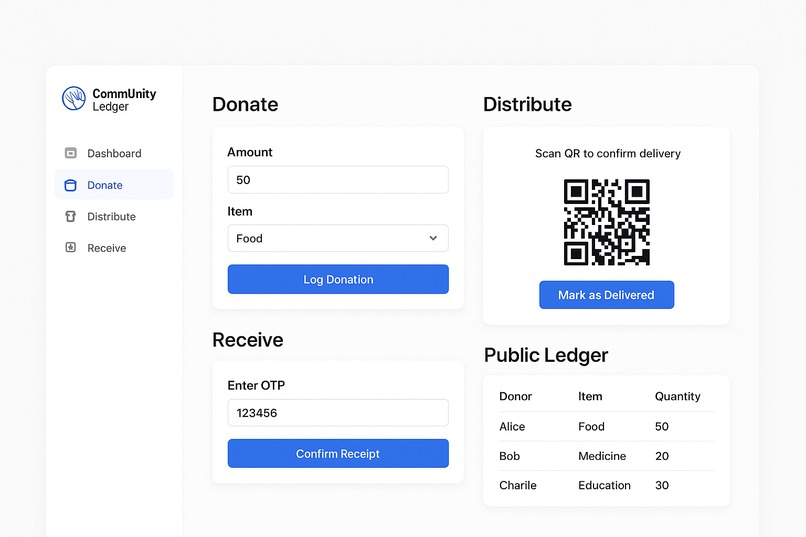
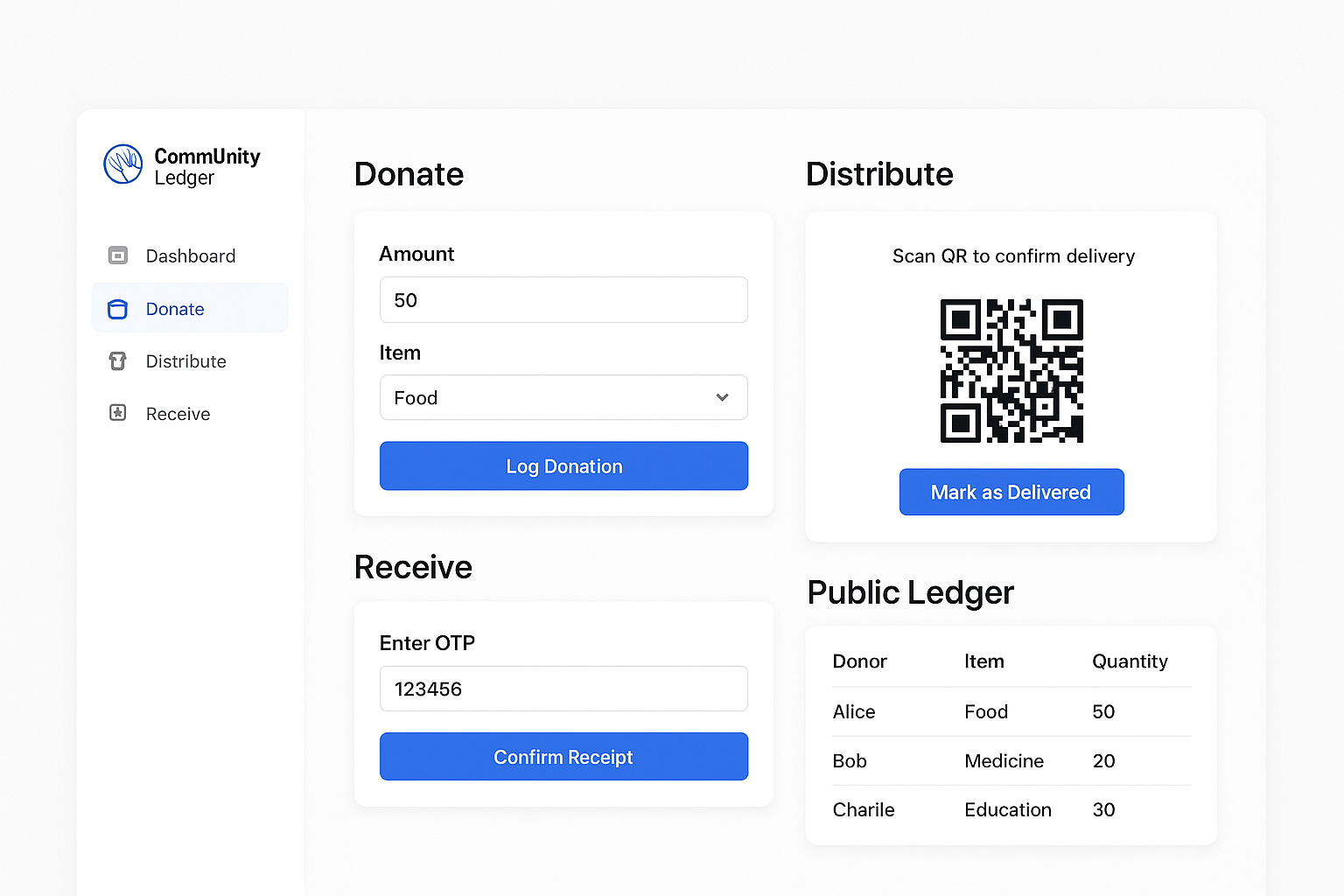
Dashboard in pc
-
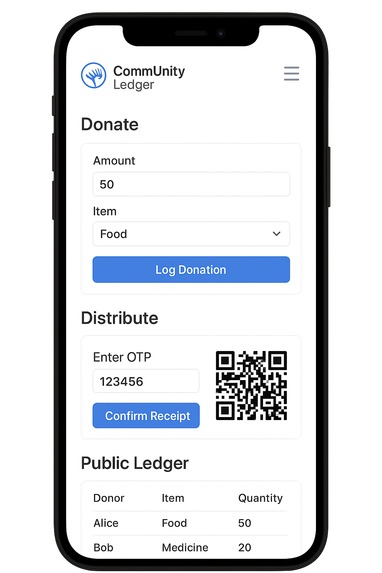
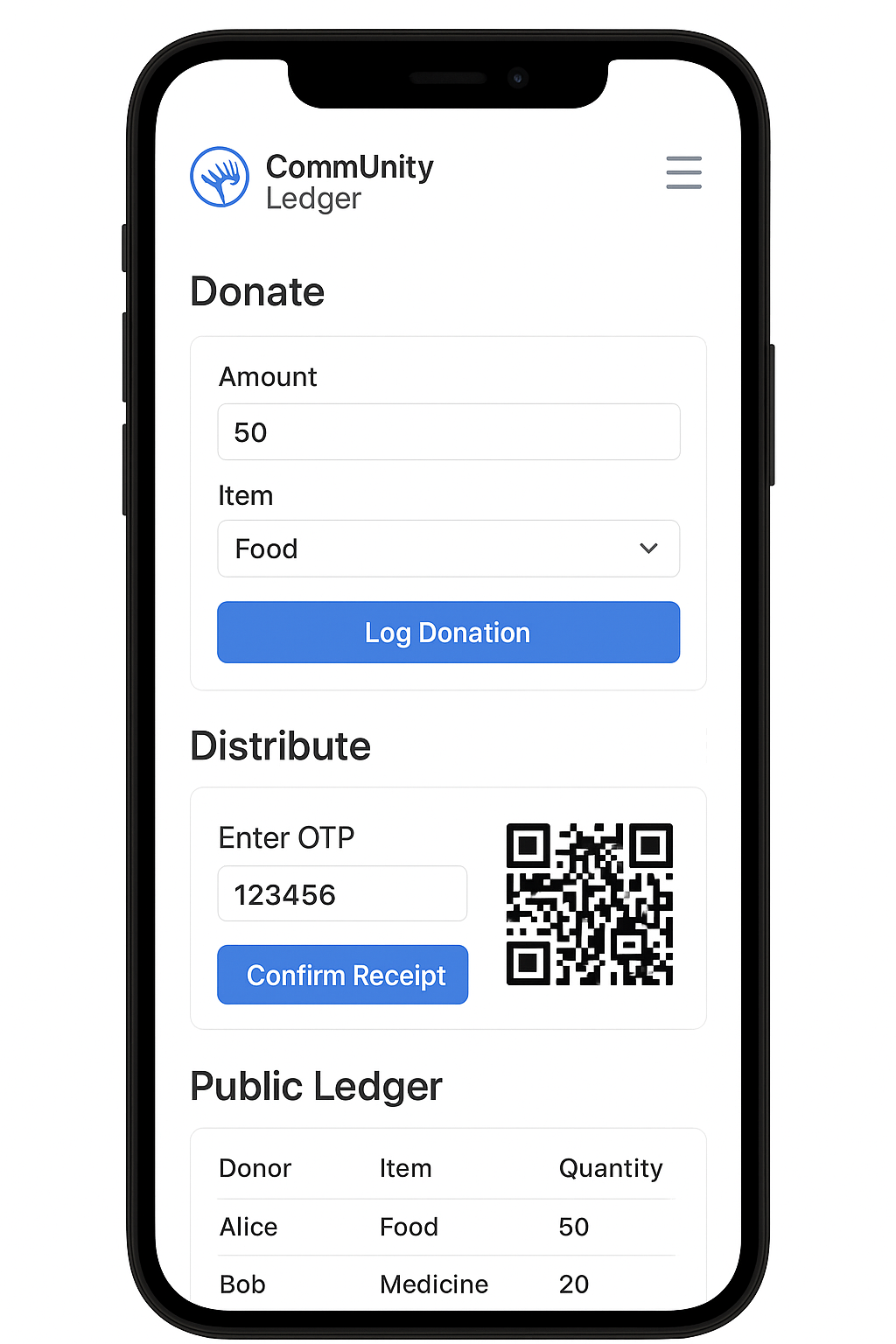
Light theme in Smartphone
-
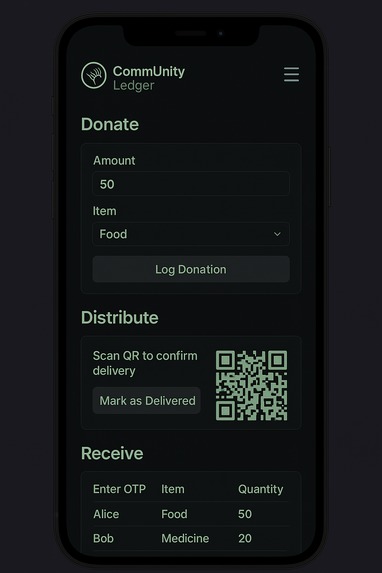
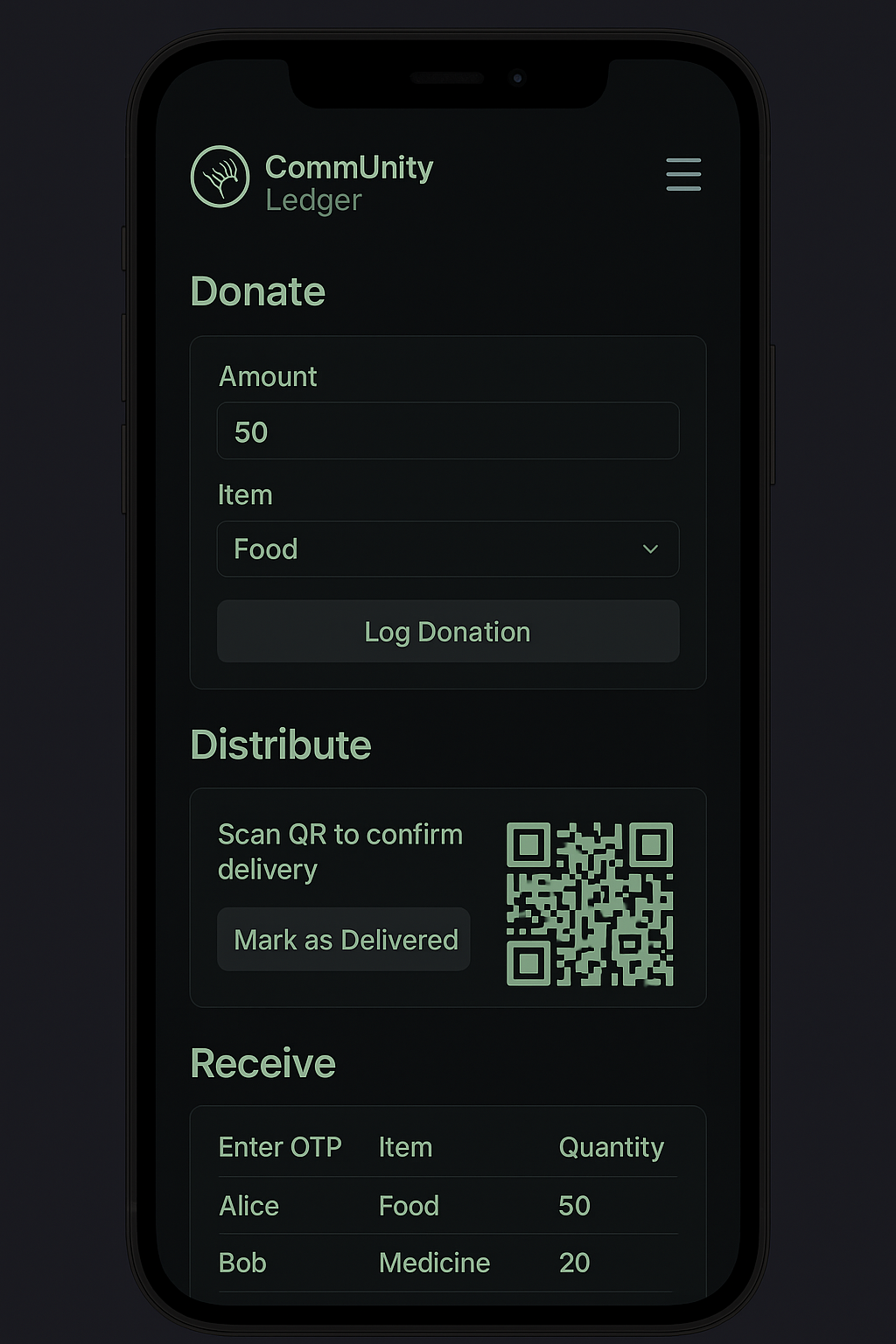
Dark theme In Smartphone
💡 Inspiration
We were inspired by countless stories of relief funds vanishing, families not receiving promised food packets, and students missing scholarships because of opaque systems. At the same time, donors and NGOs often lose motivation because they can’t see their contributions making real change.
We asked ourselves: 👉 What if aid could be as transparent as tracking a package? 👉 What if communities could verify every meal, medicine, and school supply they receive?
That’s how CommUnity Ledger was born.
What It Does
Donors/NGOs log contributions (food, medicine, scholarships, relief funds).
Distributors/volunteers scan QR codes on deliveries → entries are verified on blockchain.
Beneficiaries confirm receipt via a simple mobile app or SMS OTP.
Public Dashboard shows real-time impact: where donations came from, where they went, and how they helped.
Result? A tamper-proof, people-centered ledger of social good.
🎯 Problem It Solves
Eliminates corruption and mismanagement in aid distribution.
Restores trust for donors → encourages more giving.
Gives communities power to verify and participate in the system.
Ensures sustainable programs are trackable, reducing waste and fraud.
How We Built It
Blockchain Smart Contracts → Solidity on Polygon (Mumbai Testnet).
Frontend → React + Next.js for dashboard and donor portal.
Mobile/Web Verification → React Native for app; Twilio API for SMS OTP confirmations.
Backend → Node.js + Express server handling QR generation & verification logic.
Database → MongoDB (for off-chain quick reads) + IPFS (for tamper-proof documents).
APIs/Services →
Twilio (SMS confirmations)
OpenStreetMap (for dashboard maps)
Google Charts / Recharts (impact visualizations)
Hosting → Vercel (frontend) + AWS/GCP (backend).
⚔️ Challenges We Ran Into
Integrating blockchain with real-world low-tech users (had to add SMS OTP for accessibility).
Keeping the UI simple while handling complex backend logic.
Testing QR verification in offline/low-internet conditions.
Syncing on-chain and off-chain data smoothly without duplication
🏅 Accomplishments We’re Proud Of
Built a working blockchain-based aid tracking system in under a week.
Designed a human-centered interface accessible even in low-tech areas.
Created a demo flow where a donation can be tracked end-to-end transparently.
Proved that blockchain isn’t just for crypto it can serve humanity.
📚 What We Learned
Blockchain can be humanized if we think in terms of real communities, not just tokens.
Simplicity > complexity: people in villages or disaster zones don’t care about “smart contracts,” but they trust a QR code and an SMS.
Building with a social impact focus makes technical challenges worth solving.
What's next for CommUnity Ledger - A Transparent Aid & Resource Platform
Scale to real pilot projects with NGOs.
Add AI-powered fraud detection (flag suspicious patterns in aid flow).
Expand beyond food/medicine → scholarships, disaster relief, carbon credits.
Local language support for maximum accessibility.
Example Code
// Example: Recording a donation entry on blockchain async function recordDonation(donor, item, quantity) { const tx = await contract.addDonation(donor, item, quantity); await tx.wait(); console.log("Donation recorded:", donor, item, quantity); } // Solidity Smart Contract Snippet mapping(uint => Donation) public donations;
struct Donation { address donor; string item; uint quantity; uint timestamp; }
function addDonation(address _donor, string memory _item, uint _quantity) public { donations[donationCount] = Donation(_donor, _item, _quantity, block.timestamp); donationCount++; }
Built With
- express-blockchain:-polygon-mumbai-testnet-(solidity-smart-contracts)-database:-mongodb
- html/css-frameworks:-react
- ipfs-cloud-services:-aws/gcp
- languages:-javascript
- next.js
- node.js
- openstreetmap
- react-native
- solidity
- vercel-apis:-twilio-(sms)


Log in or sign up for Devpost to join the conversation.