Inspiration
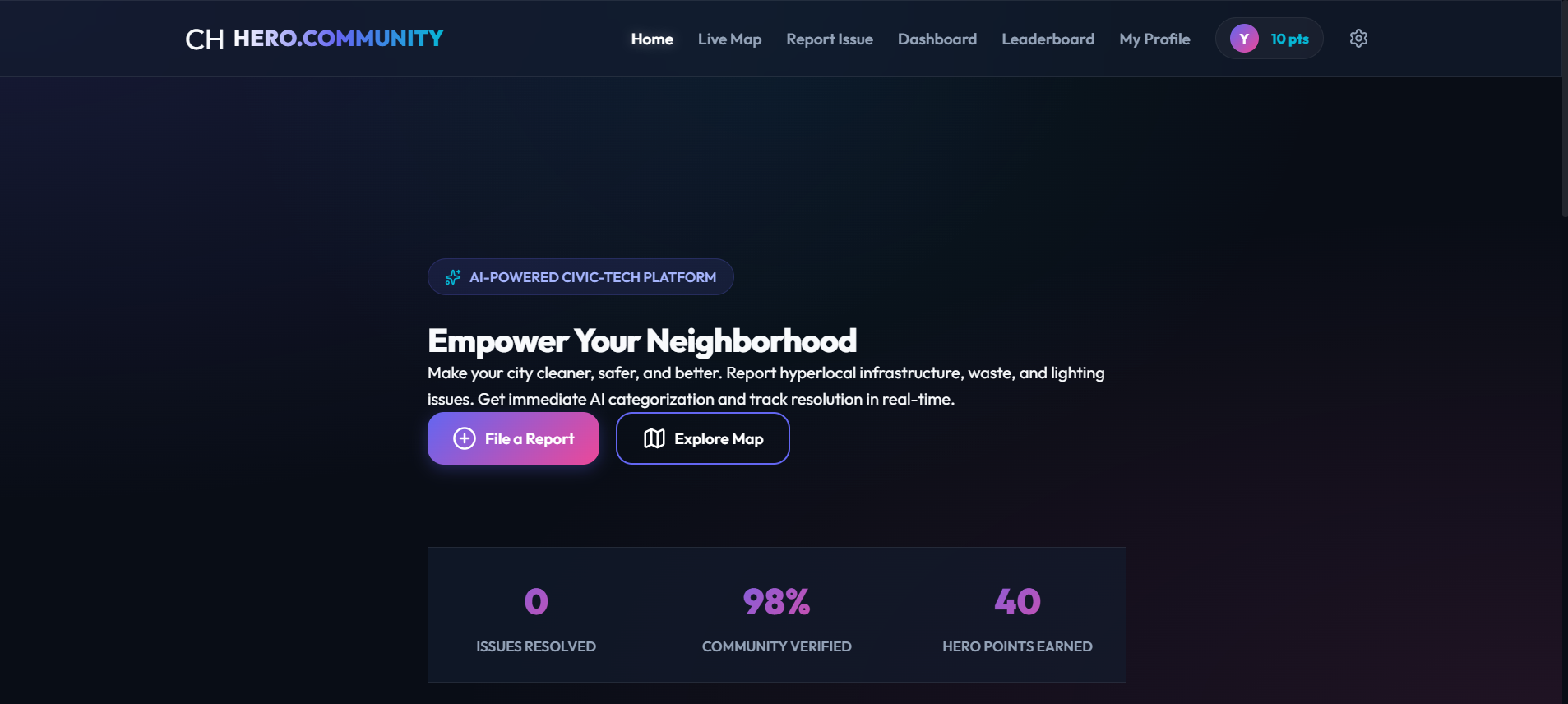
Community Hero was inspired by a simple observation: every day, citizens encounter potholes, overflowing garbage bins, broken streetlights, and water leakages, yet reporting these issues is often frustrating, slow, and lacks transparency. Most people either don't know where to report problems or never receive updates after reporting them. We wanted to build a platform that empowers citizens to become active contributors in improving their communities. By combining AI, real-time collaboration, and community verification, we envisioned a system where reporting local problems is as easy as taking a photo and where every report is transparent, trackable, and actionable. Our goal was to transform civic engagement from a fragmented process into a collaborative, data-driven ecosystem that benefits both citizens and local authorities.
What it does Community Hero is an AI-powered civic engagement platform that enables citizens to:
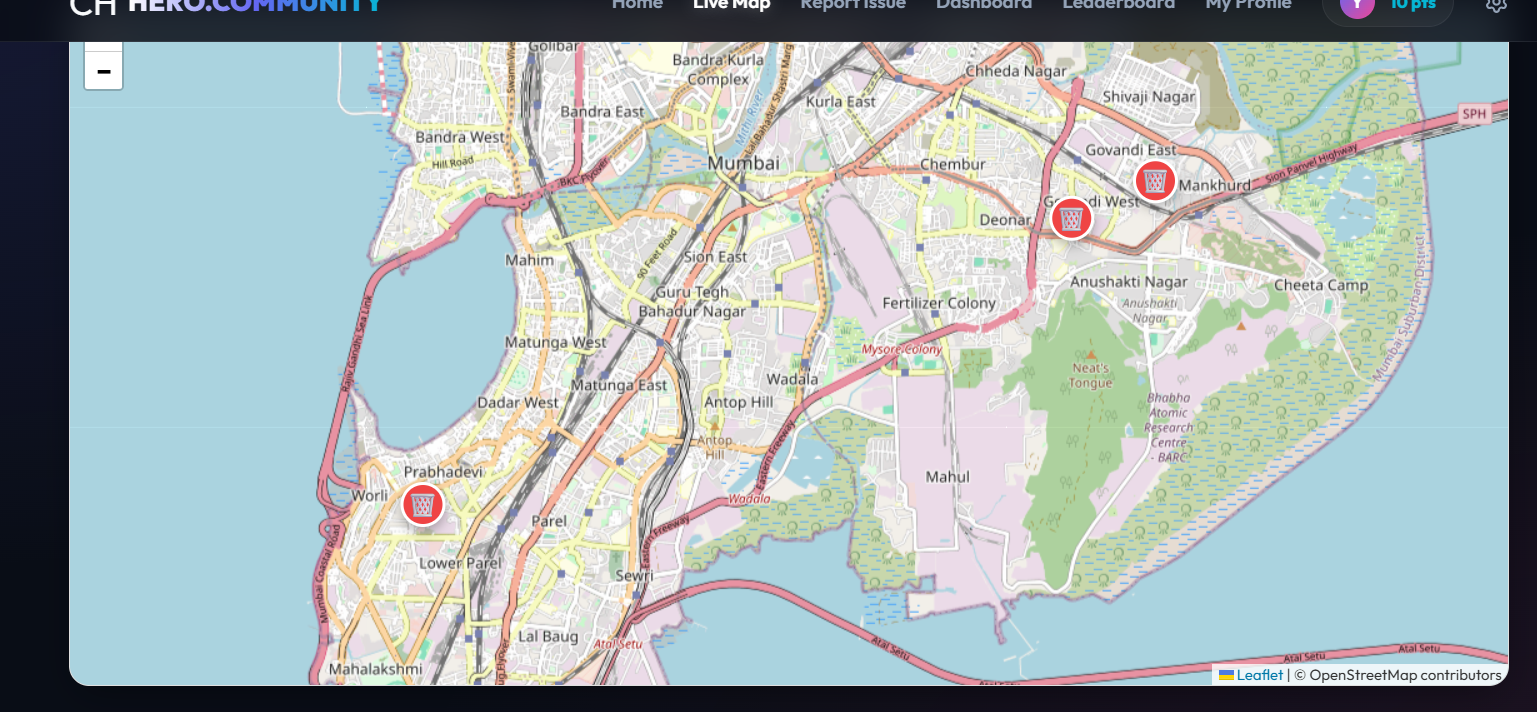
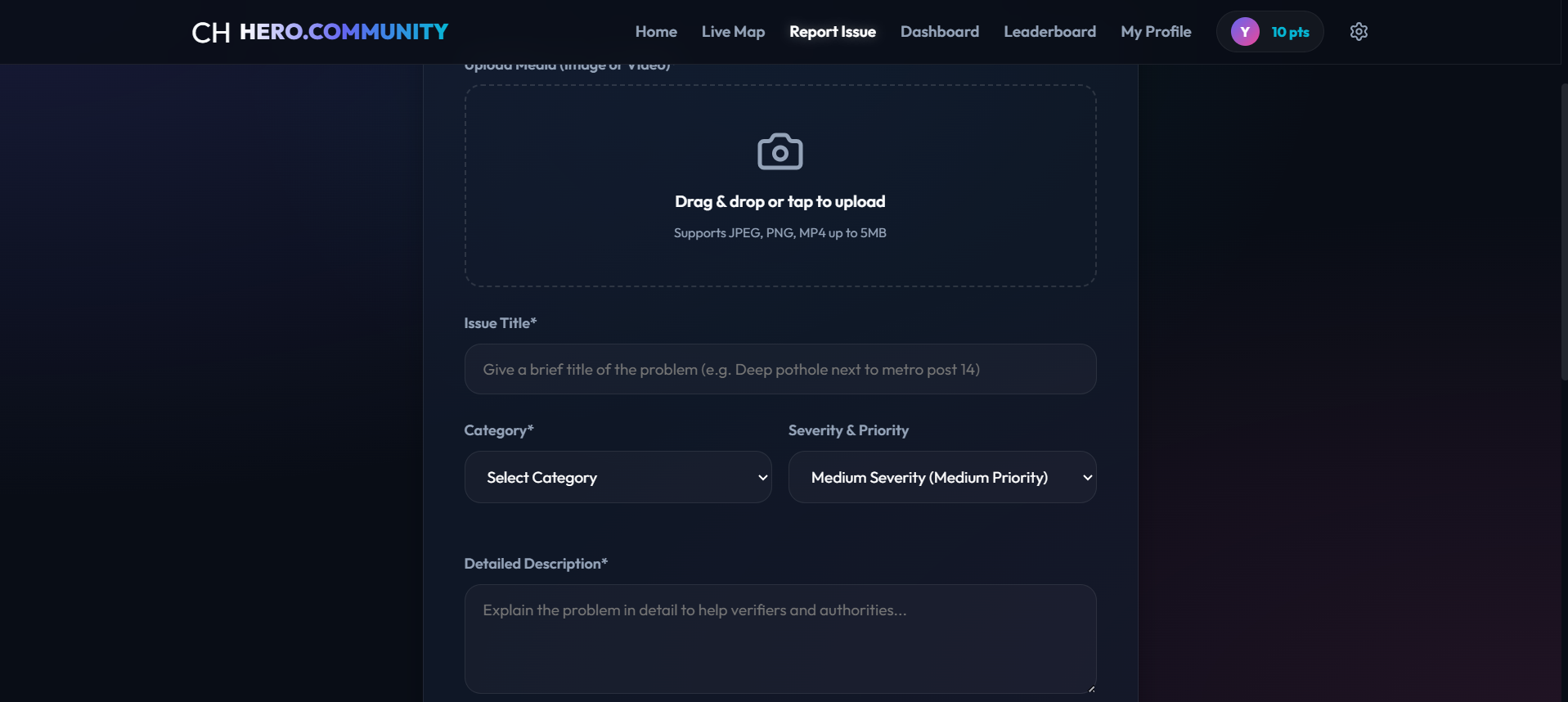
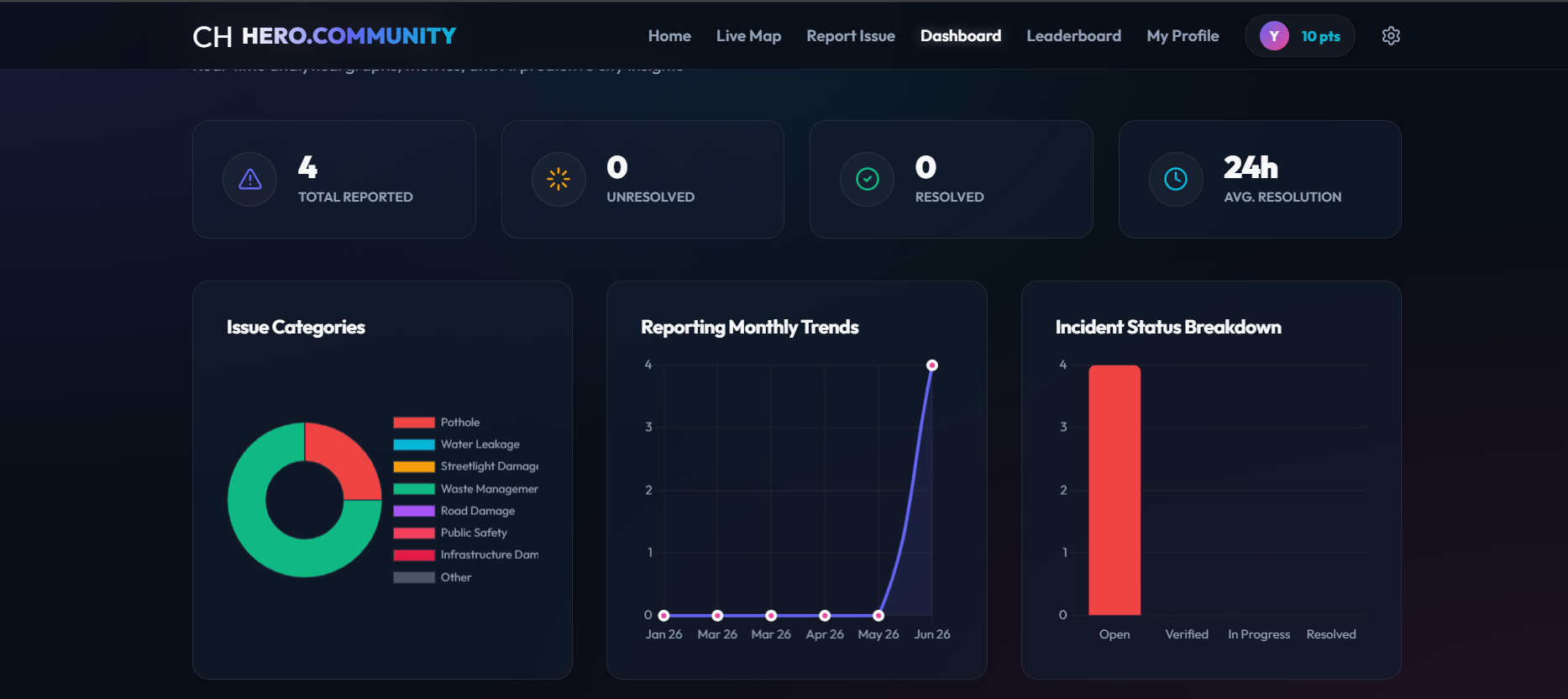
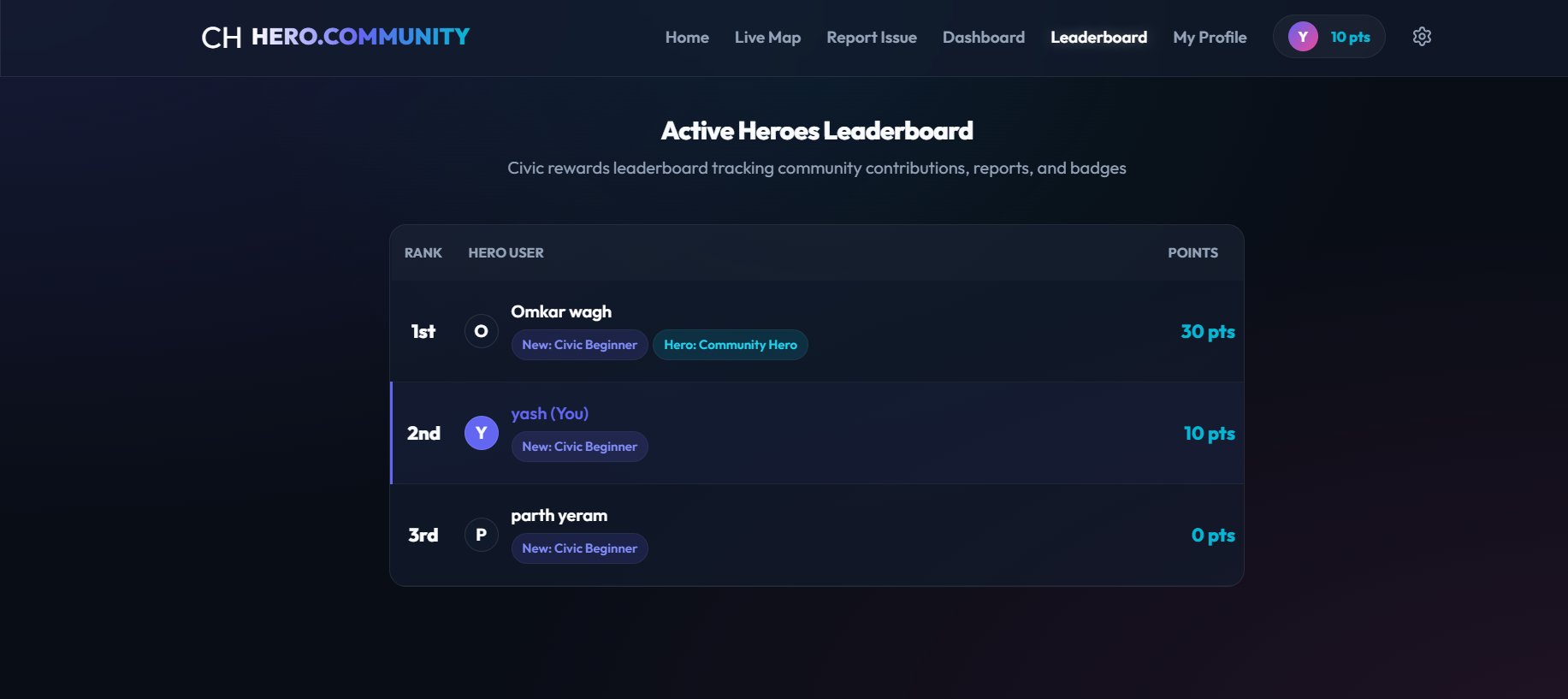
• Report community issues using photos, videos, or text. • Automatically classify issues using Google Gemini 2.5 Flash. • Detect issue severity and generate concise summaries. • Pin issues on an interactive map using GPS. • Allow communities to verify and upvote reports. • Track issue resolution status in real time. • Visualize city-wide trends through dashboards and heatmaps. • Generate predictive insights to identify future problem hotspots. • Encourage participation through points, badges, and leaderboards. The platform creates a transparent bridge between citizens and local authorities, making communities safer, cleaner, and more responsive.
How we built it We built Community Hero using a modern web stack focused on AI and real-time collaboration.
Frontend: • HTML5, CSS3, JavaScript (ES6 Modules) • Leaflet.js and Leaflet.heat for interactive maps and heatmaps • Chart.js for analytics dashboards
Backend and Infrastructure: • Firebase Authentication for secure login and role management • Cloud Firestore for real-time data storage • Cloudinary for media uploads • Vercel Serverless Functions for secure API proxying • Firebase Hosting for deployment
AI: • Google Gemini 2.5 Flash for image analysis, issue categorization, severity detection, and predictive insights. • Canvas pixel-sampling fallback for offline AI analysis when external APIs are unavailable.
The application follows a multi-agent architecture where AI agents collaborate to analyze, verify, predict, and prioritize community issues.
Challenges we ran into
• Integrating image-based issue detection while maintaining low latency. • Designing reliable severity classification for different issue categories. • Handling API rate limits and implementing an offline fallback mechanism. • Building real-time synchronization between multiple users. • Detecting duplicate reports from nearby locations. • Designing an intuitive map interface that remains responsive on mobile devices. • Managing Firebase and Firestore configuration issues during development. • Balancing advanced AI features with a smooth user experience.
Accomplishments that we're proud of
• Successfully built an end-to-end AI-powered civic reporting platform. • Integrated Google Gemini 2.5 Flash for automated issue analysis. • Implemented real-time maps, dashboards, and community verification. • Designed a multi-agent architecture that goes beyond traditional reporting systems. • Built a fully responsive application that works on both desktop and mobile devices. • Added predictive analytics and gamification to increase community engagement. • Reduced the reporting process from several manual steps to a single photo upload.
What we learned
• Large language models and multimodal AI can solve practical civic problems. • Community participation significantly improves data quality and trust. • Building resilient systems requires fallback mechanisms and graceful degradation. • Geospatial visualization and analytics provide valuable insights for local governments. • Gamification can meaningfully increase citizen engagement. • Real-world applications require balancing AI capabilities, performance, and usability.
What's next for Community Hero — Hyperlocal Problem Solver
Our future roadmap includes:
• Direct integration with municipal complaint management systems. • Push notifications and SMS alerts for issue updates. • Multilingual support for regional languages. • AI-generated repair cost estimation and resource planning. • Drone and CCTV integration for automated issue detection. • Advanced predictive models using weather and historical infrastructure data. • Dedicated mobile applications for Android and iOS. • Ward-level analytics dashboards for city administrators. • Open APIs that allow governments and NGOs to integrate with the platform.
Our long-term vision is to build a scalable civic intelligence platform that enables communities and governments to work together in solving local challenges proactively rather than reactively.
Built With
- 2.5
- ai
- api
- authentication
- chart.js
- cloud
- cloudinary
- css3
- firebase
- firestore
- flash
- functions
- gemini
- git
- github
- hosting
- html5
- javascript
- leaflet.heat
- leaflet.js
- modules)
- nominatim
- openstreetmap
- responsive
- serverless
- studio

Log in or sign up for Devpost to join the conversation.