Inspiration
Colabourhood was inspired by a simple frustration: people often know exactly what needs improving in their own neighbourhood, but they lack an easy way to organise with nearby residents. A broken streetlight, an unsafe crossing, a neglected green space, a missing playground, a pothole, or a shared tool library all start with the same question:
Who else nearby cares enough to help?
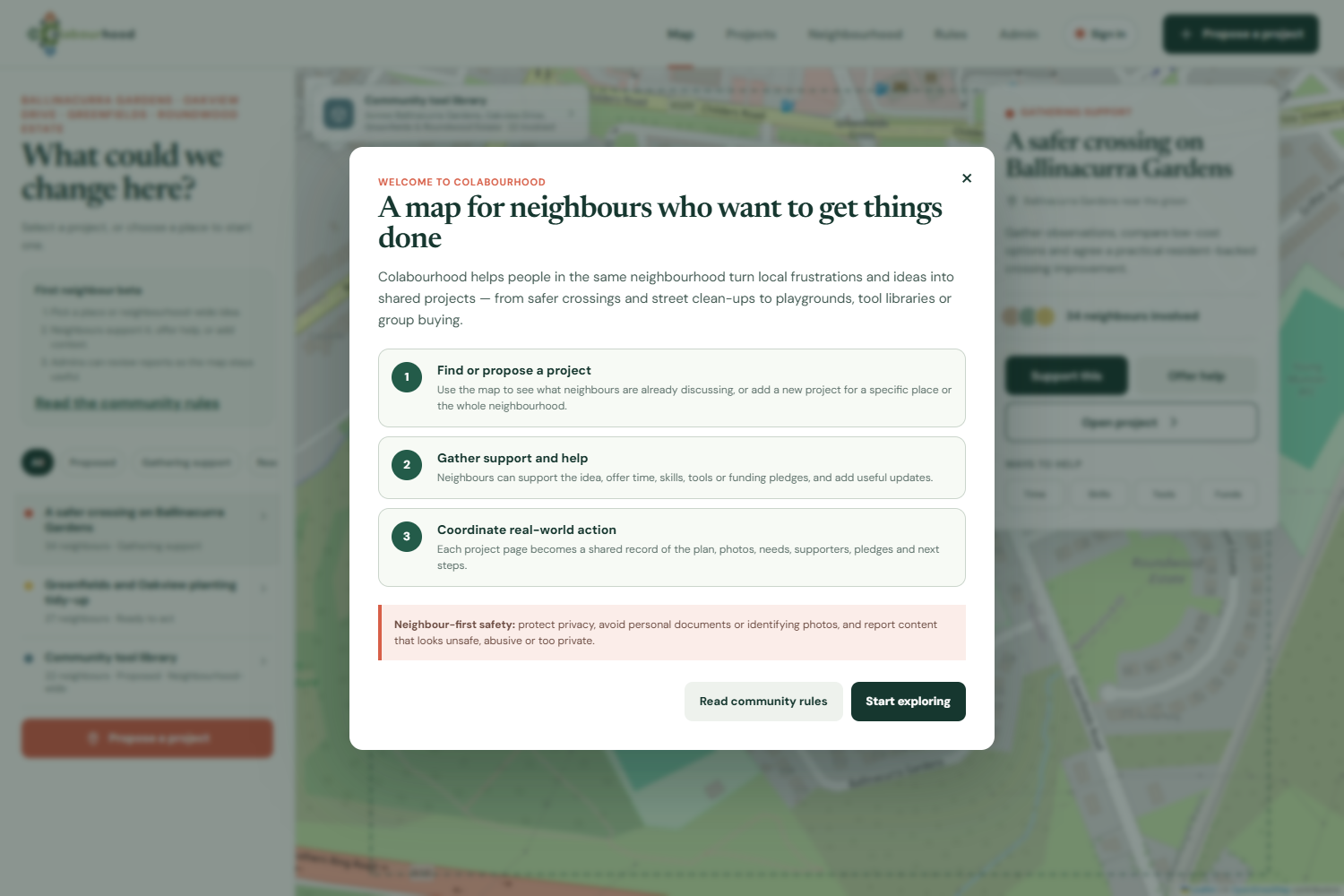
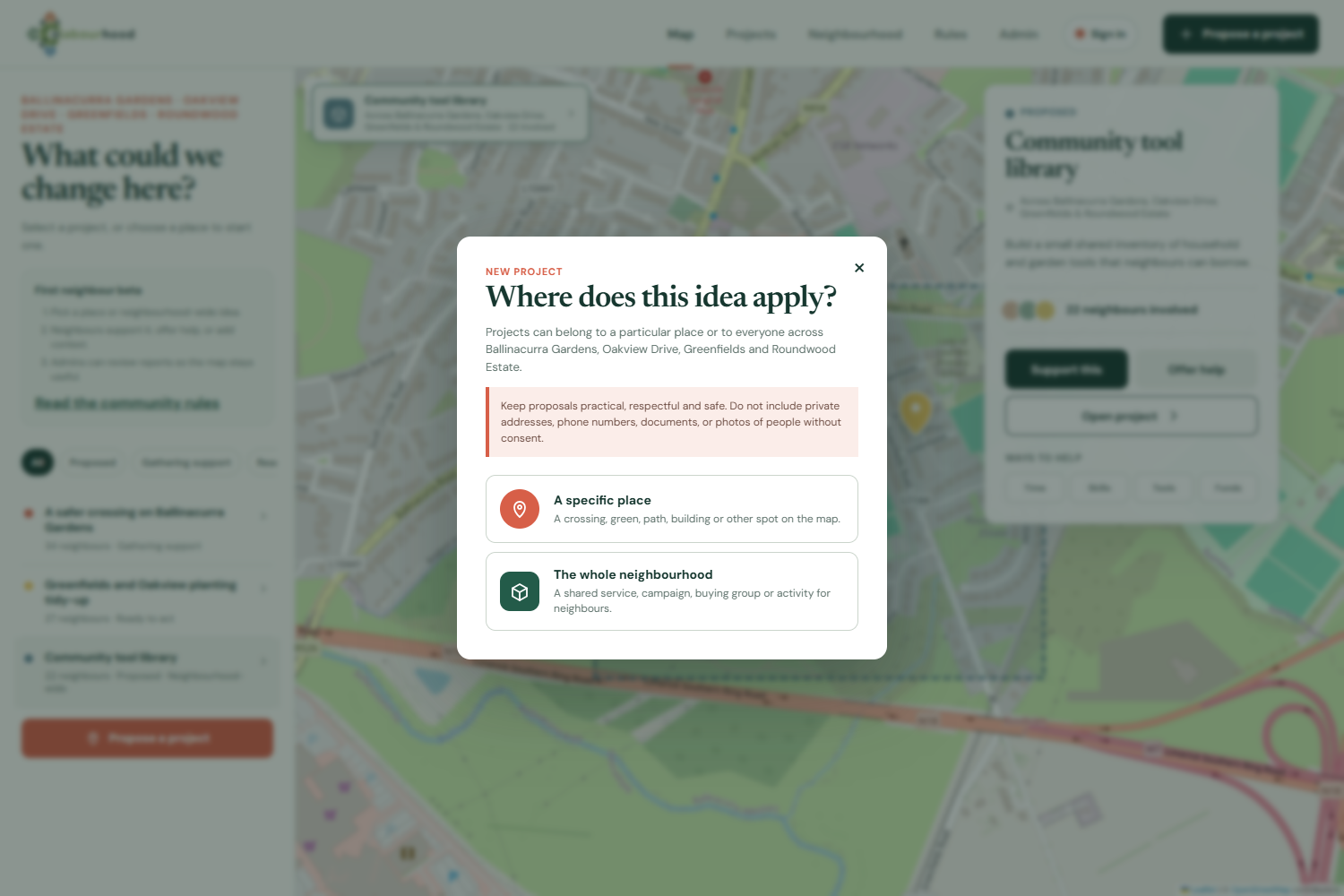
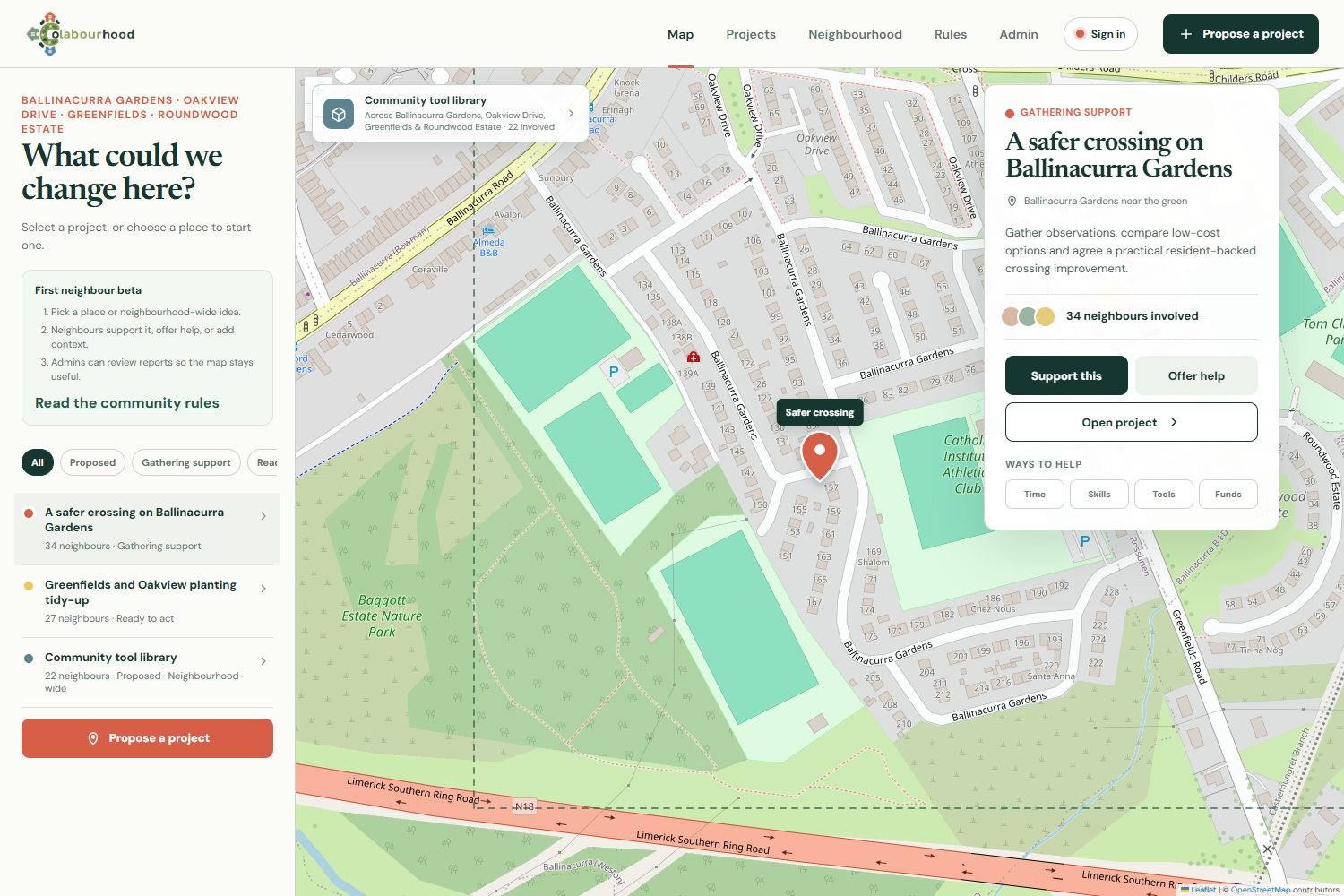
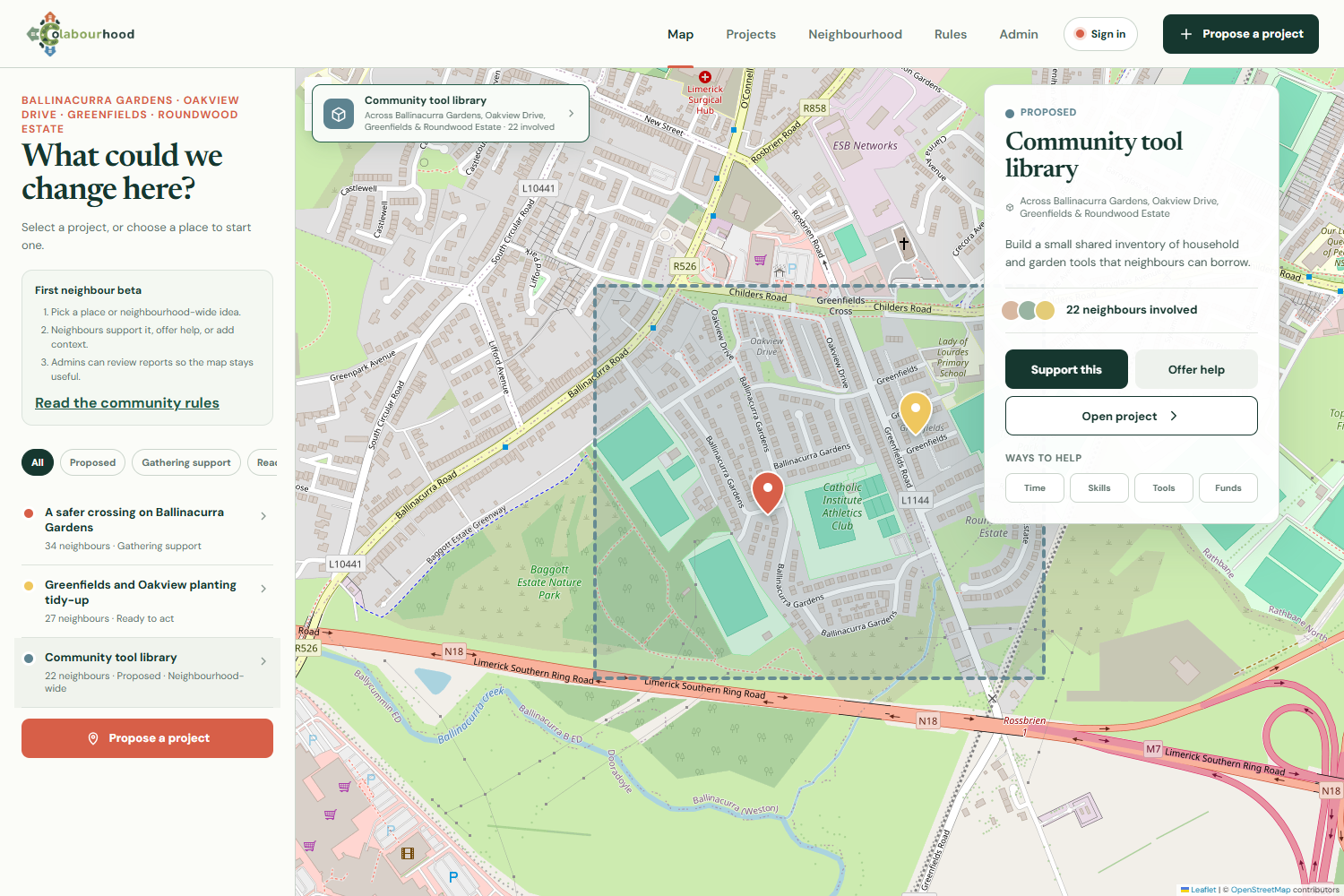
Colabourhood is designed to answer that question. It gives residents a map-based way to propose local projects, gather support, offer help, raise concerns, and move from complaint to coordinated action.
What it does
Colabourhood helps people in a defined neighbourhood:
- see proposed local projects on a map;
- open a dedicated page for each project;
- support a project;
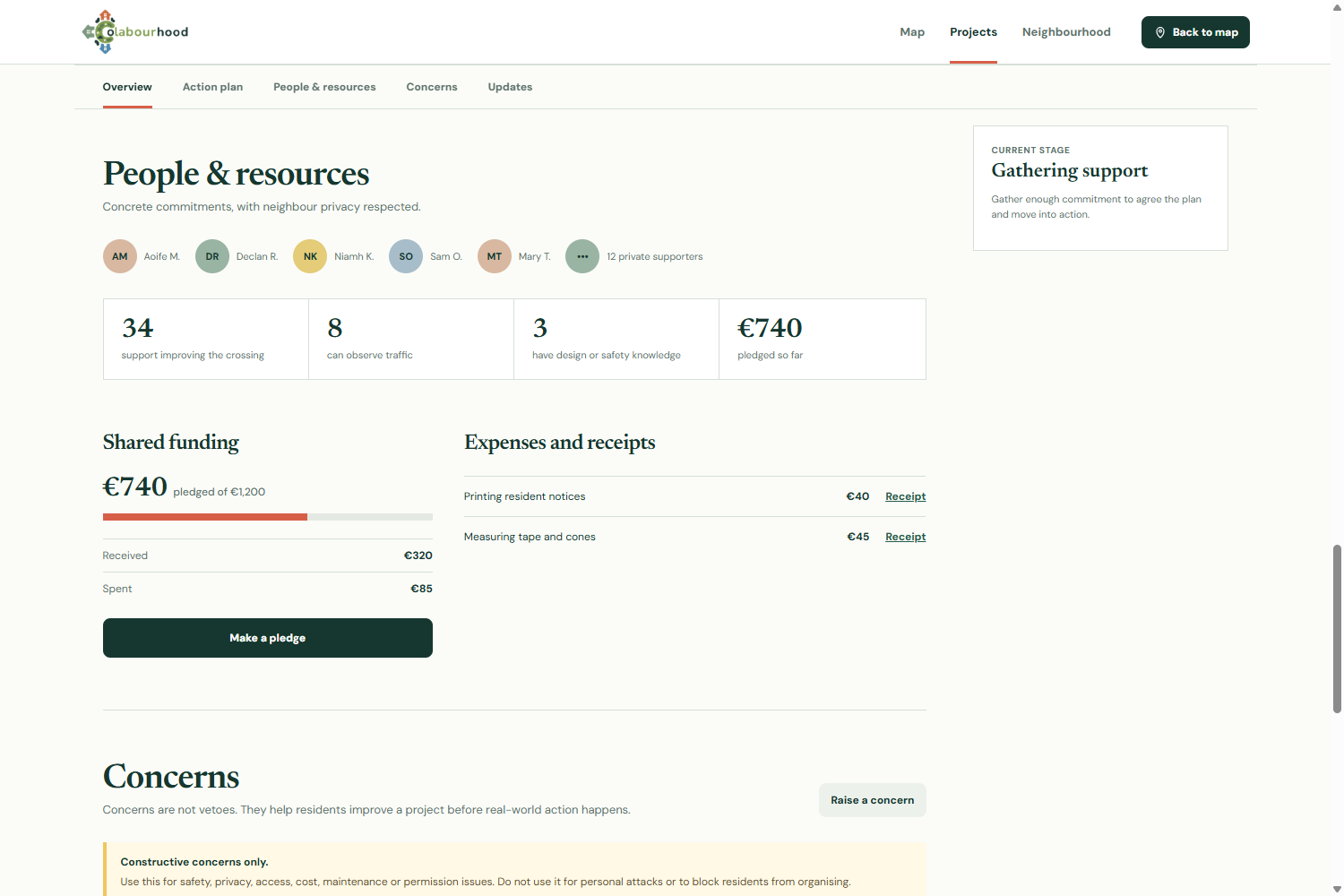
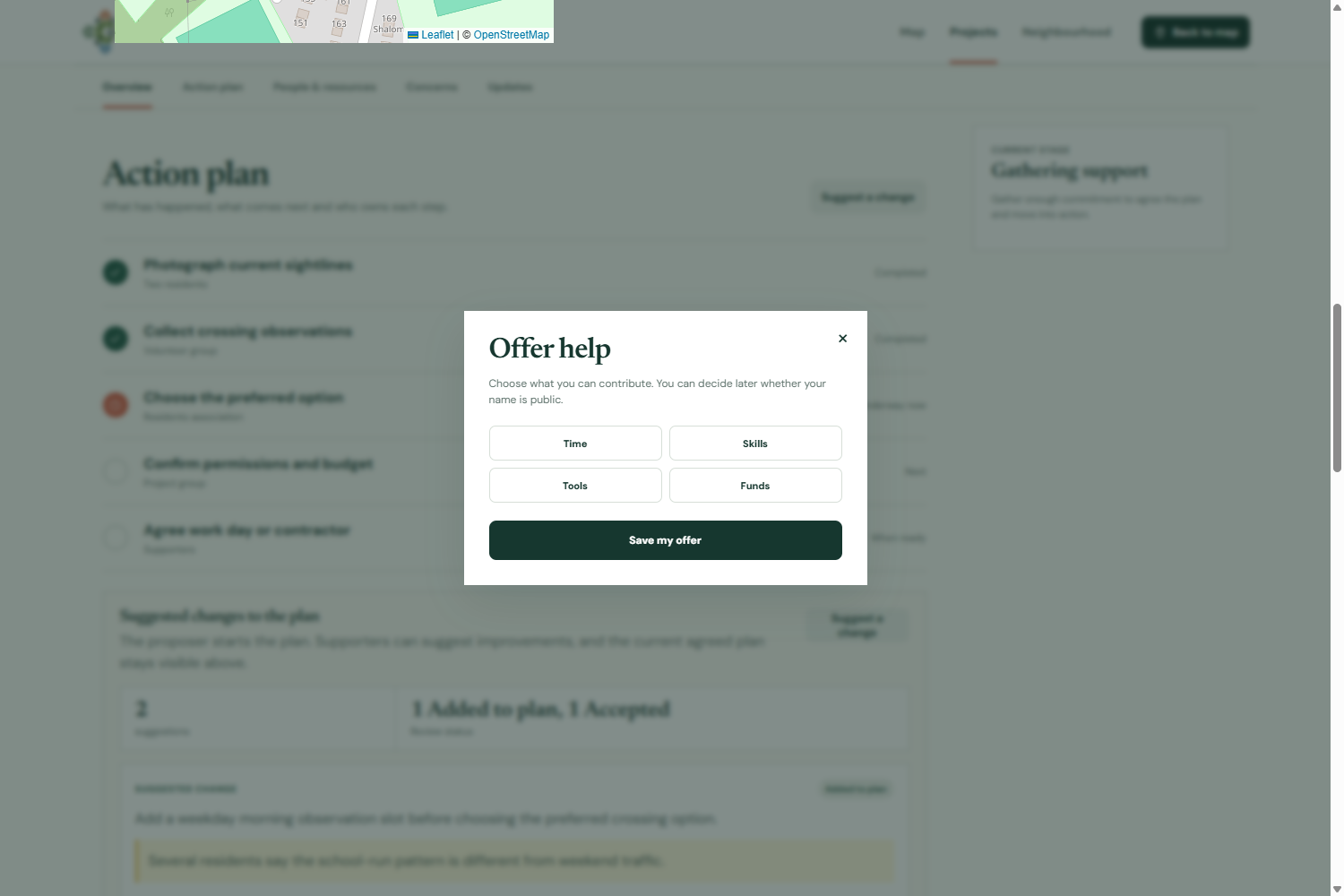
- offer time, skills, tools, materials, or funding pledges;
- upload project photos;
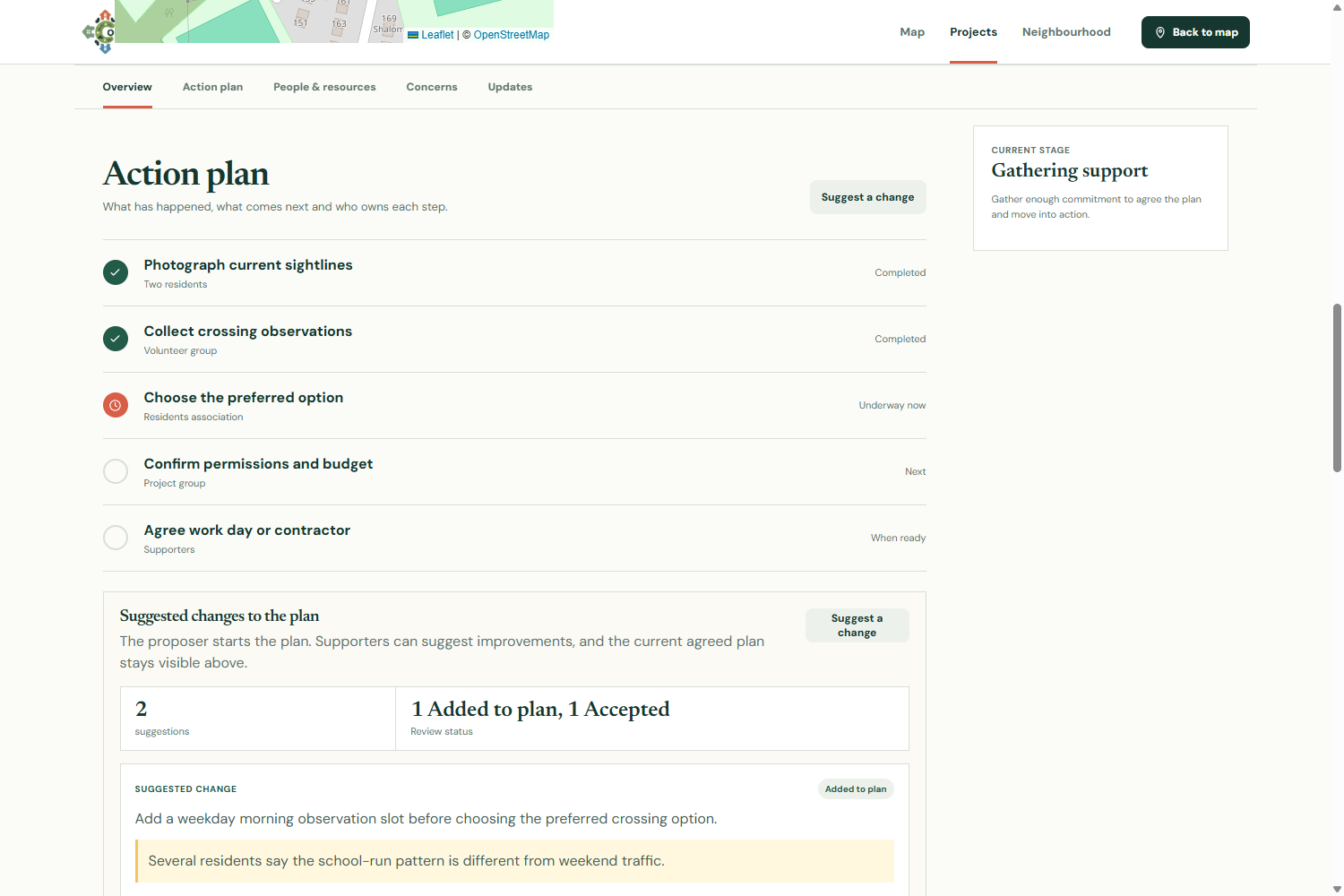
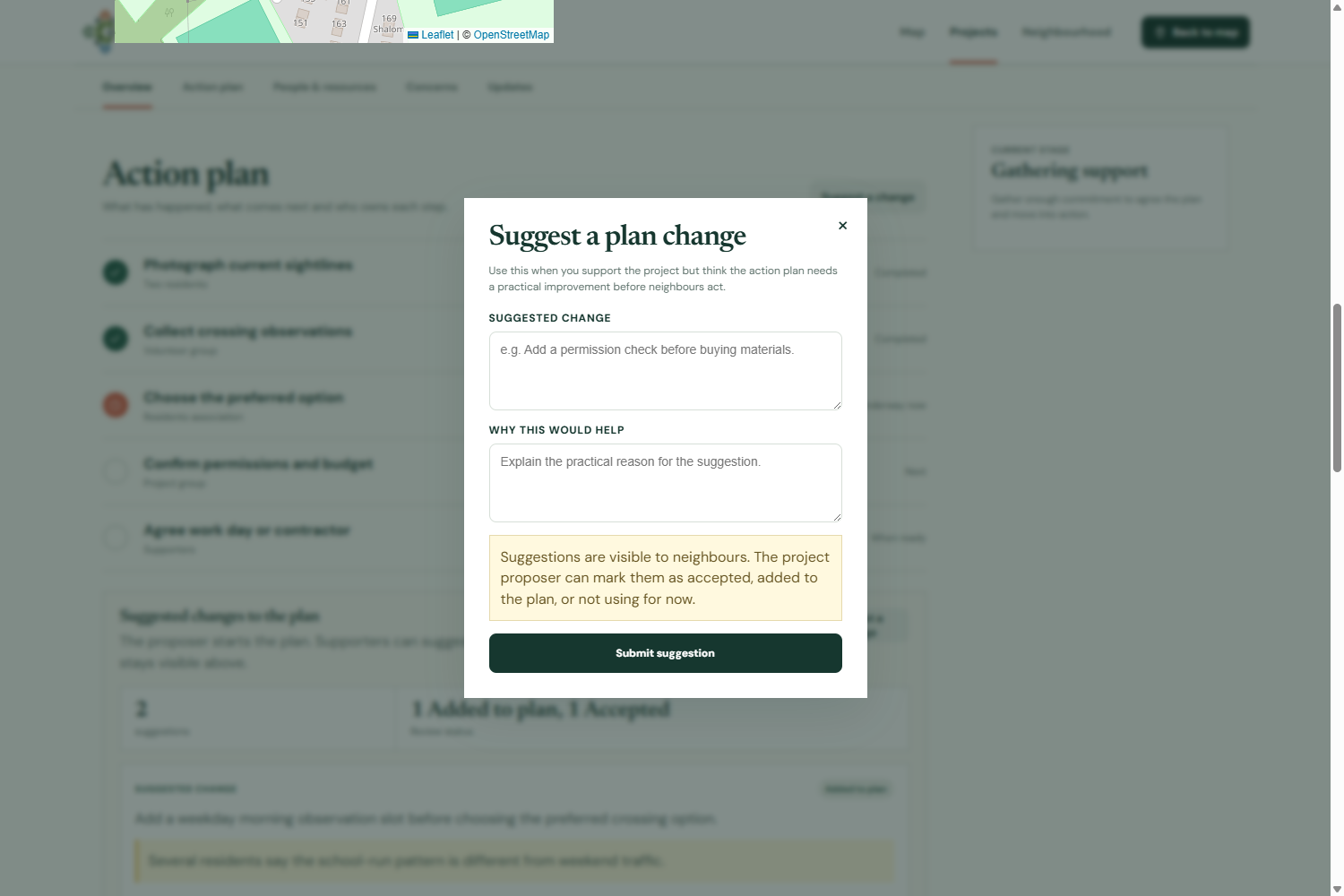
- suggest changes to the action plan;
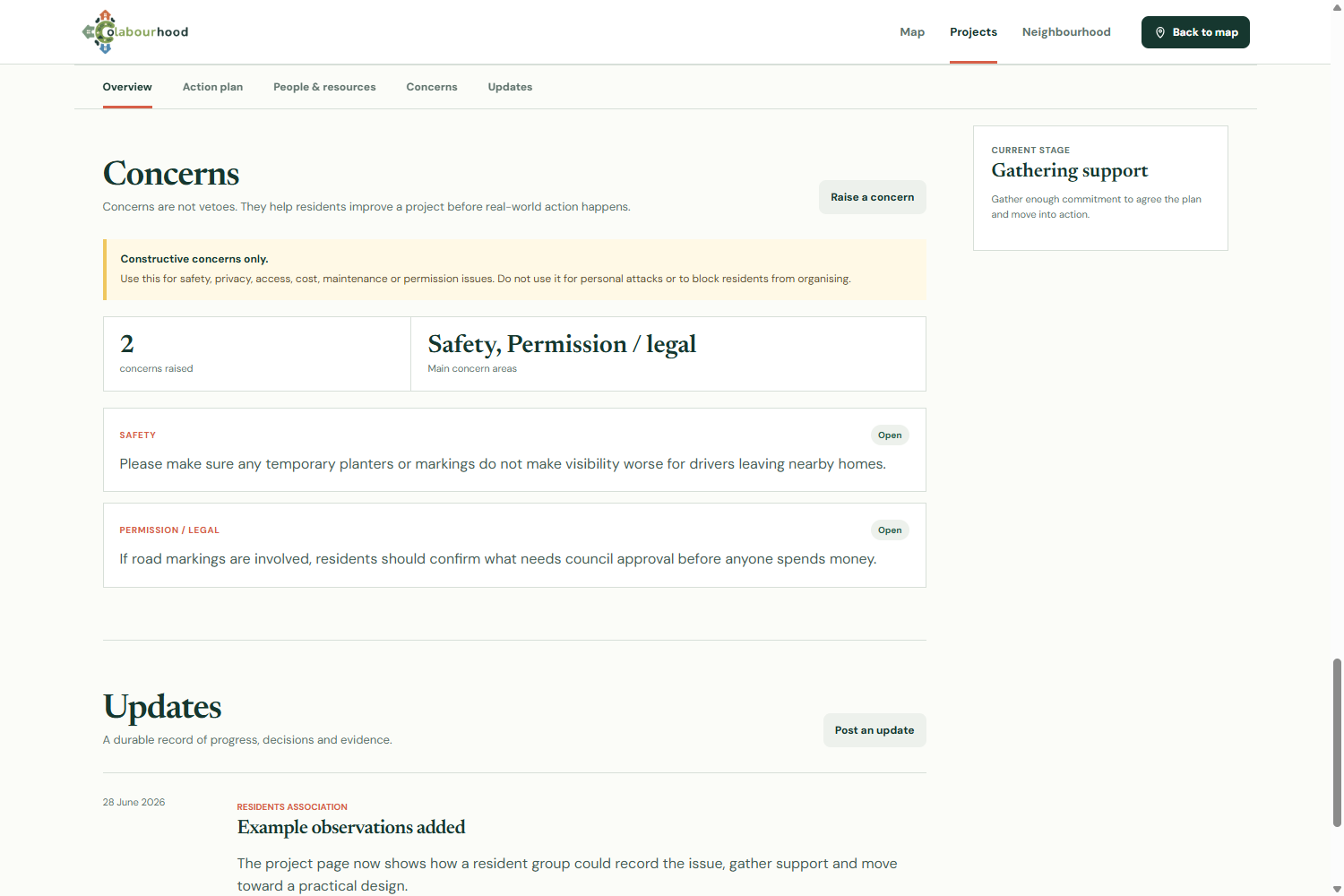
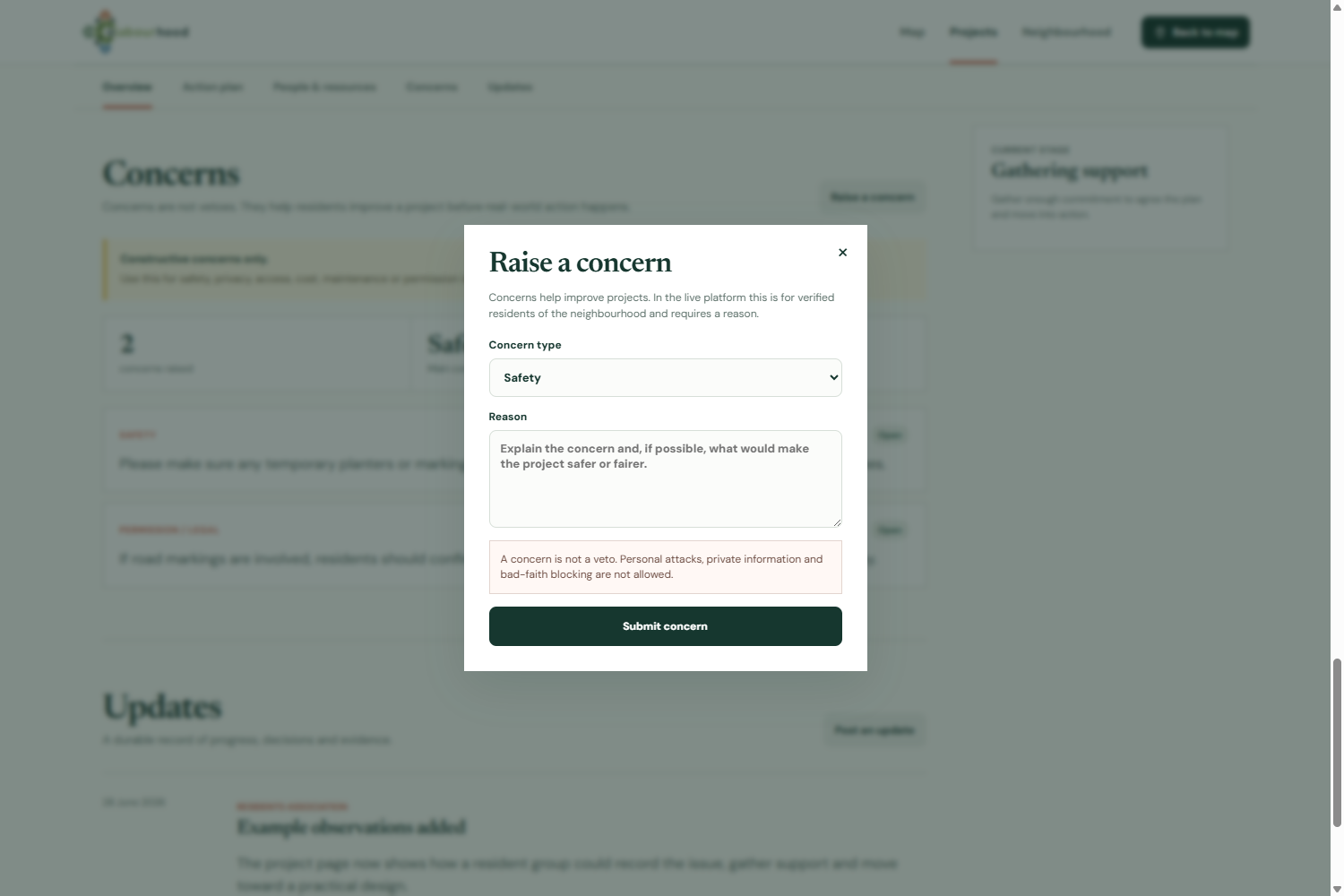
- raise constructive concerns;
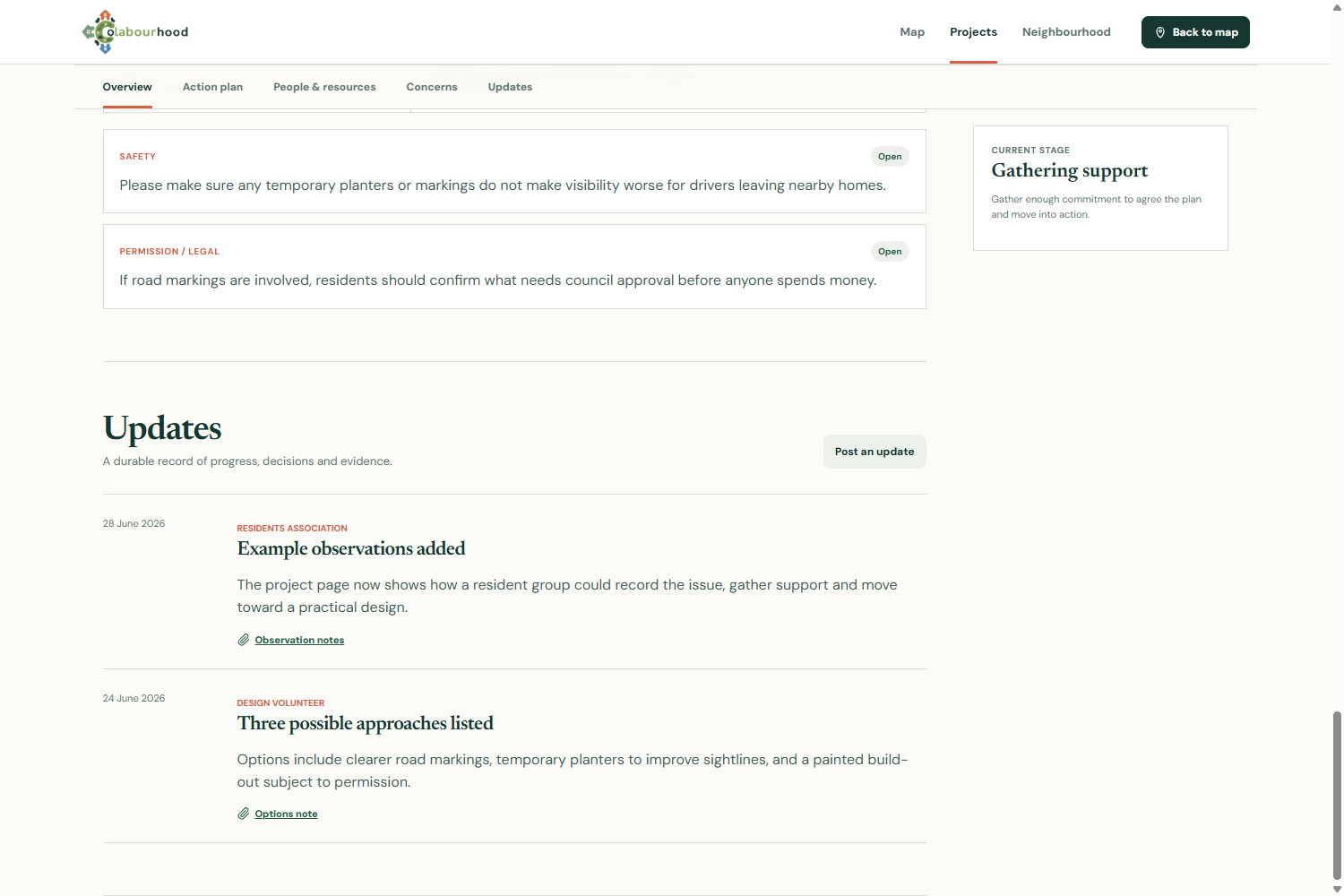
- post updates;
- keep a transparent record of local action.
The first pilot area is Ballinacurra Gardens, Oakview Drive, Greenfields, and Roundwood Estate in Limerick, Ireland.
How we built it
The platform was built as a lightweight web app with a map-first interface.
We used:
- Leaflet and OpenStreetMap for the interactive neighbourhood map;
- Supabase for authentication, database storage, profiles, projects, support, concerns, media, and project updates;
- Vercel for deployment;
- GitHub for source control;
- a custom Colabourhood visual identity and logo.
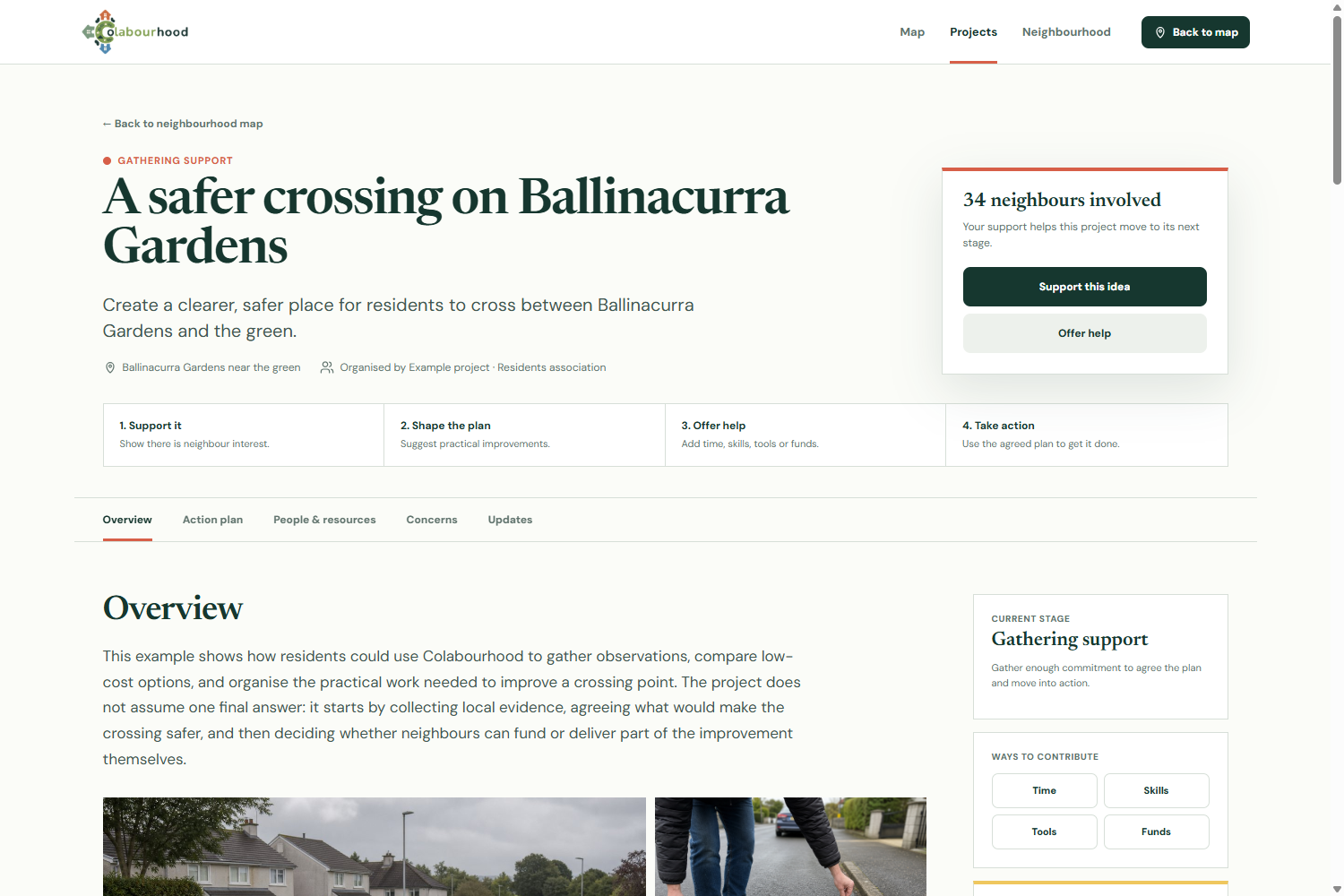
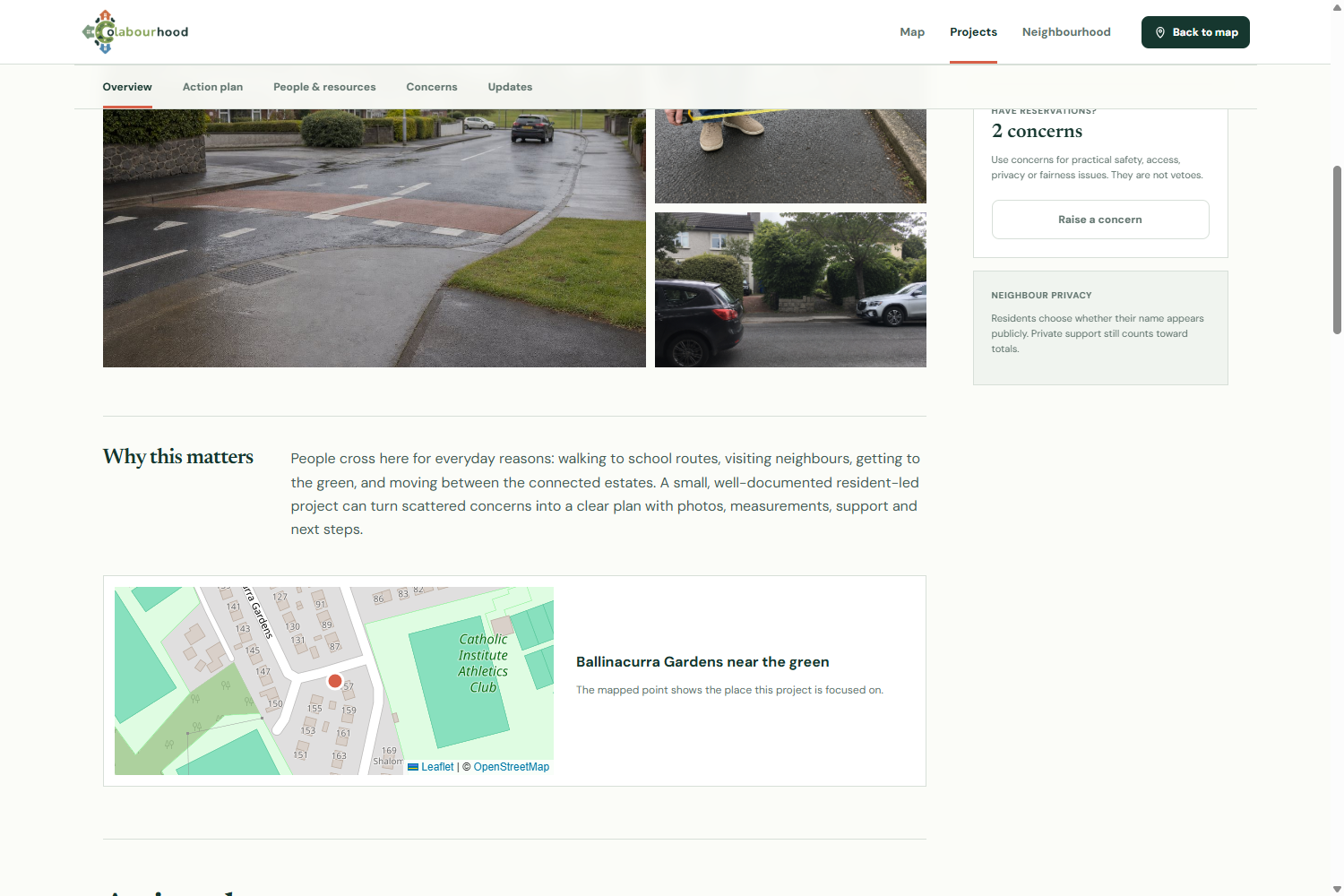
Each project has its own page showing the project description, photos, location, action plan, needs, supporters, funding pledges, concerns, and updates.
A key design decision was to keep the first user experience simple. The main actions are:
- Support it
- Shape the plan
- Offer help
- Take action
More advanced features, like concerns, reporting, admin review, and action-plan suggestions, are available without overwhelming the first impression.
What we learned
We learned that neighbourhood collaboration needs balance. Too little structure and a project becomes just another comment thread. Too much structure and it starts to feel like bureaucracy.
So Colabourhood tries to sit in the middle:
- simple enough for ordinary residents;
- structured enough to coordinate real-world work;
- open enough to avoid gatekeeping;
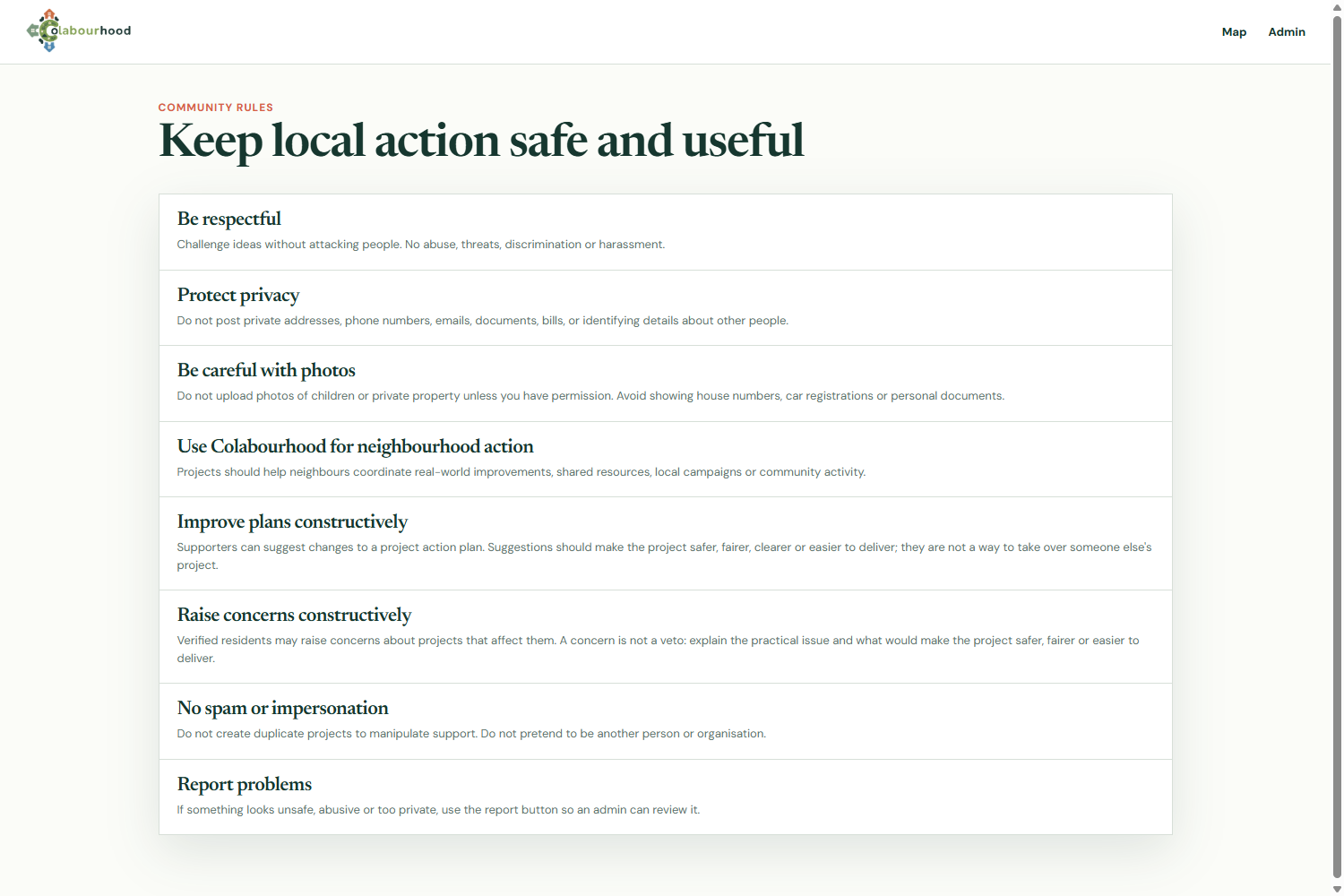
- safe enough to handle concerns, privacy, and moderation.
We also learned that objections are not a failure of collaboration. They are part of collaboration. A resident who raises a concern may be helping improve the project, not blocking it.
Challenges we faced
The biggest challenge was complexity.As the platform developed, more useful mechanisms appeared:
- project proposals;
- support;
- offers of help;
- funding pledges;
- action plans;
- plan suggestions;
- concerns;
- reports;
- media uploads;
- admin review;
- neighbourhood verification.
Each feature made sense on its own, but together they risked making the site feel cumbersome. The solution was to simplify the visible surface while keeping the deeper collaboration tools available in context.
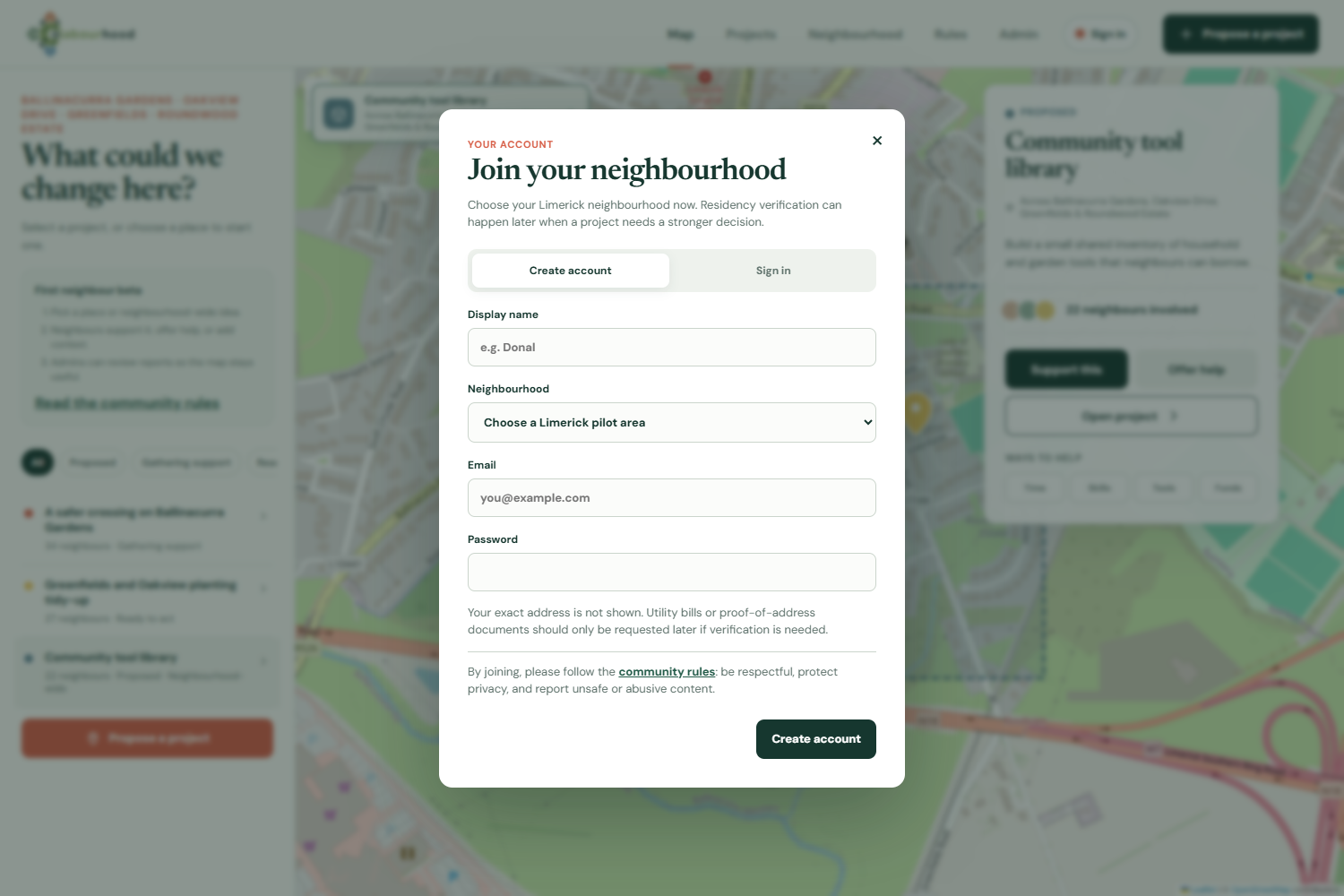
Another challenge was verification. If someone raises a formal concern about a local project, they should actually live in the neighbourhood. But asking every new user to upload proof of address would create friction and privacy worries. The current direction is to allow easy participation first, and require stronger verification only for actions where residence really matters.
What’s next
The next step is a first-neighbourhood beta.
We want to test whether residents can use Colabourhood to move from scattered local complaints to practical shared action.
Future improvements may include:
- a clearer residence verification flow;
- better admin dashboards;
- project task assignment;
- household or address-code verification;
- notifications;
- richer media support;
- expansion across more neighbourhoods in Limerick, Ireland.
Colabourhood’s long-term goal is simple:
Help neighbours stop waiting, start organising, and improve the places they live.
Built With
- github
- leaflet.js
- openstreetmap
- supabase
- vercel

Log in or sign up for Devpost to join the conversation.