
Improvement 1: Receiver Email Notification
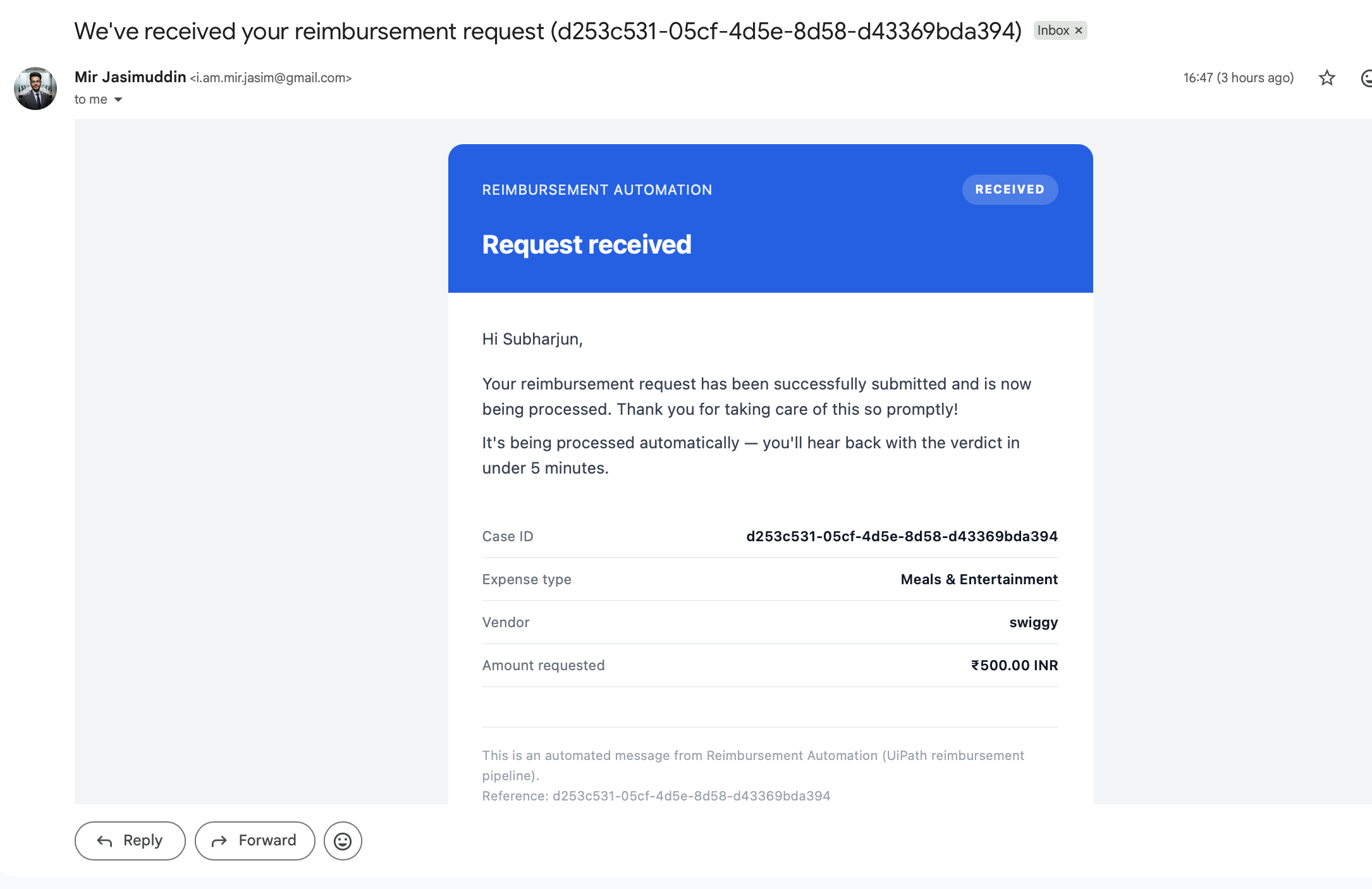
Version 1 worked — claims got processed. But feedback kept saying the same thing: the person a claim reached had no idea it had arrived until they happened to check.
So version 2 fixed it — the moment a claim reaches the concerned person, they get an automatic email. No manual follow-up, no "did you get my claim?" pings.
A small addition on paper, but it came straight from real users — and it's the difference between an automation that technically works and one that actually removes friction for the people using it.
Improvement 2: Live Status Tracker for the Submitter
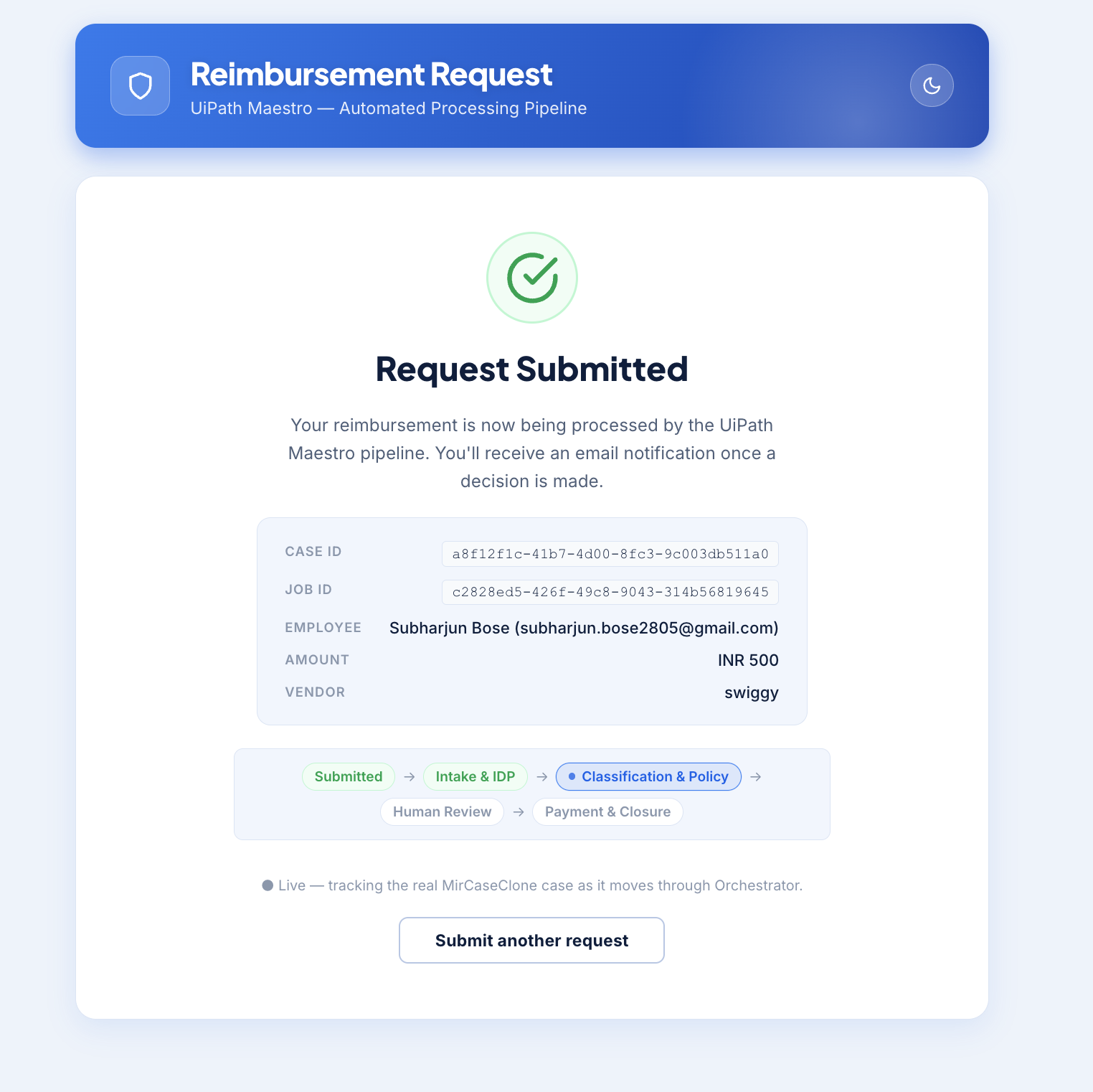
Once someone submitted a claim in version 1, it disappeared into the system. This one didn't come from a complaint — it came up in our own internal discussion. We asked ourselves a simple question: if I submitted this claim, wouldn't I want to know where it is right now?
That became the live tracker in version 2. The submitter can check, in real time, exactly where their claim stands — submitted, under review, approved, paid out.
Some of the best improvements don't come from bug reports — they come from the team honestly asking what the experience is missing.
Improvement 3: Customized Human-in-the-Loop Approval Email
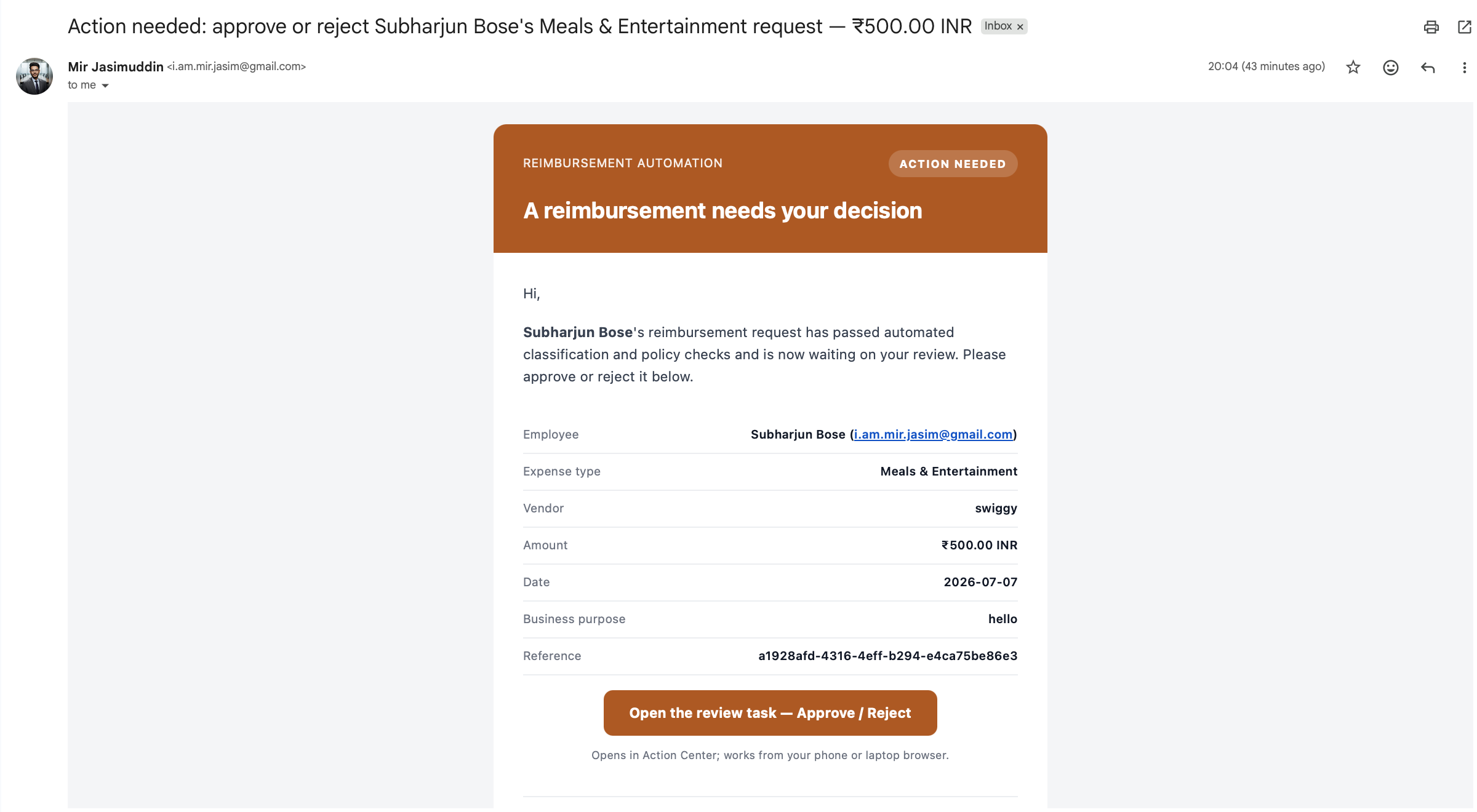
In version 1, the human review step was clunky — reviewers had to dig through the system to find what they were even supposed to approve or reject.
The push to fix this came from a mentor's feedback, which genuinely changed how we thought about the whole thing. Version 2 gives reviewers a custom email built for that exact decision — the context is already there, with a simple Approve/Reject action.
We didn't try to remove humans from the loop; some decisions need a person's judgment. We just made it effortless for that person to make the call quickly, instead of hunting for information first.
Improvement 4: Manager/Director Dashboard
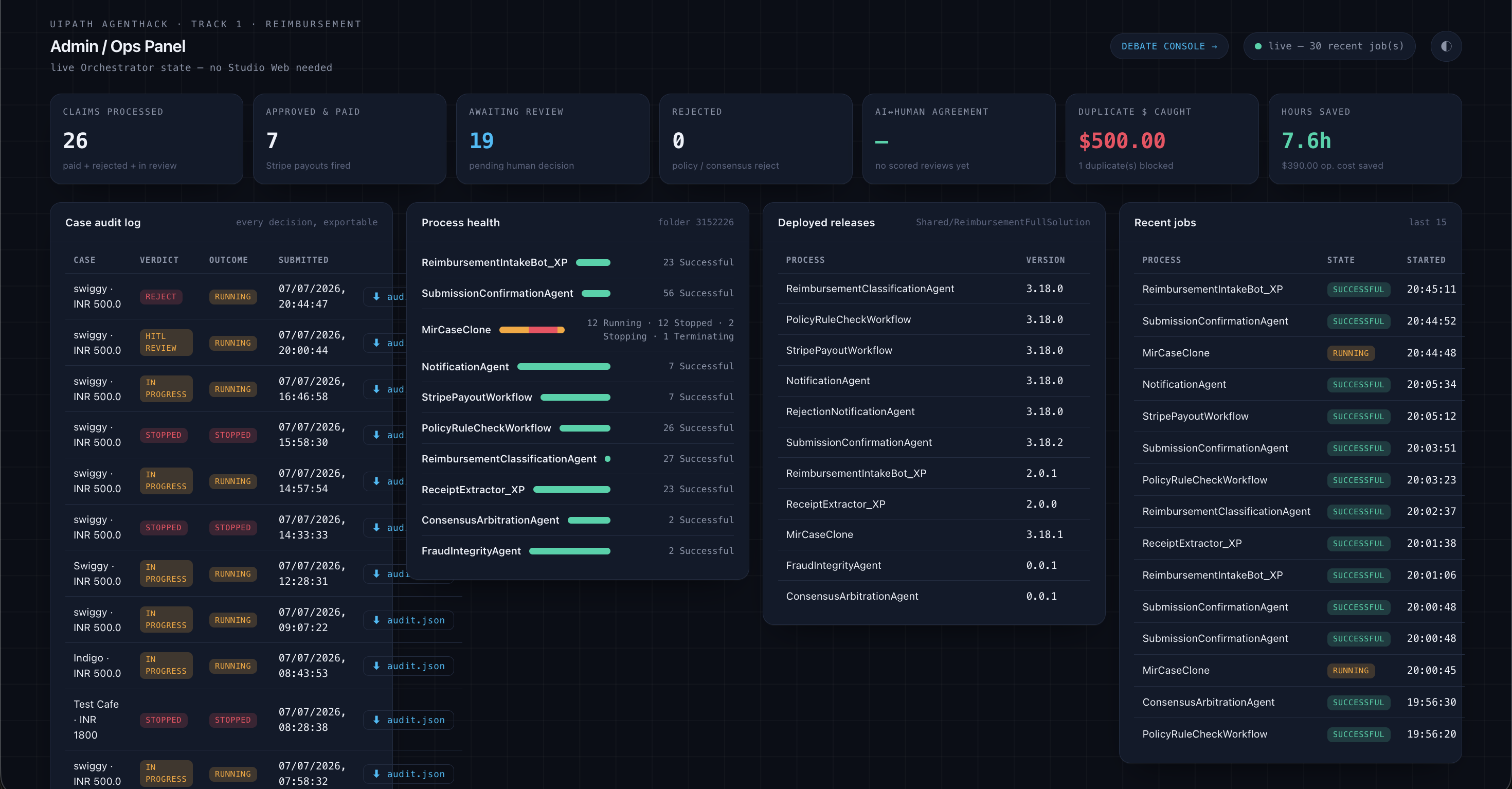
Version 1 proved the automation worked. What it couldn't do was answer the question leadership actually cares about: is this saving us anything?
A mentor's feedback really reshaped our thinking here — that a working automation means little if you can't show the value behind it. That lesson became the admin dashboard in version 2, built for managers and directors, tracking:
- Total number of claims processed
- Time saved vs. the manual process
- Estimated FTE (people-hours) saved
- Overall business ROI
It turned "we built something cool" into "here's the number behind it."
Log in or sign up for Devpost to join the conversation.