Civora AI – AI-Powered Care and Emergency Guidance
Inspiration
Civora AI was inspired by the challenges faced by people in Pakistan during flood-related emergencies and health crises. In critical situations, access to reliable healthcare information, emergency guidance, and nearby medical facilities is often limited. Many individuals struggle to find accurate safety instructions, understand potential health risks, or locate the nearest hospital when immediate assistance is required.
We envisioned a solution that could provide instant, accessible, and easy-to-understand guidance through both text and voice interactions. By leveraging Artificial Intelligence, our goal was to make emergency and healthcare information more accessible, enabling people to make informed decisions when it matters most.
What We Built
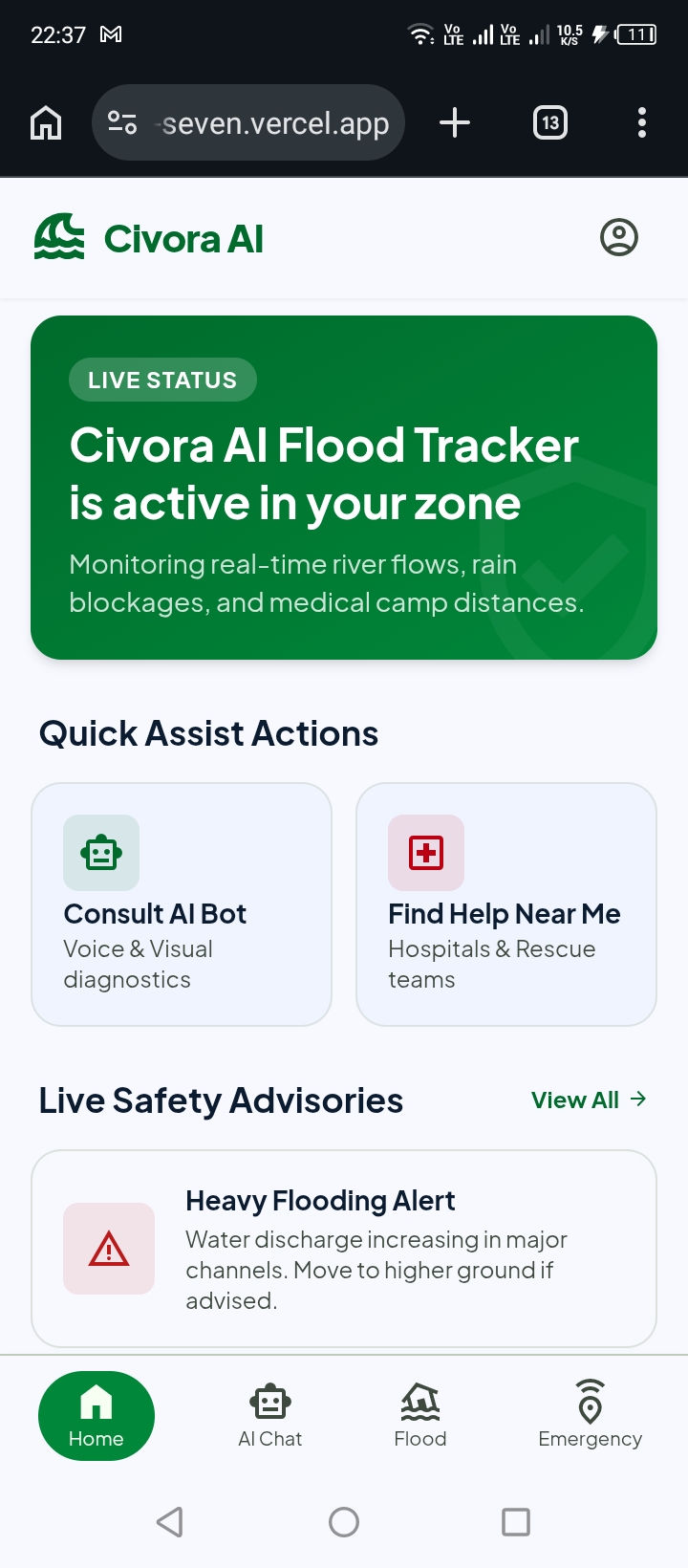
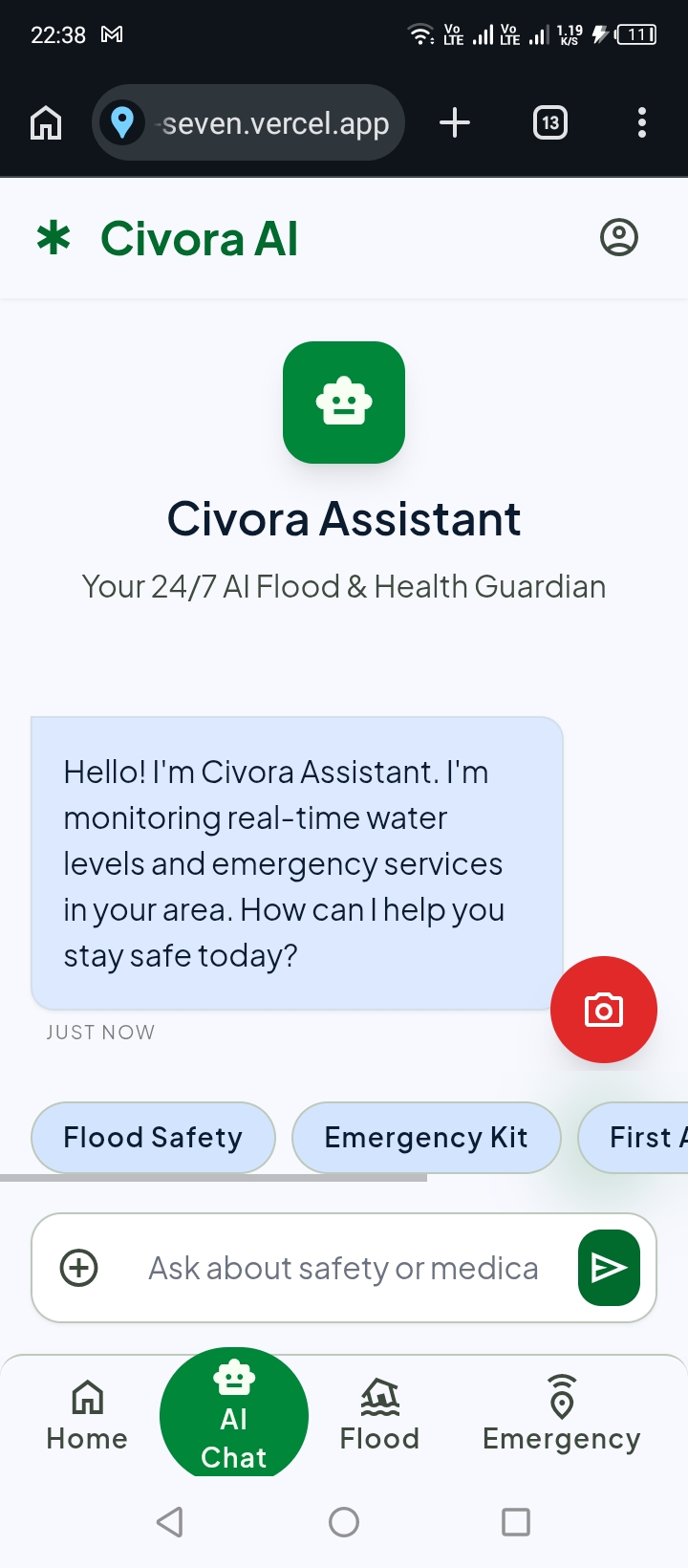
Civora AI is an AI-powered assistant designed to provide healthcare and flood emergency guidance through a simple, intuitive, and user-friendly interface.
The platform enables users to:
- Interact using both text and voice.
- Ask healthcare and emergency-related questions.
- Receive AI-powered guidance and recommendations.
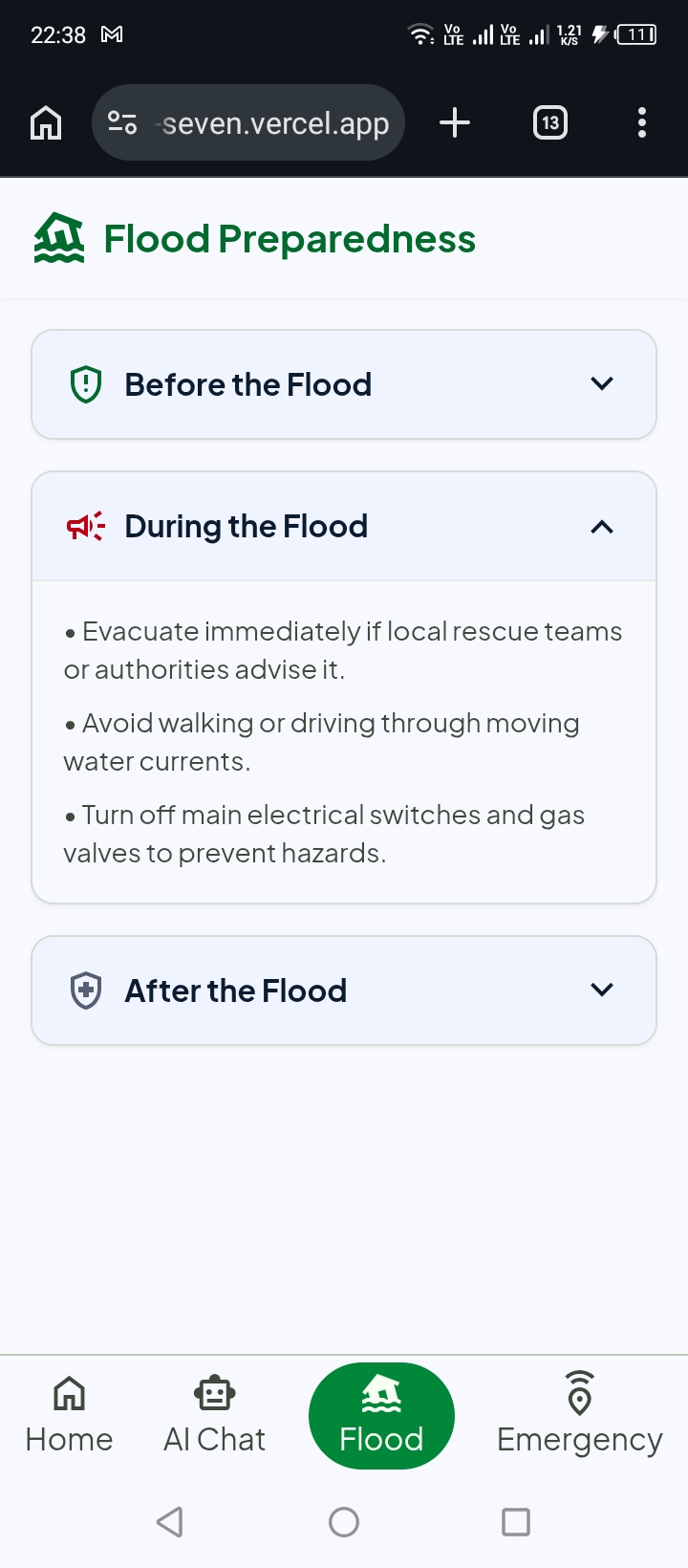
- Access flood safety and preparedness information.
- Obtain first-aid assistance during emergency situations.
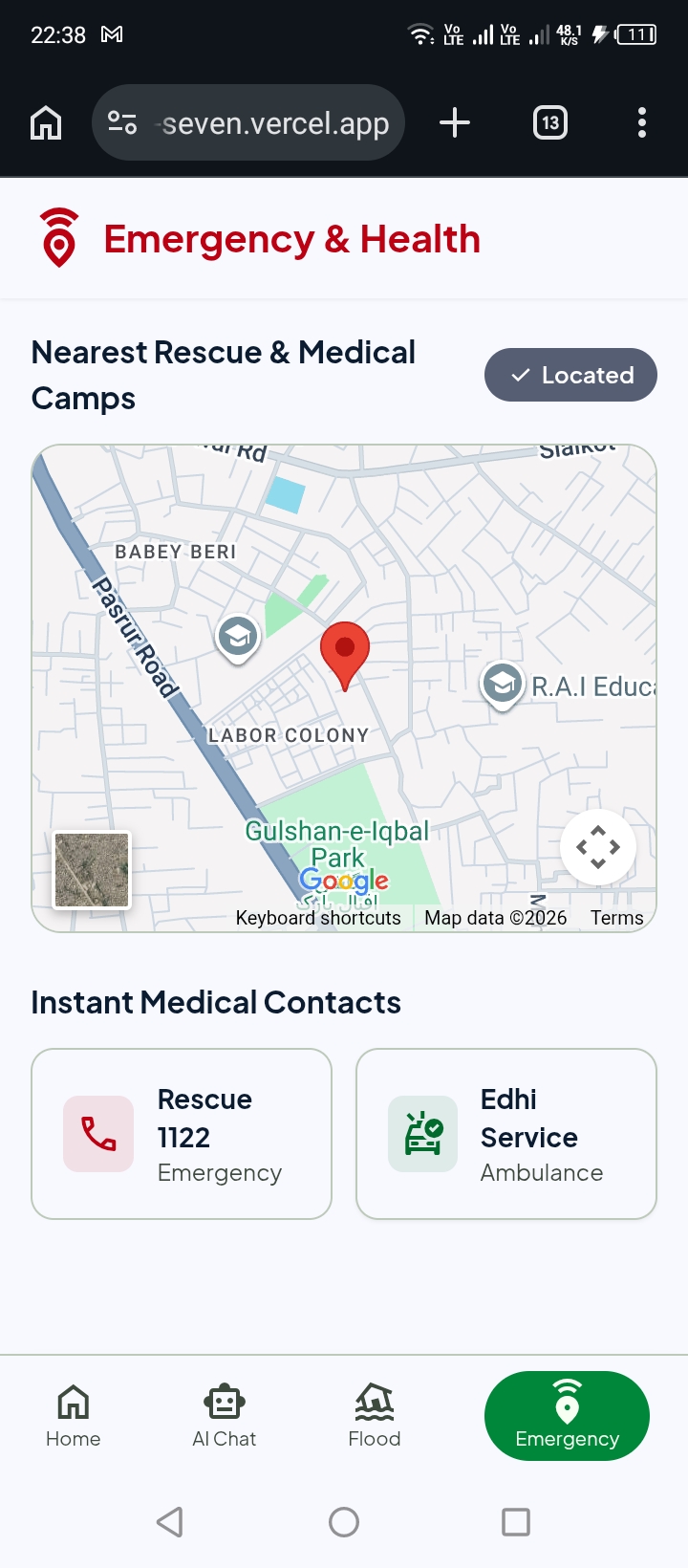
- Locate nearby hospitals through map integration.
- Access emergency support recommendations, including Rescue 1122 assistance.
Our focus was to create a solution that delivers clear, reliable, and actionable information during emergencies.
How We Built It
We developed Civora AI using modern web technologies and AI-powered services.
Frontend
- React.js
- Tailwind CSS
AI & Intelligence
- Groq API
- Large Language Model (LLM)
Voice Features
- Speech-to-Text
- Text-to-Speech
Knowledge Retrieval
- Retrieval-Augmented Generation (RAG)
The RAG system retrieves relevant information from trusted healthcare and flood-related documents before generating responses, helping improve the accuracy, relevance, and reliability of the information provided.
Maps & Location Services
- Map API Integration
- Geolocation Services
These services allow users to discover nearby hospitals and healthcare facilities based on their current location.
Challenges We Faced
One of the primary challenges was sourcing reliable and trustworthy healthcare and flood-related information for the RAG system. Ensuring the quality and accuracy of retrieved information required careful document selection and organization.
Another challenge was integrating voice interaction while maintaining a seamless and intuitive user experience. Since emergency situations can be stressful, designing an interface that remains simple, accessible, and easy to navigate was a key priority.
Additionally, integrating location-based hospital recommendations and combining AI, voice processing, document retrieval, and mapping services into a unified platform required thoughtful system design and coordination.
What We Learned
Through the development of Civora AI, we gained valuable experience in:
- Artificial Intelligence Applications
- Large Language Models (LLMs)
- Groq API Integration
- Retrieval-Augmented Generation (RAG)
- Voice-Based User Experiences
- Geolocation and Mapping Services
- Emergency Response Technologies
- User-Centered UI/UX Design
- Building AI Solutions for Real-World Challenges
Most importantly, we learned how technology can be leveraged to create meaningful social impact by providing accessible guidance and support during critical situations.
What's Next for Civora AI?
Our long-term vision is to transform Civora AI into a comprehensive emergency response and healthcare assistance platform for communities across Pakistan.
Future enhancements may include:
Real-time flood alerts and disaster notifications. Automated emergency assistance requests using the user's live location. Location-based emergency center and rescue service notifications. Integration with Rescue 1122 and other emergency response organizations. Smart hospital recommendations and appointment scheduling support. Emergency alerts to nearby healthcare facilities during critical situations. Shelter and evacuation center recommendations during floods and disasters. Advanced voice-assisted emergency support for hands-free interaction. Offline emergency guidance for low-connectivity areas. Multilingual support, including Urdu and regional languages. Personalized health and safety recommendations based on user situations. Nearby pharmacy discovery and medicine availability assistance. AI-powered first-aid guidance with recommendations based on verified medical resources. Location-aware healthcare support to help users find hospitals, pharmacies, and emergency facilities faster. Mobile application deployment for Android and iOS devices. Enhanced AI risk assessment for more accurate emergency response recommendations.
Our ultimate goal is to create an intelligent AI ecosystem that not only provides guidance but also helps connect people with emergency services, healthcare facilities, and life-saving resources when every second matters.
Civora AI – AI-Powered Care and Emergency Guidance.
Built With
- ai
- api
- apis
- backend
- bge
- chromadb
- code
- coqui
- css
- deployment
- easyocr
- embeddings
- faiss
- fastapi
- frontend
- gemma
- github
- groq
- gtts
- langchain
- leaflet.js
- learning
- llama
- machine
- maps
- mistral
- mobilenet
- nominatim
- openstreetmap
- overpass
- postgresql
- python
- react.js
- render
- tailwind
- tomtom
- tools
- vercel
- vs
- whisper
- yolov8


Log in or sign up for Devpost to join the conversation.