-
-
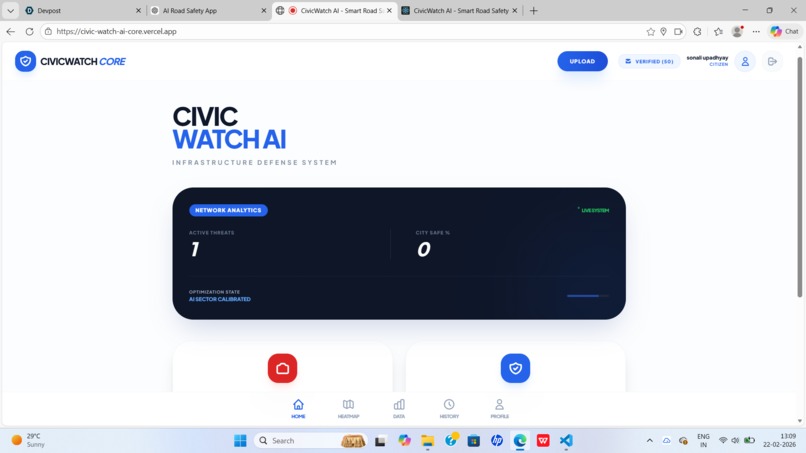
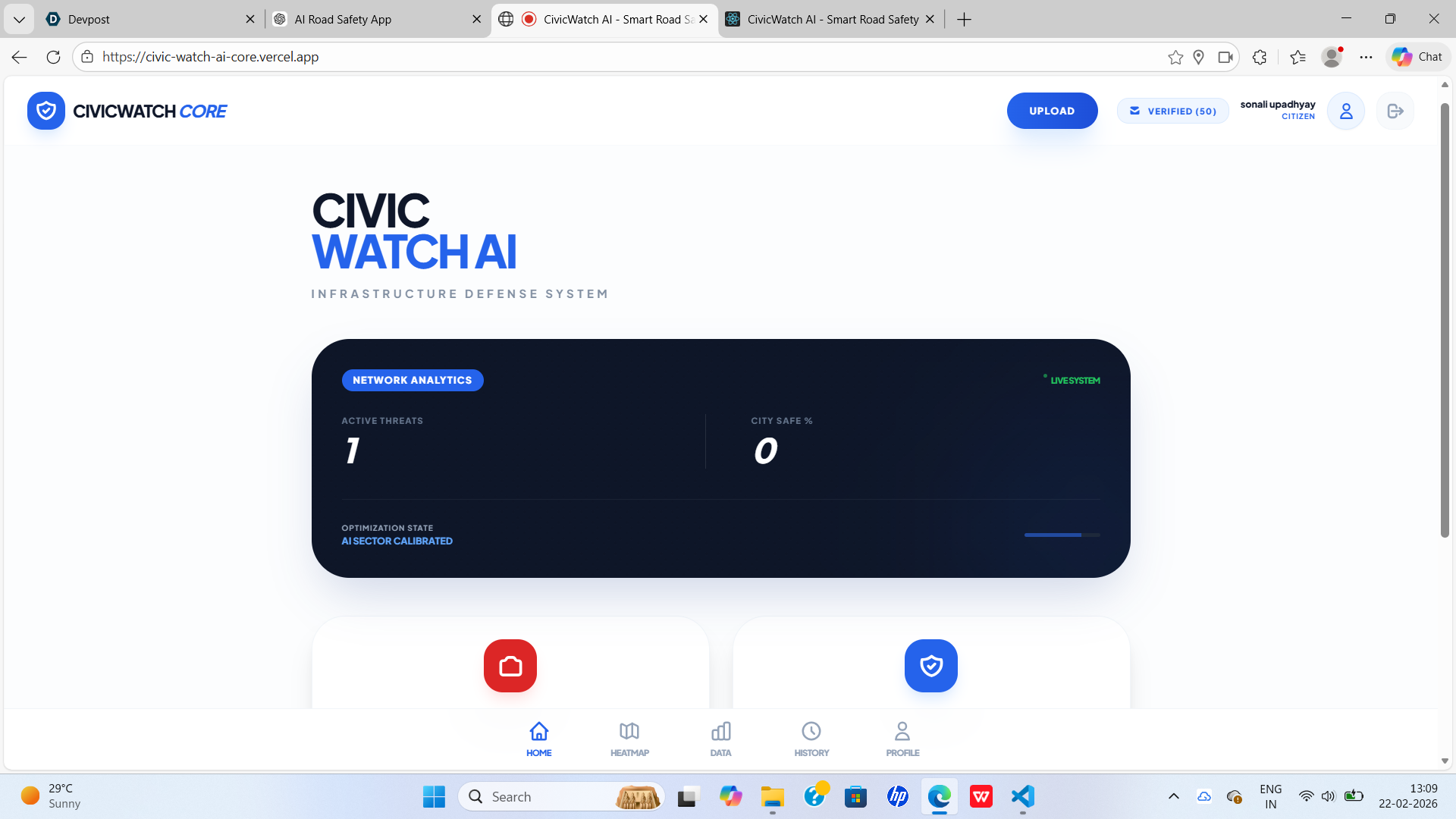
Homepage
-
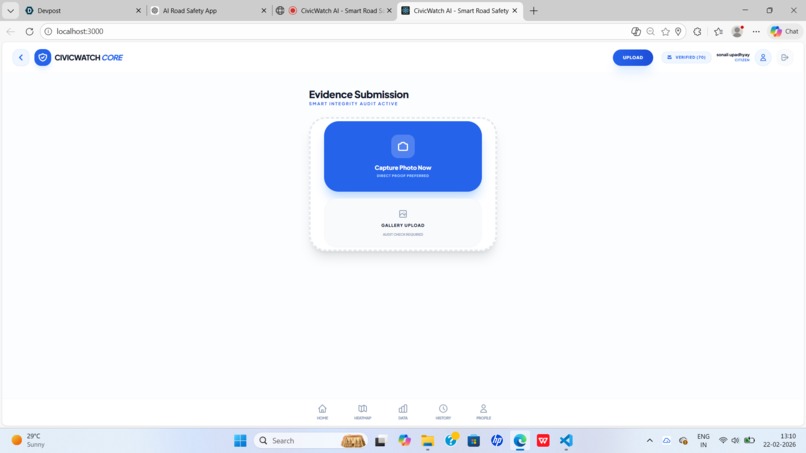
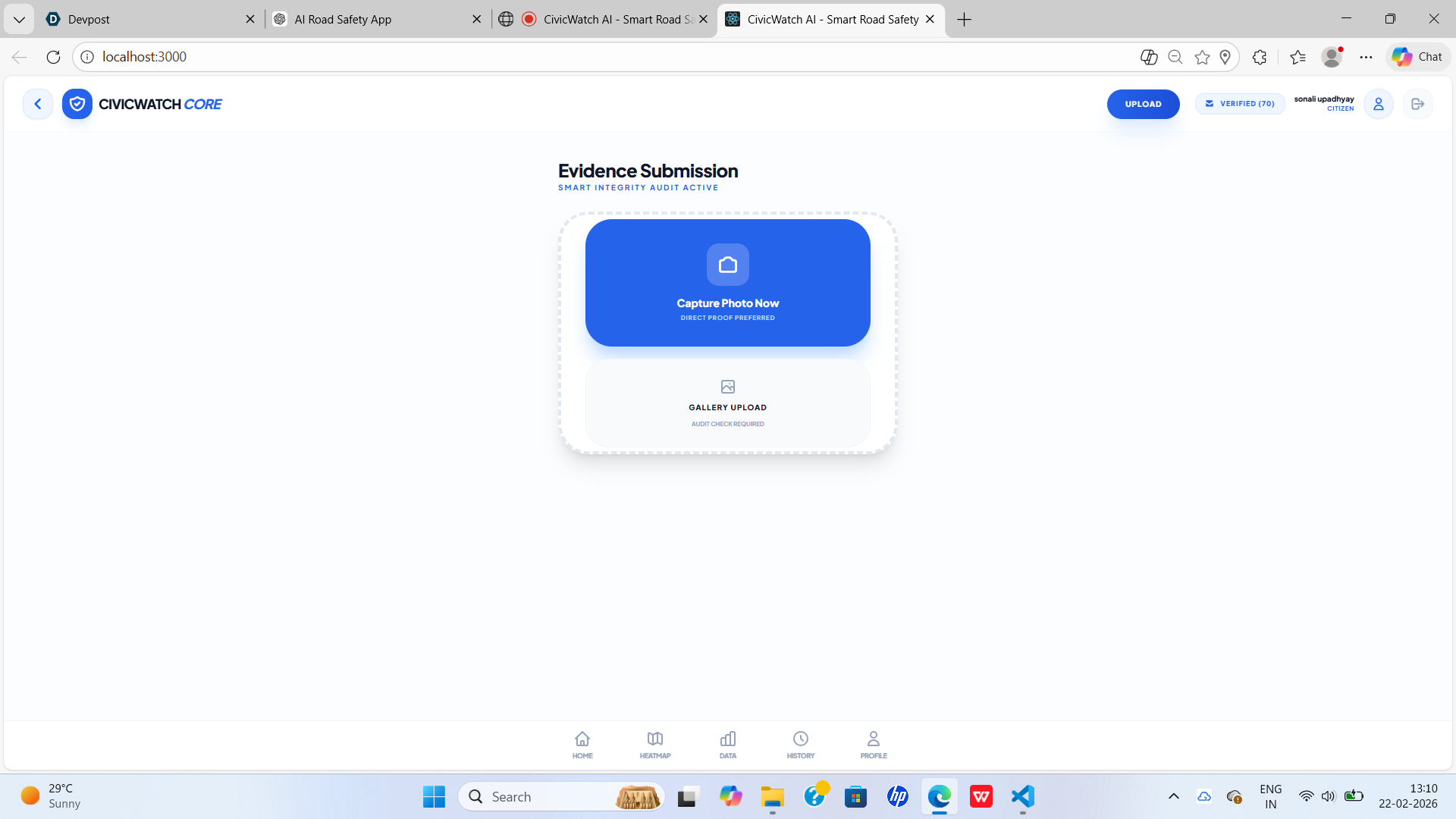
Upload Feature
-
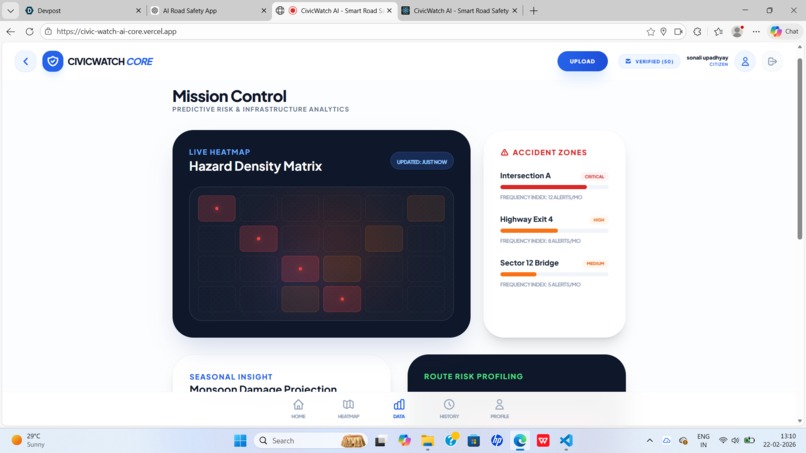
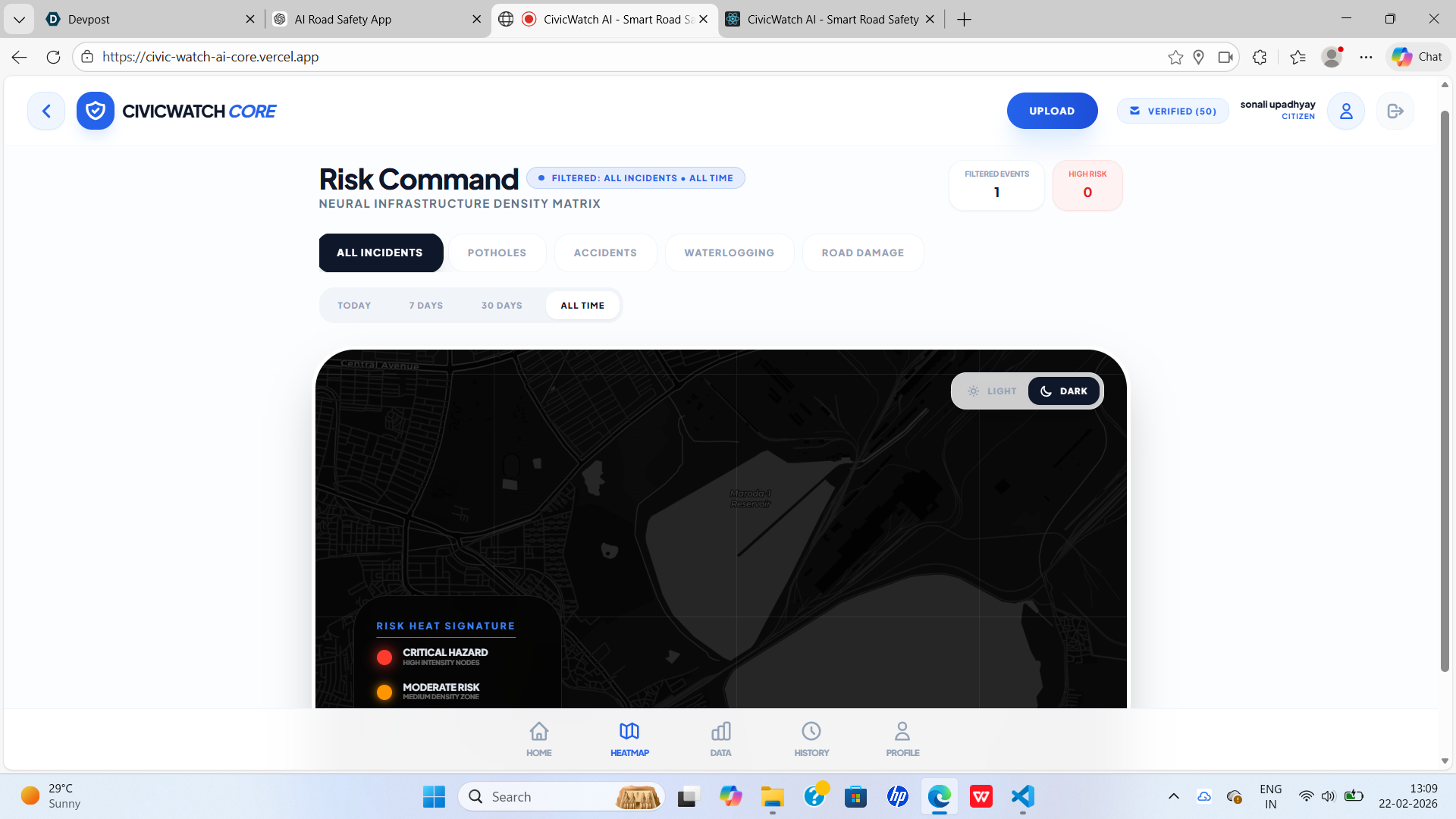
Heatmap
-
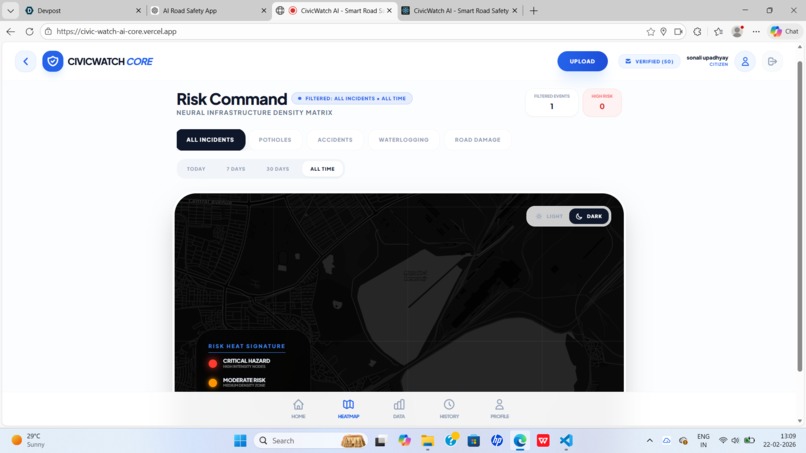
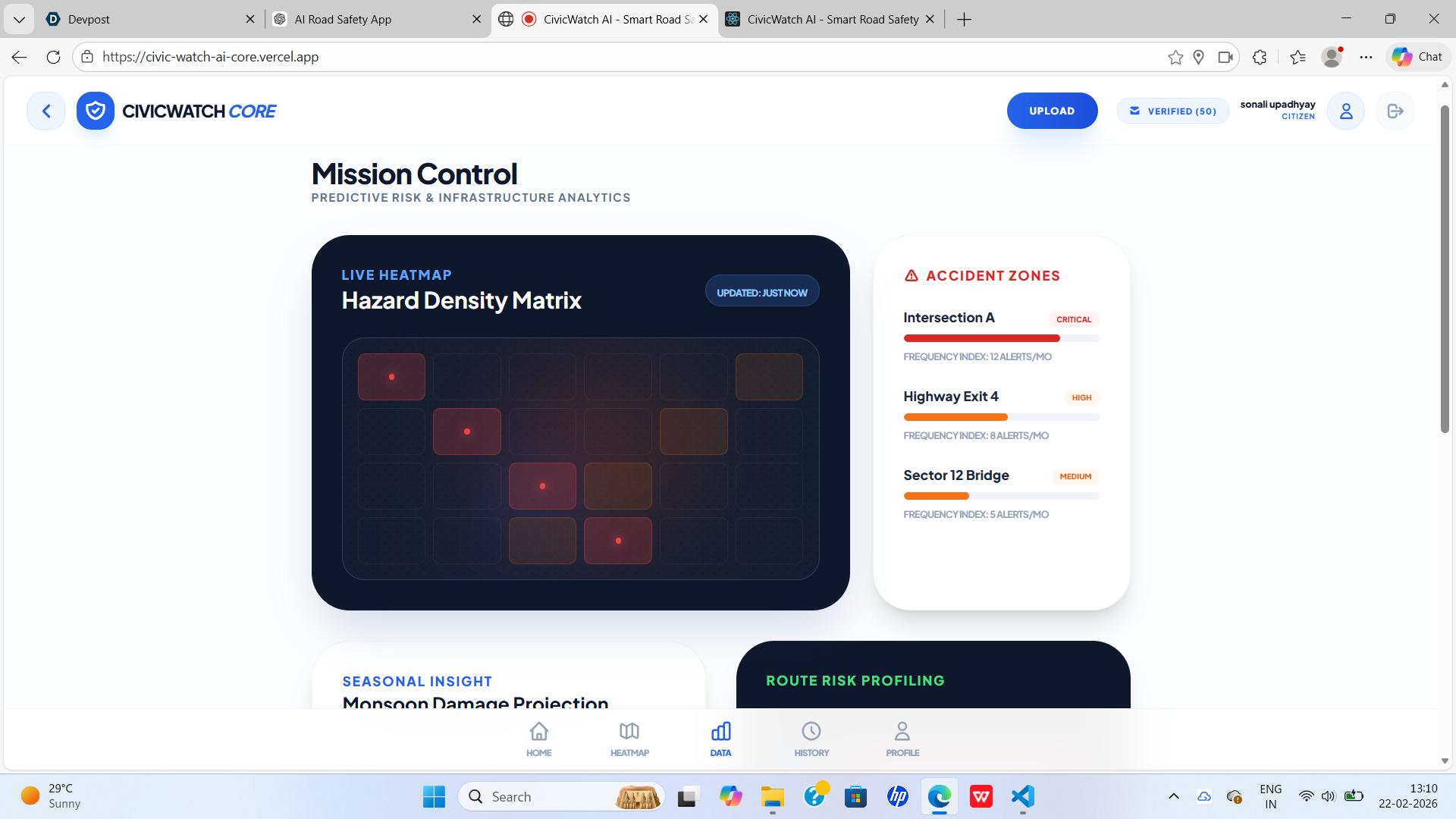
Data / Mission Control
-
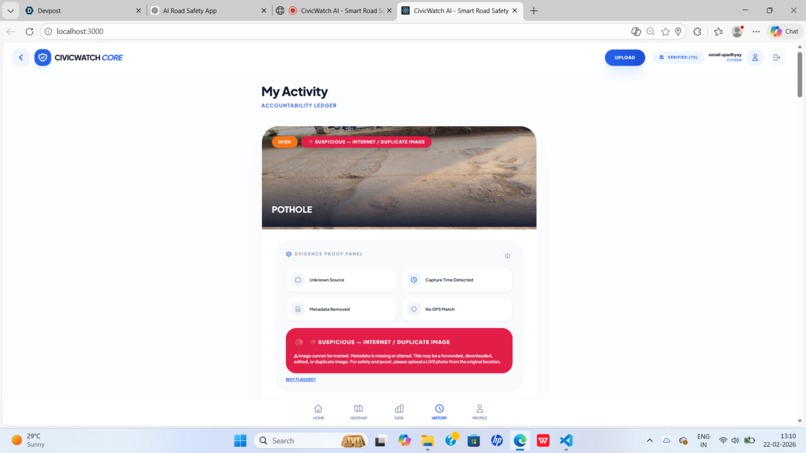
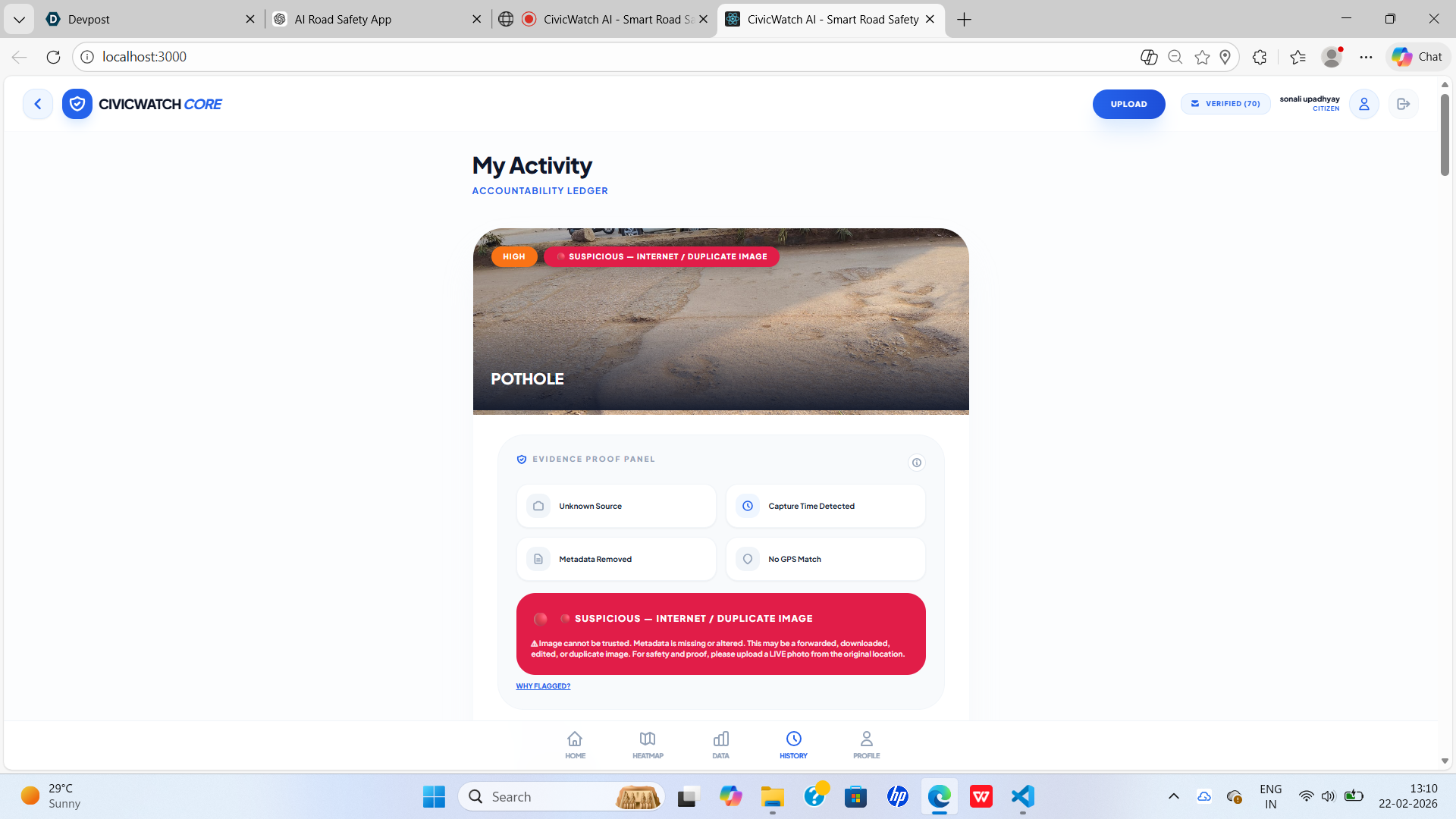
AI Validation/Activity
Inspiration
Road safety remains a major public safety concern, especially in developing countries where potholes, damaged roads, and poor infrastructure often go unreported. Thousands of people lose their lives every year due to unsafe road conditions and delayed maintenance.
Many hazards remain unnoticed because citizens do not have a simple and reliable way to report issues, and authorities lack real-time data to prioritize repairs.
This inspired us to build CivicWatch AI — a smart platform that empowers citizens to report hazards instantly while using AI to analyze severity and help authorities take faster action.
Our vision is to create safer roads through smarter reporting and data-driven decision making.
What it does
CivicWatch AI is an AI-powered road safety reporting platform that allows citizens to capture and report road hazards in real time.
The platform:
• Detects road hazards using AI image analysis • Assigns severity levels and confidence scores • Provides safety insights and risk explanations • Tracks hazard reports with live location • Generates authority-ready reports automatically • Enables faster response through data-driven prioritization
This helps bridge the gap between citizens and authorities to improve road safety outcomes.
How we built it
We built CivicWatch AI using a modern full-stack architecture.
The frontend is developed using React and TypeScript to create a fast and responsive user interface.
Google Gemini Flash Vision model is integrated for AI image analysis, allowing the system to detect hazards, estimate severity, and generate insights.
Firebase services are used for backend functionality including authentication, database storage, and real-time syncing.
Geolocation APIs are used to capture live coordinates of hazard reports, and the application is deployed using cloud hosting for scalability.
Challenges we ran into
One of the biggest challenges was integrating real-time AI image analysis while maintaining fast performance.
Handling image validation and ensuring reliable responses from the AI model required multiple iterations.
Another challenge was designing a simple user experience while managing complex backend logic like severity scoring and authenticity checks.
We also worked on optimizing performance to ensure smooth reporting even with limited network conditions.
Accomplishments that we're proud of
We successfully built a working AI-powered reporting platform within a short development timeline.
The system can analyze images, assign severity levels, and generate actionable insights in real time.
We created a clean and intuitive interface that makes reporting simple for users while providing meaningful data for authorities.
We are proud of building a solution that has real-world impact potential in improving road safety.
What we learned
Through this project, we learned how to integrate AI models into real-world applications and handle image processing workflows.
We gained experience in designing scalable systems, managing API integrations, and building user-centric interfaces.
Most importantly, we learned how technology can be used to solve real societal problems and create meaningful impact.

Log in or sign up for Devpost to join the conversation.