-
-
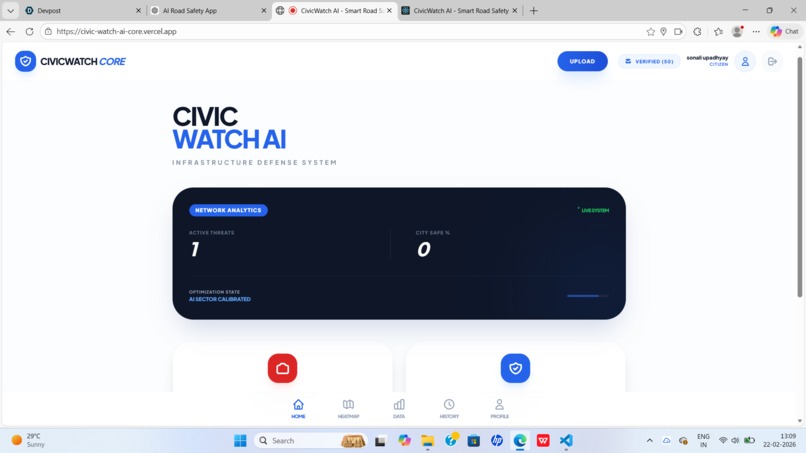
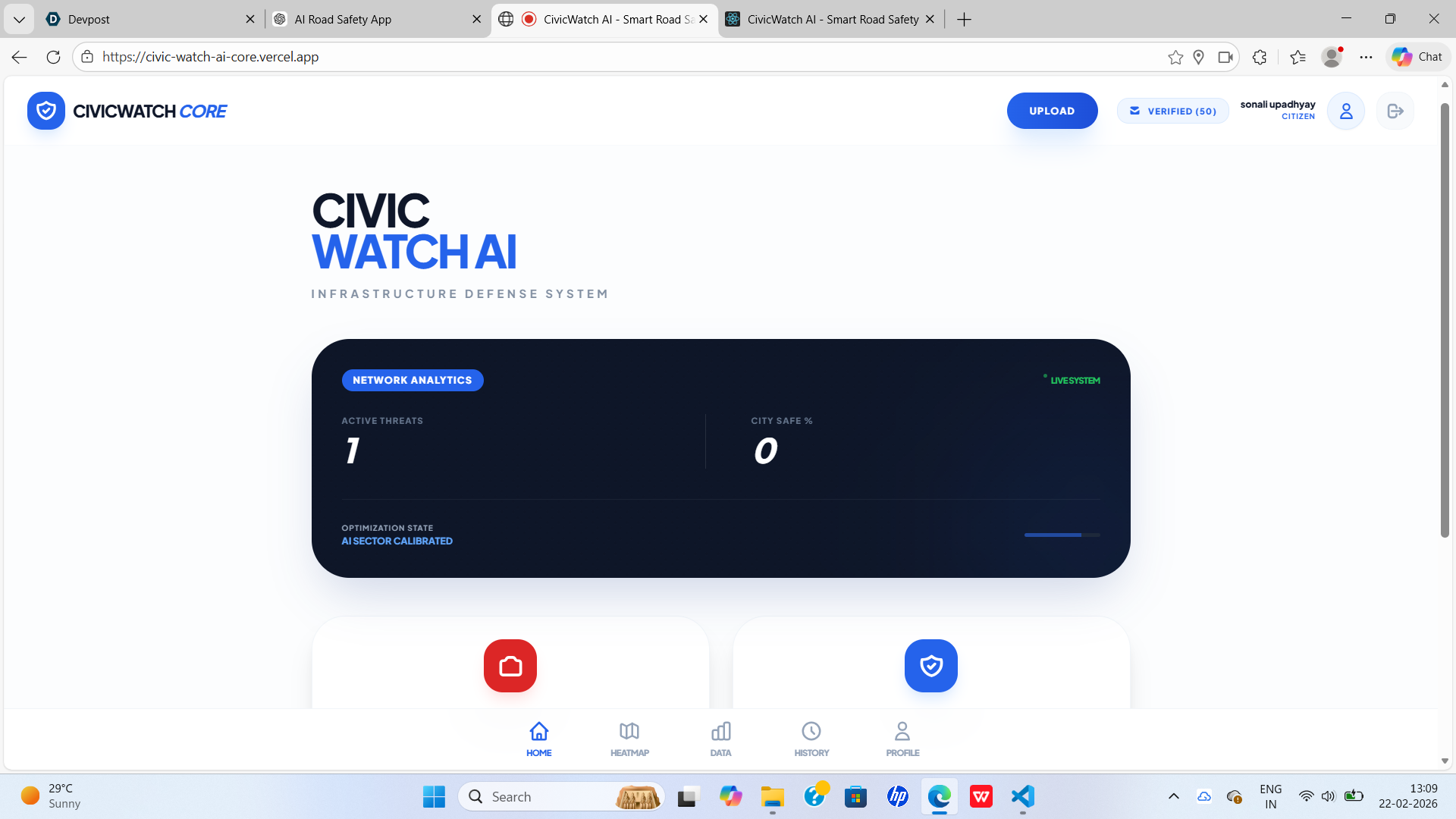
Homepage
-
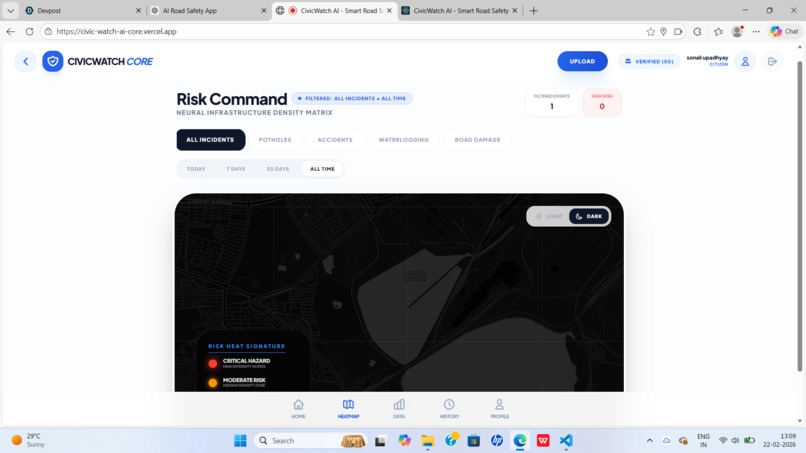
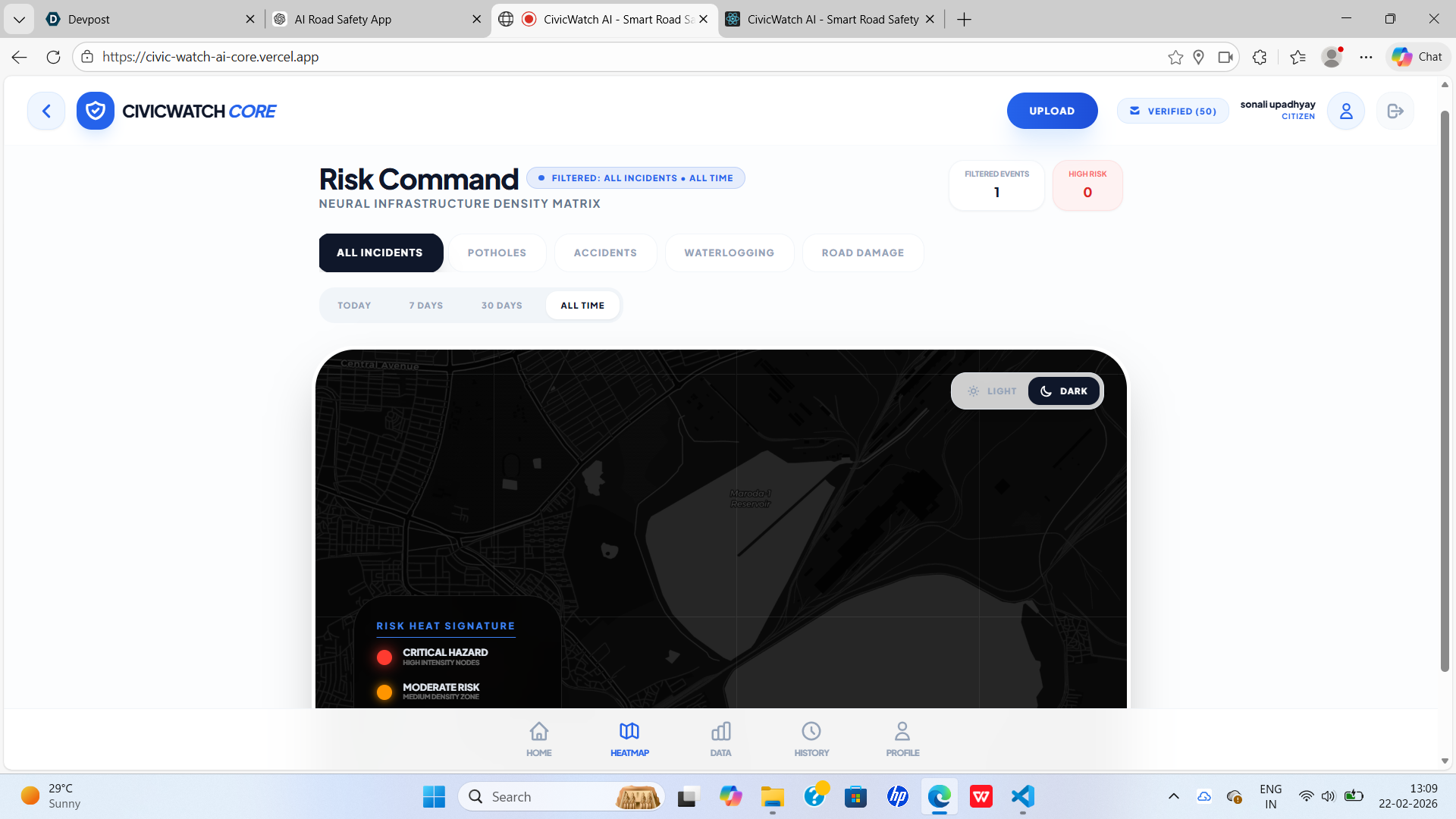
HeatMap
-
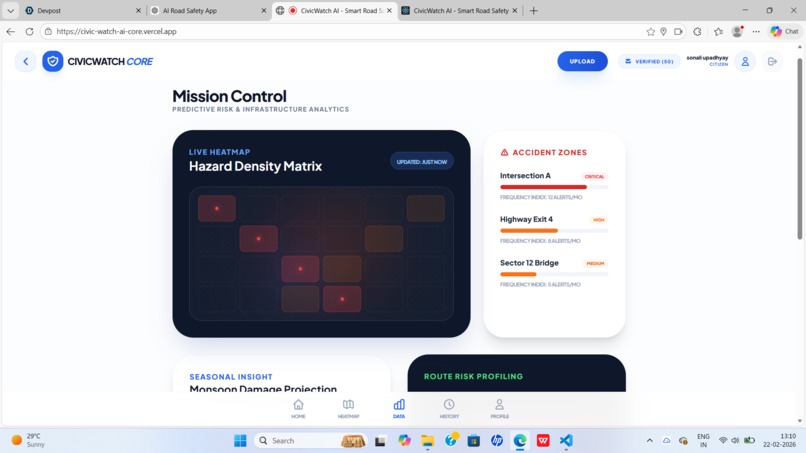
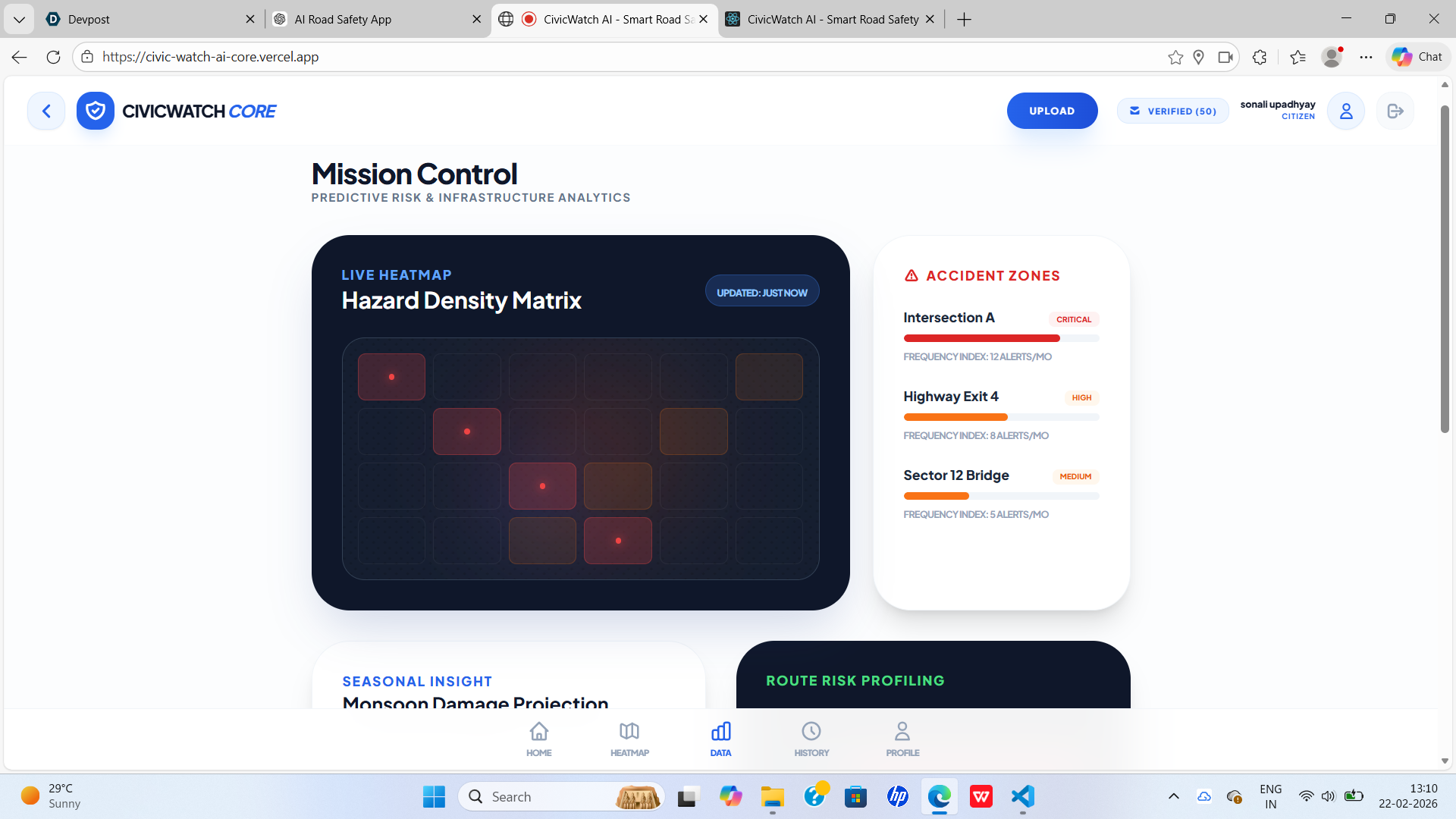
Mission control / data insights
-
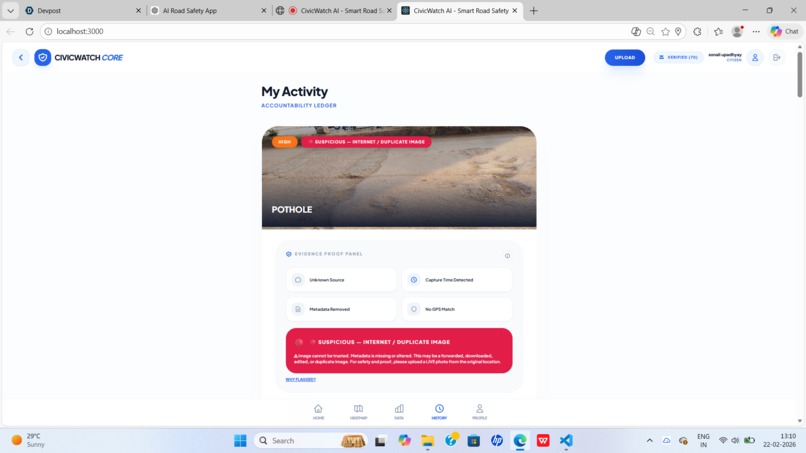
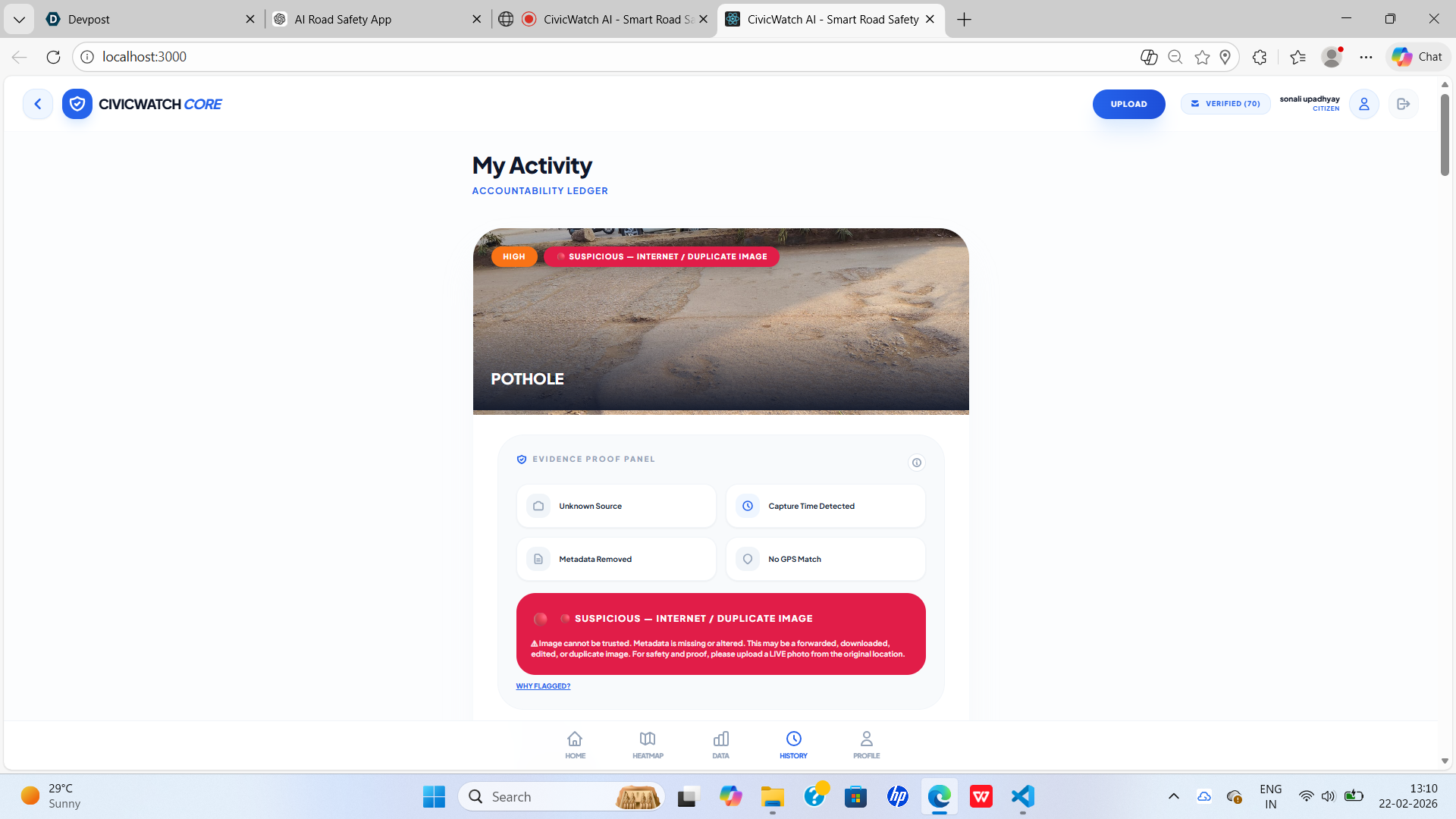
Activity
-
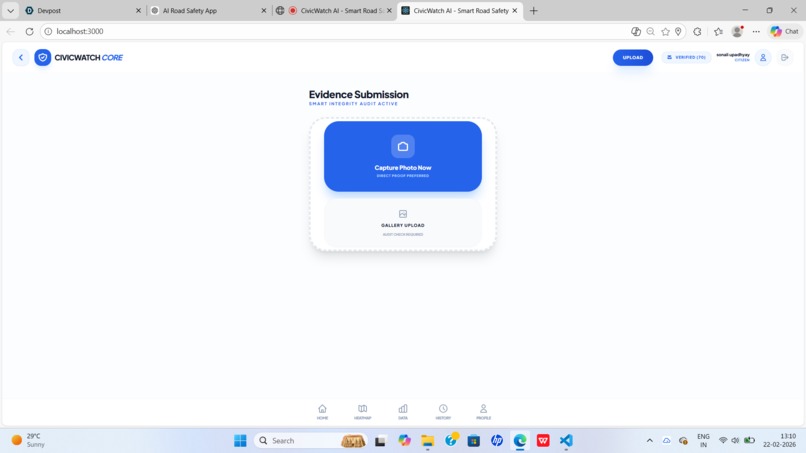
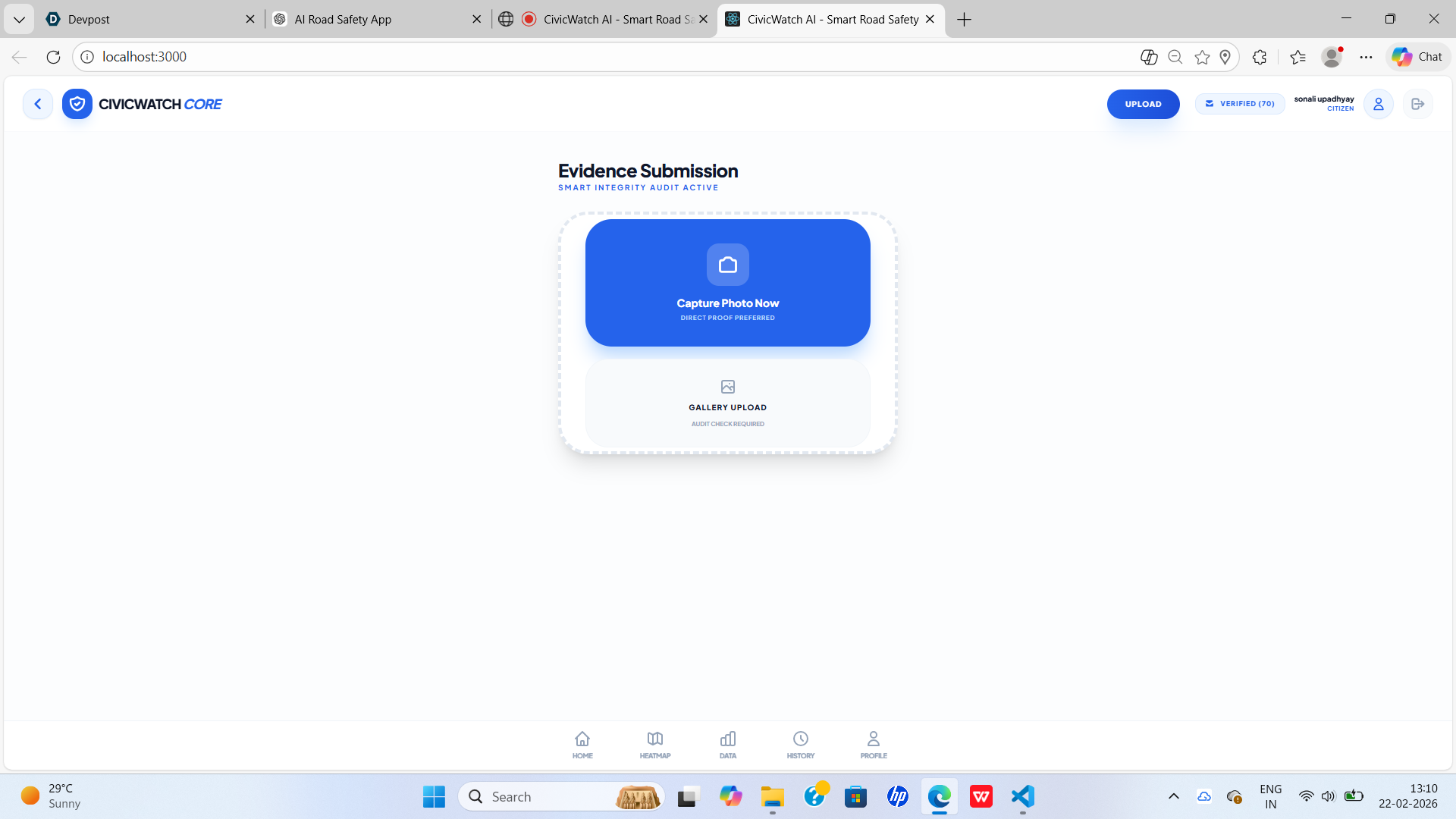
Upload/report screen
Inspiration
Road safety remains a critical issue in many cities where potholes, damaged roads, broken streetlights, and civic infrastructure problems often go unreported or unresolved for long periods.
We were inspired by the idea of empowering citizens with a simple tool to report hazards instantly while helping authorities prioritize repairs using AI-based severity analysis.
Our goal was to bridge the gap between citizens and municipal authorities through a smart, transparent, and real-time reporting platform.
What it does
CivicWatch AI is an AI-powered road safety reporting platform that allows citizens to capture or upload images of road hazards and civic issues.
The system analyzes the image using AI to:
• Detect whether the issue is real • Categorize the type of hazard • Assign severity levels • Estimate safety impact • Generate insights • Prepare authority-ready reports
The platform also maintains a history of reports and enables better decision-making for city authorities.
How we built it
We built the application using a modern full-stack architecture:
• Frontend built with React + TypeScript • Styled using Tailwind CSS • AI image analysis powered by Google Gemini Flash Vision model • Map visualization using Leaflet • Backend logic integrated with cloud APIs • Deployed on Vercel
The system processes images securely and generates structured AI responses for hazard evaluation.
Challenges we ran into
One of the main challenges was handling image authenticity checks and ensuring accurate AI responses.
We also faced challenges integrating the AI model with real-time UI updates and parsing structured JSON responses from the AI output.
Optimizing performance while keeping the UI smooth and responsive was another key challenge.
Accomplishments that we're proud of
We successfully built a working AI system that can analyze real-world road hazards and provide meaningful insights.
The platform demonstrates how AI can be used for public safety and smart city infrastructure improvement.
We are proud of creating a clean UI, real-time reporting flow, and an end-to-end functional prototype.
What we learned
Through this project, we learned:
• How to integrate AI vision models into web applications • Handling structured AI outputs • Building scalable UI workflows • Importance of real-time civic reporting systems • Deployment and production considerations
What's next for CivicWatch AI
Future improvements include:
• Real-time authority dashboard • Automatic ticket generation for municipalities • Mobile app version • Predictive analytics for accident-prone zones • Integration with government smart city systems • Multi-language support
Our long-term vision is to transform CivicWatch AI into a complete smart infrastructure monitoring platform

Log in or sign up for Devpost to join the conversation.