-
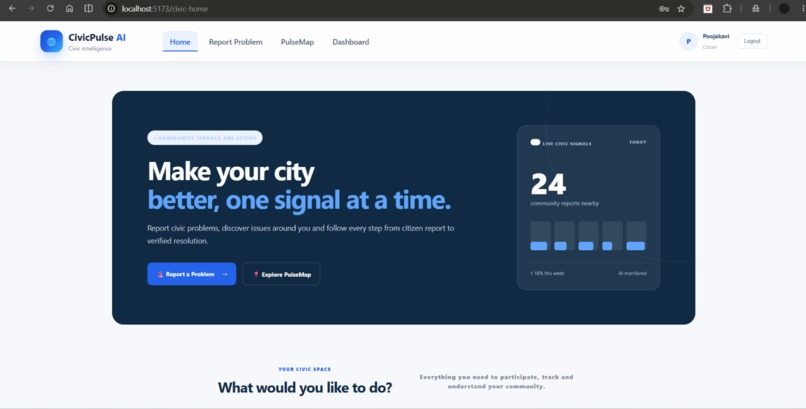
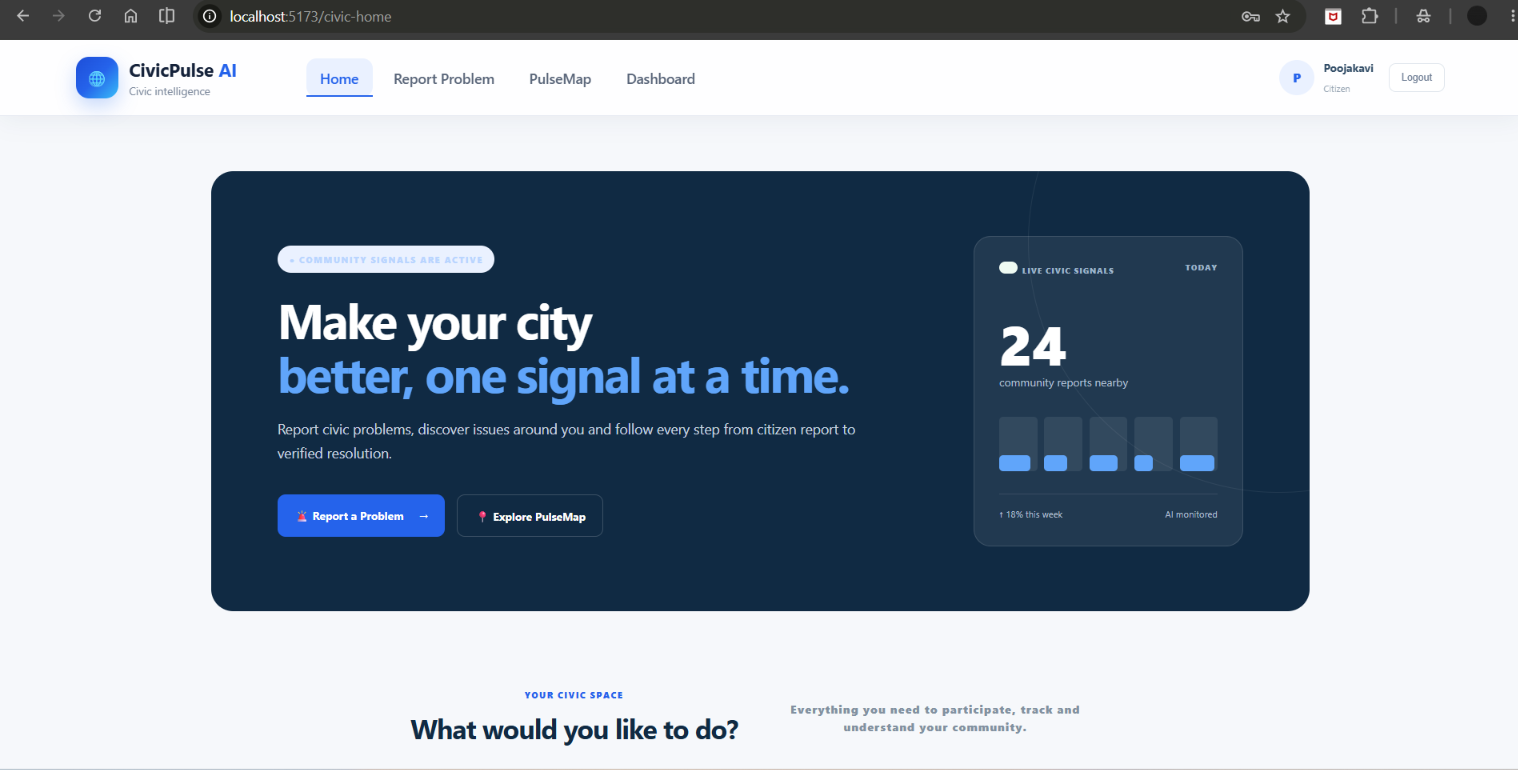
Home page of the CivicPulse AI
-
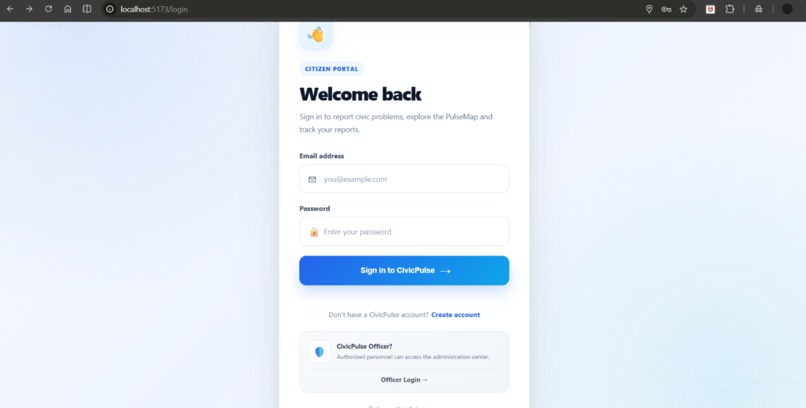
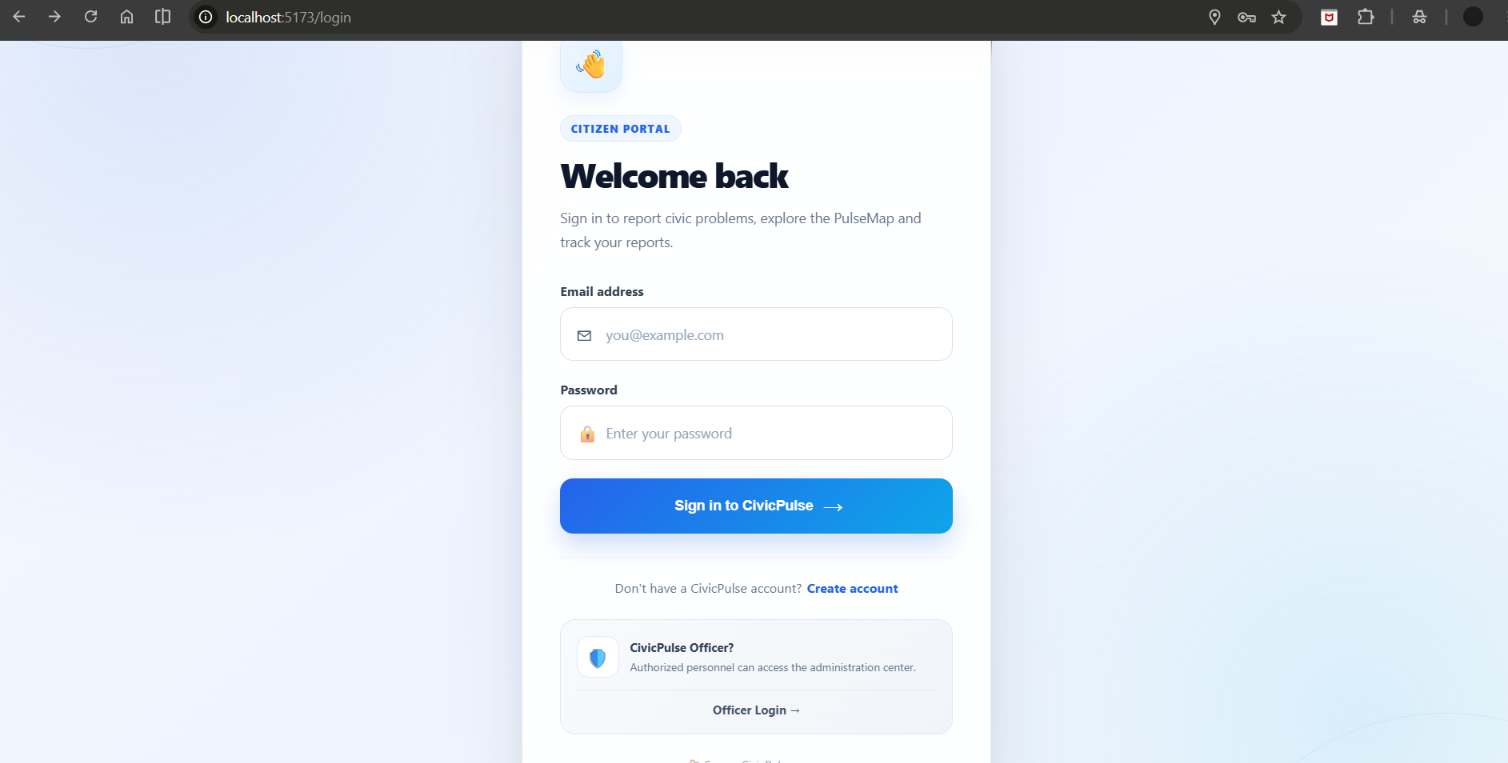
Login page of the citizen
-
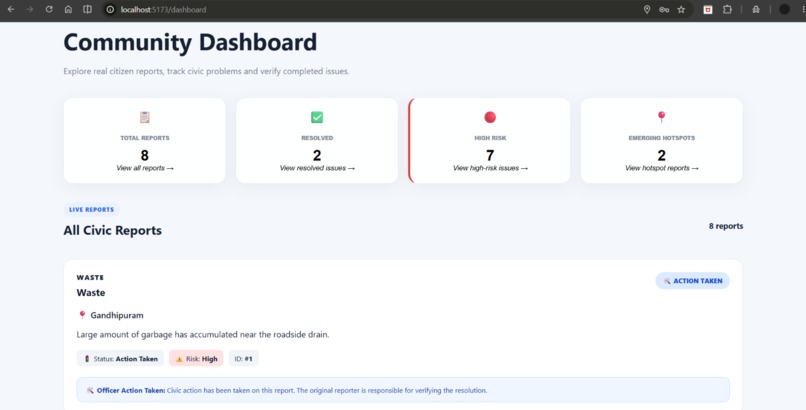
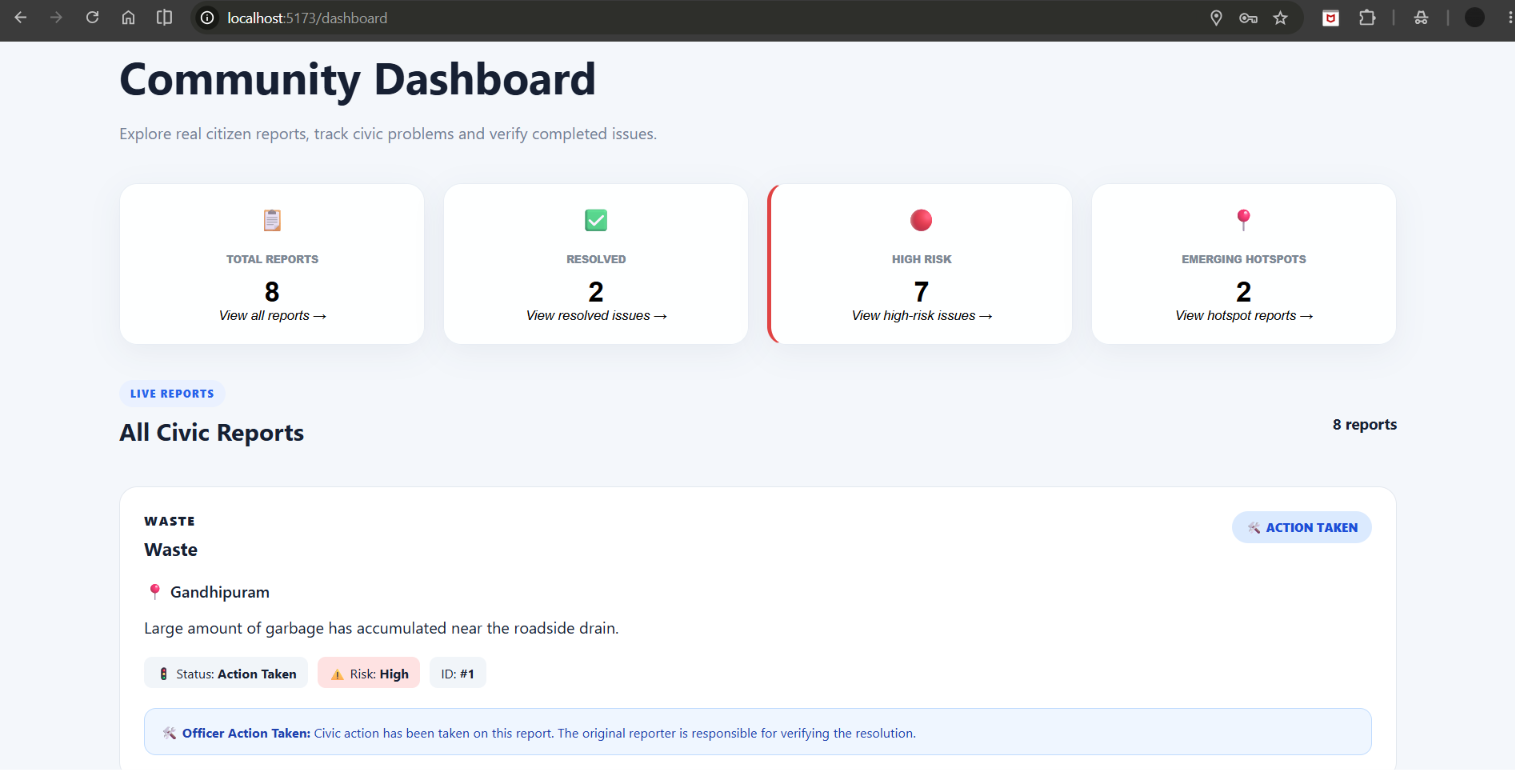
citizen dashboard , which displays the problems reported ,using map the citizen can report problem exactly .
-
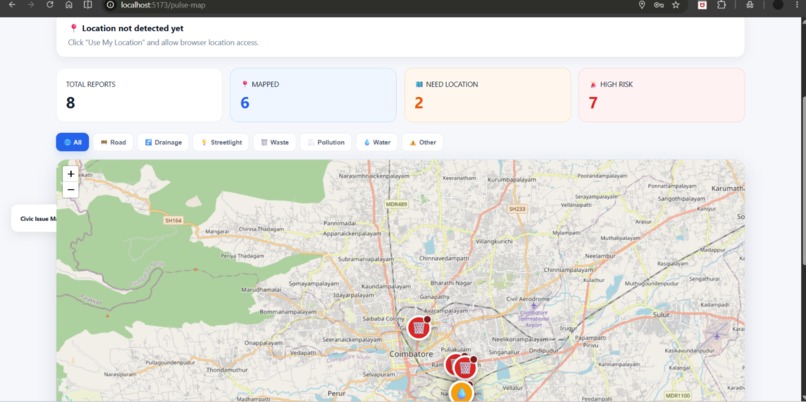
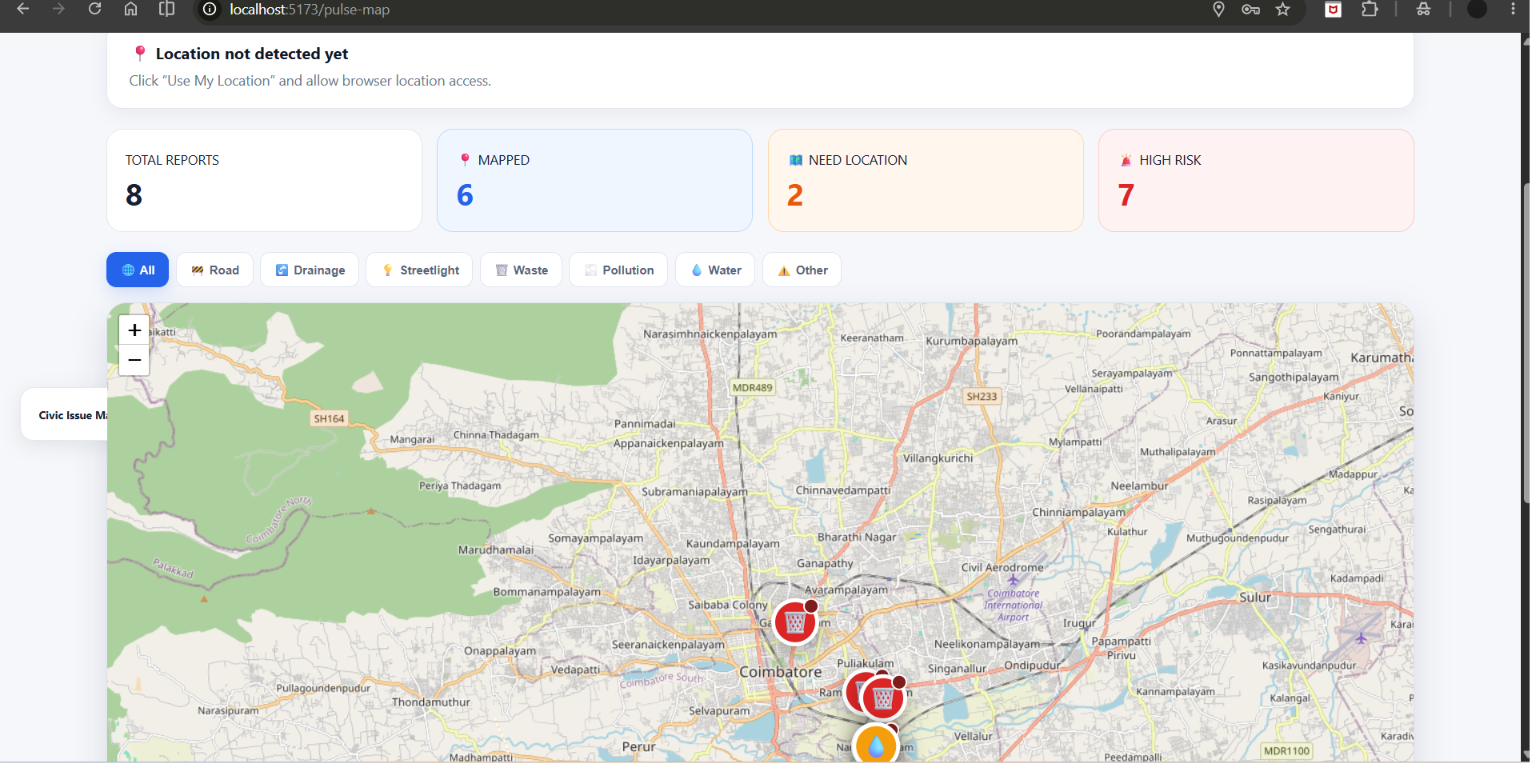
Map shows exactly the problem reported by the other citizens around our location .
-
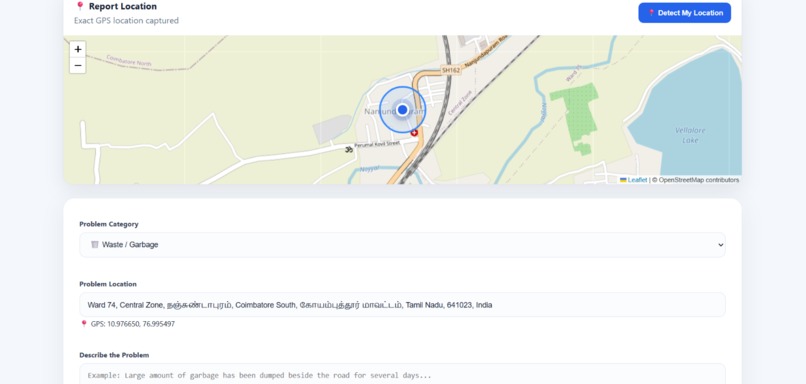
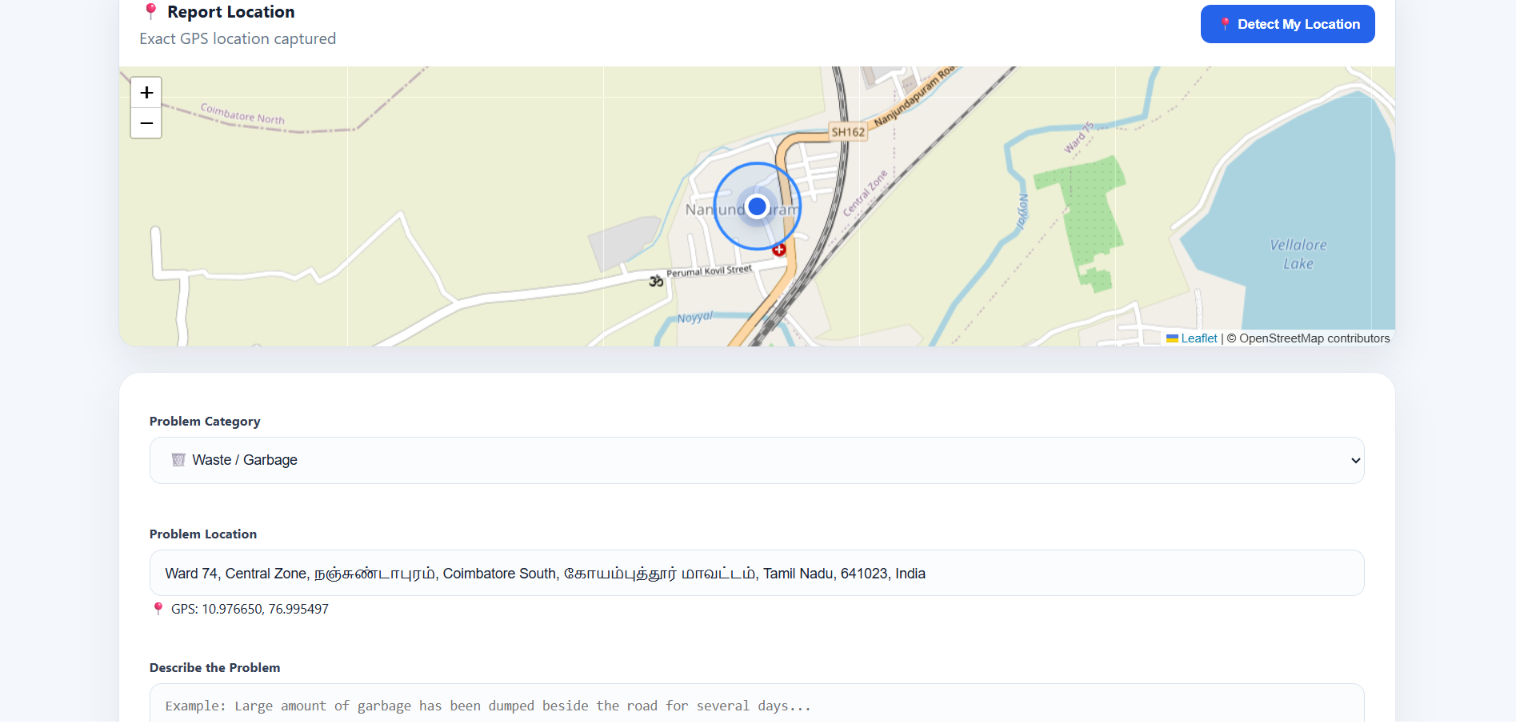
Problem in our location can be reported by enabling location so it detects our location and mark our problem report there.
-
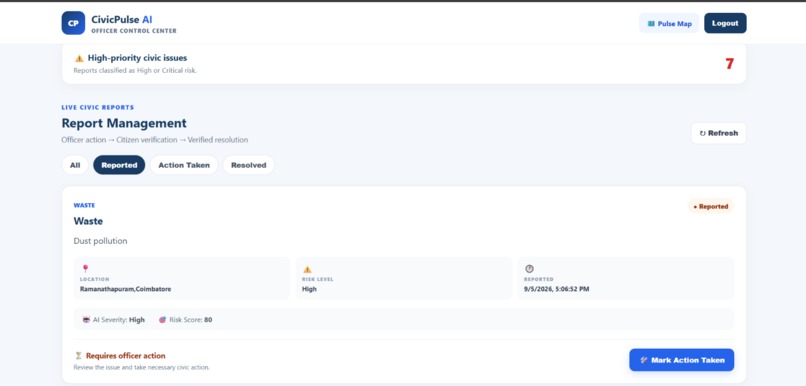
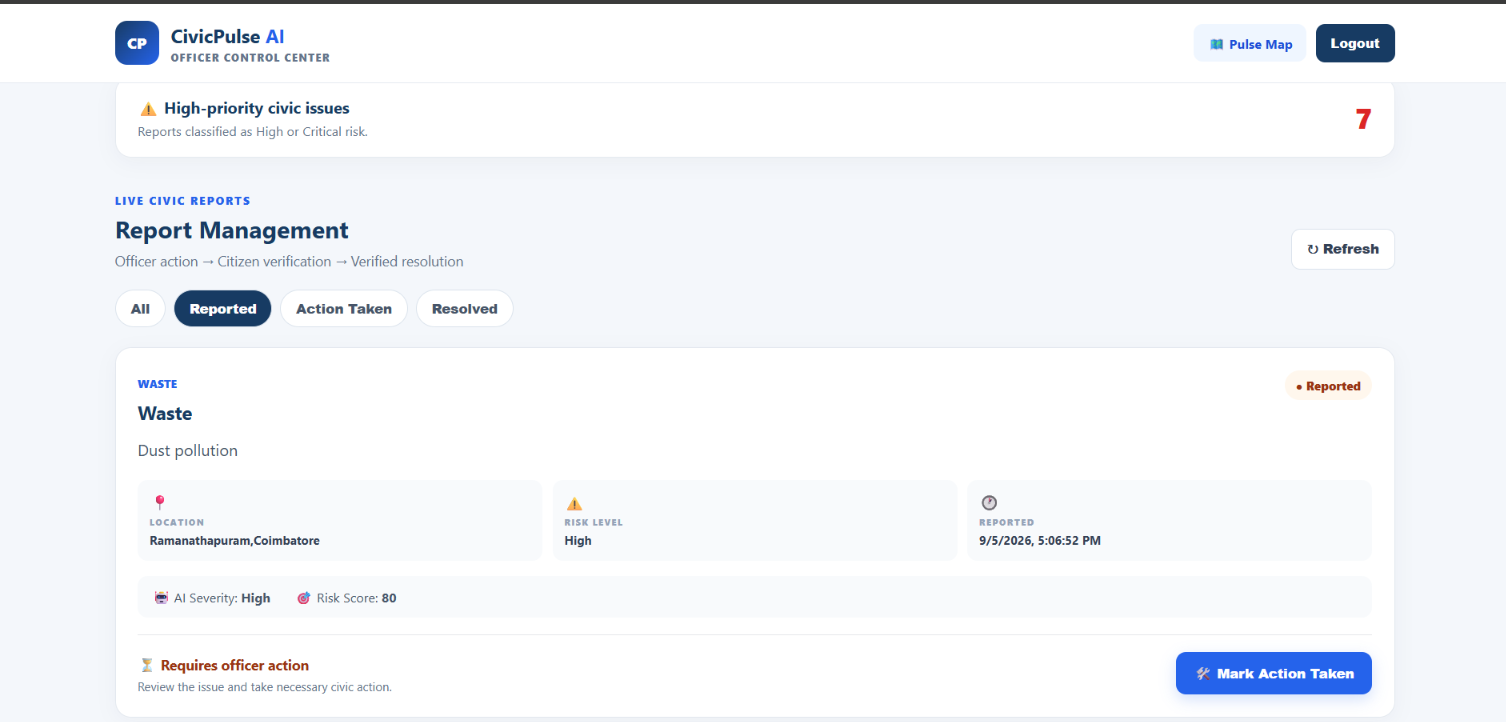
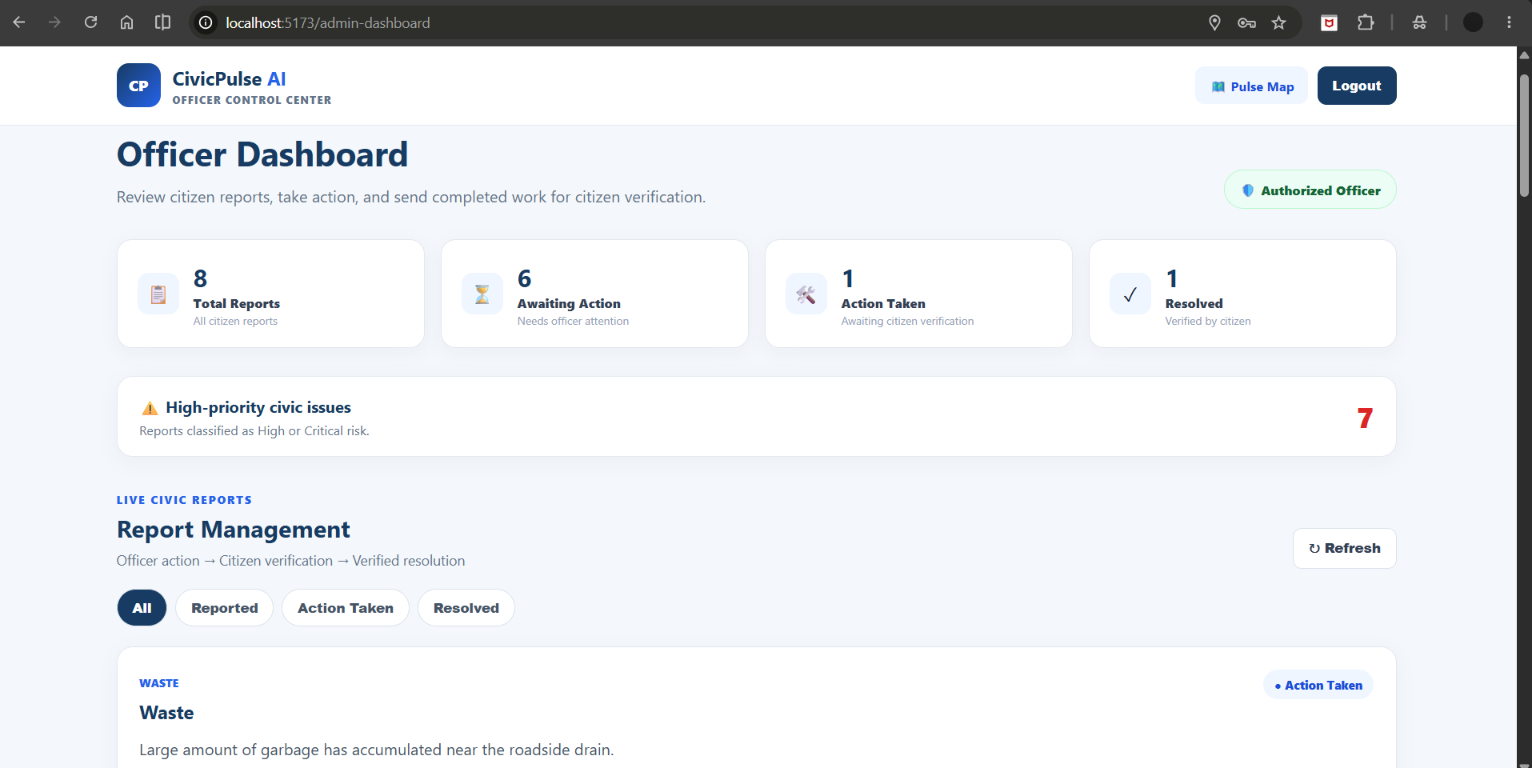
After officer login, in officer dashboard ,there exist the problem reported by users , he can mark the " action taken " for each problem
-
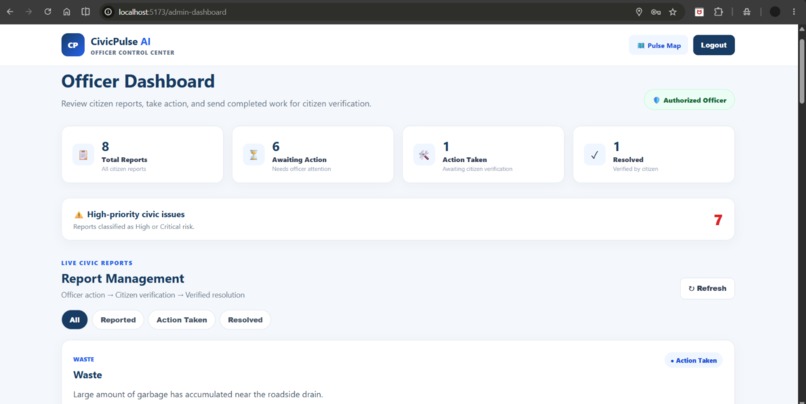
If the problem got over, the citizen who posted the problem will mark resolved, it will be displyed in officer dashboard.
Inspiration
Civic issues such as damaged roads, drainage problems, water leakage, pollution, and broken streetlights affect communities every day. However, reporting an issue is often only the first step; citizens may not know whether their complaint was received, who is handling it, or whether action was actually taken.
We wanted to build a platform that creates a clear connection between citizens and responsible officers, while making the complete complaint lifecycle visible and trackable.
This inspired us to build CivicPulse AI — a digital platform for reporting, managing, and resolving community issues.
What it does
CivicPulse AI provides a centralized workflow for civic issue management.
Citizens can register and submit civic complaints. Complaints include category, description, location, and GPS coordinates. Reports are stored in a MySQL database. Officers can view and manage submitted complaints through an officer dashboard. Officers can update the complaint when action has been taken. Citizens can view the officer's update. Citizens can confirm whether the issue has been addressed. The complaint can then move to Resolved status. A map-based interface helps visualize reported issues. Dashboard statistics provide an overview of reported and resolved complaints.
The goal is to make civic issue reporting more transparent, organized, and trackable.
How we built it
CivicPulse AI was developed as a full-stack web application.
Frontend
React Vite JavaScript HTML/CSS
Backend
Python Flask REST APIs
Database
MySQL
Mapping
GPS coordinates and map visualization
The frontend communicates with the Flask backend through REST APIs. Complaint and user information is stored in MySQL so that the application can maintain the complaint workflow across citizens and officers.
We designed the system around a simple workflow:
Citizen Report → Officer Review → Action Taken → Citizen Confirmation → Resolved
Challenges we ran into
One of our biggest challenges was connecting the frontend, Flask backend, and MySQL database correctly.
We also faced challenges with:
Designing a clear citizen-to-officer workflow. Handling different complaint statuses. Connecting frontend forms with backend APIs. Managing GPS/location information. Making the application easy to understand for both citizens and officers. Deploying the React frontend and resolving production build issues.
Working through these challenges helped us understand how different parts of a full-stack application need to work together.
Accomplishments that we're proud of
We are proud of building a complete civic issue workflow rather than just a complaint submission form.
The project connects multiple stages of the process:
Report → Track → Officer Action → Citizen Confirmation → Resolution
We also successfully built a responsive React interface, Flask API layer, MySQL database structure, officer dashboard, complaint tracking, and map-based visualization.
The project is also publicly available through GitHub and has a deployed frontend.
What we learned
This project helped us gain practical experience in:
Full-stack application development React and Vite Flask REST APIs MySQL database integration Frontend-backend communication CRUD operations User authentication Location/GPS-based functionality Deployment and debugging Designing applications around real-world problems
Most importantly, we learned that solving a real-world problem requires not only building features, but also designing a workflow that users can actually follow.
What's next for CivicPulse-AI
Our next goal is to make CivicPulse AI more intelligent and scalable.
Future improvements include:
AI-based complaint classification Automatic priority/urgency detection Intelligent routing to the appropriate department Duplicate complaint detection AI-generated complaint summaries Civic issue trend analysis Real-time notifications Improved officer analytics More detailed map-based hotspot analysis Mobile application support
Our long-term vision is to evolve CivicPulse AI into an intelligent civic coordination platform that helps communities identify, report, track, and resolve local problems more efficiently.


Log in or sign up for Devpost to join the conversation.