-
-
-
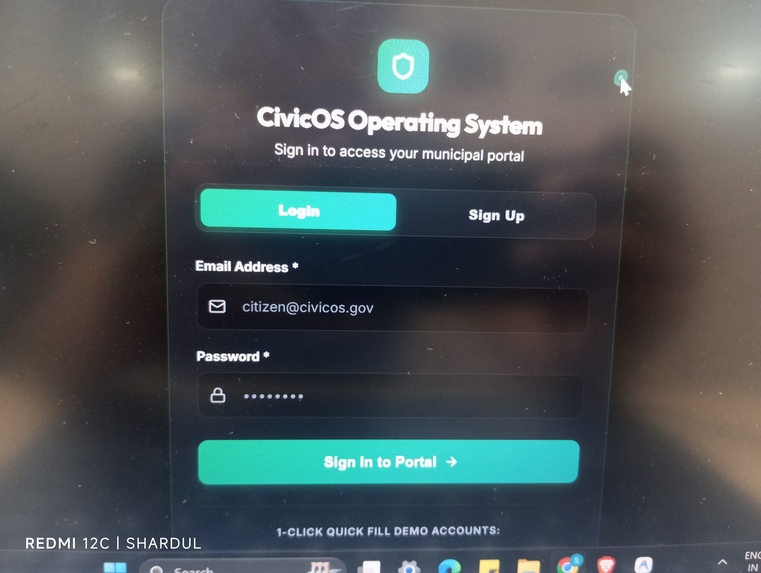
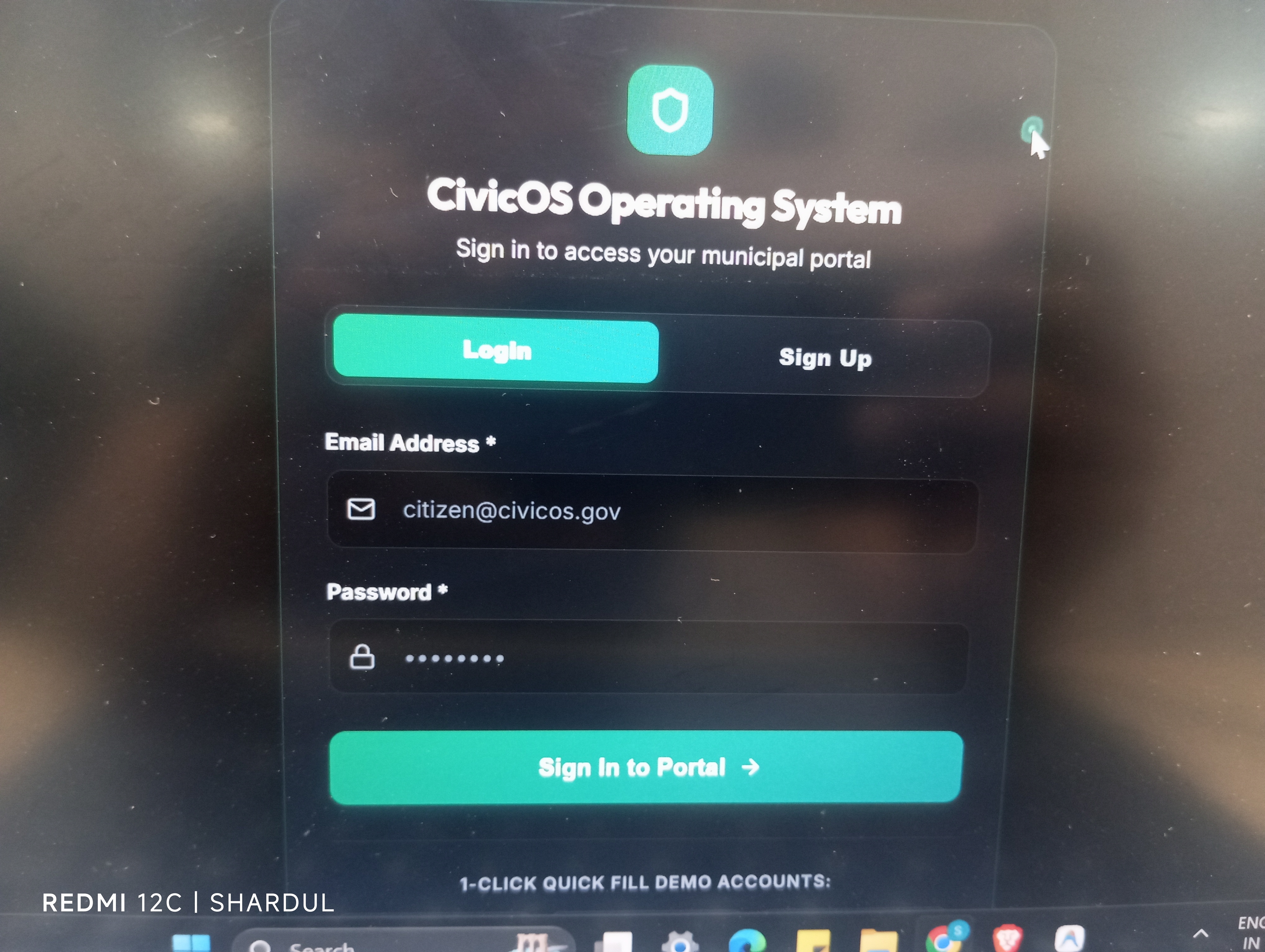
Sign in page as citizen officer and admin demo accounts provided
-
-
Inspiration
Cities receive thousands of complaints every day about potholes, garbage, water leakage, streetlights, drainage, traffic, and other civic issues. The real challenge is not only collecting complaints—it is understanding them, prioritizing them, assigning them to the right department, and ensuring they are actually resolved.
We were inspired by a simple question:
What if a municipality could turn every citizen complaint into an intelligent, trackable workflow automatically?
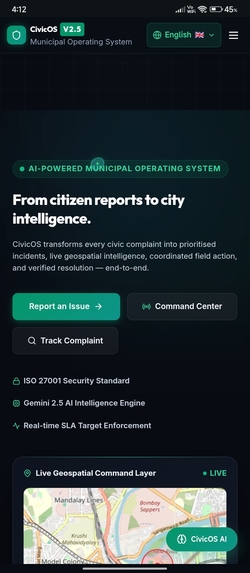
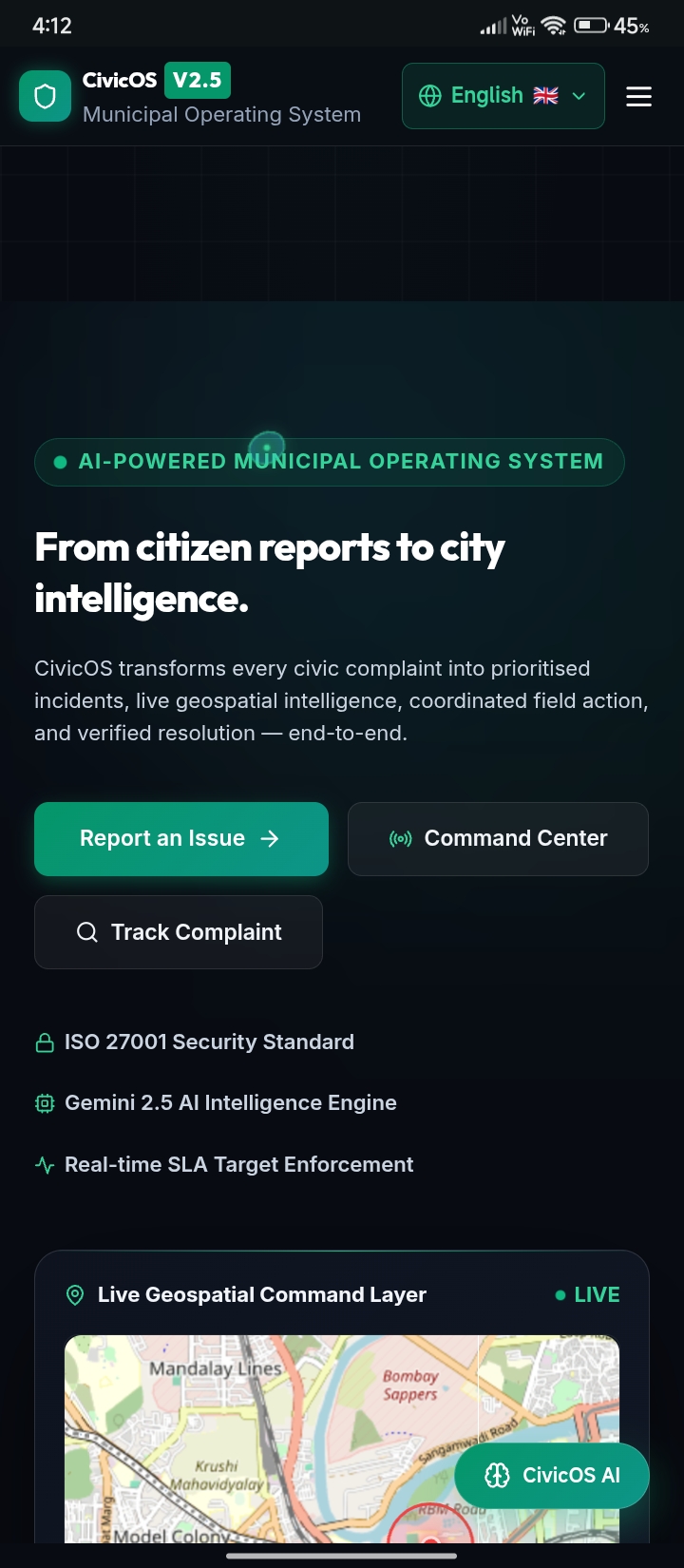
That idea led us to build CivicOS, an AI-powered municipal operating system designed to connect citizens, municipal officers, and departments through one unified platform.
What is CivicOS?
CivicOS transforms the traditional complaint system into an end-to-end operational loop:
REPORT → UNDERSTAND → PRIORITIZE → ASSIGN → RESOLVE → LEARN
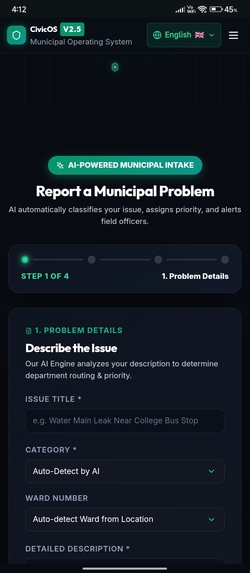
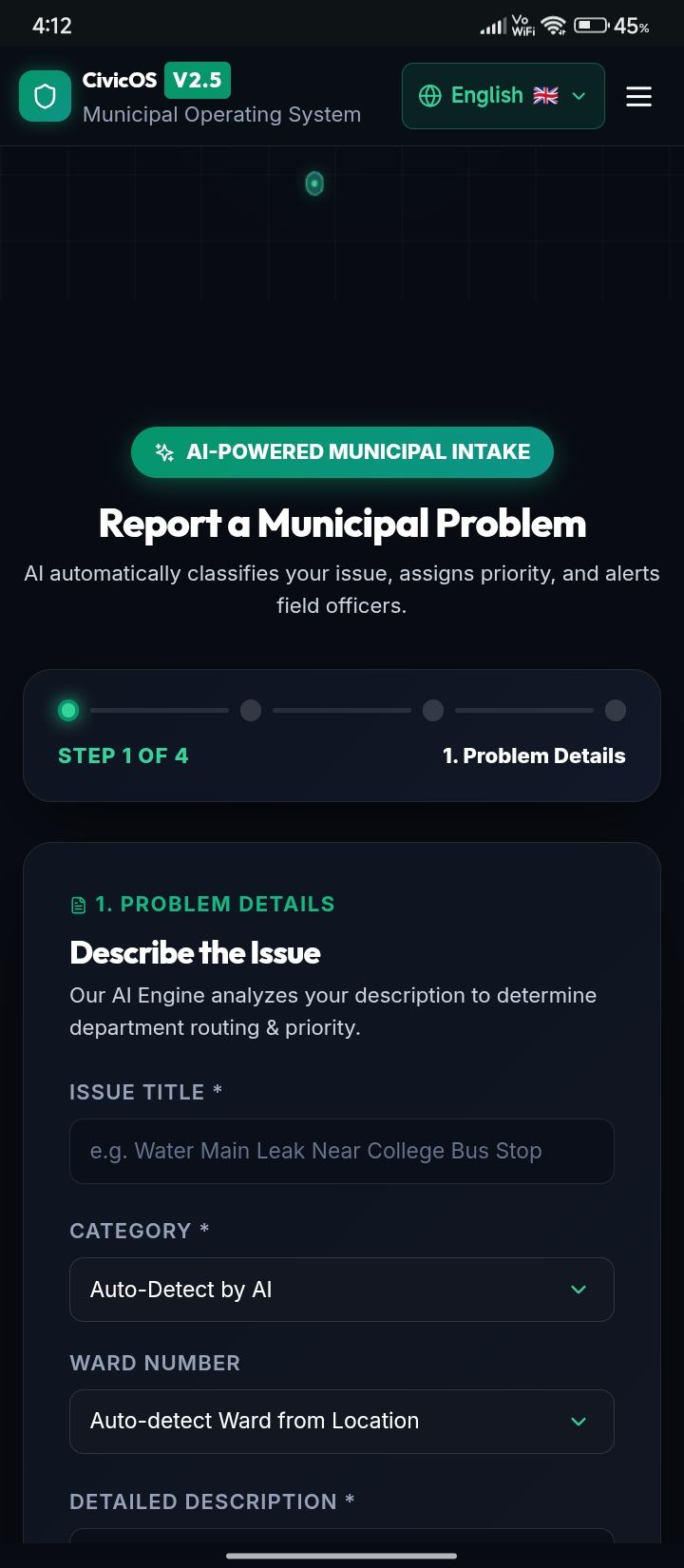
A citizen can report an issue with details and location. CivicOS processes the complaint, identifies its category, estimates severity, detects possible duplicate reports, groups nearby issues, and routes the case to the appropriate department.
Officers get an operational dashboard where they can monitor complaints, priorities, assignments, SLA status, locations, and resolution progress.
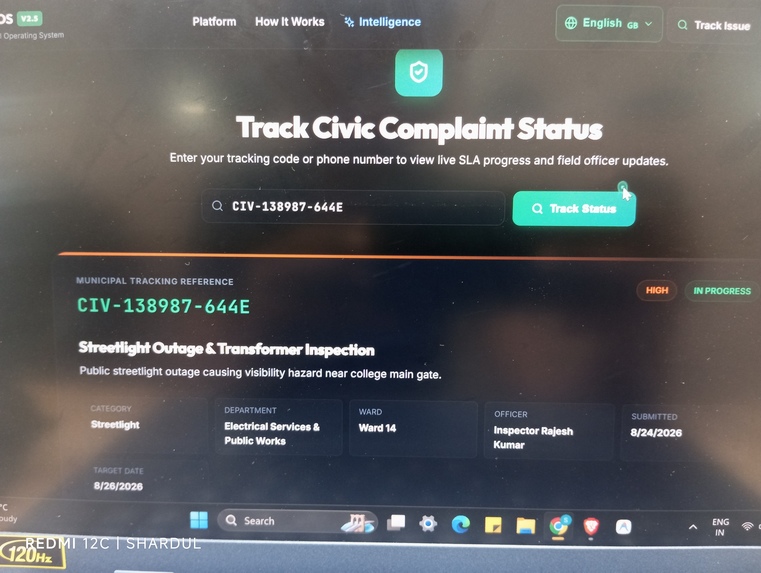
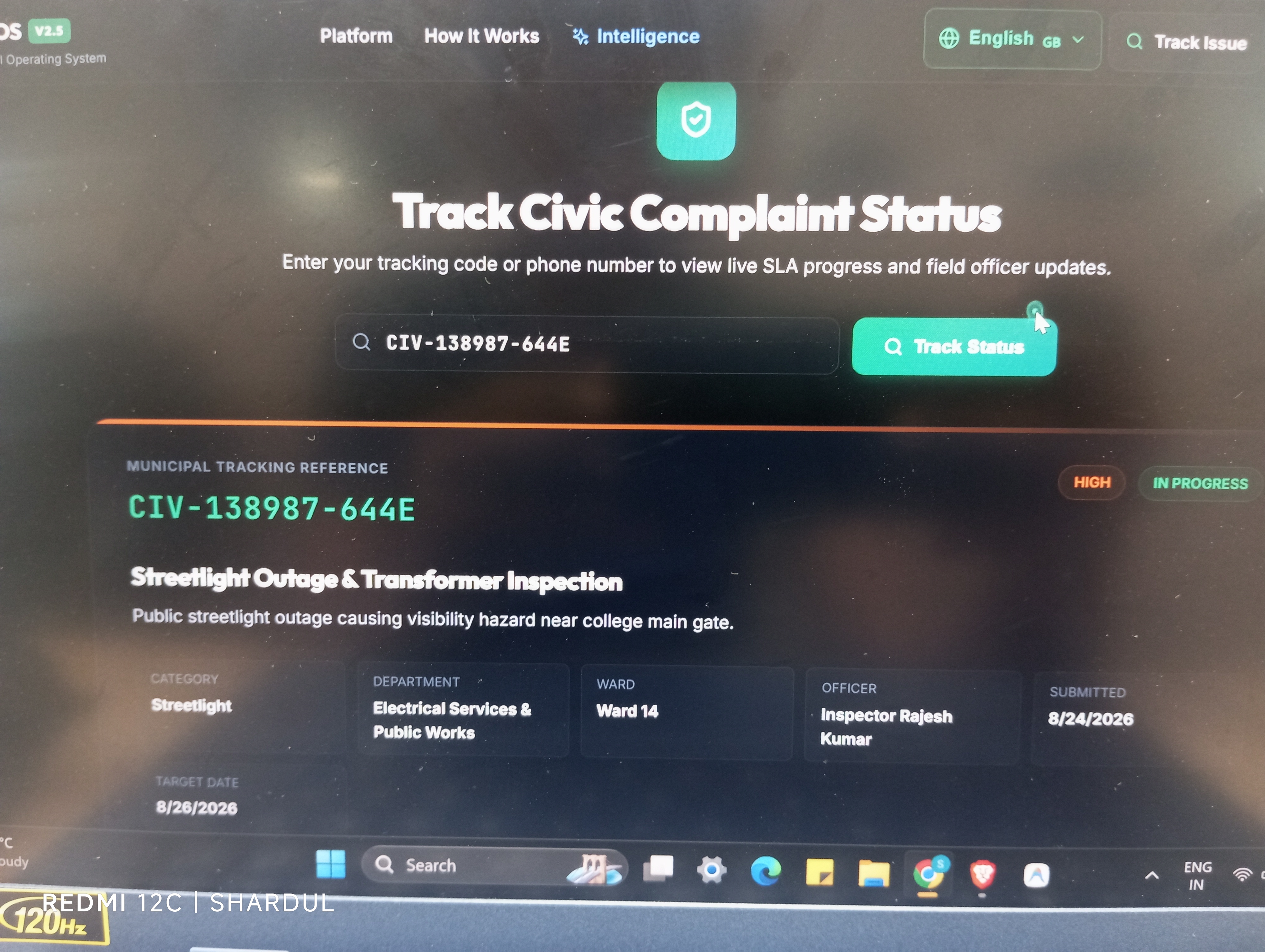
Citizens can track the status of their complaints instead of simply submitting a form and waiting.
Key Features
- 🏙️ Citizen complaint reporting
- 🤖 AI-based complaint classification
- 📍 Location-based issue tracking
- 🔎 Duplicate complaint detection
- 🧠 Intelligent severity and priority scoring
- 🏢 Automatic department assignment
- 📊 Municipal command dashboard
- 👮 Officer workspace for case management
- ⏱️ SLA and overdue tracking
- 🔄 Real-time complaint status workflow
- 🗺️ Geographic issue visualization
- 📈 Civic analytics and performance insights
- 🔔 Notifications and activity tracking
- 🔐 Role-based authentication
- 📱 Responsive citizen and officer interfaces
How We Built It
We designed CivicOS as a full-stack system rather than a static prototype.
The frontend provides dedicated experiences for citizens and municipal officers. The backend exposes APIs responsible for authentication, complaints, departments, assignments, status updates, analytics, and operational workflows.
A database stores users, complaints, locations, departments, assignments, status history, and other municipal data.
The architecture is designed around a continuous operational workflow so that a complaint does not stop after submission—it moves through the system until resolution.
What We Learned
Building CivicOS taught us that solving a real-world problem requires more than creating an attractive interface.
We learned how to:
- Design a complete full-stack architecture
- Connect frontend interfaces with backend APIs
- Structure data for real-world workflows
- Build role-based municipal dashboards
- Handle state changes across multiple users
- Think about scalability and reliability
- Design systems around real operational processes
- Turn a hackathon idea into a practical product concept
One of our biggest lessons was that the success of a civic platform should be measured by resolution, not simply by the number of complaints submitted.
Challenges We Faced
One of the biggest challenges was designing a system where information flows correctly between citizens and officers.
A complaint should not merely appear as "submitted" on the citizen side. It must actually reach the backend, become visible to the responsible officer, support assignment and status updates, and finally return meaningful progress to the citizen.
We also faced challenges around designing multiple user roles, maintaining consistent application state, connecting APIs with the frontend, structuring the database, and creating a dashboard capable of representing a large number of civic issues without overwhelming users.
The Vision
CivicOS is more than a complaint-management application.
Our vision is to create a Municipal Operating System where civic data becomes actionable intelligence.
Instead of municipalities reacting to individual complaints, CivicOS can help them identify patterns, discover problem hotspots, monitor department performance, detect SLA violations, and eventually predict recurring civic problems.
Our goal
Make cities more responsive, transparent, data-driven, and citizen-centric—one complaint at a time.
Built With
- ai
- api
- artificial
- data
- express.js
- full
- gps
- intelligence
- javascript
- learning
- machine
- mongodb
- node.js
- react
- rest
- stack
- visualization


Log in or sign up for Devpost to join the conversation.