-
-
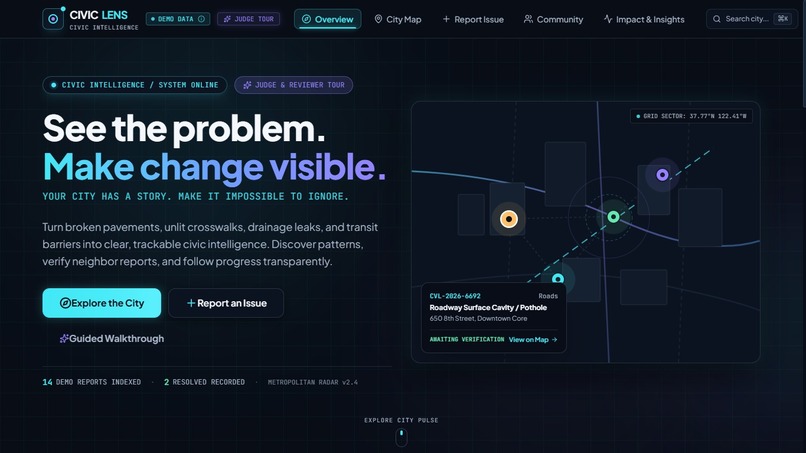
DASHBOARD
-
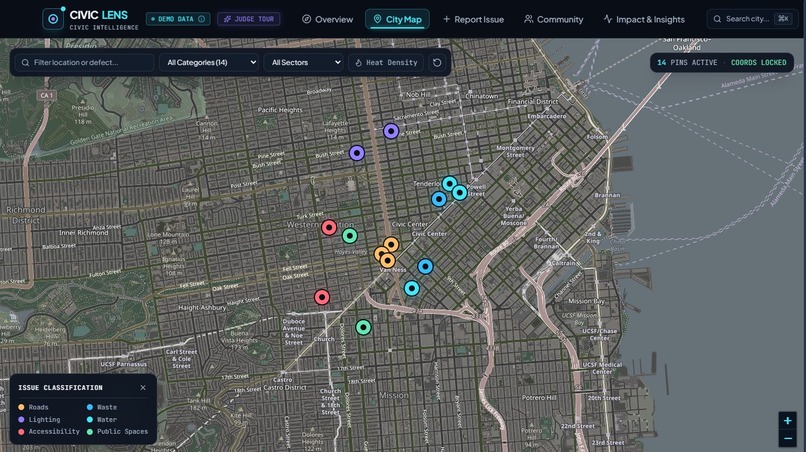
CITY MAP
-
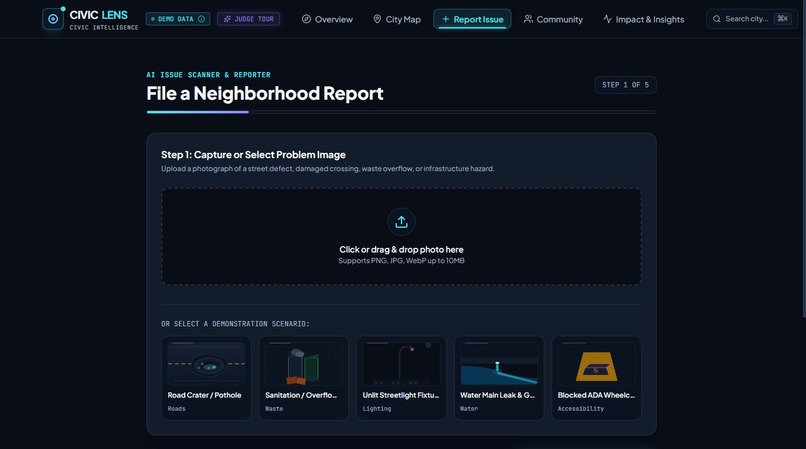
REPORT ISSUE
-
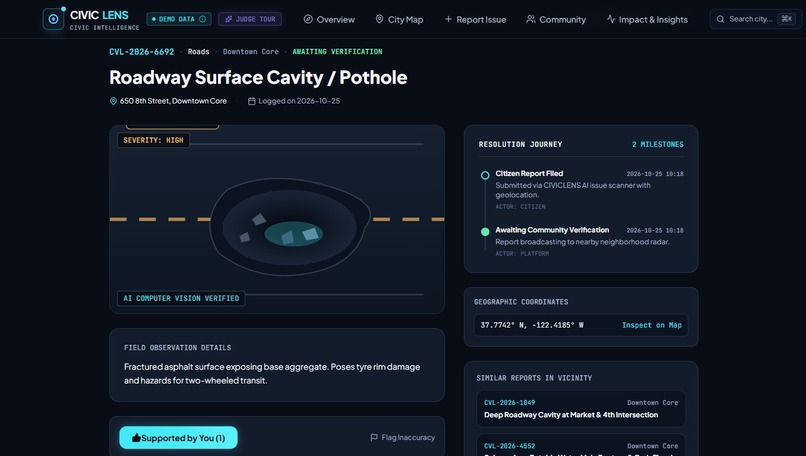
REPORT PROGRESS
-
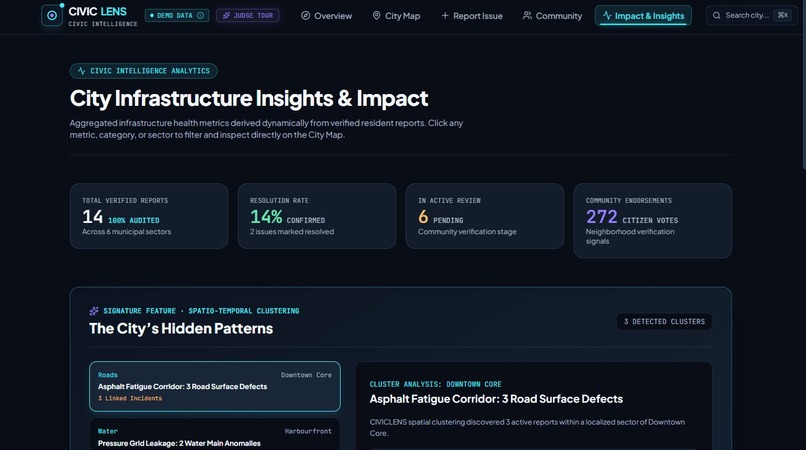
IMPACTS
-
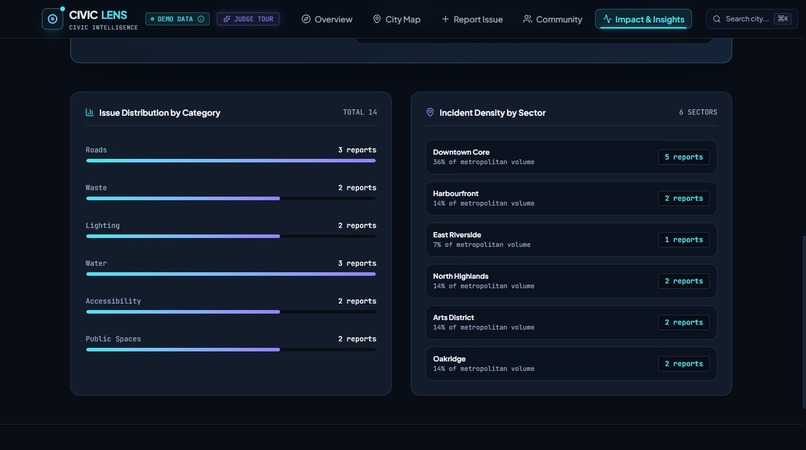
ANALYTICS
-
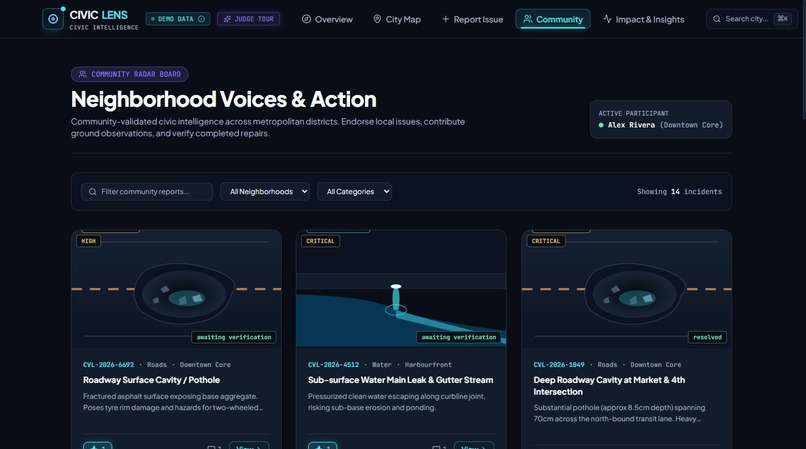
COMMUNITY
-
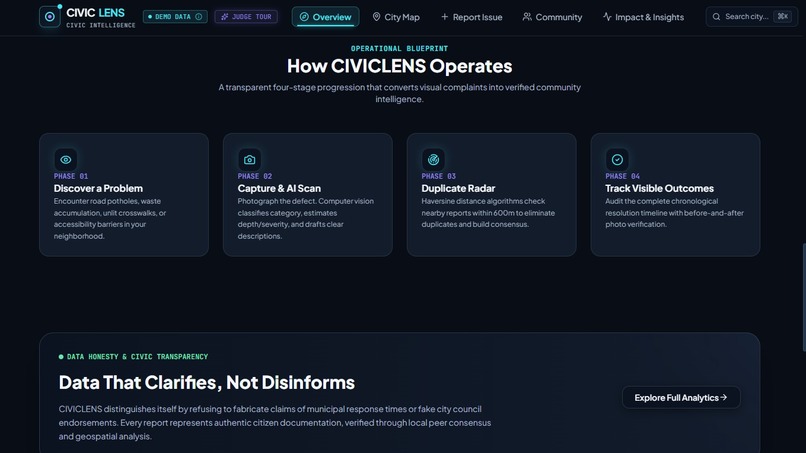
ABOUT CIVICLENS
Inspiration
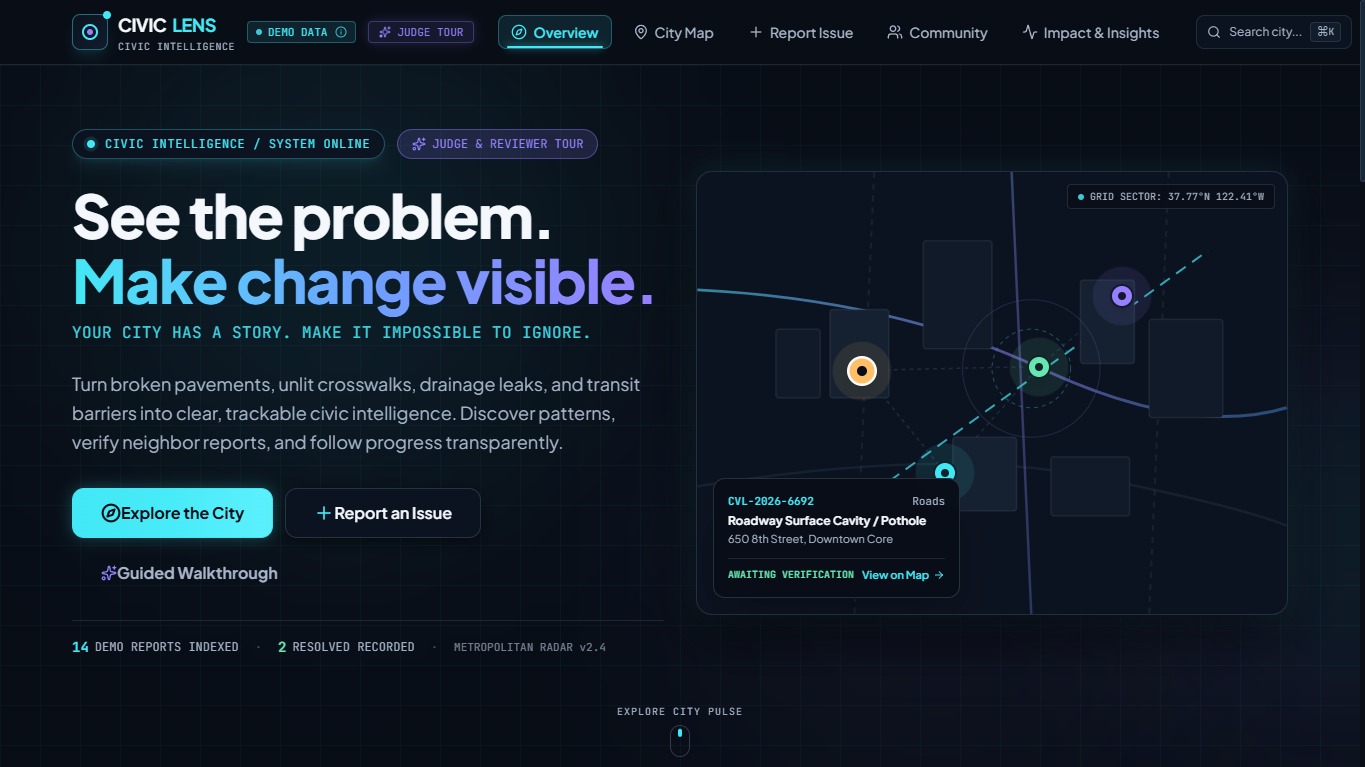
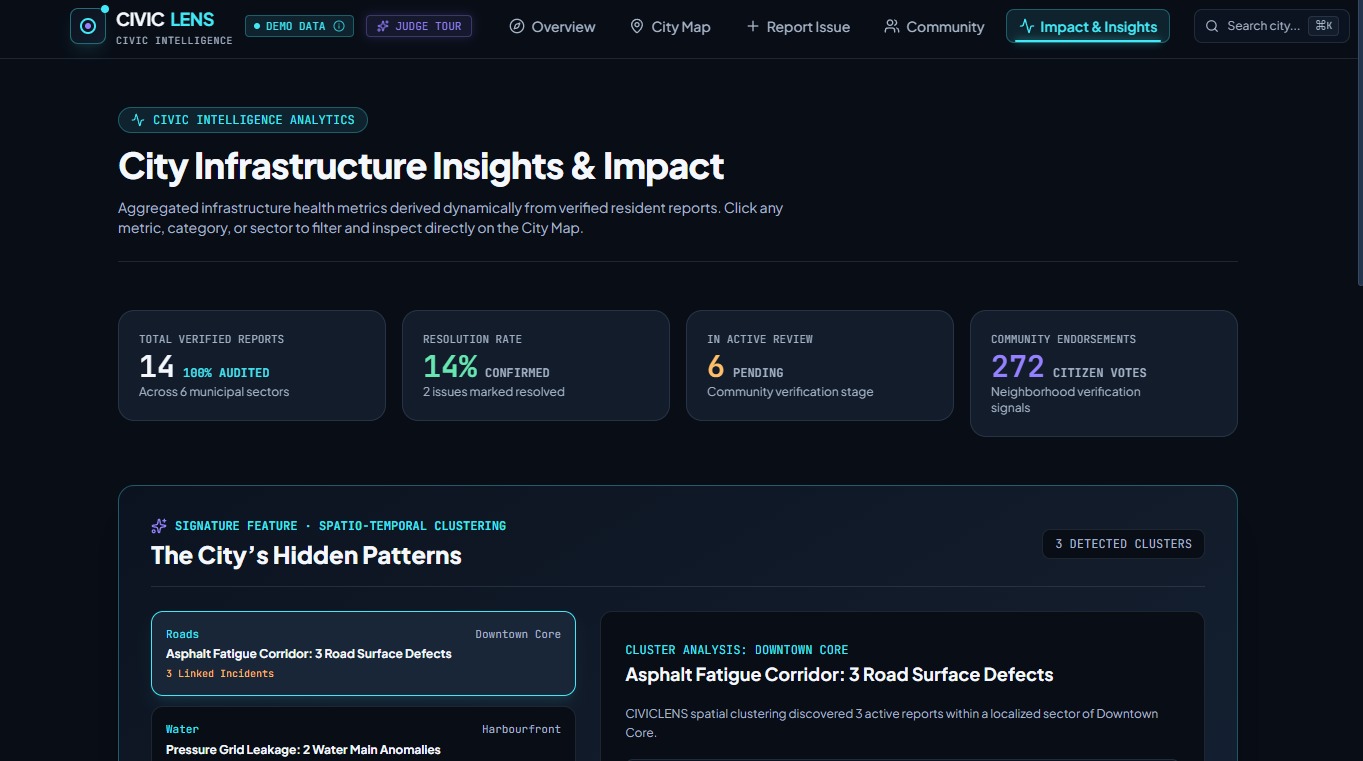
Our inspiration for CIVICLENS came from the everyday civic issues people face in cities, including damaged roads, overflowing garbage, waterlogging, and poor public infrastructure. Many of these problems remain unnoticed or unresolved due to a lack of visibility and accessible information. We wanted to bridge this gap by using AI and geospatial technology to make civic problems easier to identify, visualize, and understand, ultimately contributing to smarter and more sustainable cities.
What it does
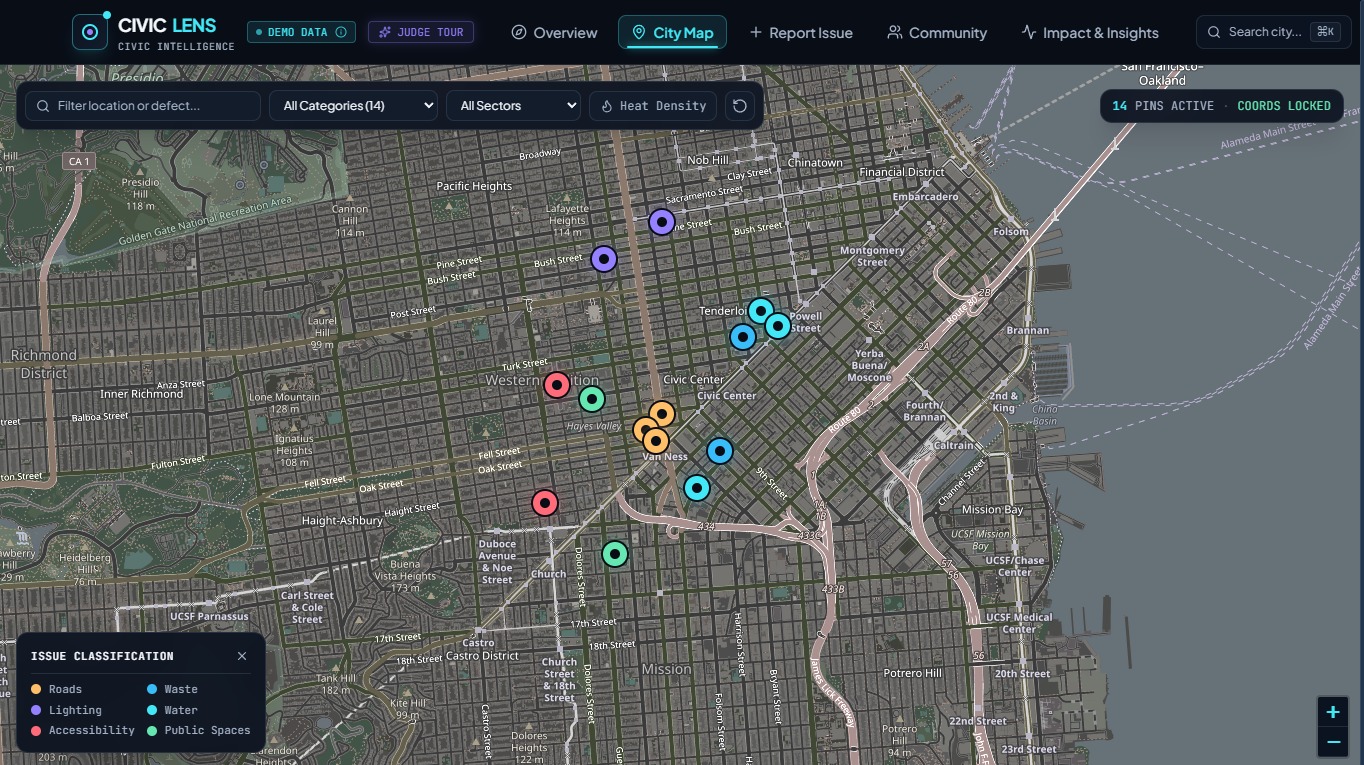
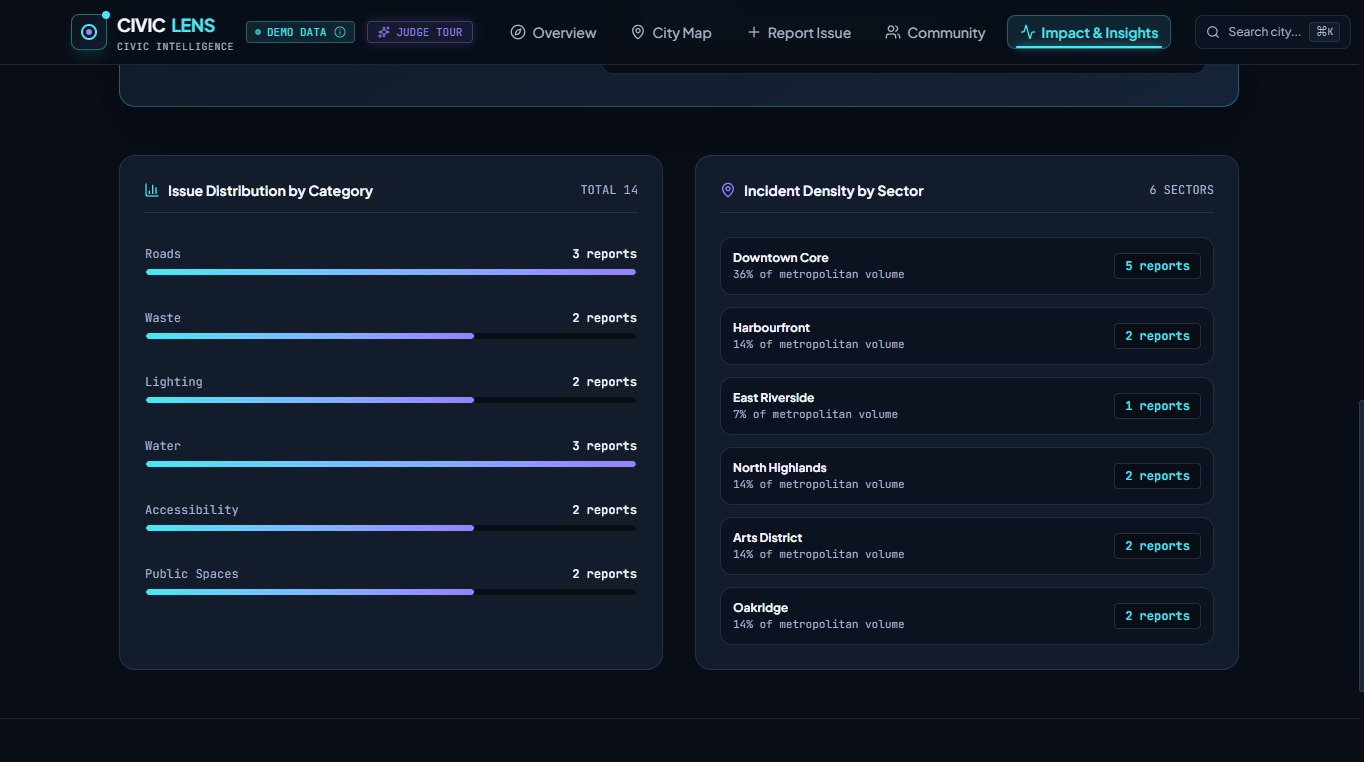
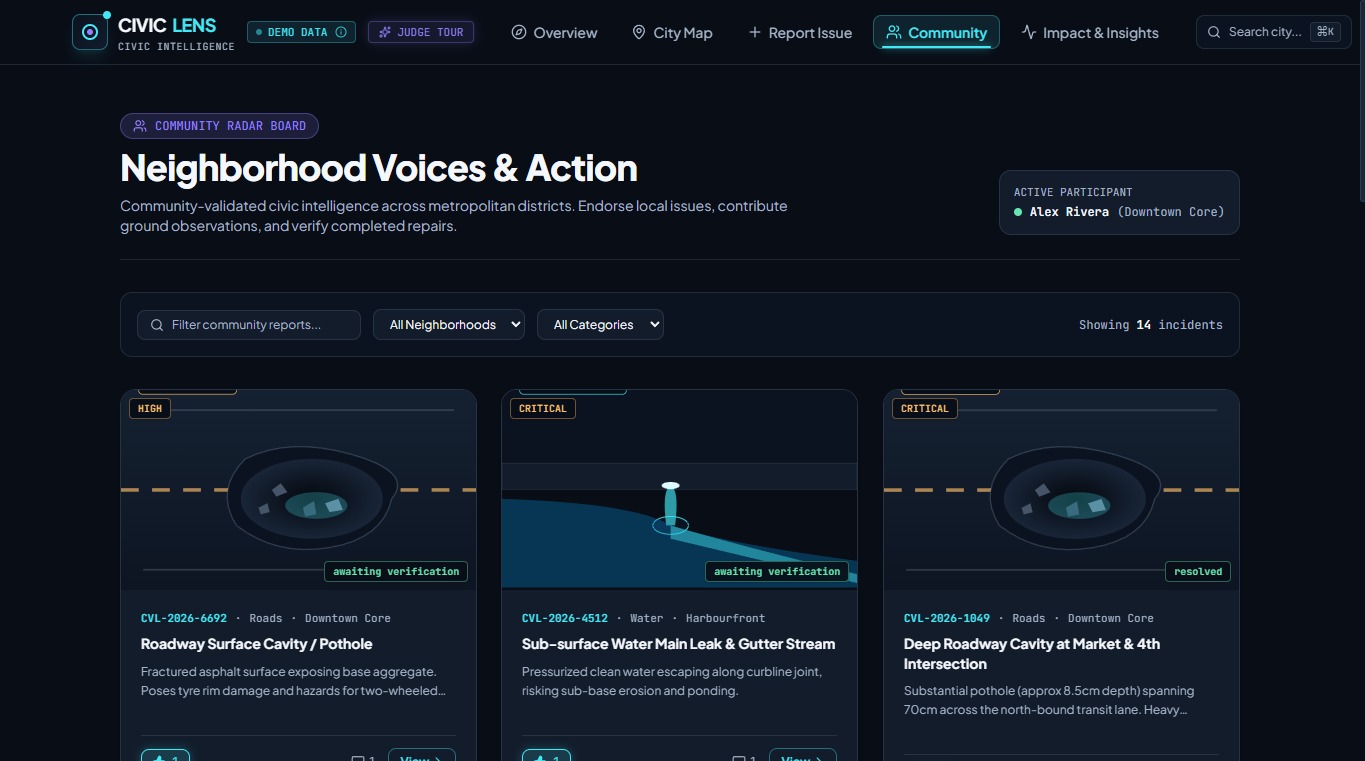
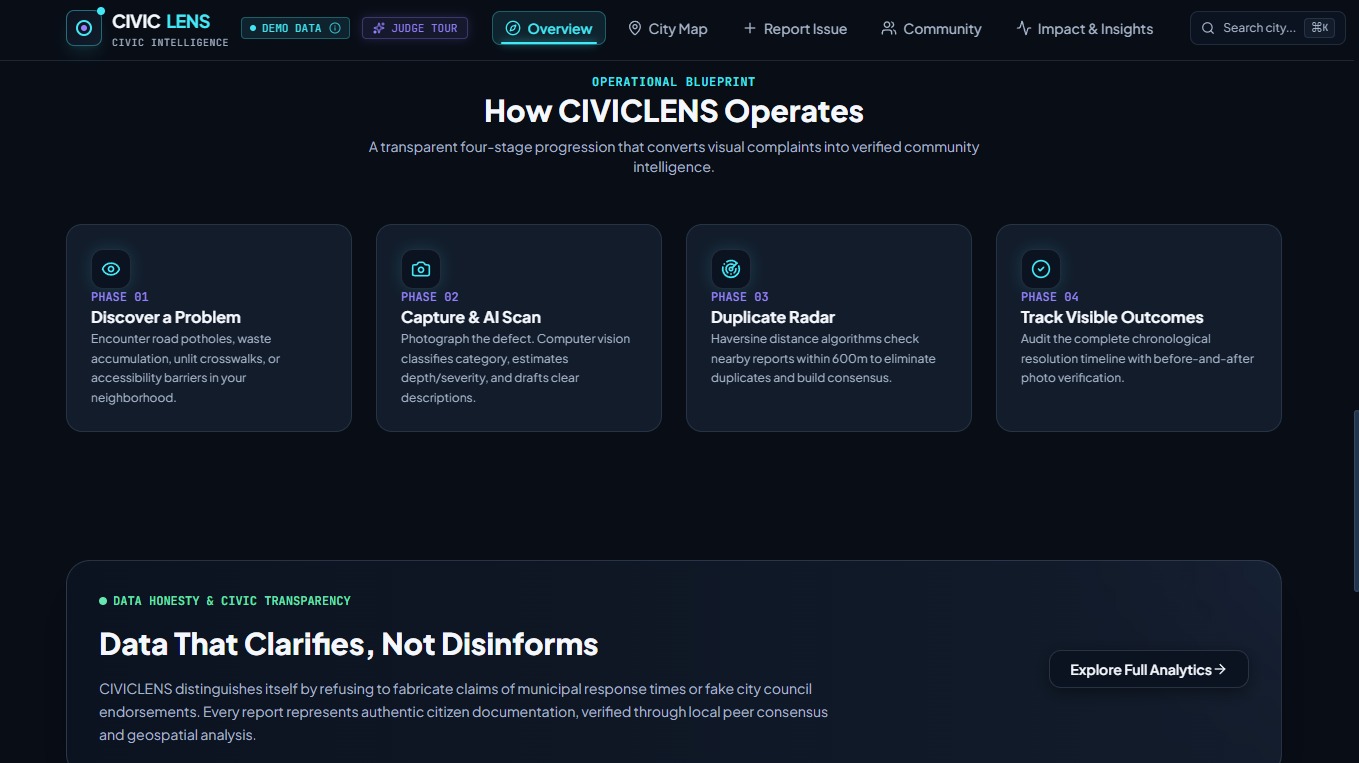
CIVICLENS is an AI-powered civic issue visualization platform that helps users identify, explore, and understand urban problems. It uses interactive maps powered by OpenStreetMap (OSM) to display location-based civic issues, making problems such as damaged roads, waste accumulation, and waterlogging easier to visualize. It transforms scattered civic information into meaningful insights, helping communities better understand local challenges and encouraging smarter urban development.
How we built it
We built CIVICLENS using Google AI Studio to develop and refine the application with AI assistance. We focused on creating a modern, interactive, and user-friendly web interface with engaging visual elements and smooth animations. We integrated OpenStreetMap (OSM) to provide map-based visualization and location awareness. We combined frontend technologies with AI-powered capabilities to create a platform that presents civic issues in an accessible and meaningful way. Throughout development, we tested the application, improved the UI/UX, and refined its features to deliver a better user experience.
Challenges we ran into
One of our biggest challenges was transforming our idea into a functional and visually engaging platform. Integrating AI-powered features with OpenStreetMap (OSM), ensuring accurate location-based visualization, and designing an intuitive user interface required several iterations. We also faced challenges in making the website responsive, improving animations, and maintaining smooth interactions. Another difficulty was ensuring that the platform communicated complex civic issues in a simple and understandable way. We overcame these challenges through continuous testing, refining our design, and experimenting with different technologies.
Accomplishments that we're proud of
We are proud to have transformed an idea into CIVICLENS, an interactive platform that addresses real-world civic challenges through technology. We successfully developed a modern, visually engaging website with AI-powered capabilities and OpenStreetMap integration. We are particularly proud of creating an intuitive user experience, interactive map visualizations, and a platform focused on meaningful social impact. Most importantly, we gained practical experience in AI-assisted development, frontend technologies, geospatial visualization, teamwork, and problem-solving.
What we learned
Through CIVICLENS, we learned how to turn a real-world problem into a technology-driven solution. We gained practical experience in AI-assisted development using Google AI Studio, frontend technologies, OpenStreetMap integration, geospatial visualization, and UI/UX design. We also learned the importance of responsive design, continuous testing, teamwork, and creative problem-solving. Most importantly, we understood how emerging technologies like AI can be applied to address everyday civic challenges and create meaningful social impact.
What's next for CIVICLENS
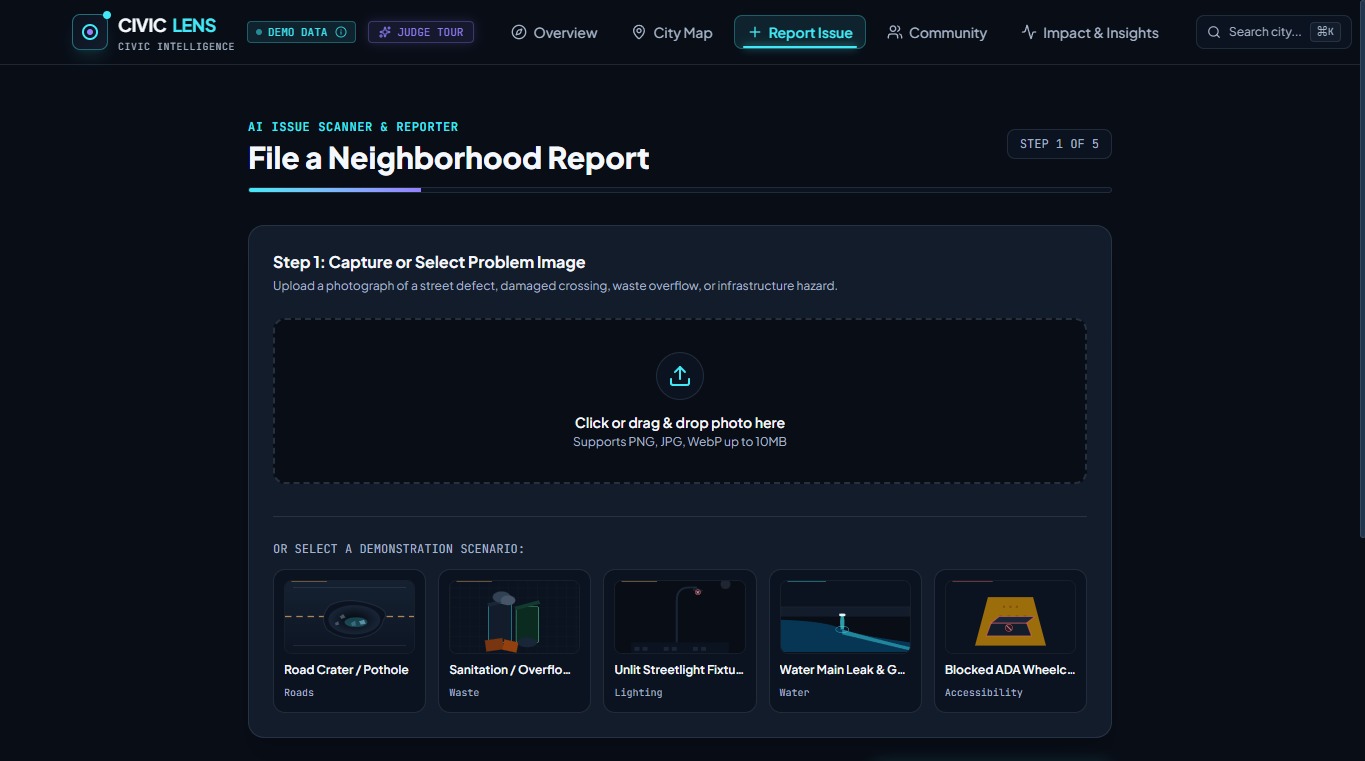
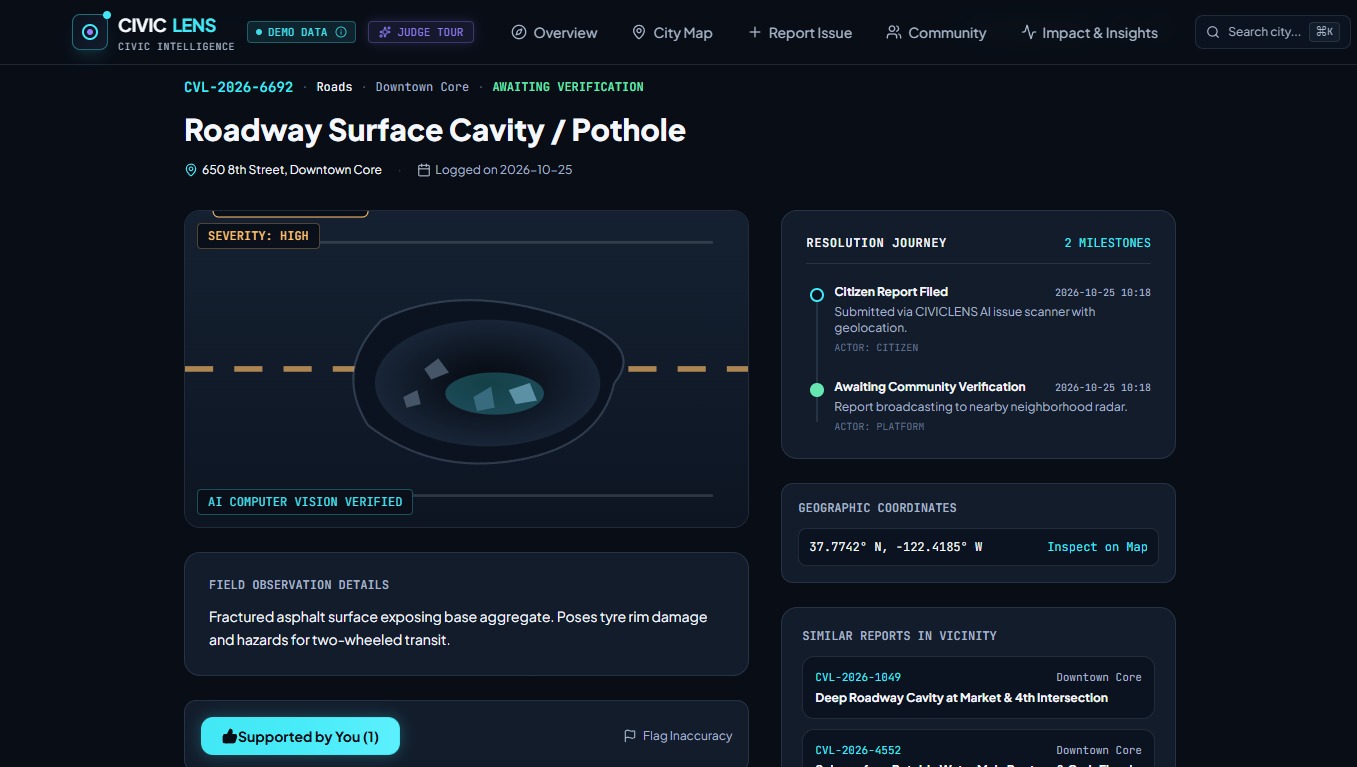
Our next goal for CIVICLENS is to evolve it into a more intelligent and impactful civic technology platform. We plan to enhance AI capabilities for automatic civic issue detection and classification, introduce real-time issue reporting, and improve location-based analysis using geospatial data. We also aim to integrate community feedback, issue tracking, and resolution status updates to connect citizens with relevant authorities. In the future, we envision CIVICLENS becoming a scalable platform that helps cities identify problems faster, make data-driven decisions, and move towards smarter and more sustainable urban environments.
Built With
- ai
- ai-powered
- cities
- civic
- css
- data
- frontend
- geospatial
- html
- interactive
- javascript
- maps
- openstreetmap
- react
- responsive
- smart
- solutions
- sustainable
- technology
- typescript
- ui/ux
- visualization


