-
-
-
Workflow
CivicAI – AI-Powered Emergency Intelligence and Response
Inspiration
Across Kenya, emergencies such as fires, floods, road accidents, crime, and medical crises often suffer from delayed reporting, fragmented communication, and slow emergency coordination. Citizens may not know who to contact, responders lack verified information, and decision-makers struggle to prioritize limited resources. We envisioned CivicAI as an intelligent platform that transforms every smartphone into a trusted emergency reporting and response hub, using AI to help save lives when every second matters.
What it does
CivicAI is an AI-powered emergency intelligence platform that connects citizens, emergency responders, hospitals, government agencies, NGOs, and communities through a single intelligent ecosystem.
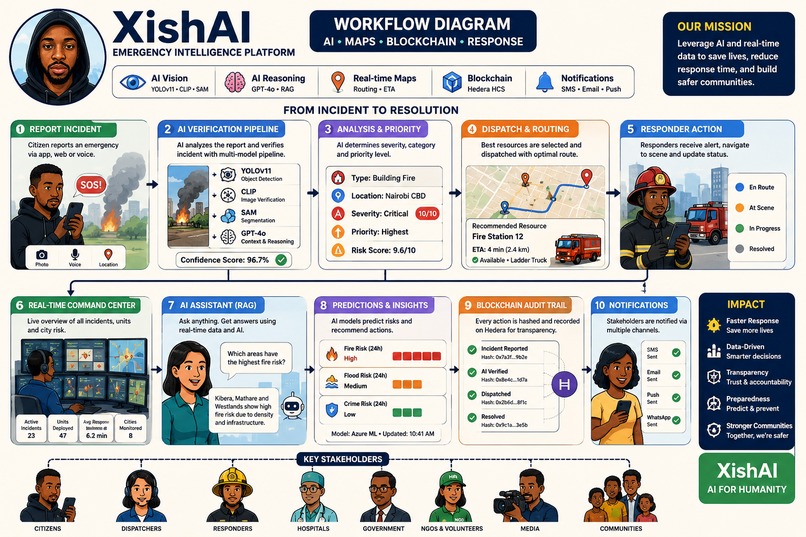
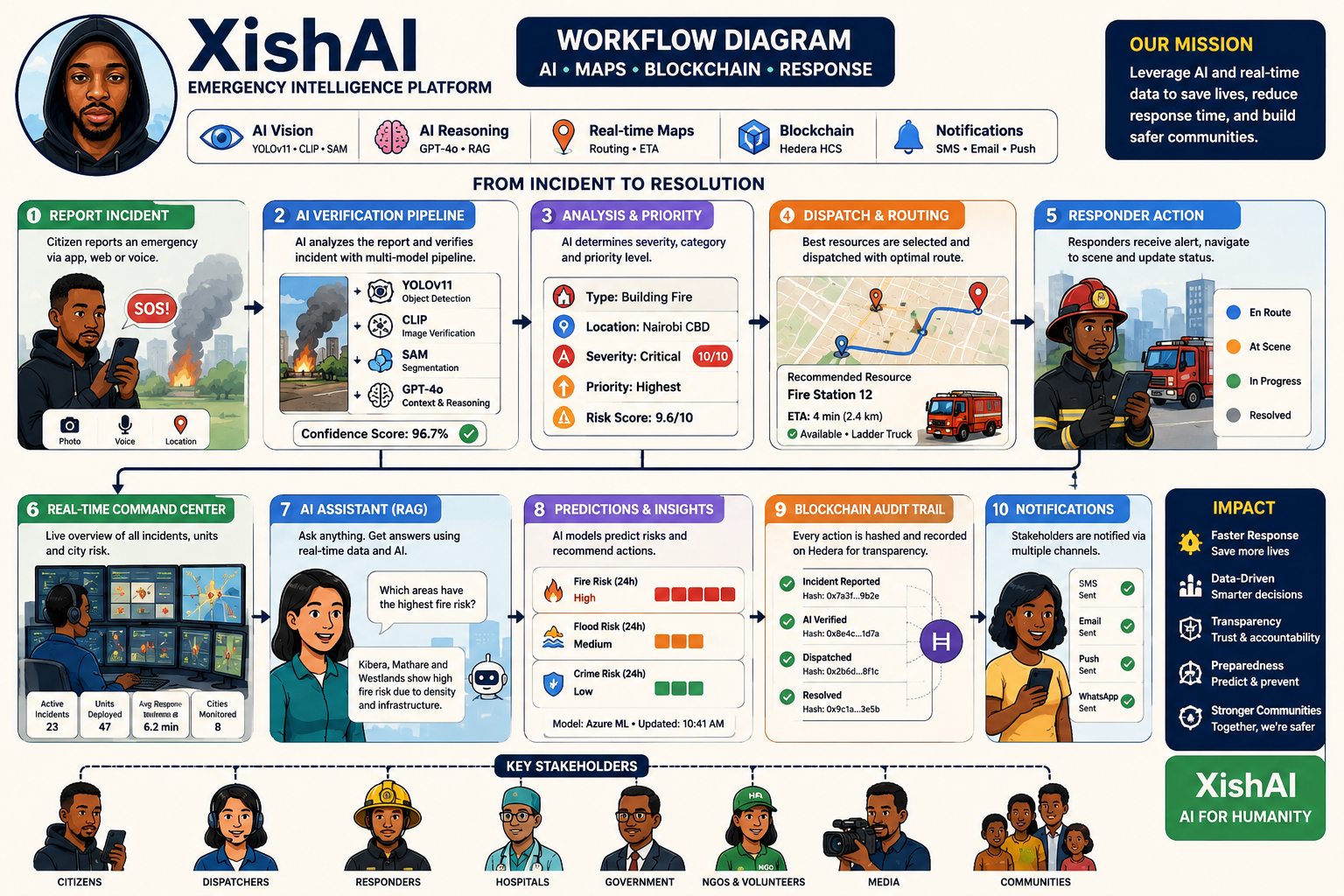
The platform enables citizens to report incidents using photos, videos, voice, or text. AI automatically verifies reports using computer vision, image understanding, and reasoning models, classifies incident types, estimates severity, calculates risk scores, and identifies the optimal response strategy.
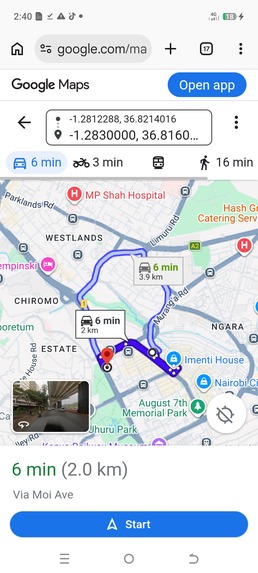
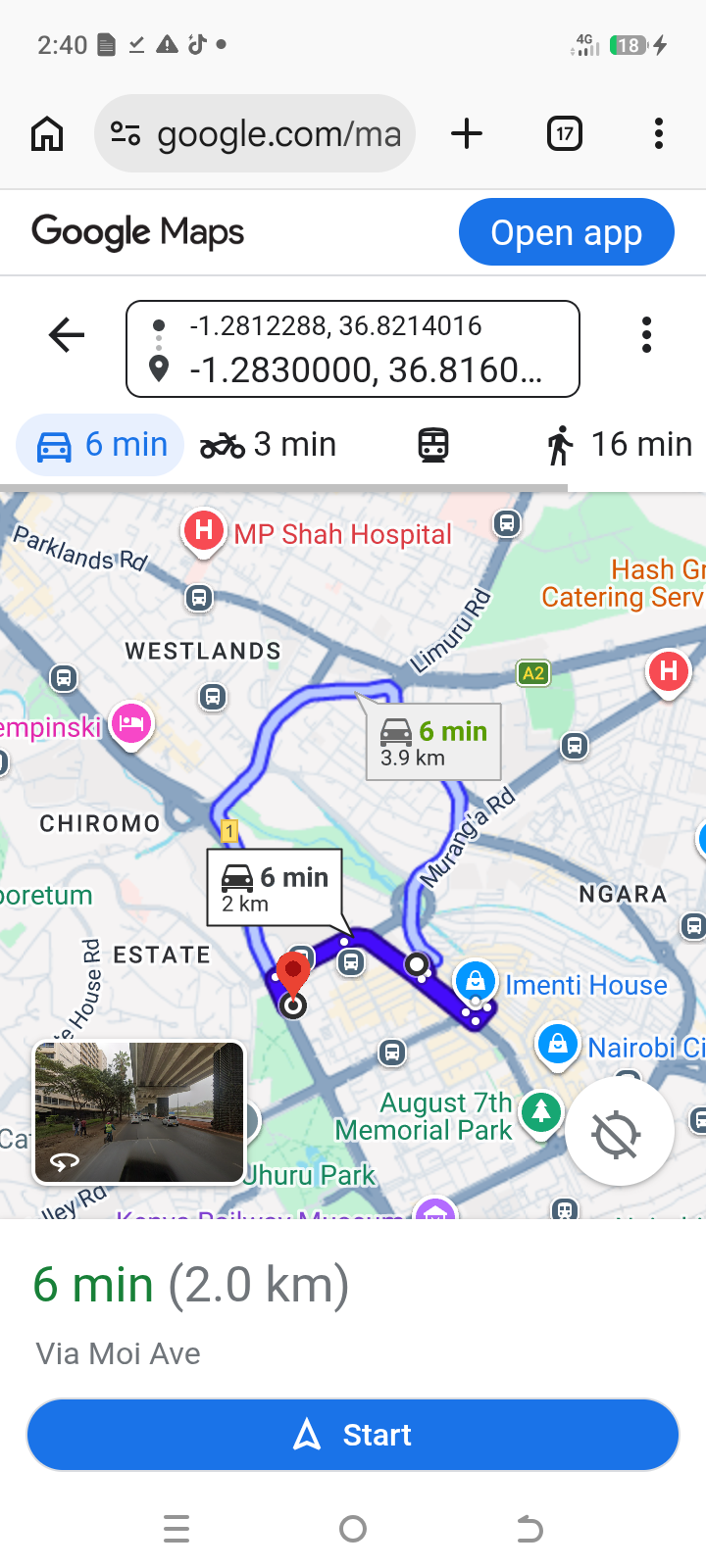
Real-time maps recommend the closest available responders, while intelligent routing minimizes response times. A Retrieval-Augmented Generation (RAG) assistant provides situational intelligence to command centers, predictive analytics identify high-risk areas before disasters escalate, and Hedera blockchain creates a tamper-proof audit trail for transparency and accountability.
How we built it
We designed CivicAI as a modular, cloud-native AI platform built around multiple intelligent services working together.
- Frontend: React.js for responsive web dashboards and citizen reporting interfaces.
- Backend: Node.js and Express for scalable APIs and emergency workflow orchestration.
- Artificial Intelligence: YOLOv11 for object detection, CLIP for image understanding, GPT-4-class reasoning with Retrieval-Augmented Generation (RAG) for contextual decision support, and Azure Machine Learning for predictive risk analytics.
- Mapping & Routing: Real-time GIS integration with ETA optimization for emergency dispatch.
- Blockchain: Hedera Consensus Service (HCS) to create immutable records of every emergency event and response action.
- Notifications: Multi-channel alerts via SMS, Email, Push Notifications, and WhatsApp.
- Cloud Architecture: Containerized microservices designed for scalability, resilience, and future IoT integration.
Challenges we ran into
One of the biggest challenges was designing a system capable of handling diverse emergency scenarios while minimizing false reports. Balancing AI accuracy with rapid decision-making required combining multiple AI models instead of relying on a single algorithm.
Another challenge was creating a workflow that remains understandable for both citizens and professional emergency operators despite the complexity of the underlying AI pipeline. We also considered how to build trust in AI-assisted decisions, which led us to integrate blockchain for transparent auditability and explainable emergency workflows.
Accomplishments that we're proud of
- Developed an end-to-end AI emergency response workflow from incident reporting to resolution.
- Combined computer vision, multimodal reasoning, predictive analytics, mapping, and blockchain into a unified platform.
- Designed a scalable architecture capable of supporting multiple emergency agencies simultaneously.
- Built an explainable AI system that promotes trust through transparent decision-making.
- Focused on solving a real societal problem with measurable impact on emergency response and public safety.
What we learned
Building CivicAI reinforced that effective emergency response depends not only on artificial intelligence but also on trust, collaboration, and interoperability.
We learned how multimodal AI significantly improves incident verification, how predictive analytics can shift emergency management from reactive to proactive, and how blockchain enhances transparency without compromising operational efficiency. Most importantly, we discovered that technology has the greatest impact when it empowers people to make faster and more informed decisions during critical situations.
What's next for CivicAI – AI-Powered Emergency Intelligence and Response
Our roadmap extends CivicAI into a nationwide intelligent emergency ecosystem.
Future enhancements include drone-assisted incident assessment, AI-powered multilingual voice reporting in local Kenyan languages, offline emergency reporting for low-connectivity regions, satellite imagery integration for disaster monitoring, IoT sensor connectivity for smart cities, digital twin simulations for emergency planning, and cross-border disaster collaboration across East Africa.
Our long-term vision is to make CivicAI the intelligent emergency infrastructure that helps governments, responders, and communities anticipate risks, coordinate faster, and ultimately save more lives through responsible artificial intelligence.
Built With
- clip
- express.js
- firebase-cloud-messaging-(fcm)
- geojson
- github
- google-maps-platform
- gpt-4o
- hedera-hashgraph
- mongodb
- nginx
- node.js
- openai-codex
- opencv
- postgresql
- python
- pytorch
- react.js
- rest-apis
- retrieval-augmented-generation-(rag)
- sql
- tensorflow
- vite
- websockets
- whatsapp-business-api
- yolov11


Log in or sign up for Devpost to join the conversation.