Inspiration
Natural disasters, road accidents, medical emergencies, and public safety incidents continue to challenge communities worldwide due to delayed reporting, fragmented communication, and inefficient coordination between citizens and emergency responders. We envisioned a platform where artificial intelligence, geospatial intelligence, and secure digital infrastructure work together to reduce response time and improve decision-making.
Our inspiration came from the idea of combining the strengths of navigation systems, AI assistants, emergency dispatch centers, and blockchain into a single intelligent platform capable of transforming how emergencies are reported, verified, prioritized, and resolved. CivicAI was created with one goal in mind: saving lives through faster, smarter, and more transparent emergency response.
What it does
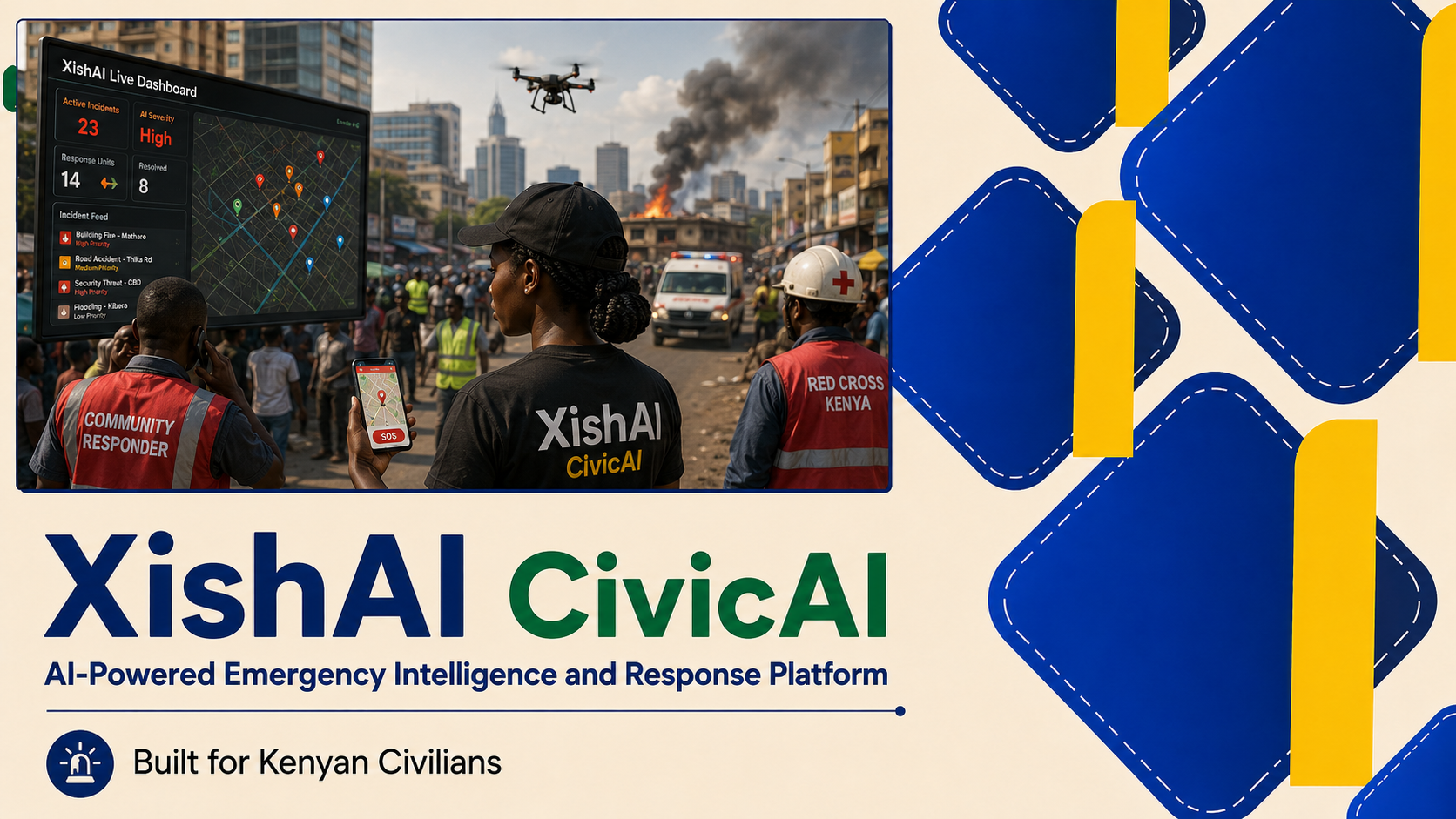
CivicAI is an AI-powered Emergency & Civic Intelligence Platform that enables citizens, emergency responders, hospitals, governments, and NGOs to collaborate in real time.
Key capabilities include:
- 📍 AI-assisted emergency reporting with GPS location
- 🧠 Computer Vision verification using YOLOv11, CLIP, and SAM
- 🤖 GPT-4o-powered incident analysis, prioritization, and recommendations
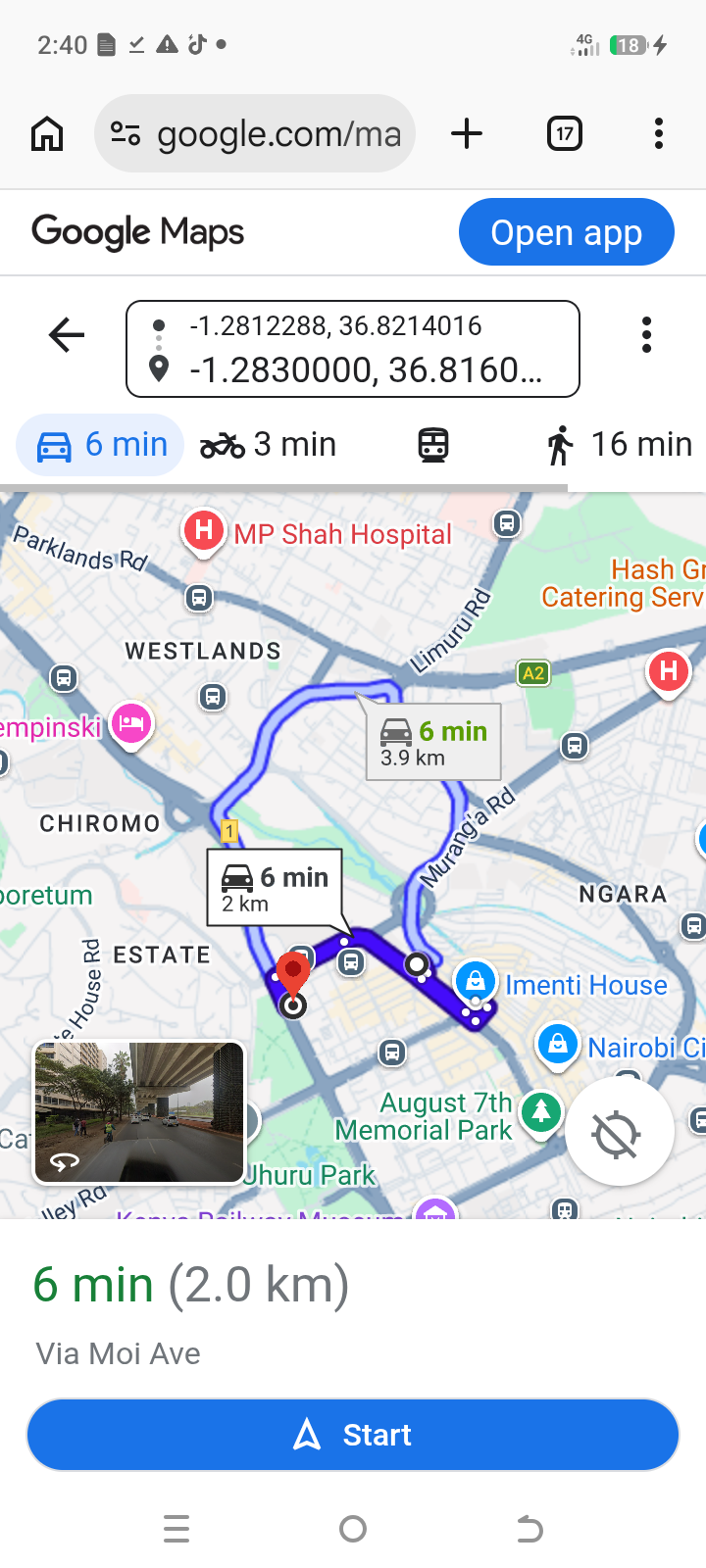
- 🗺️ Live interactive incident mapping with routing and ETA calculations
- 🚒 Smart responder recommendation based on distance and availability
- 🔗 Hedera blockchain audit trail for immutable incident records
- 📊 AI-powered risk prediction and analytics dashboards
- 💬 Intelligent RAG chatbot for emergency insights
- 📢 Multi-channel notifications via SMS, Email, and Push Notifications
- 📱 Offline-first synchronization for low-connectivity environments
The platform transforms raw citizen reports into verified, prioritized, and actionable emergency intelligence.
How we built it
We designed CivicAI as a scalable full-stack cloud application using modern AI and geospatial technologies.
Frontend
- React
- Vite
- Tailwind CSS
- React Router
- Map visualization
- Responsive dashboard
- Interactive incident reporting wizard
Backend
- FastAPI
- Python
- RESTful APIs
- Modular microservice-inspired architecture
Artificial Intelligence
- YOLOv11 for object detection
- Segment Anything Model (SAM)
- CLIP for image verification
- GPT-4o for reasoning and incident analysis
- Retrieval-Augmented Generation (RAG) for contextual emergency assistance
Cloud & Data
- Azure Cosmos DB
- Azure Blob Storage
- Azure AI Search
- Azure Machine Learning
- Azure Communication Services
Security & Trust
- Hedera Consensus Service
- SHA-256 hashing
- Immutable audit logs
Routing & GIS
- GPS positioning
- Haversine distance calculations
- OSRM routing engine
- Estimated arrival time prediction
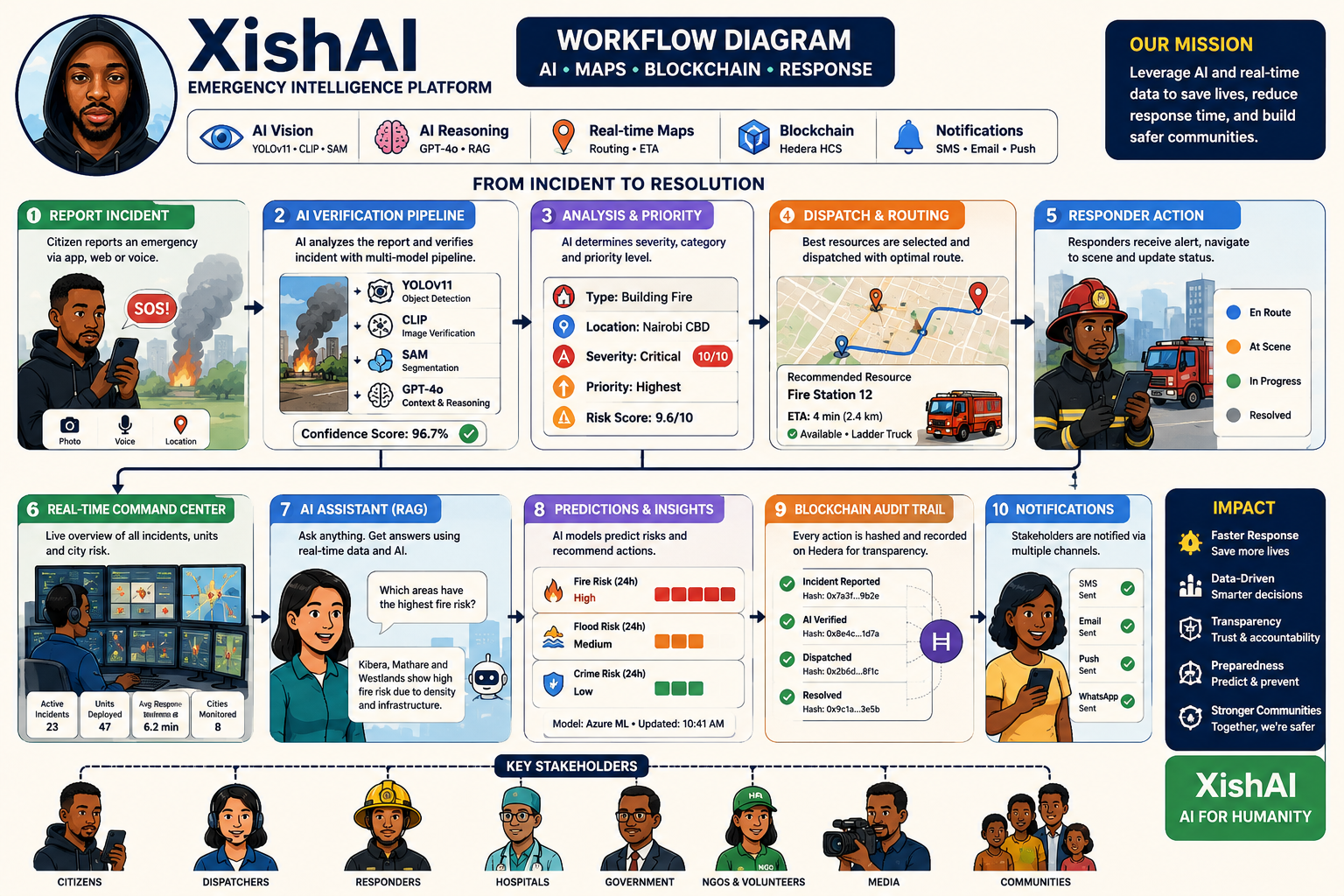
The system follows an end-to-end AI workflow:
Citizen Report
      ↓
GPS + Media Upload
      ↓
AI Vision Verification
      ↓
GPT-4o Incident Analysis
      ↓
Priority Classification
      ↓
Nearest Resource Selection
      ↓
Navigation & Dispatch
      ↓
Blockchain Audit
      ↓
Notifications
      ↓
Incident Resolution
Challenges we ran into
Developing CivicAI required solving several complex technical challenges.
- Integrating multiple AI models into a unified workflow.
- Designing a scalable architecture that supports both real-time and asynchronous processing.
- Combining computer vision, natural language reasoning, GIS, routing, and blockchain technologies.
- Creating an intuitive user interface despite the complexity of emergency operations.
- Simulating live emergency data for demonstrations while keeping the architecture production-ready.
- Balancing AI automation with transparency and human oversight to maintain trust in emergency decisions.
Another major challenge was ensuring that every system component—from AI verification to dispatch and notifications—could communicate seamlessly without introducing unnecessary latency.
Accomplishments that we're proud of
We are proud of building a platform that combines several advanced technologies into a single cohesive ecosystem.
Highlights include:
- ✅ AI-powered emergency verification pipeline
- ✅ Intelligent emergency routing with GPS and ETA
- ✅ Blockchain-backed incident transparency
- ✅ Interactive emergency command dashboard
- ✅ AI assistant powered by Retrieval-Augmented Generation
- ✅ Predictive risk analytics
- ✅ Offline-ready architecture
- ✅ Modular, cloud-native design ready for future deployment
Perhaps our biggest achievement is demonstrating that advanced AI can directly improve public safety by enabling faster, data-driven emergency response.
What we learned
Building CivicAI taught us valuable lessons about both technology and emergency management.
We learned that successful AI systems depend not only on accurate models but also on thoughtful user experience, reliable data pipelines, and trustworthy decision-making.
We also gained practical experience integrating:
- Computer Vision
- Large Language Models
- Retrieval-Augmented Generation
- GIS and routing systems
- Blockchain technologies
- Cloud-native application architecture
- Real-time emergency workflows
Most importantly, we learned that technology has the greatest impact when it solves meaningful human problems.
What's next for CivicAI — Emergency & Civic Intelligence Platform
Our vision extends beyond the current prototype.
Future development includes:
- 🌍 Nationwide and global deployment
- 🚁 AI-powered drone integration for disaster assessment
- 📡 IoT sensor integration for wildfire, flood, and air-quality monitoring
- 🛰️ Satellite imagery analysis for large-scale disaster detection
- 🚑 Live responder fleet tracking
- 🏥 Hospital capacity intelligence and smart ambulance routing
- 🌊 Digital twin simulations for disaster prediction
- 🌐 Multilingual voice-based emergency reporting
- 📲 Community safety mobile application
- 🤝 Integration with government emergency agencies and humanitarian organizations
- 📈 Advanced predictive analytics for proactive disaster management
Our long-term goal is to build a global AI-powered emergency intelligence ecosystem that helps communities predict risks, coordinate responses, and save lives through intelligent, transparent, and resilient technology.


Log in or sign up for Devpost to join the conversation.