-
-
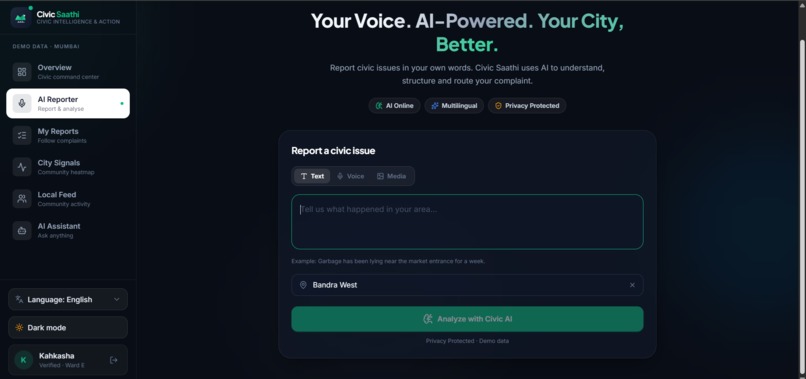
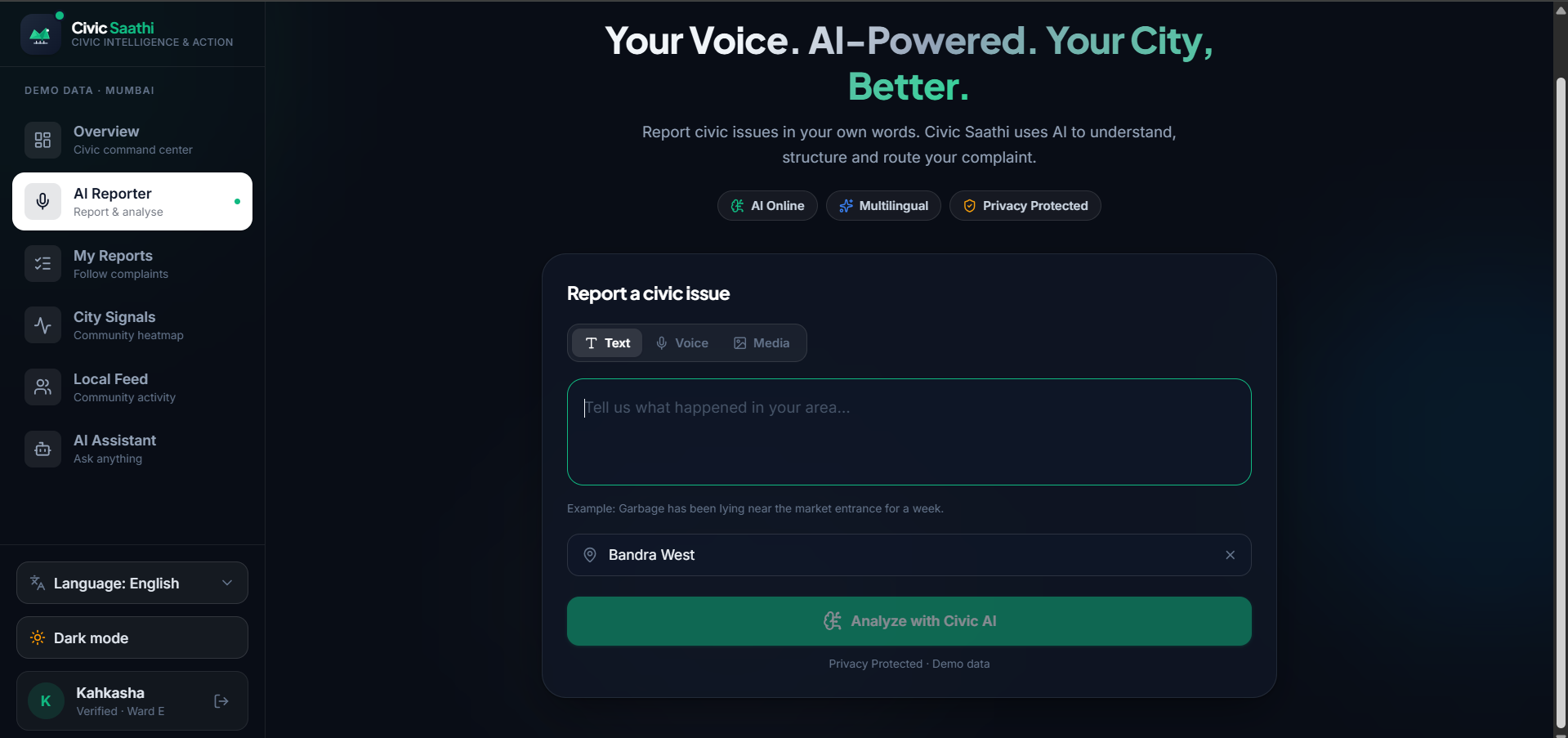
Report civic issues through text, voice, or images and let AI assist with turning evidence into a clear, actionable complaint.
-
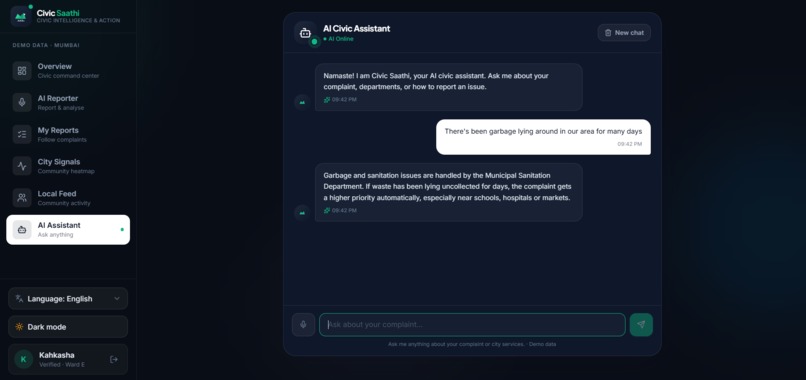
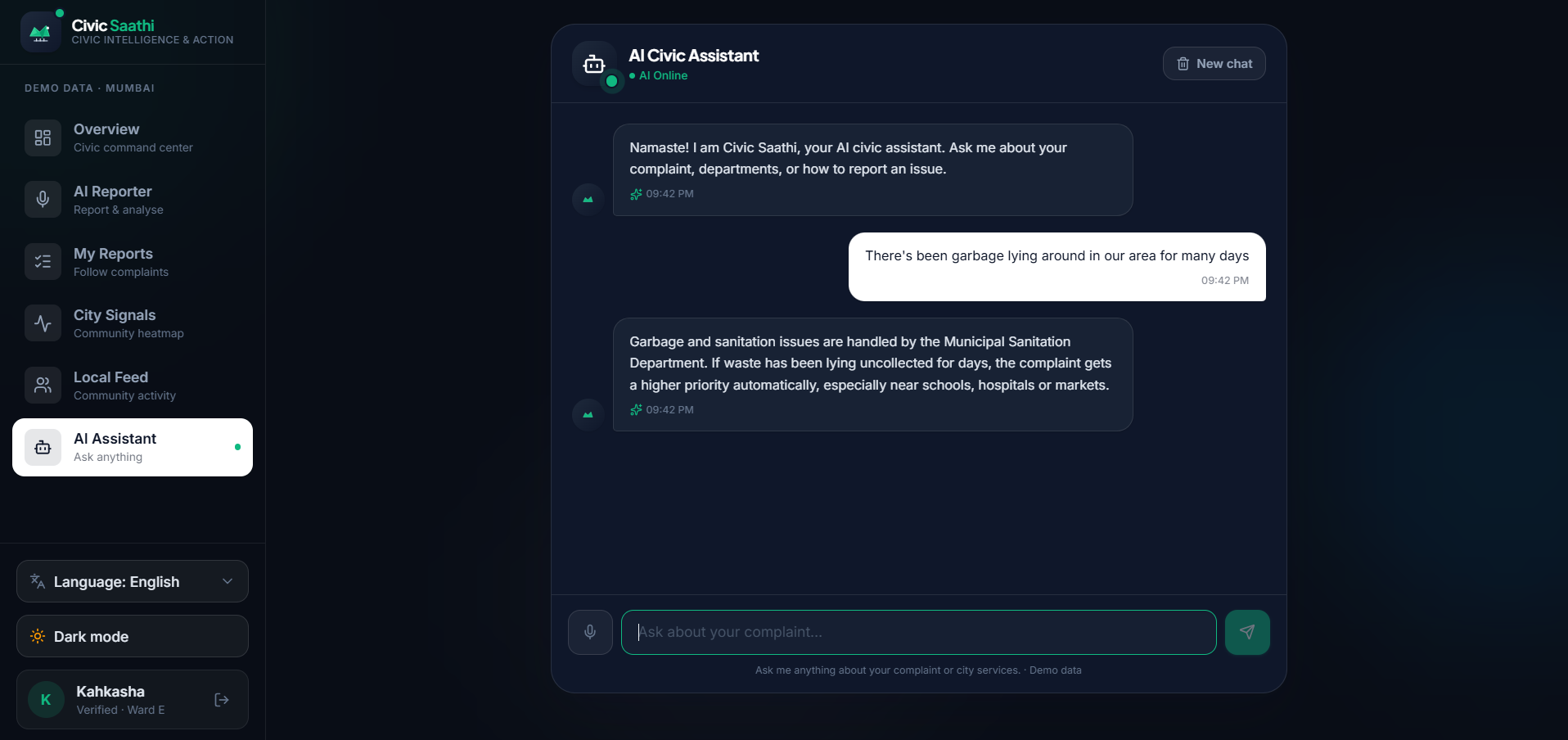
Ask Civic Saathi what is happening around you and get simple, AI-powered answers from the civic information that matters.
-
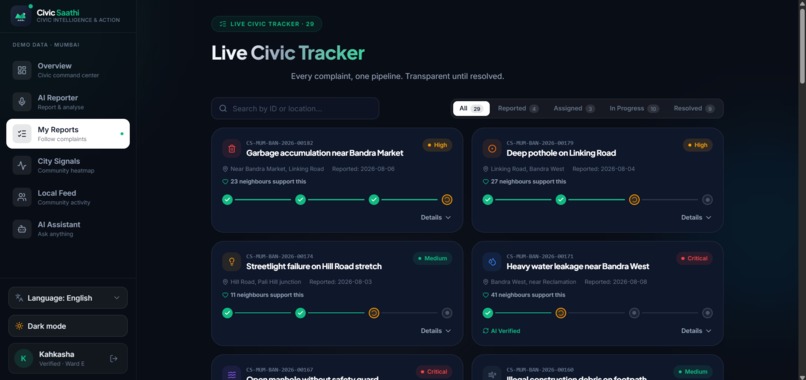
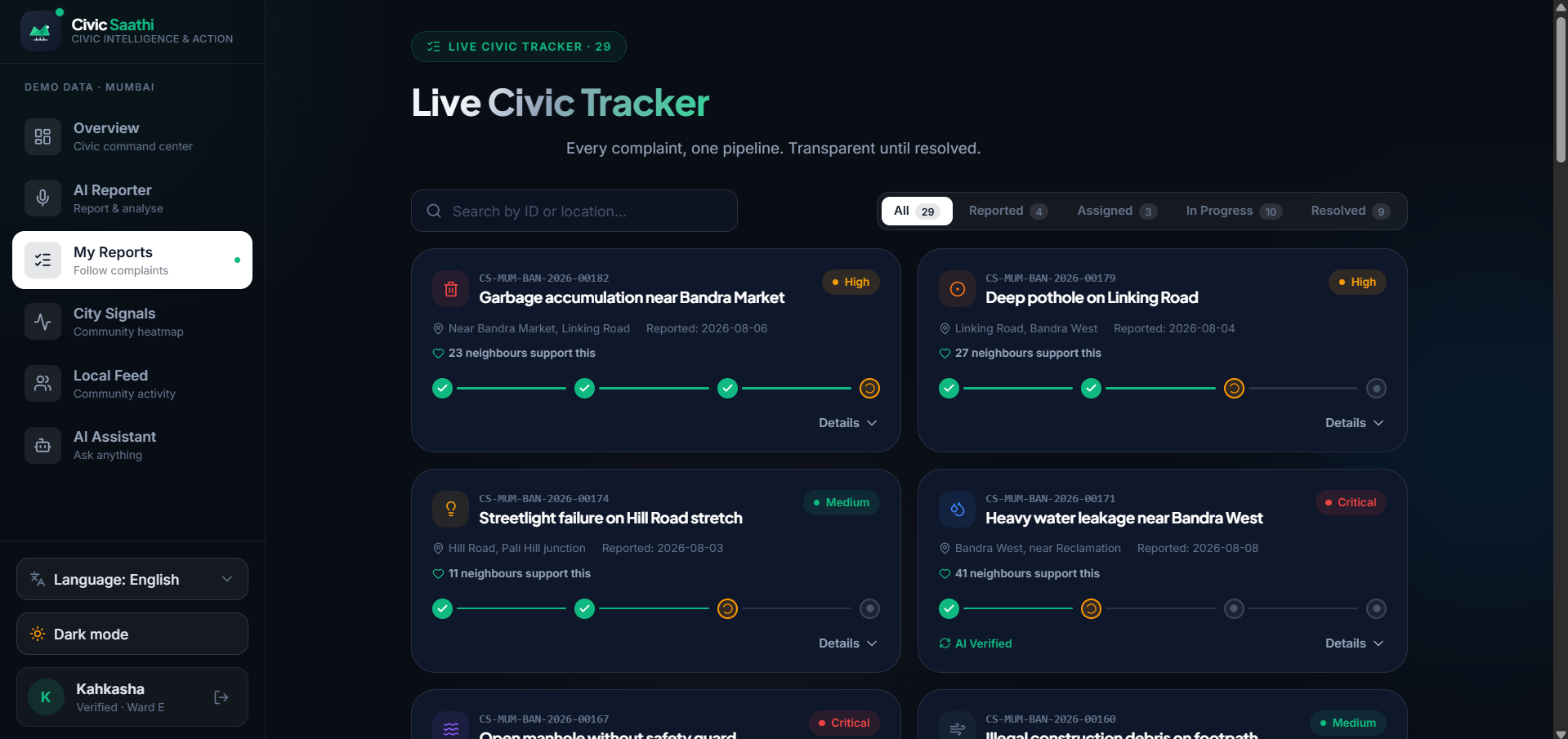
From submission to resolution, citizens stay informed with transparent complaint tracking and clear progress updates.
-
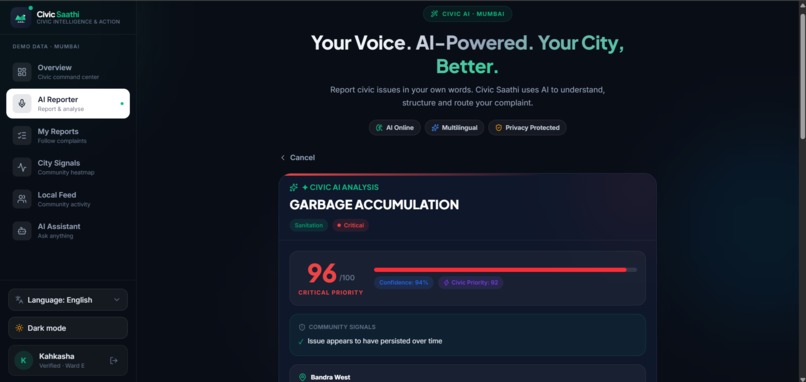
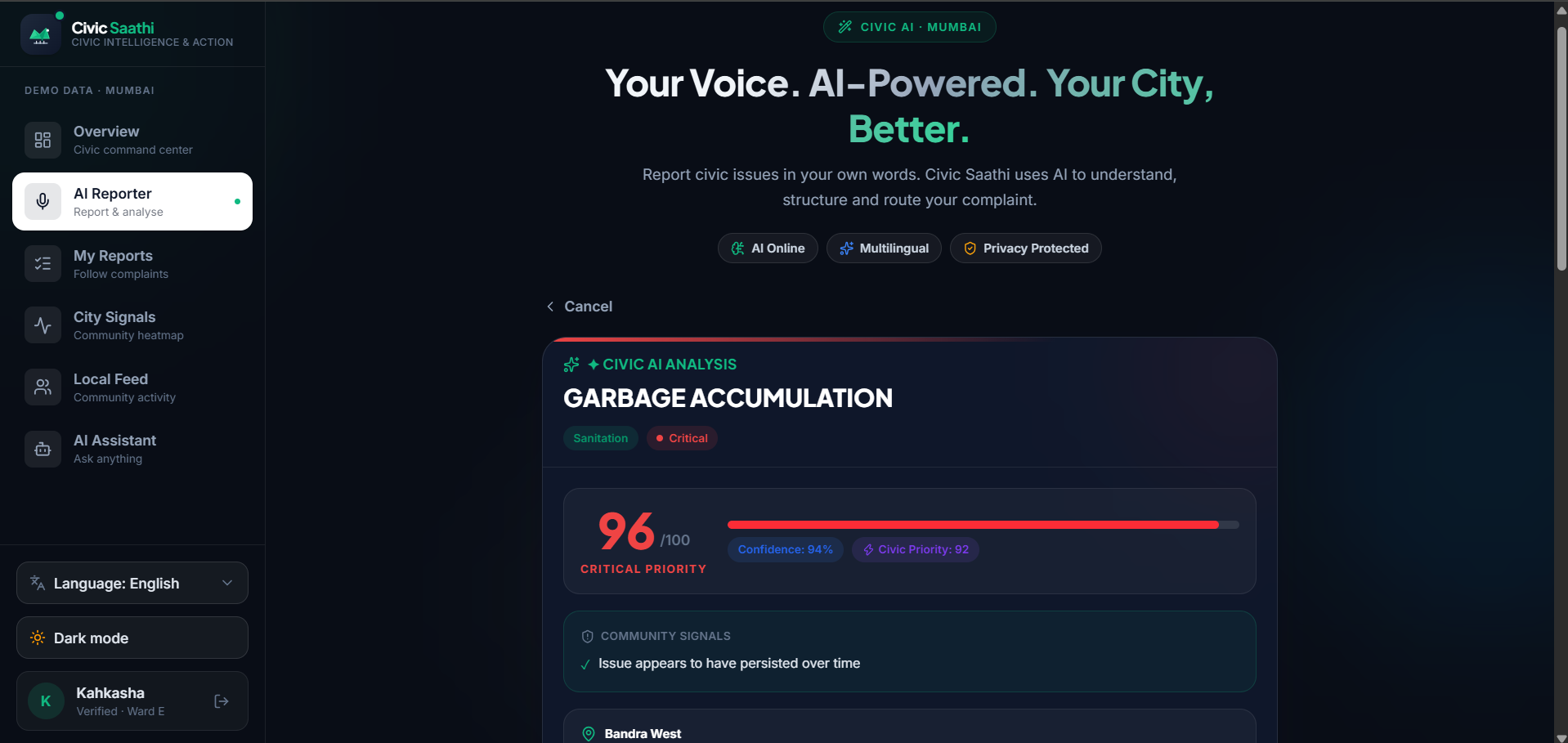
AI analyzes uploaded evidence and helps citizens assess its quality before turning it into a stronger civic report.
-
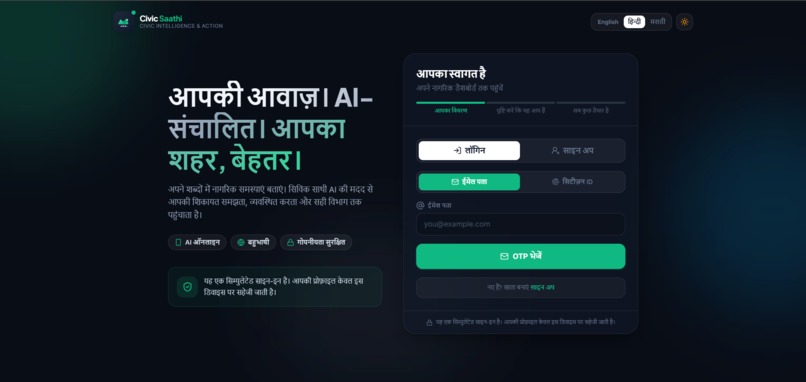
Civic participation without language barriers: Civic Saathi brings AI-powered civic intelligence to citizens in their preferred language.
-
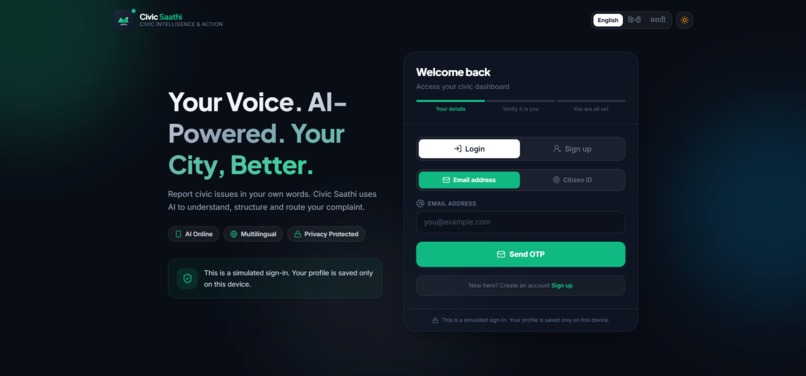
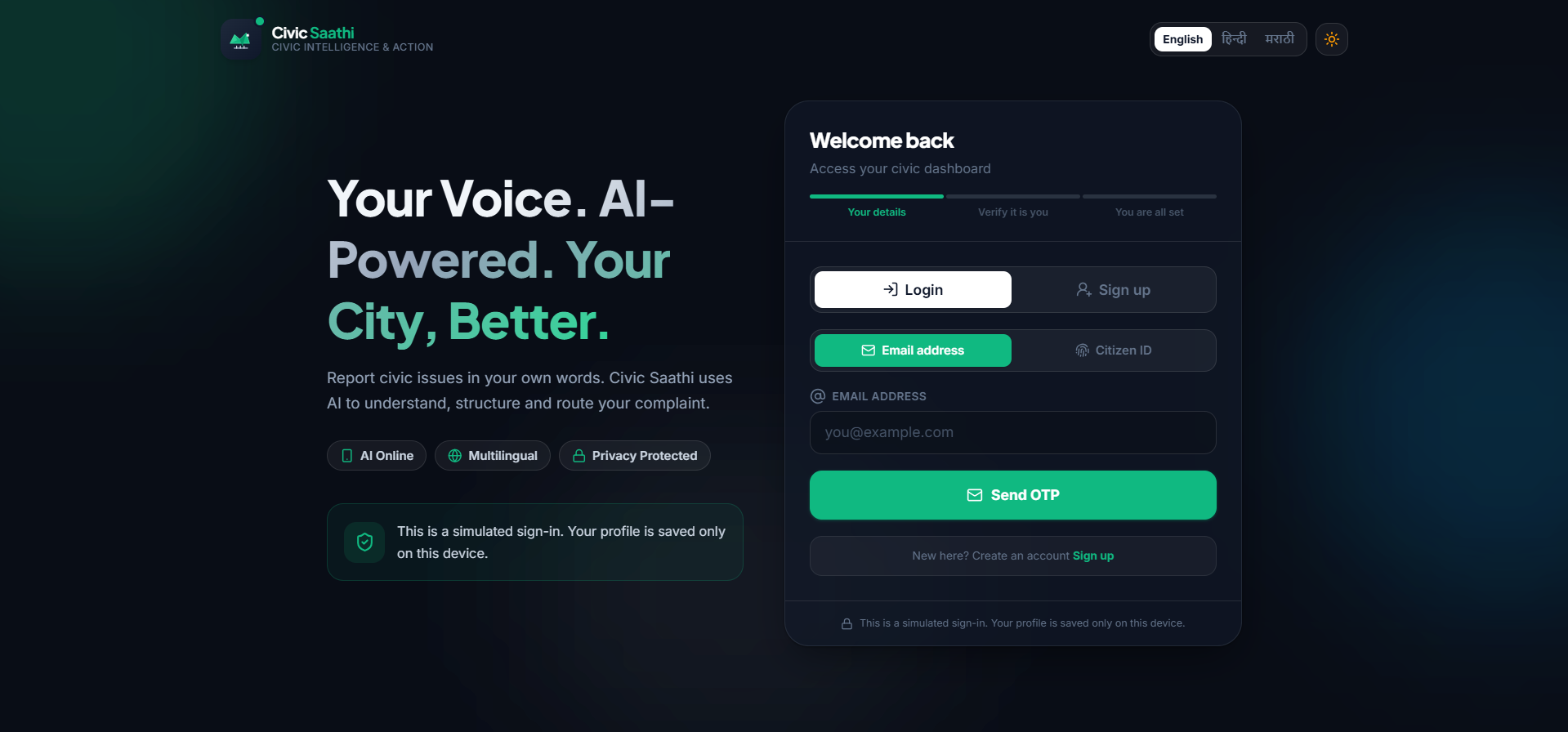
Your Voice. AI-Powered. Your City, Better. Civic Saathi turns everyday civic problems into visible, actionable community signals.
-
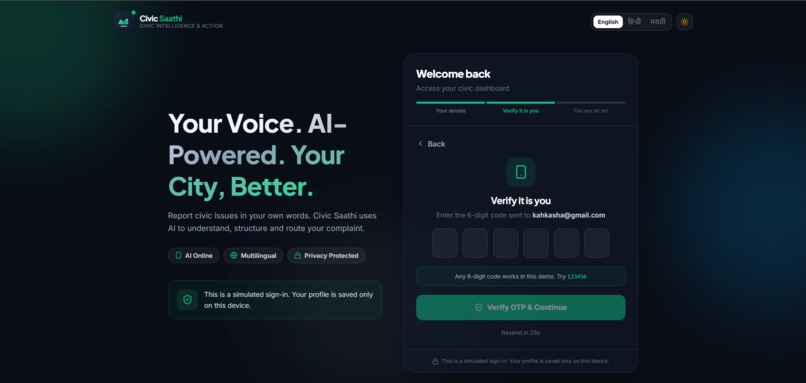
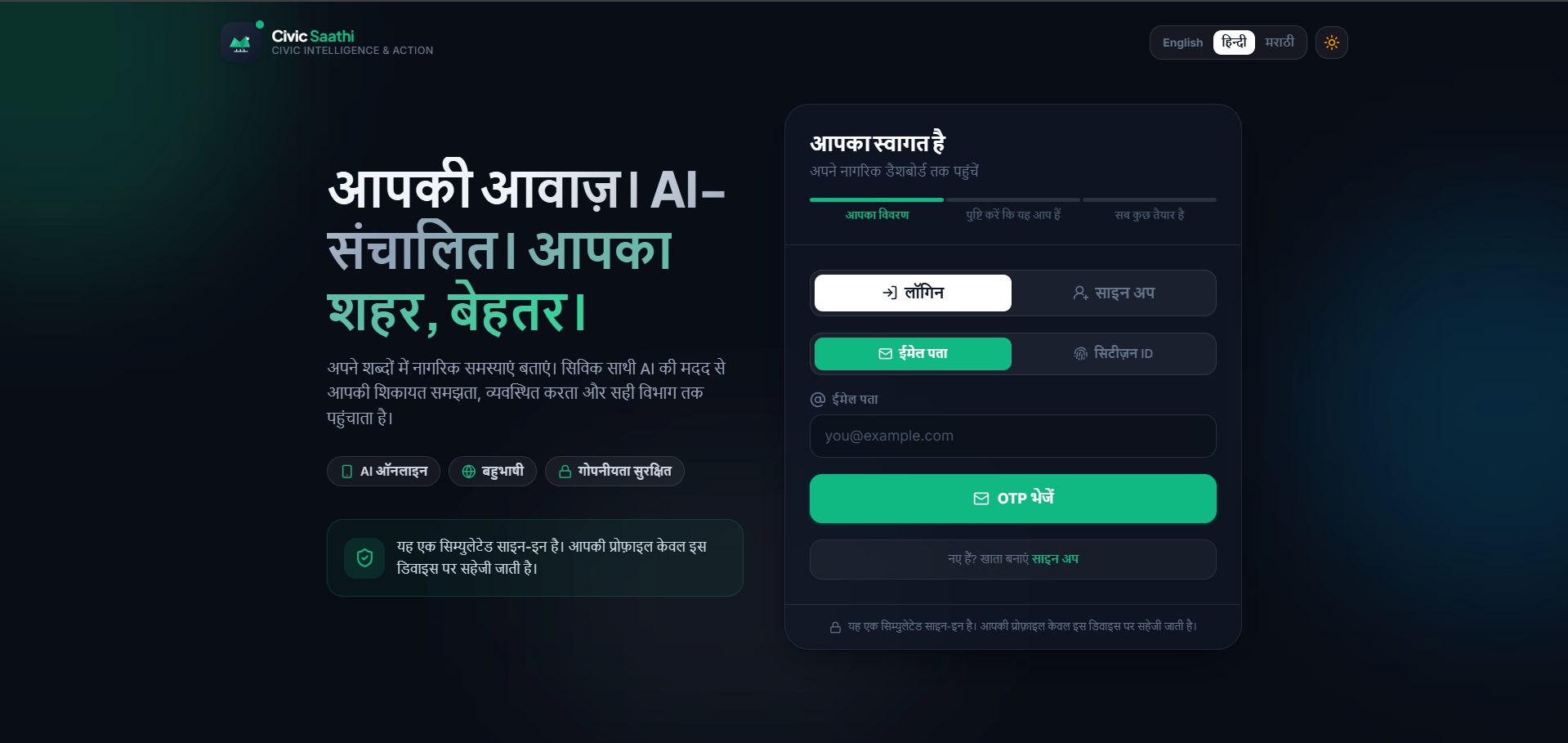
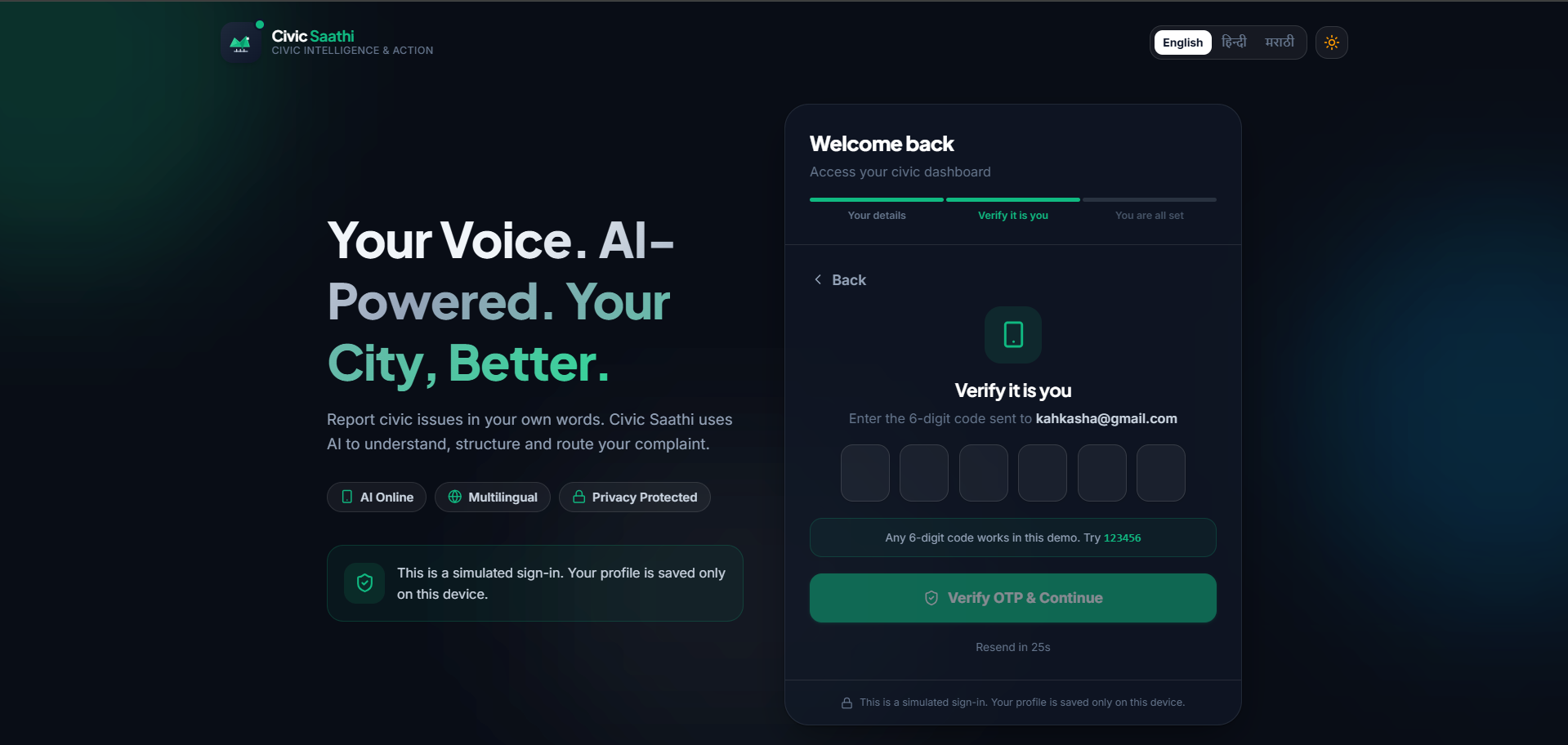
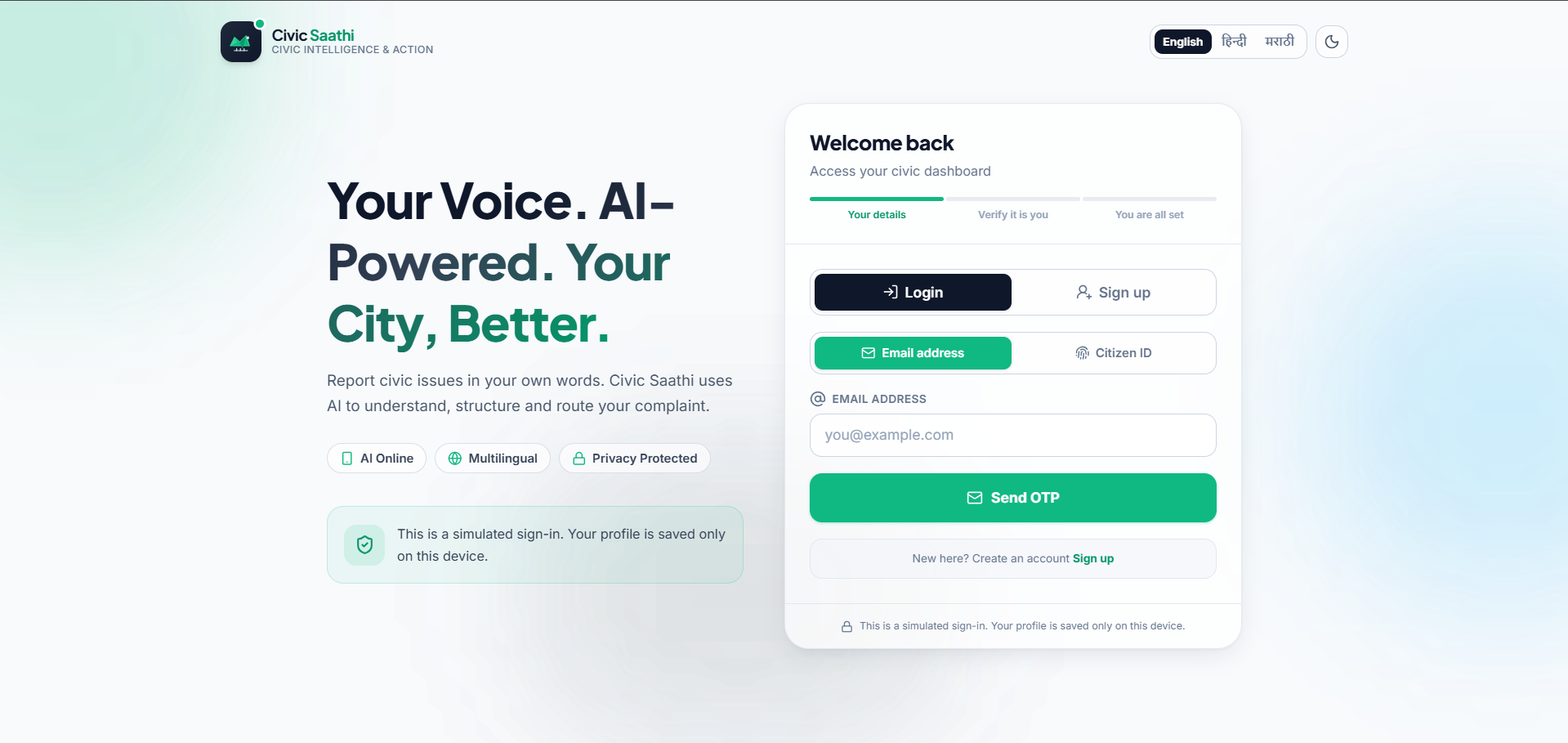
Secure, simple onboarding gets citizens from verification to civic action with minimal friction.
-
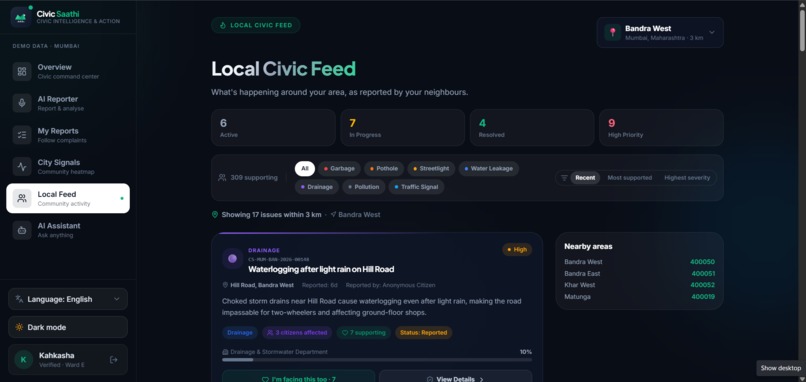
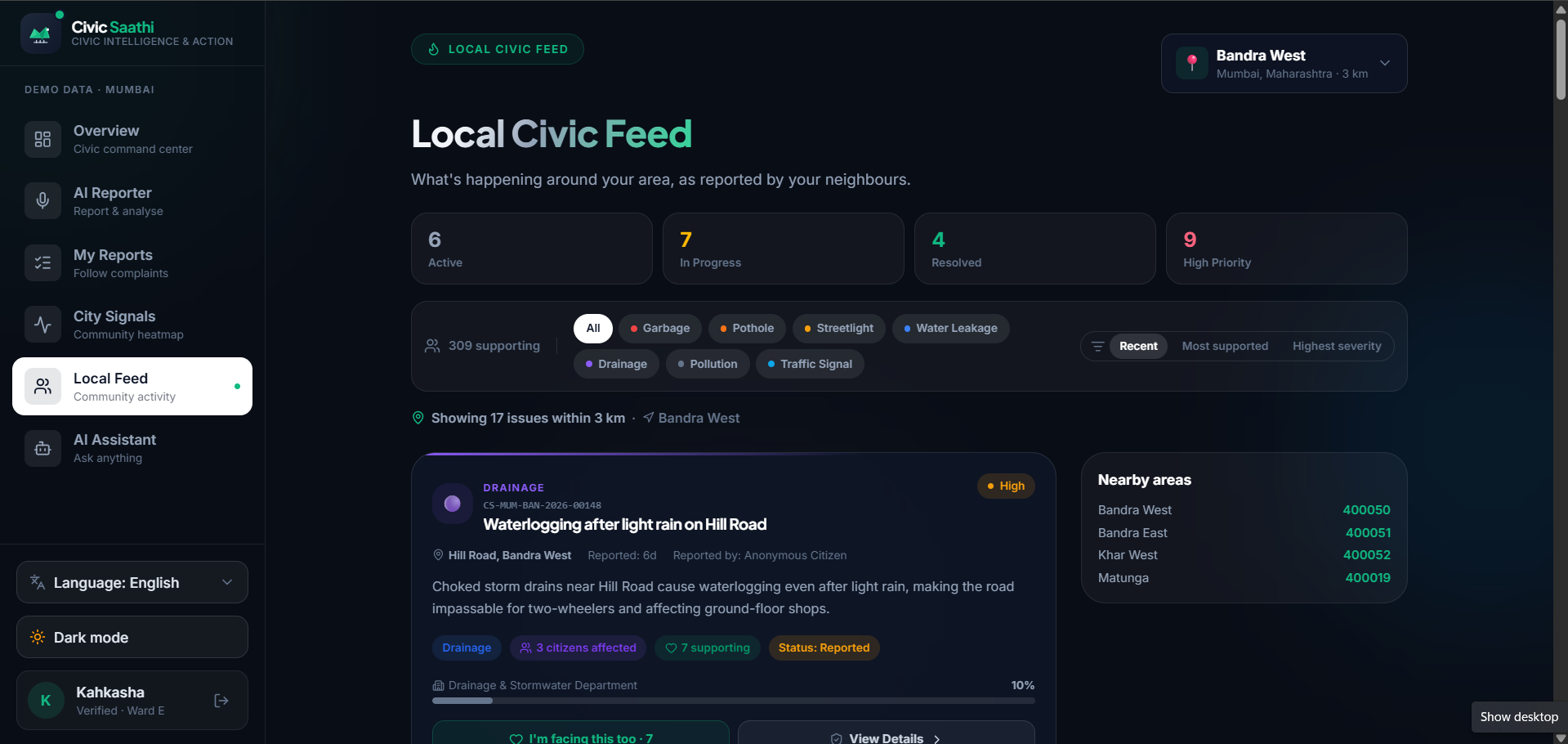
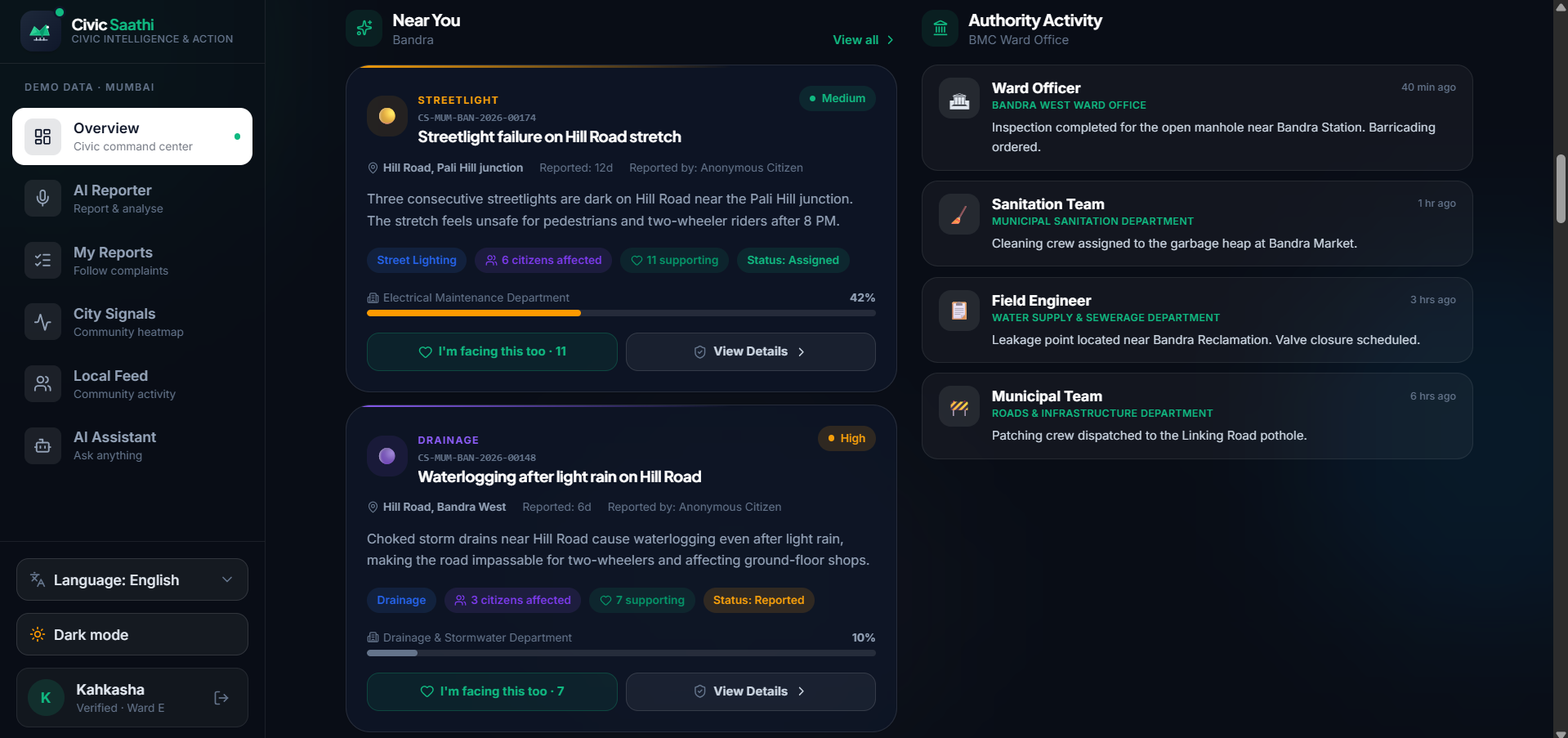
Discover what your neighborhood is facing, support existing complaints, and turn individual reports into collective civic signals.
-
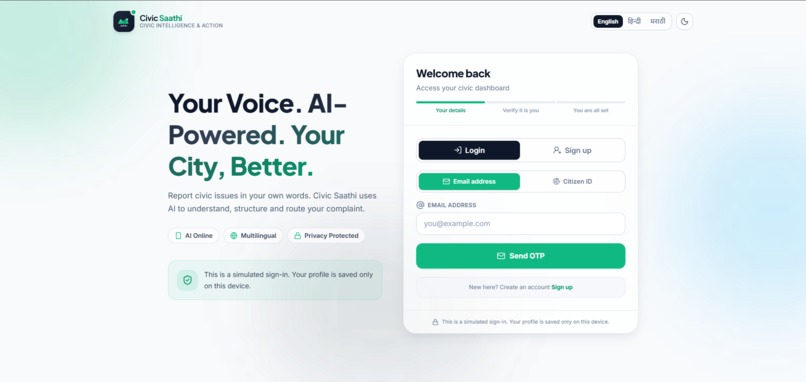
A citizen-first interface designed for clarity, accessibility, and effortless civic participation across different user preferences.
-
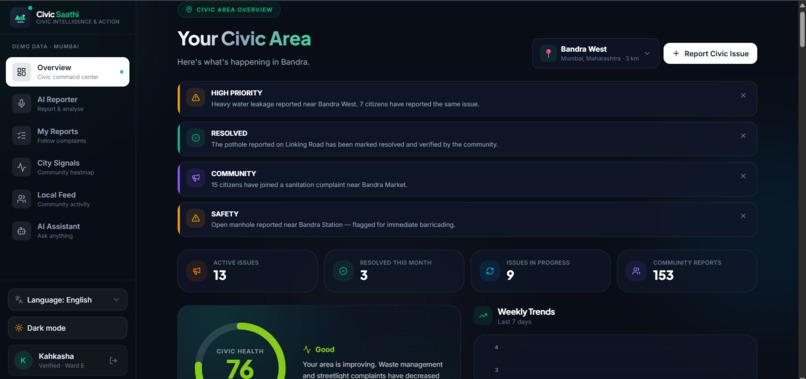
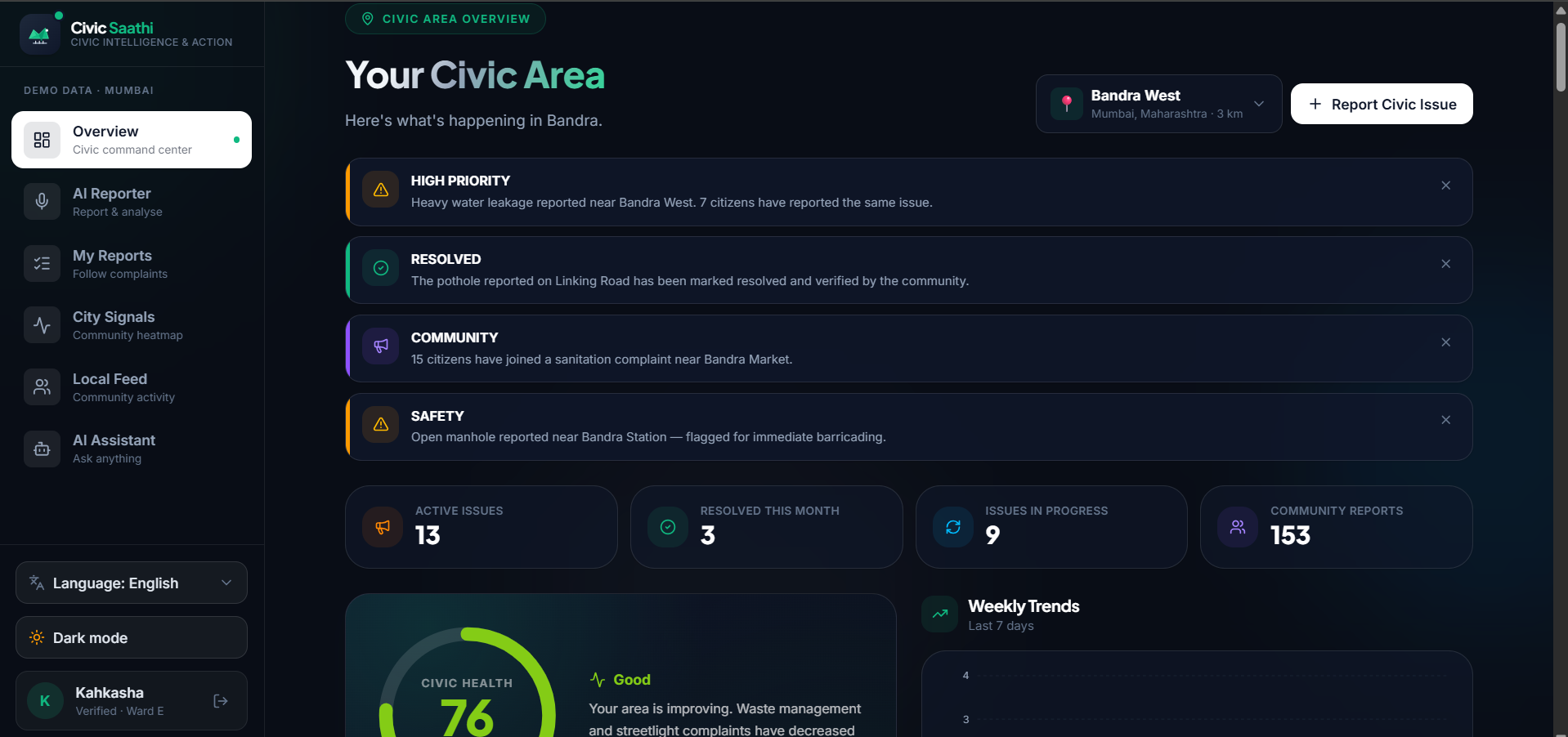
One dashboard, one civic pulse: understand local complaints, trends, priorities, and community activity at a glance.
-
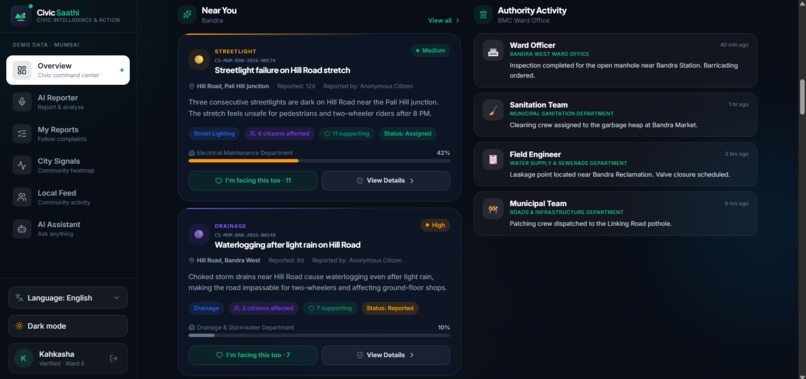
Turn scattered complaints into meaningful civic intelligence with AI-assisted insights, activity tracking, and community signals.
-
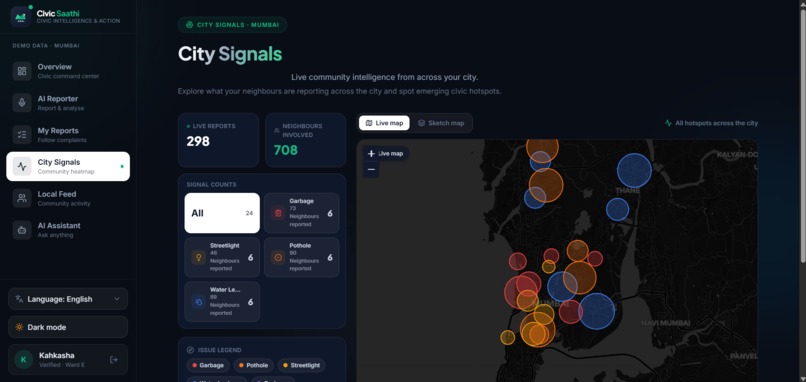
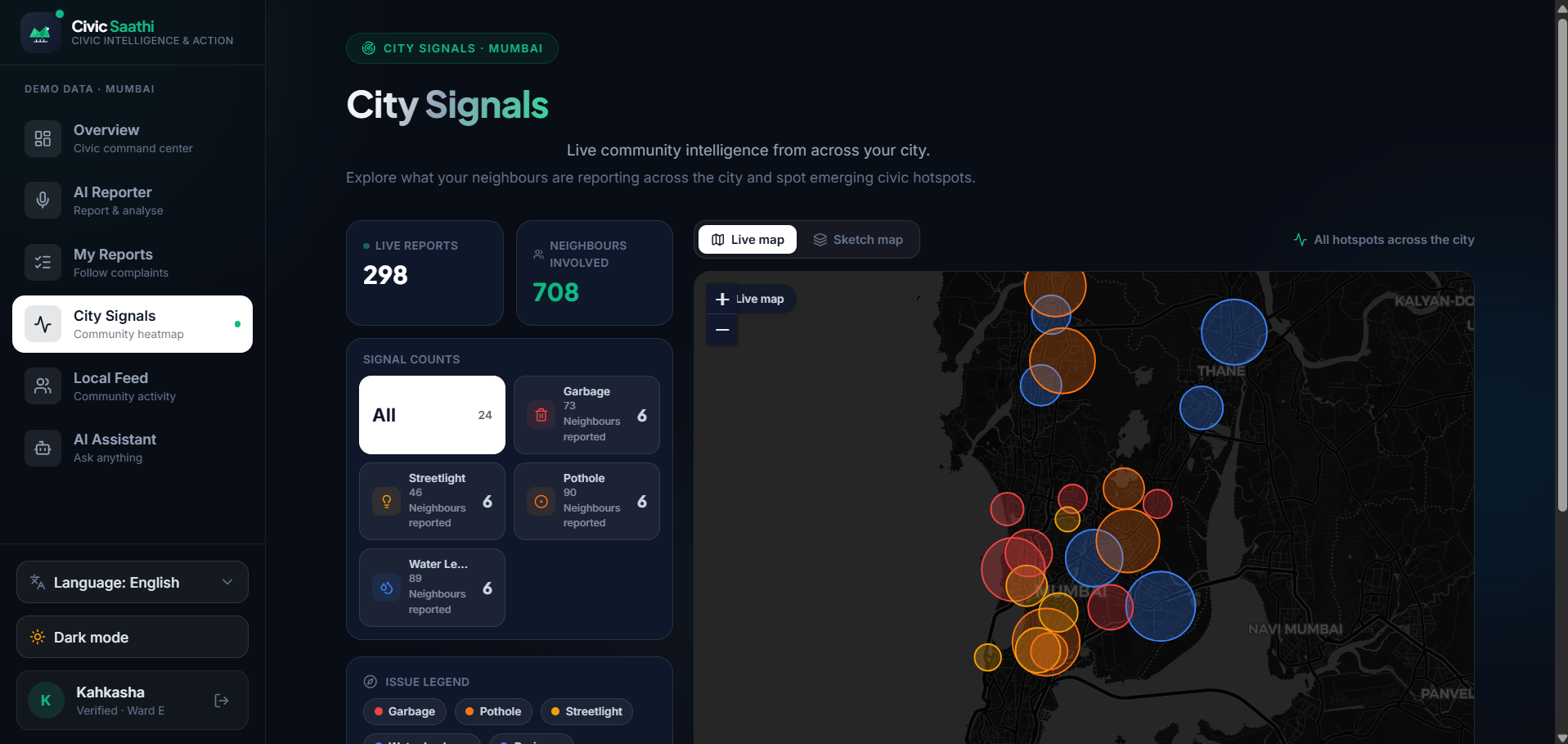
See your city differently: location-based civic signals reveal where problems are concentrated and what communities are facing.
Inspiration
Civic problems are part of everyday life — overflowing garbage, potholes, broken streetlights, water leakage, and damaged public infrastructure.
The problem is not only that these issues exist. The bigger problem is that reporting them, understanding them, tracking them, and getting the community involved are often fragmented processes.
We wanted to build something that goes beyond simply filing a complaint.
The idea behind Civic Saathi came from a simple question:
What if a citizen could not only report a civic problem, but also understand what is happening around them, find existing issues, gather community support, and use AI to navigate the entire process?
This led us to build Civic Saathi — an AI-powered civic intelligence and community platform that turns individual citizen voices into structured, community-backed civic signals.
What it does
Civic Saathi brings reporting, AI, location intelligence, community participation, and complaint tracking together in one platform.
Citizens can:
- Report civic problems using text, voice, or images
- Use AI to analyze uploaded evidence
- Get AI-assisted descriptions of reported problems
- Edit AI-generated descriptions before submission
- Discover existing complaints in their locality
- Support existing complaints instead of creating duplicates
- Comment and share experiences with other citizens
- Explore civic issues through a location-based map
- Track complaint progress
- Understand complaint statuses through AI-powered explanations
- Ask questions about their area using the AI Copilot
- Use the platform in English, Hindi, and Marathi
AI-Powered Evidence Analysis
When a citizen uploads an image, Civic Saathi analyzes the available visual evidence.
If the image is unclear or low quality, the system can identify this and give the citizen an opportunity to provide better evidence.
AI can then assist in generating a concise description of the issue.
The citizen remains in control throughout the process.
AI assists the citizen. The citizen makes the final decision.
Community-Powered Reporting
Civic Saathi addresses duplicate reporting by allowing citizens to support existing complaints.
Instead of:
One problem → Multiple duplicate complaints
the platform enables:
One problem → Multiple citizens → Community support → Stronger civic signal
Citizens can also comment on complaints and share their own experiences.
Location Intelligence
Citizens can manually select an area or use their current location to explore nearby civic problems.
The map makes different categories of issues easy to identify, including garbage, streetlights, potholes, road damage, and water-related problems.
This helps citizens understand what problems are happening, where they are happening, and how the community is responding.
AI Copilot
The AI Copilot allows citizens to ask questions about civic information using natural language.
For example:
"What are the major problems in my area?"
"Why is this complaint considered high priority?"
"What is happening with complaints near me?"
Instead of manually searching through complaints, maps, and updates, citizens can simply ask Civic Saathi.
How we built it
We designed Civic Saathi around three interconnected layers.
1. Citizen Layer
This layer handles the complete citizen experience — authentication, reporting, evidence submission, complaint discovery, community support, comments, and complaint tracking.
2. AI Intelligence Layer
AI is integrated directly into the civic workflow rather than being used only as a standalone chatbot.
It powers:
- Image and evidence analysis
- Complaint description assistance
- Complaint status explanations
- Natural-language civic queries through the AI Copilot
3. Civic Intelligence & Location Layer
Civic issues are connected with location and community activity.
The platform combines complaint information, issue categories, location data, community support, and status information to provide a broader view of the civic situation in an area.
The overall workflow is:
Citizen ↓ Report Issue ↓ Upload Evidence ↓ AI Analysis ↓ Create / Improve Complaint ↓ Community Support ↓ Authority ↓ Complaint Tracking ↓ AI-Powered Understanding
Challenges we ran into
One of our biggest challenges was deciding where AI genuinely adds value.
It would have been easy to add a generic chatbot and label the project as AI-powered. Instead, we focused on practical parts of the civic workflow where AI can reduce friction.
We focused AI on:
Evidence → Complaint Creation → Status Understanding → Civic Intelligence
Another challenge was maintaining the right balance between automation and citizen control.
AI-generated information may not always be perfect, so citizens can edit generated complaint descriptions before submission.
We also had to rethink duplicate complaints.
If multiple people experience the same civic problem, creating multiple isolated reports does not necessarily provide a better representation of the issue.
Our community support mechanism allows citizens to strengthen an existing complaint instead.
Finally, we had to design a large amount of civic information without overwhelming users. Location-based visualization, categories, complaint cards, and AI-powered explanations helped us make the information easier to understand.
Accomplishments that we're proud of
We are proud that Civic Saathi goes beyond the traditional "submit a complaint and wait" model.
The platform combines several parts of the civic journey into one experience:
Report → Analyze → Understand → Support → Track
We are particularly proud of our AI-assisted reporting workflow, where citizens can provide visual evidence, receive AI assistance, review the generated information, and remain in control of the final complaint.
We are also proud of the community support model, which transforms individual complaints into collective civic signals.
Another key accomplishment is the AI Copilot, which allows citizens to interact with civic information using natural language rather than navigating through complex dashboards.
Most importantly, we built Civic Saathi around a broader idea:
A civic platform should not only collect complaints. It should help people understand the civic problems around them.
What we learned
Building Civic Saathi taught us that AI is most useful when it simplifies a real-world workflow rather than simply adding another interface.
We learned that civic technology is not only about connecting:
Citizen → Authority
It can also connect:
Citizen → Community → Information → Action
We also learned that community participation can add an important layer of context to individual reports.
A single complaint tells us that one person reported a problem.
Multiple citizens supporting and discussing that same complaint can provide a much stronger signal that the issue is affecting the wider community.
Most importantly, we learned that a complaint does not have to remain just a ticket.
With evidence, location, community support, status information, and AI-powered understanding, it can become a piece of structured civic intelligence.
What's next for Civic Saathi
Our long-term vision is to evolve Civic Saathi from a civic reporting platform into a broader AI-powered civic intelligence layer connecting citizens, communities, and authorities.
Some of the next areas we want to explore are:
- Smarter civic issue prioritization
- Stronger evidence verification
- Community-driven issue validation
- Authority-side analytics and dashboards
- Detection of recurring civic problems
- Predictive identification of infrastructure issues
- More powerful multilingual AI assistance
- Better accessibility for diverse citizen groups
- Integration with real civic authority workflows
We also want to move from simply understanding what has already happened toward helping communities identify patterns and emerging civic problems.
The goal is not to create more complaints.
The goal is to create better civic signals that can lead to better action.
Civic Saathi is not just a complaint platform. It is an AI-powered civic intelligence and community platform.
Civic Saathi
Your Problem. Your Voice. Your City.
Built With
- ai-copilot
- artificial-intelligence
- computer-vision
- css3
- express.js
- gps
- html5
- image-analysis
- javascript
- large-language-models
- maps-api
- mongodb
- multilingual-support
- node.js
- otp-authentication
- react
- rest-api
- tailwind-css


Log in or sign up for Devpost to join the conversation.