Inspiration
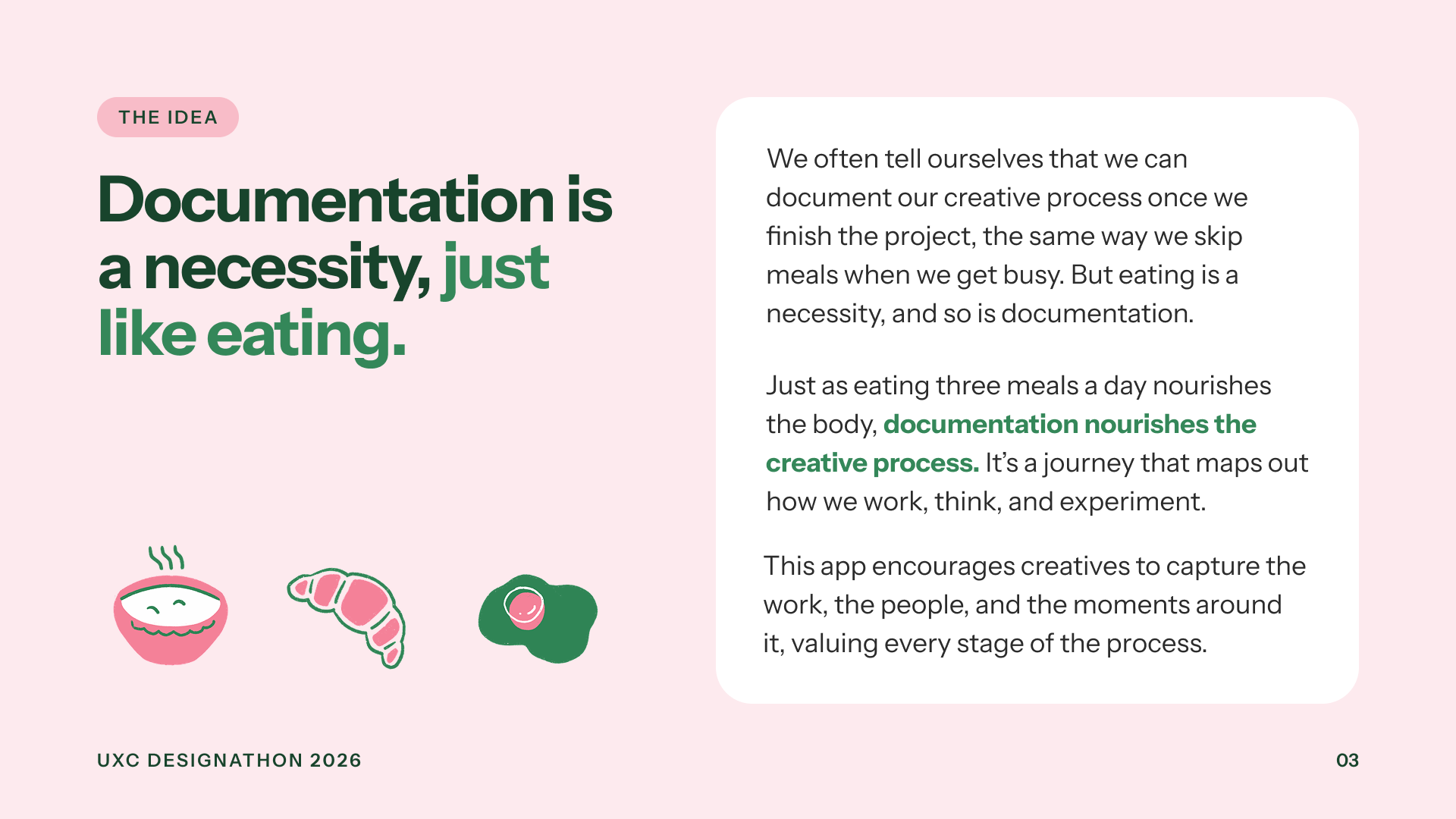
As creatives and art students, we understand how easy it is to overlook documentation. We become so immersed in making that we forget to capture the process. By the time a project is finished, the people, unexpected discoveries, discarded sketches, and small milestones that shaped it often fade from memory. Without documentation, it becomes difficult to retrace how an idea evolved.
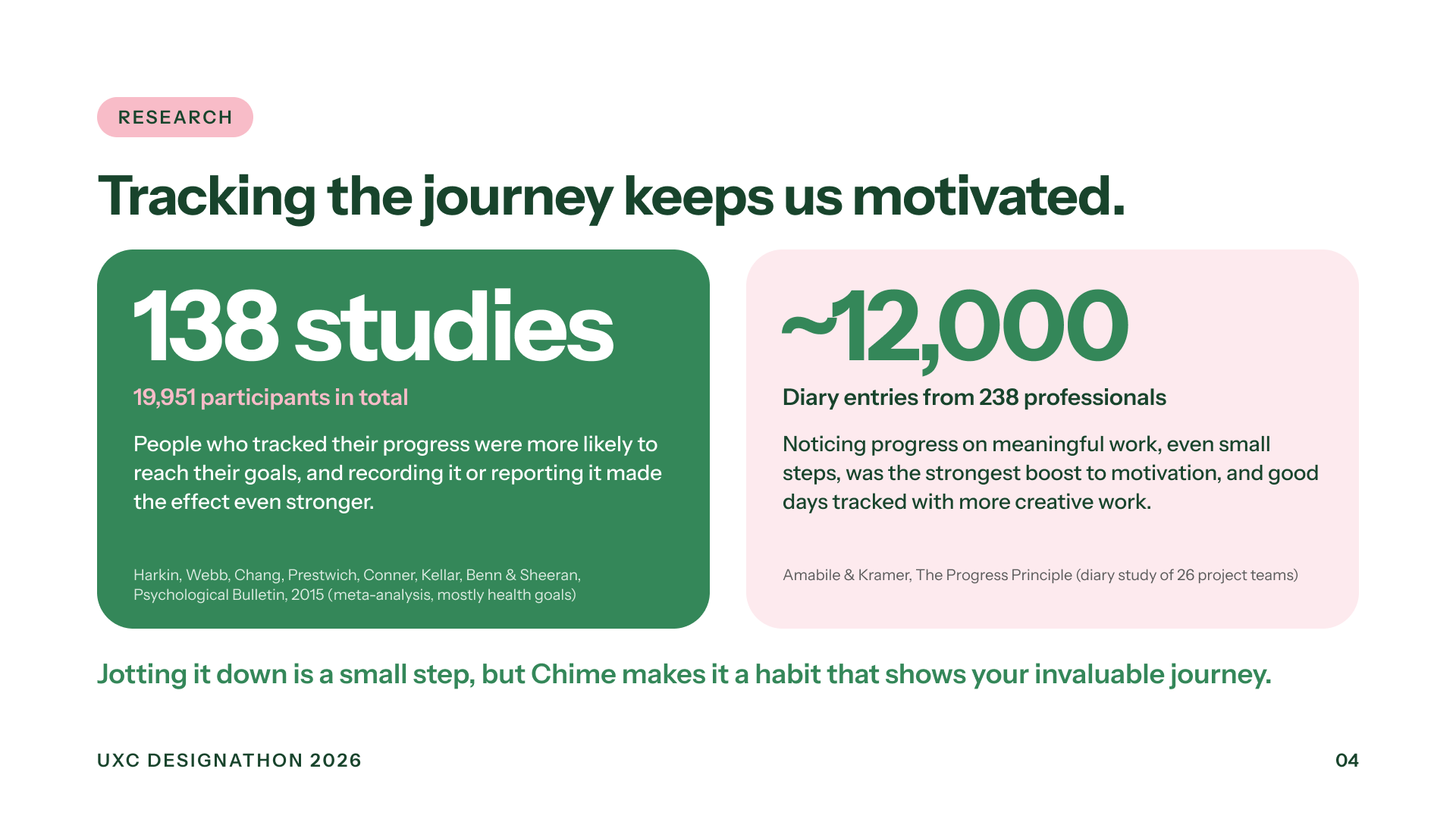
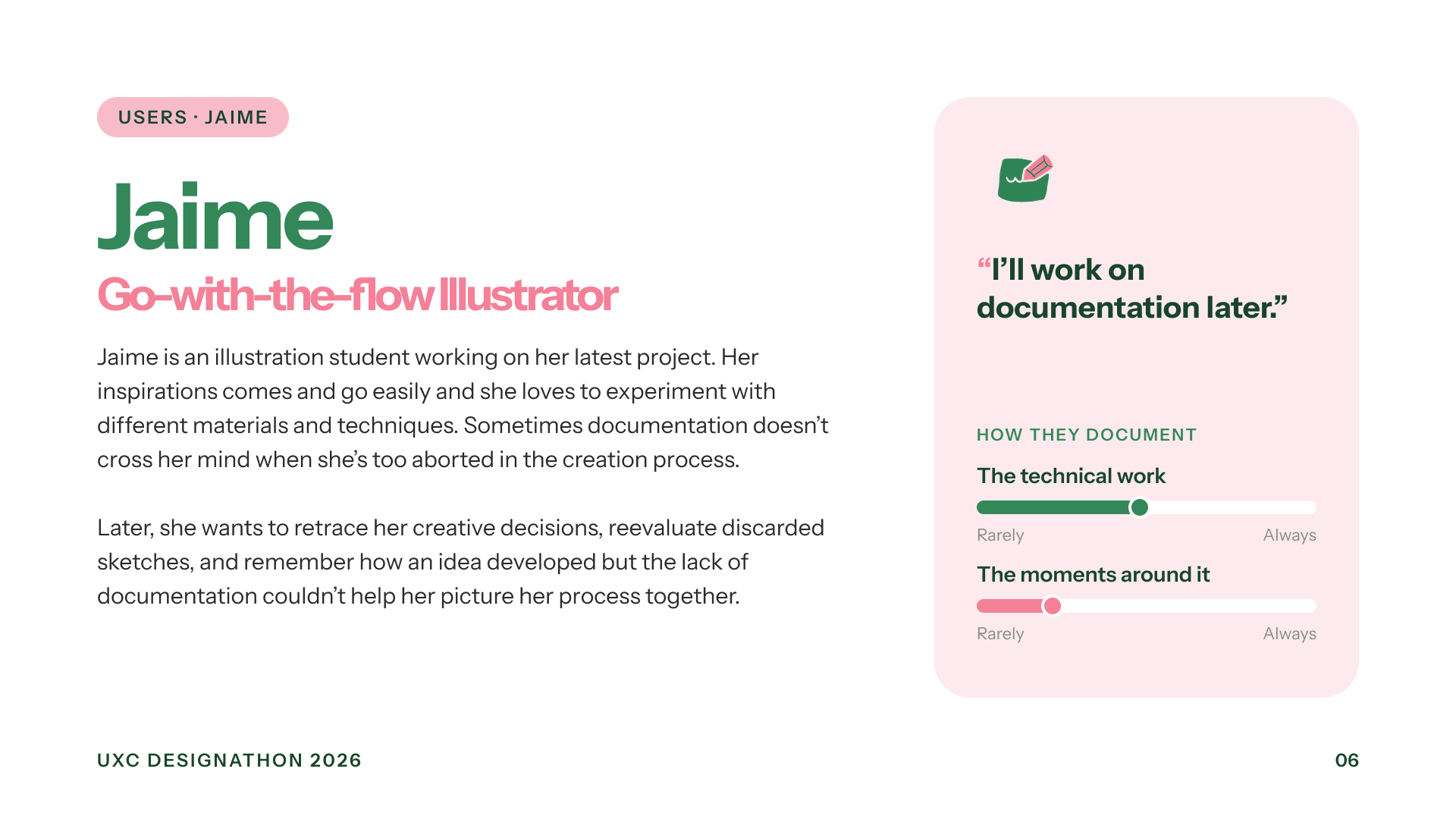
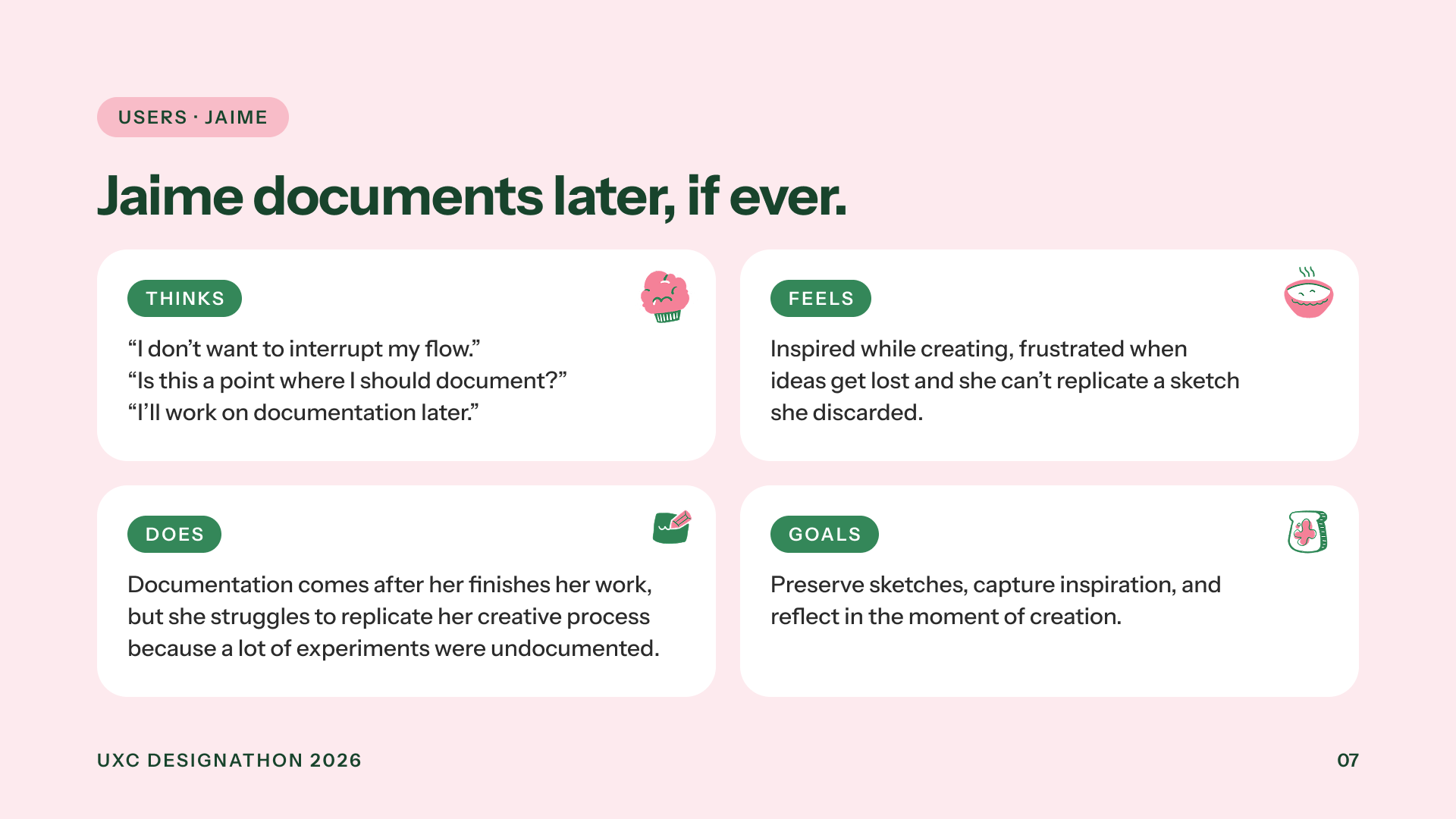
Research also highlights the value of recognizing progress. Amabile and Kramer's diary study found that noticing small steps forward was a powerful driver of motivation. Our two user personas illustrate this challenge: Jaime, an illustration student, often postpones documentation, while Jonas, a baker, tracks recipe changes but also wants to preserve the moments surrounding his work.
We drew additional inspiration from focus apps like Forest, which use timers to make productivity engaging. However, these apps primarily track time rather than creative progress. We wanted to combine the structure of a Pomodoro timer with the reflective qualities of a journal. This led to our central question: What if a Pomodoro timer and a journal app had a baby?
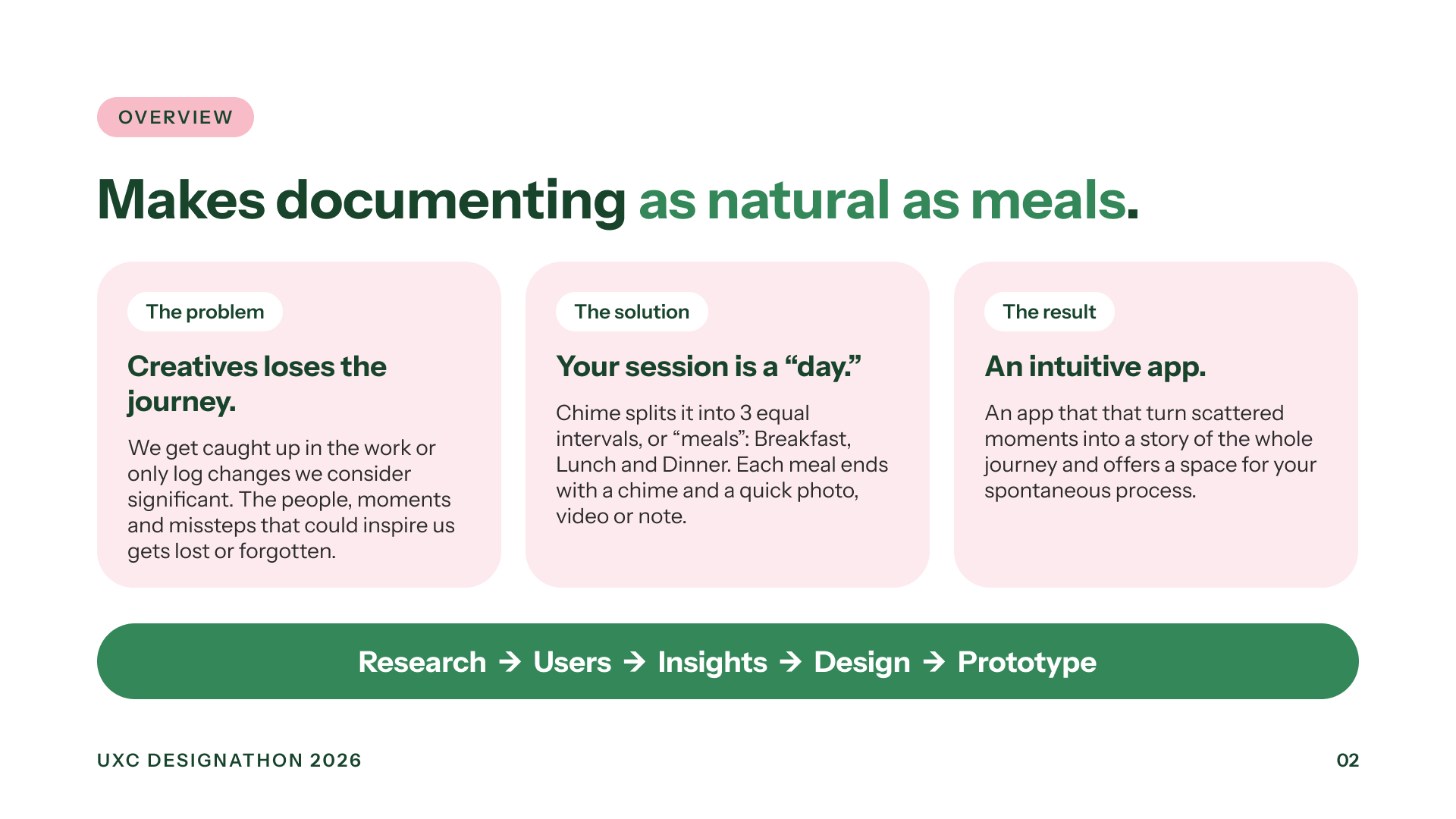
We developed a meal-inspired concept: just as people need regular meals to stay healthy, creative work benefits from consistent documentation. Chime divides a work session into three equal intervals, or "meals," each ending with an opportunity to capture progress.
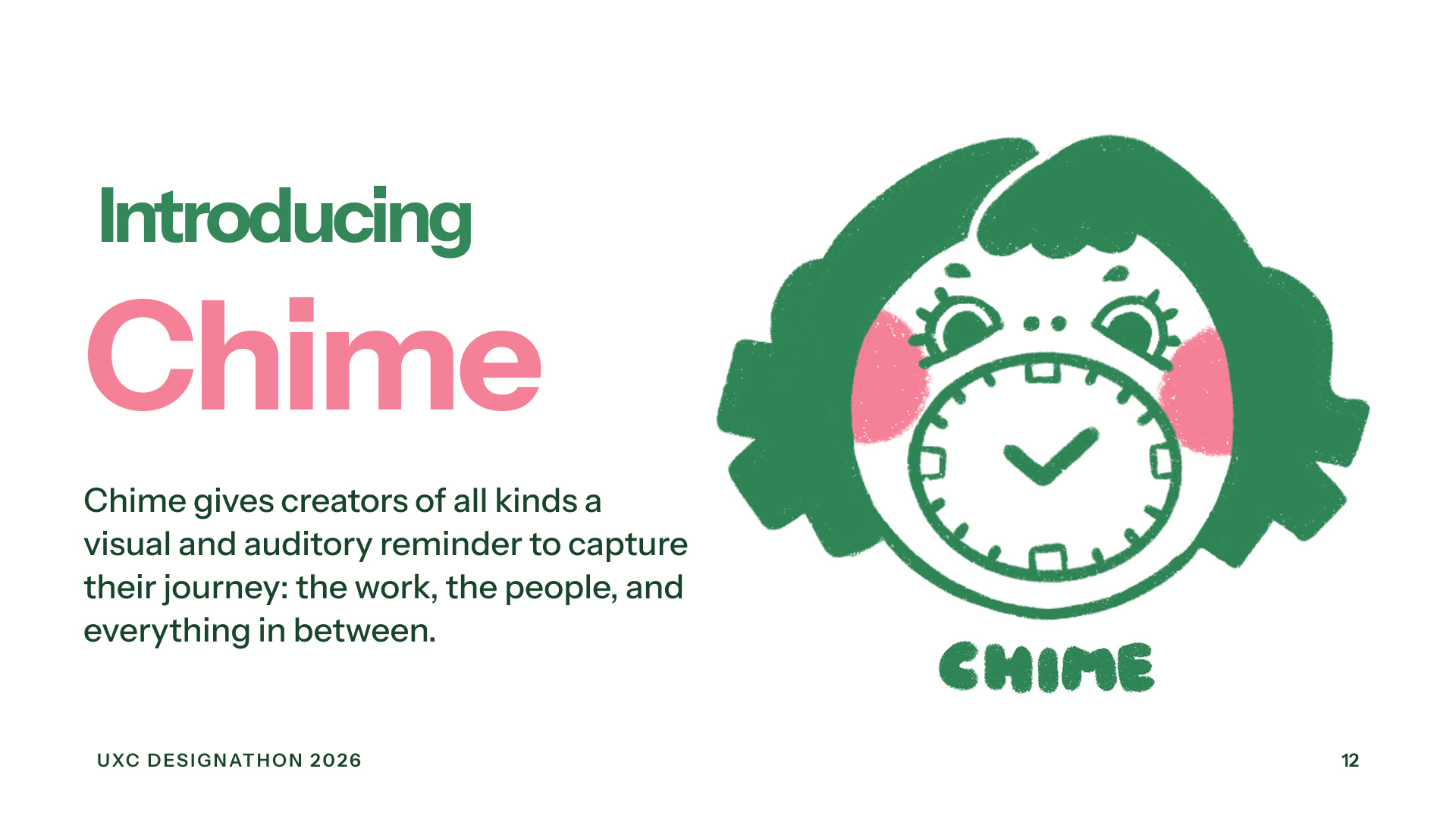
The name Chime reflects our inspiration from wind chimes: gentle sounds that bring attention to a moment without interrupting it. We wanted documentation to feel like a subtle reminder rather than another task.
What It Does
Chime is designed for anyone who creates, and anyone can be a creative. It transforms documentation into a natural part of the creative process by dividing a work session, or "day," into three equal intervals: Breakfast, Lunch, and Dinner.
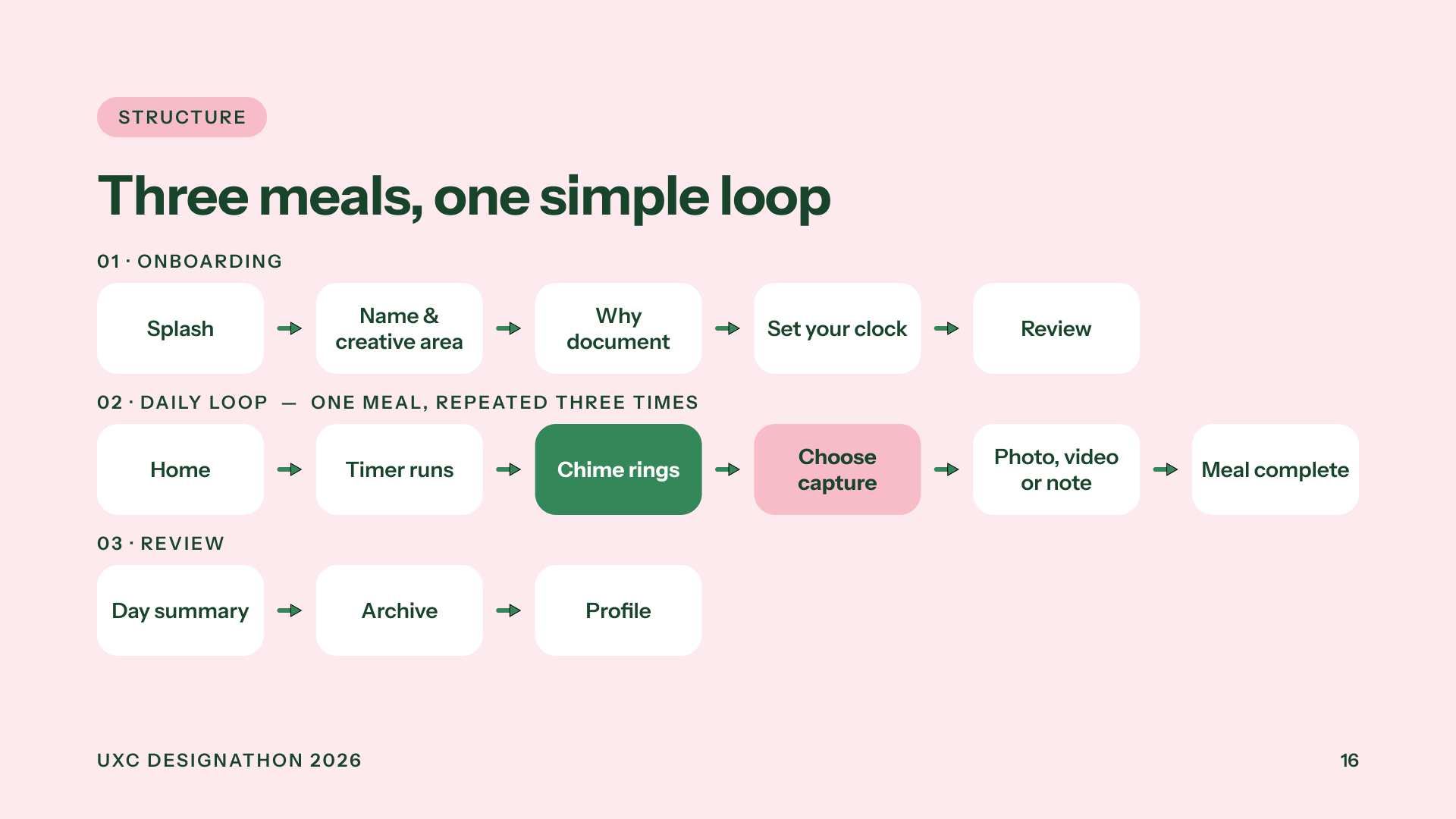
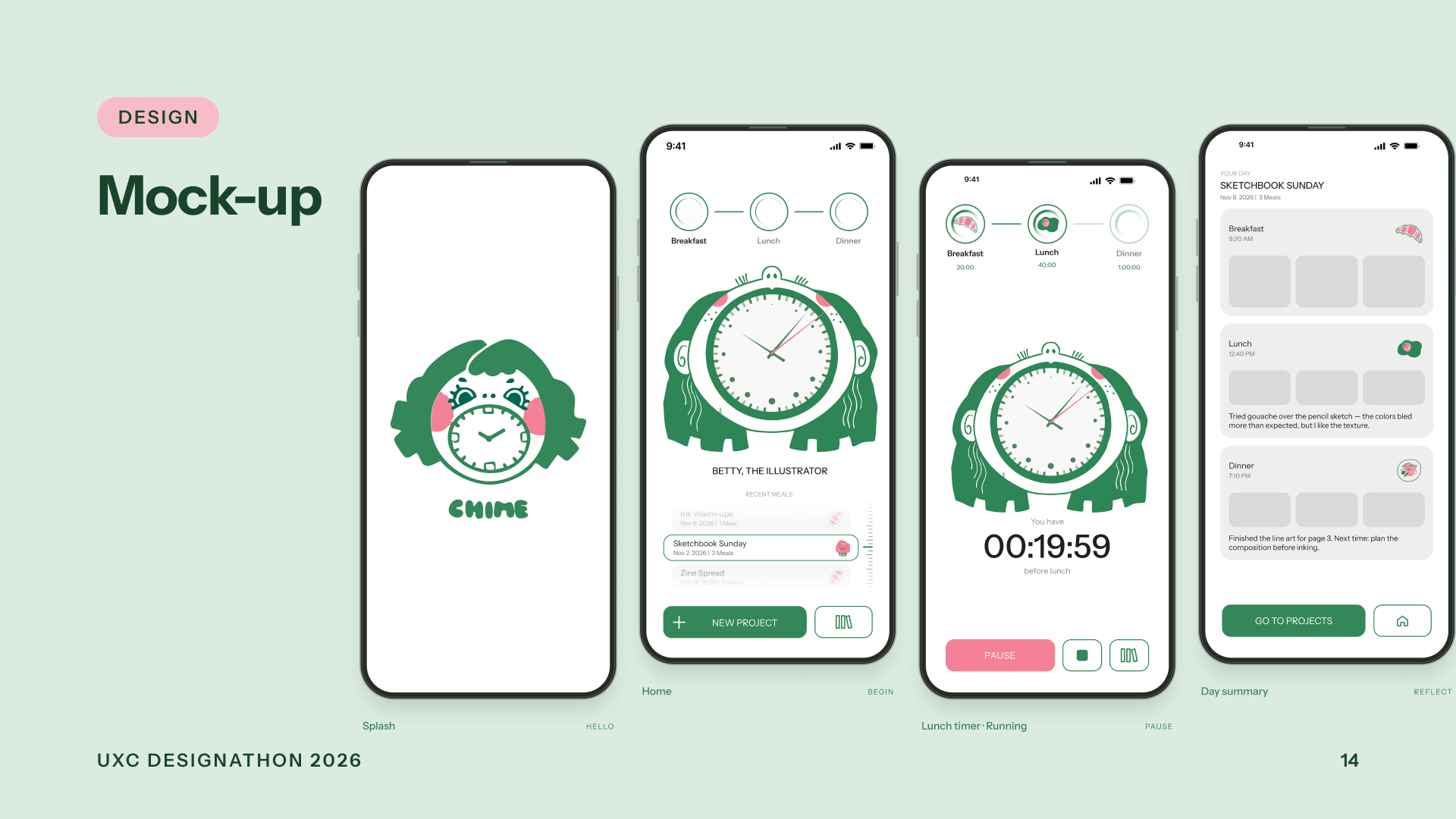
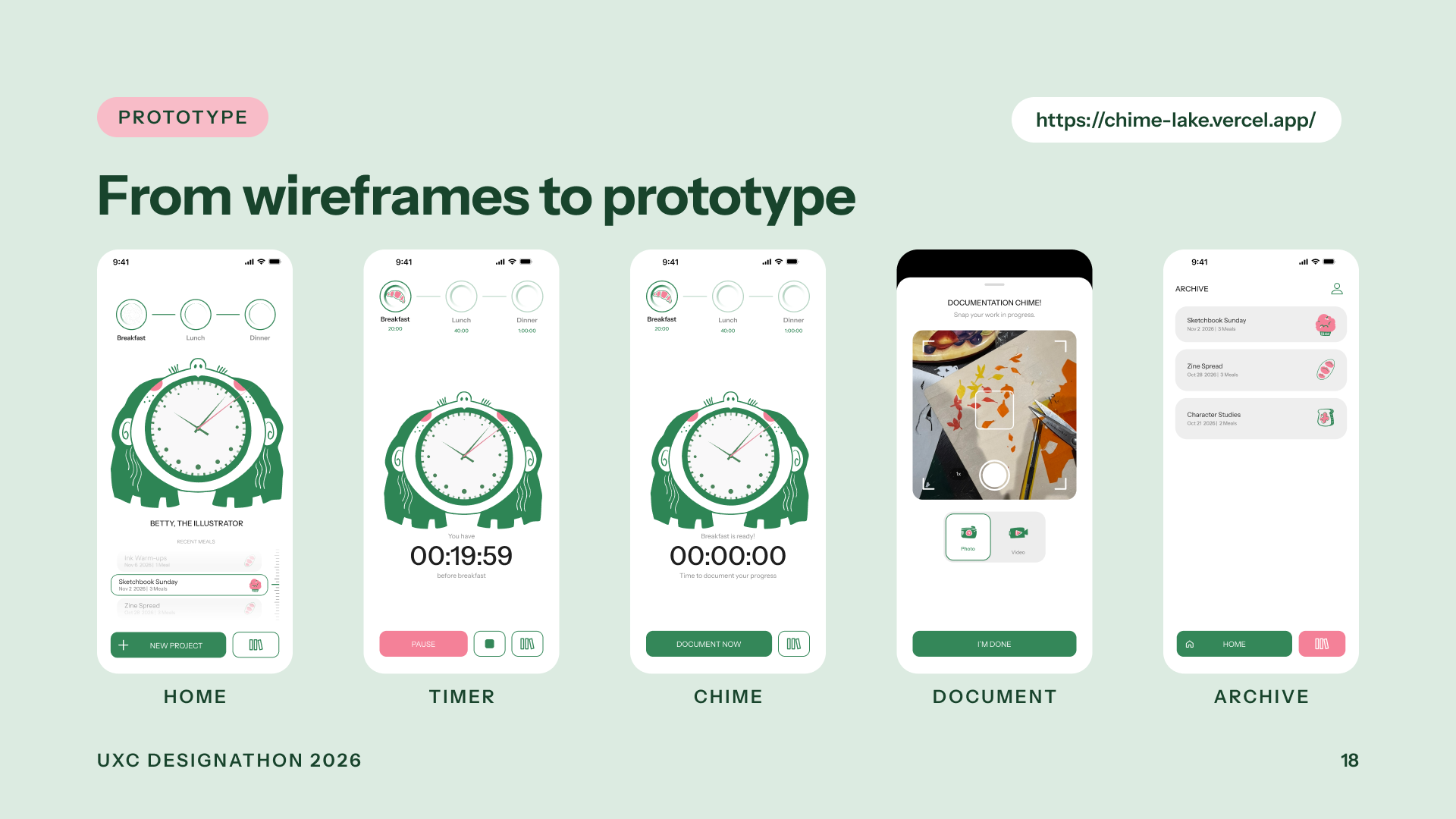
Users begin by setting their clock, entering their name, what they create, and their desired session length. Chime automatically divides the session into three equal intervals, each with a built-in timer that users can pause or stop at any time. At the end of each interval, an auditory chime prompts users to document their progress by taking a photo, recording a video, or writing a quick note.
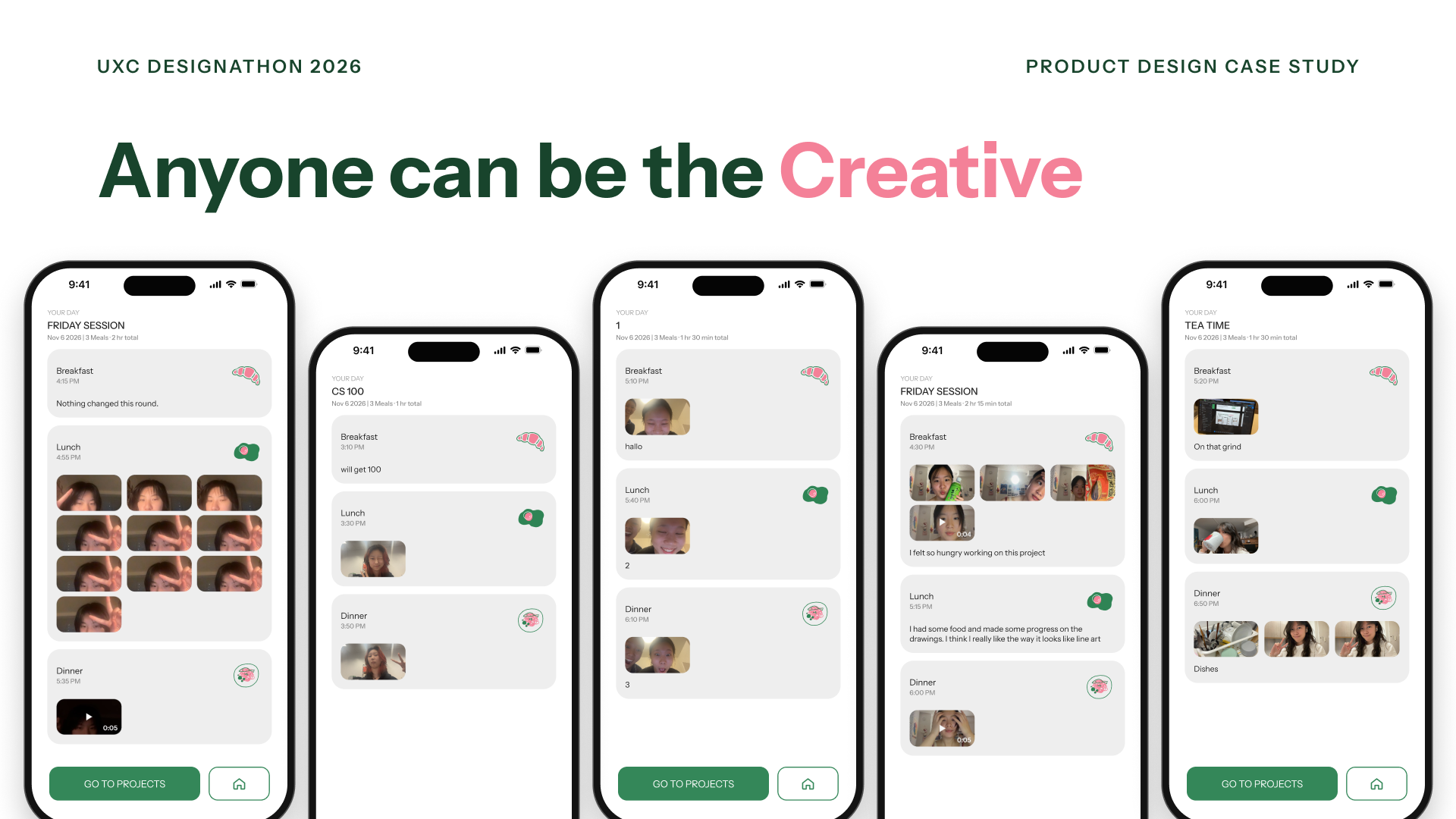
Once all three intervals are complete, Chime organizes these individual captures into a daily summary that tells the story of the user's creative journey. Users can revisit previous sessions through their archive, allowing them to reflect on not only what they created but also how their ideas developed along the way.
How We Built It
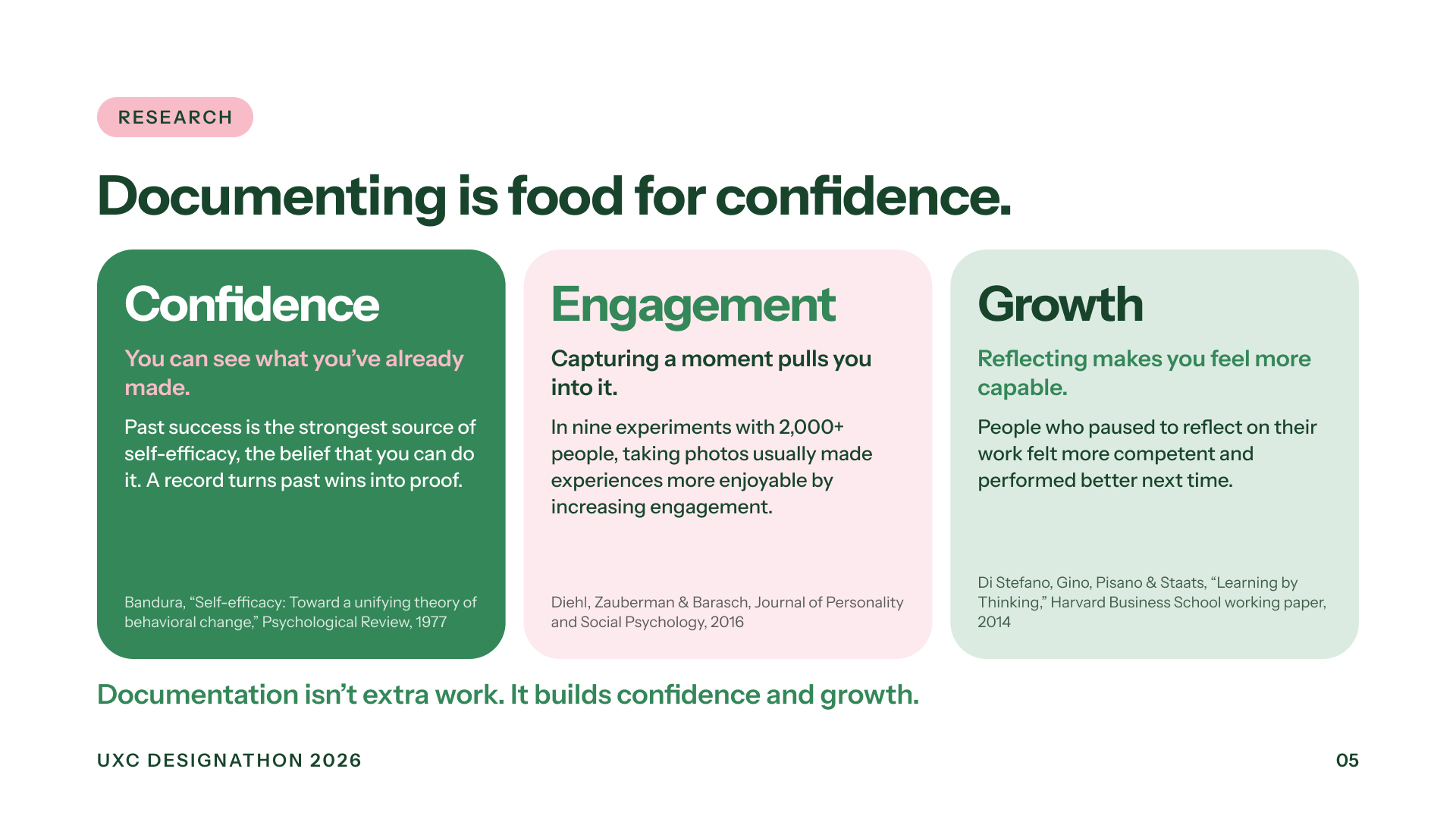
Over five days, our team of four moved through the complete design process, from research and ideation to a working prototype. We began by exploring how documentation influences motivation, confidence, engagement, and creative growth. To better understand our audience, we developed two user personas, Jaime and Jonas, along with individual empathy maps that helped us identify their needs and frustrations.
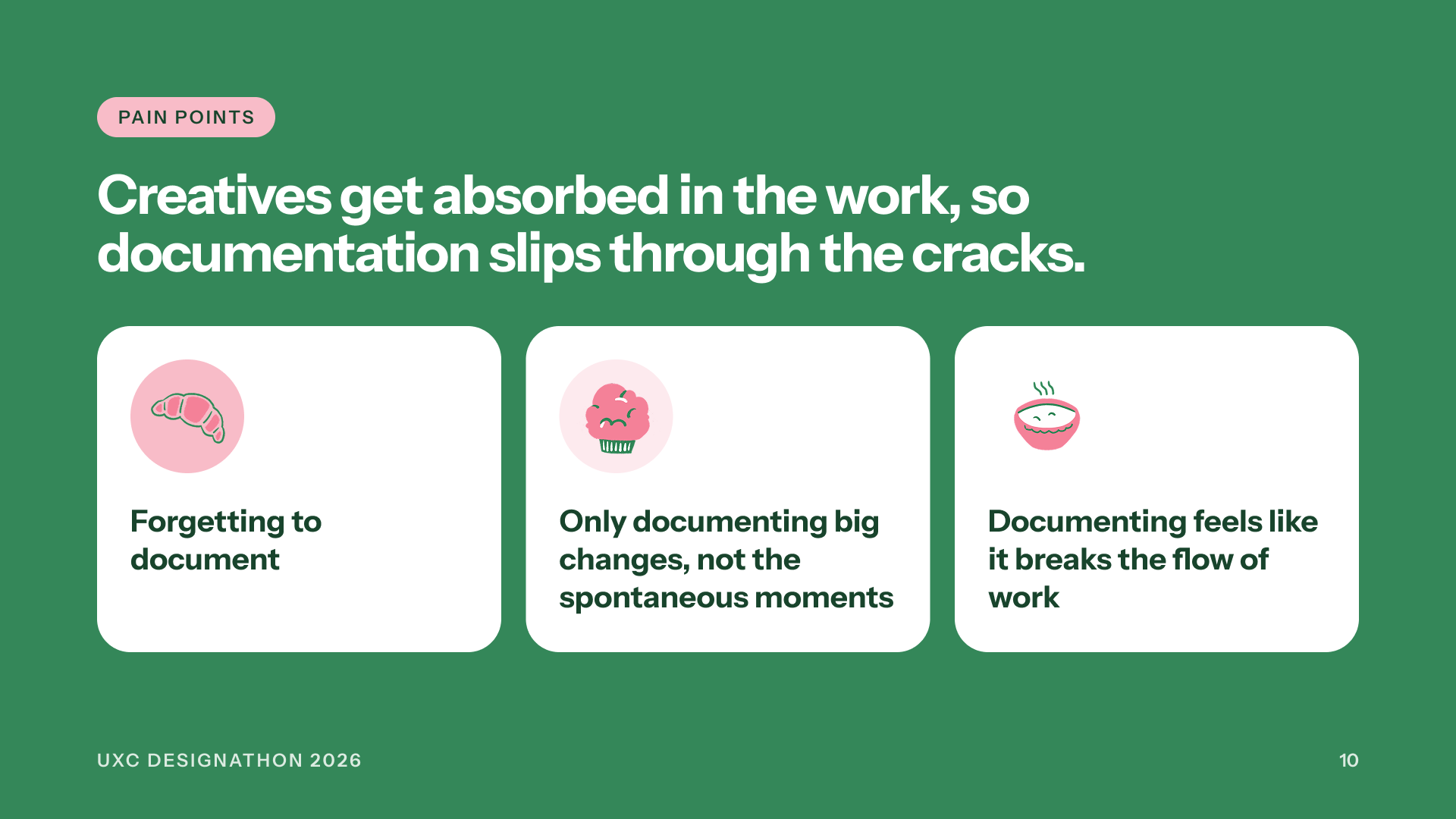
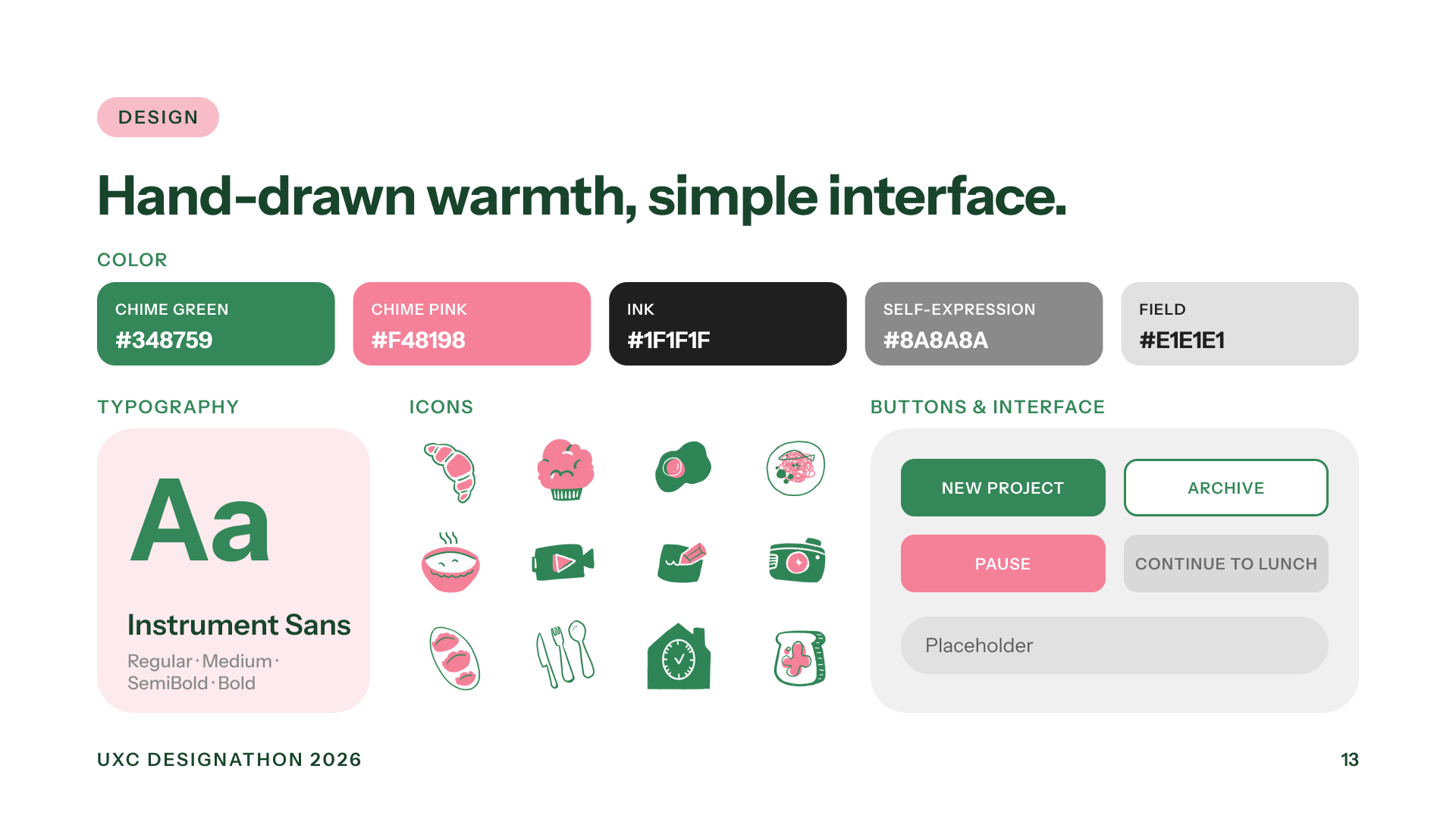
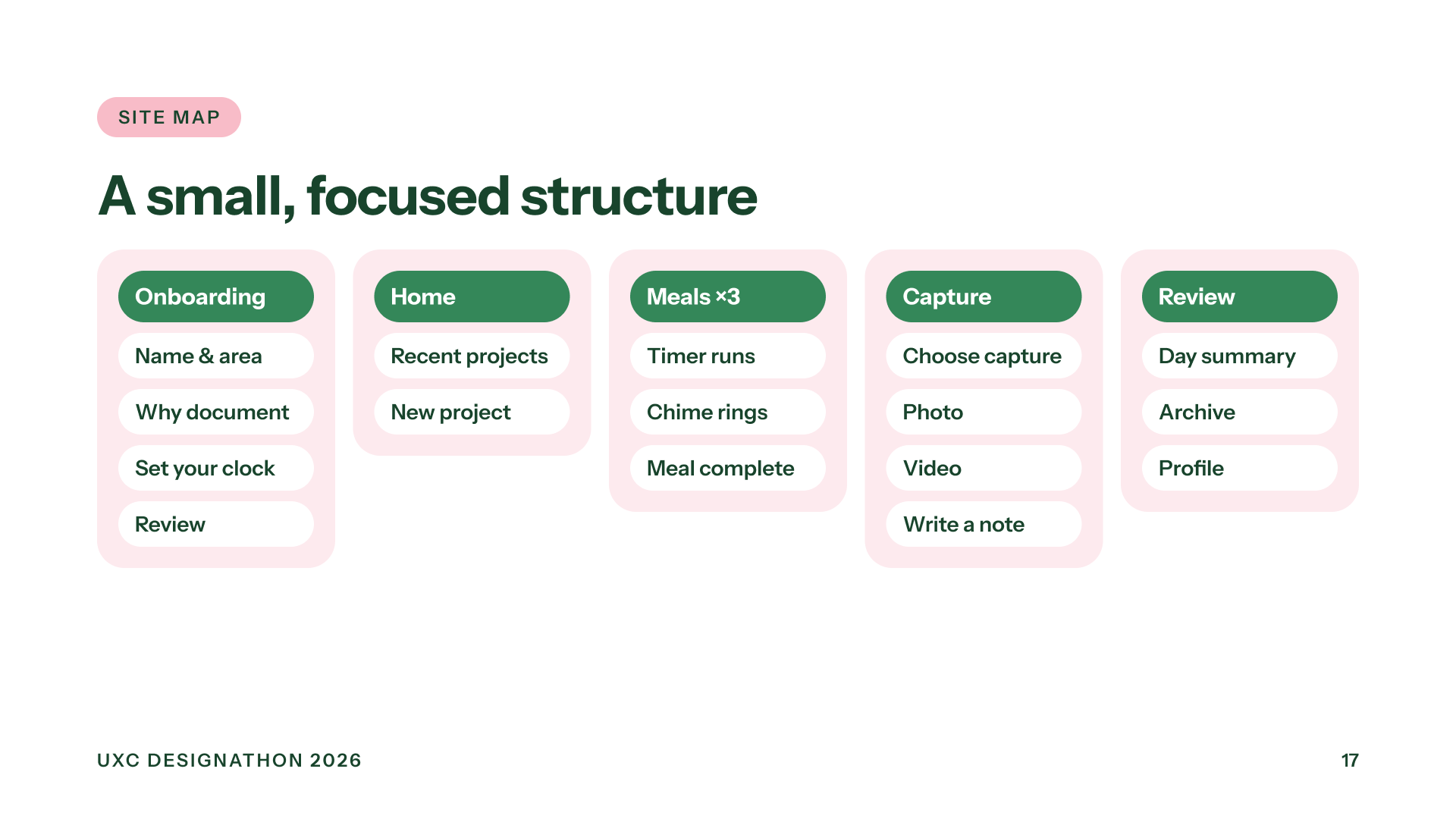
From our research, we identified three key pain points: forgetting to document, only recording major milestones, and feeling that documentation interrupts creative flow. These insights shaped our meal-based concept and guided the development of our branding, user flow, sitemap, and wireframes in Figma. We also hand-illustrated the app's icons to establish a distinct visual identity before translating our designs into a working prototype.
Try Chime: https://chime-lake.vercel.app/
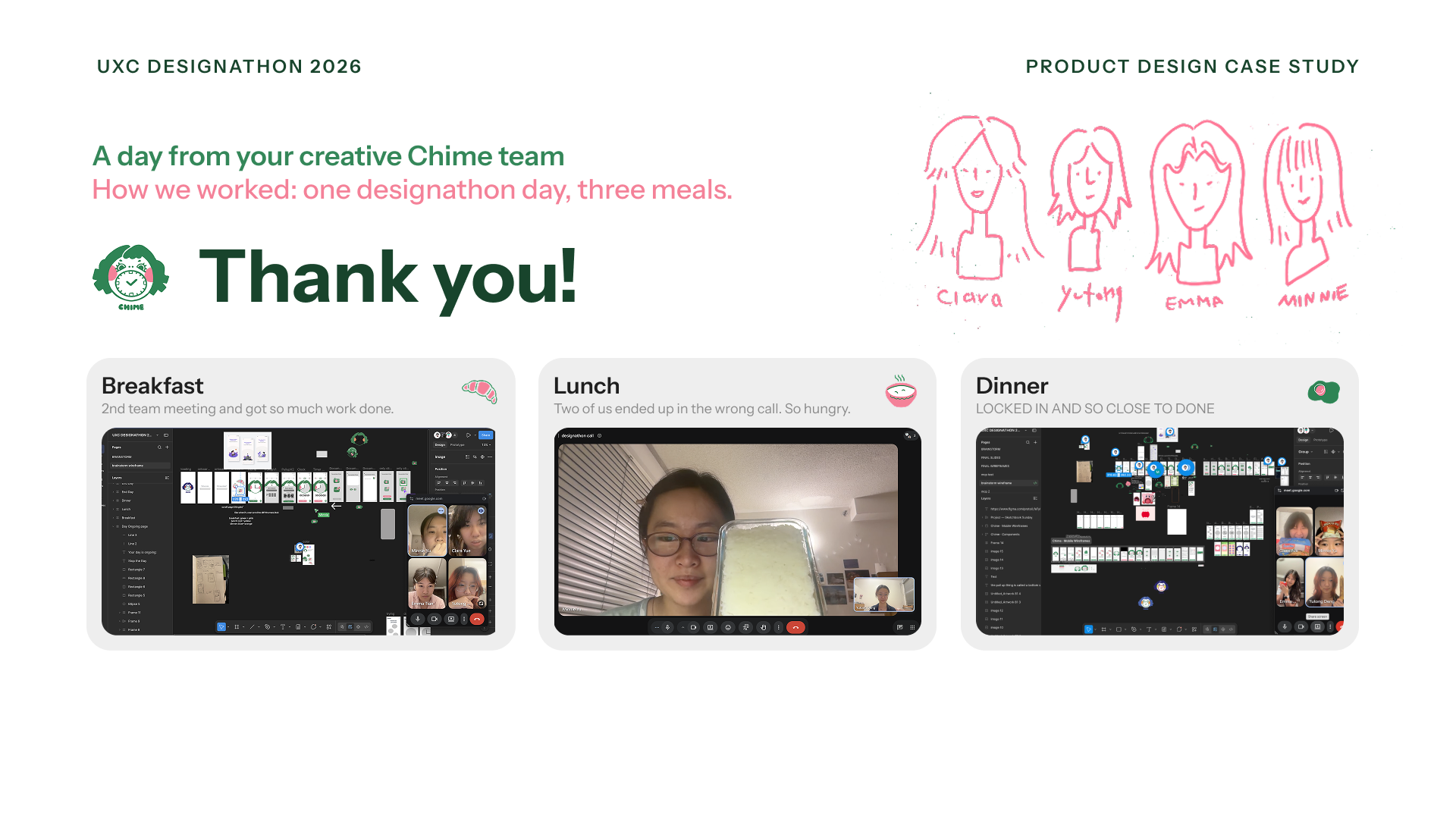
Interestingly, our own experience designing Chime followed the same rhythm we envisioned for users, reinforcing the value of documenting progress throughout a project rather than only at the end.
Challenges We Ran Into
One of our biggest challenges was framing the problem accurately. Our initial wording suggested that creatives intentionally avoid documentation, but we realized that people often forget because they are deeply immersed in their work. We refined our approach to focus on making documentation easier to incorporate into the creative process.
We also had to communicate the meal metaphor clearly. Chime does not follow traditional breakfast, lunch, and dinner schedules; instead, it divides each user's individual work session into three equal intervals. We refined the onboarding experience and messaging to make this distinction intuitive.
Another challenge was maintaining consistency between our wireframes, user flow, and sitemap as the prototype evolved. With design decisions happening quickly, we continuously worked to ensure that all our deliverables reflected the latest version. Additionally, our limited timeline required us to move efficiently from initial research to a functional prototype, prioritizing essential features and making design decisions under pressure.
Accomplishments We're Proud Of
We are especially proud of developing a memorable concept that connects creative documentation to the familiar routine of three daily meals. We successfully built a working prototype that guides users from onboarding through timed work sessions, documentation, and daily summaries. We also translated our research insights into tangible design decisions that address real user needs while establishing a distinctive brand identity through custom illustrations, food-inspired icons, and a cohesive visual language.
What We Learned
Throughout this process, we learned that documentation is more sustainable when integrated into the natural rhythm of work rather than treated as an additional responsibility. We also realized that preserving the experiences surrounding creative work can be just as valuable as recording the final product or technical progress.
From a design perspective, we learned that strong metaphors can make a product more intuitive, but their effectiveness depends on clear communication and thoughtful iteration. Finally, we found that user research becomes more actionable when insights are connected to specific needs and experiences, as demonstrated through our personas, Jaime and Jonas.
What's Next for CHIME
Our next step is to test Chime with real users and understand whether it successfully builds a documentation habit. We want to explore whether users consistently return to document their creative sessions, whether they capture the experiences surrounding their work rather than just the finished results, and what additional features would make Chime more valuable based on actual user behavior.
Ultimately, we believe success should not be measured solely by what someone creates, but also by the journey they preserve along the way.
Built With
- adobe-illustrator
- claude
- figma
- photoshop


