Inspiration
Every commercial vehicle carries more than cargo. It carries the safety of the driver, the people on the road, and the value of everything being transported.
We were inspired by the risks created by overloading, uneven cargo distribution, vehicle instability and changing road conditions. A vehicle may appear normal to the driver, while an unsafe load distribution is already affecting how it behaves on the road.
That led us to one simple question:
What if we could recognize the risk before it becomes an accident?
This question became the foundation of CargoSense. Instead of only recording what happened after an incident, we wanted to build a platform that helps identify developing risks and gives the driver practical guidance in time to respond.
What it does
CargoSense combines multiple sources of vehicle and cargo information to build a clearer picture of the vehicle's condition.
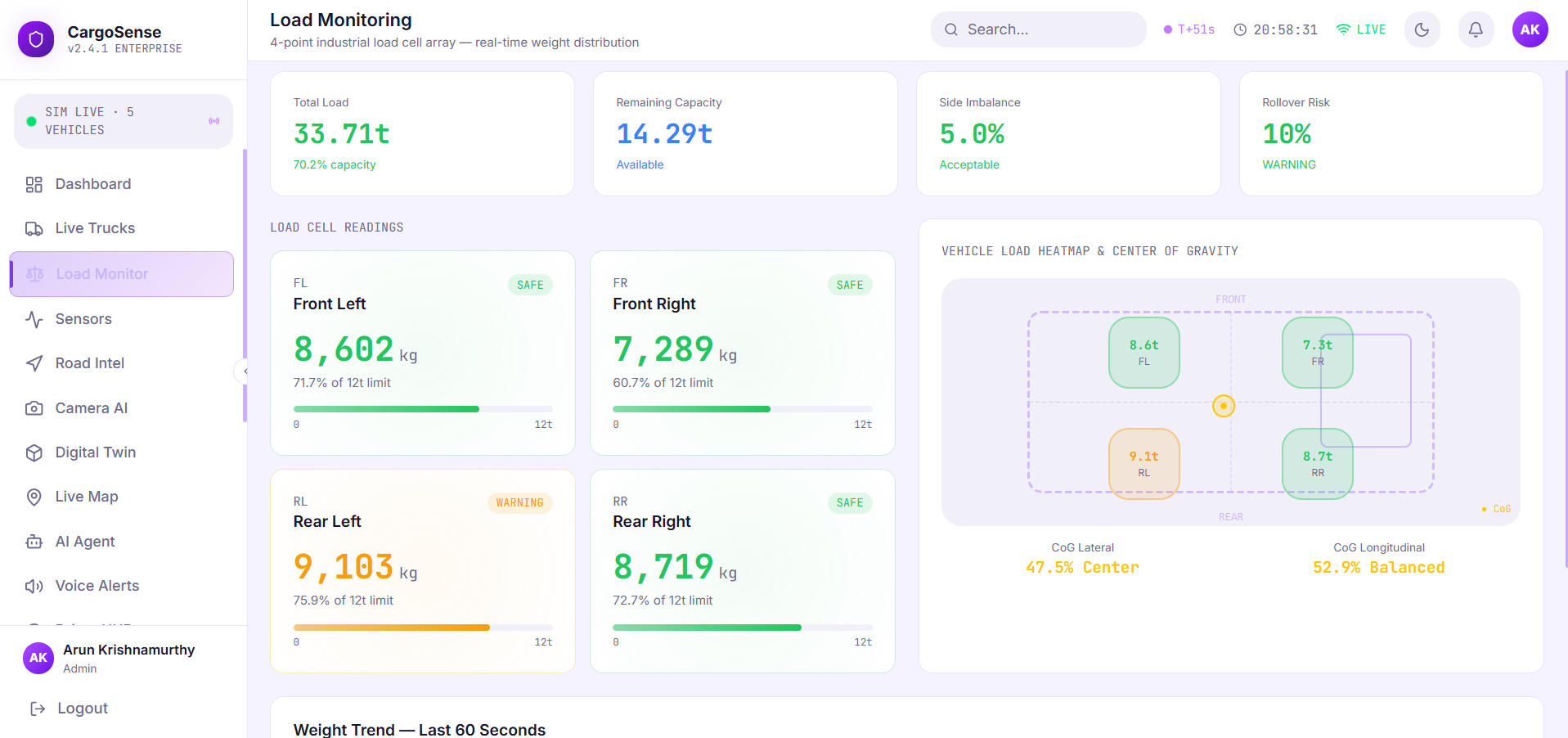
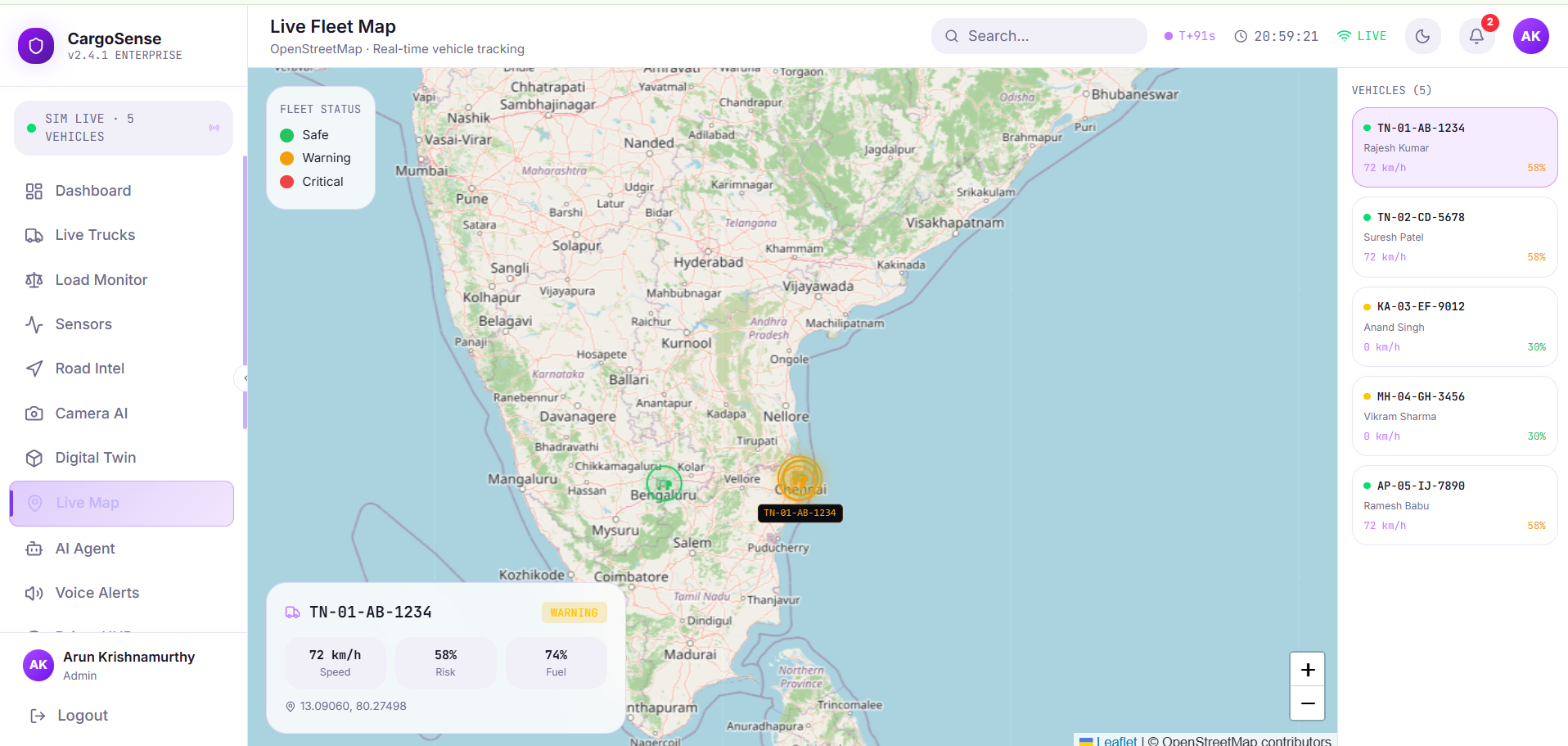
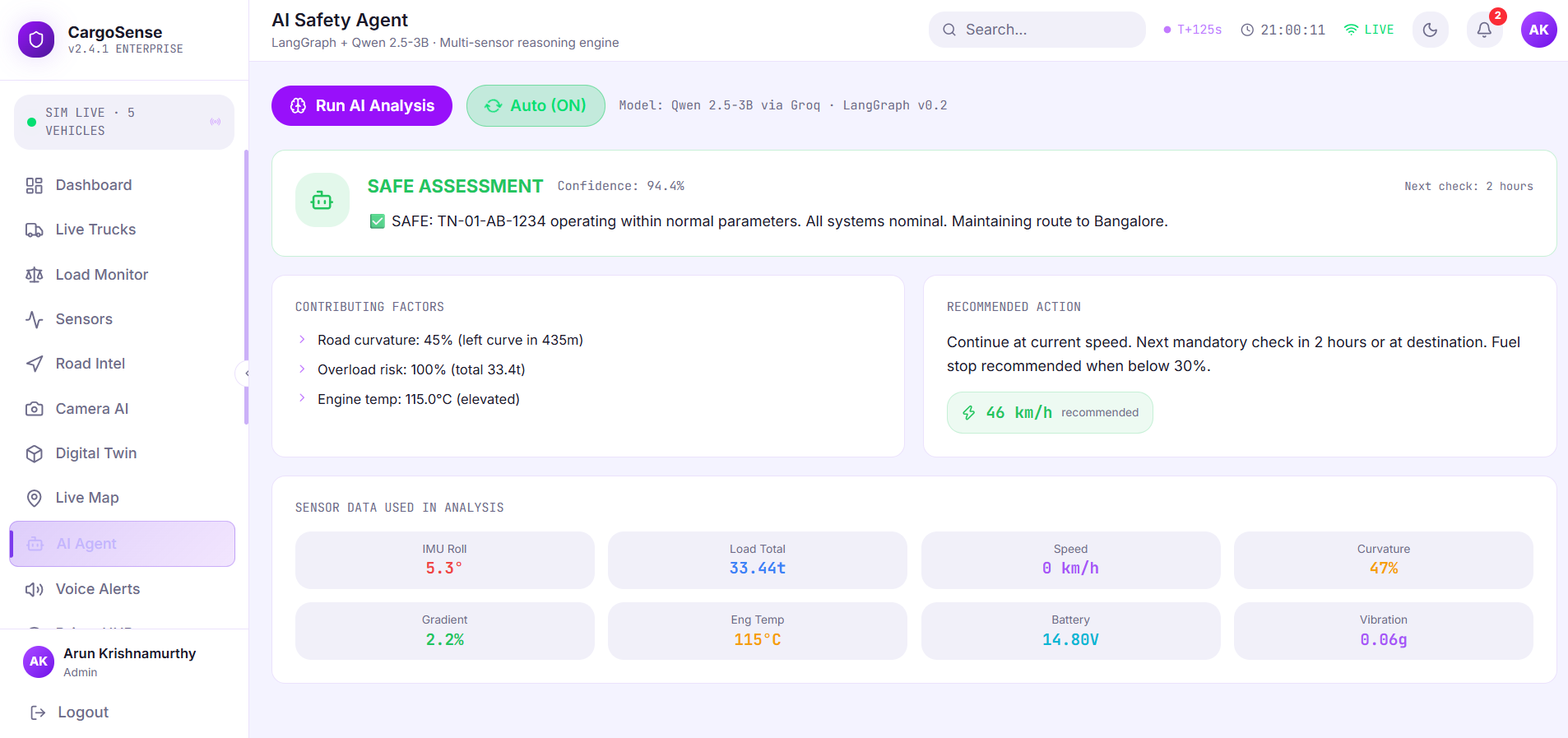
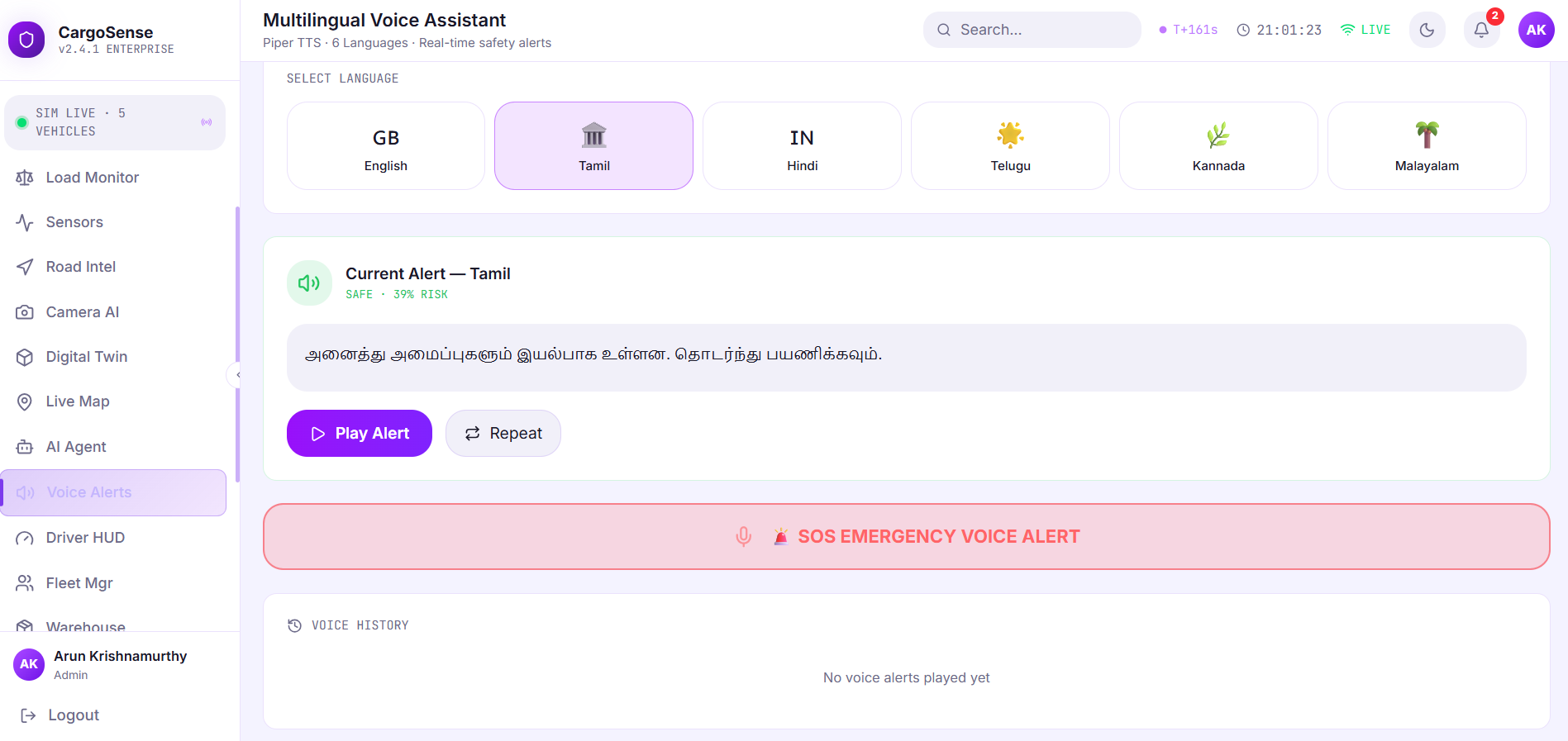
Measures cargo distribution using four load points Detects overloading and load imbalance Estimates changes in the centre of gravity Monitors vehicle movement using an MPU6050 Uses GPS for location and speed information Integrates available OBD-II vehicle parameters Uses a front camera with YOLO11 for relevant visual detection Provides Safe, Warning and Critical risk conditions Provides Smart Load Redistribution guidance before departure Generates contextual recommendations using Qwen 2.5 3B through Ollama Uses LangGraph to coordinate the processing workflow Provides local voice guidance through Piper TTS Supports offline operation and local data storage
The goal is simple: turn complex vehicle data into understandable actions for the driver.
How we built it
We designed CargoSense as a combination of hardware sensing and local software processing.
The sensing layer collects information from the four load cells, MPU6050, GPS, OBD-II and camera. The data is acquired through the embedded hardware and passed to a local edge device.
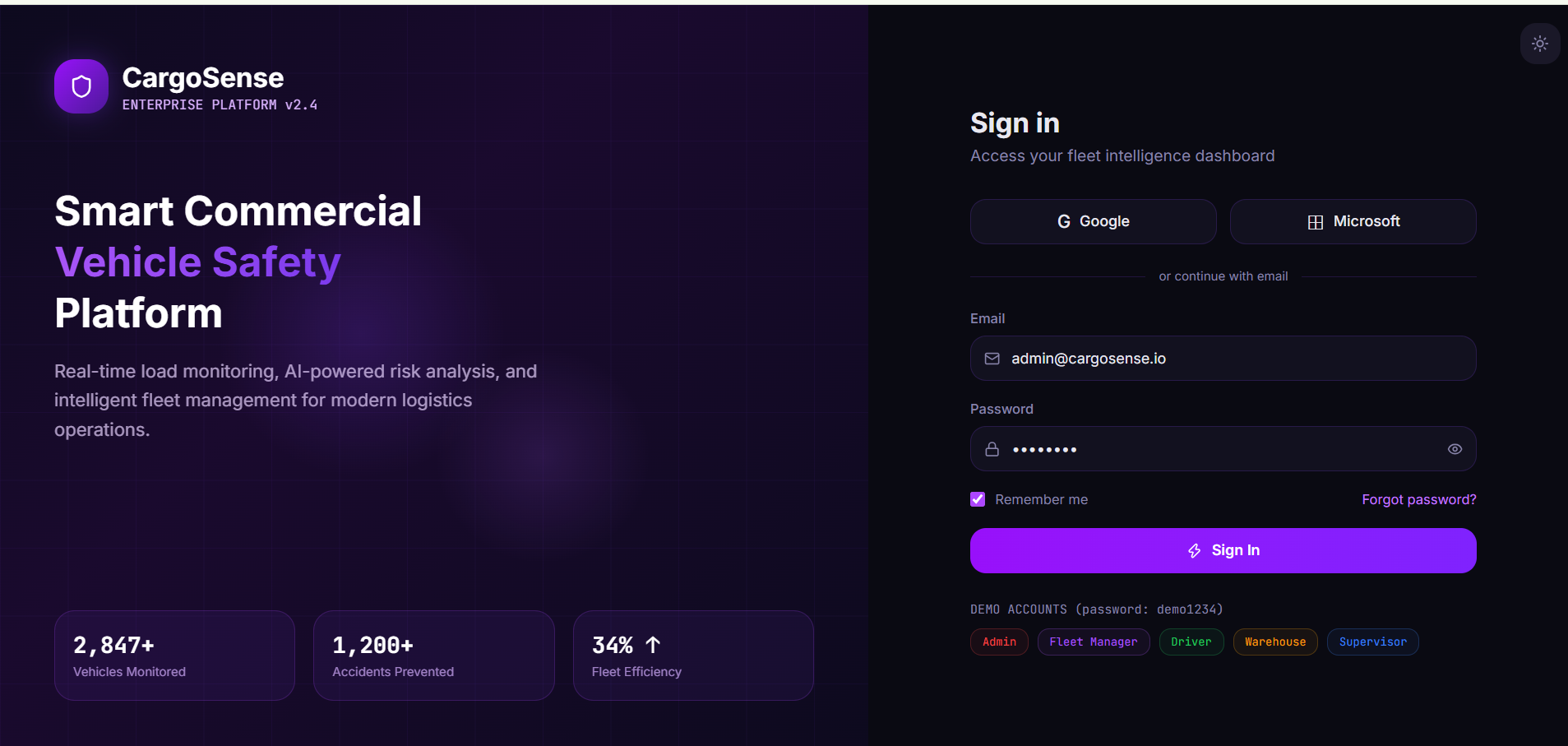
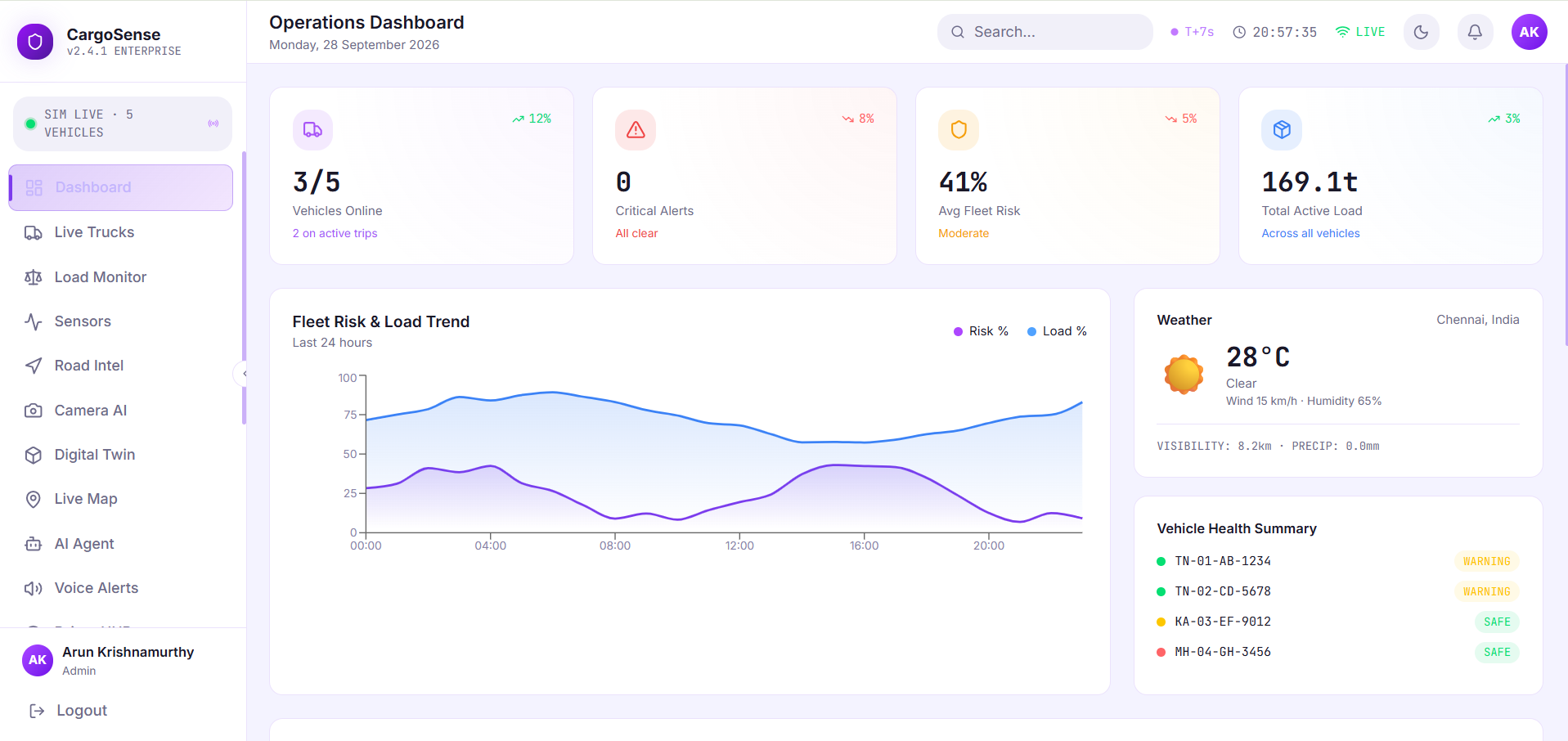
The software workflow uses YOLO11 for visual information, LangGraph for workflow coordination and Ollama with Qwen 2.5 3B for local contextual reasoning. The resulting assessment is converted into practical guidance and presented through the driver interface and voice output.
We also designed the architecture with offline operation in mind, so the core processing does not depend on continuous Internet connectivity.
Challenges we ran into
One of our biggest challenges was bringing completely different types of information together.
A load sensor produces numerical measurements, an IMU describes vehicle movement, GPS provides location and speed, OBD-II provides vehicle parameters, and a camera provides visual information. The difficult part was not simply collecting these inputs—it was determining how they should work together to represent an actual safety condition.
We also had to think about sensor calibration, load distribution, real-time processing, driver-friendly alerts and operation in environments where Internet connectivity may not be reliable.
Another challenge was keeping the system practical. A safety solution should not overwhelm the driver with numbers and technical information. It should communicate what is happening and what action may be appropriate.
Accomplishments that we're proud of
We are proud that CargoSense has grown from an idea into a structured working prototype concept with a complete sensing, processing and decision workflow.
Our key accomplishments include:
Designing the four-point cargo measurement approach Developing the Smart Load Redistribution concept Integrating cargo, vehicle, location and visual information Building an offline-first processing architecture Integrating YOLO11, LangGraph, Ollama and Qwen 2.5 3B Designing Safe / Warning / Critical driver guidance Adding Piper TTS for local voice assistance Creating a retrofit-oriented approach for existing commercial vehicles
Most importantly, we are proud that the project is focused on a real human problem rather than technology for technology's sake.
What we learned
CargoSense taught us that building a safety-focused product requires much more than making sensors work.
We learned about sensor integration, data fusion, embedded hardware, computer vision, local AI workflows, vehicle dynamics and user-focused interface design.
We also learned that the most complicated technical output is not always the most useful one. For a driver, a simple and timely message can be far more valuable than a screen full of raw data.
The project also changed how we think about AI. Instead of using AI as the centre of the product, we learned to use it as one component within a larger workflow where sensors provide evidence and the final goal is useful human decision-making.
What's next for CargoSense
Our next step is to move from software and simulation toward physical hardware integration and real-vehicle validation.
We plan to:
Integrate the load sensors and vehicle sensors with the embedded hardware. Calibrate the load-distribution measurements. Connect the camera and validate YOLO11 detection in real road conditions. Test the risk-assessment workflow under different loading conditions. Improve Smart Load Redistribution based on practical testing. Develop a rugged driver-facing interface. Conduct controlled testing on a commercial vehicle. Collect feedback from actual users and improve the platform accordingly.
Our long-term vision is to make CargoSense a practical preventive safety companion for commercial vehicles—helping drivers recognize developing risks early, make better decisions, and reach their destination more safely.
Built With
- computer-vision
- edge-ai
- embedded-systems
- esp32
- gps
- iot
- langgraph
- load
- local-ai
- machine-learning
- obd-ii
- offline-computing
- ollama
- predictive-safety
- python
- qwen-2.5-3b
- real-time-processing
- sensor-fusion
- vehicle-safety
- yolo11


Log in or sign up for Devpost to join the conversation.