-
-
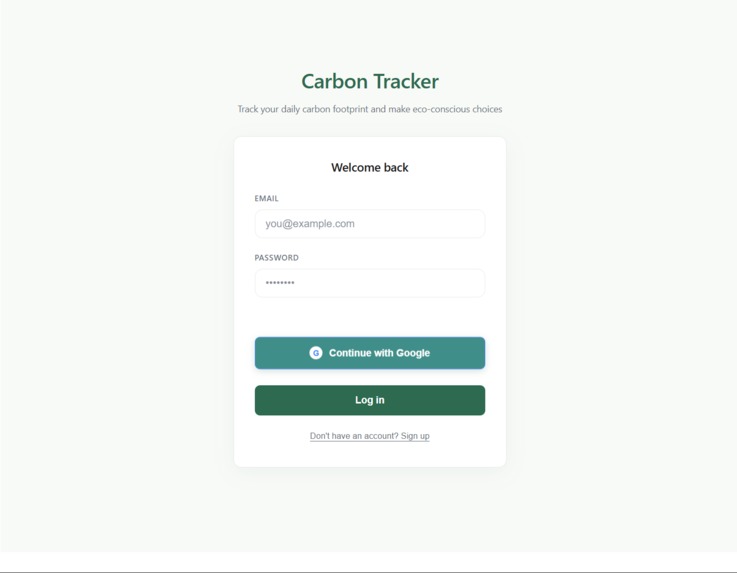
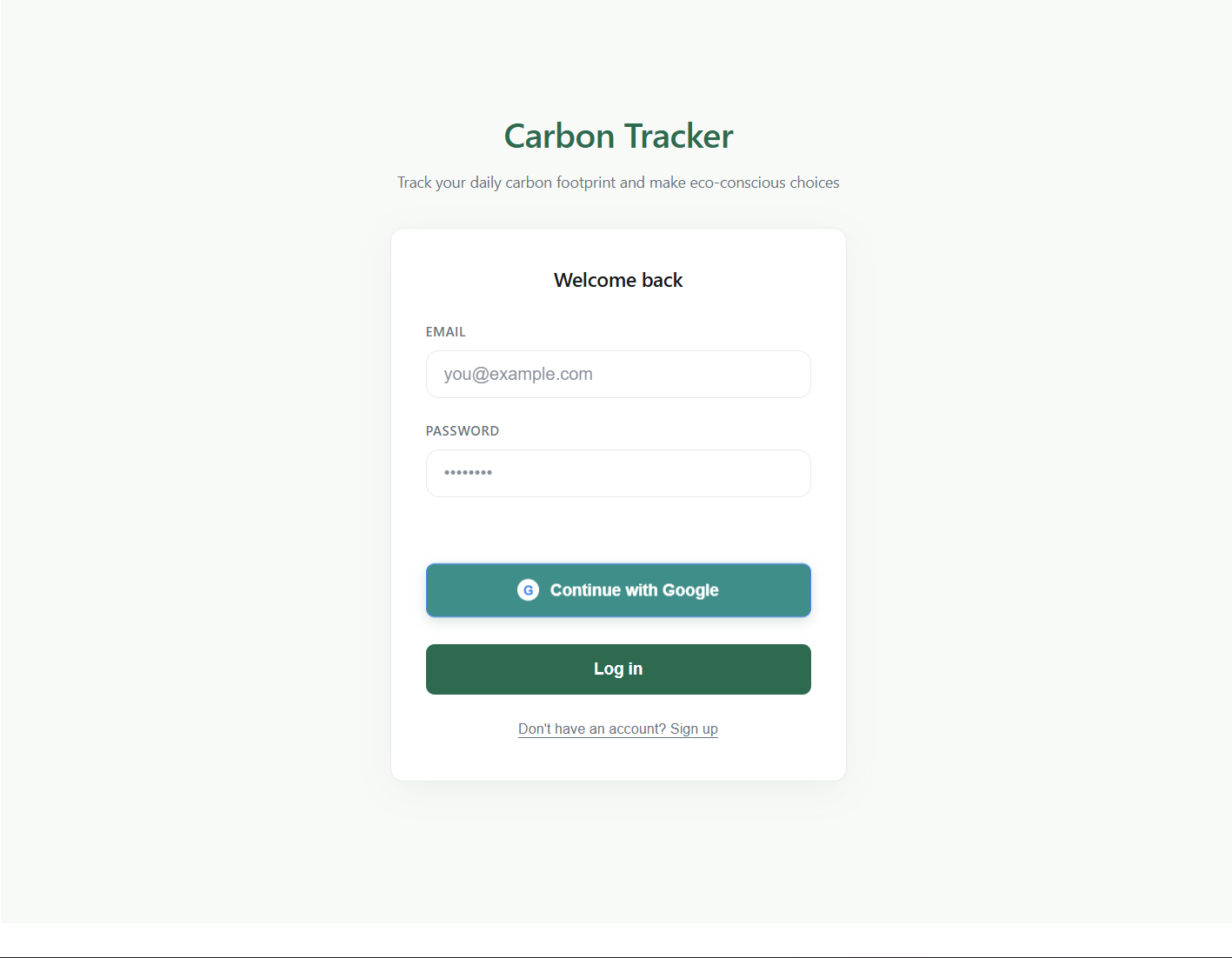
Login Page
-
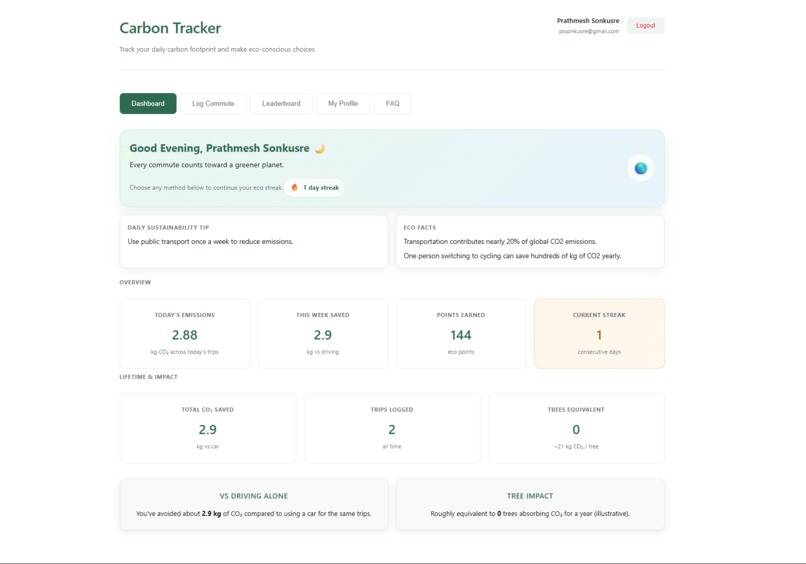
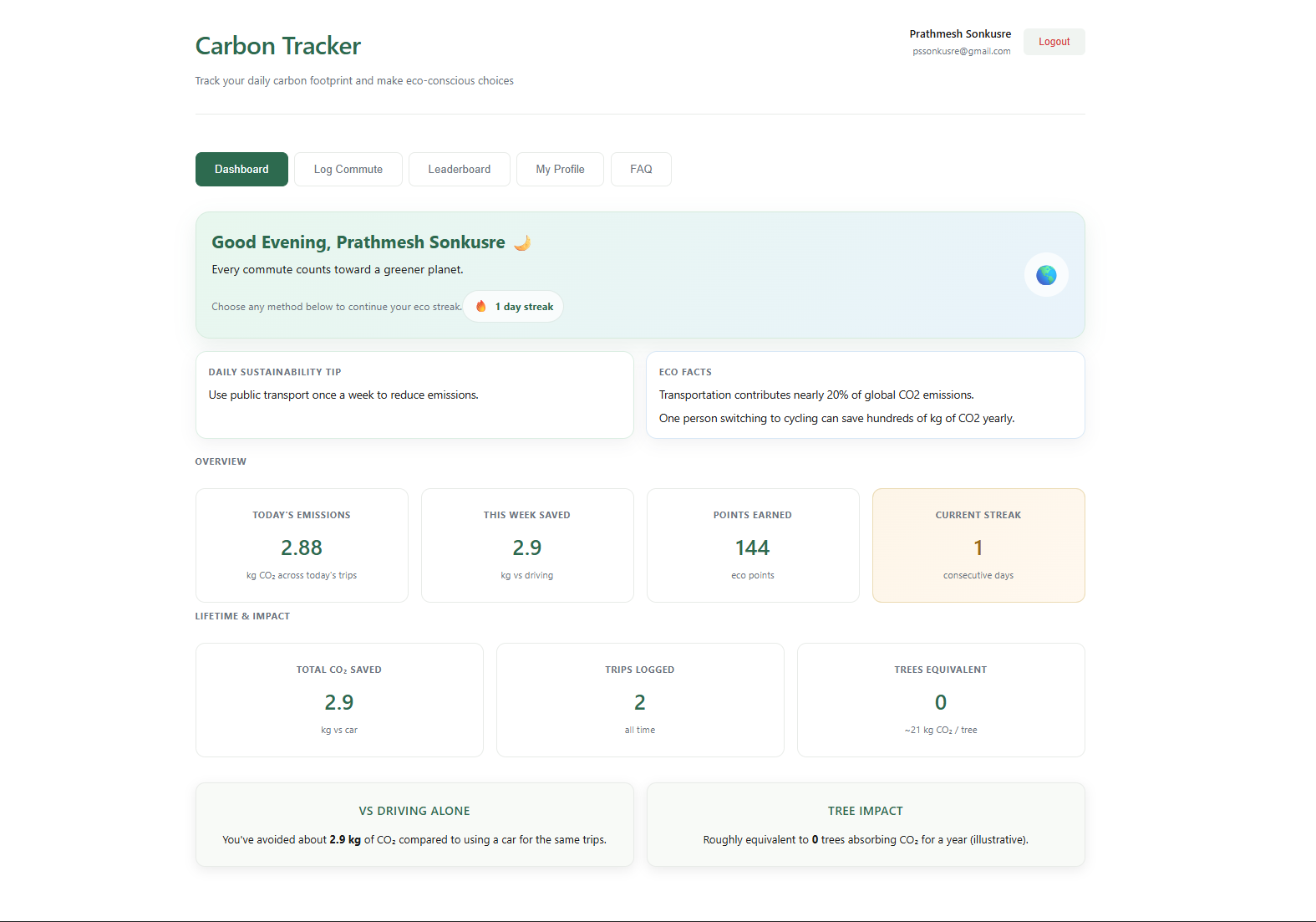
Dashboard
-
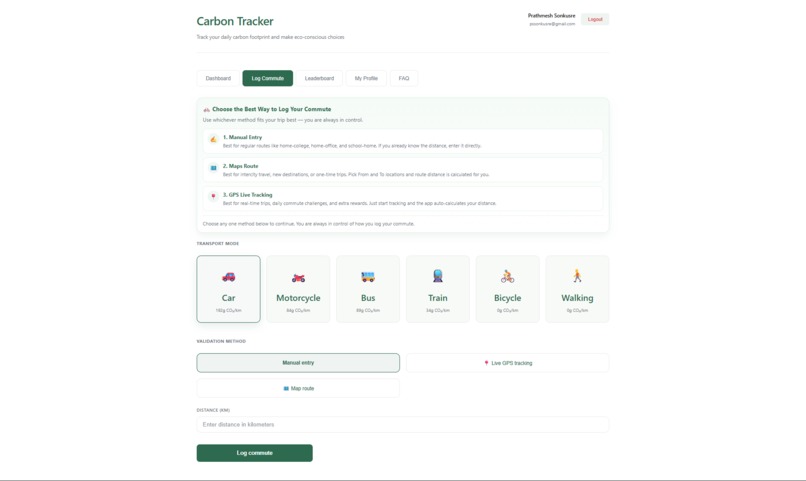
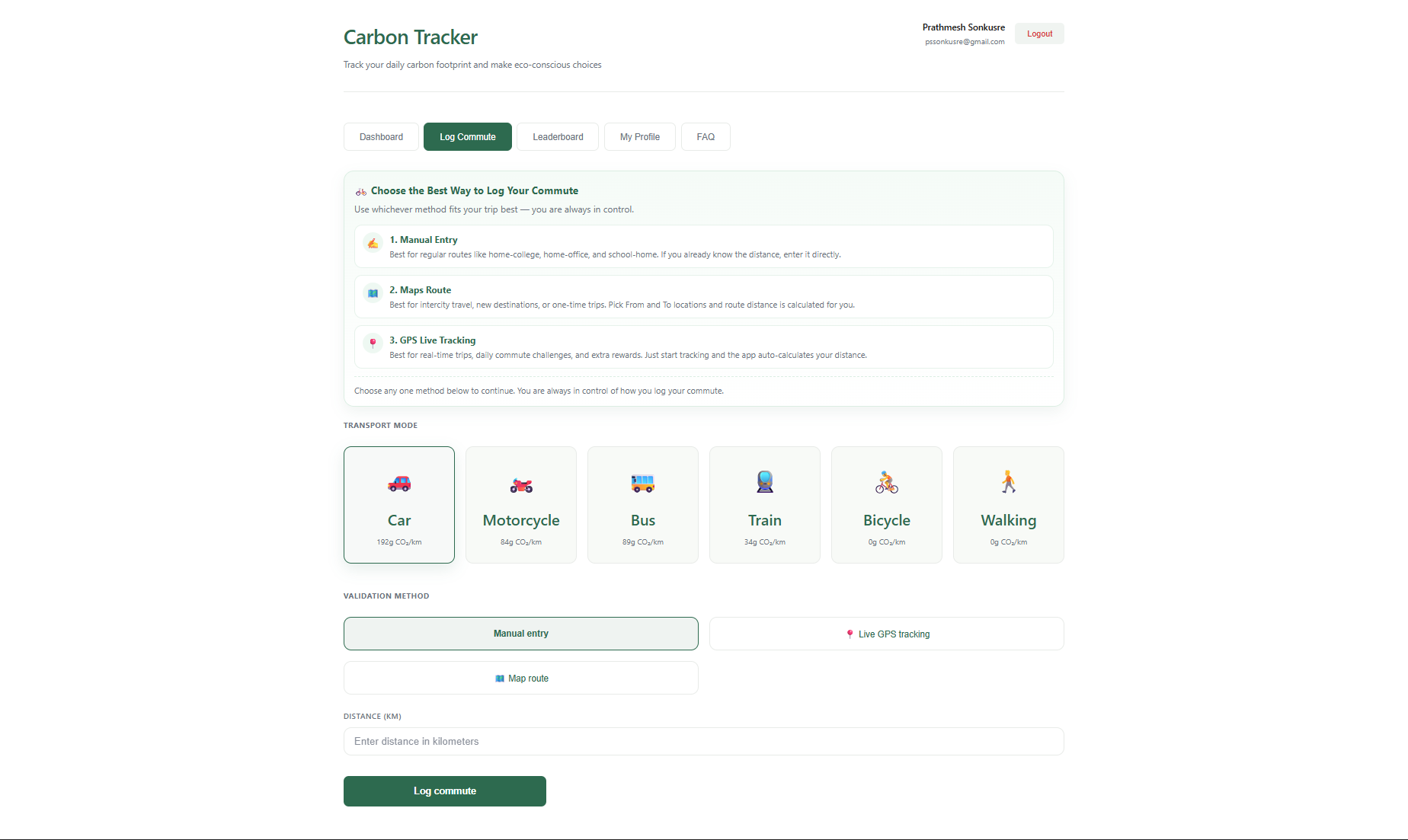
Log Commute Tab
-
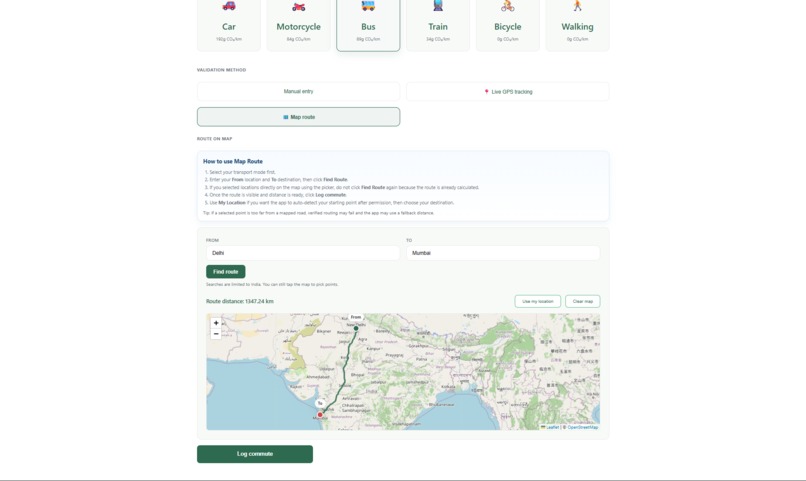
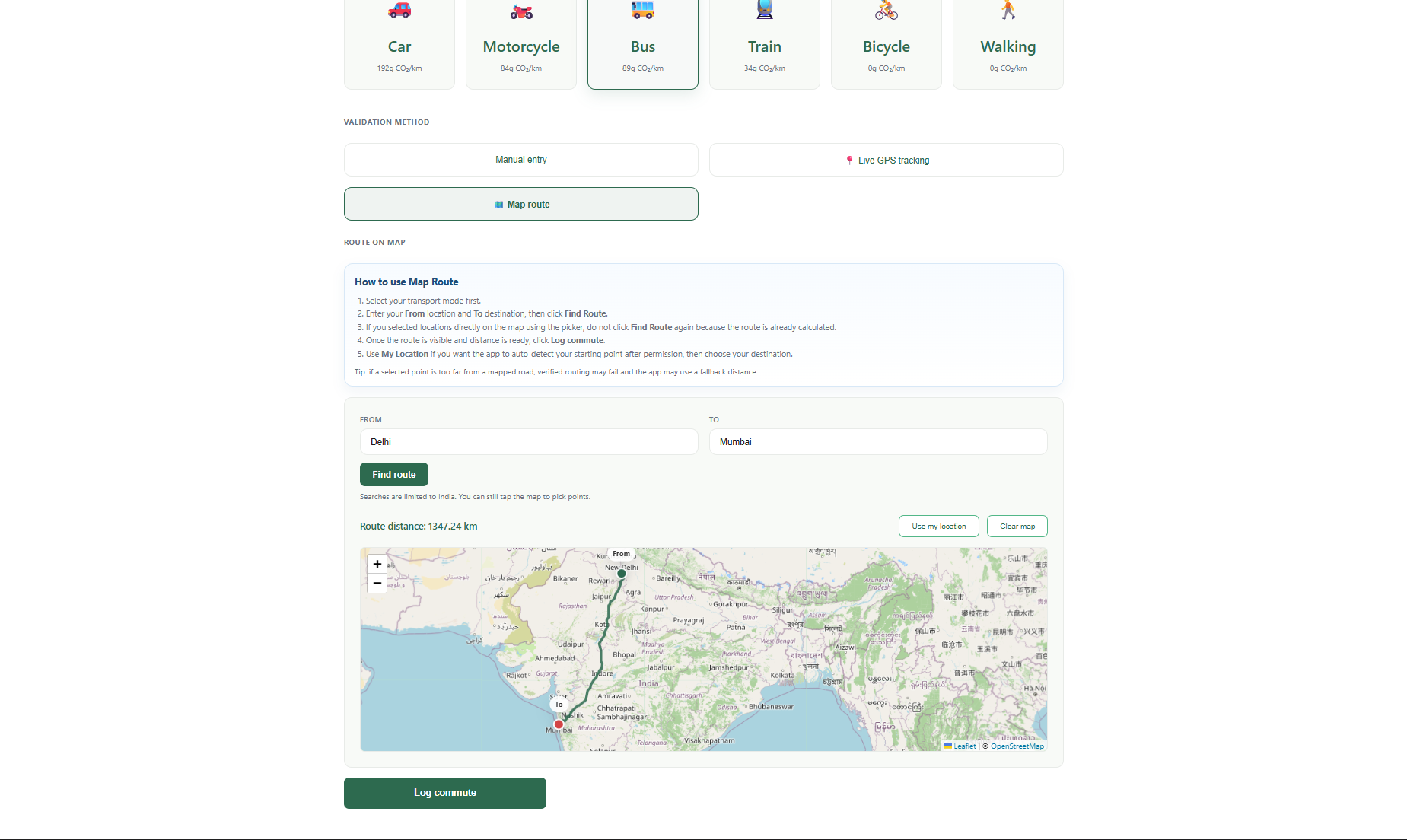
Log commute using Map Route
-
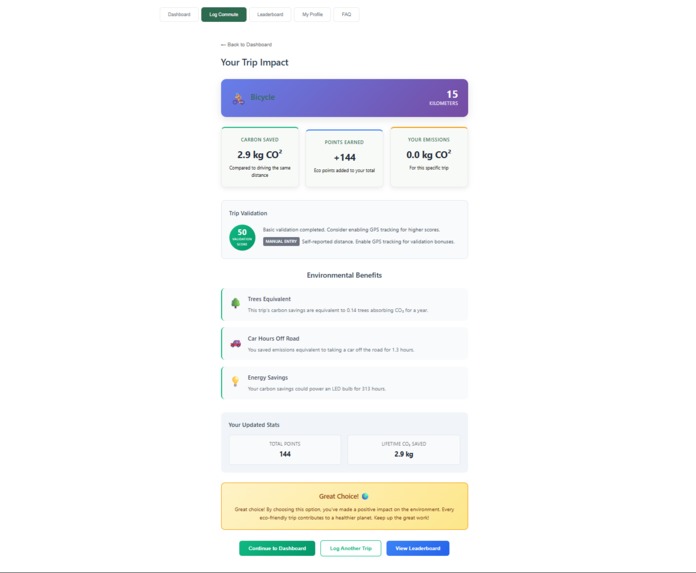
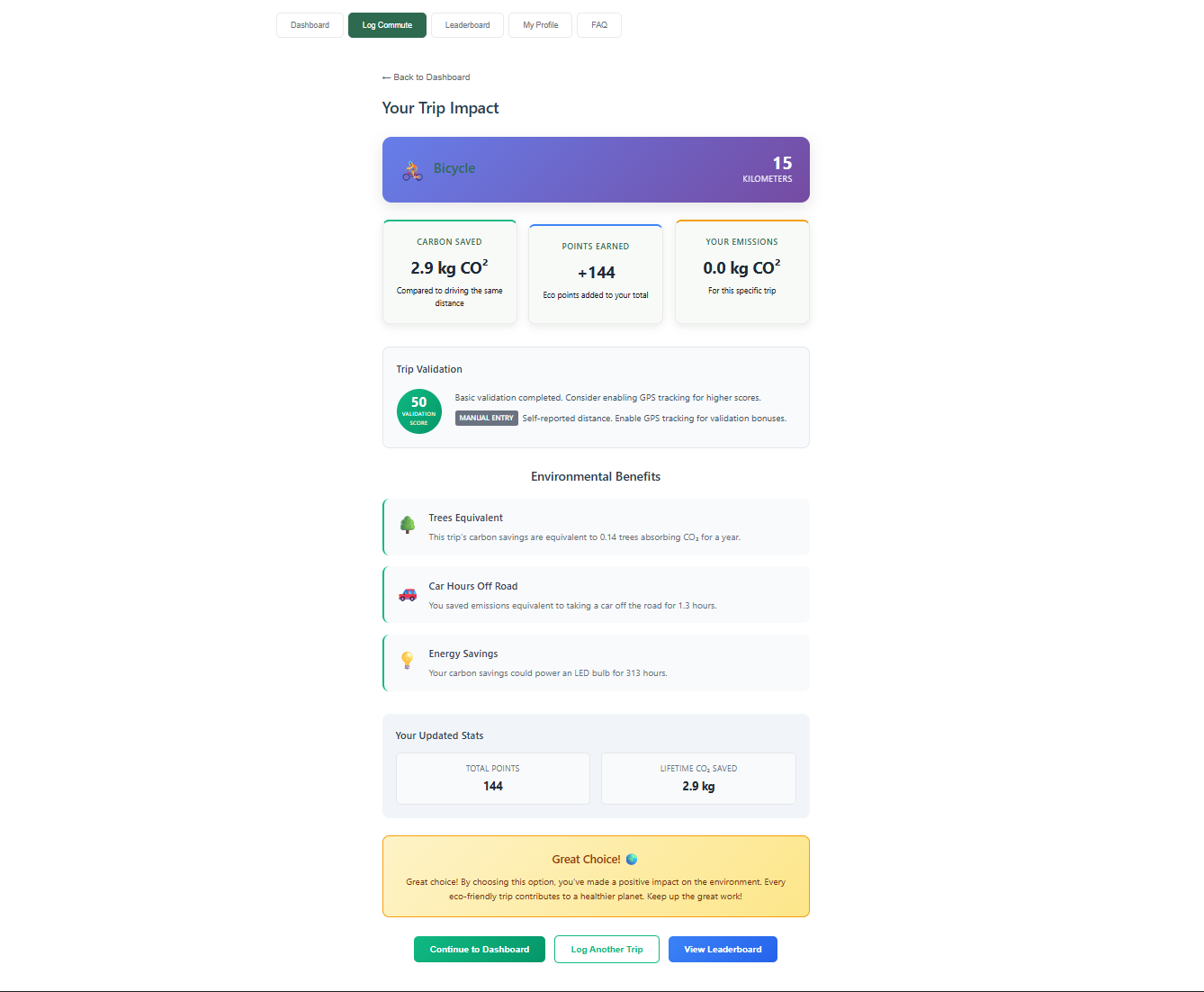
Trip Impact Summary
-
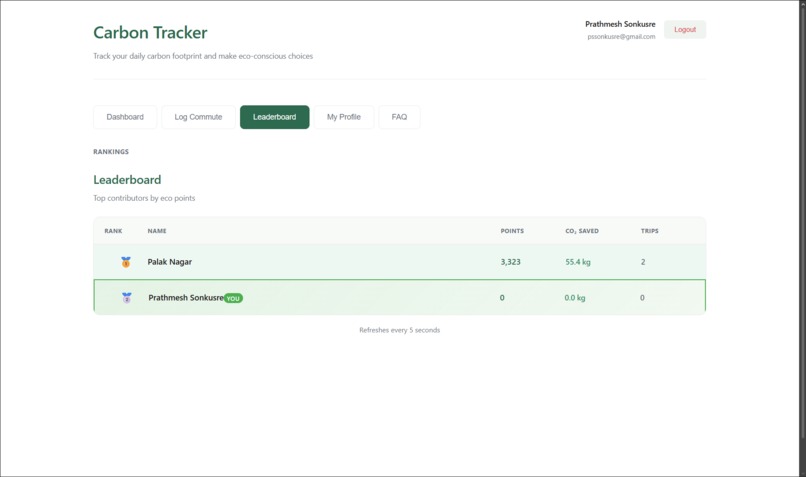
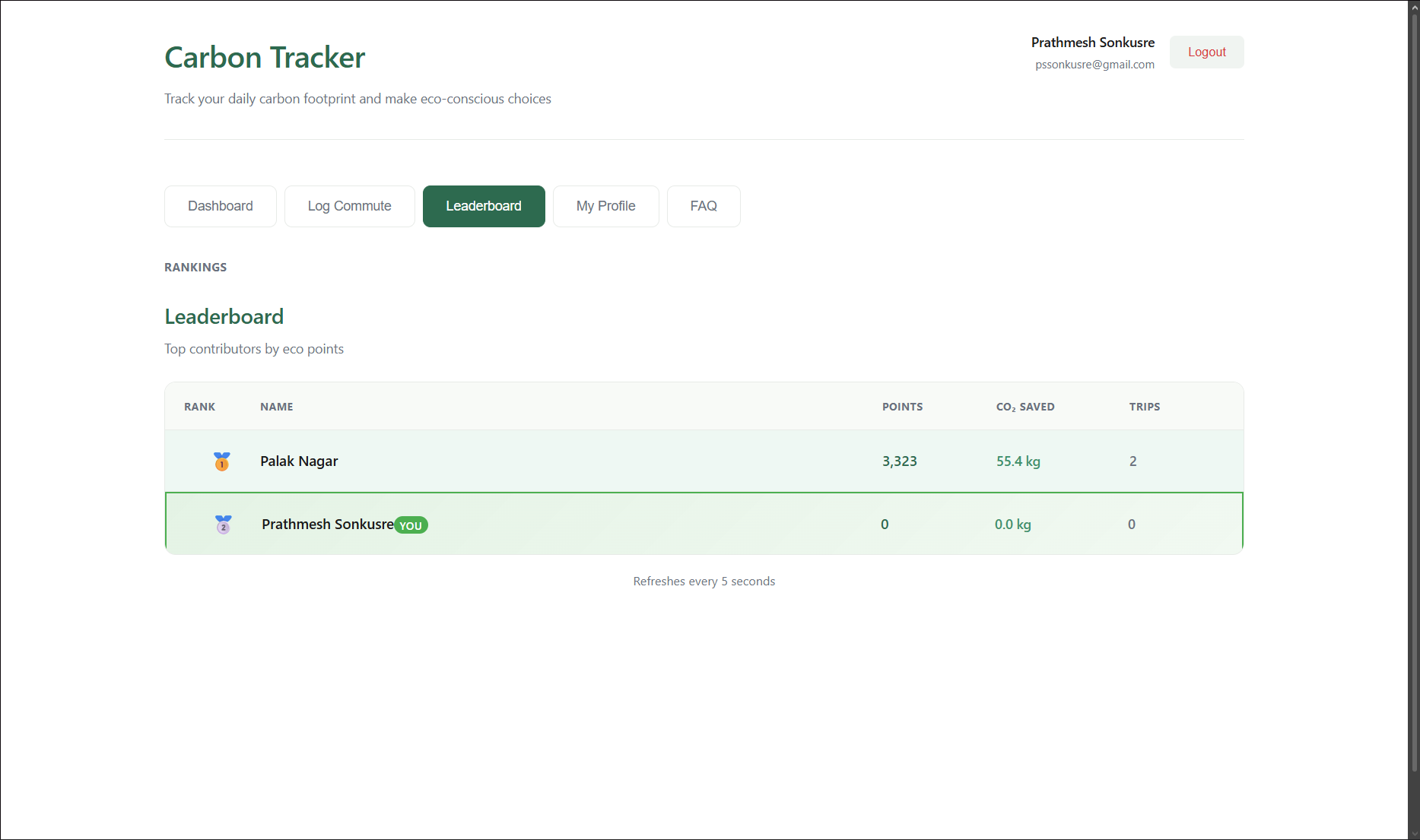
Leaderboard
-
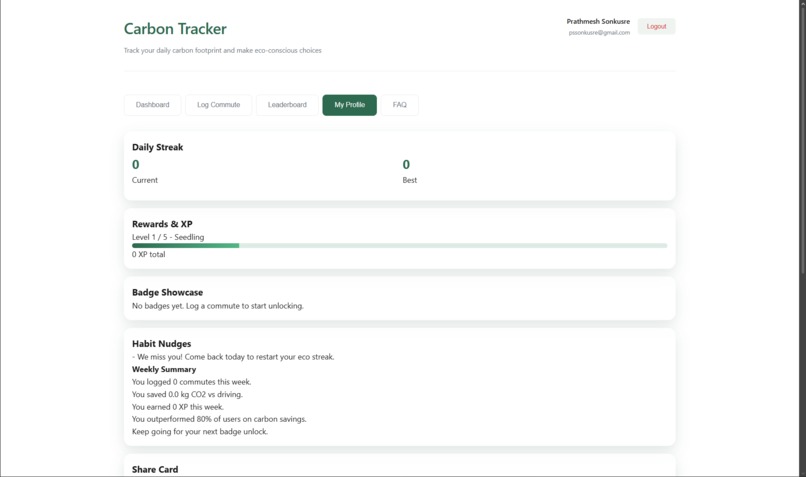
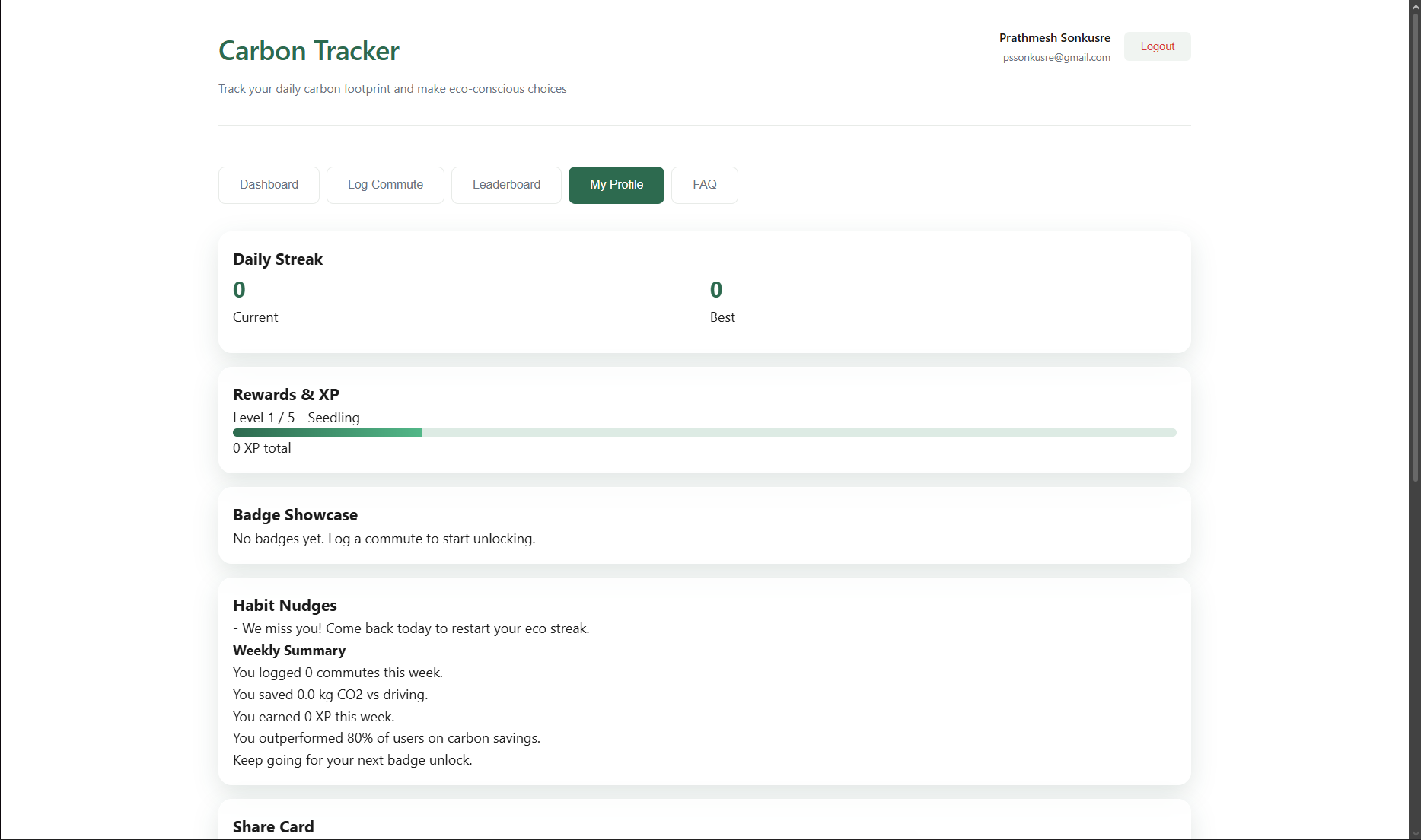
Profile Tab
-
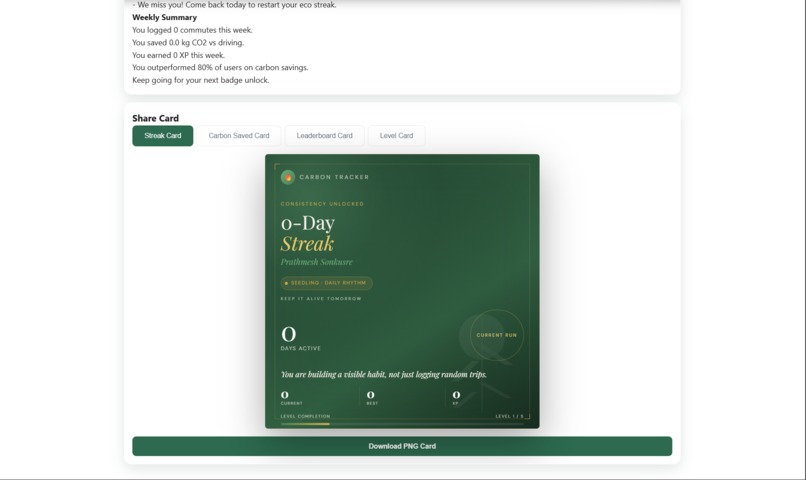
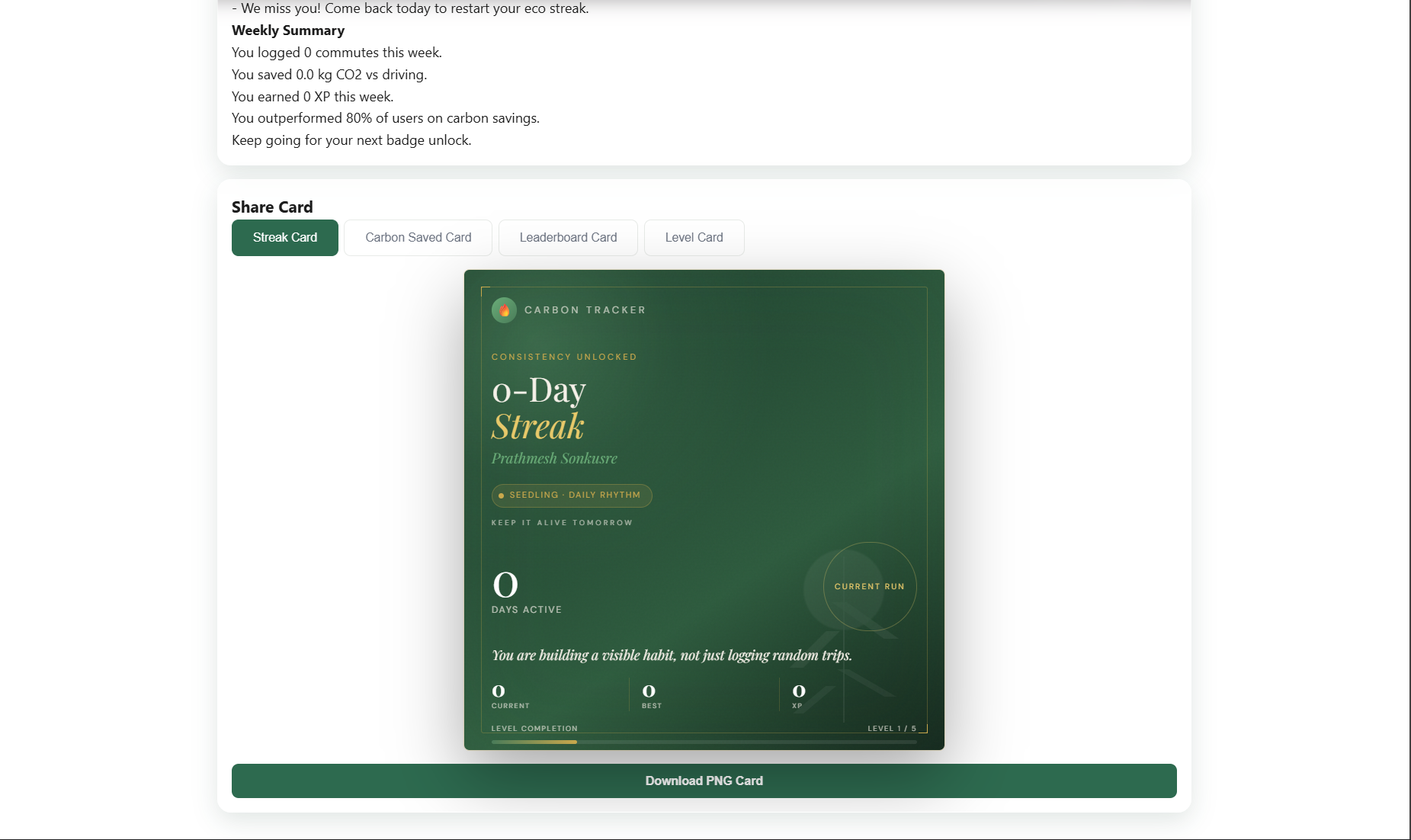
Downloadable streak Card to share on social media
-
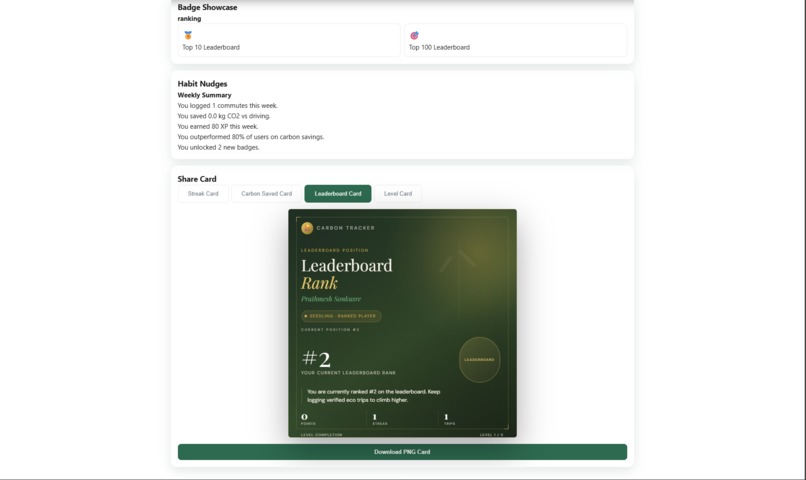
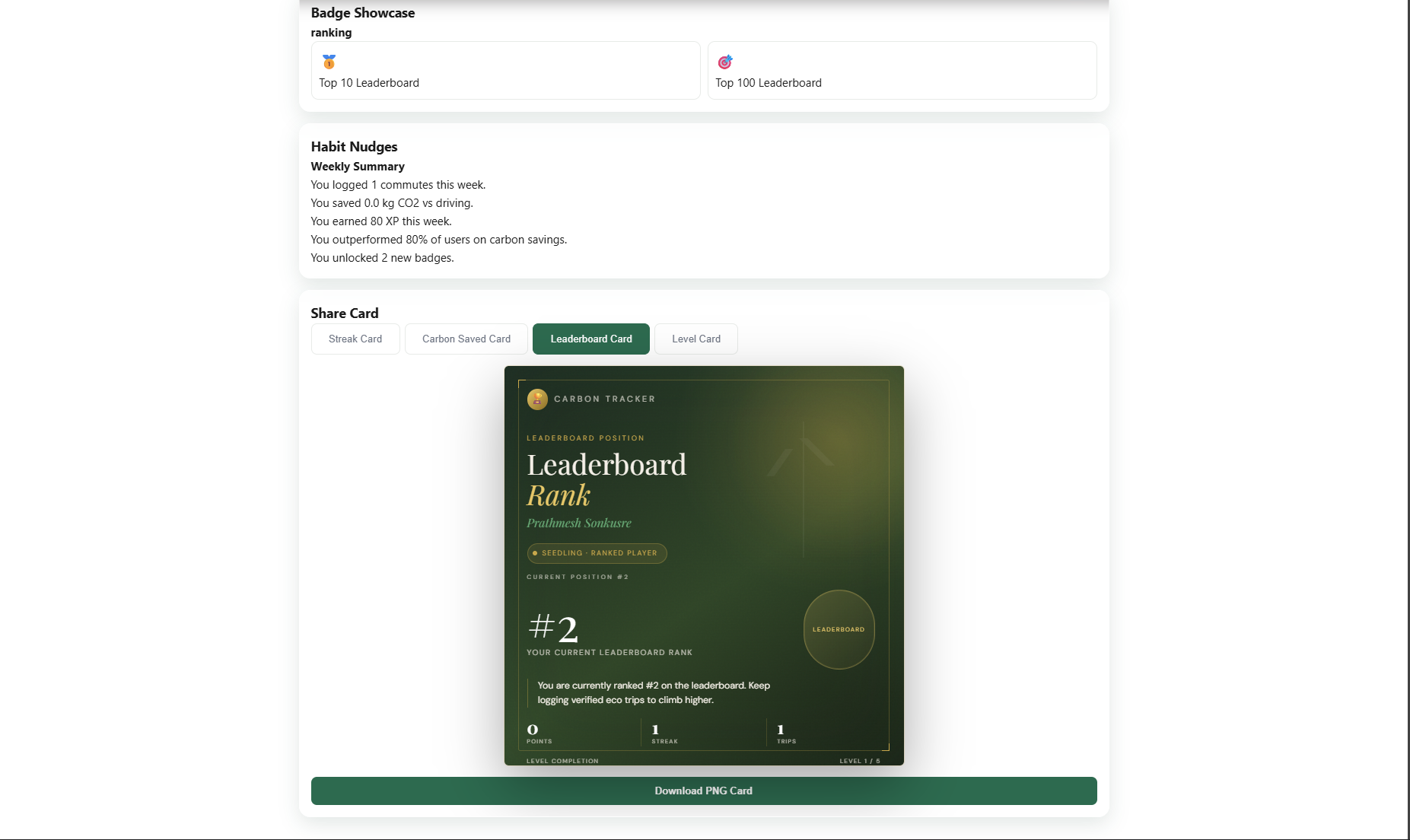
Downloadable Leaderboard Card to share on social media
-
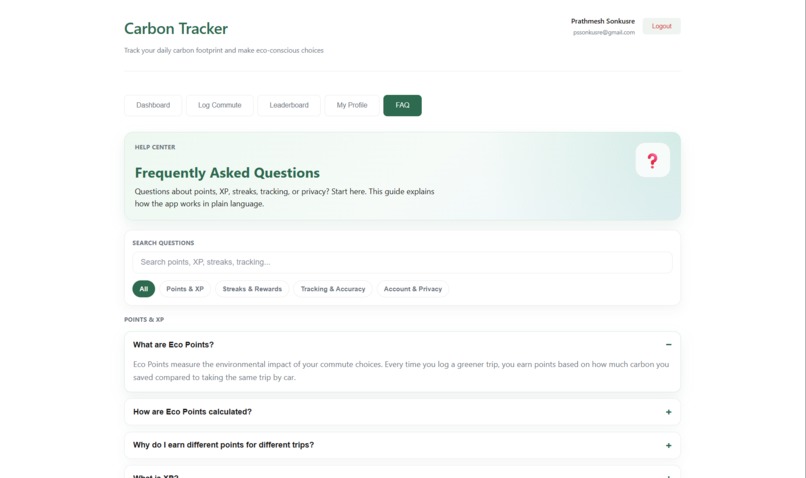
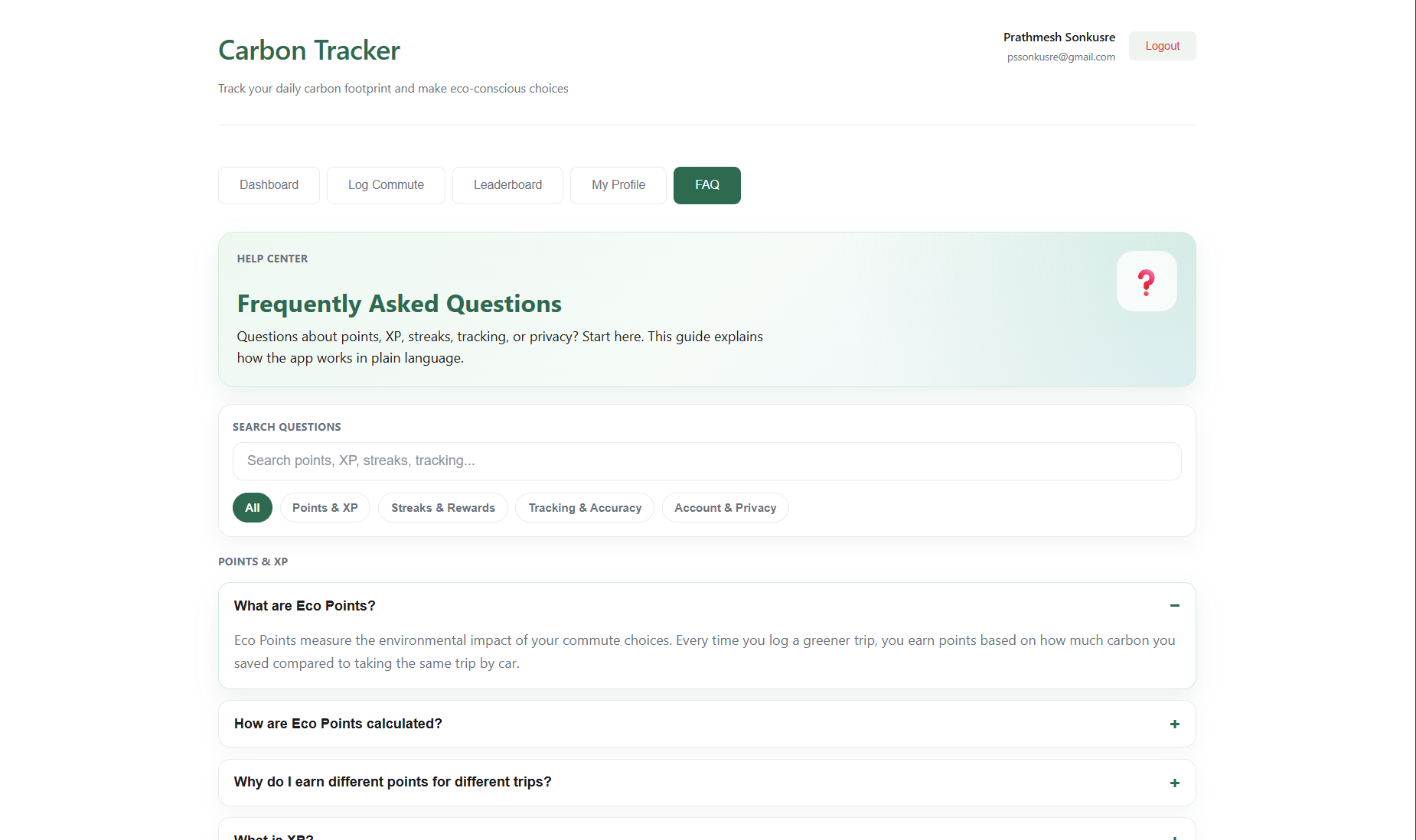
Frequently Asked Questions Tab
Inspiration
Why do we constantly monitor our activity level, step count, and other habits on a daily basis but fail to give much thought about our carbon footprint during our daily commutes? The act of commuting is perhaps one of the most frequently performed climate impact actions in daily lives, yet it largely goes unnoticed. We drew inspiration from popular apps such as Duolingo, Apple Fitness, and habit tracker apps that utilize the concepts of streaks and levels to develop real habits. What if taking public transport or riding a bike was as rewarding?
What it does
The Carbon Tracker application creates a habit loop out of daily travel. By entering data manually, choosing a route on a map, or using live GPS, users can immediately view the carbon footprint of their choice relative to that of a car ride. However, the application does not end with telling the user how many kilograms of carbon emissions have been saved by taking an environmentally conscious action. Rather, it provides an incentive for consistent behavior through the use of experience points, leveling, streaks, badges, and a leaderboard.
How we built it
The development of Carbon Tracker was done using React as the front-end technology stack, Express/Node as the back-end stack, and Firebase for the authentication and database part. The product is equipped to support three types of commuter logging activities: manually logged routes, route logging using the map, and GPS-based live route logging. Our gamification mechanics include streaks, experience points (XP), leveling up, badges, and an automatically refreshed leaderboard. The carbon computations are done on a per transport basis.
Challenges we ran into
The most challenging part was making the GPS-based trip recording accurate enough to be able to verify commuter trips. Live location introduces issues related to precision, permissions, unstable data, and trip validation that cannot be easily resolved within the hackathon timeframe. In addition, we had to find the optimal way of balancing the gamification aspect such that it remained engaging but did not cross the border of being overly rewarding or exploitable.
Accomplishments that we're proud of
It’s something we are proud of because we have successfully implemented a complete behavior loop - log a journey, see your impact, level up, and be motivated enough to come back the next day. We already have implemented manual journey logging as well as map-based route logging, while GPS logging was partially implemented as a beta-stage functionality. Gamification layer with such features as streaks, badges, XP, and leaderboard progress was also successfully implemented. User accounts powered by Firebase are capable of retaining user data and history through sessions. Perhaps, most importantly, it doesn’t feel like a calculator anymore.
What we learned
We came to understand that retention was an issue of product design and not just a notification. When the reward system was not built into the product, users did not return. We also understood how important trip verification was to building trust; one wrong commute would decrease faith in the entire product. But more than anything else, we learned about the chasm between informing people about their environmental footprint and making them feel it.
What's next for Carbon Tracker
Our immediate priority is improving GPS reliability and strengthening trip validation. From there, we want to add team-based and workplace leaderboards so groups can participate in eco-commute challenges together. We are also exploring transit API integrations to help users discover greener travel choices before the trip begins, not just measure them afterward. Longer term, Carbon Tracker could support employer sustainability programs and larger community climate initiatives.
Built With
- axios
- bcryptjs
- cors
- css3
- dom
- dotenv
- express-rate-limit
- express.js
- git
- github
- helmet
- html5
- javascript
- node.js
- nominatim
- npm
- openrouteservice
- openstreetmap
- react.js
- render
- vercel


Log in or sign up for Devpost to join the conversation.