-
-
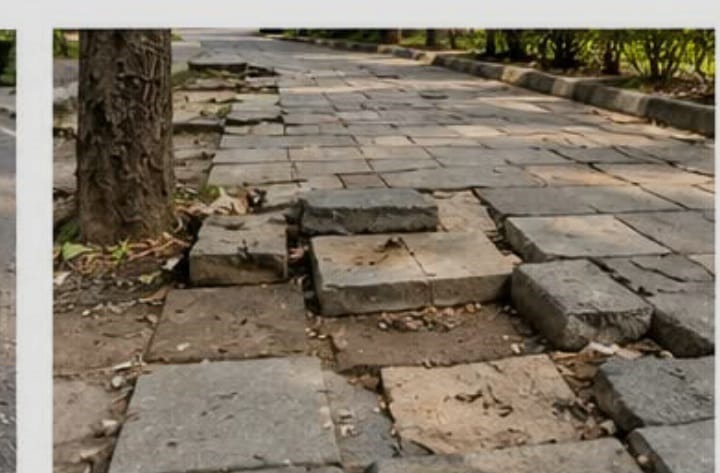
Damaged Footpath
-
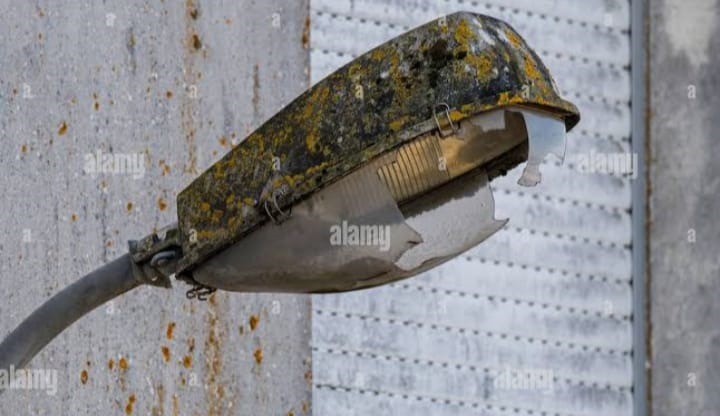
Broken Streetlight training
-
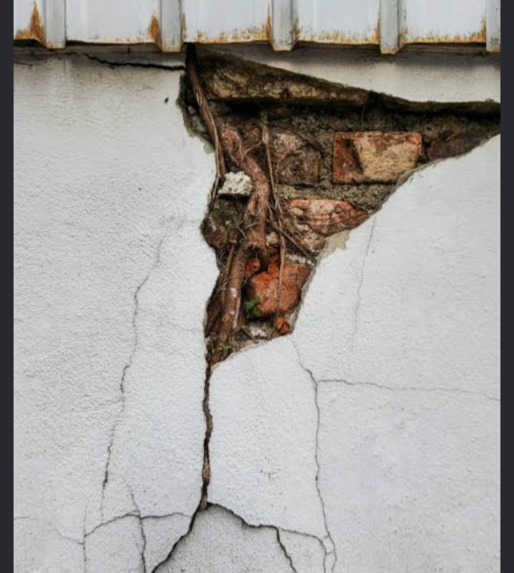
Cracked Walls training
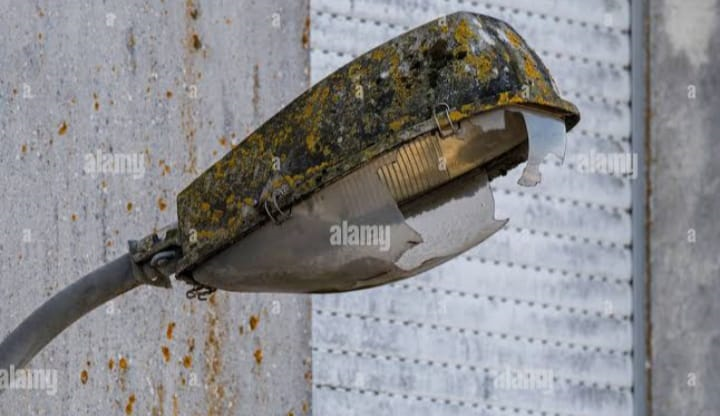
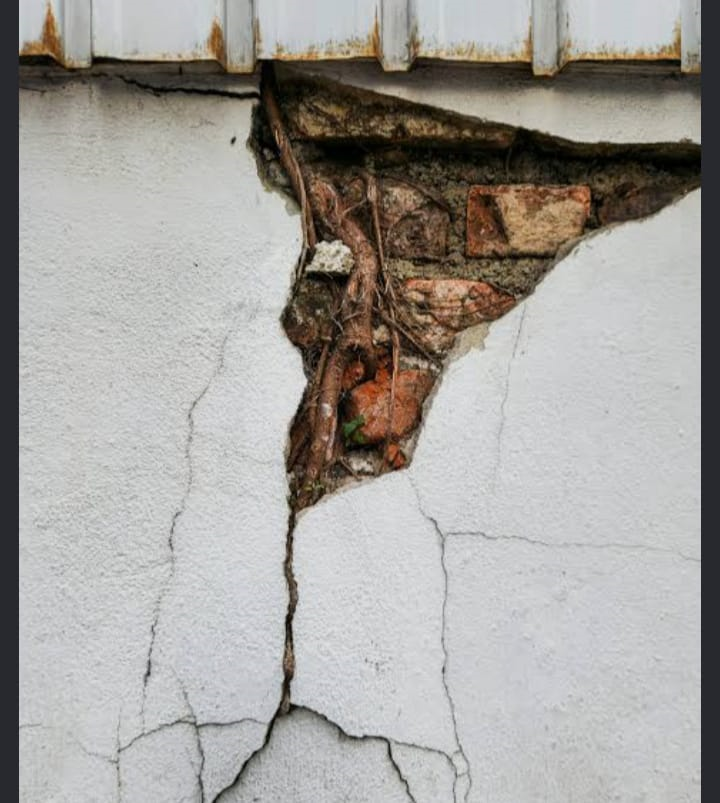
Inspiration
The idea for CampusSense came from a simple problem we noticed in large campuses. Issues like damaged streetlights, overflowing dustbins, drainage leakage, and road damage may not always be noticed immediately. Usually, someone has to manually identify the problem and report it.
We wanted to explore whether images captured by campus vehicles could help monitor these issues automatically. Since these images are also stored and processed digitally, we wanted security to be part of the system from the beginning rather than treating it as an afterthought.
What it does
CampusSense uses images captured from a campus vehicle to identify whether a newly captured image matches a known infrastructure defect.
We first create a defect reference library. When a new image is captured, ViT extracts its visual features, while LSH helps find similar candidates efficiently.
The similarity between two feature vectors can be represented using cosine similarity:
$$ \text{Similarity}(A,B)=\frac{A\cdot B}{|A||B|} $$
HMAC-SHA256 protects the searchable information, AES-256 encrypts the actual images, and ElGamal protects the AES encryption key.
When the similarity exceeds the defined threshold, CampusSense generates an alert containing the defect type, location, and time.
How we built it
We built CampusSense by combining computer vision, similarity search, and security techniques.
The image processing pipeline uses Vision Transformer (ViT) and Locality-Sensitive Hashing (LSH). The security layer uses HMAC-SHA256, AES-256, and ElGamal.
The overall workflow is:
$$ \text{Image} \rightarrow \text{ViT} \rightarrow \text{LSH} \rightarrow \text{Secure Search} \rightarrow \text{Similarity Check} \rightarrow \text{Alert} $$
The system also includes a dashboard to manage defect reference images, vehicle test images, detection results, secure storage, and alerts.
Challenges we ran into
One of our biggest challenges was figuring out how to combine image similarity and encryption without mixing their responsibilities.
We had to understand how LSH could reduce the search space and how AES-256 and ElGamal could work together.
Another challenge was making sure that alerts are generated only when an actual vehicle image is processed and a sufficient similarity match is found, rather than using predefined or sample alerts.
Accomplishments that we're proud of
We are proud that CampusSense goes beyond simply detecting an image. We designed a complete workflow that connects image capture, feature extraction, similarity search, secure storage, detection, and maintenance alerts.
We also kept the system modular so that individual components can be improved or replaced as the project develops.
What we learned
This project taught us that building a real-world system is not just about selecting different algorithms. We learned how computer vision, similarity search, and cryptography need to work together as separate but connected components.
We also learned how to take an idea from a research paper and adapt it into a practical application with a clear real-world purpose.
What's next for CampusSense
Our next step is to test CampusSense with more real campus images and a larger defect reference library.
We plan to improve detection accuracy, integrate live vehicle-camera input and GPS, strengthen the searchable encryption implementation, and eventually develop CampusSense into a continuous campus monitoring system.
Our goal is to help maintenance teams identify infrastructure issues earlier and respond to them more efficiently.
Built With
- aes-256
- github
- hmac-sha256
- image-processing
- machine-learning
- python
- searchable-encryption
- tailwindcss
- typescript


Log in or sign up for Devpost to join the conversation.