-
-
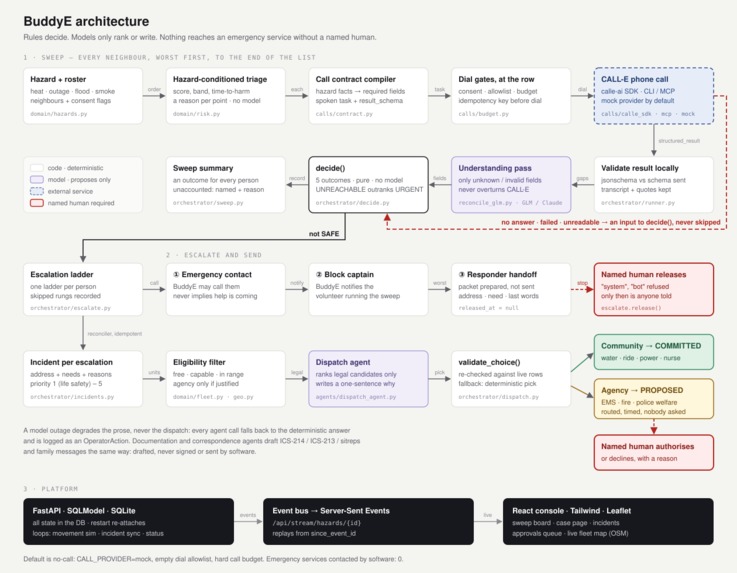
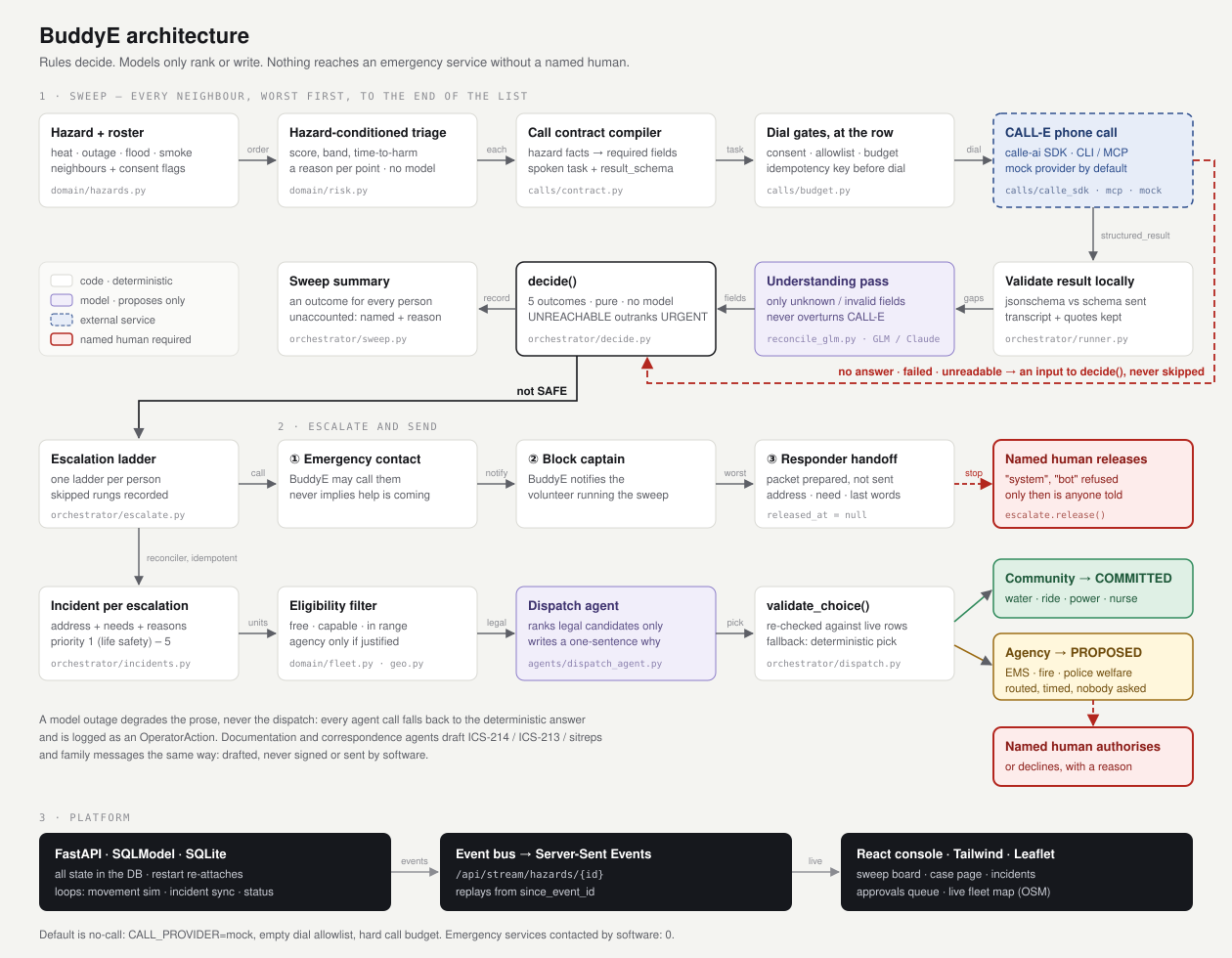
Architecture BuddE
-
-
-
-

Inspiration
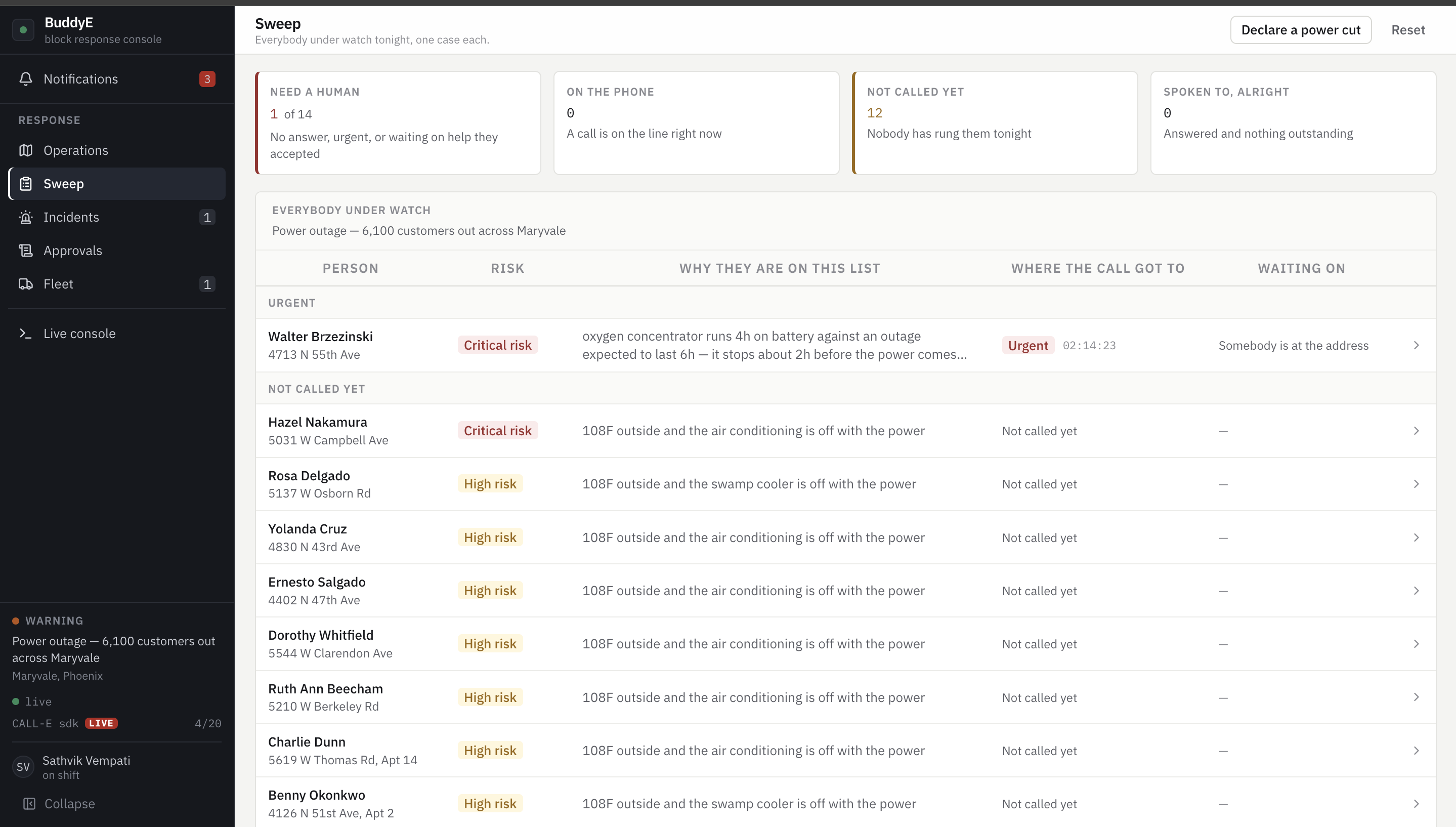
When extreme weather hits or power fails, volunteer block captains face an impossible race against time. A 114°F heatwave affects everyone differently. Rosa, 75, might insist she's fine despite her swamp cooler failing in the high humidity, while Walter's oxygen concentrator battery won't outlast a six-hour outage. BuddE was built because static call lists fail when hazards change. Communities need dynamic triage to keep their most vulnerable neighbors safe.
How BuddE Works
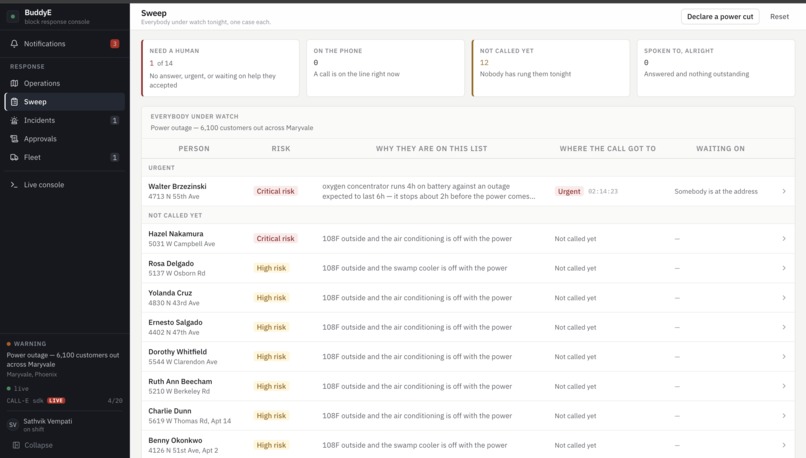
BuddE conducts intelligent welfare sweeps using CALL-E to prioritize those most at risk from a specific, immediate hazard. Instead of relying on AI guesses, it dynamically reorders call lists based on hard-coded rules and the current threat level.
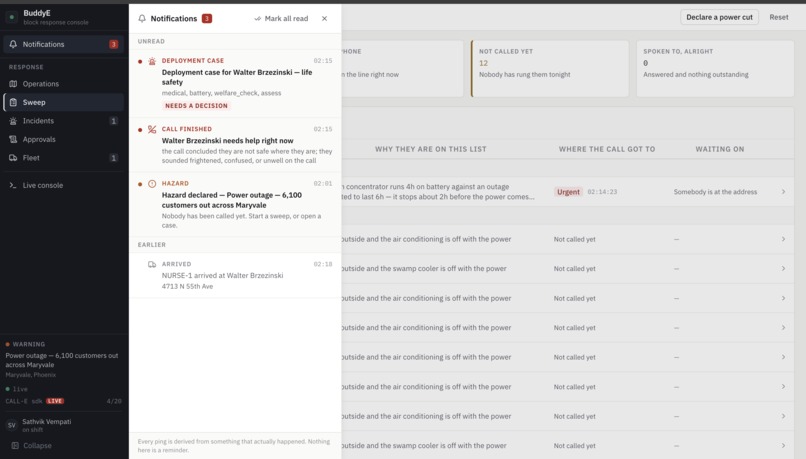
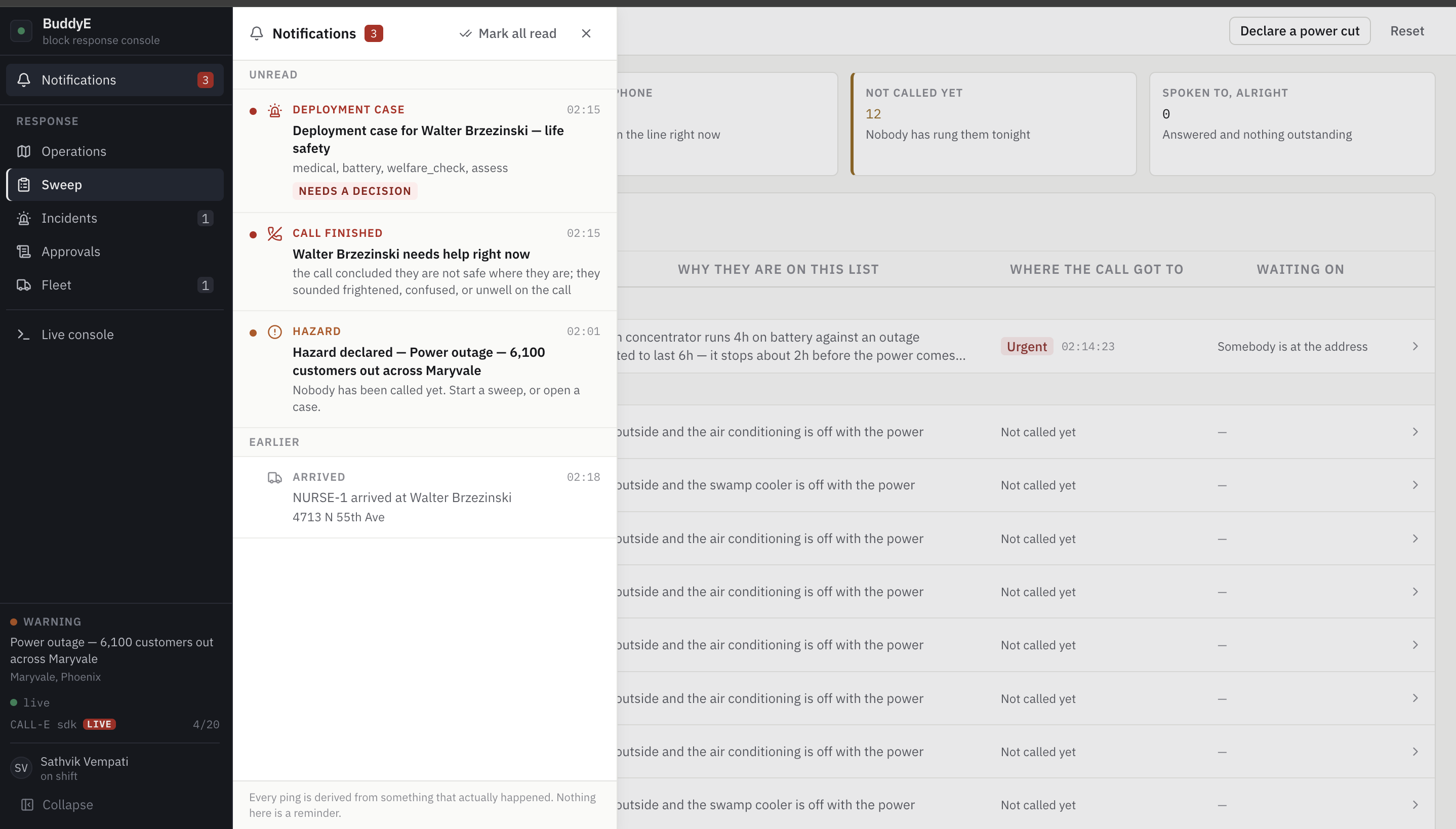
During these automated calls, the system doesn't just listen for a basic "yes" or "no." It requires specific safety validations and reads between the lines—recognizing that a dismissive "I'm just a bit dizzy" is not a safe outcome. Crucially, silence is treated as a critical signal; an unanswered call from an at-risk neighbor immediately triggers a high-priority alert.
When help is needed, BuddE manages the response in clear stages:
- Community First: Automatically stages local, reversible assistance like wellness vans or water drops.
- Guarded Escalation: Prepares detailed dispatch packets for emergency services (ambulances, police).
- Human-in-the-Loop: Strictly requires human authorization before releasing any emergency packets to ensure units aren't pulled away for false alarms.
Architecture & Engineering
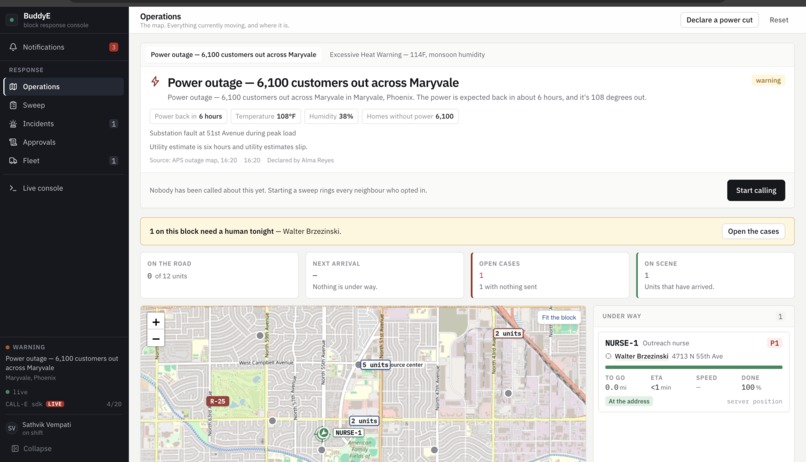
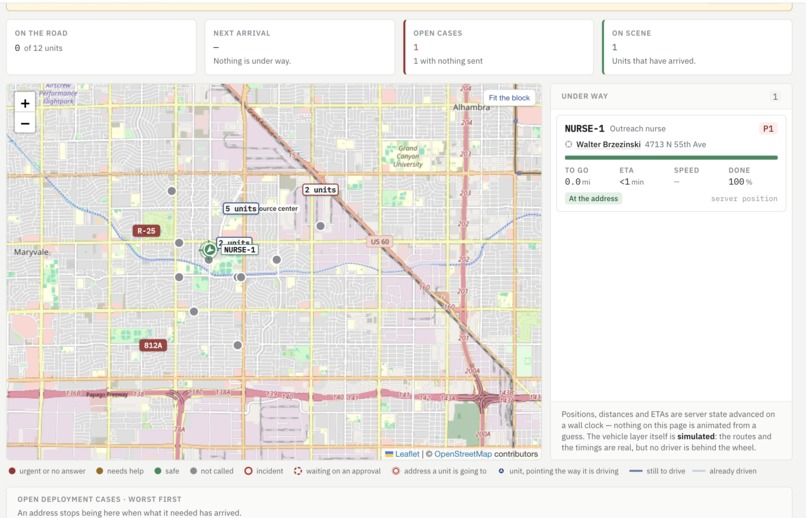
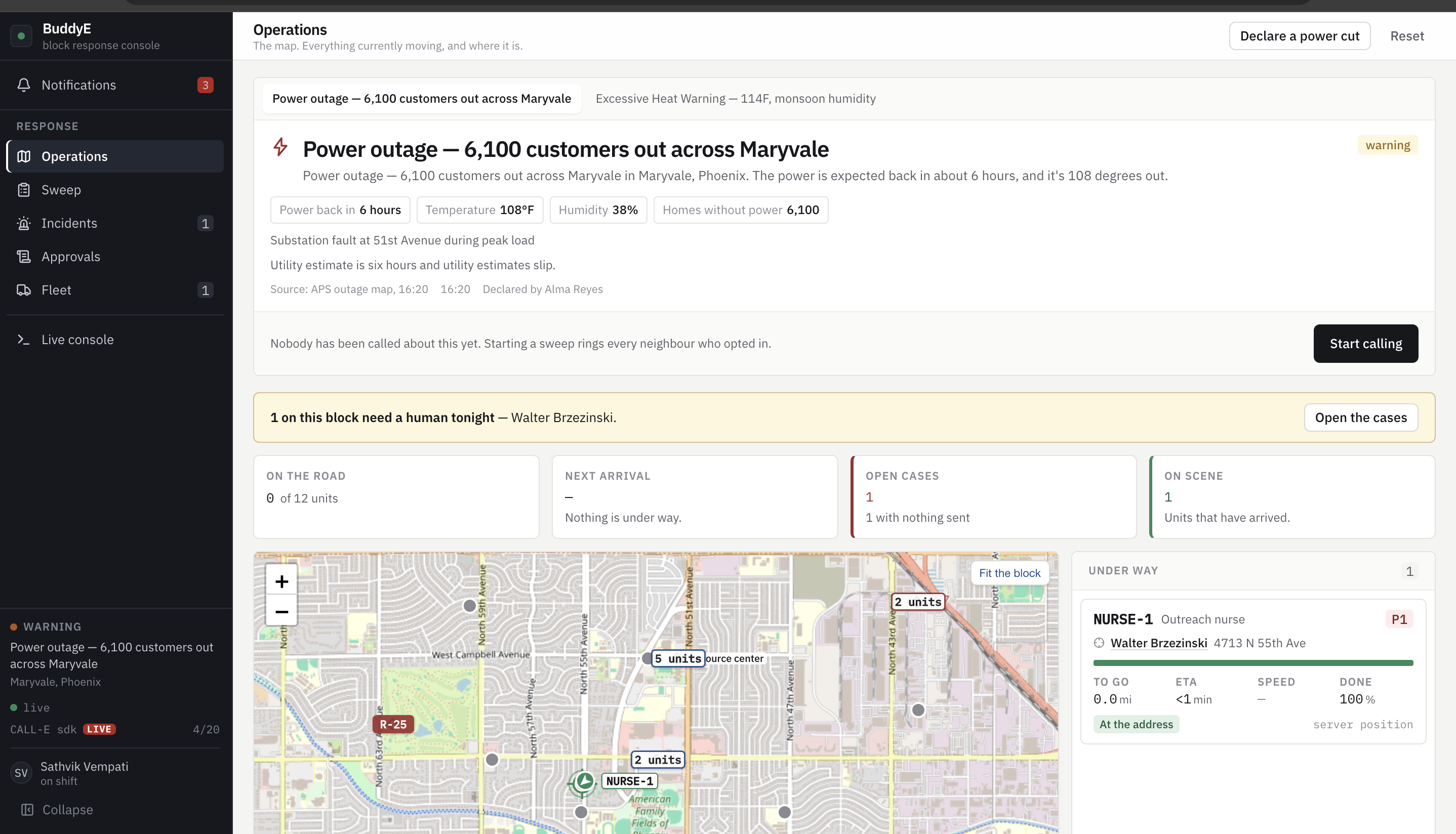
The platform is powered by a FastAPI and SQLite backend, seamlessly paired with a React, TypeScript, and Tailwind frontend that features real-time Leaflet mapping over OpenStreetMap. By design, our code dictates all rankings, routing, and safety checks, restricting the AI models (GLM-5.3 and Claude) exclusively to parsing intent and drafting communications. Calle-ai-sdk was used to make the live, automated calls only AI agents can hold, and mapped structure output into the hands of a fleet of ai agents running on TokenRouter(openai compatible sdk).
We overcame several core engineering challenges to make this architecture viable:
- Safety by Design: We implemented hard call budgets, strict dial allowlists, and aggressive health data redaction so sensitive information never reaches our logs or model prompts.
- Speed & Scale: By transitioning the understanding step to the
glm-5.3-flashmodel, we slashed AI processing latency from over 20 seconds down to just 2.7 seconds per call.
The Road Ahead
Building BuddE reinforced that the strongest AI safety guarantee is a structural, human-in-the-loop design. Moving forward, we are integrating live automatic vehicle location (AVL) feeds, direct database imports from county at-risk registries, and automated multilingual check-ins tailored to each neighbor's preferred language.
Built With
- call-e
- calle-ai-sdk
- claude
- fastapi
- glm-5.3
- jsonschema
- langraph
- leaflet.js
- mcp
- openstreetmap
- pydantic
- python
- react
- server-sent-events
- sqlite
- sqlmodel
- tailwindcss
- tokenrouter
- typescript
- vite


Log in or sign up for Devpost to join the conversation.