-
-
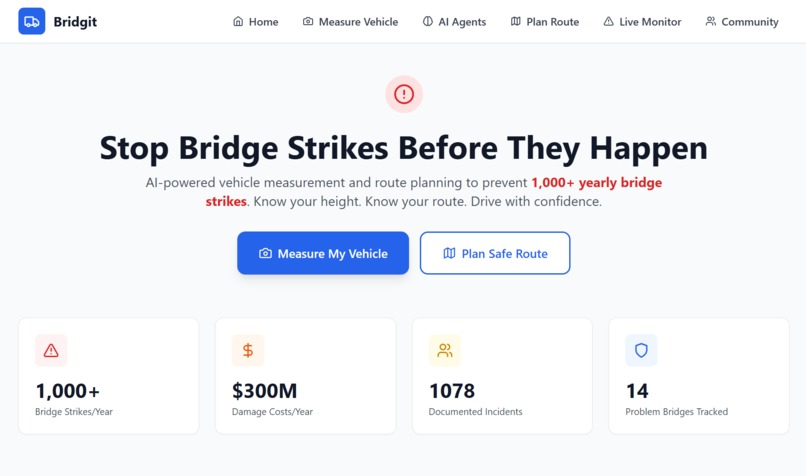
Home page
-
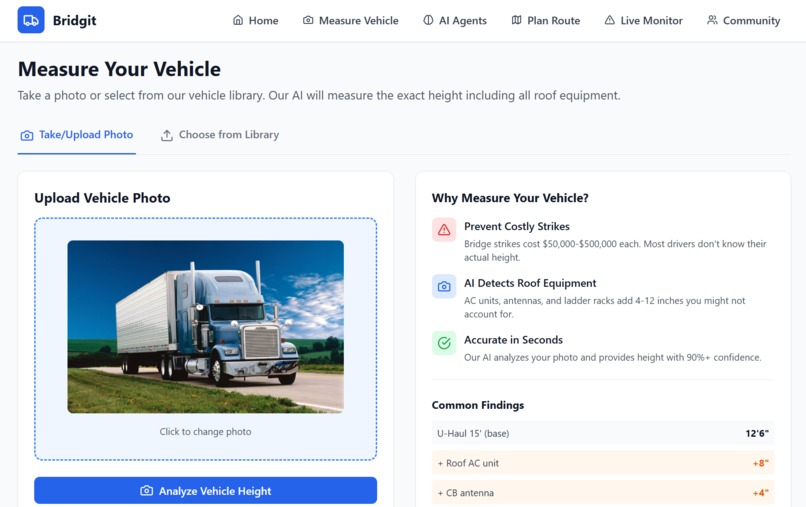
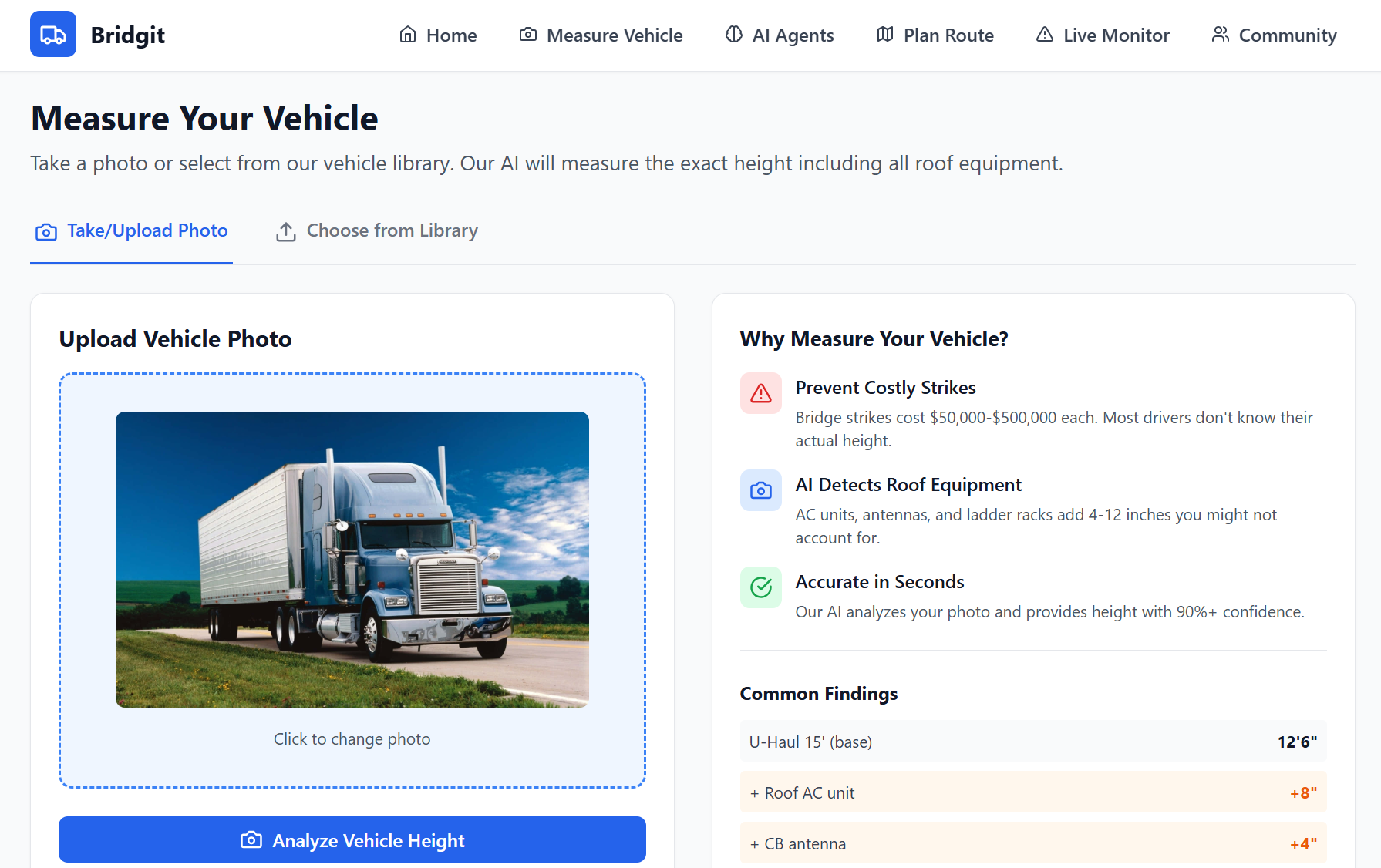
Measure Vehicle/Truck page
-
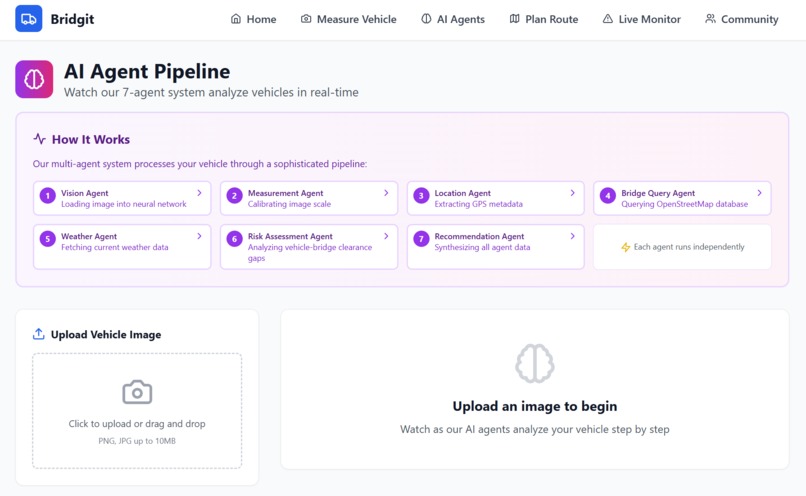
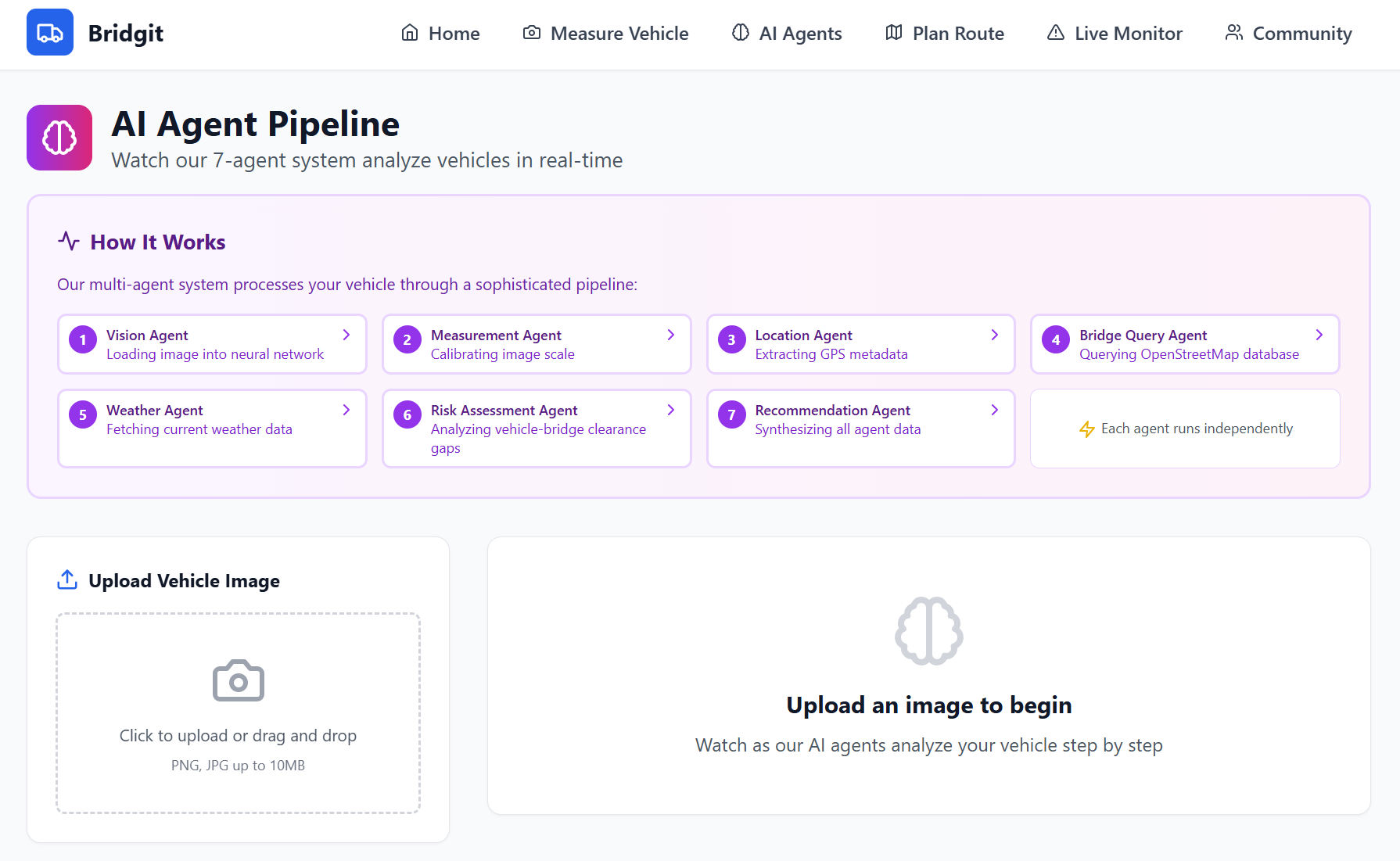
Agent workflow visualization
-
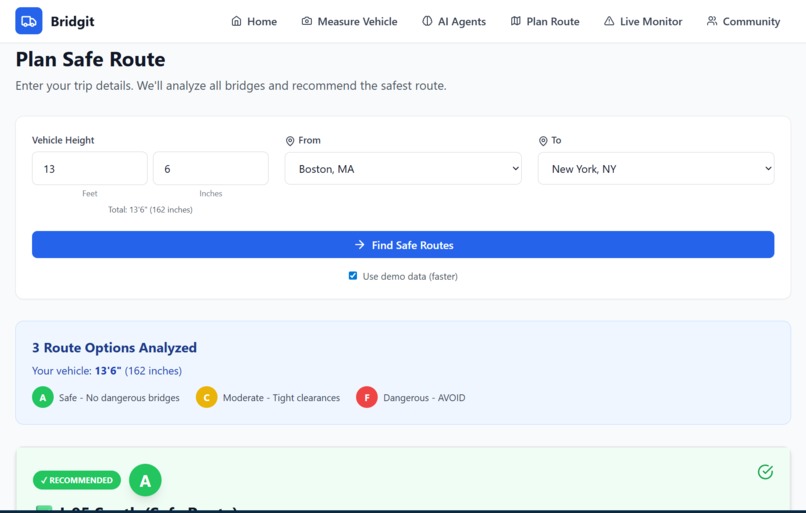
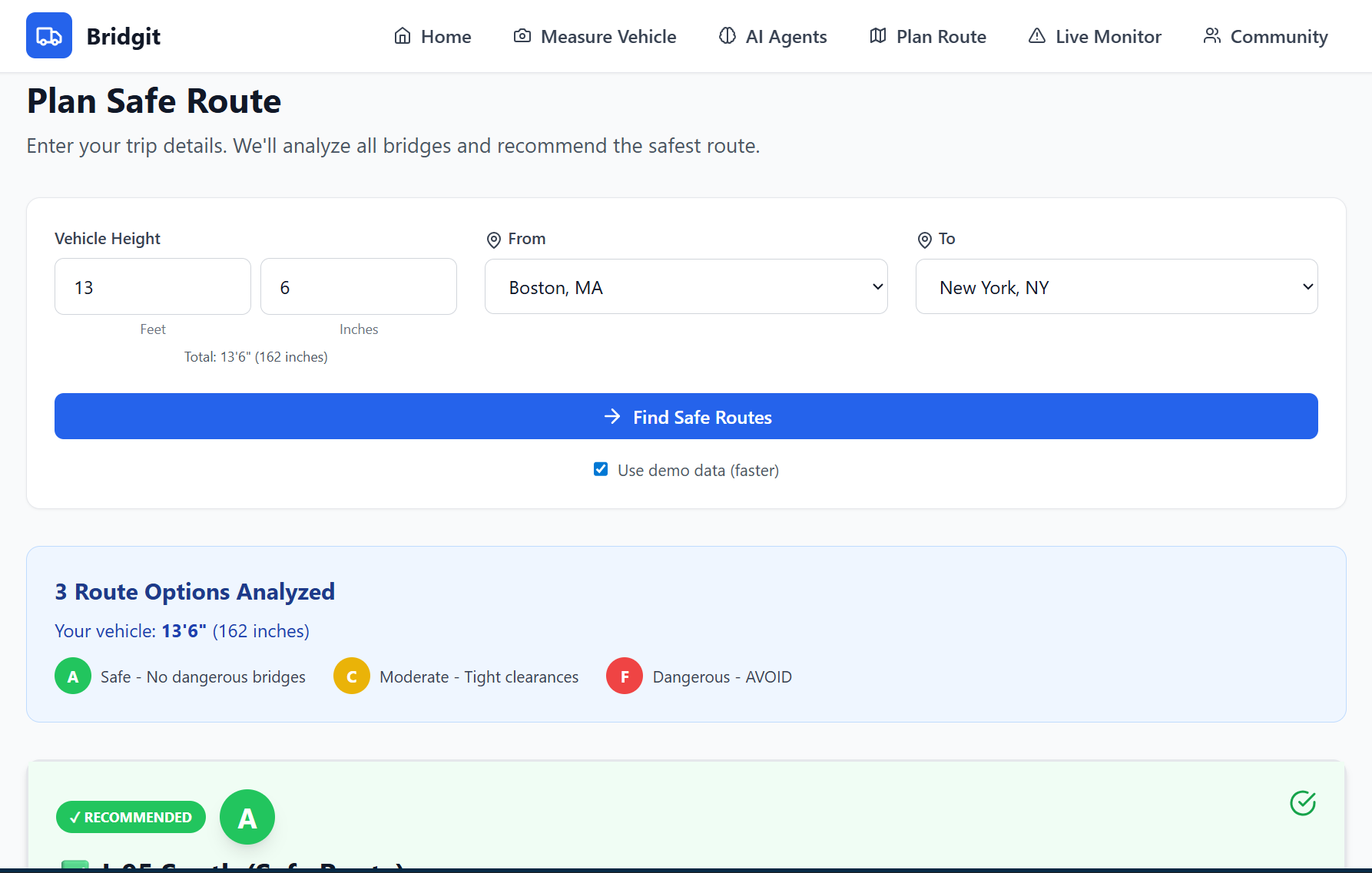
Route planning and selection
-
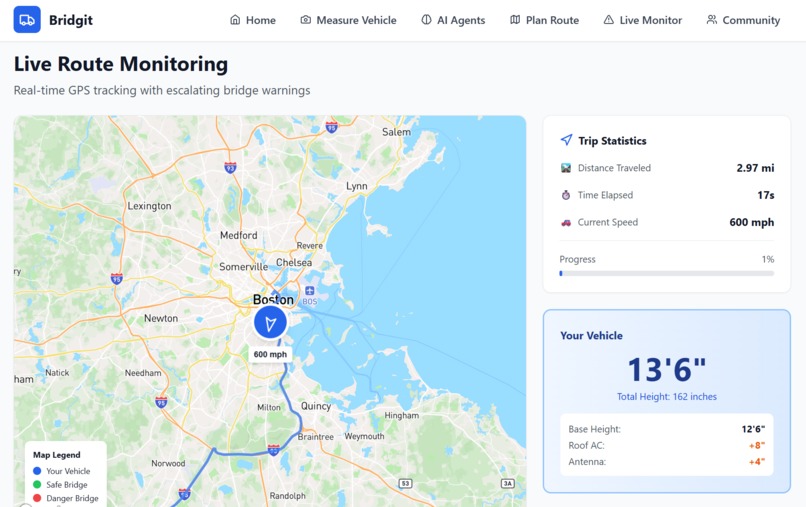
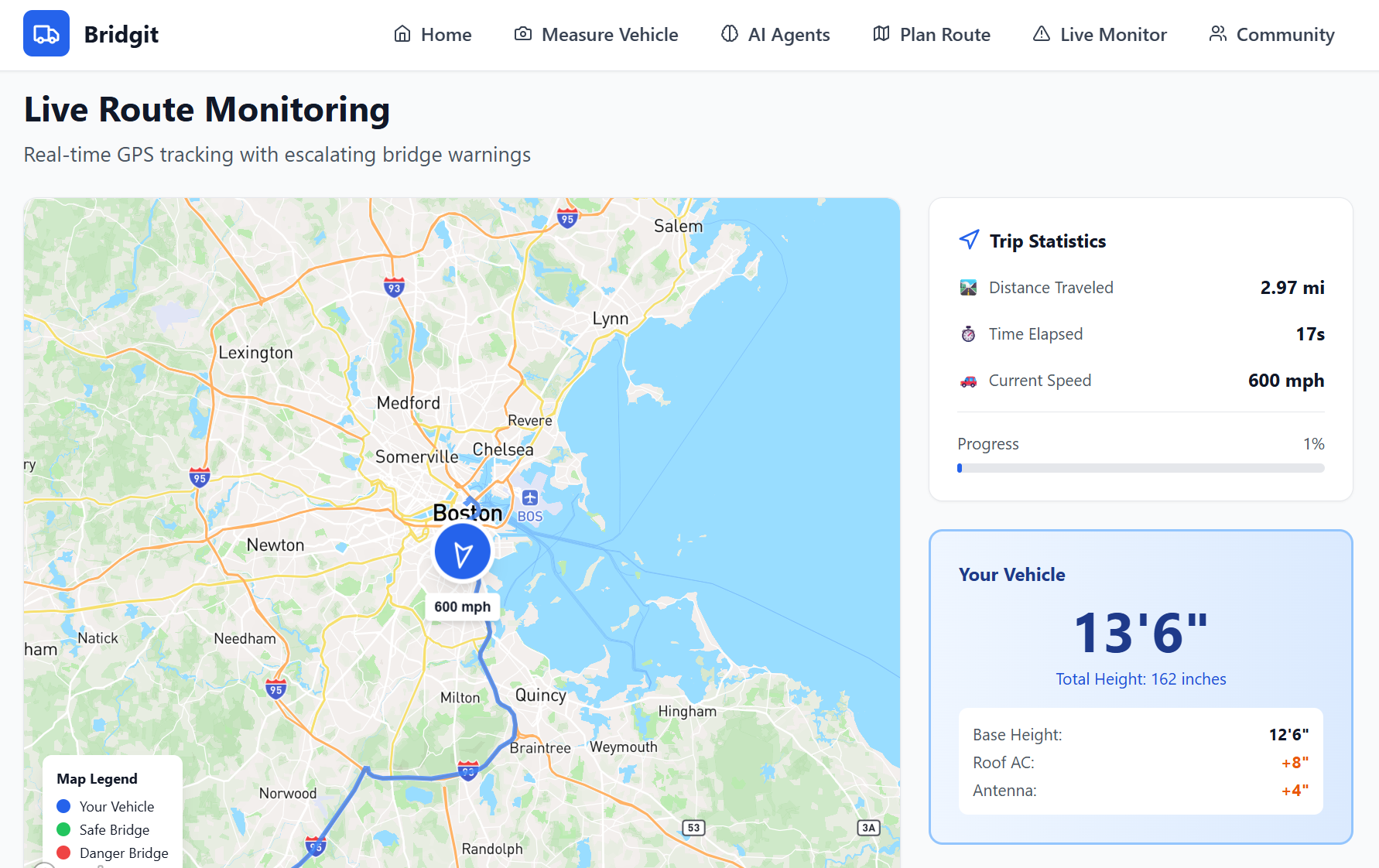
Live route monitoring
-
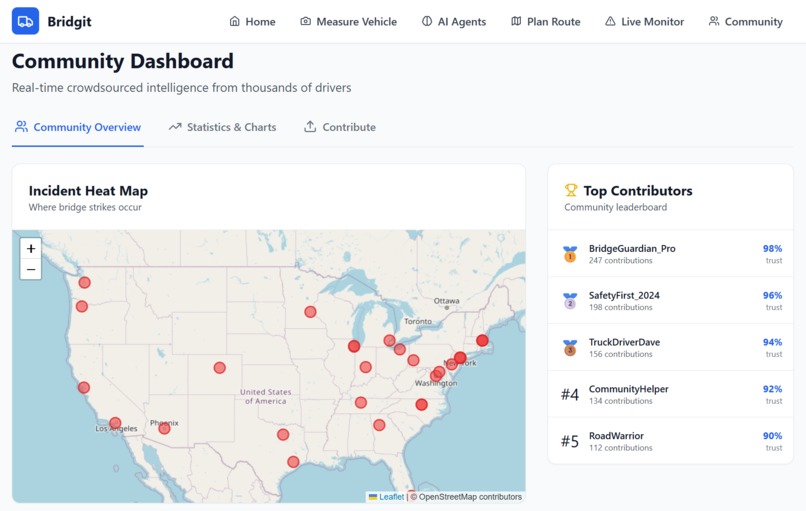
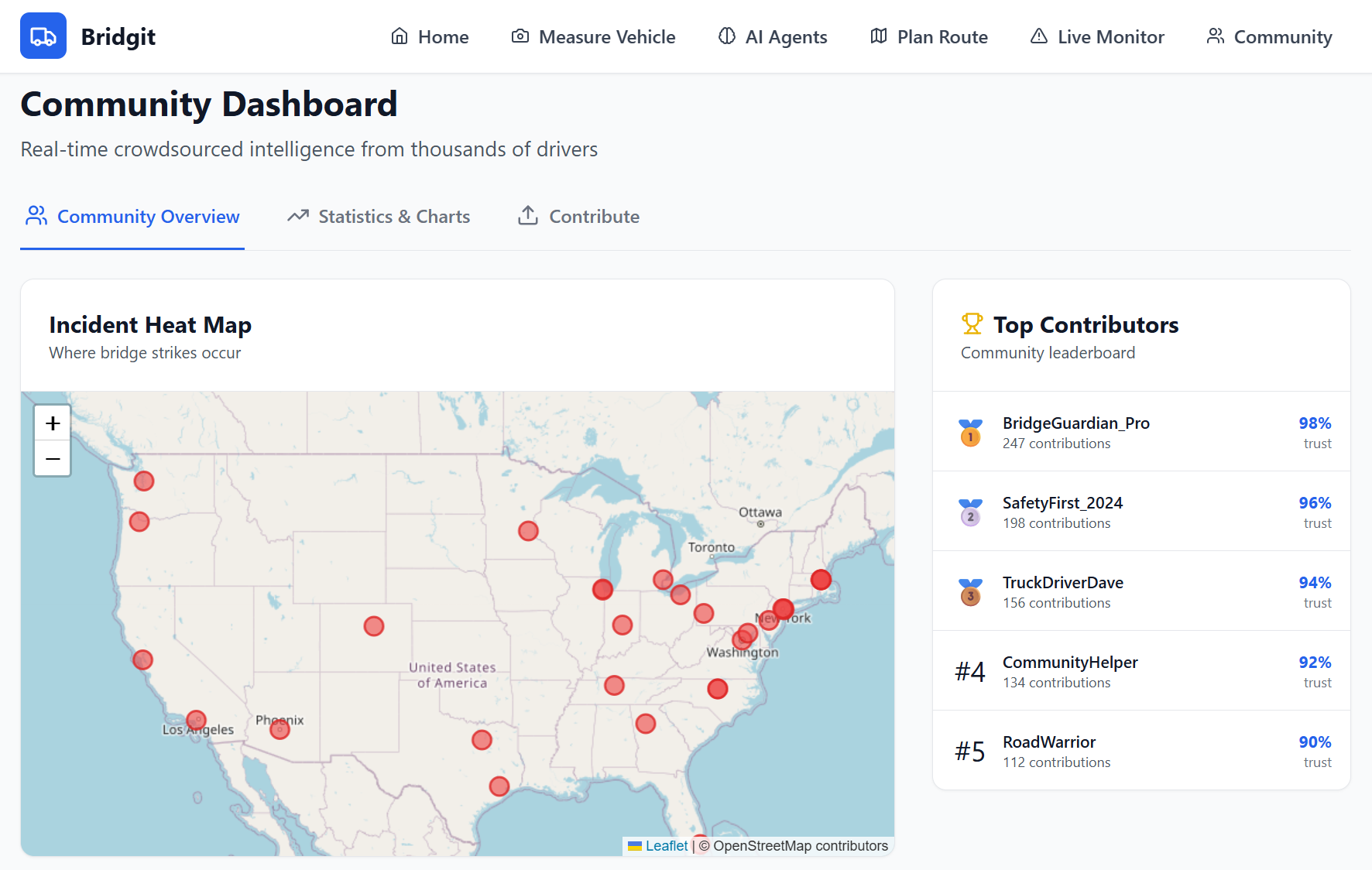
Community dashboard showing reported danger spots
-
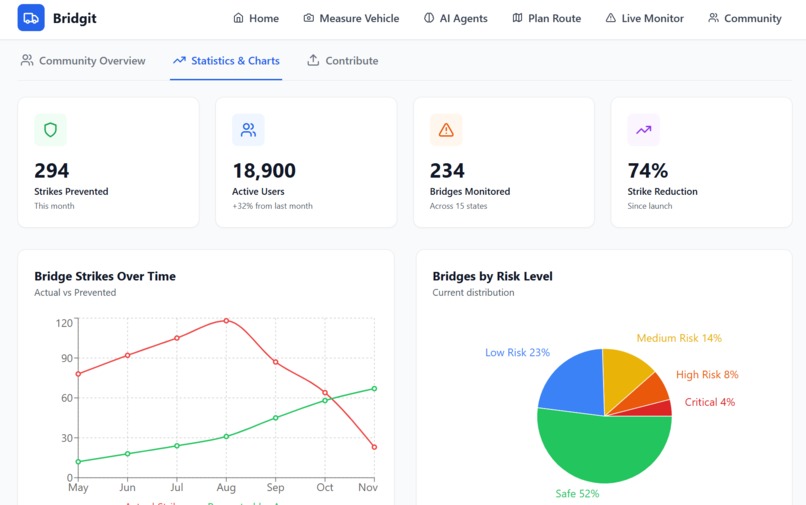
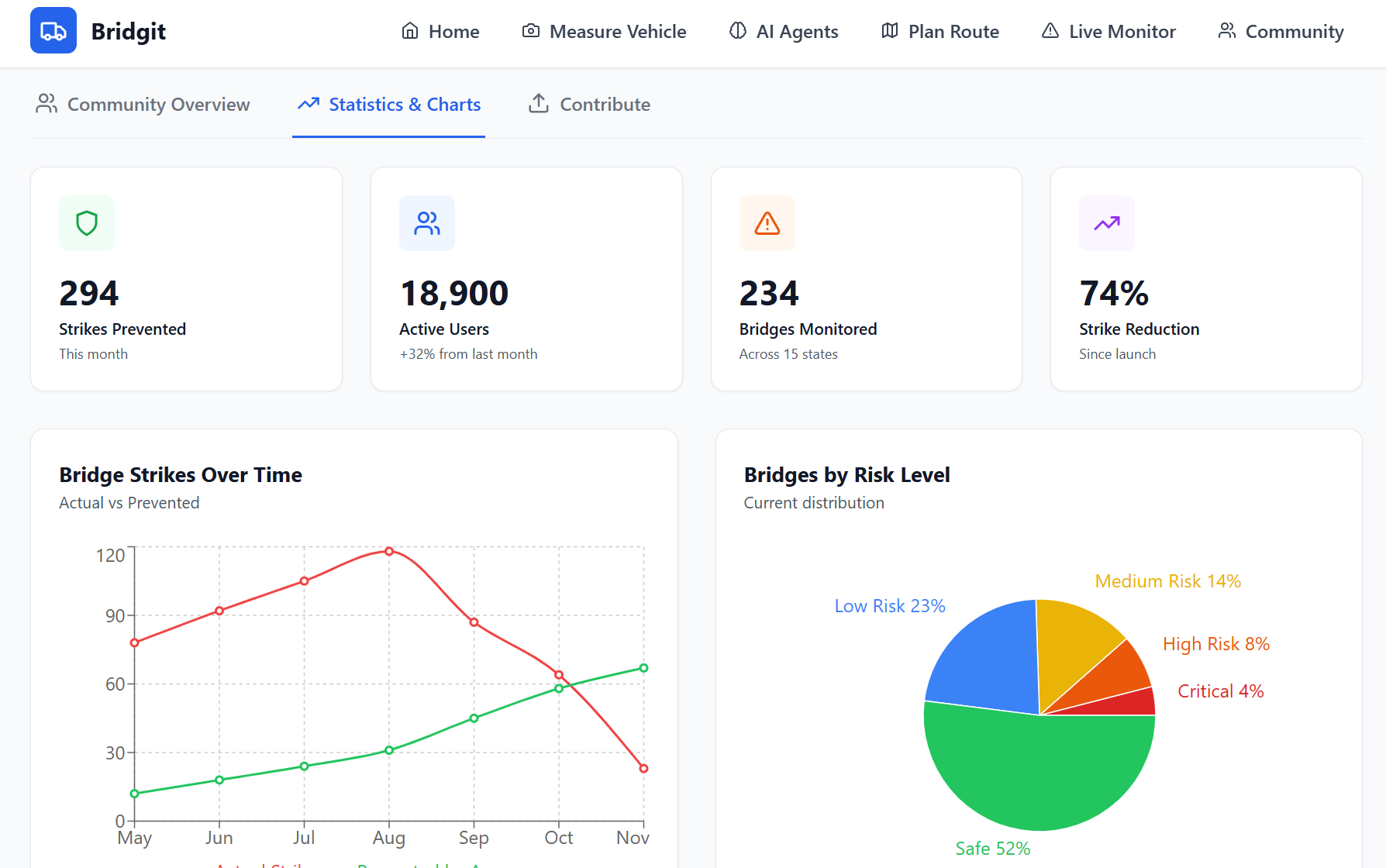
Community stats
-
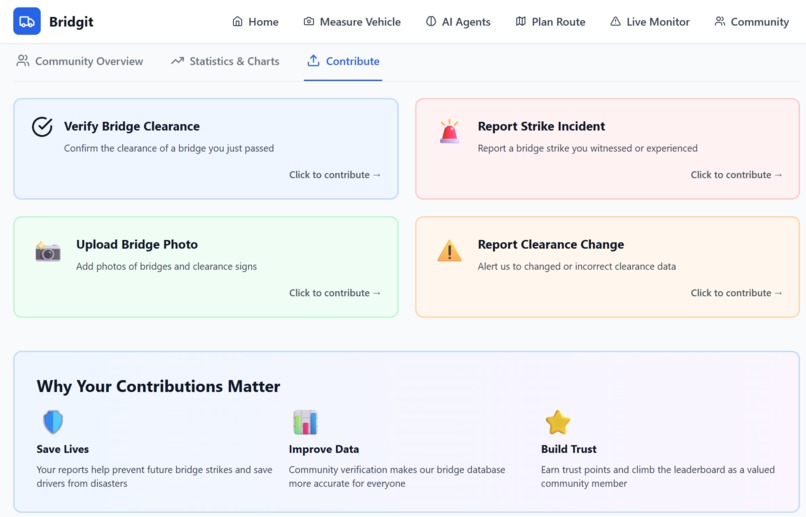
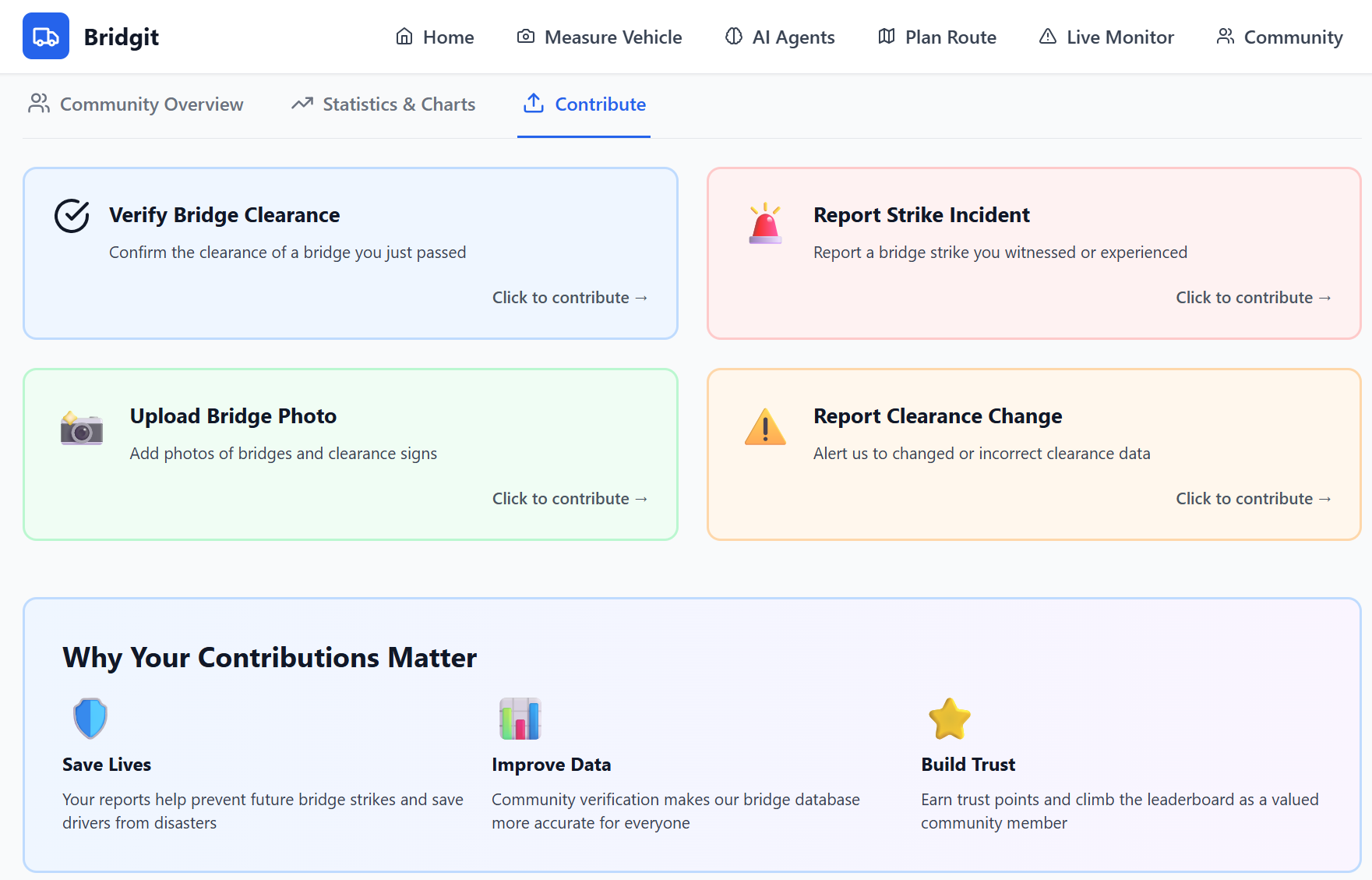
Community contribution and crowdsourcing
-
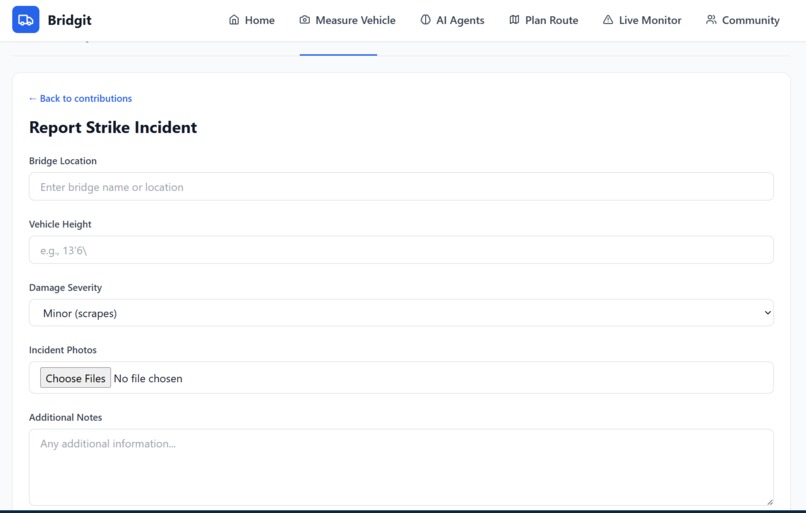
Crowdsourcing information page
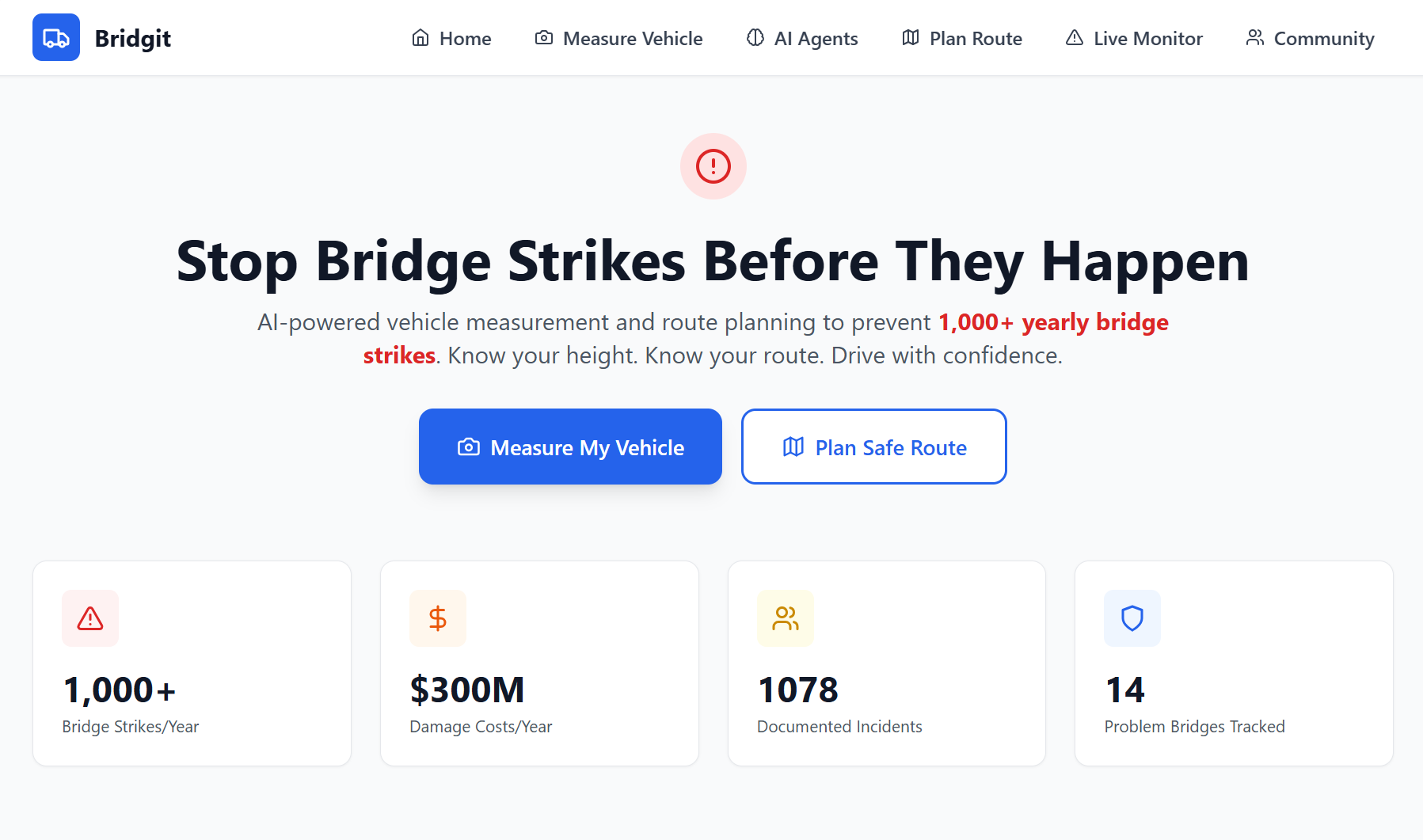

What it does
Brigit is a comprehensive AI-powered safety platform that prevents bridge strikes through three core features:
1. AI Vehicle Height Measurement
- Users upload a photo of their vehicle (rental truck, RV, delivery van, etc.)
- Our 7-agent multi-agent system analyzes the image:
- Vision Agent: Identifies vehicle type and detects roof equipment
- Measurement Agent: Calculates precise height using Nemotron Visual language model (VLM)
- Location Agent: Determines where the photo was taken
- Bridge Query Agent: Searches nearby bridge database
- Weather Agent: Checks current conditions that affect clearance
- Risk Assessment Agent: Evaluates danger level for local bridges
- Recommendation Agent: Provides actionable safety guidance
- Returns exact height including often-forgotten additions (AC units add 6-10 inches, antennas 4-6 inches)
- Shows visual breakdown with confidence scores
2. Intelligent Route Planning
- Enter your origin, destination, and vehicle height
- AI analyzes your route for low bridge hazards
- Returns:
- Safe routes with bridge clearances
- Risk levels (SAFE, LOW, MEDIUM, HIGH, CRITICAL)
- Specific bridges to avoid
- Alternative routes if needed
- Distance, duration, and safety grades
- Real-time "Start This Route" navigation with live monitoring
3. Bridge Strike Prevention System
- Live monitoring page tracks your location as you drive
- Escalating warning system:
- 5 miles out: Yellow alert notification
- 1 mile out: Orange warning with bridge details
- 500 feet: Red critical alert to stop
- Shows exact clearance, your vehicle height, and safety margin
- Incident reporting for near-misses or actual strikes
4. Vehicle Library
- Pre-configured profiles for common vehicles (U-Haul 10'/15'/20', Penske trucks, RVs)
- Interactive portfolio system to customize roof equipment
- Real-time height calculation as you toggle modifications
- Instant safety warnings for high-risk configurations
How we built it
Technology Stack
Frontend: React 18.2 + Vite 5.0 + Tailwind CSS 3.3
- Modern, responsive UI with component-based architecture
- React Router for seamless navigation
- Axios for API communication
- Lucide React for beautiful, consistent icons
Backend: FastAPI + Python 3.12
- High-performance async API endpoints
- RESTful architecture for scalability
- CORS middleware for cross-origin requests
- Multipart file upload handling for images
AI/ML Core: LangGraph 1.0.2 Multi-Agent System
- 7 specialized AI agents working in sequence
- State management for agent communication
- Nemotron Llama 3.1 70B Instruct via NVIDIA API
- OpenAI SDK for NVIDIA API compatibility
External Integrations:
- NVIDIA AI: Nemotron Llama 3.1 70B for vision analysis and route planning
- OpenStreetMap Overpass API: Bridge database queries
- Mapbox Geocoding API: Location detection and reverse geocoding
- OpenWeather API: Real-time weather data for clearance adjustments
Development Process
- Research Phase: Studied bridge strike statistics, rental truck heights, and common causes
- Design Phase: Created user flows for photo upload, route planning, and monitoring
- Backend First: Built the 7-agent system with LangGraph, tested each agent individually
- Frontend Integration: Created React components matching the agent pipeline
- Iteration: Added vehicle library, route planning, and real-time monitoring based on user needs
- Polish: Agent Pipeline UI visualization, portfolio modals, responsive design
Challenges We Ran Into
1. Multi-Agent State Management
- Problem: Getting 7 agents to communicate their results to each other sequentially was complex
- Solution: Used LangGraph's state management to create a shared context that each agent could read from and write to
- Lesson: LangGraph excels at orchestrating complex multi-agent workflows
2. Computer Vision Height Measurement
- Problem: Accurately measuring vehicle height from a single photo without known reference points
- Solution:
- Used license plates as scale references (standard 6" × 12")
- Instructed users to stand at specific distances
- Provided confidence scores rather than claiming perfect accuracy
3. Bridge Database Accuracy
- Problem: OpenStreetMap data isn't always complete or accurate for bridge clearances
- Solution:
- Cross-referenced multiple data sources
- Added user incident reporting to crowdsource corrections
- Displayed confidence levels for each bridge clearance
- Lesson: Real-world data is messy; build systems that acknowledge and handle uncertainty
Accomplishments We're Proud Of
1. The 7-Agent Pipeline
Building a working multi-agent system where each agent has a specific expertise and they all work together seamlessly. The Vision Agent detects objects, Measurement calculates heights, Location finds where you are, Bridge Query searches databases, Weather checks conditions, Risk assesses danger, and Recommendation provides guidance. It's like having a team of experts analyzing every aspect of bridge strike risk.
2. Real-Time Agent Pipeline Visualization
Creating the AgentPipeline component that shows users exactly what each AI agent is doing in real-time. Users can watch the progress bar fill up (5/7 agents completed), see which agent is currently working (with a loading spinner), and click to expand any agent to see its detailed findings. This transparency builds trust in the AI system.
3. Interactive Vehicle Portfolio System
The vehicle library with interactive portfolios where users can select a vehicle type (U-Haul 15', Class A RV, etc.) and toggle roof equipment modifications. As they check/uncheck AC units, antennas, and other items, the total height updates in real-time. It's educational and practical.
4. Intelligent Route Planning
The AI doesn't just find low bridges on your route—it evaluates the entire journey, assigns risk levels, calculates safety grades, and recommends alternatives. The "Start This Route" button passes all data to a live monitoring page for real-time tracking.
5. User Experience Design
From the homepage's embedded bridge strike video to the feet/inches height input (13'6" instead of just 162 inches), every detail was designed for real-world truck drivers, RV owners, and rental customers who aren't height experts.
6. Comprehensive Documentation
The README.md with architecture diagrams, complete agent workflow explanations, API endpoint documentation, and setup instructions. Future developers (or hackathon judges!) can understand the entire system at a glance.
7. Handling Real-World Complexity
- Same-city validation (preventing boston→boston routes)
- Bidirectional route matching
- AI response sanitization
- Error handling with helpful messages
- Confidence scores for uncertain measurements
- Weather-based clearance adjustments
8. Preventing Actual Tragedies
Building something that could genuinely save lives. Every bridge strike prevented is a person who gets home safely, a family that doesn't lose a loved one, a community that doesn't experience trauma. That's what drives us.
What We Learned
Multi-Agent Systems are Powerful but Complex
- LangGraph makes orchestration manageable
- Each agent needs a clear, focused responsibility
- State management is critical for agent communication
- Sequential pipelines work better than parallel for dependent tasks
Frontend-Backend Contracts Matter
- Define data schemas early
- Build transformation layers for mismatches
- Validate responses before rendering
- Handle errors gracefully with user-friendly messages
Real-World Data is Messy
- OpenStreetMap has incomplete bridge data
- Some bridges aren't in any database
- Weather affects clearance (snow accumulation, road flooding)
- User-reported incidents help fill gaps
User Experience Drives Adoption
- Truckers think in feet/inches, not total inches
- City dropdowns are easier than typing city names
- Visual feedback (progress bars, agent status) builds trust
- Warnings must be clear and actionable
The Impact We Hope to Have
Every year, thousands of bridge strikes occur in the US alone. Each one risks lives, causes massive traffic disruptions, costs tens of thousands in repairs, and traumatizes communities. Bridgit aims to prevent these tragedies by making bridge clearance awareness effortless.
We envision:
- Rental companies integrating Bridgit into checkout processes
- GPS apps adopting height-aware routing
- Fleet managers using our API to protect drivers
- Individual drivers checking their height before every trip
- Fewer families experiencing the trauma I witnessed
Because no one should die because of a number they didn't know.
Built With
- fastapi
- langgraph
- mapbox
- nemotron
- openstreetmap
- openweather
- python
- react
- recharts
- tailwind


Log in or sign up for Devpost to join the conversation.