-
-
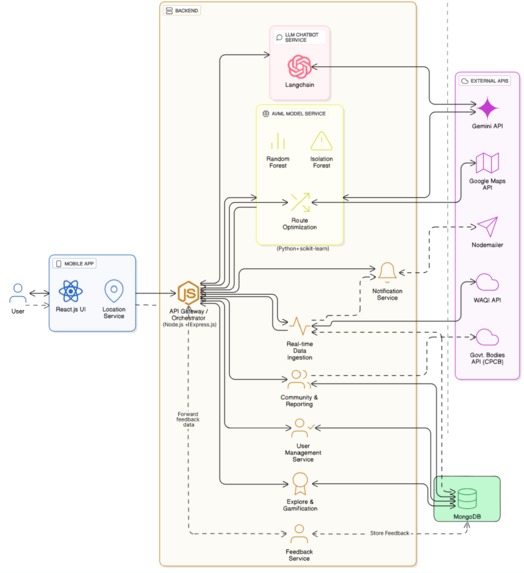
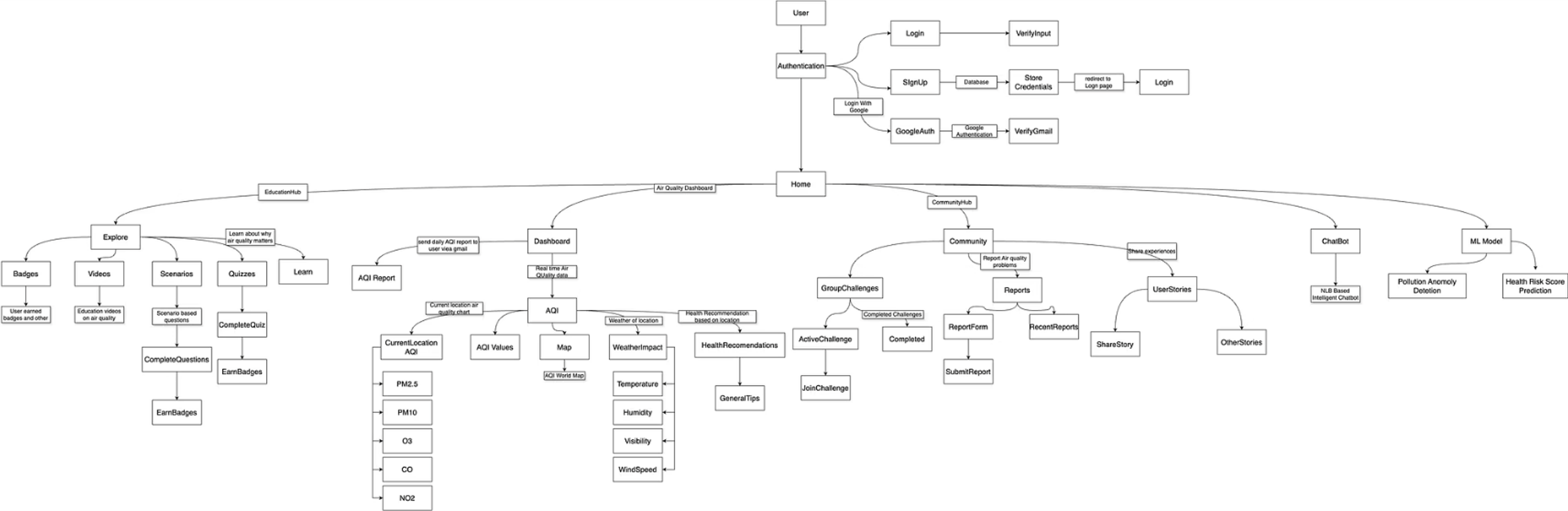
Architecture
-
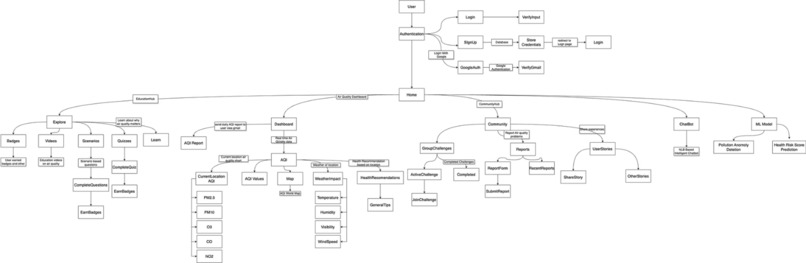
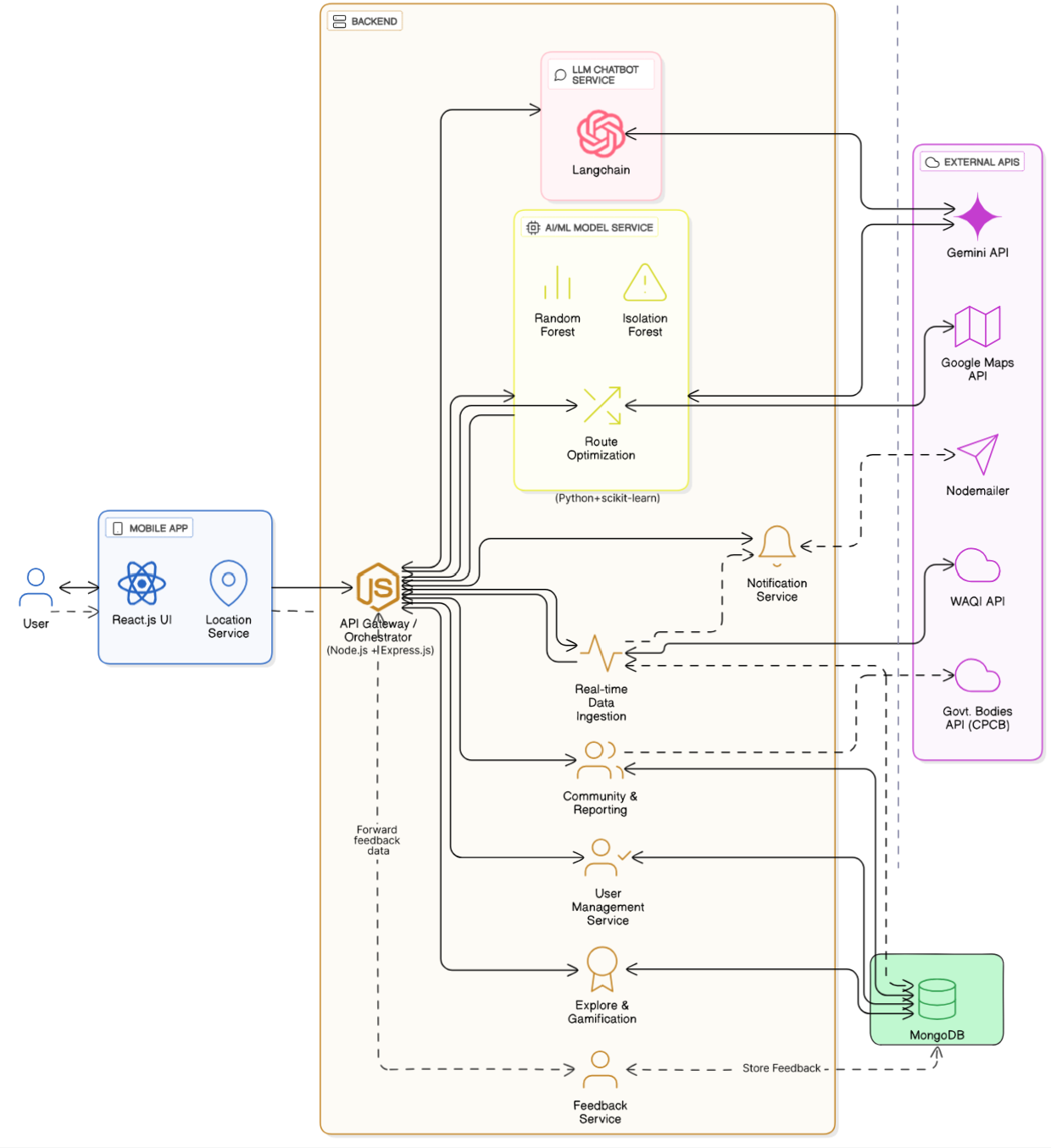
Data flow diagram
-
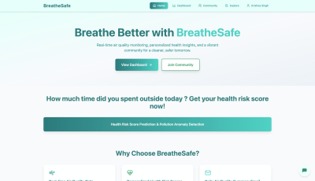
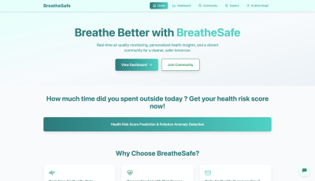
Home Page
-
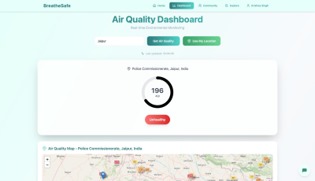
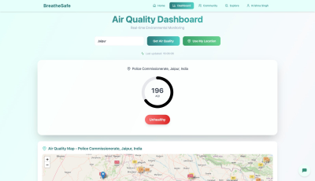
Dashboard
-
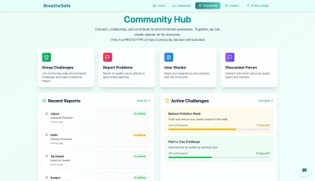
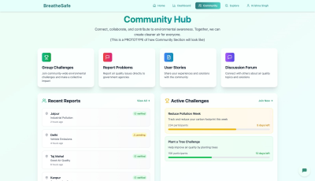
Community Hub
-
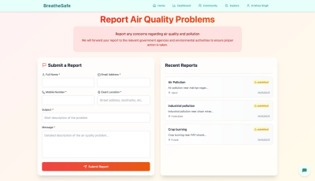
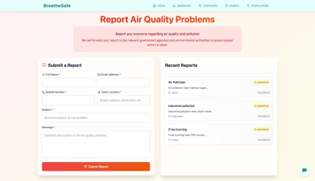
Report form
-
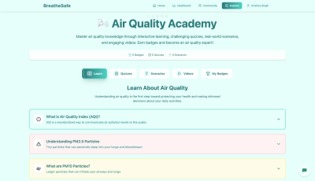
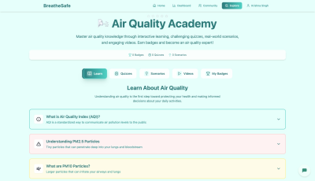
Air Quality Academy (Educational Side)
Inspiration
Air pollution is a growing global health crisis, yet awareness about its immediate impact remains low. We were inspired to build a solution that not only tracks pollution but empowers individuals and communities with real-time data, personalized health insights, and a direct line of engagement with authorities. Our goal was to go beyond AQI dashboards and create an intelligent, citizen-centric environmental assistant.
What it does
BreatheSafe is an AI-powered air quality tracker that:
- Displays a real-time air quality dashboard (AQI, PM2.5, PM10, CO, SO₂, etc.)
- Predicts health risk scores using machine learning
- Suggests pollution-aware travel routes using Google Maps API + AQI overlays
- Sends real-time health warnings in high AQI zones
- Generates daily natural language summaries via LLMs (e.g., Gemini)
- Offers an LLM-powered chatbot for pollution and health queries
- Detects pollution anomalies using unsupervised ML
- Enables community pollution reporting directly to CPCB
- Hosts an interactive "Air Quality Academy" with quizzes and certificates
- Gives personalized, data-driven health recommendations
How we built it
We used the following technologies:
- Frontend: React.js + TypeScript, styled with Tailwind CSS and Framer Motion for a clean, animated interface.
- Backend: Node.js + Express.js for server-side logic and APIs.
- Database: MongoDB to store user profiles, AQI logs, and reports.
- Authentication: Google OAuth 2.0 and JWT for secure login/session handling.
- AI/ML:
- Random Forest for health risk prediction
- Isolation Forest for anomaly detection in air quality
- Random Forest for health risk prediction
- LLMs:
- Botpress for chatbot queries
- Google Gemini for AI-generated summaries
- Botpress for chatbot queries
- APIs: WAQI API + GPS for real-time air data, Google Maps API for routing, and CPCB webhook/API for issue reporting.
Challenges we ran into
- Ensuring real-time synchronization between user location, AQI data, and health warnings
- Balancing LLM integration with performance and user data privacy
- Designing a meaningful user experience that is both informative and engaging
- Handling pollution anomaly detection with limited labeled data
- Setting up authenticated reporting to government portals via APIs
Accomplishments that we're proud of
- Successfully integrated AI and LLMs for meaningful, real-world pollution awareness
- Enabled real-time, pollution-aware route planning — a unique feature among similar apps
- Built a working CPCB reporting feature to close the citizen-to-government feedback loop
- Developed an Air Quality Academy to educate and reward users for learning
- Created an end-to-end pipeline from data ingestion to personalized insight delivery
What we learned
- How to combine environmental data with user behavior and ML to drive actionable insights
- The importance of clean UI/UX in delivering serious health-related content
- How to securely integrate third-party APIs like Google Maps and WAQI
- Best practices in deploying scalable Node.js apps with real-time capabilities
- The power of LLMs in summarizing data and engaging users
What's next for BreatheSafe
- Deploying a mobile app version to enhance accessibility
- Adding community features like pollution heatmaps and group alerts
- Expanding reporting integration with more government and civic bodies
- Fine-tuning ML models with more granular health data and feedback
- Partnering with schools and local organizations for awareness campaigns
Built With
- botpress
- cpcbintegration
- express.js
- framermotion
- gemini
- google-maps
- googleauth
- googlegemini
- gps
- isolationforest
- jwt
- mongodb
- node.js
- program-o-chatbot
- randomforest
- react.js
- tailwindcss
- typescript
- waqiapi


Log in or sign up for Devpost to join the conversation.