-
-
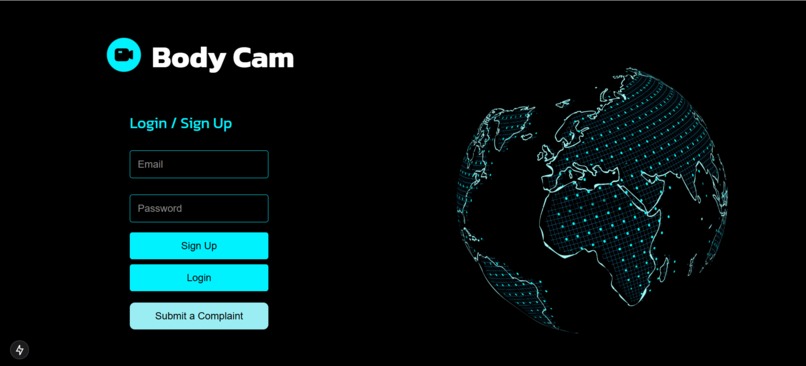
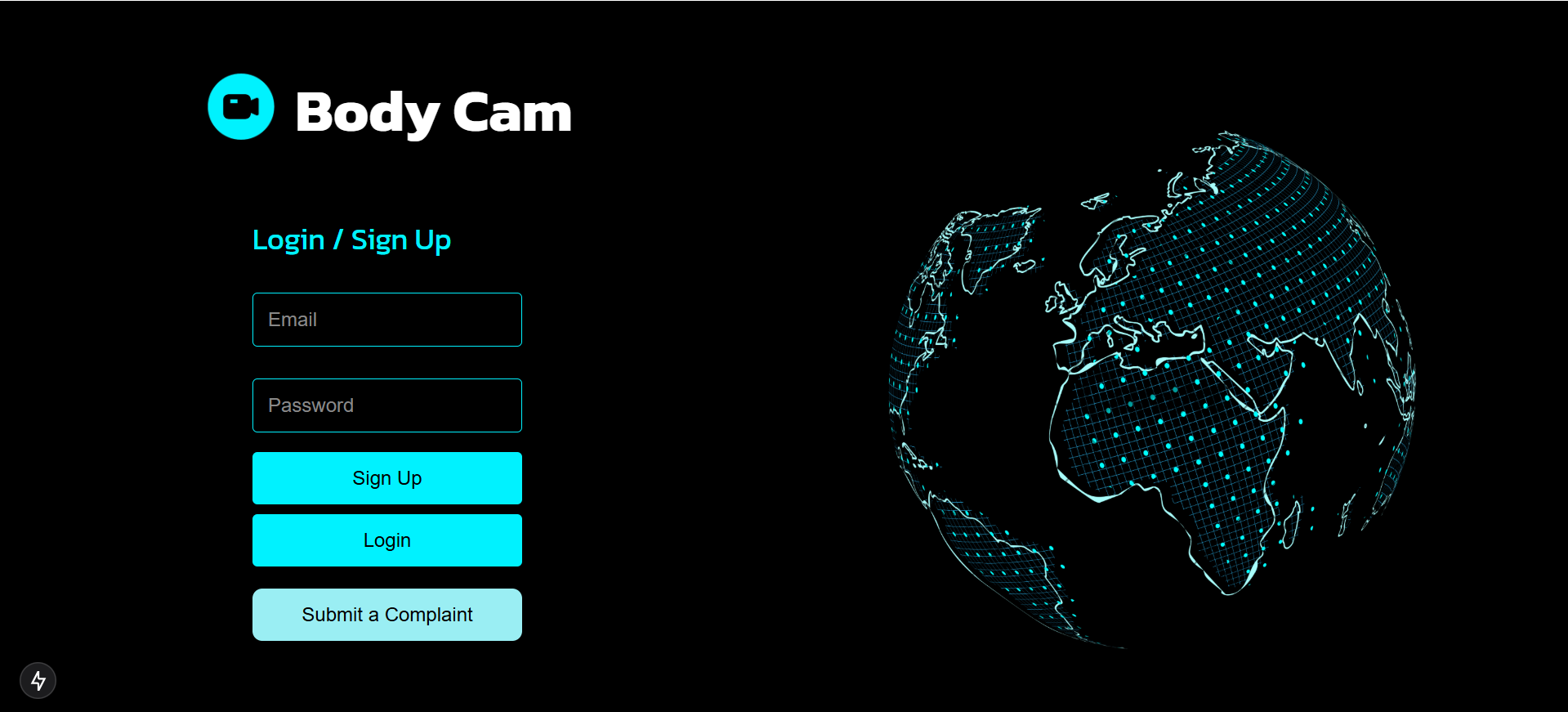
Main page
-
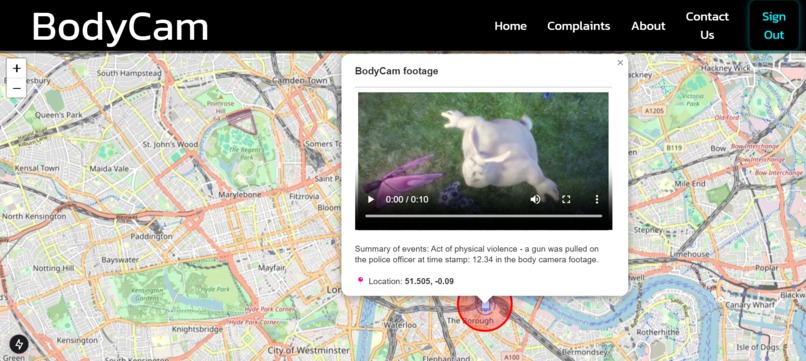
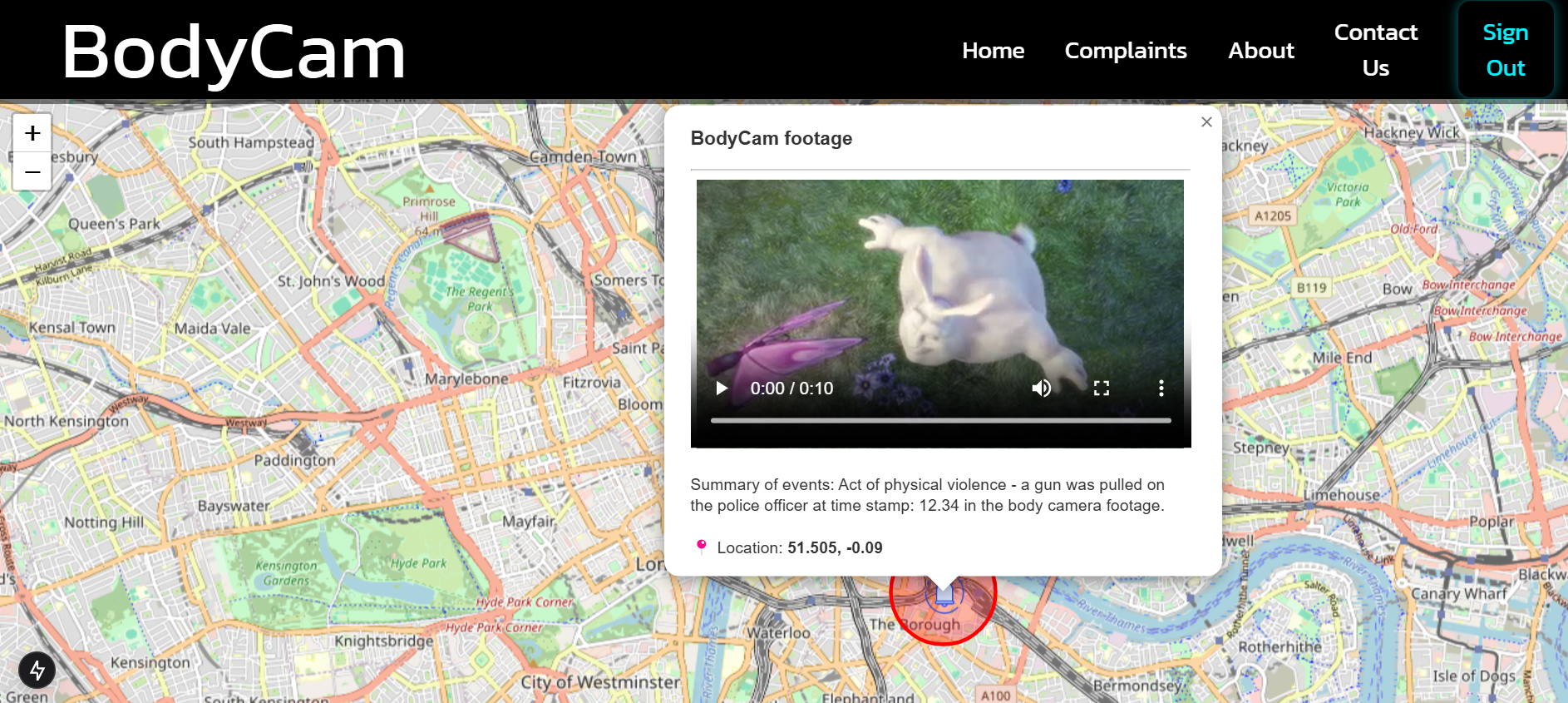
Map visualization
-
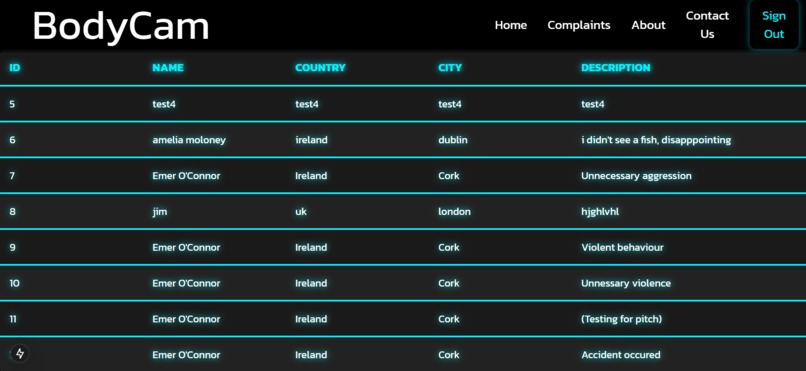
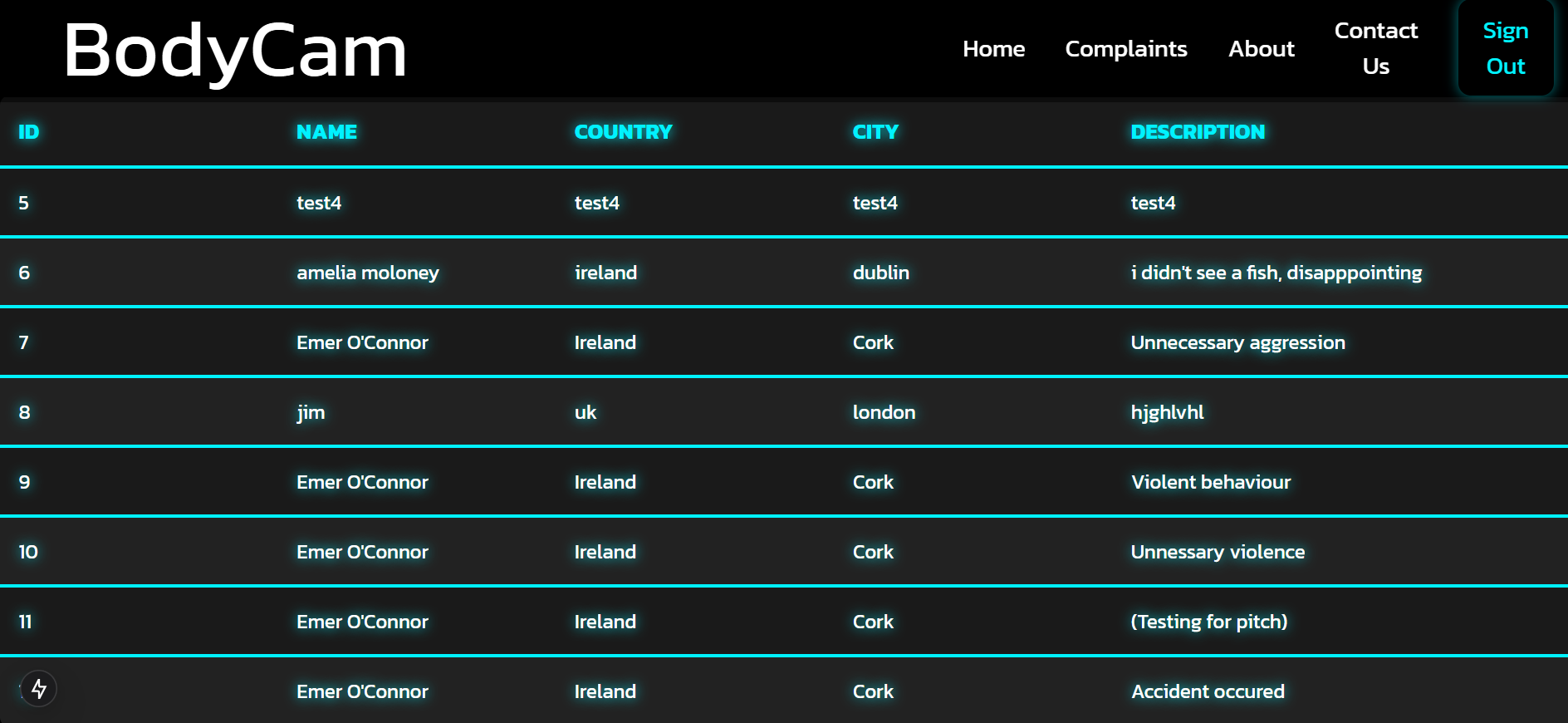
Snapshot of the database
-
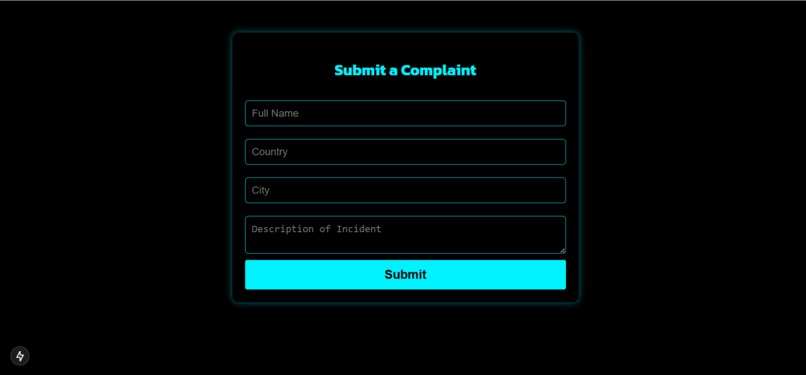
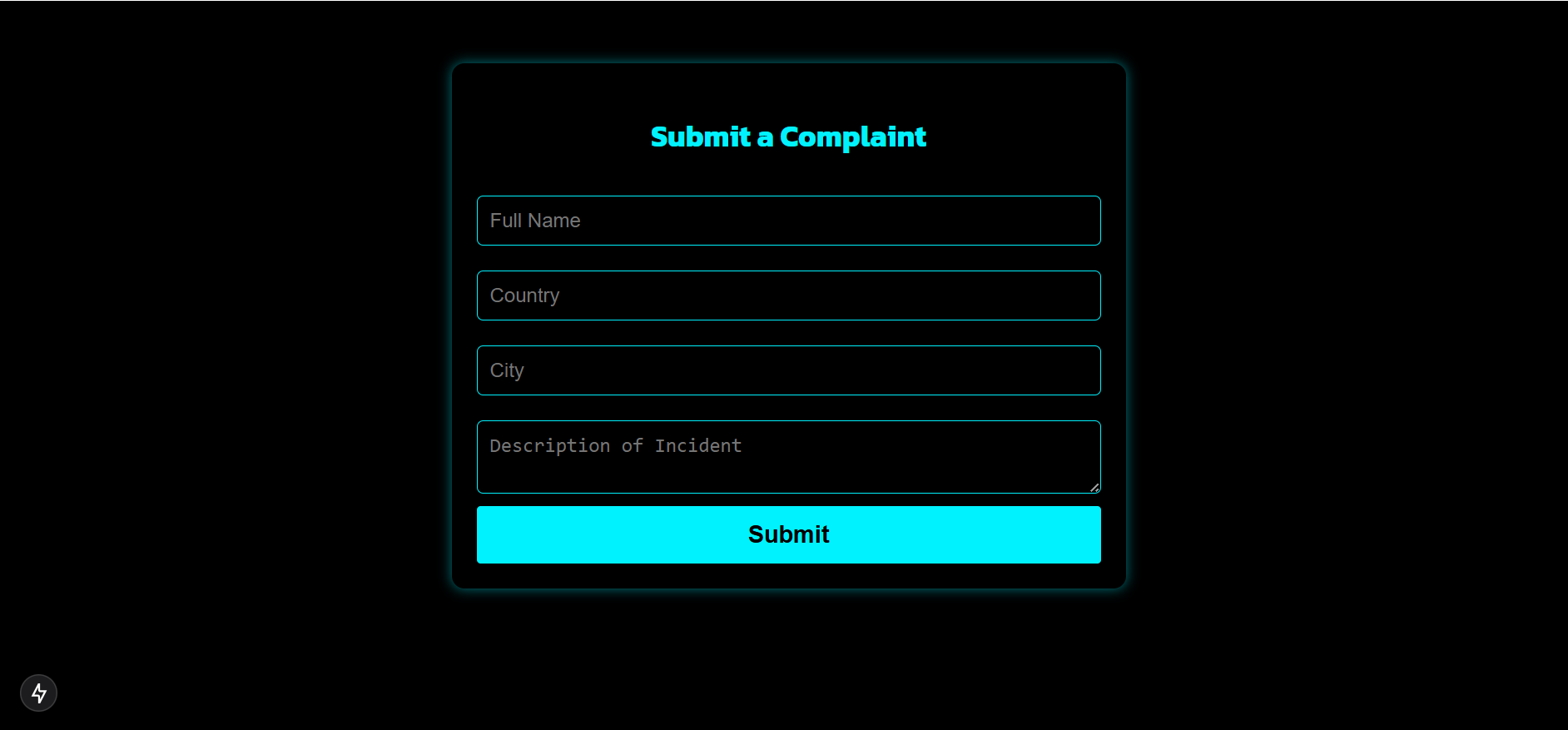
Complain form
Inspiration
In the US, nearly 950TB of body cam footage is produced each year. Much of it goes unseen.
At the same time, cases of police brutality are at an all-time high, especially targeted against minorities despite the technological progress.
What it does
We have designed an AI-based system that monitors officers' body cam footage and flags inappropriate behavior.
We also incorporate a feature wherein citizens can sign in and submit complaints against particular officers/police departments.
This system can thus verify that the complaint is warranted against the available footage before escalating the complaint to humans.
How we built it
We make significant use of OpenAI models - specifically CLIP for flagging timestamps which demonstrate aggressive, illegal or unethical behavior by the officers.
We also leverage the new GPT-4o models for analyzing the audio and annotating tonal cues, as well as the final o3-mini reasoning model that consumes all this processed information, reasons about the situation and the context before providing a verdict. It also produces a brief analysis and summary of the situation.
Challenges we ran into
We don't have video access to any of the OAI models. So instead, to work around that issue, we flag timestamps that need review using CLIP and provide a short-snippet around that timestamp (~25 seconds) and filter keyframes to provide context as images to the reasoning model.
We had to figure out how to use leaflet for the maps integration on-the-fly as well as migrating from React 18 to 19 mid-project.
Accomplishments that we're proud of
Combing our diverse skillset to create a great MVP that integrates all the components seamlessly in a clean frontend
Building a UI to render and track multiple points on a map that denote officer positions
Working around the limitations of the OpenAI API and our hardware to deploy the latest state-of-the-art models in a functional and reliable manner
What's next for BodyCam
Scaling the infrastructure of the system to handle the thousands of hours of footage produced each month and rewriting the codebase to be more asynchronous and not block other concurrent operations.
More fancier and informative visualizations (such as 3D maps) with live updating police-officer locations and insightful visualizations like heatmaps.
Built With
- authentication
- css3
- gps
- html5
- huggingface
- javascript
- json
- next
- npx
- openai
- python
- supabase
- typescript

Log in or sign up for Devpost to join the conversation.