-
-
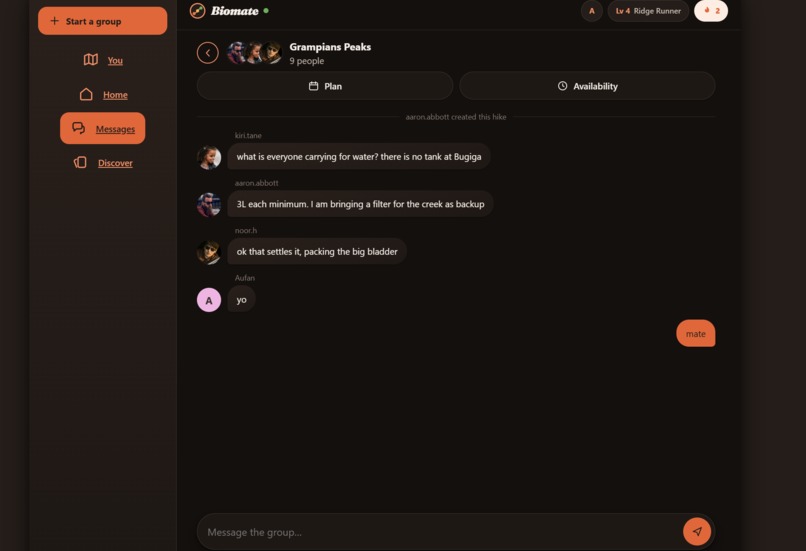
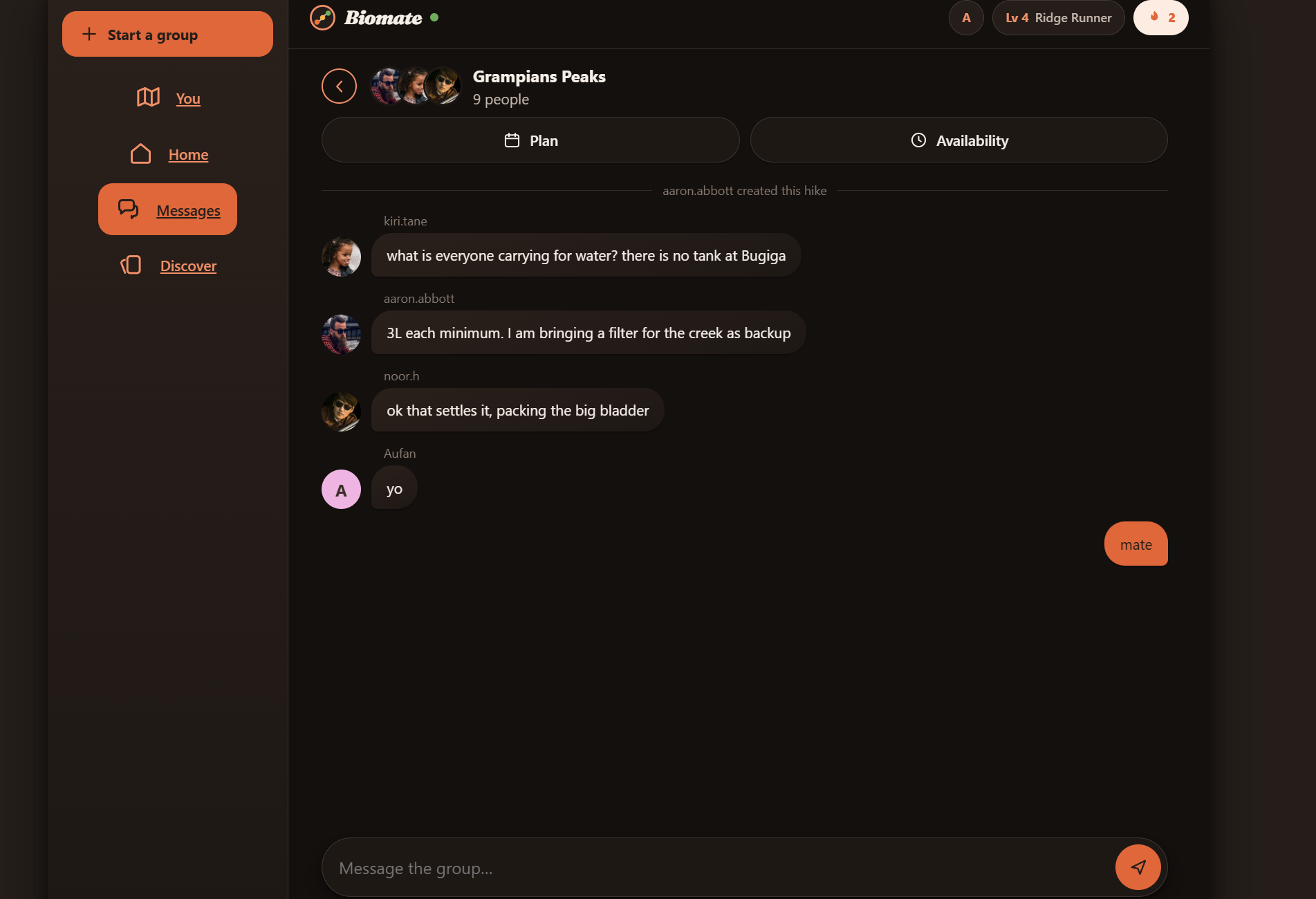
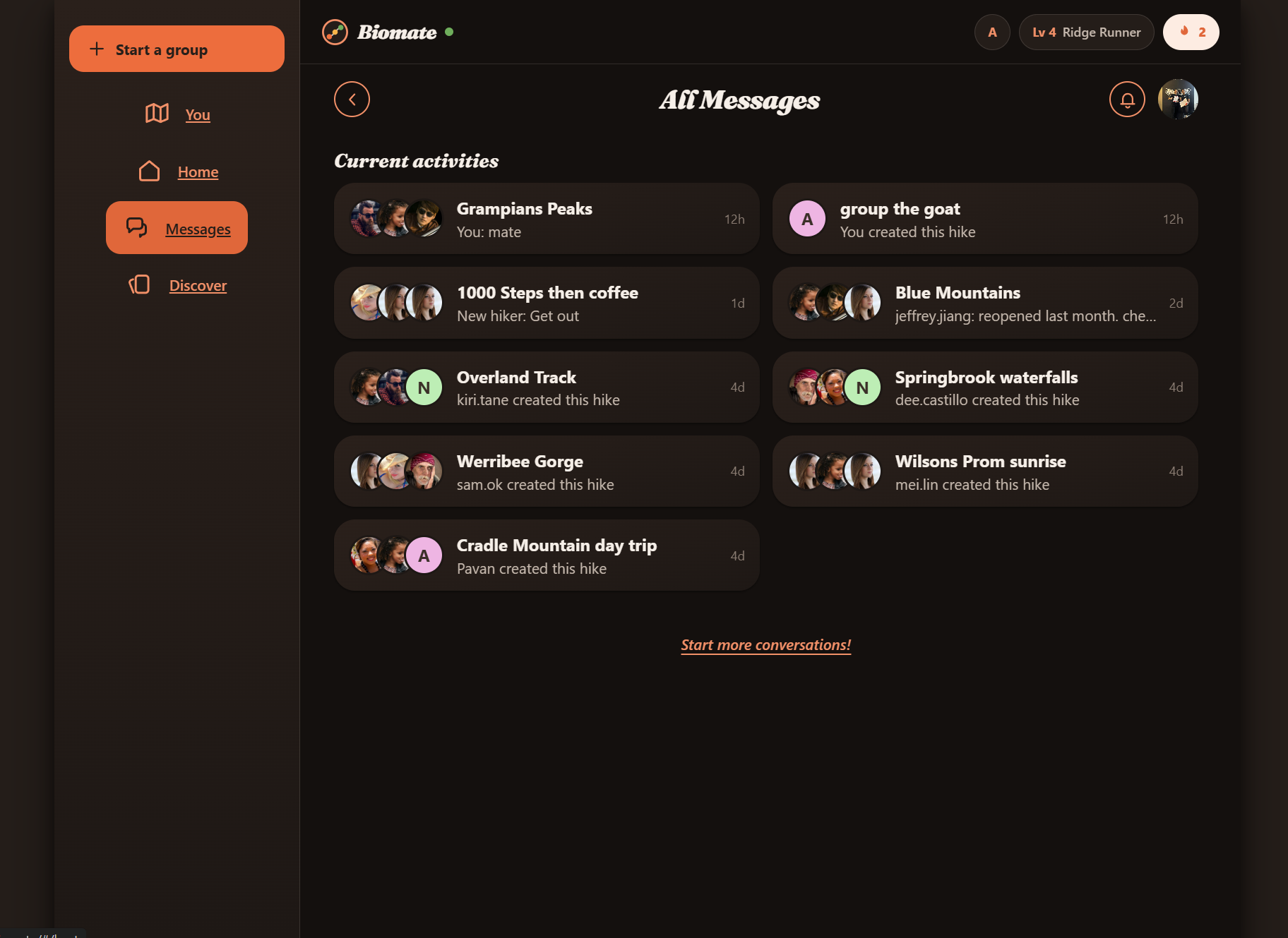
group chat
-
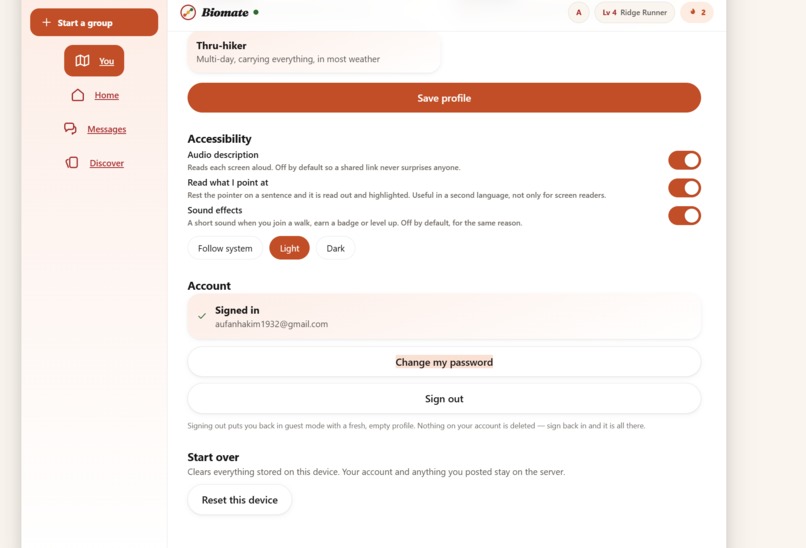
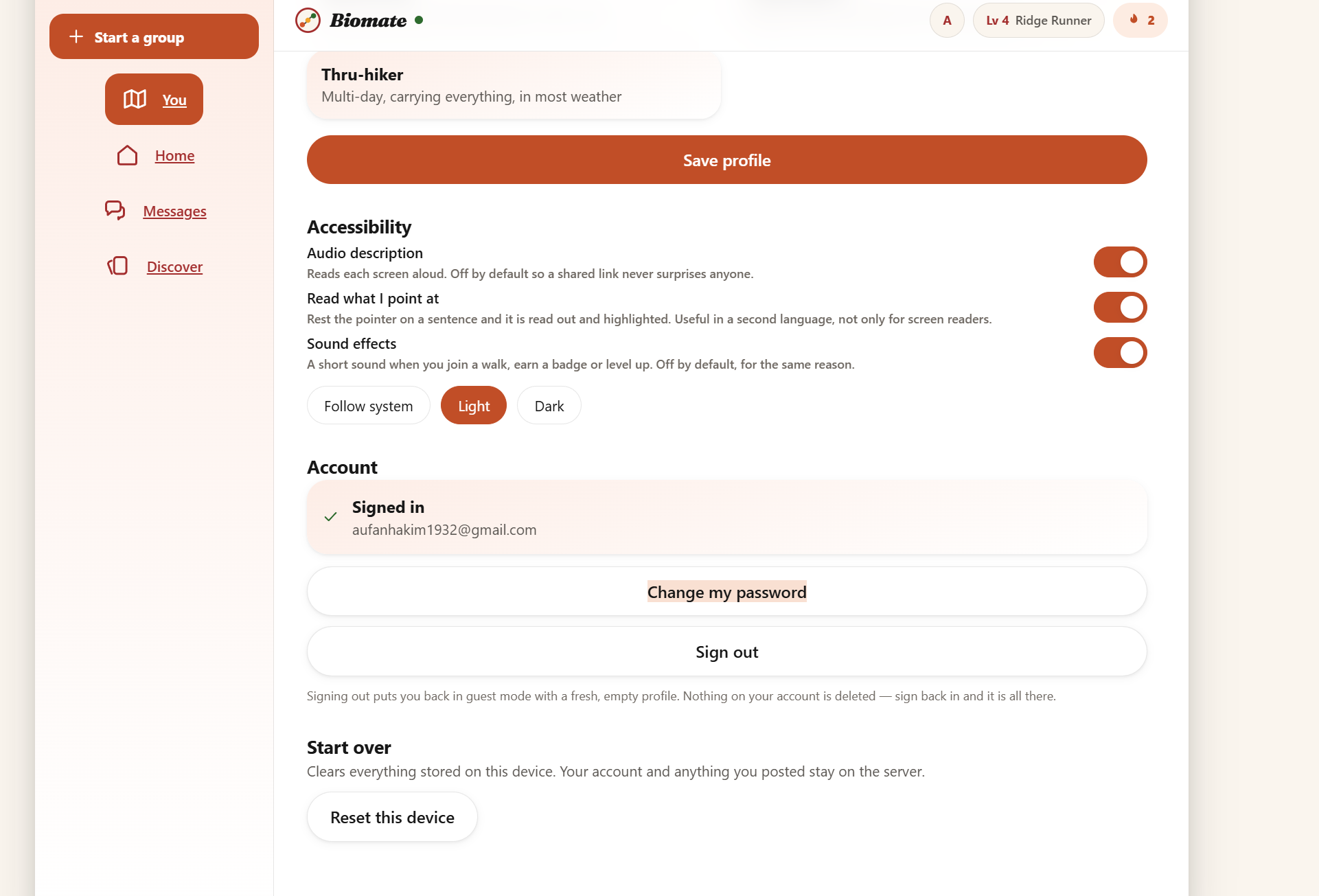
profile accesibility
-
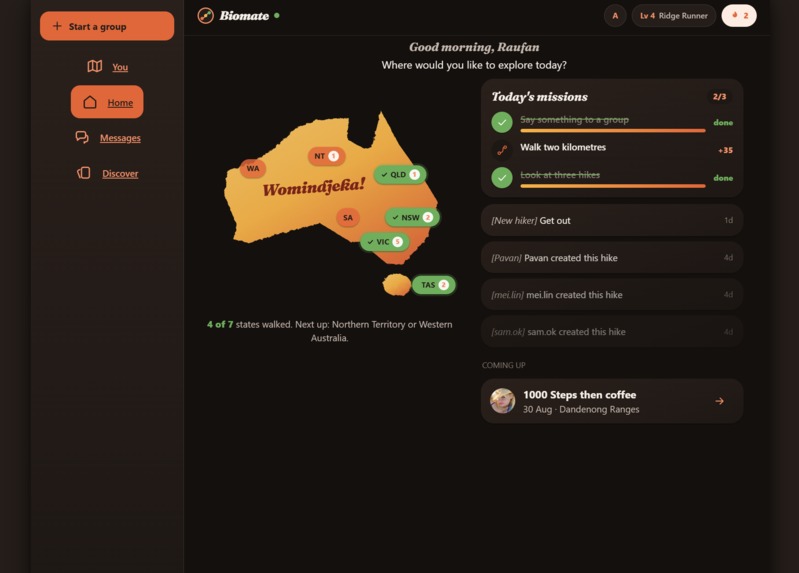
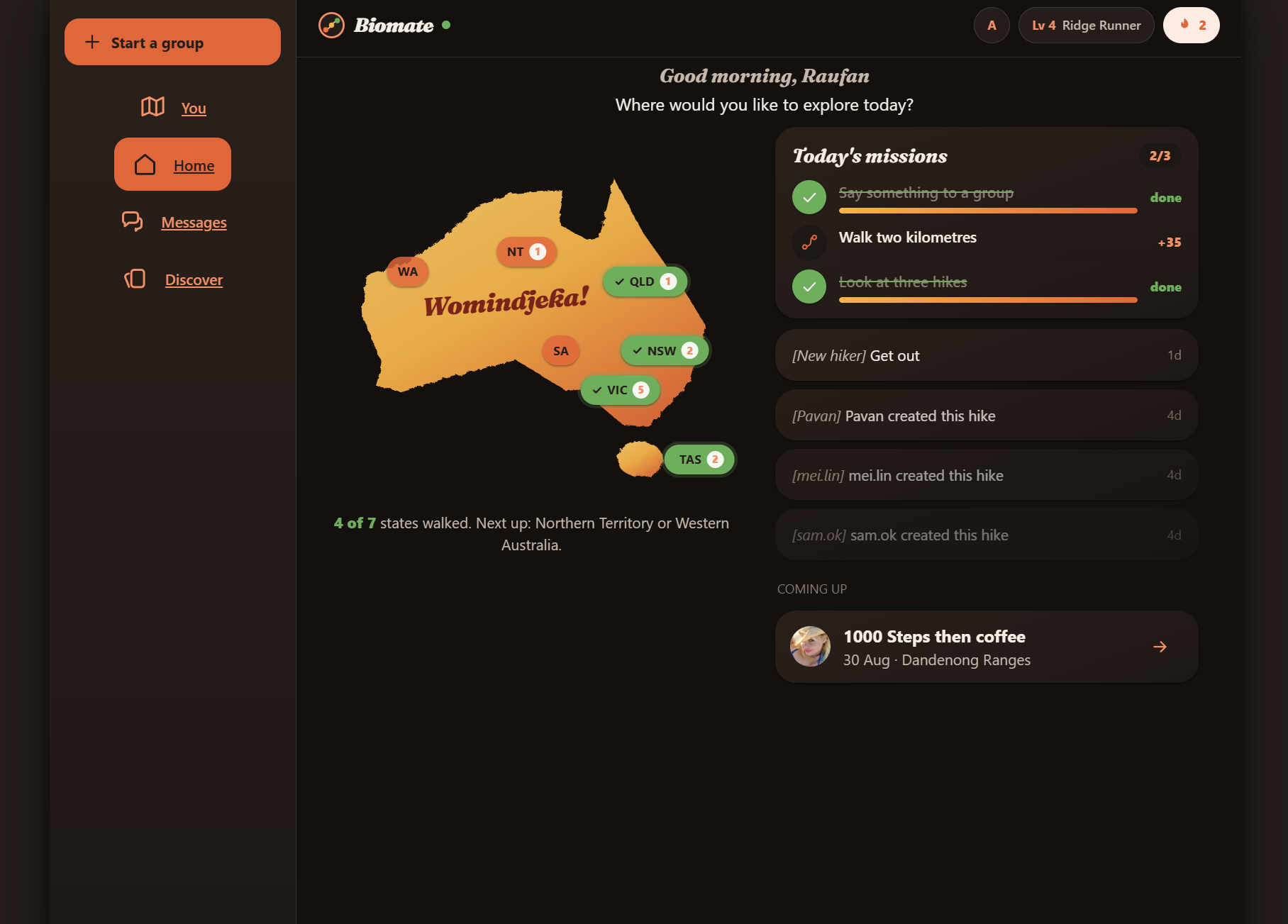
home page(daily mission), latest notification
-
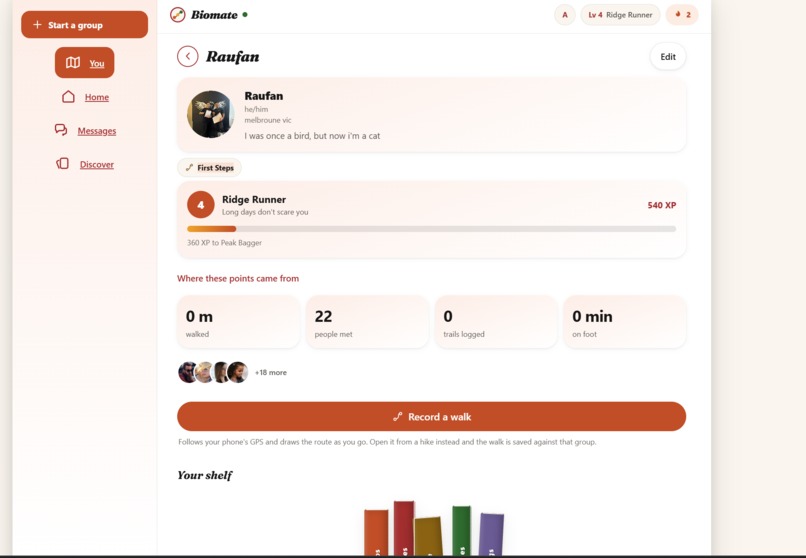
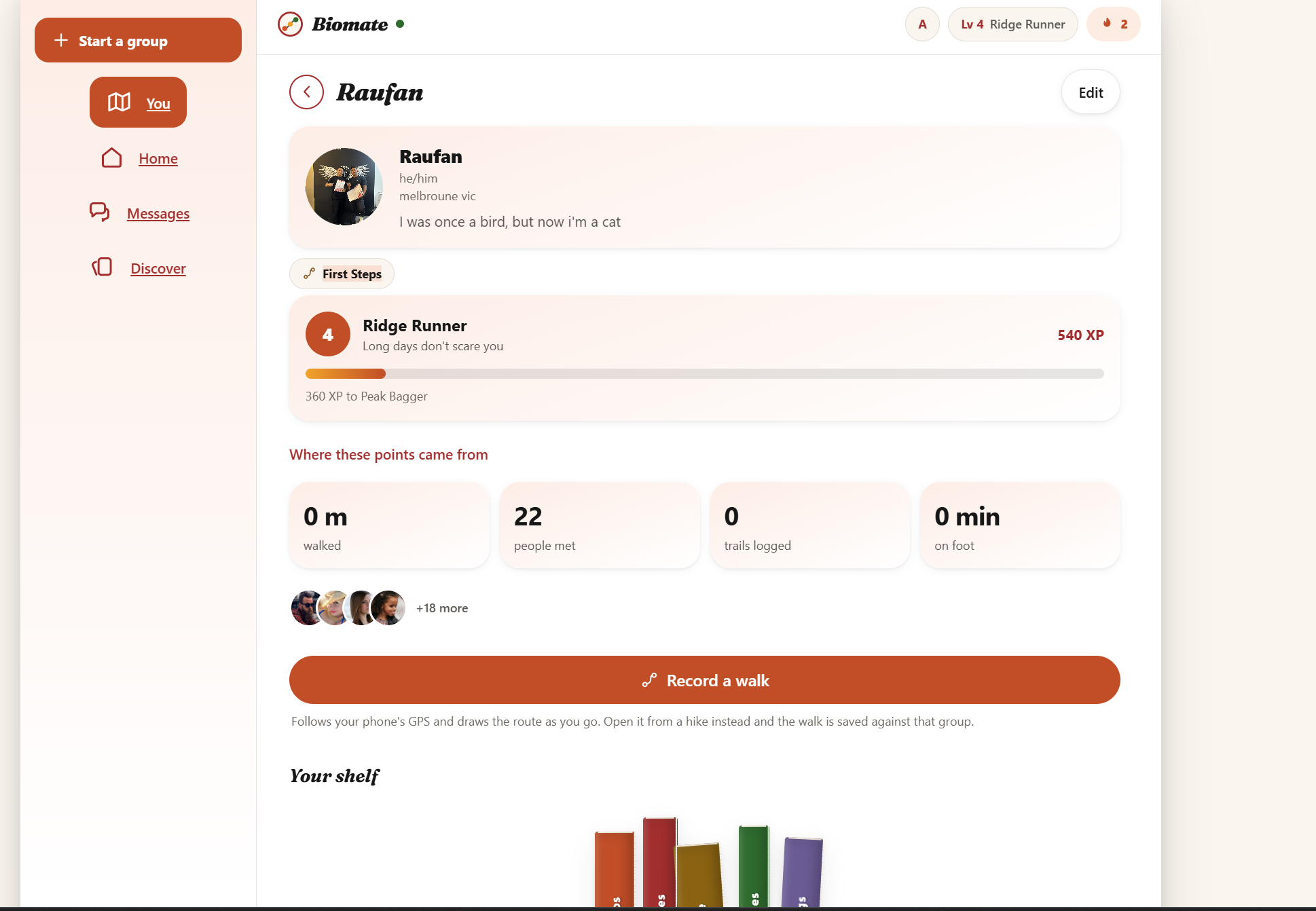
profile info-
-
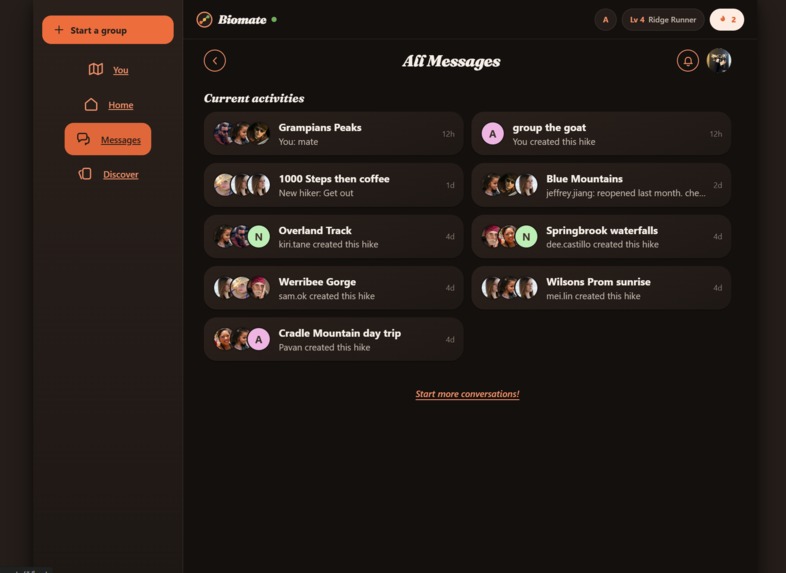
group list
-
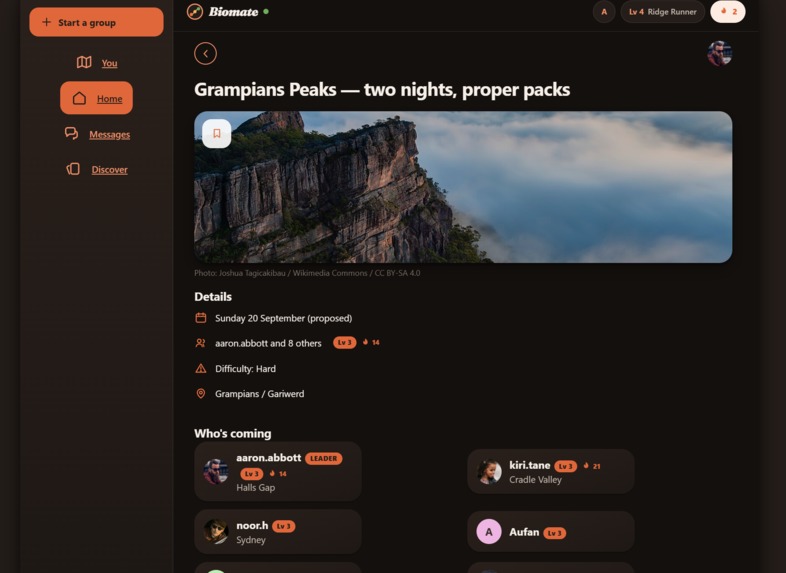
Group bio
-
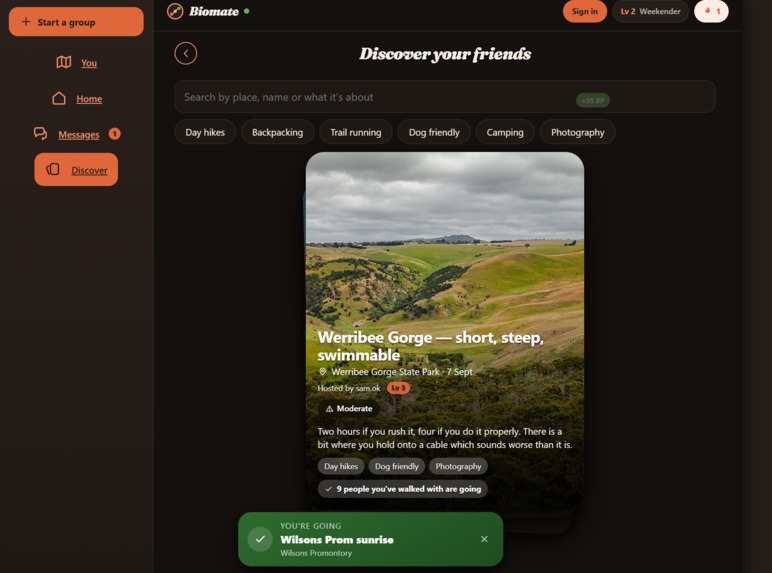
Mathching system
-
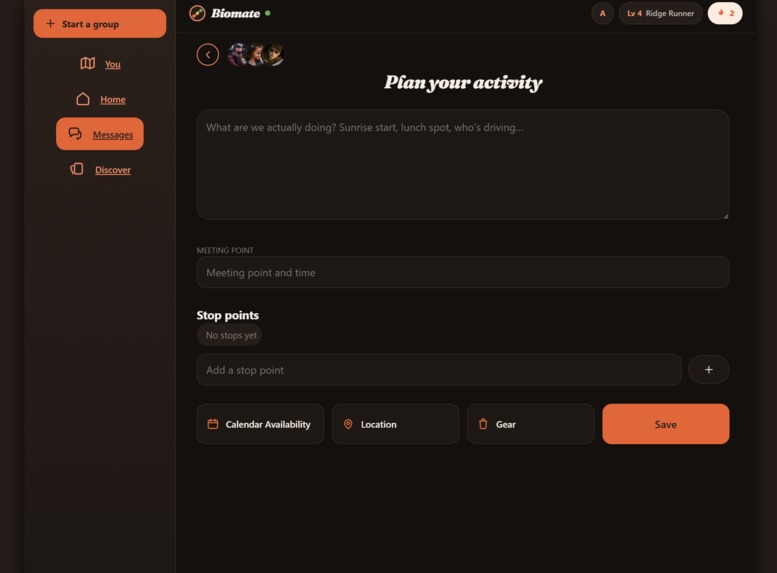
the plan/agenda of the hiking or outdoors activity
-
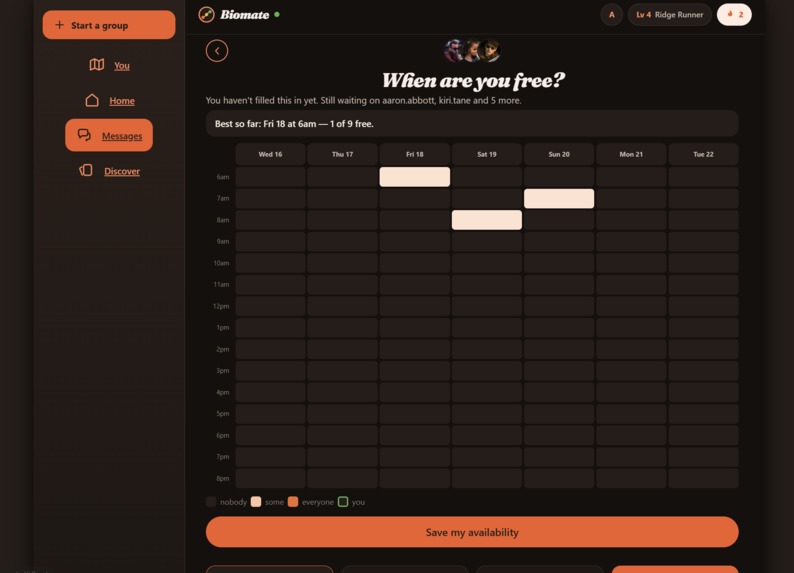
when all of peopple in the group arte free
-
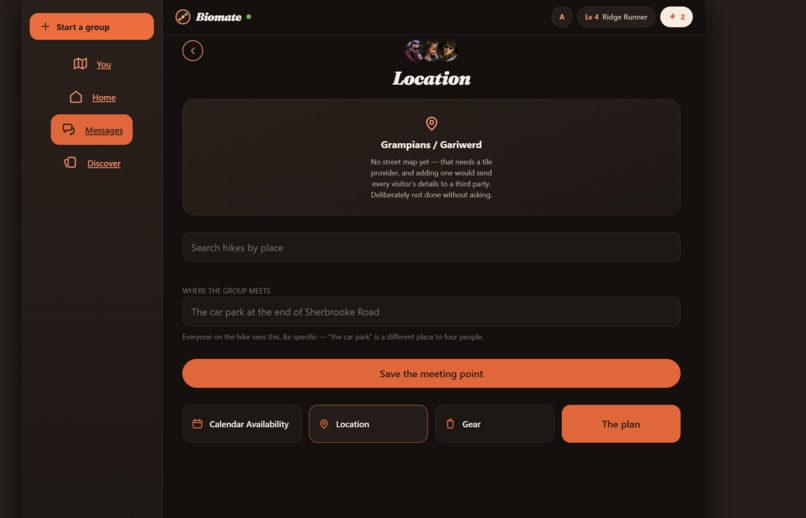
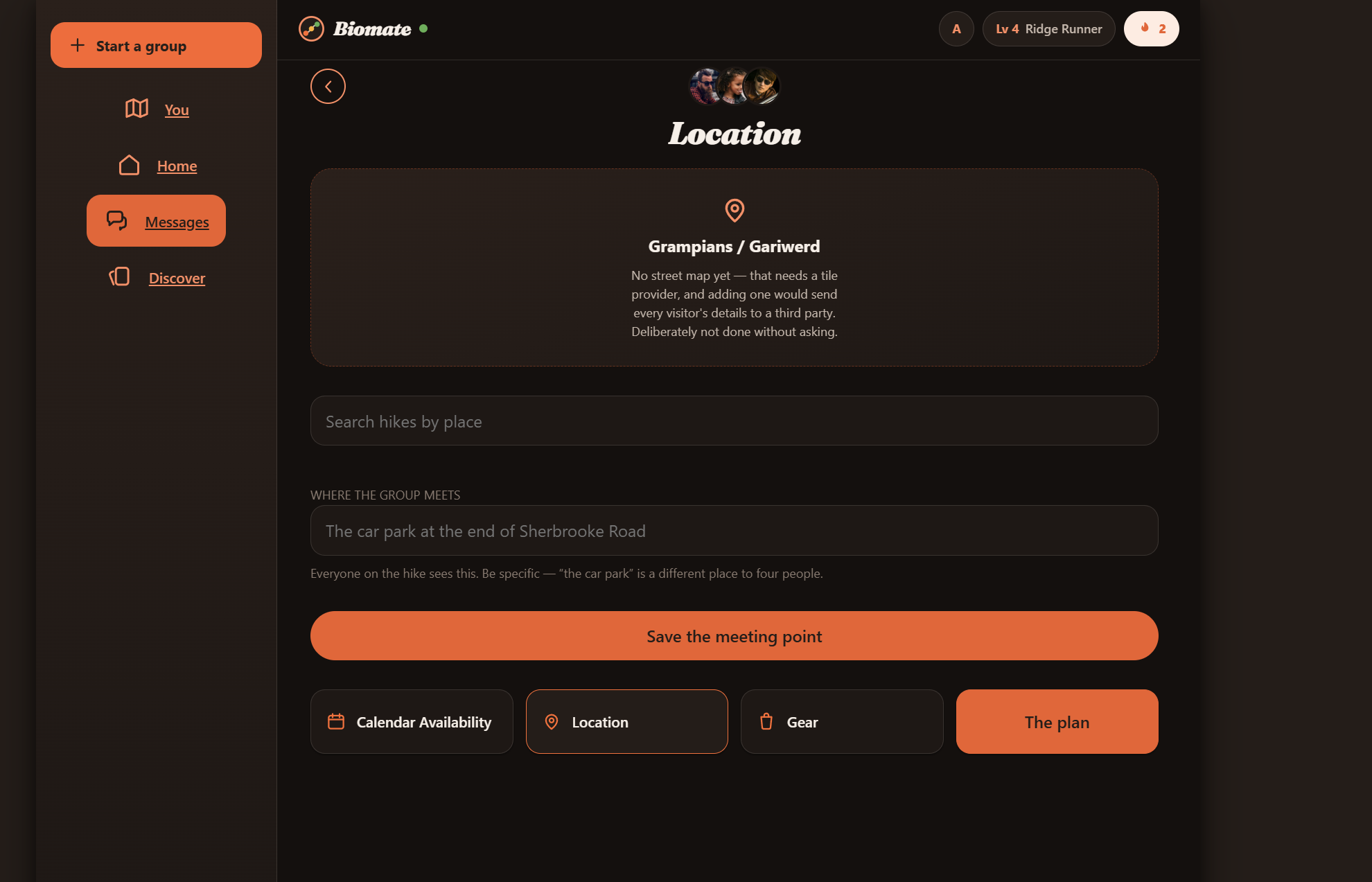
location agencda
-
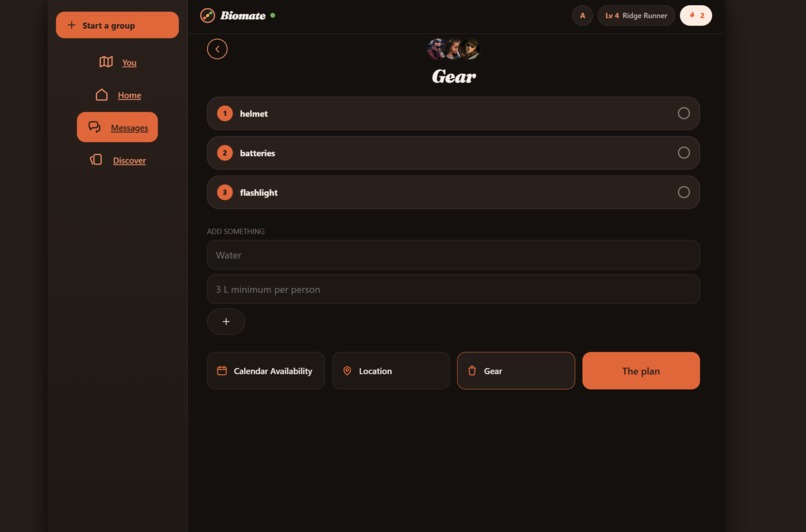
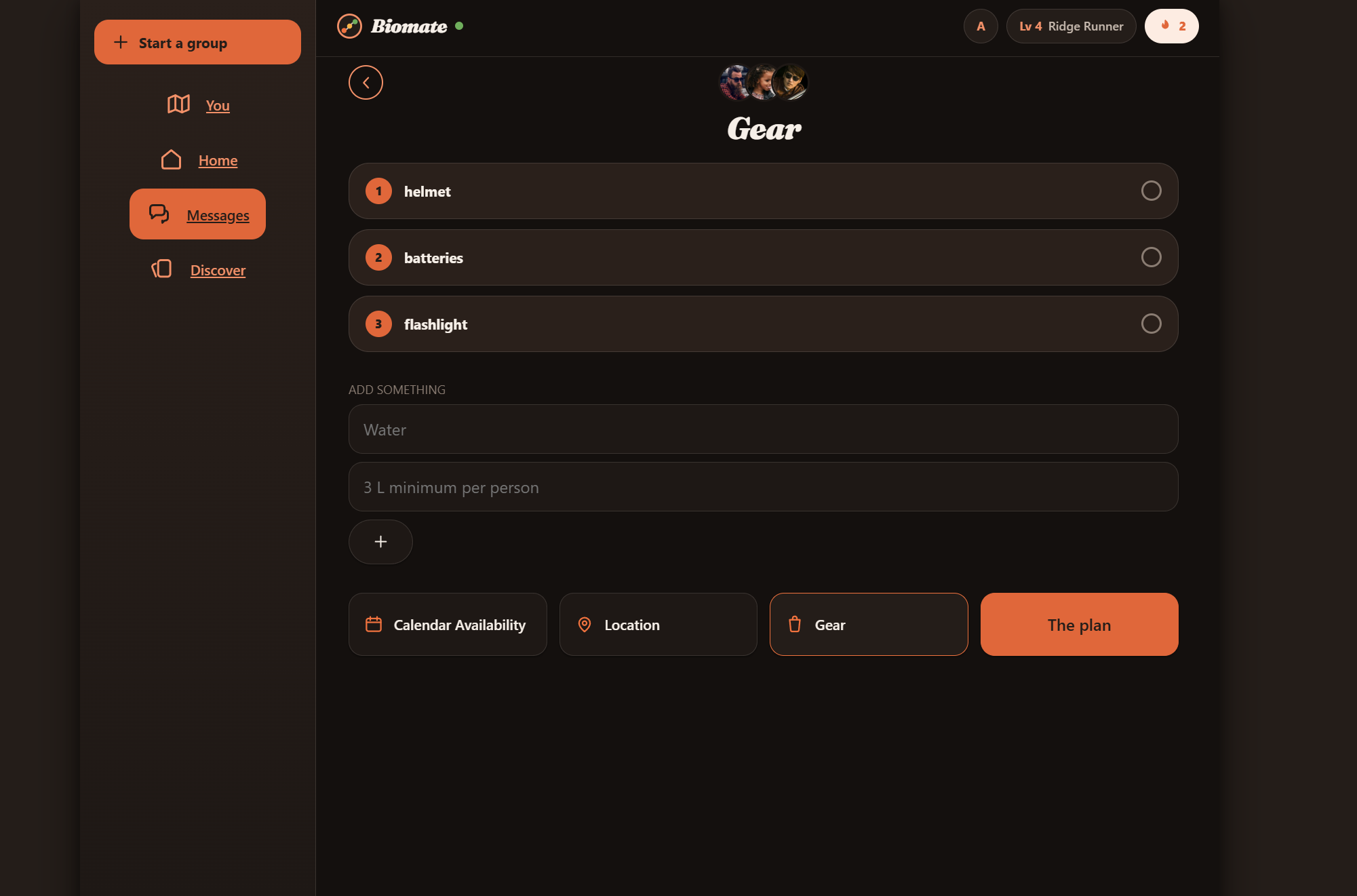
gear to prep
Inspiration
We saw what the Product-Thon team, Fantastic Four, envisioned for Biomate and strongly believed in what it was striving to do. We developed and implemented as many features as we could to make Biomate's first real functioning build!
What it does
Swipe, join, chat, plan, walk, record.
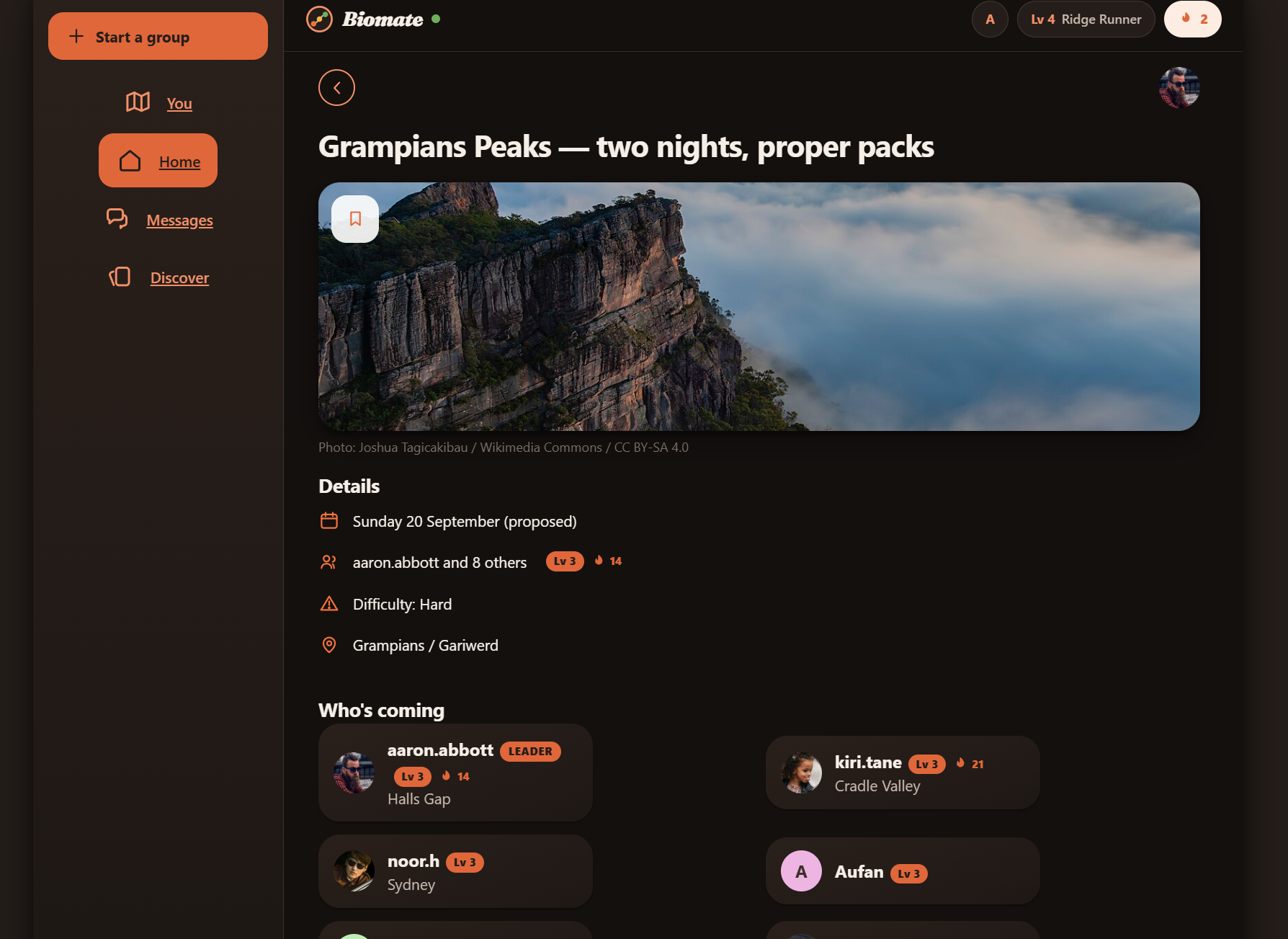
The key decision, and the first place we diverged: a card is a hike someone is hosting, not a person. The brief said you swipe on "hiking groups". The Figma's card showed a face. Making the card an event satisfies both, because the event is the group. It removed an entire database table, deleted the "what is this group for between hikes" problem, and made "how many people have you hiked with" fall straight out of co-membership.
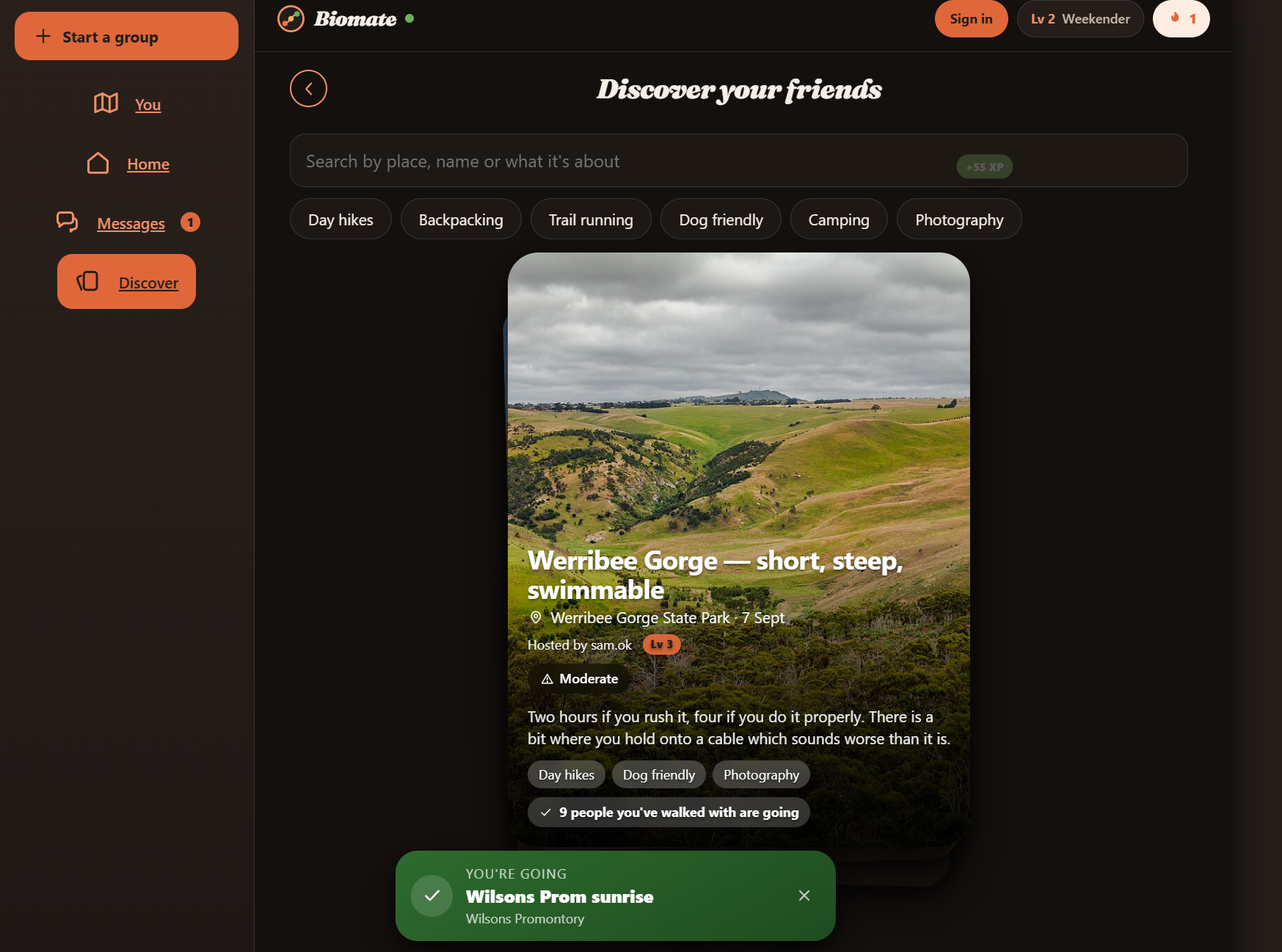
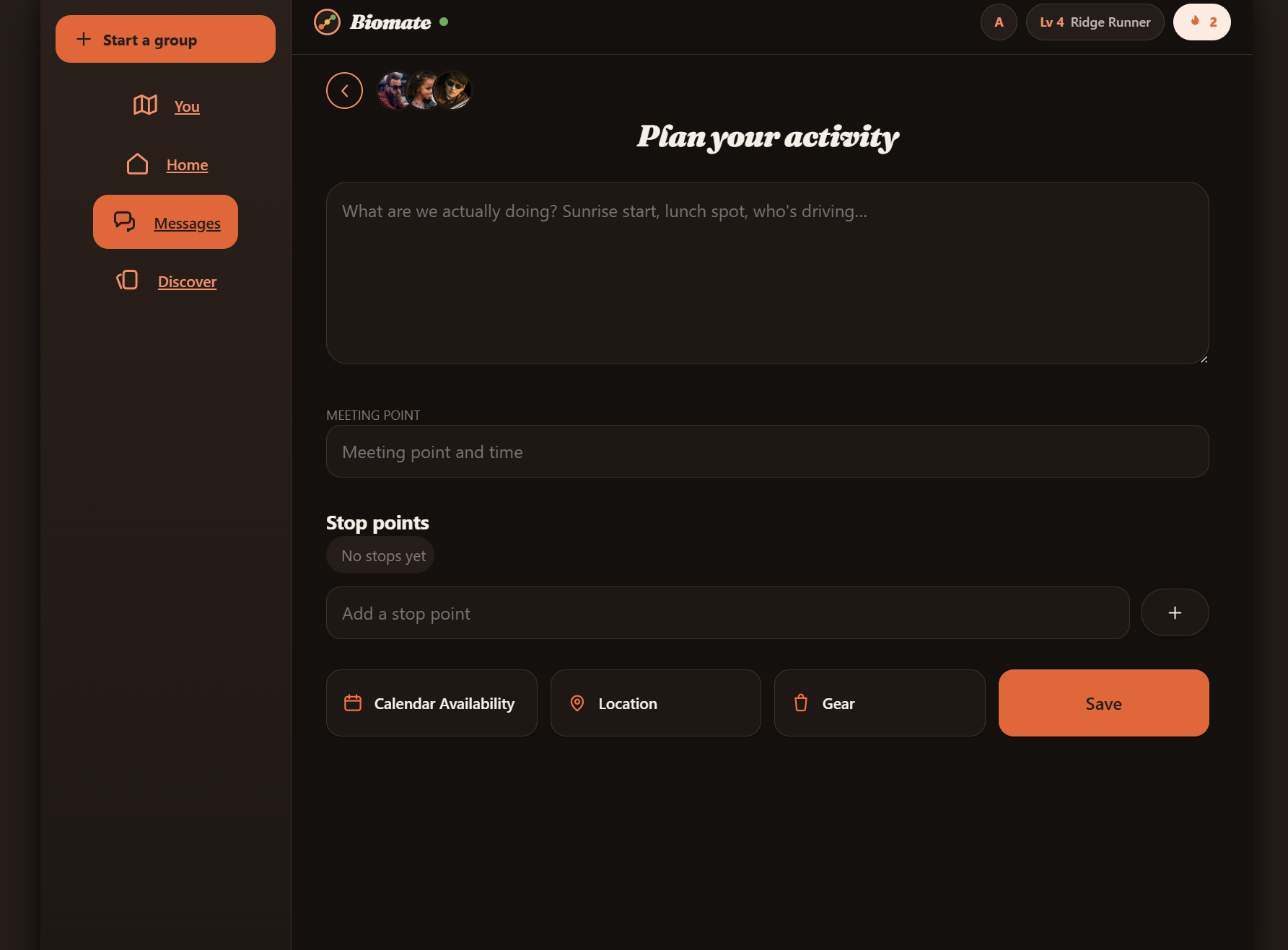
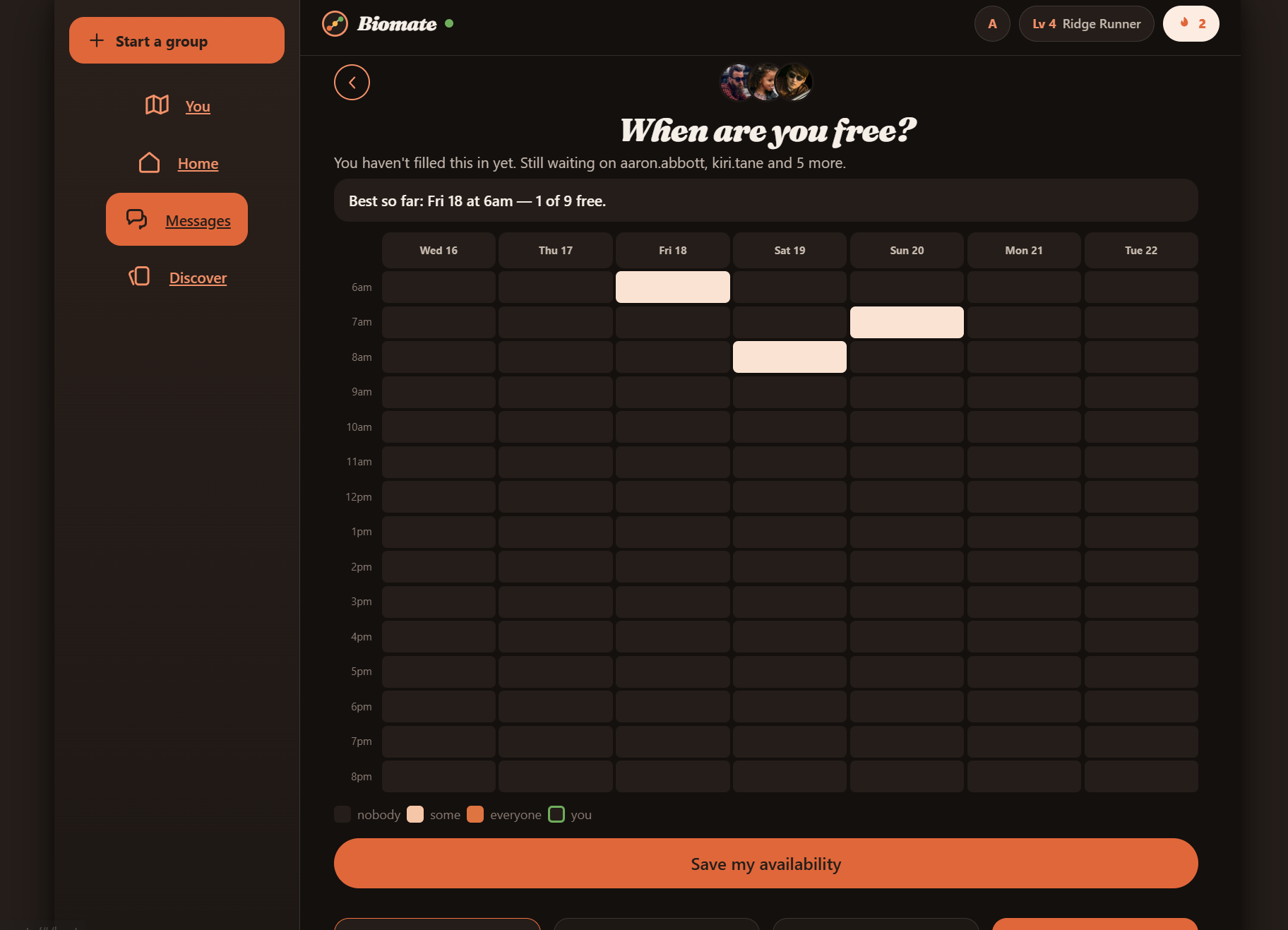
Discover. Swipe through hikes near you, ranked by who's going, your interests, distance, and whether the difficulty suits you. The card shows the reason in words, like "someone you've walked with is going" or "about your pace". Never a match percentage. -Group chat: One thread per hike, members only, enforced in the database rather than the interface. Roles: Leader, co-leader, member. A co-leader can edit the hike. Only the leader hands out the role, and never their own. Plan: Three views of one plan: availability, meeting point, gear. Availability: A drag-to-paint grid with an overlap heatmap, so the group can actually settle a day. The host confirms the winning slot. Trail recorder: Real device GPS, drawing your route as you walk. Your shelf. Walks, photos, people met, and badges, shown as books on a shelf.
On top sits a light game layer: levels, daily missions, badges, login streaks. We built it out of the loop rather than beside it. Every point comes from something you did with a person, so there's nothing to grind that isn't also the thing the app is for.
How we built it
A functioning build that used the original Figma from Fantastic Four, then into our own Figma to implement many features and add some of our own. And then we translate this figma blueprint of ours into a web app with little bit of gamified.
Challenges we ran into
- The live map tracking feature.
- Matching Algorithm - difficulty building a working recommendation engine. Since our app does not any users, it would be difficult to implement a recommendation engine with implicit feedback. We believed that content filtering recommendation system would be best and there were scraps of the API used to implement the recommendation in the repo.
- Improving the design from the previous team. Which means we ought to understand their original research, and intentions, so not only to improve their design but also improve the overal; web app Biomate intentions.
Accomplishments that we're proud of
We managed to build a lot of accessibility and we translated most of the features Fantastic Four wanted in the app and implemented what we could in the time-span.
What we learned
As well brainstorming the implementation of ideas, giving more thought in what kind of libraries or stacks that we could use develop the program would've made this a more robust program. Instead of using vanilla java we could've use React or Vue for front end and Node.js or Express.js for backend would make this project scalable long term. We could've also just opted for a full stack option like Next js.
Further, planning out and implementing a working recommendation system takes much more than expected. In similar projects in the future, planning out and testing out different recommendation system would've helped out implement an appropriate API to the code on time.
Team work, we could never do this alone, each of us had a job and we actually achieved what we could.
What's next for Biomate - by Big Hero 5
Looking to implement real world data into the web app. Mocking up the idea of a recommendation system, it had to be based on counterfeit data because there was a lack of existing Australia data on Australian trails. Much of the existing data web scrapers and datasets were US based and the existing Australia data from government websites was insufficient to source enough trails nor generate a useable recommendation system. Finding the data through web scraping OpenStreetMaps or other resources would help establish an initial base of data regarding the trails in Australia.
We also want to look into moving away from explicit feedback recommendation engine passed its implementation to using implicit feedback recommendation engine given some users or mock users to help generate more personalized feeds.
We will be updating the build for future features so keep checking.
Built With
- canvas
- claude
- css3
- github
- gps
- html5
- httml
- javascript
- postgresql
- supabase

Log in or sign up for Devpost to join the conversation.