Inspiration
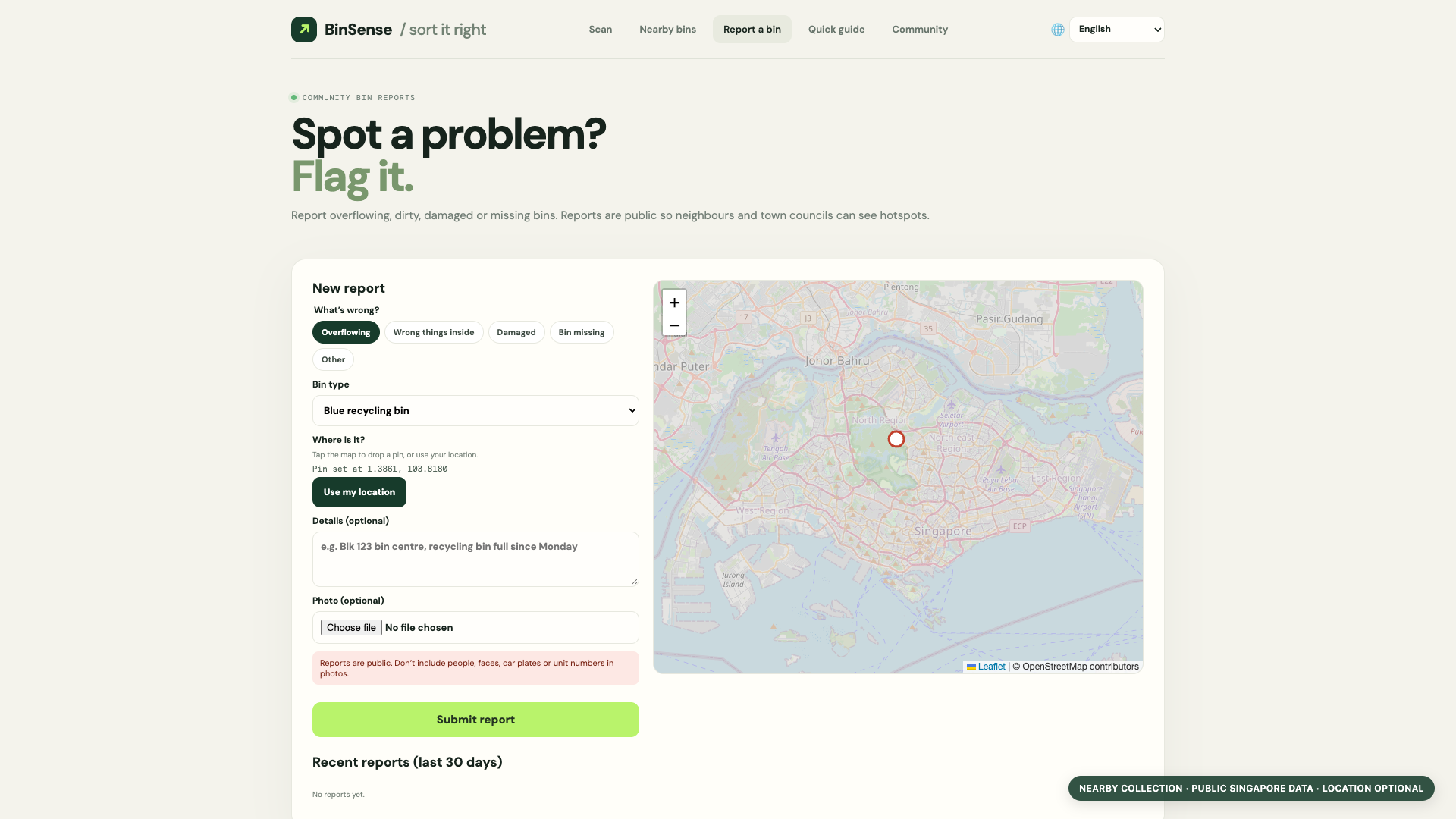
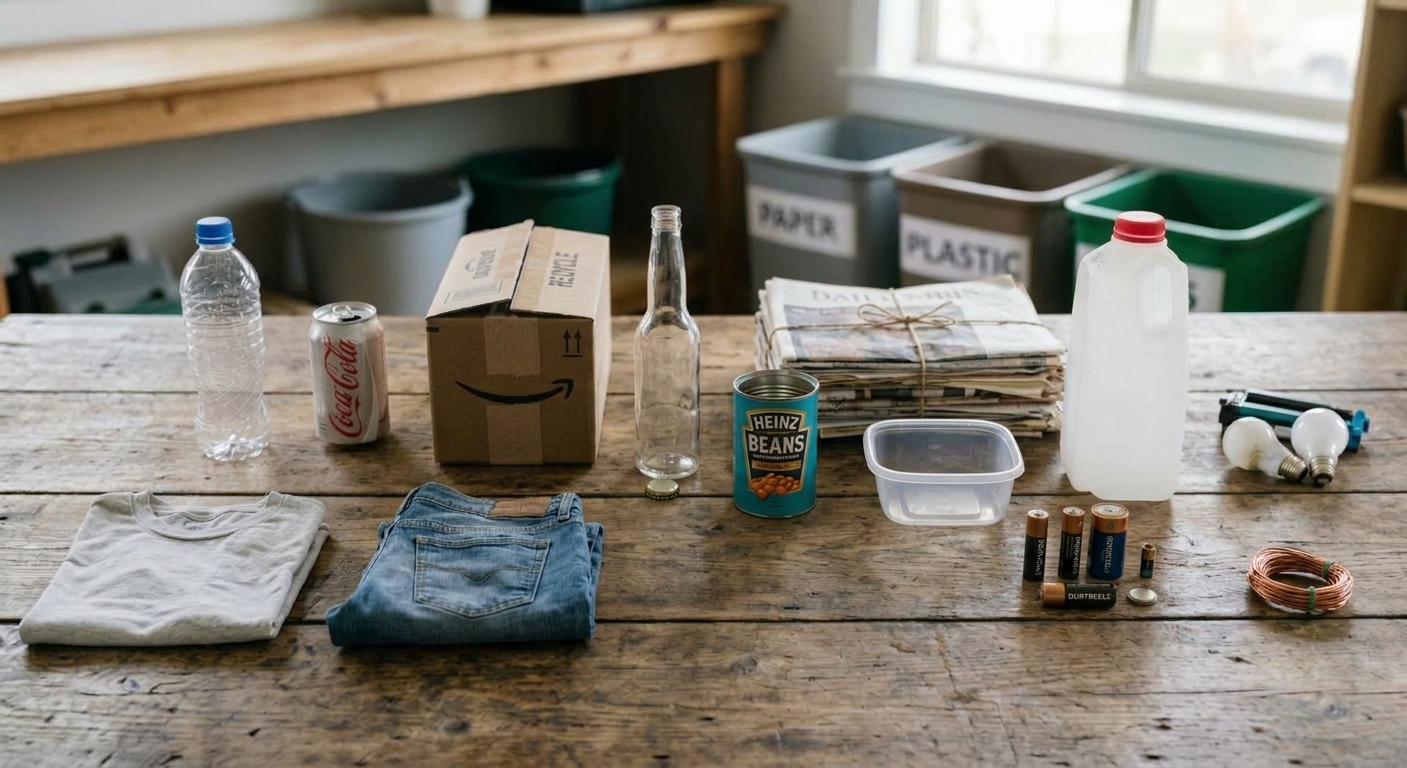
We kept seeing people pause in front of a bin, unsure where something belonged. A takeaway container, a greasy cardboard box, a dead battery. These are small decisions that are easy to get wrong. We wanted to make those moments easier, because recycling only works when people can actually figure out what to do.
What it does
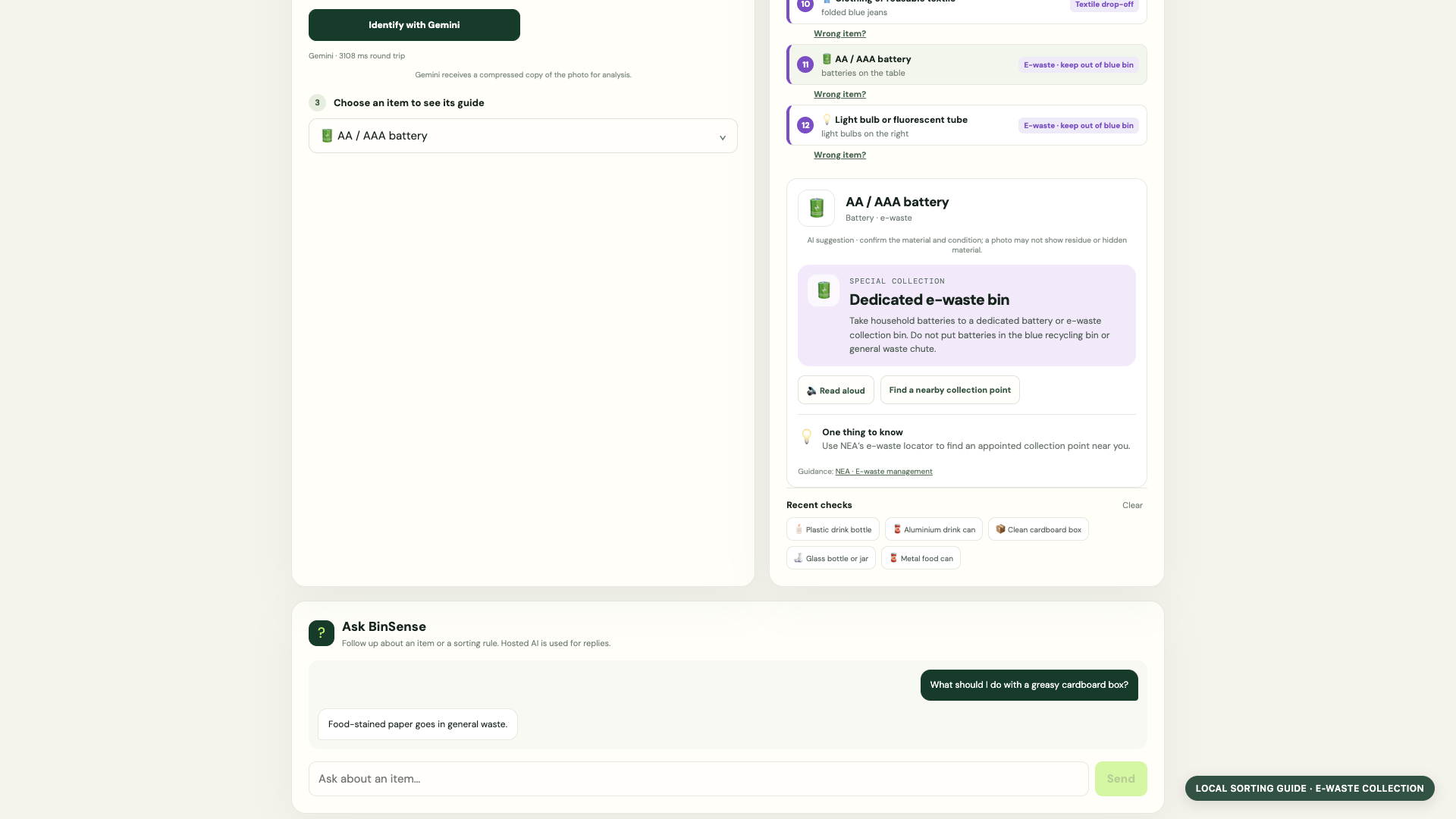
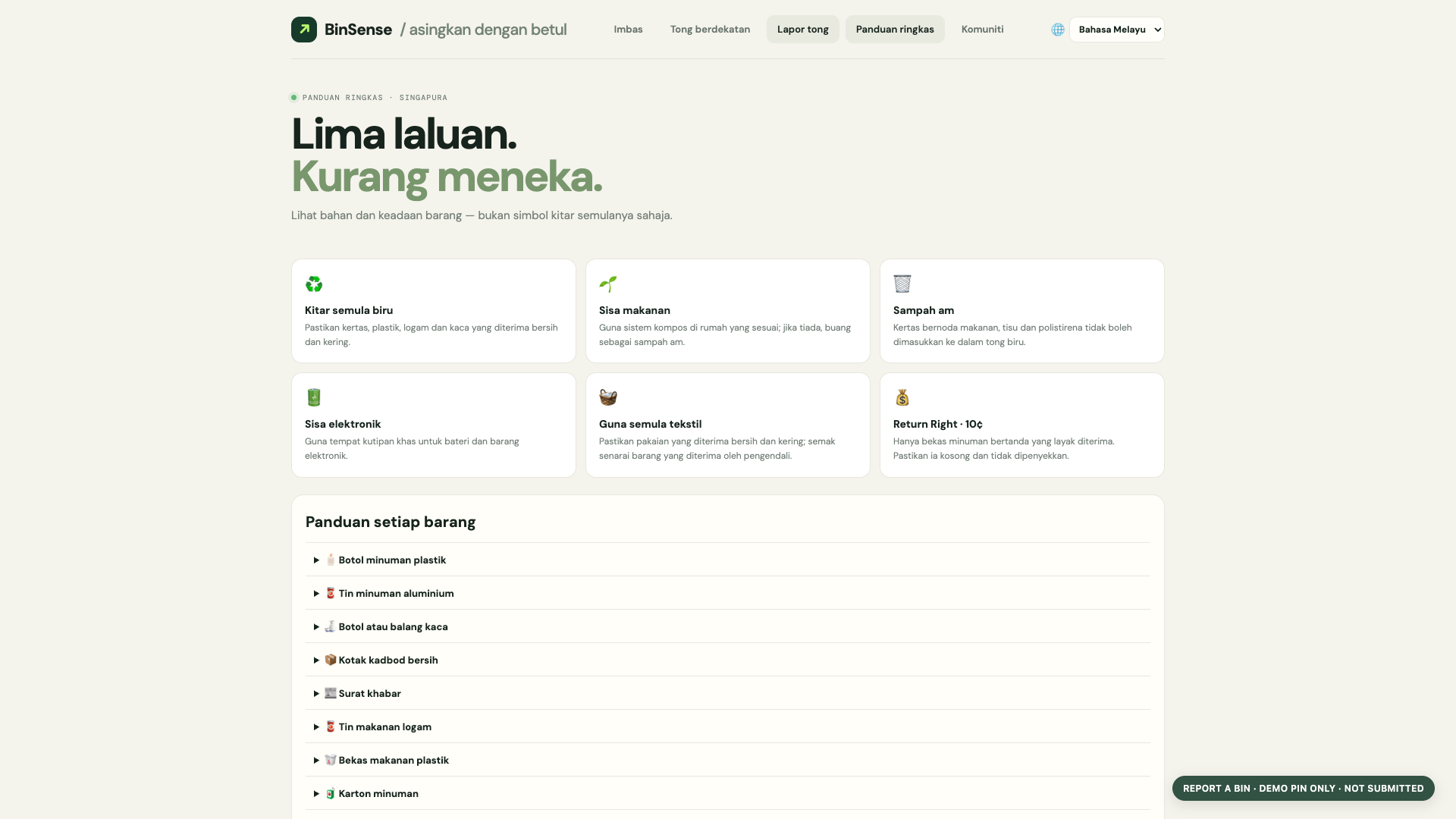
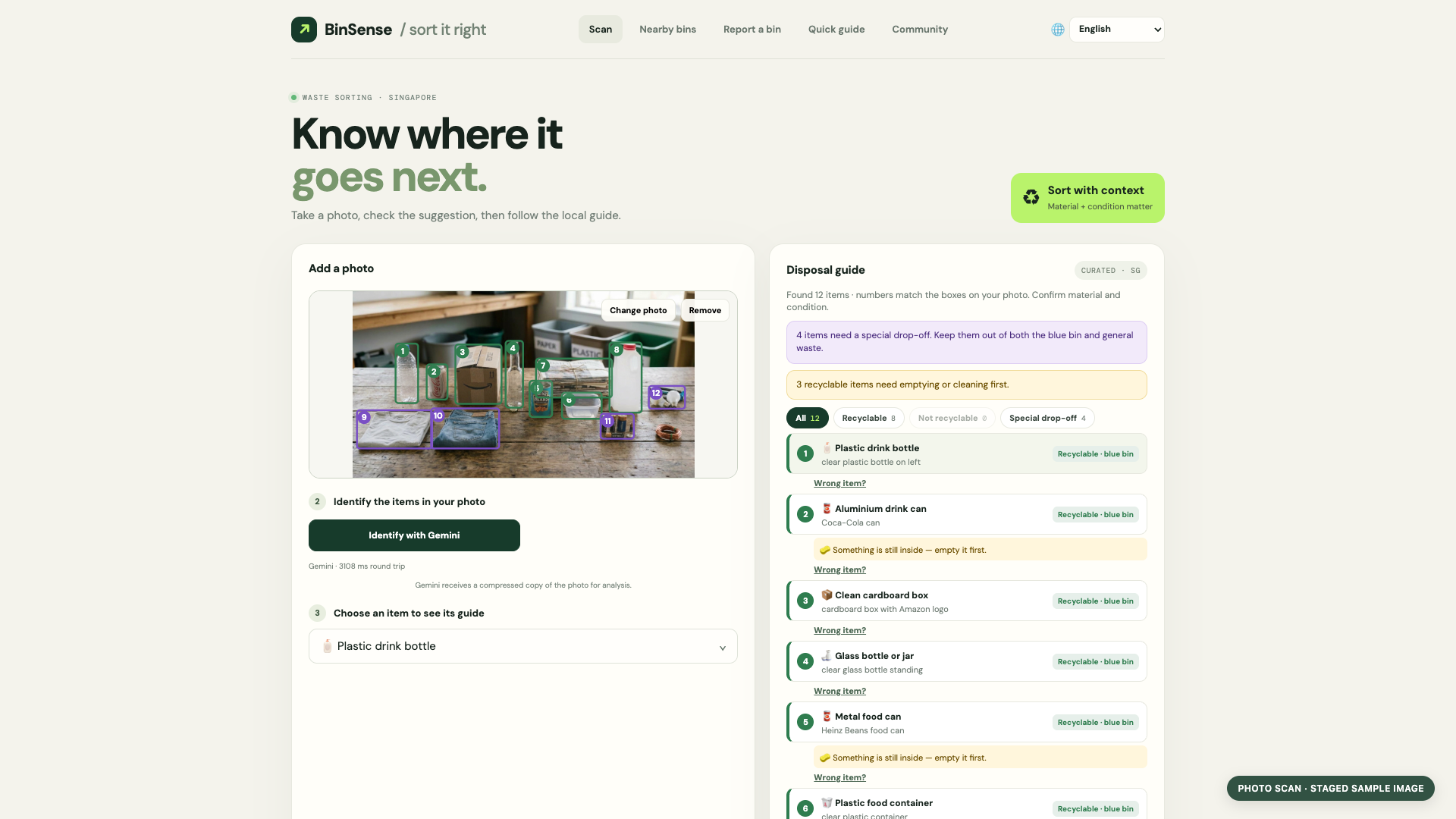
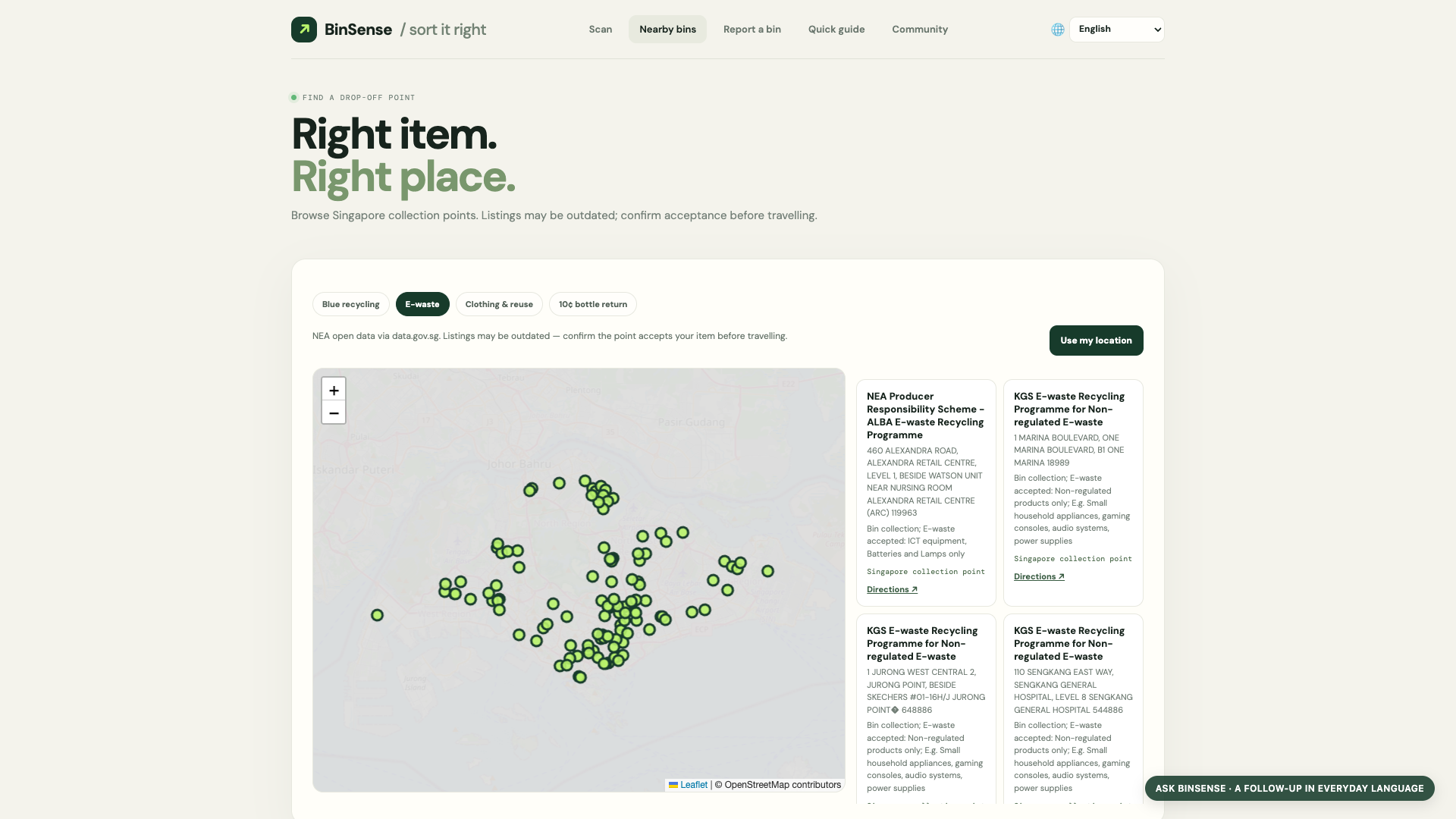
BinSense lets you take a photo of an item and get guidance on how to sort it. It also considers details like whether packaging is clean, answers everyday disposal questions, and helps people find nearby collection points for items such as e-waste. The app includes guides in four languages so more people can use it comfortably.
How we built it
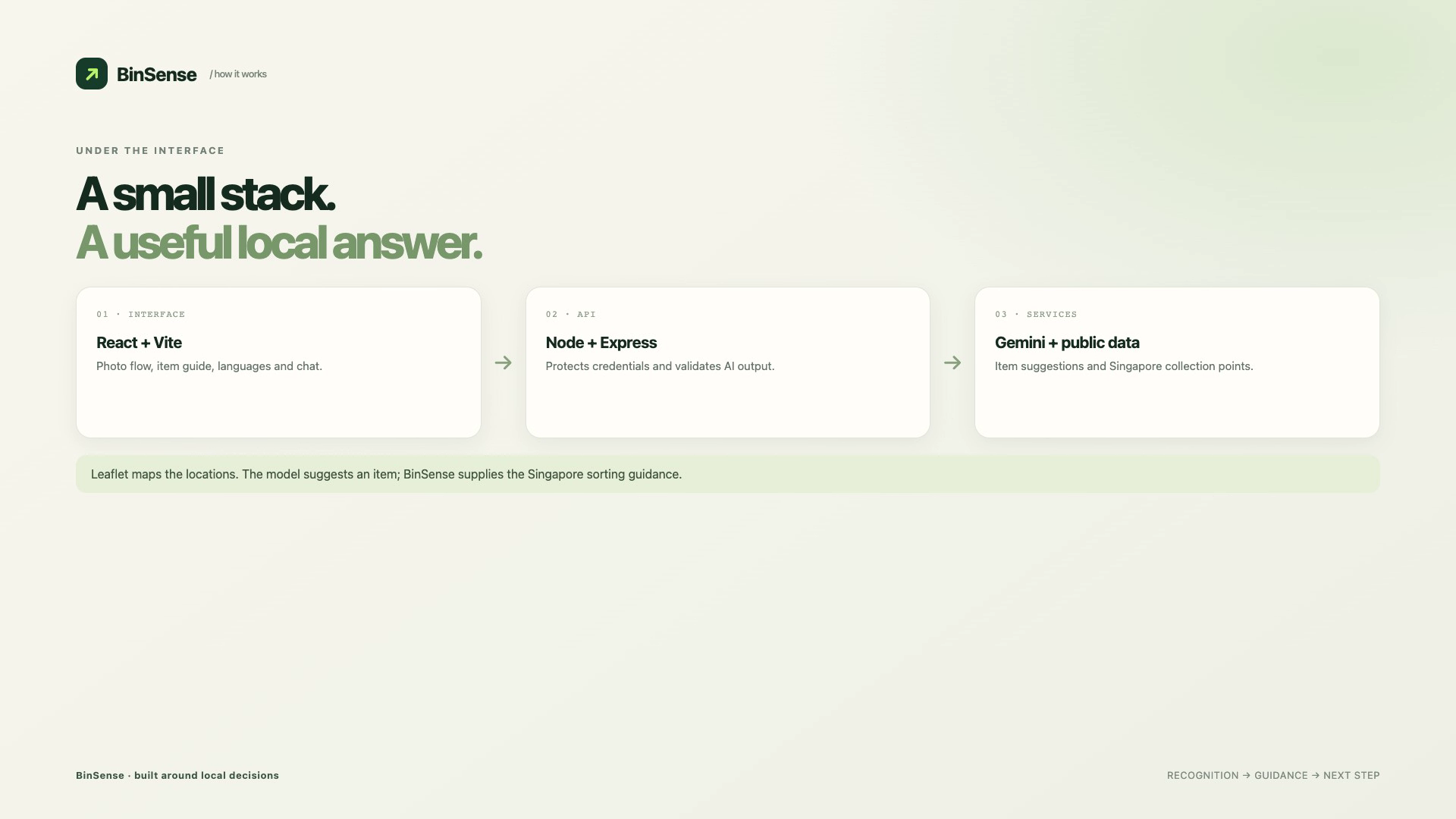
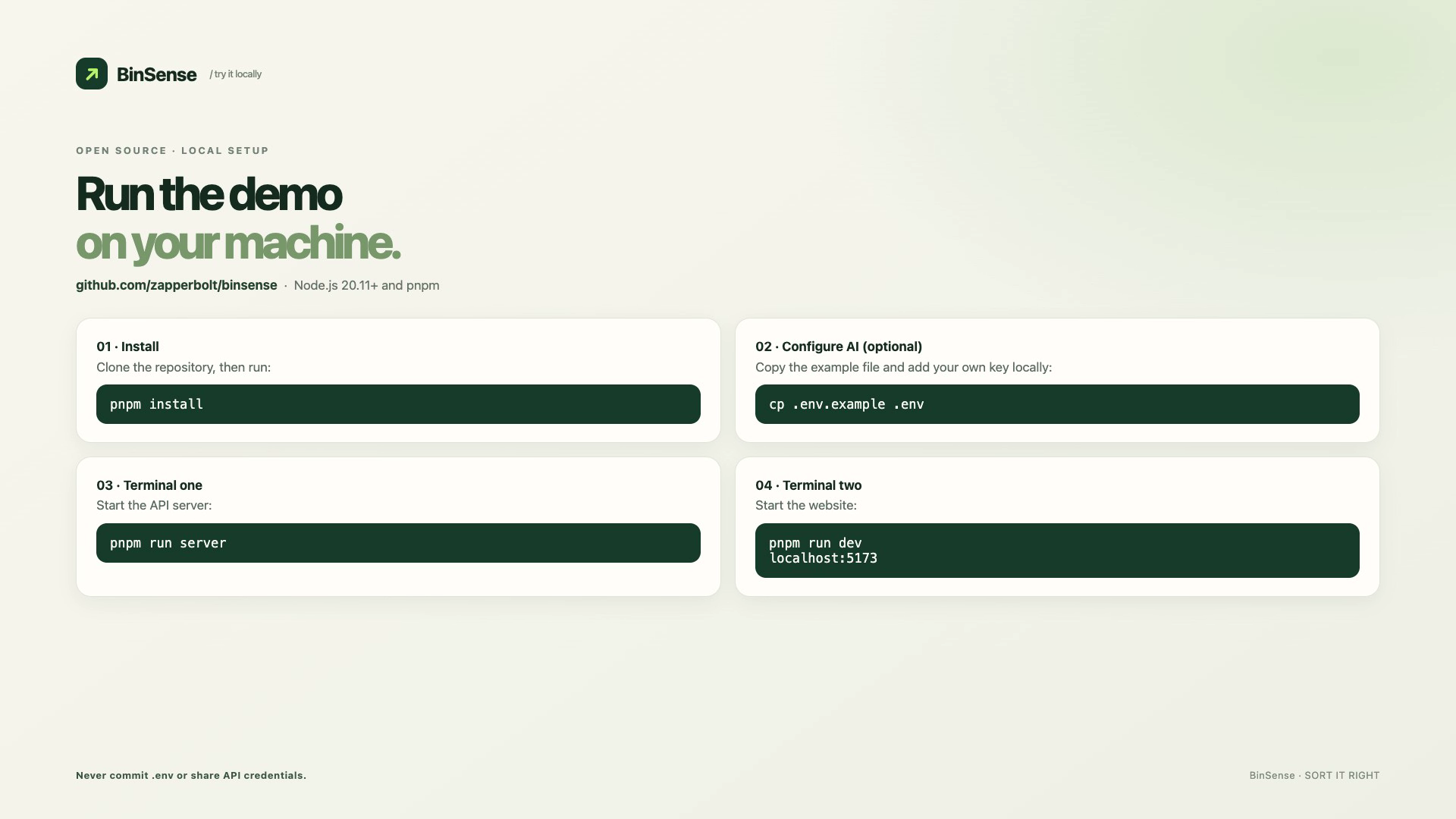
We built the interface with React and Vite, and used a Node and Express server to handle requests to Gemini without exposing the API key in the browser. The app brings together image-based item suggestions, practical sorting guidance, a chat feature, and a map using Singapore collection-point data. We tried to keep each step simple: identify the item, understand what matters, and find a useful next step.
Challenges we ran into
The hardest part was making the guidance feel useful without pretending that every item has a one-size-fits-all answer. Condition matters, collection points can change, and an AI suggestion can be wrong. We worked to make the app explain the next step clearly, while recognizing that information, especially collection point details should be checked before someone makes a trip.
Accomplishments that we're proud of
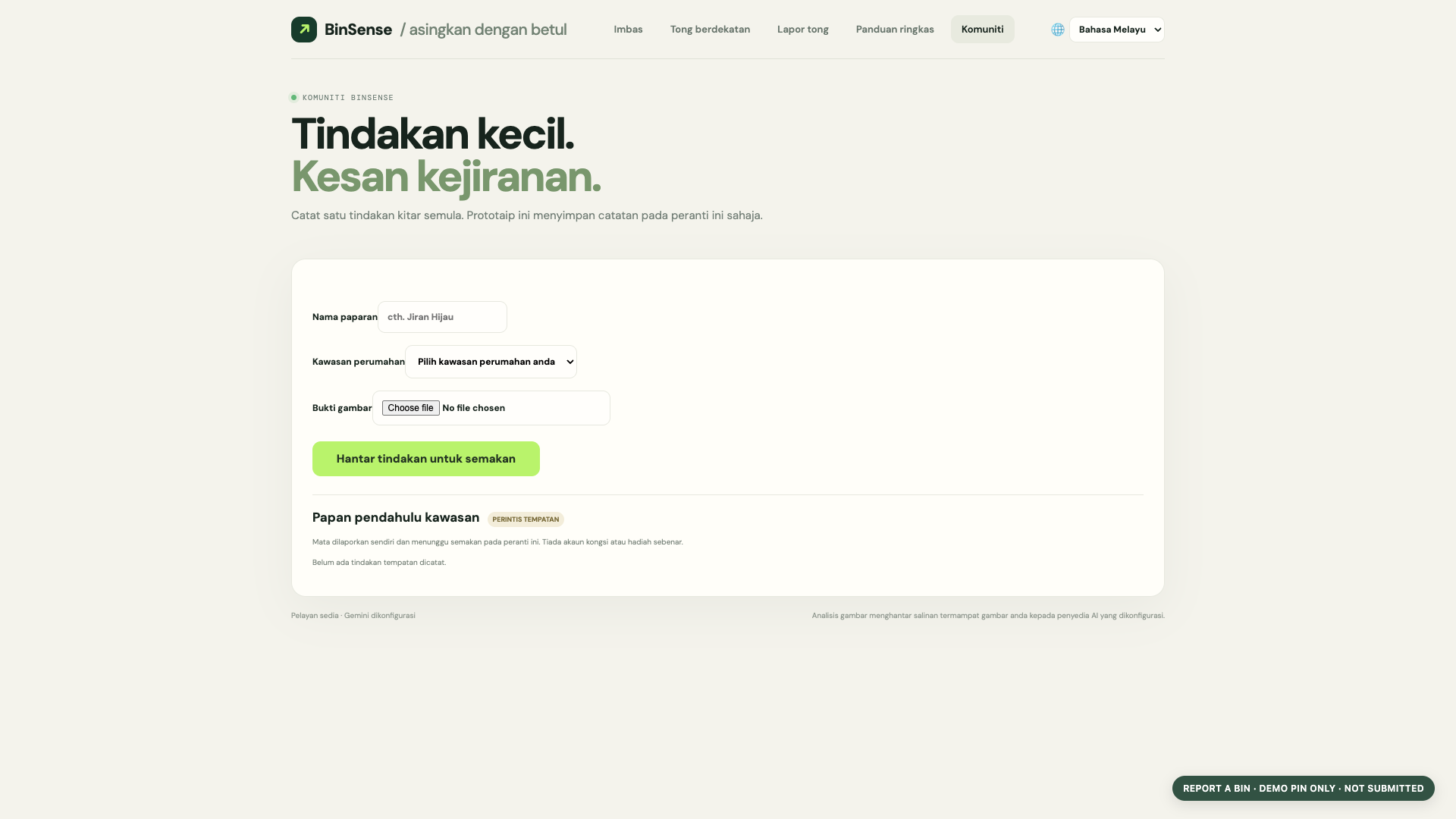
We’re proud that BinSense brings several parts of the decision together in one place: identifying an item, understanding how its condition affects sorting, and finding a possible collection point. We’re also proud to have made the experience available in English, Chinese, Malay, and Tamil. Most of all, we’re glad we built something around a small, familiar moment that can make responsible disposal feel less daunting.
What we learned
We learned that helping someone recycle is not just a matter of giving them more information. The guidance has to be local, easy to understand, and available at the moment they need it. We also learned to be thoughtful about uncertainty: a confident looking answer is not helpful if it sends someone to the wrong place or gives them the wrong impression.
What’s next for BinSense
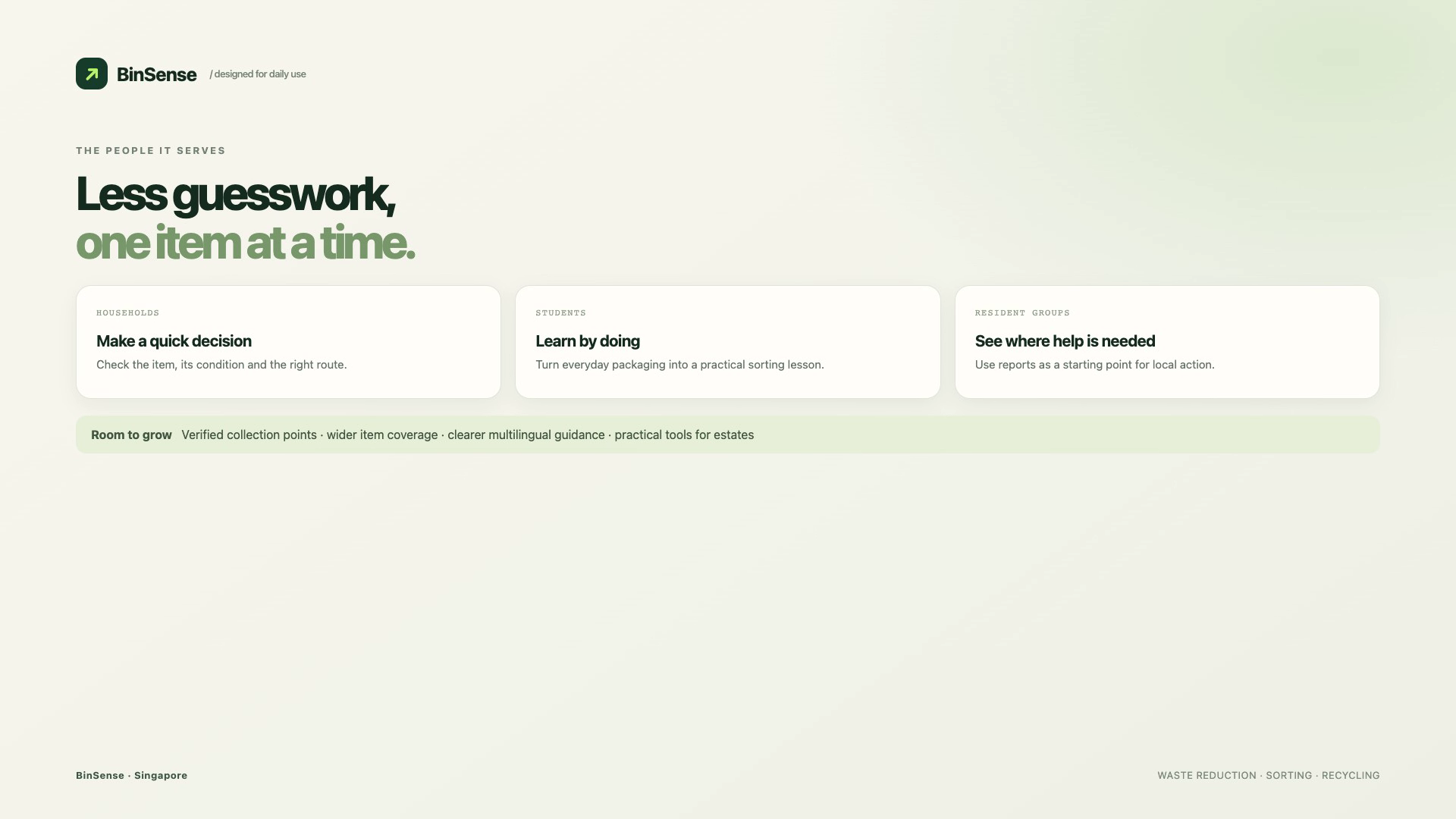
We’d like to improve the accuracy and breadth of the sorting guidance, verify collection-point details more consistently, and learn from the questions people actually ask. Over time, we hope BinSense can be useful not only to individual households, but also to schools and local communities working to make waste sorting easier.
Built With
- express.js
- google-gemini
- leaflet.js
- node.js
- openstreetmap
- react
- typescript
- vite
