-
-
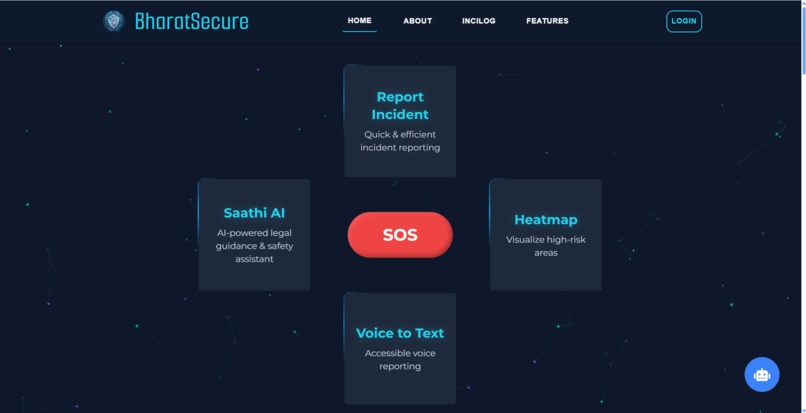
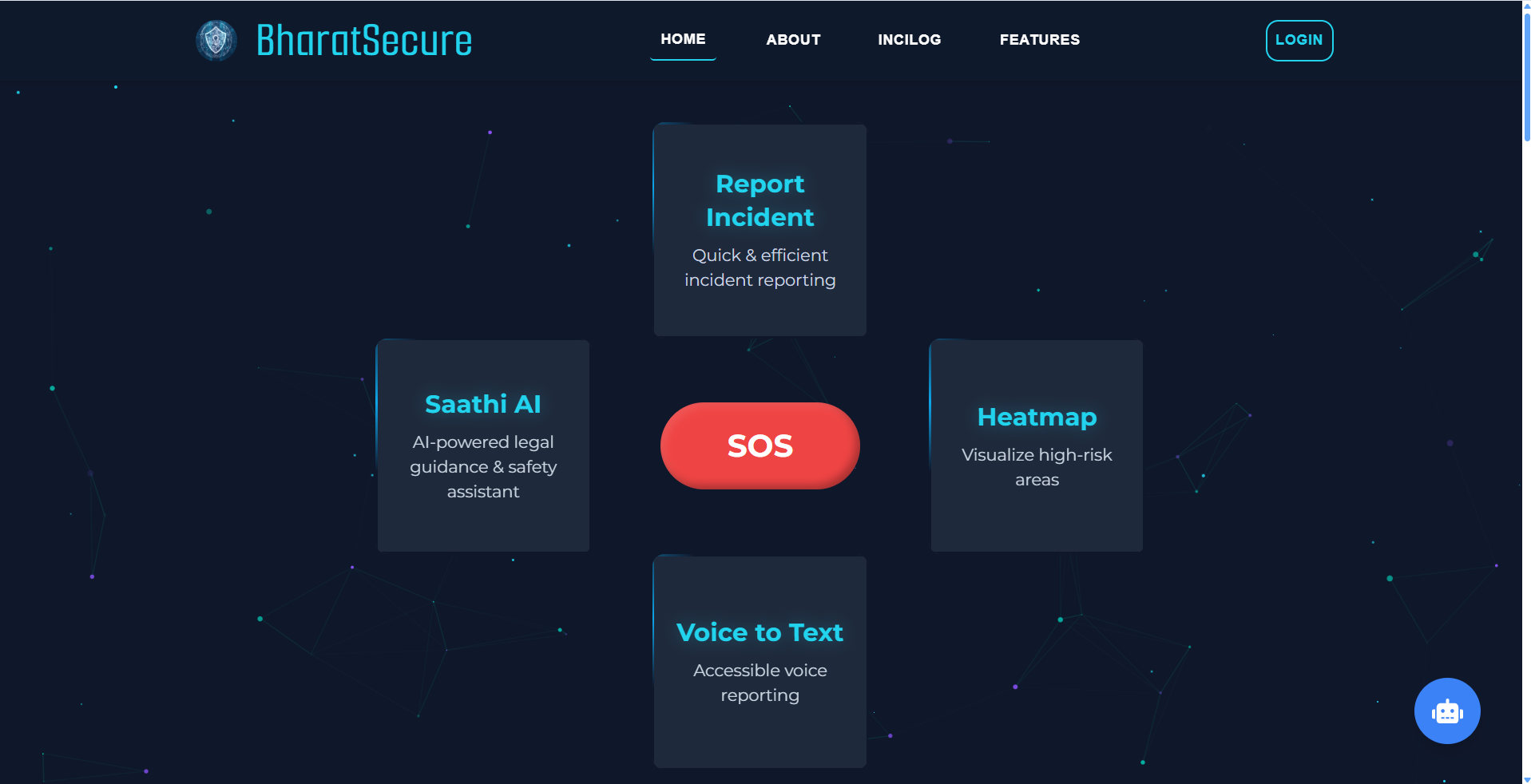
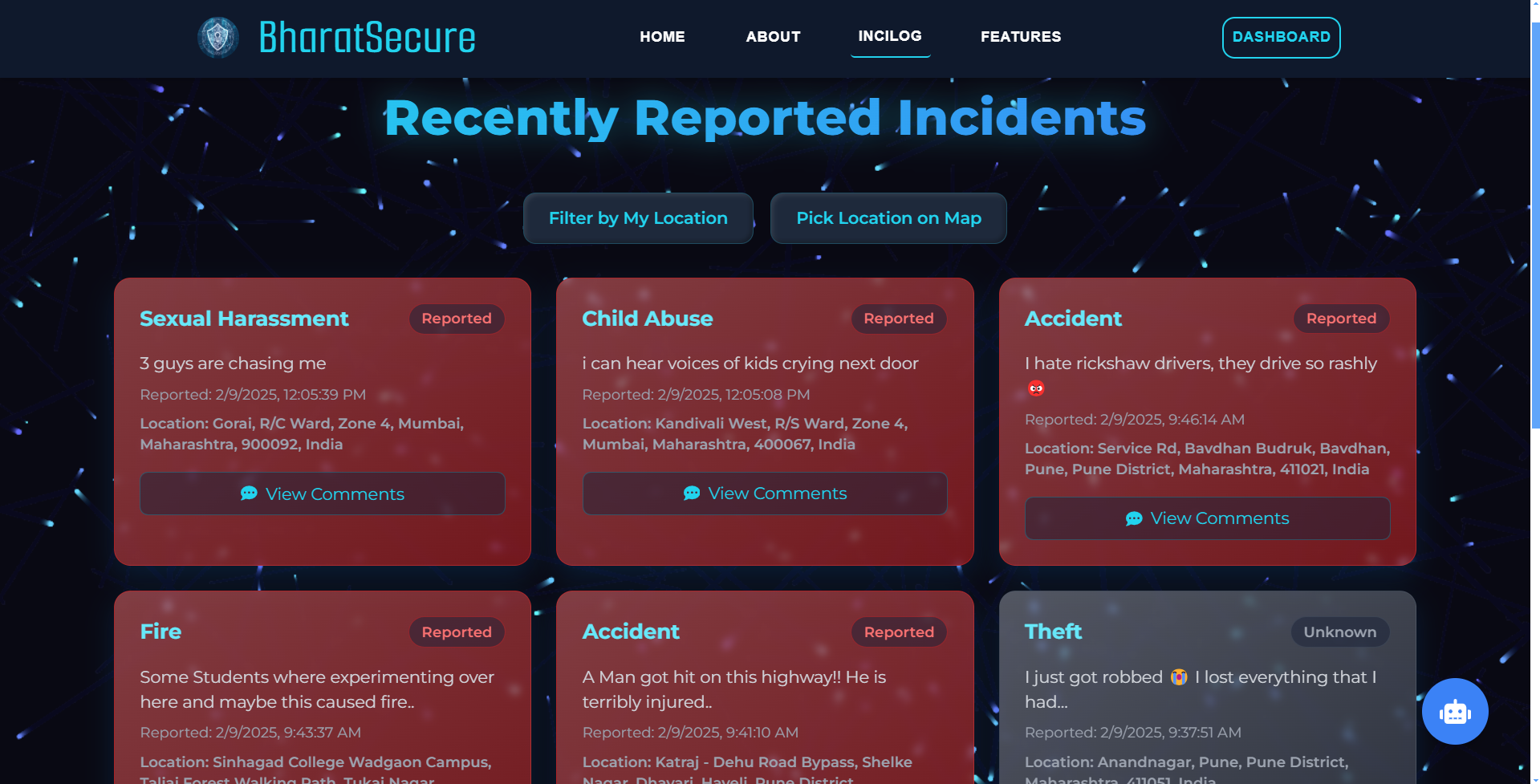
HomePage
-
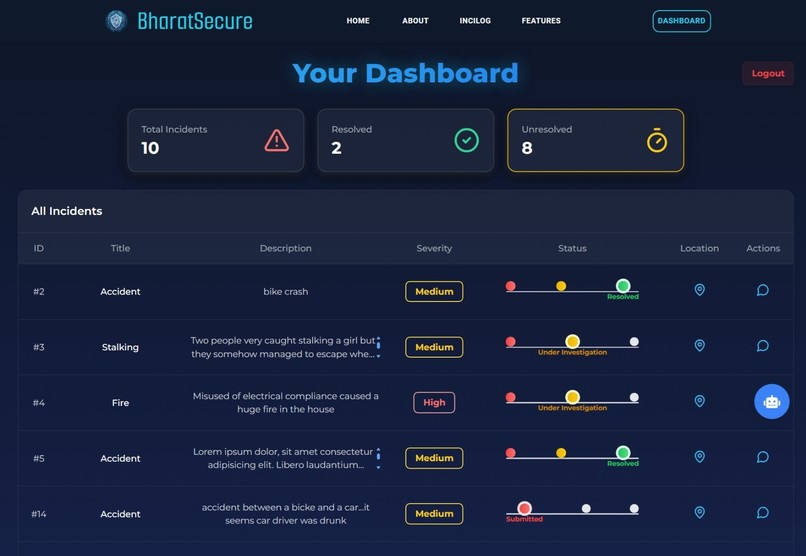
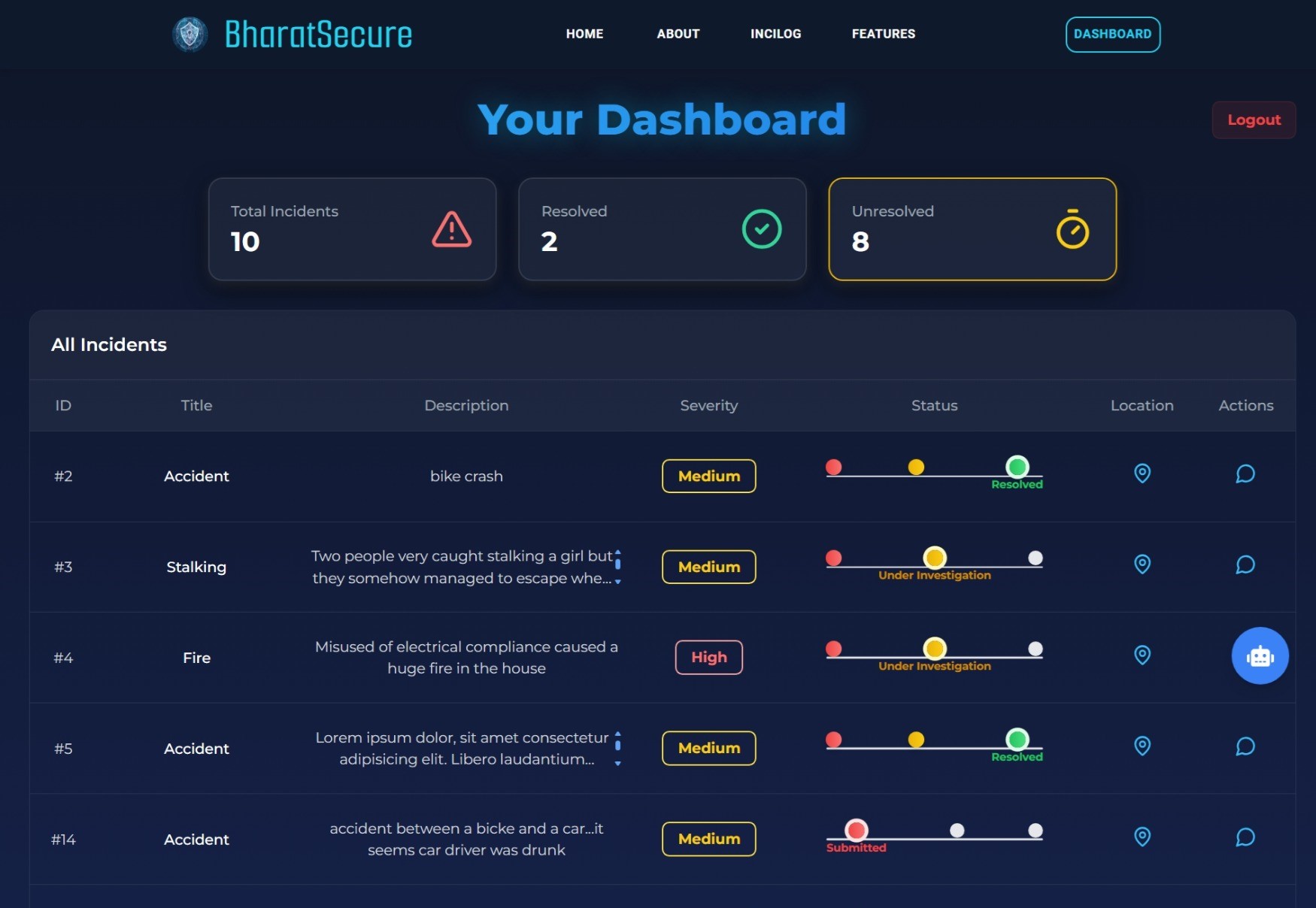
UserDashboard
-
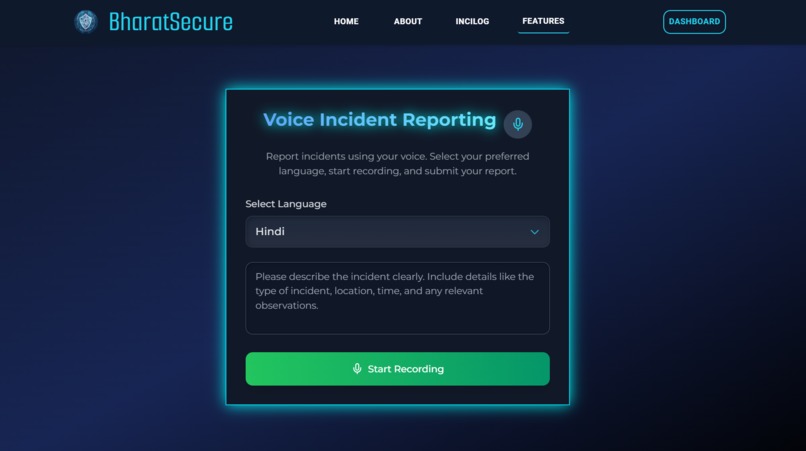
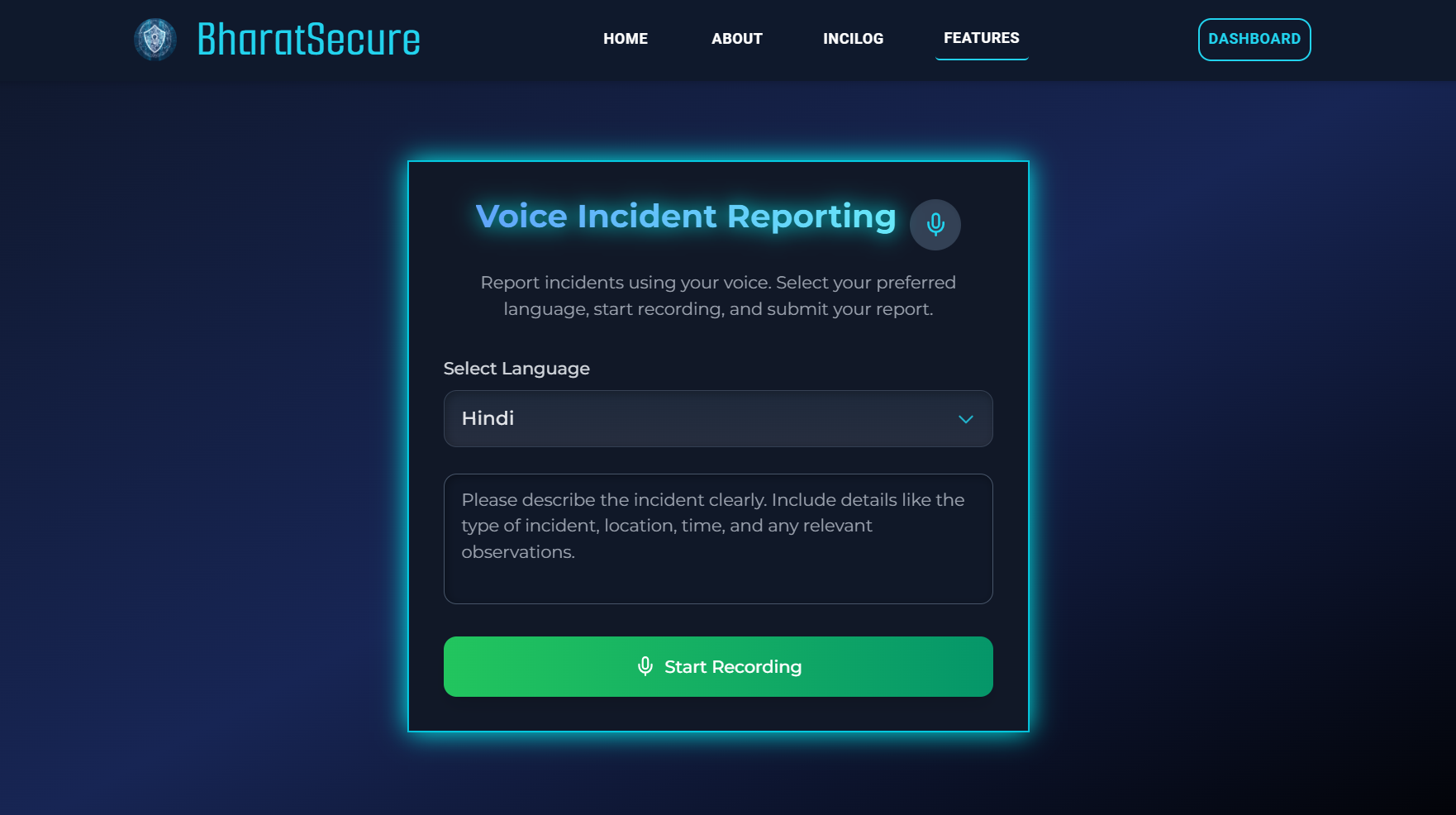
VoiceReport
-
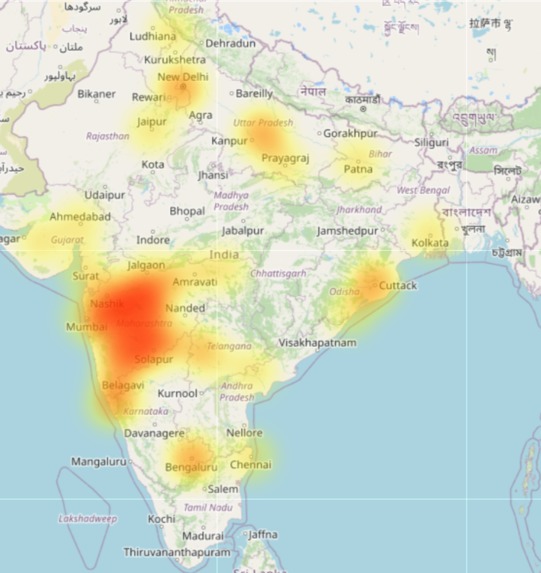
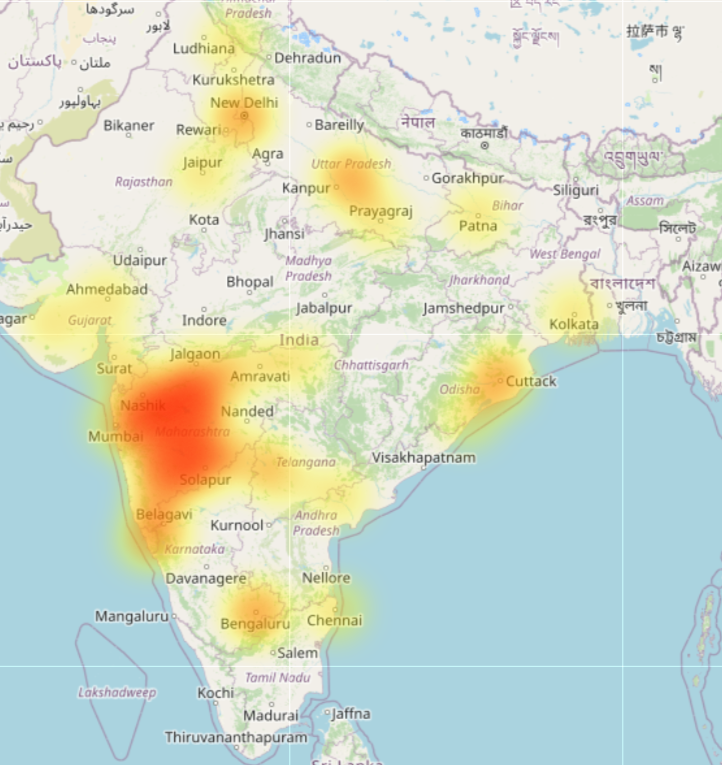
HeatMap
-
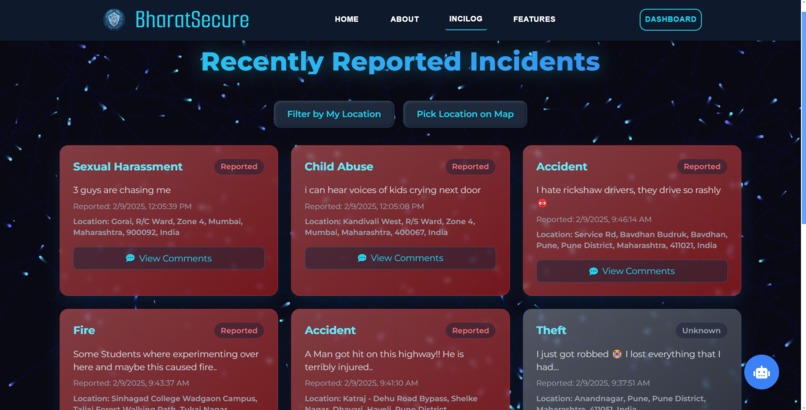
Incilog
-
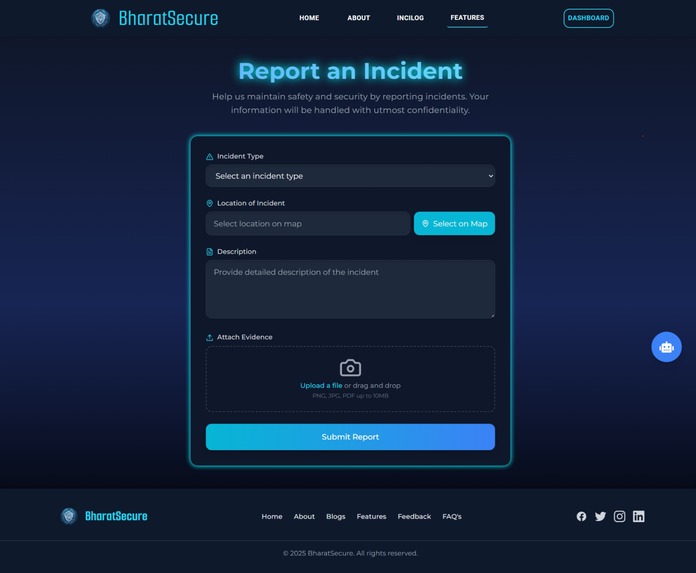
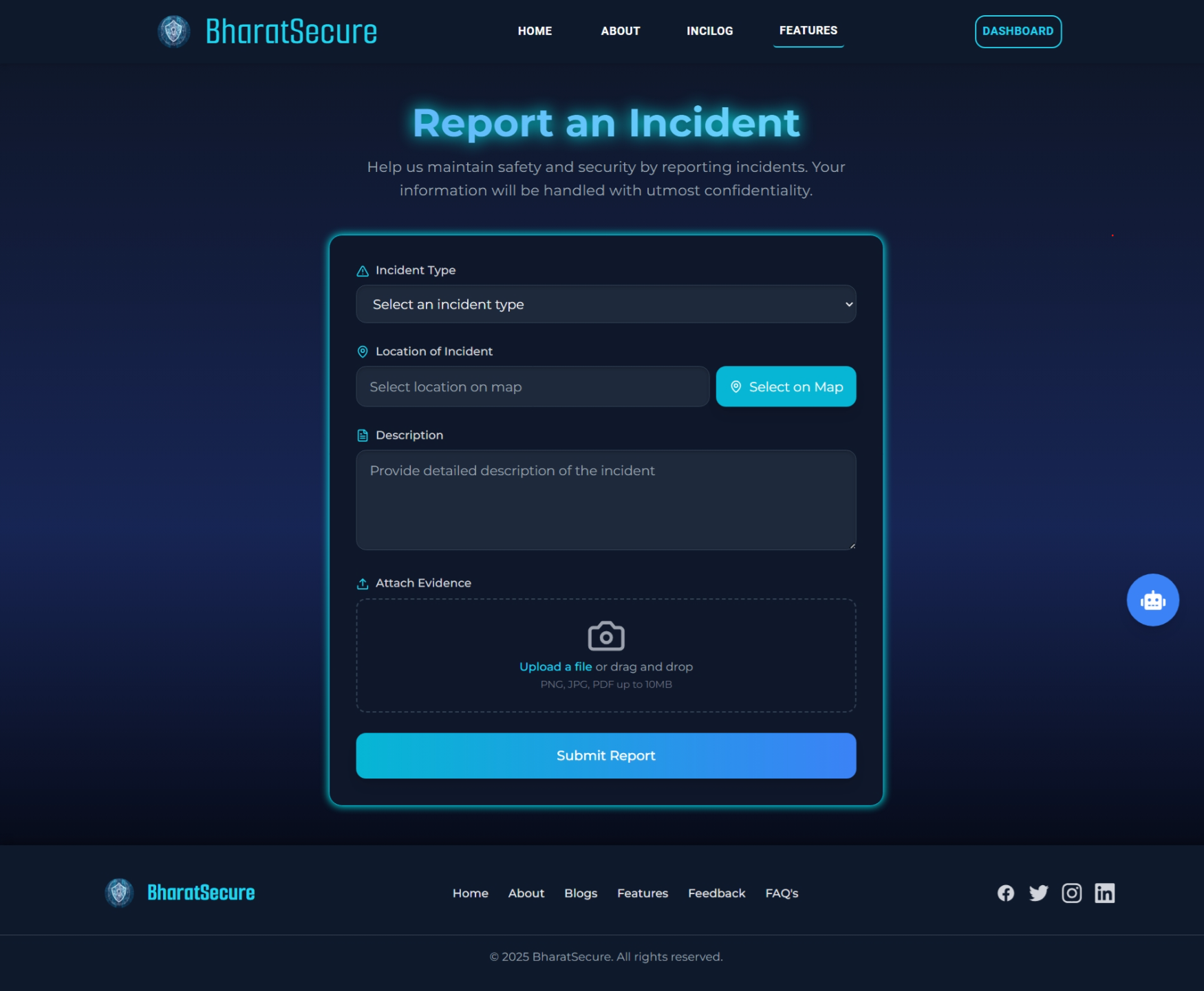
Incident Report Form
-
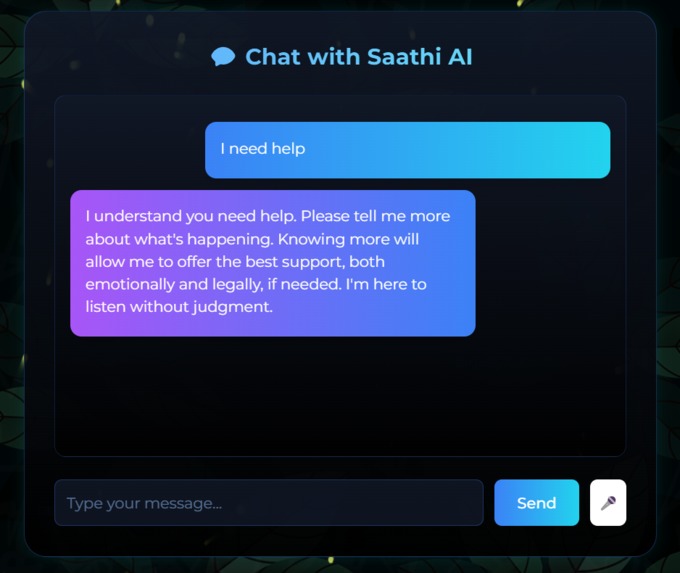
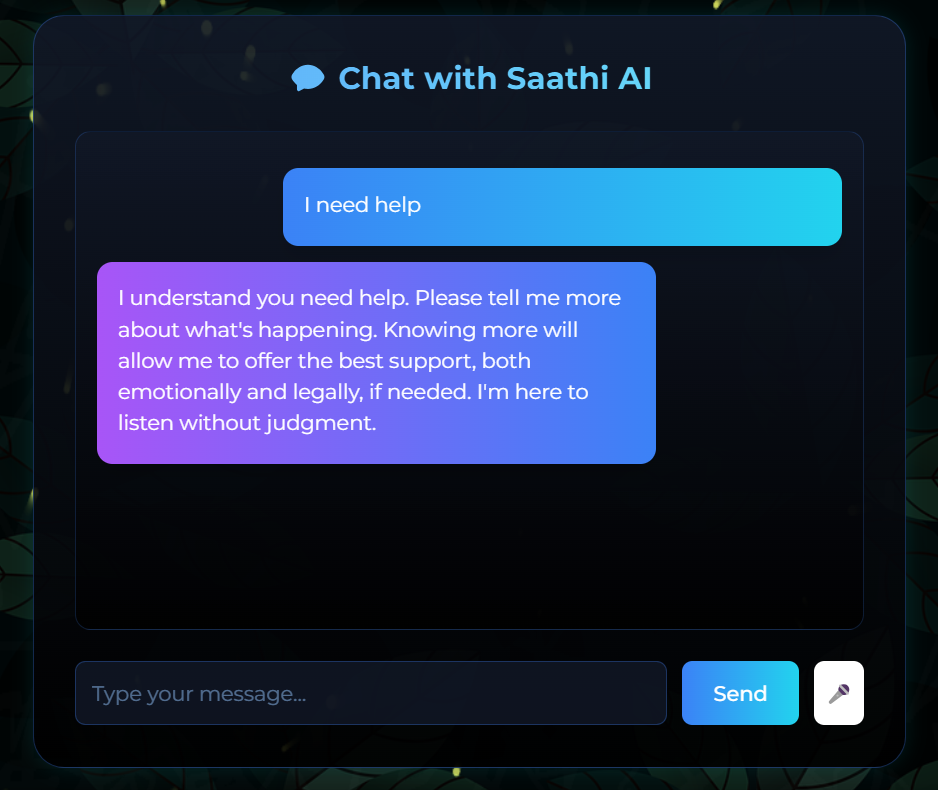
Saathi AI ChatBot
-
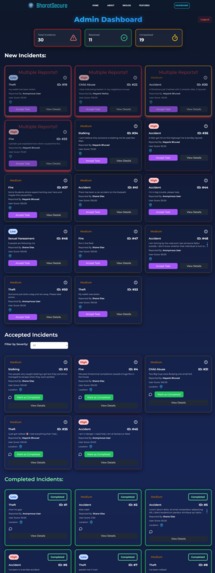
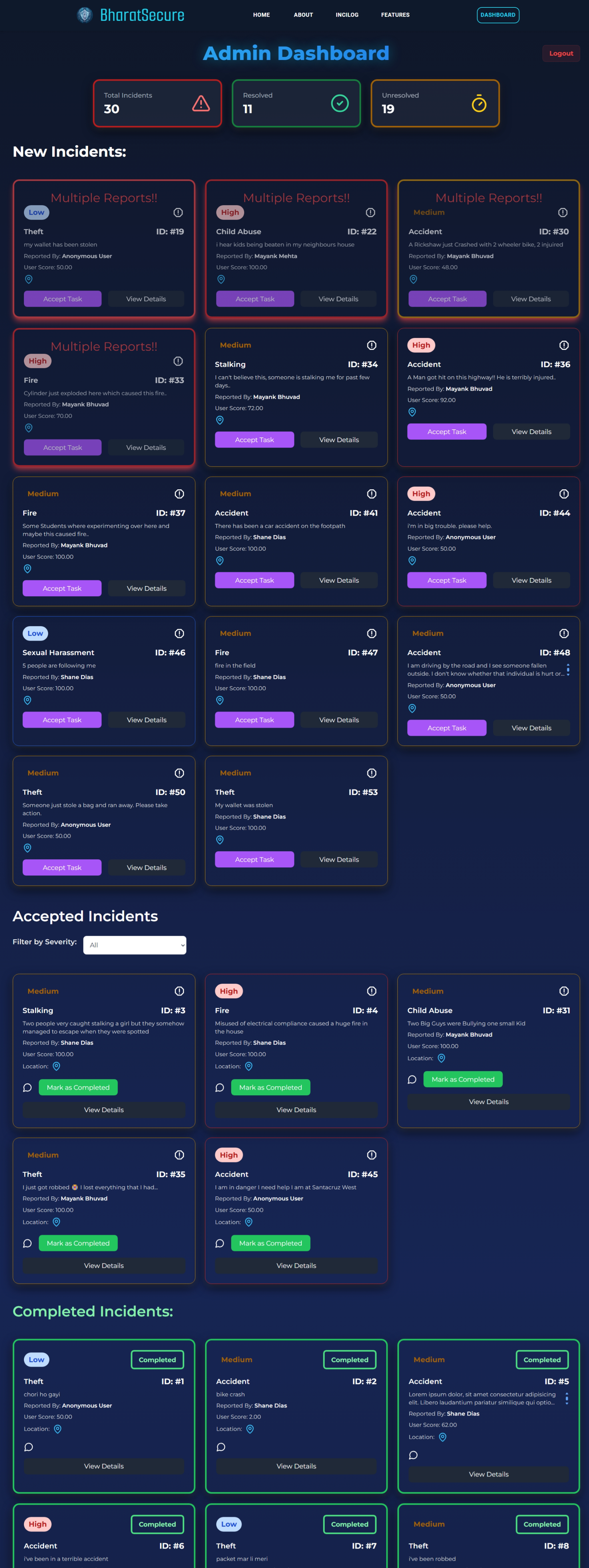
AdminDashBoard
About the Project: BharatSecure – AI-Powered Incident Reporting & Response System
🌟 Inspiration
India faces a significant gap in emergency response, especially for women, children, and marginalized groups. We were deeply moved by the frequent news reports of delayed help, underreported crimes, and lack of actionable data for authorities. This inspired us to build BharatSecure — an AI-driven platform that not only makes it easy to report incidents using voice or text but also ensures those reports reach the right people, fast. We envisioned a tool that could empower victims and witnesses to take action in real-time without fear, hesitation, or technical barriers.
Our goal: build a solution where every second counts, and every voice matters.
🧠 What We Learned
This project was a huge learning curve for our team. Some of our key takeaways include:
- Natural Language Processing (NLP): Implementing LLMs to analyze voice/text reports and assign severity levels gave us hands-on experience in using AI for real-world classification problems.
- Real-Time Data Handling: Working with live location data, WebSockets, and dynamic dashboards taught us how to build systems that reflect data changes as they happen.
- Accessibility-First Design: We explored inclusive design by enabling multilingual voice input and providing anonymous reporting to encourage usage from all demographics.
- Team Collaboration: This project sharpened our project management and collaboration skills. We split our responsibilities across frontend, backend, AI integration, and testing — ensuring parallel progress and constant communication.
🛠️ How We Built It
🔧 Technologies Used
- Frontend: React.js with Tailwind CSS for a responsive, mobile-first interface.
- Backend: Django, chosen for its robust architecture and built-in admin tools.
- Database: SQLite during development, designed to scale to PostgreSQL.
- APIs Integrated:
- OpenStreetMap API – For capturing and visualizing incident geolocation.
- Twilio API – To send real-time SMS alerts to emergency contacts.
- Custom LLM Chatbot – Acts as a legal advisor, therapist, and report assistant.
🔍 Core Features
📄 Incident Report Form
- Users can submit incidents with a title, description, image, and location.
- AI/LLM analyzes the report and assigns a severity level: Low, Medium, or High.
- GPS auto-detection or manual entry for accurate location tagging.
- Option for anonymous reporting for privacy and safety.
🧑💻 User Dashboard
- Track submitted reports with real-time status updates.
- Severity badges, chat communication with authorities, and timeline tracking.
🎙️ SafeSpeak – Voice Reporting
- Hands-free, AI-powered voice reporting system.
- Multilingual support for reporting in regional languages.
- AI detects key information: title, description, location, and urgency.
🗺️ Heatmap Visualization
- View real-time risk zones and recent incident clusters.
- Color-coded: Green (Low), Orange (Medium), Red (High).
- Helps users choose safer routes and informs community decisions.
🚨 SOS Emergency Alert System
- One-tap button shares user’s live location and emergency details.
- Continuous alerts until help is confirmed.
- Integrated with Saathi AI for real-time guidance during crisis.
🧠 Saathi AI Chatbot
- Offers emotional support and legal advice to distressed users.
- Helps complete incident reports by asking structured questions.
- Fully anonymous, multilingual, and accessible 24/7.
🛡️ Admin Dashboard
- Authorities can view, filter, and manage incidents.
- Auto-escalation of unresolved reports.
- Detects and groups mass reports (e.g., protests or serial harassment).
- Reputation scoring to reduce spam/fake entries.
💼 Business Model Canvas
| Key Partners | Key Activities | Value Propositions |
|---|---|---|
| NGOs, Local Authorities | Platform development & maintenance | Real-time AI-powered incident reporting and emergency response system |
| Law Enforcement Agencies | API integration (e.g., Twilio, maps) | Anonymous and accessible voice/text reporting in regional languages |
| Government Safety Bodies | LLM training and chatbot development | Visual safety heatmaps, escalation handling, and verified incident tracking |
| Emergency Response Teams | Awareness campaigns & onboarding | Saathi AI assistant providing legal advice, mental support, and report guidance |
| Customer Relationships | Customer Segments | Channels |
|---|---|---|
| Automated and human support | General public (victims, witnesses) | Website, mobile web, future mobile app |
| NGO/Authority partnerships | Government agencies and law enforcement | Integration with official emergency dashboards, public campaigns |
| Community awareness efforts | NGOs, public safety orgs | Collaborations, outreach in high-risk zones, college & rural area onboarding |
| Key Resources | Cost Structure | Revenue Streams |
|---|---|---|
| Development team | Hosting, server costs | B2B licensing for government/NGO platforms |
| AI/LLM models | API subscriptions (Twilio, Maps, etc.) | Paid integrations/custom dashboards for law enforcement and municipalities |
| API access (Twilio, maps) | Development & maintenance | Freemium public version with premium safety features (e.g., alerts, map insights) |
| Community partnerships | Awareness and onboarding programs | CSR/NGO funding, state-level digitization grants |
📊 Business Approach
Our business strategy focuses on a social-impact-first model backed by scalable B2B and B2G (Business-to-Government) monetization. We aim to:
- Offer Freemium Access: General users can report incidents and use essential features for free. Premium plans may include detailed safety analytics or emergency service add-ons.
- Partner with Governments and NGOs: Sell advanced dashboards and priority support features to public safety departments, disaster management authorities, and NGO helplines.
- Leverage CSR and Grants: Apply for government innovation grants, urban safety initiatives, and CSR partnerships to fund deployment in high-risk communities.
- Scale via Regional Pilots: Test our model in metro and rural regions by collaborating with civic bodies, police departments, and local women's groups.
🚧 Challenges We Faced
🔐 Data Accuracy & Privacy
- Problem: False reporting, spam entries, or missing data.
- Solution: Used form validations, user credibility scores, and LLM consistency checks. Anonymous reports are flagged for manual verification.
🌐 API Reliability
- Problem: Third-party APIs (like Twilio or OpenStreetMap) can face outages or rate limits.
- Solution: Implemented caching (e.g., Redis), retry logic, and fallback alternatives.
📢 Adoption & Trust
- Problem: How to make users trust the platform and actually use it?
- Solution: Focused on accessibility, anonymity, and partnership with NGOs. We also designed a UI that's simple, clean, and non-intimidating.
🧩 Feature Integration
- Combining chatbots, voice input, AI models, dashboards, and map visualizations was complex.
- Required constant syncing across team members working on separate modules and extensive testing.
📈 Future Scope
- Scale to integrate Google Maps and Firebase for more robust location tracking and authentication.
- Partner with local authorities and NGOs to pilot in real-world scenarios.
- Add predictive analytics to forecast risk-prone zones and suggest safety improvements.
Team JSM² is proud to present BharatSecure — built with compassion, driven by AI, and designed to protect.


Log in or sign up for Devpost to join the conversation.