-
-
1
-
3
-
4
-
9
-
8
-
11
-
6
-
10
-
12
-
2
-
7
-
5
Inspiration
I live in Yenagoa, Bayelsa State — one of Nigeria's most geographically challenging states. Many communities here can only be reached by boat across the Niger River. When someone falls sick at night, getting to a hospital means crossing waterways, hiring a boat, and spending money most families don't have. People describe symptoms to neighbours or local chemists and make the wrong call about urgency every day.
Bayelsa has one of Nigeria's highest burdens of malaria, maternal mortality, and flood-related illness. The state's riverine terrain means that the first question — "how serious is this?" — can be the difference between life and death. I built BayelsaCare to answer that question for every person in Bayelsa, wherever they are.
What it does
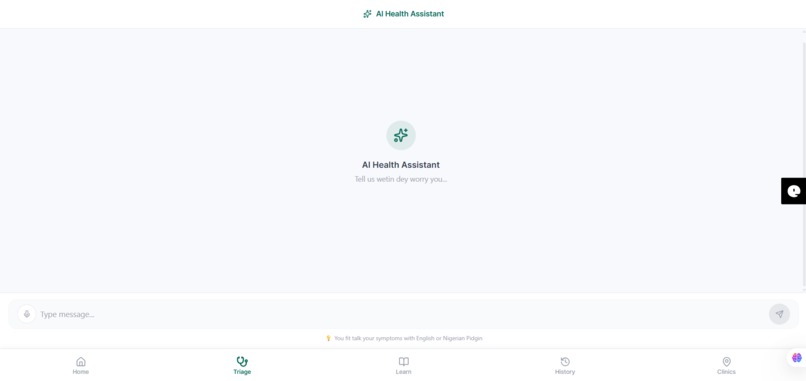
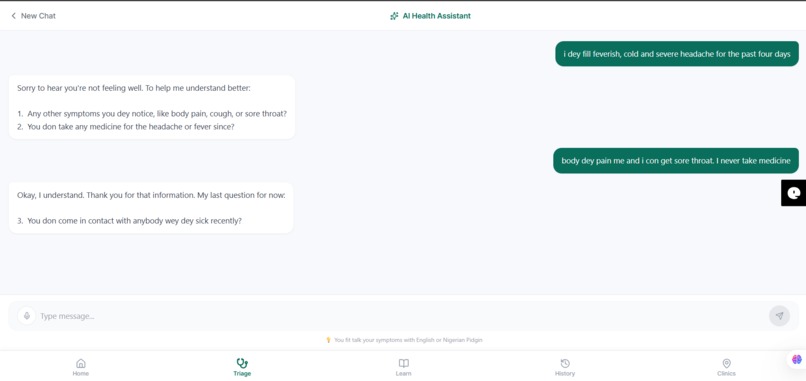
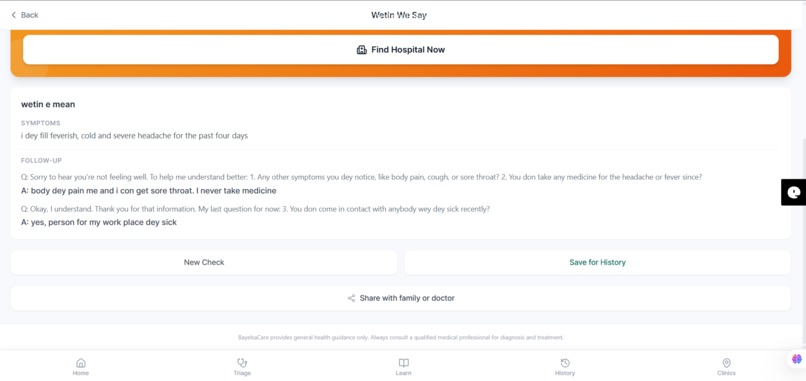
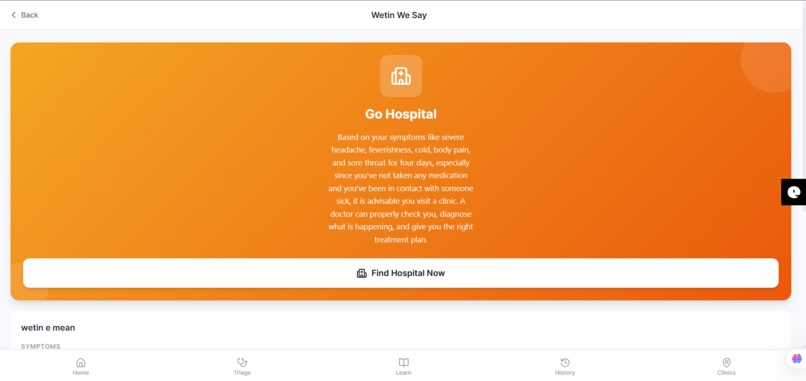
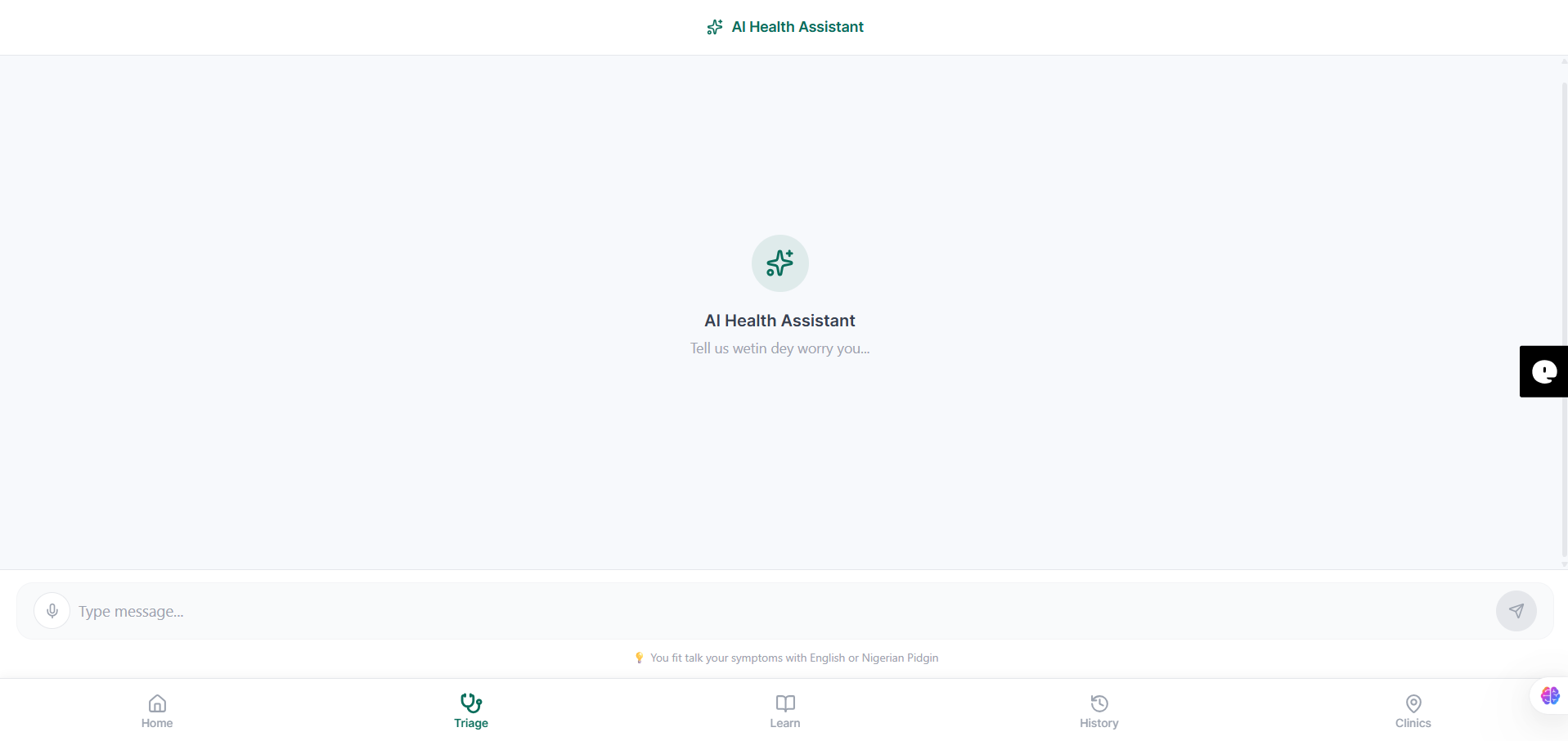
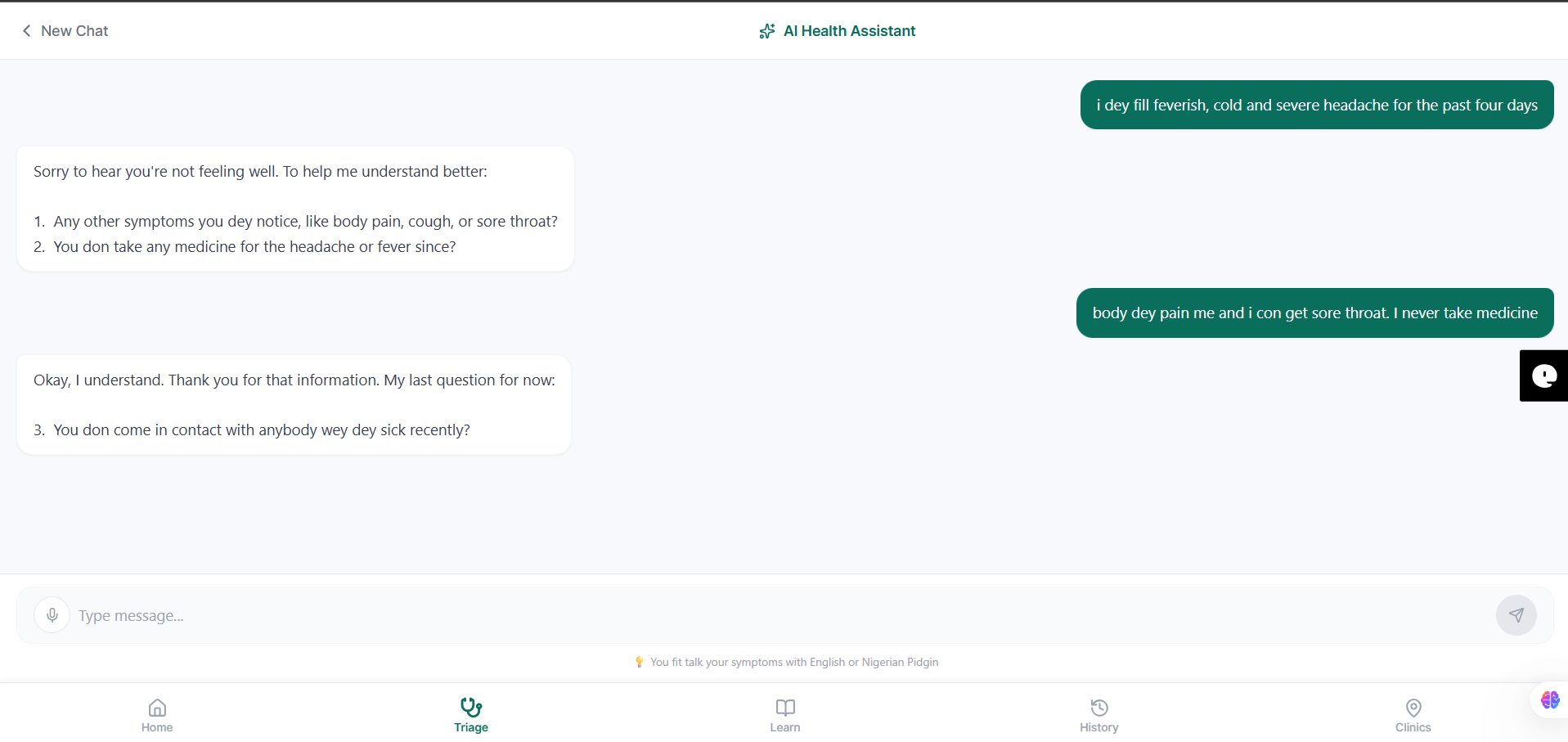
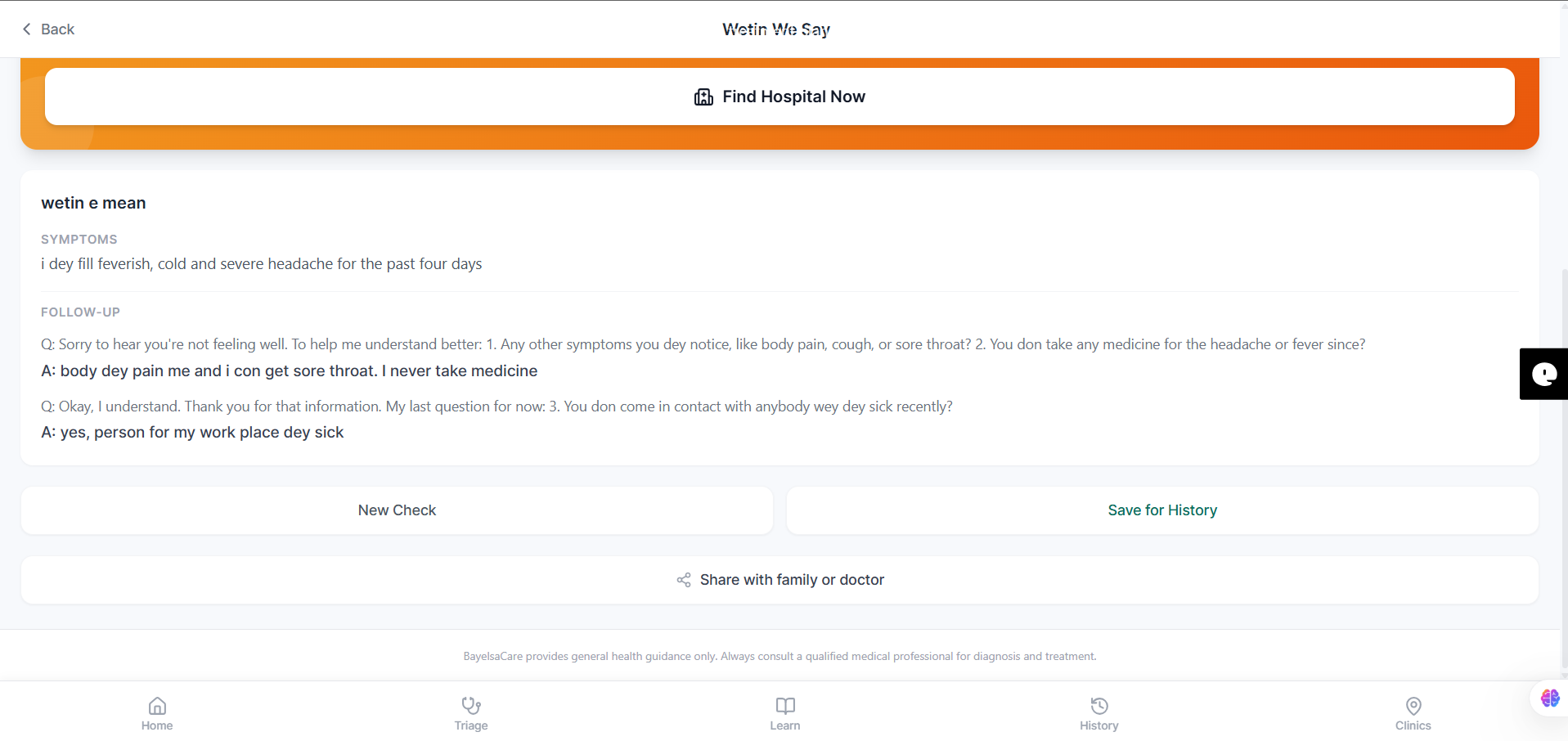
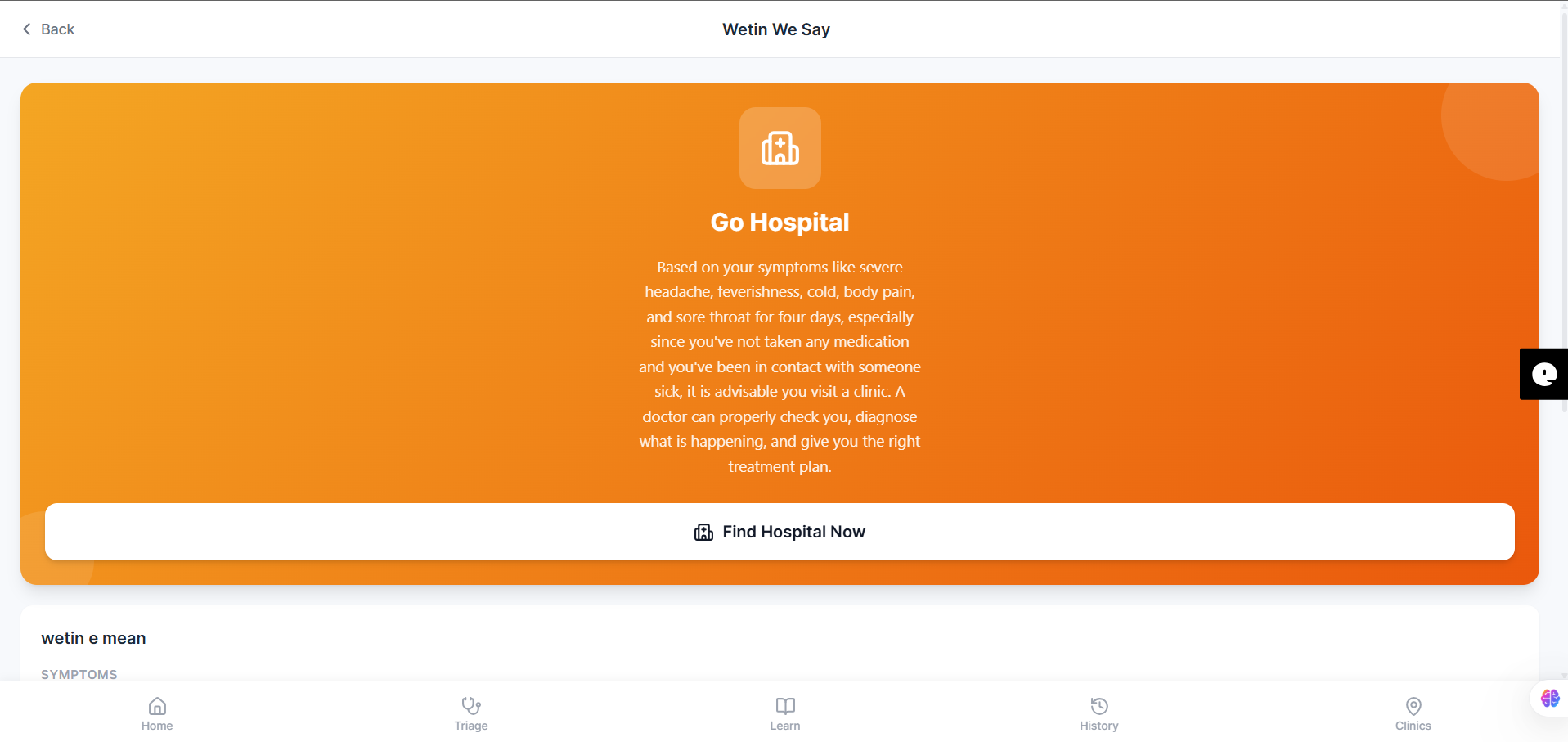
BayelsaCare is a mobile-first AI health triage app built specifically for Bayelsa State, Nigeria. A user opens the app, describes how they feel in plain English or Nigerian Pidgin, and the AI asks 2–3 targeted follow-up questions. Within seconds it produces one of three triage results: Home Care, Visit a Clinic, or Emergency — with a plain-language explanation and clear next steps.
Core features:
- AI Symptom Triage — conversational multi-turn chat with intelligent follow-up questions before producing a result
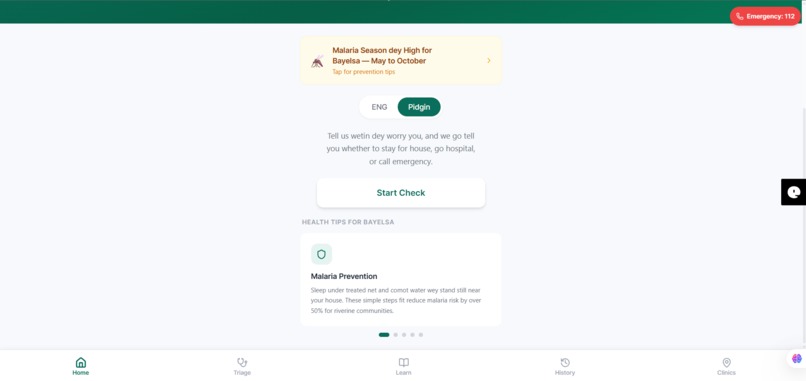
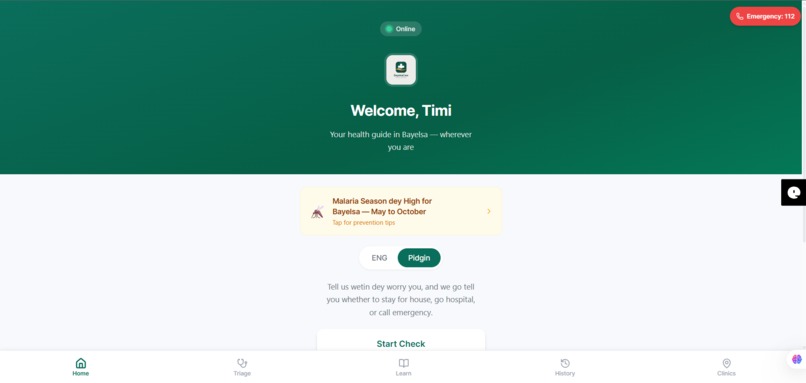
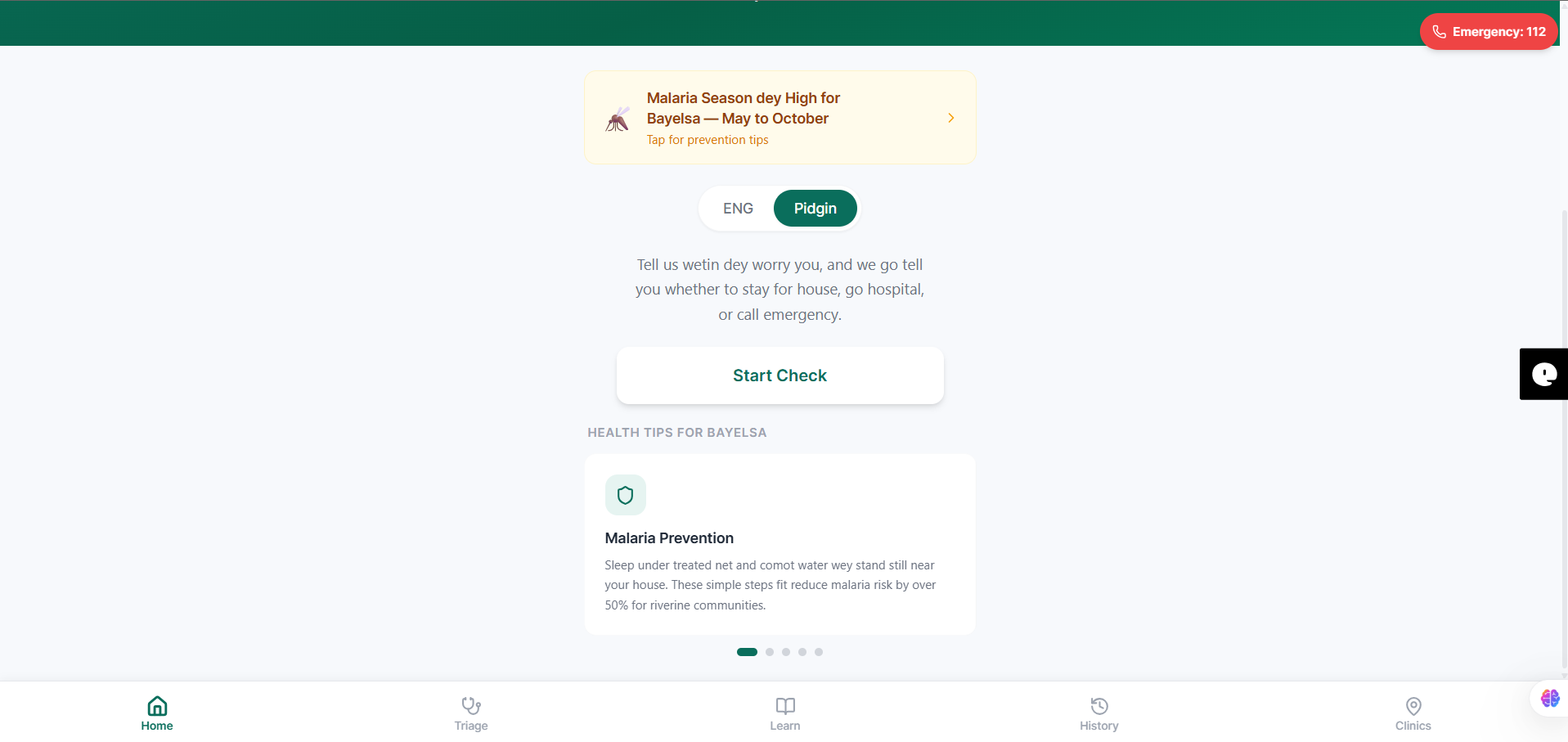
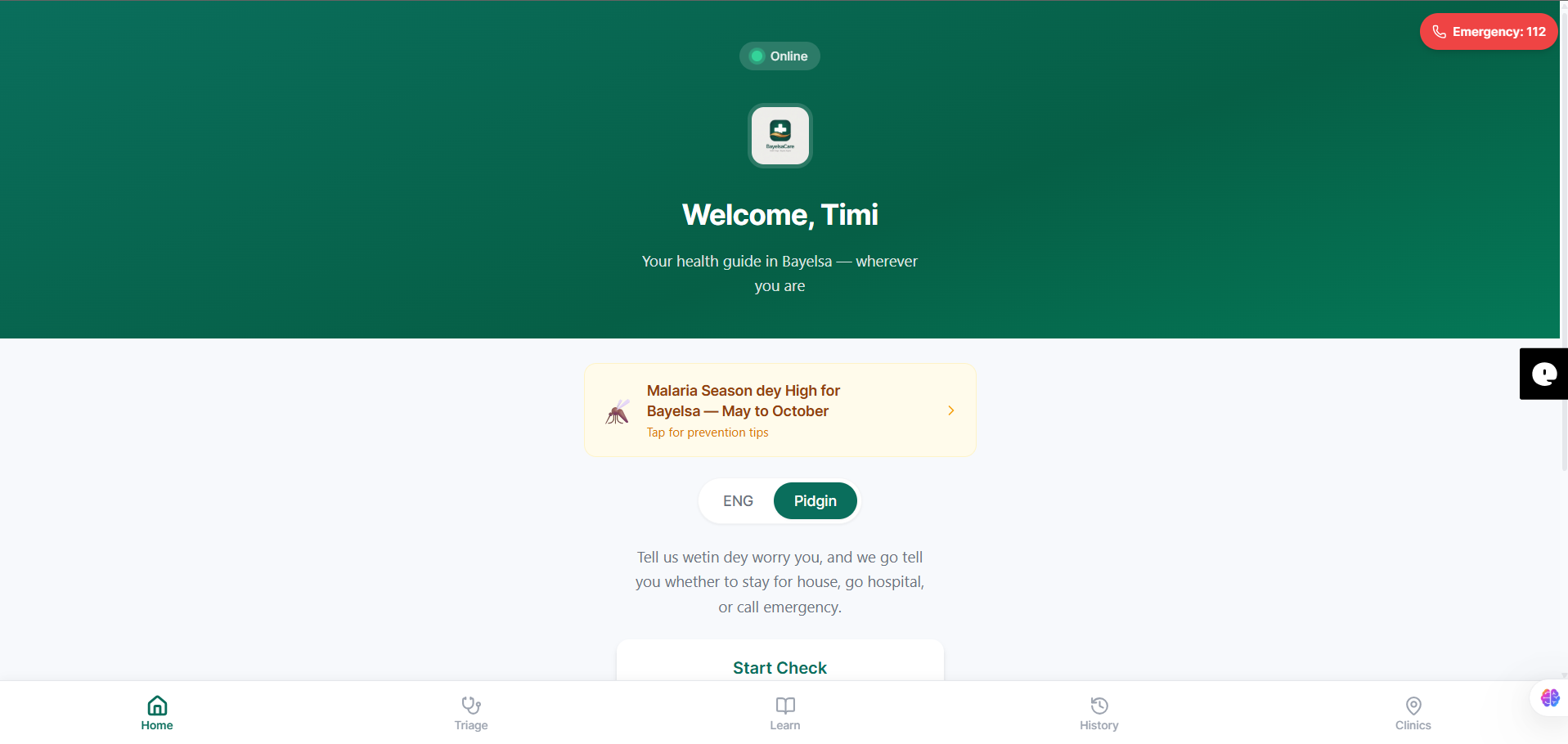
- Nigerian Pidgin support — full app interface switches to Pidgin with one tap ("Tell us wetin dey worry you")
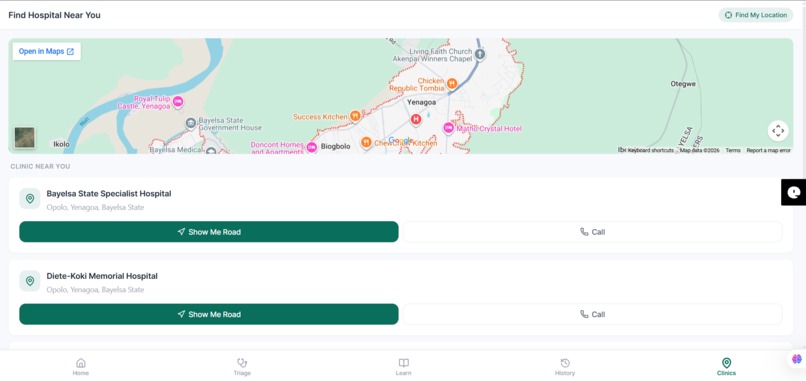
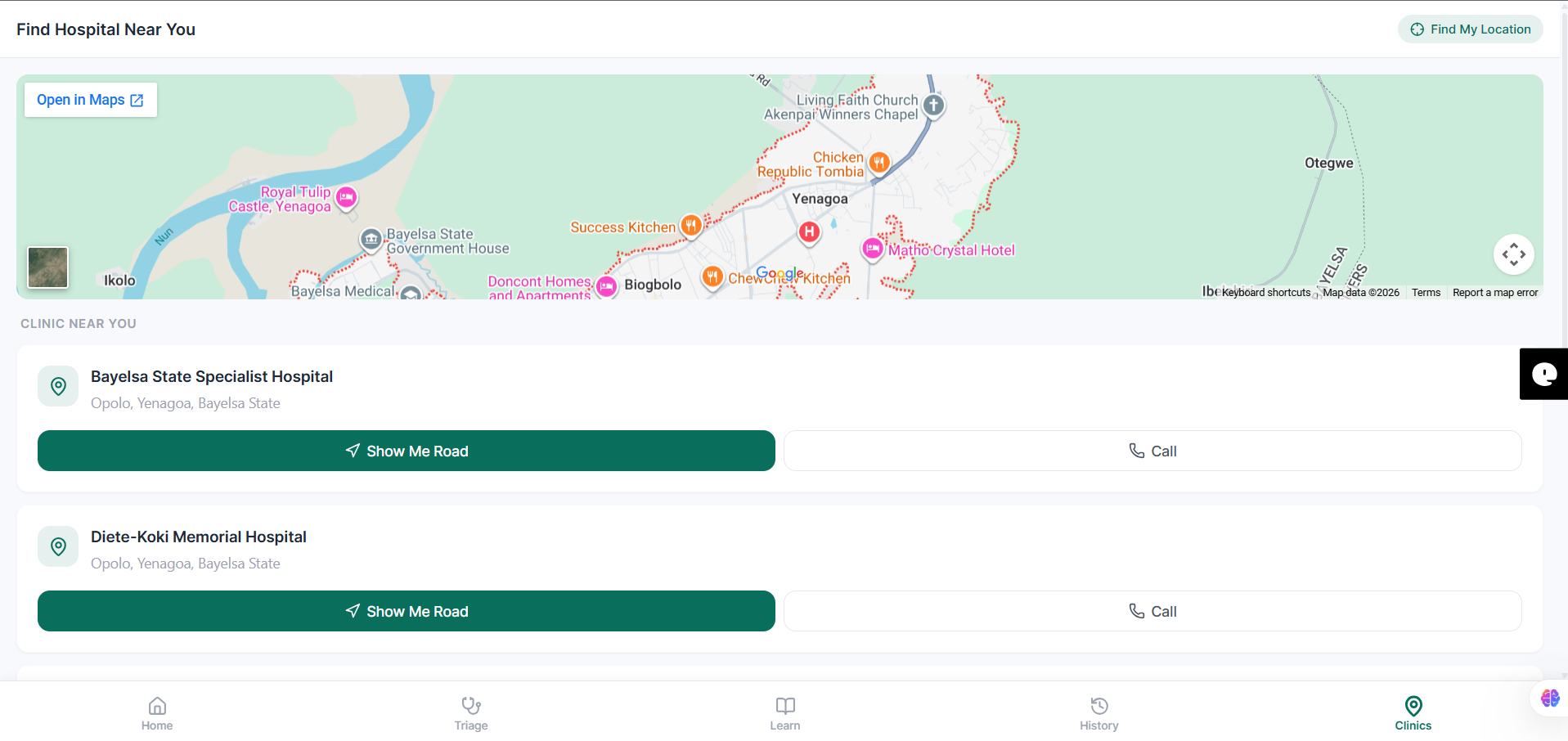
- Clinic Finder — shows real Yenagoa hospitals (Bayelsa State Specialist Hospital, Diete-Koki Memorial Hospital, Federal Medical Centre Yenagoa) with distances and one-tap Google Maps navigation
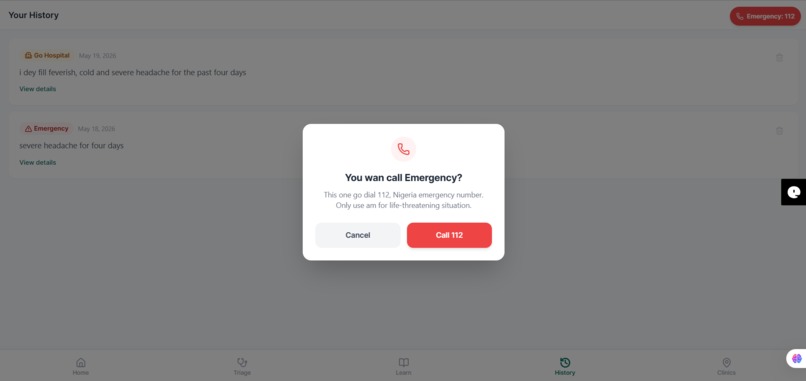
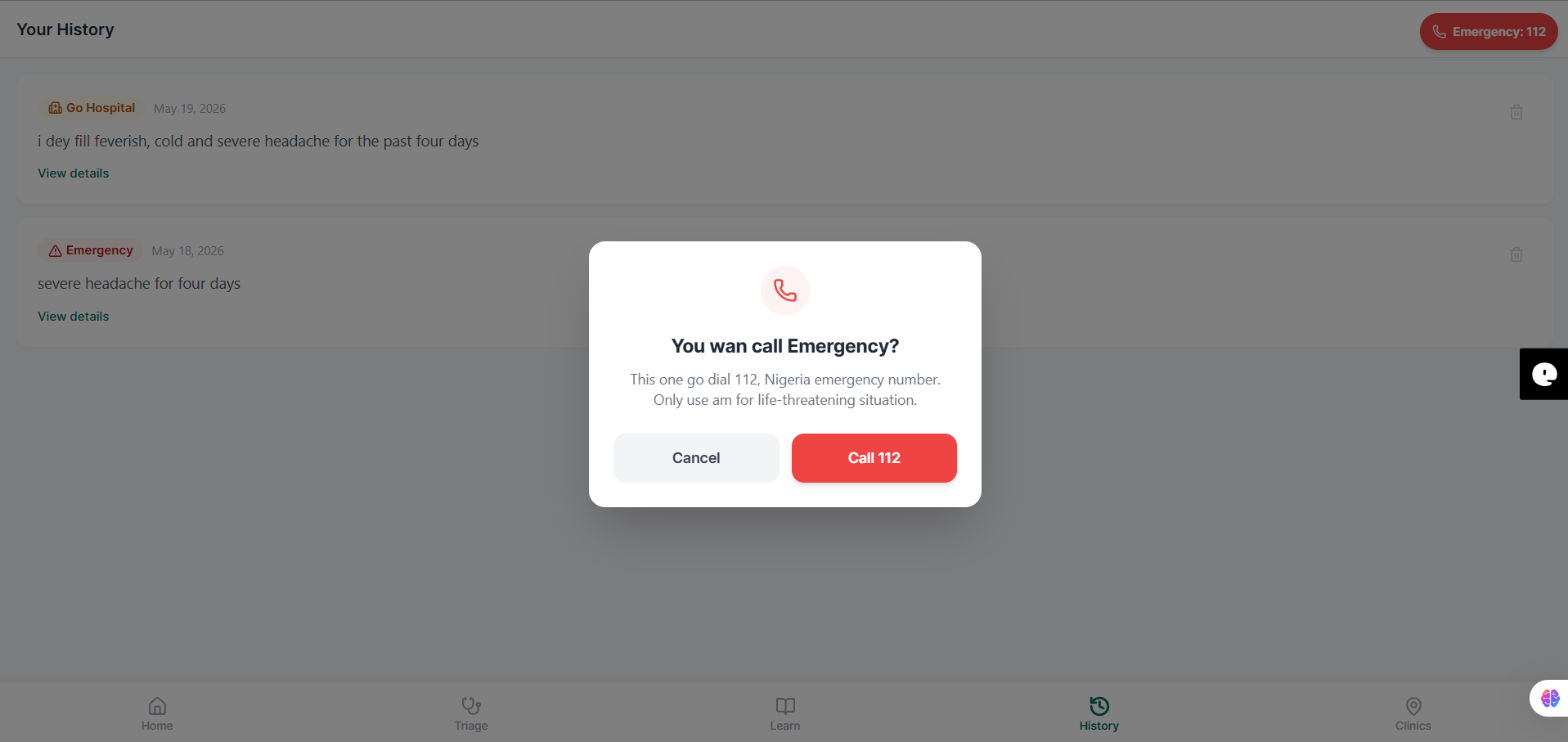
- Symptom History — every completed triage session is saved locally on the user's device with date, symptoms, Q&A, and result for sharing with a doctor
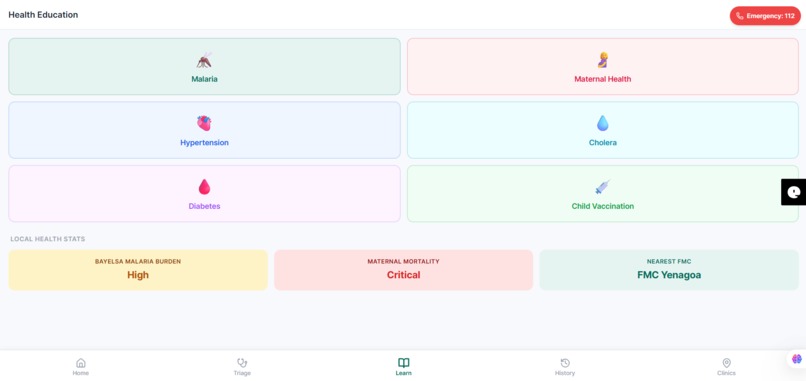
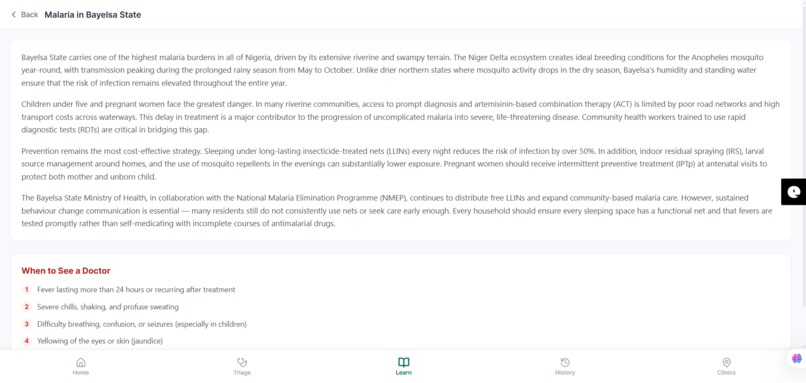
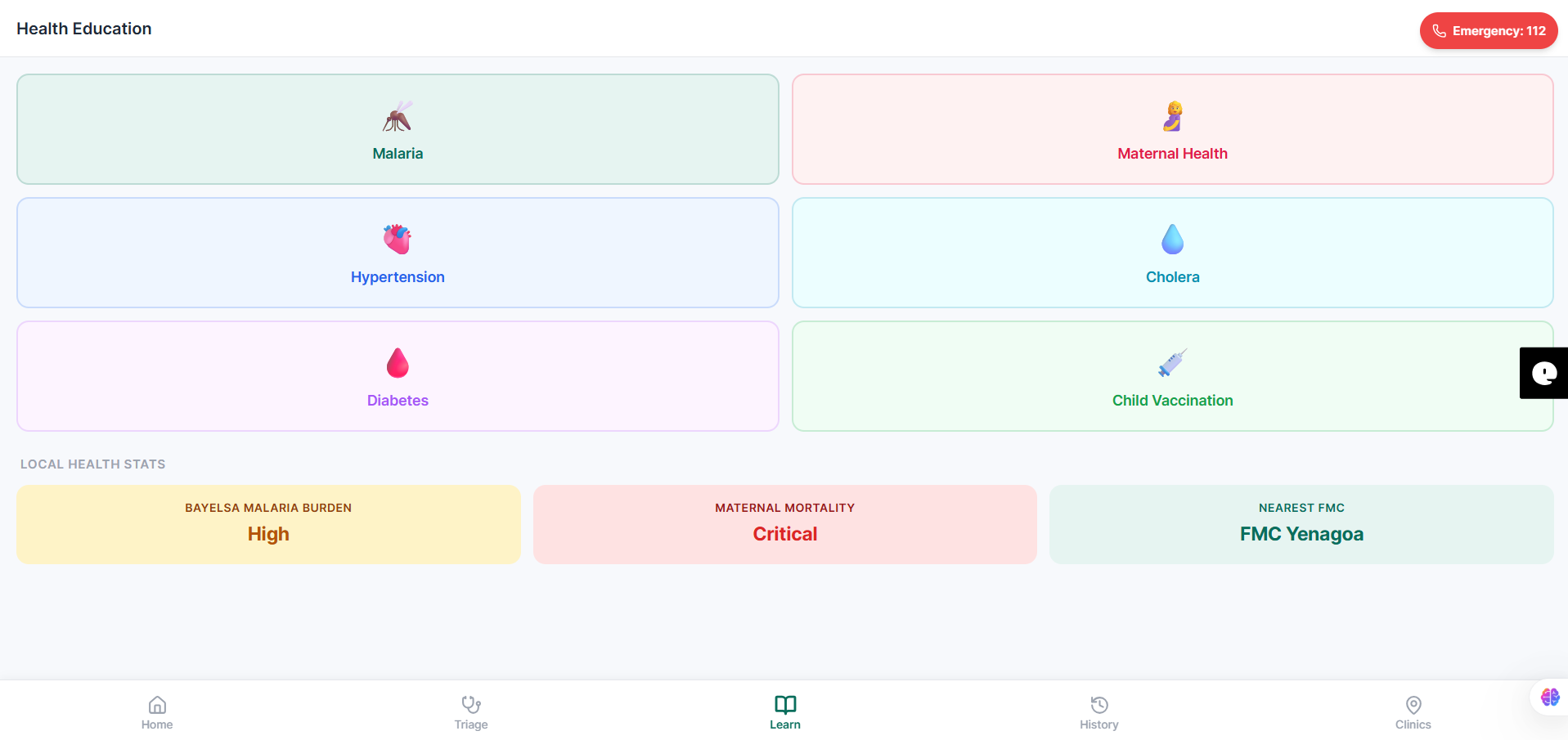
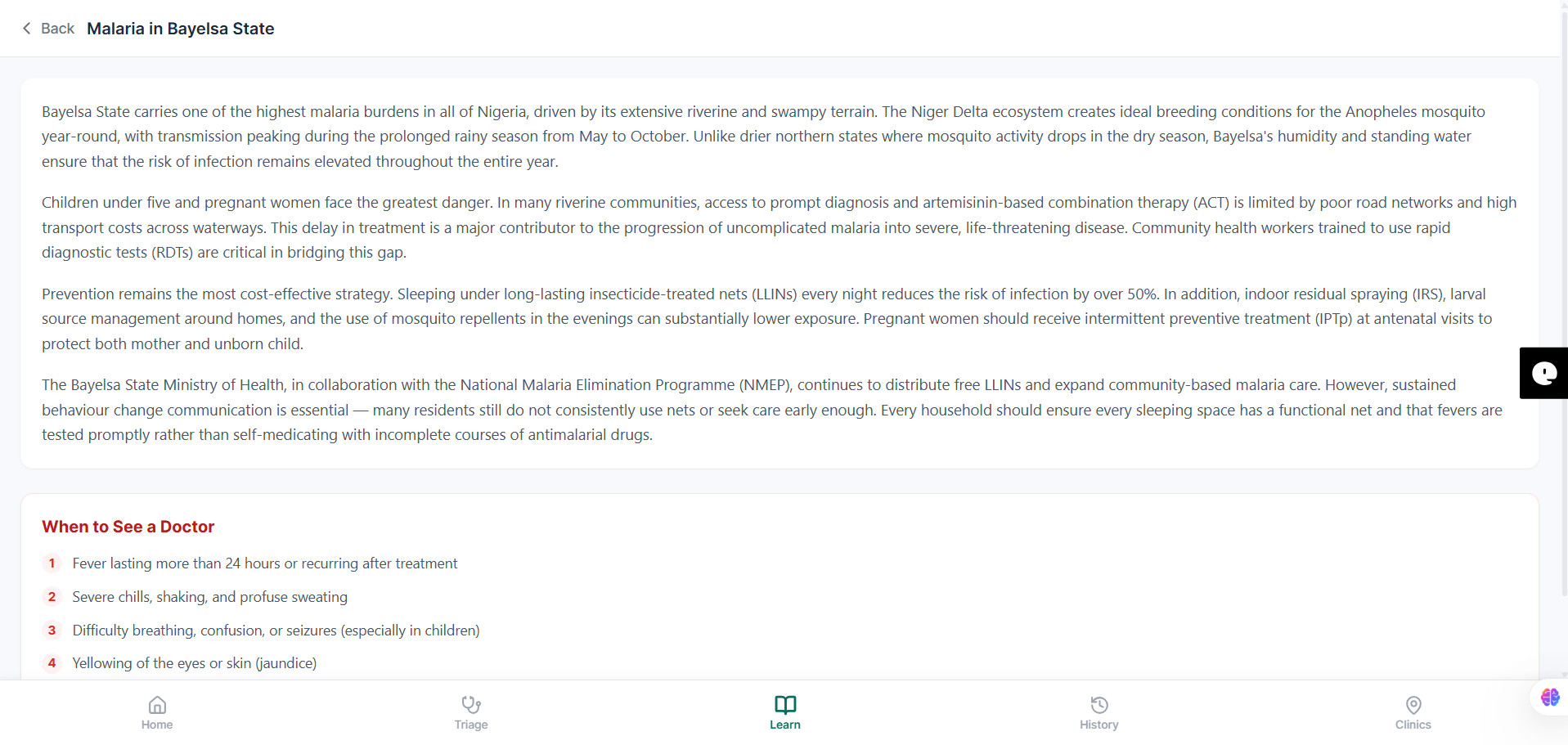
- Health Education hub — six topic cards covering Malaria, Maternal Health, Hypertension, Cholera, Diabetes, and Child Vaccination, all contextualised for Bayelsa State
- Local Health Stats — displays real Bayelsa health data: Malaria Burden (High), Maternal Mortality (Critical), Nearest FMC (FMC Yenagoa)
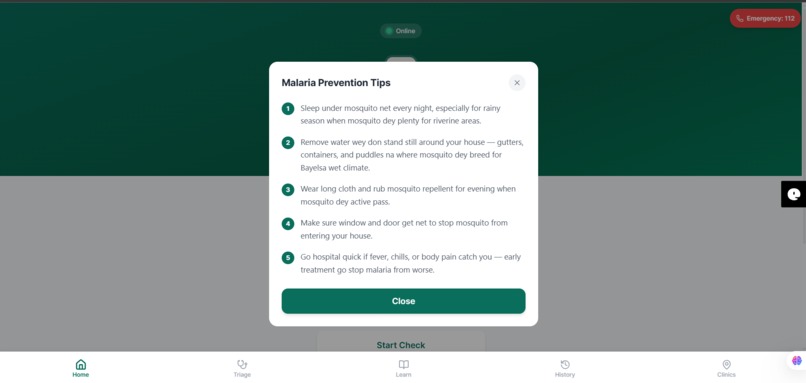
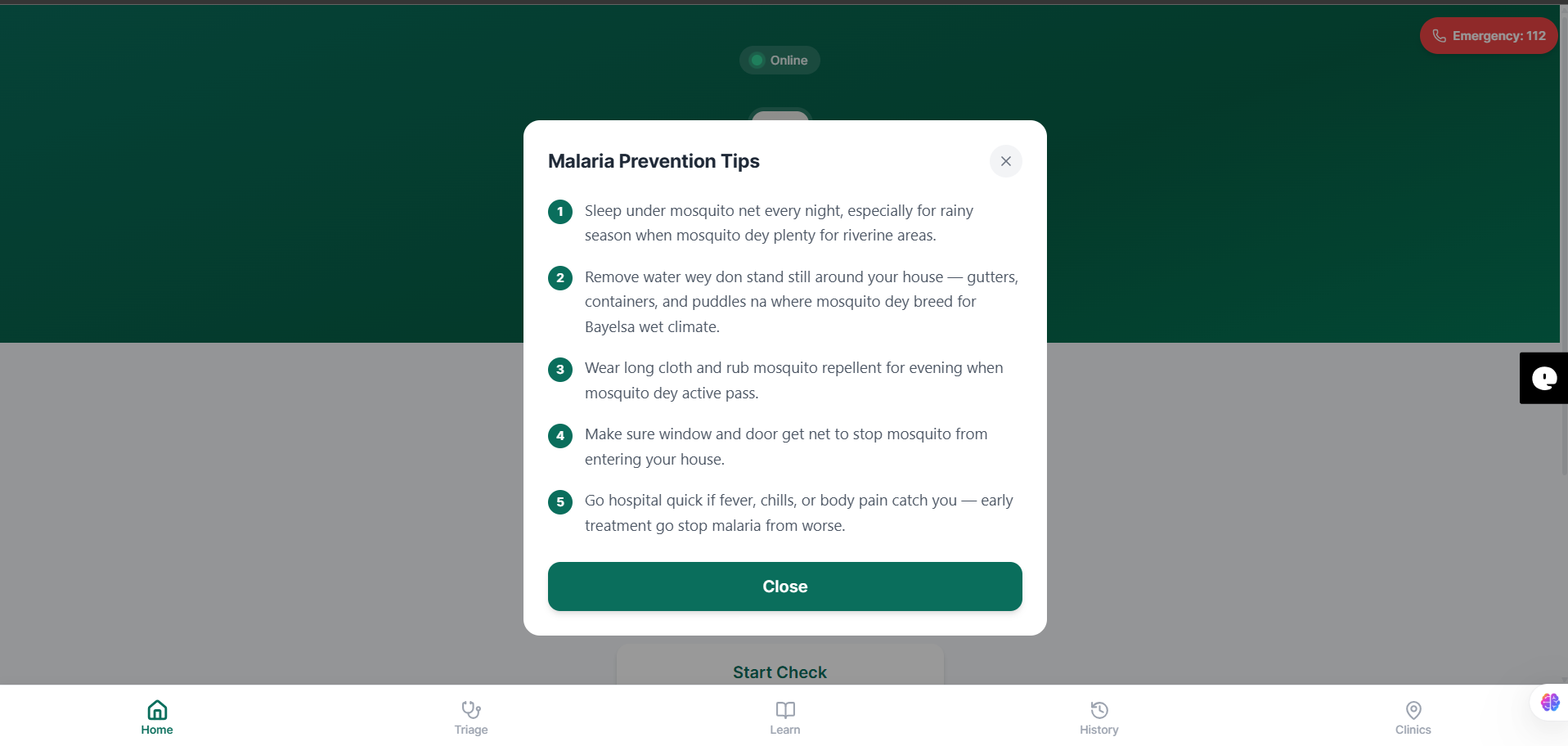
- Malaria Season Alert — contextual banner active May–October matching Bayelsa's rainy and flood season
- Auto-rotating Health Tips — five Bayelsa-specific health tips rotate automatically with dot indicators
- Emergency 112 button — persistent one-tap access to Nigeria's emergency line on every screen
- Voice Input — users can speak symptoms instead of typing, critical for low-literacy users in riverine communities
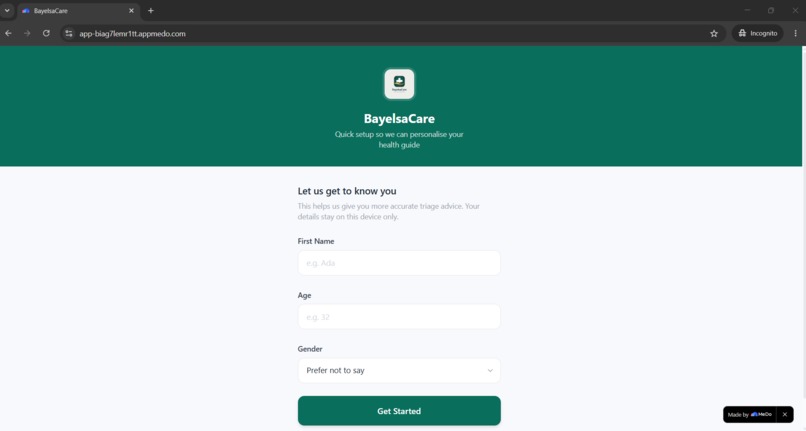
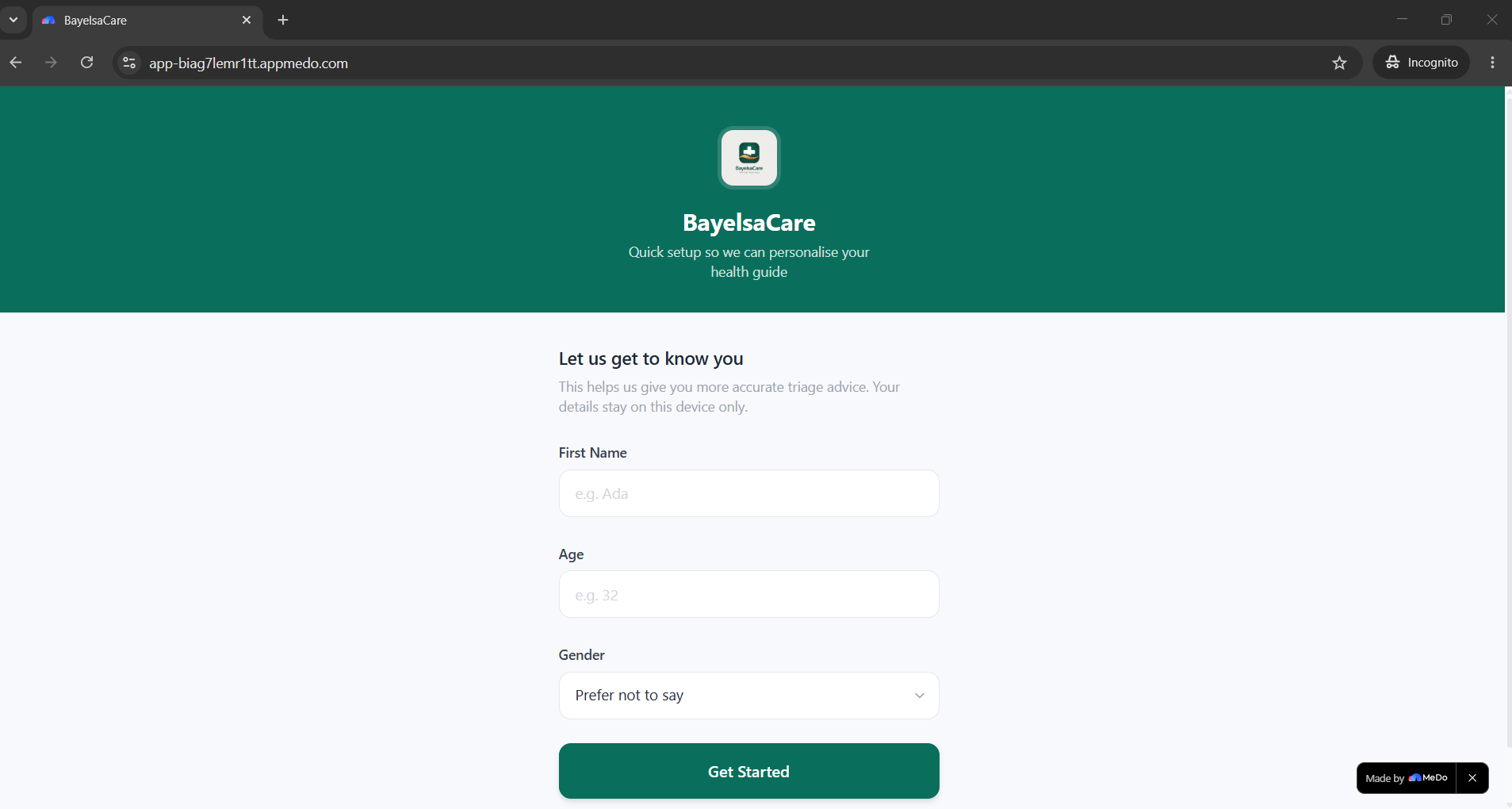
- First-time user setup — collects name, age, and gender on first launch to personalise the experience and improve triage accuracy
How I built it with MeDo
I built BayelsaCare entirely through natural language conversation with MeDo — no coding whatsoever. Every screen, every AI logic flow, and every integration was generated by MeDo from plain English descriptions.
How I structured conversations with MeDo: I started with a detailed requirements prompt describing all four core pages. I used MeDo's Deep Build mode for every major feature. I iterated through 12 versions, describing bugs and new features in plain language each time. For complex logic like the triage decision flow, I described the exact conditions: "if the user reports high fever plus headache plus lives in a malaria-endemic area, flag as urgent." MeDo turned that into a working multi-condition AI decision flow.
The most impressive feature MeDo helped create: The multi-turn triage conversation engine. I described the expected flow — collect symptoms, ask 2–3 follow-up questions one at a time, then and only then produce a triage result — purely in natural language. MeDo generated the complete conversational logic, state management, and result rendering. It correctly triaged a pregnant woman reporting constant cramping and dizziness as Emergency on the first test, without any manual coding from me.
The Pidgin language system was another standout — I told MeDo "add a toggle that switches the entire app interface and all AI responses to Nigerian Pidgin English" and it implemented a full language mode including Pidgin triage prompts, Pidgin follow-up questions, and Pidgin result explanations.
How I used plugins and API integrations
I integrated a Maps API and Google Maps to power the Clinic Finder. Tapping "Get Directions" on any clinic opens Google Maps with real turn-by-turn directions to that specific Yenagoa hospital. The page also uses the browser's Geolocation API to detect the user's position and sort clinics by distance. I integrated the Web Speech API for voice symptom input so users can speak rather than type. The embedded map on the Clinics page uses a Google Maps iframe centred on Yenagoa coordinates (4.9267° N, 6.2676° E).
Challenges I ran into
The biggest technical challenge was the Leaflet/OpenStreetMap library failing silently on the live published URL while working perfectly in MeDo preview. I resolved this by switching to a Google Maps iframe and direct Google Maps URL links for directions — more reliable across all environments. I also encountered a routing bug where navigating back from the Clinics page caused a blank screen until browser refresh. I fixed this by describing the expected remounting behaviour to MeDo precisely.
Getting the triage AI to ask follow-up questions before producing a result — rather than jumping to a conclusion after the first message — required careful prompt engineering in my MeDo conversations.
Accomplishments I'm proud of
- The app correctly triaged a pregnant woman's symptoms (constant cramping + dizziness at 5 months) as Emergency on the first live test
- Full Nigerian Pidgin mode — "i dey get headache, i dey fill cold and my body dey shake" — something no other submission in this hackathon has
- Real named hospitals in Yenagoa with working Google Maps navigation — not generic pins
- Built a production-quality, fully functional health app in under 48 hours using only MeDo and natural language
- The auto-rotating health tips carousel covers Malaria, Maternal Health, Cholera, Clean Water, and Emergency signs — all specific to Bayelsa's documented disease burden
What I learned
MeDo's power is in precision. The more specifically I described what I wanted — including exact UI behaviour, error states, fallback messages, and logic conditions — the better the output. I also learned that hyper-local context is what separates a meaningful app from a generic one. Naming Yenagoa's real rivers, real hospitals, real disease seasons, and real communities gave BayelsaCare a story and purpose that a template app cannot replicate.
What's next for BayelsaCare
- Add Ijaw and Itsekiri language support for deeper local reach
- Partner with Bayelsa State Ministry of Health to verify and expand the clinic database to all 8 LGAs
- Add a Maternal Health Tracker specifically for pregnant women in riverine communities
- Integrate real-time flood alerts from NIHSA (Nigeria Hydrological Services Agency) during rainy season
- Offline mode so the app works without internet in remote waterway communities
Built With
- geolocation-api
- google-maps
- google-maps-iframe
- localstorage
- medo
- nigerian-pidgin-nlp
- openstreetmap
- web-speech-api

Log in or sign up for Devpost to join the conversation.