-
-

The Logo
-
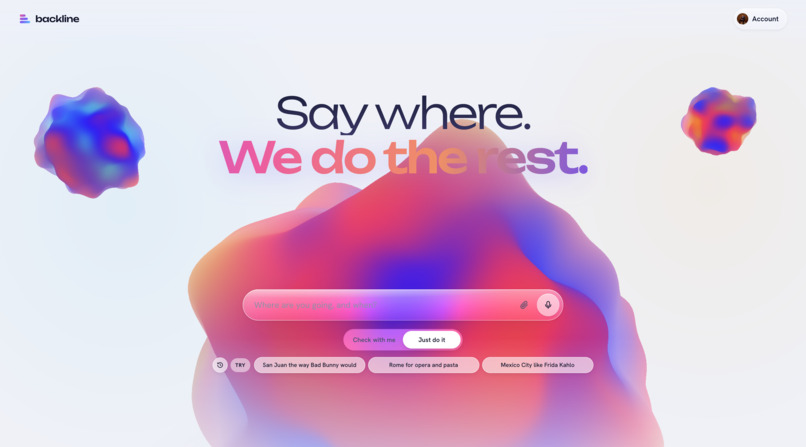
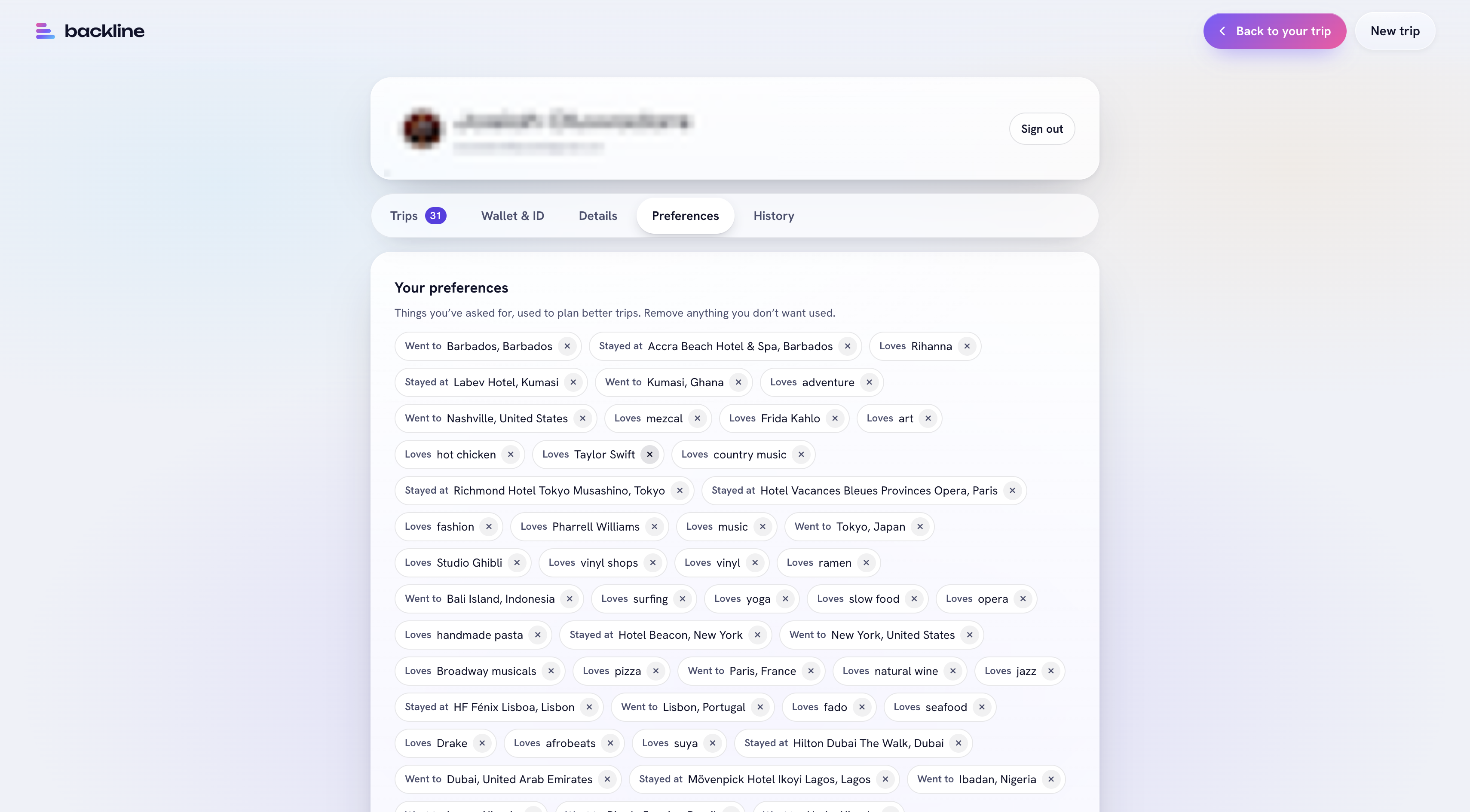
The webpage
-
-
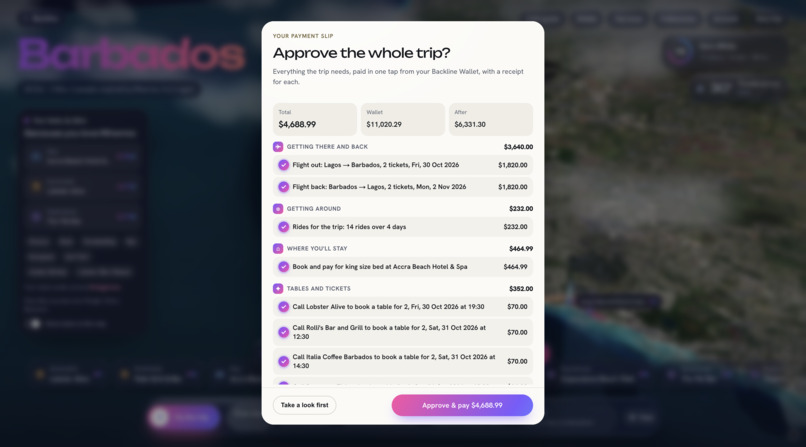
PAYMENT APPROVAL
-
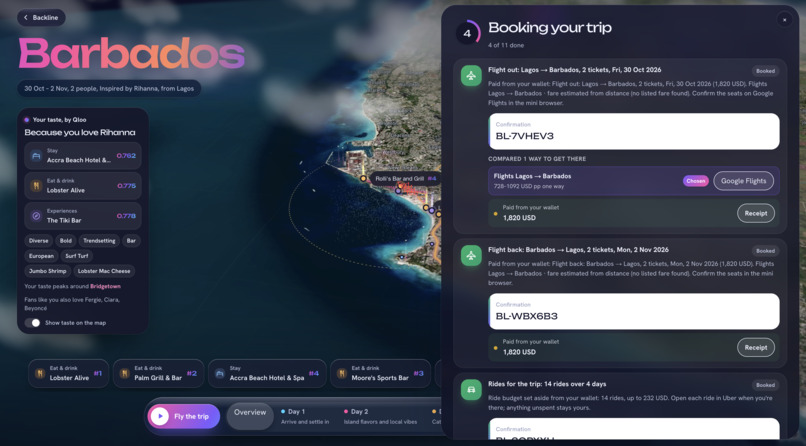
BOOKING
-
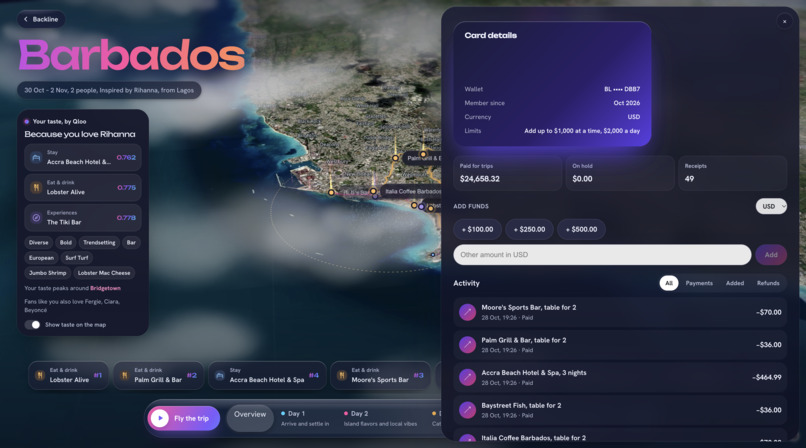
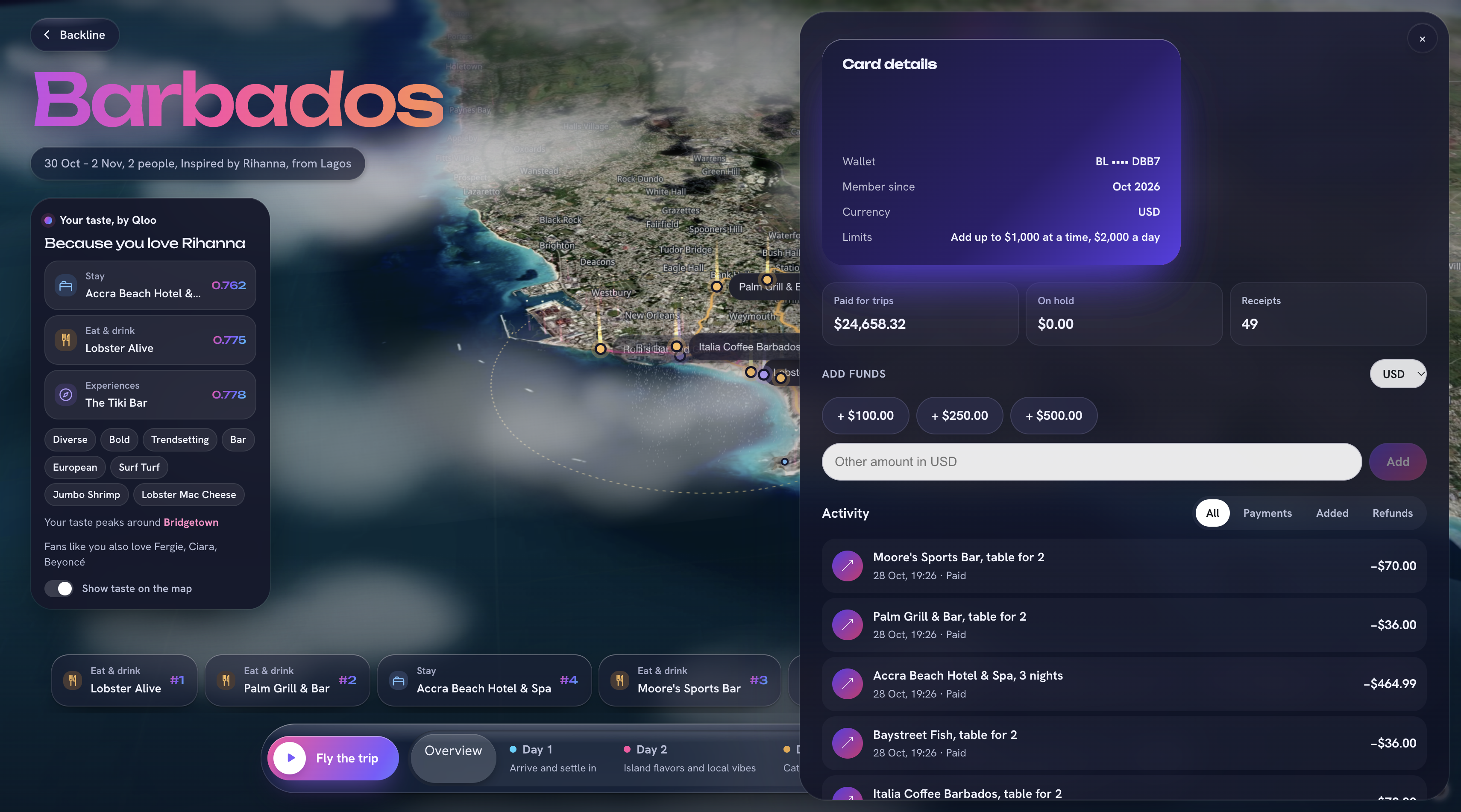
WALLET
-
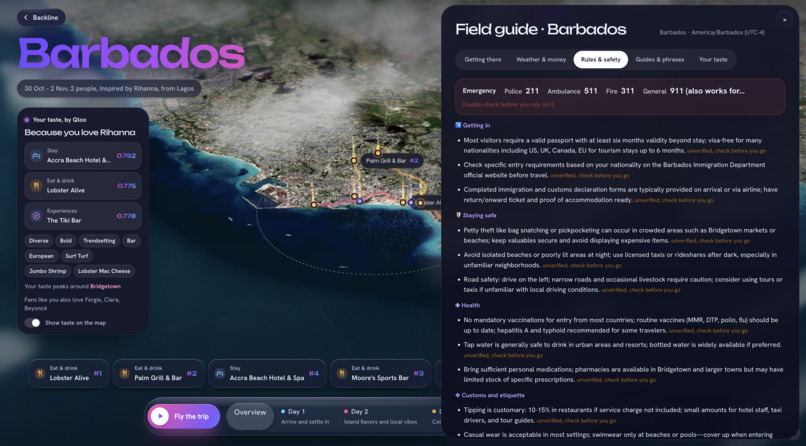
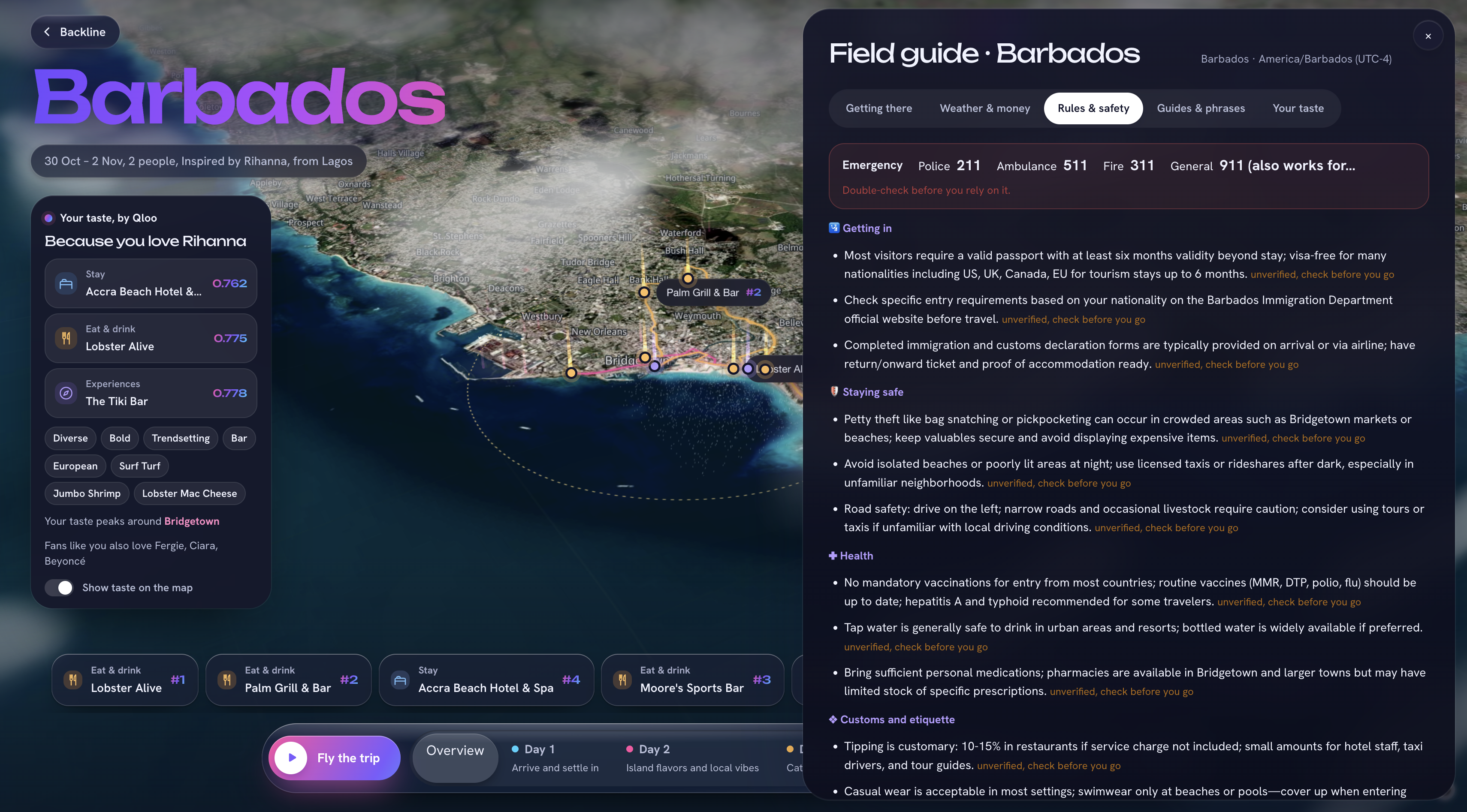
FIELD GUIDE
-
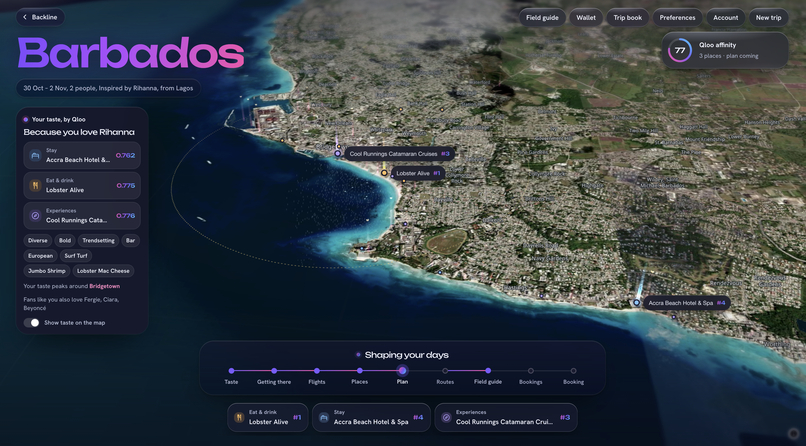
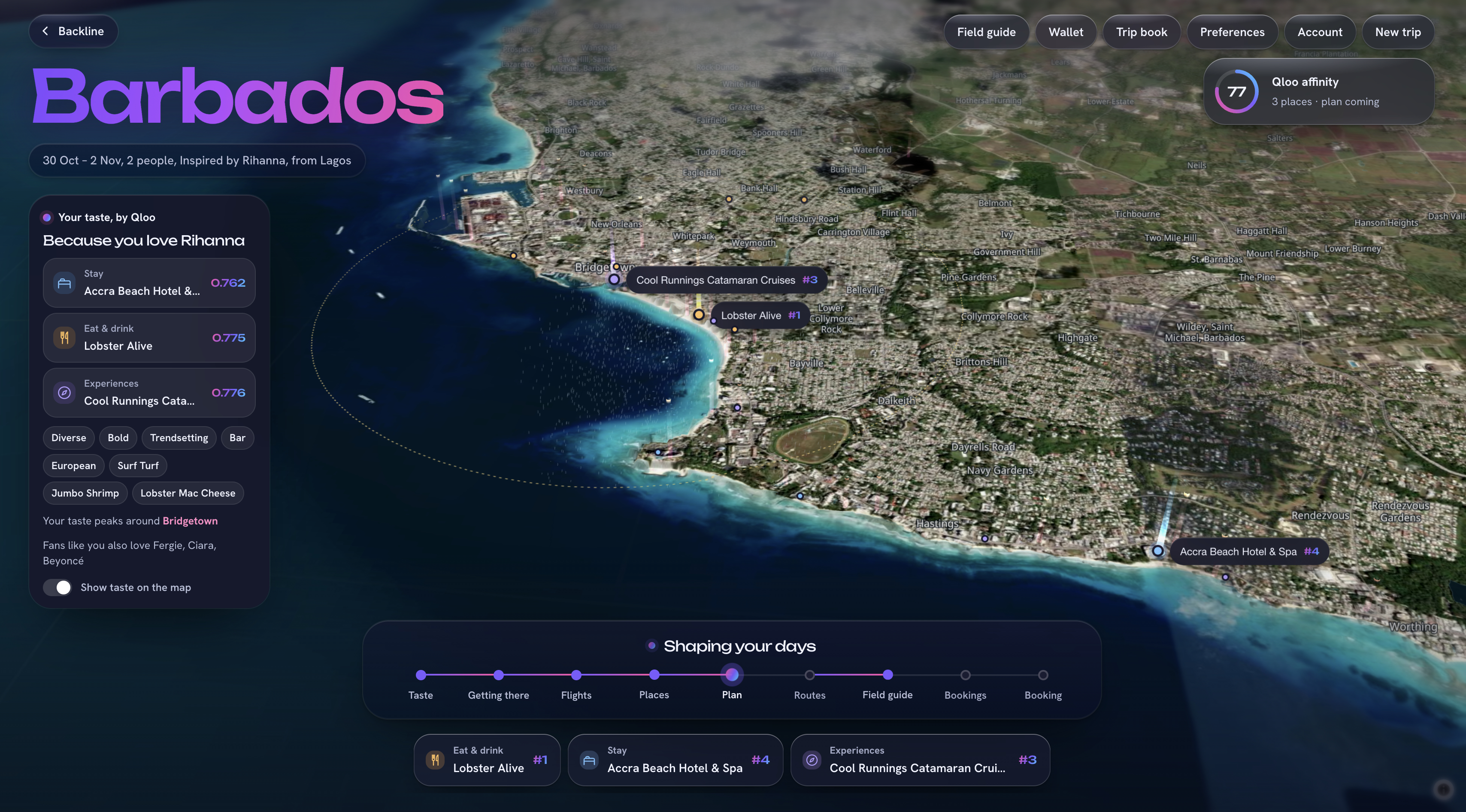
PLANNING
-
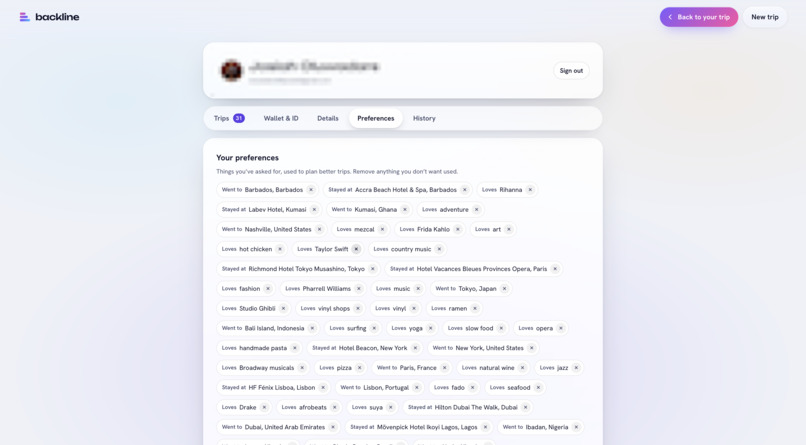
-
-
-
-

Inspiration
Travel planning is still surprisingly manual. You jump between websites to compare flights, hotels, restaurants and activities, piece together an itinerary, and then spend more time making the bookings yourself. Most AI travel planners recommend places but leave you to do the actual work.
I wanted to build something different: a personal AI travel agent that understands your taste, discovers experiences you might never have found yourself, and handles the work of turning a plan into a real trip.
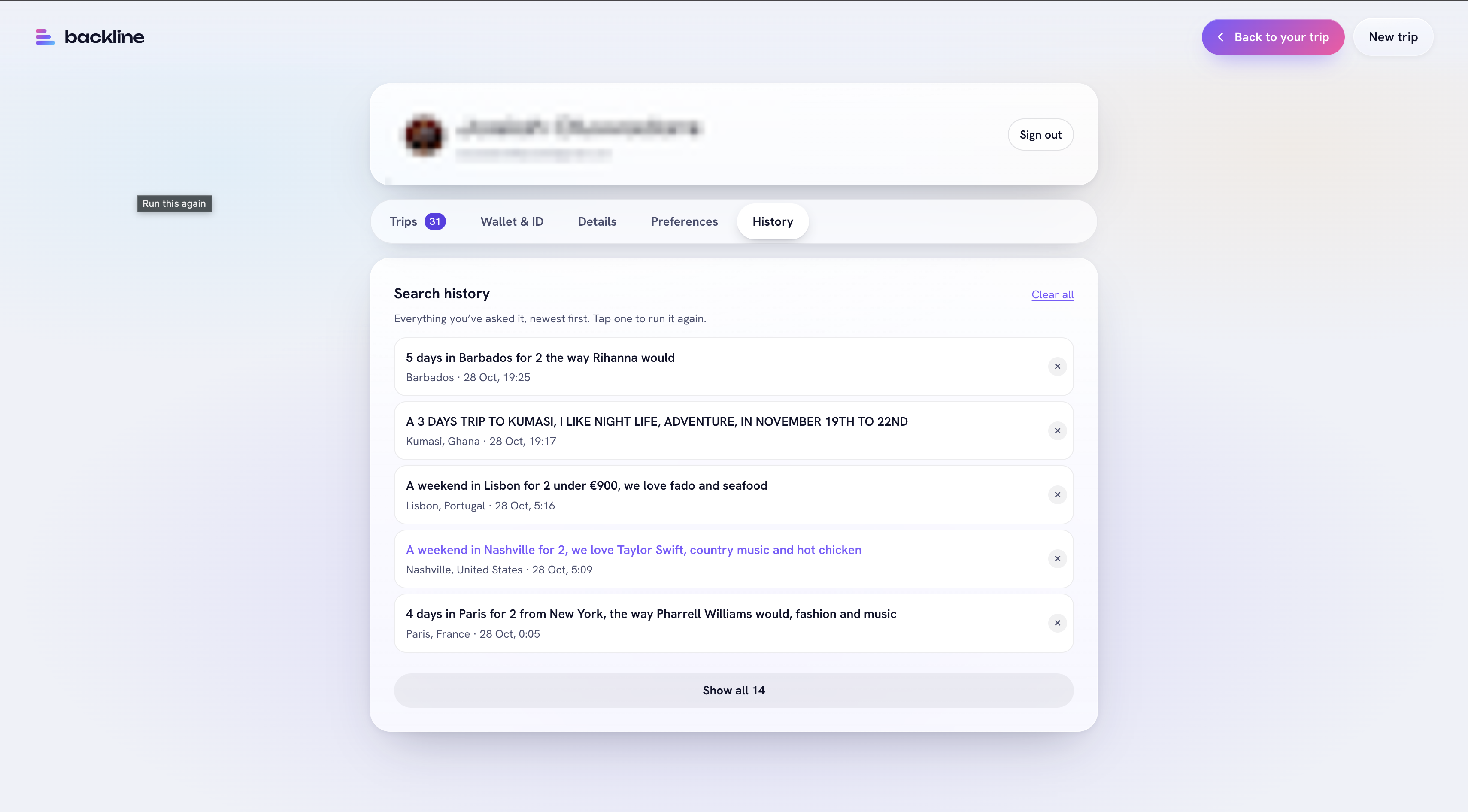
With Qloo, you can describe a trip through the tastes and interests of someone you admire. For example, “Four days in Paris, the way Pharrell Williams would do it, with a focus on fashion and music.” Backline uses taste intelligence to discover places and experiences aligned with that direction, rather than returning another generic tourist itinerary.
I initially built a group trip planner, but realised I wanted to tackle a bigger problem: an agent that doesn't stop at planning. I wanted it to work towards booking the trip, too.
What it does
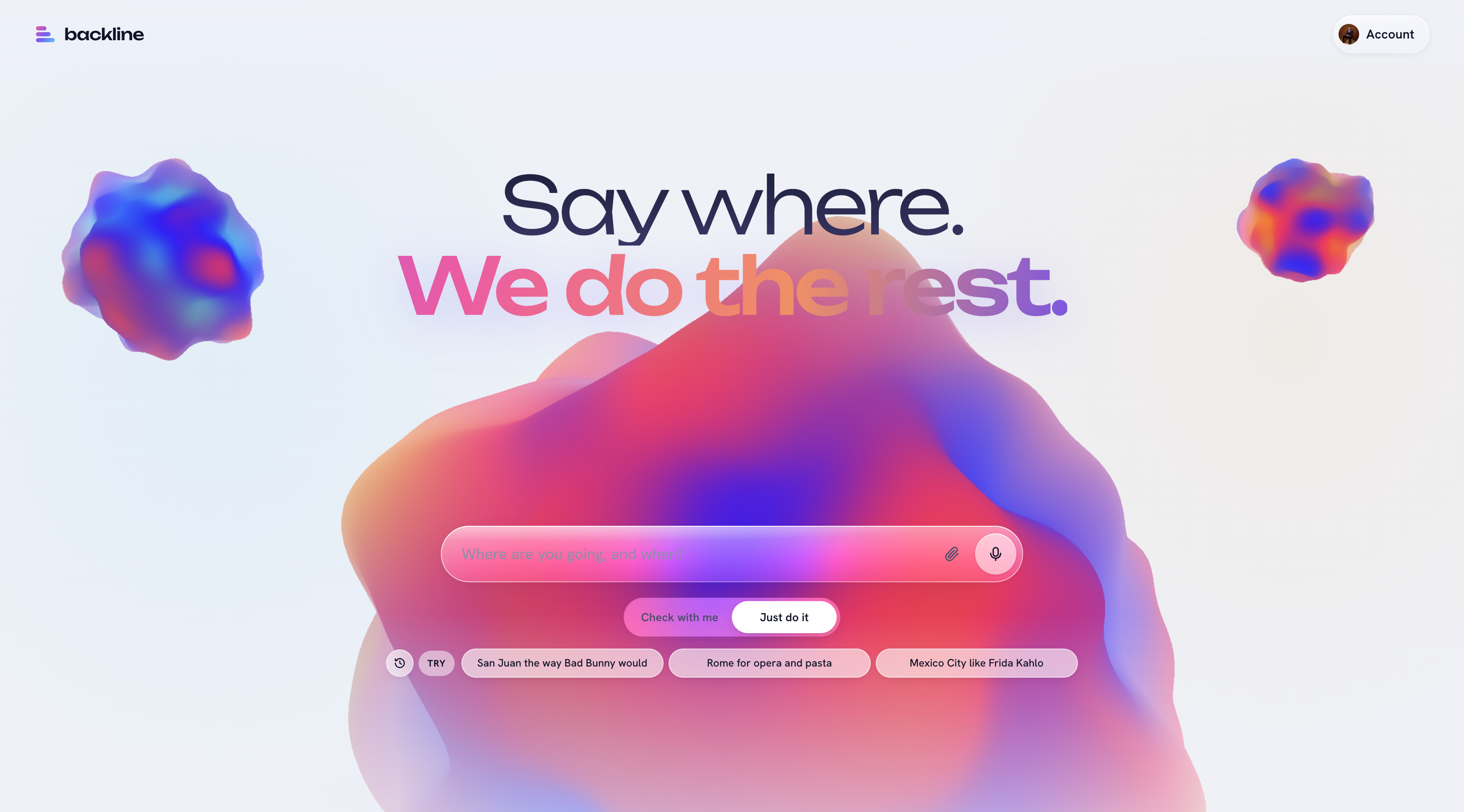
Backline turns a simple travel request into a personalised itinerary and a coordinated booking workflow.
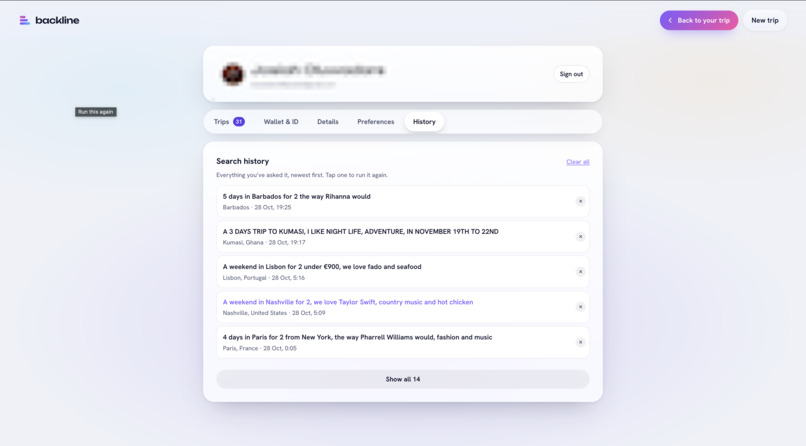
You can type or speak a request such as “Four days in Paris for two, the way Pharrell Williams would do it, with a focus on fashion and music.”
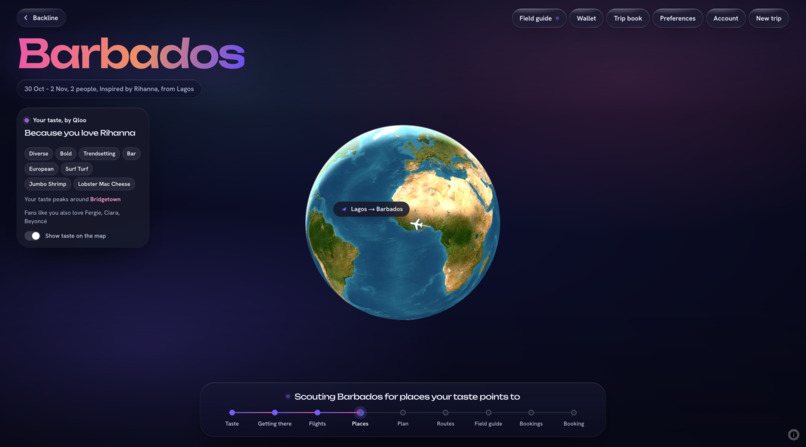
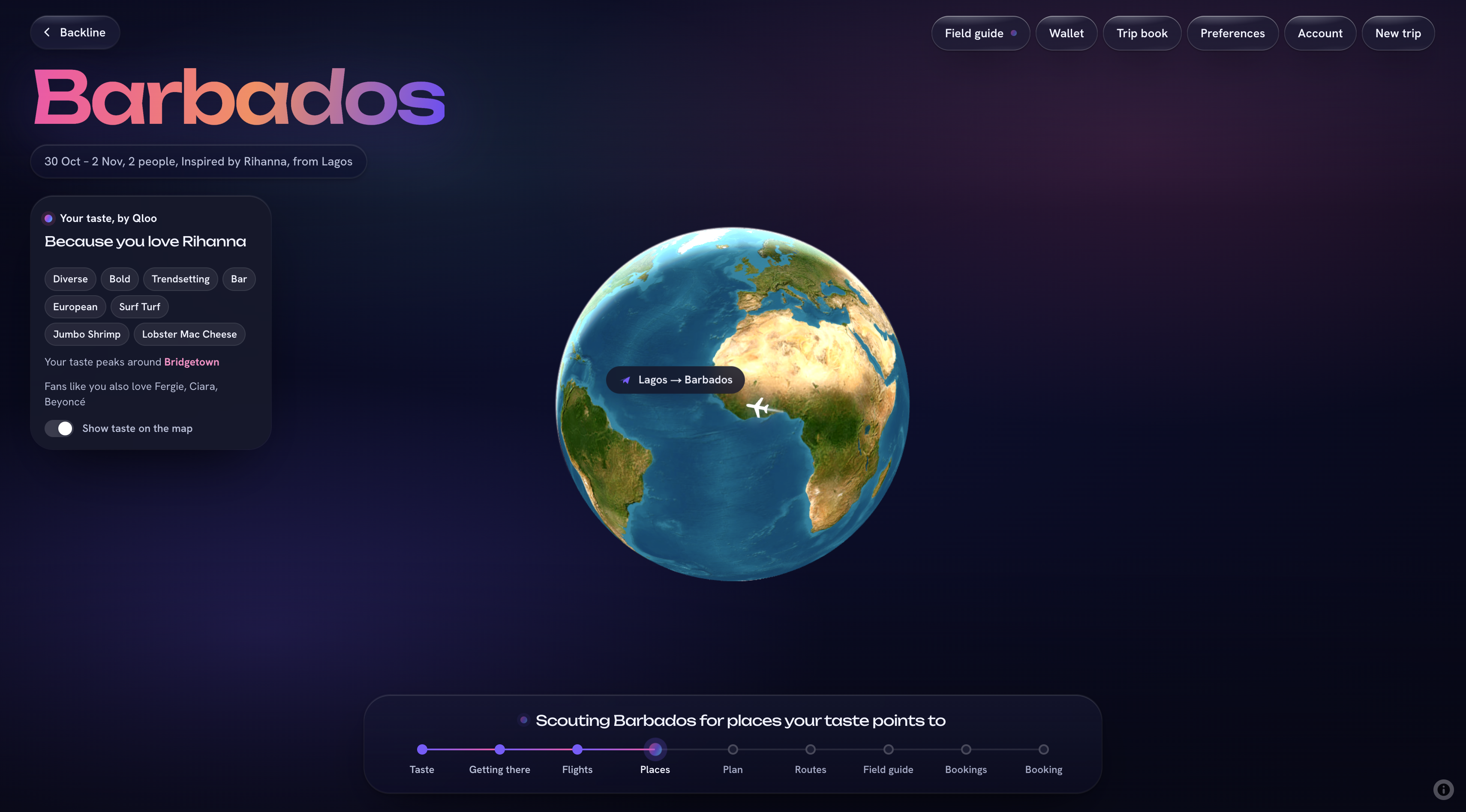
Backline interprets your request and uses Qloo's search, insights, tags and heatmaps to inform recommendations for neighbourhoods, hotels, restaurants and venues. Selected options can display their Qloo scores, helping users understand why they were recommended.
It researches practical travel information, including flight options, hotel rates, weather, public holidays and exchange rates. It then builds an hour-by-hour itinerary that users can explore through an interactive 3D globe with real-world locations and routes.
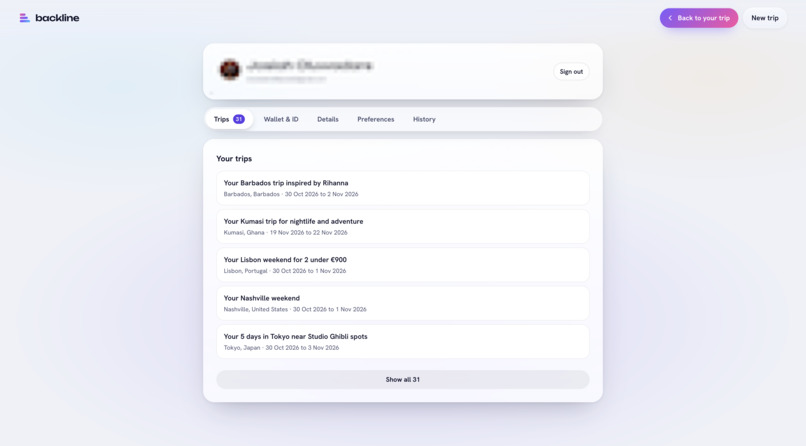
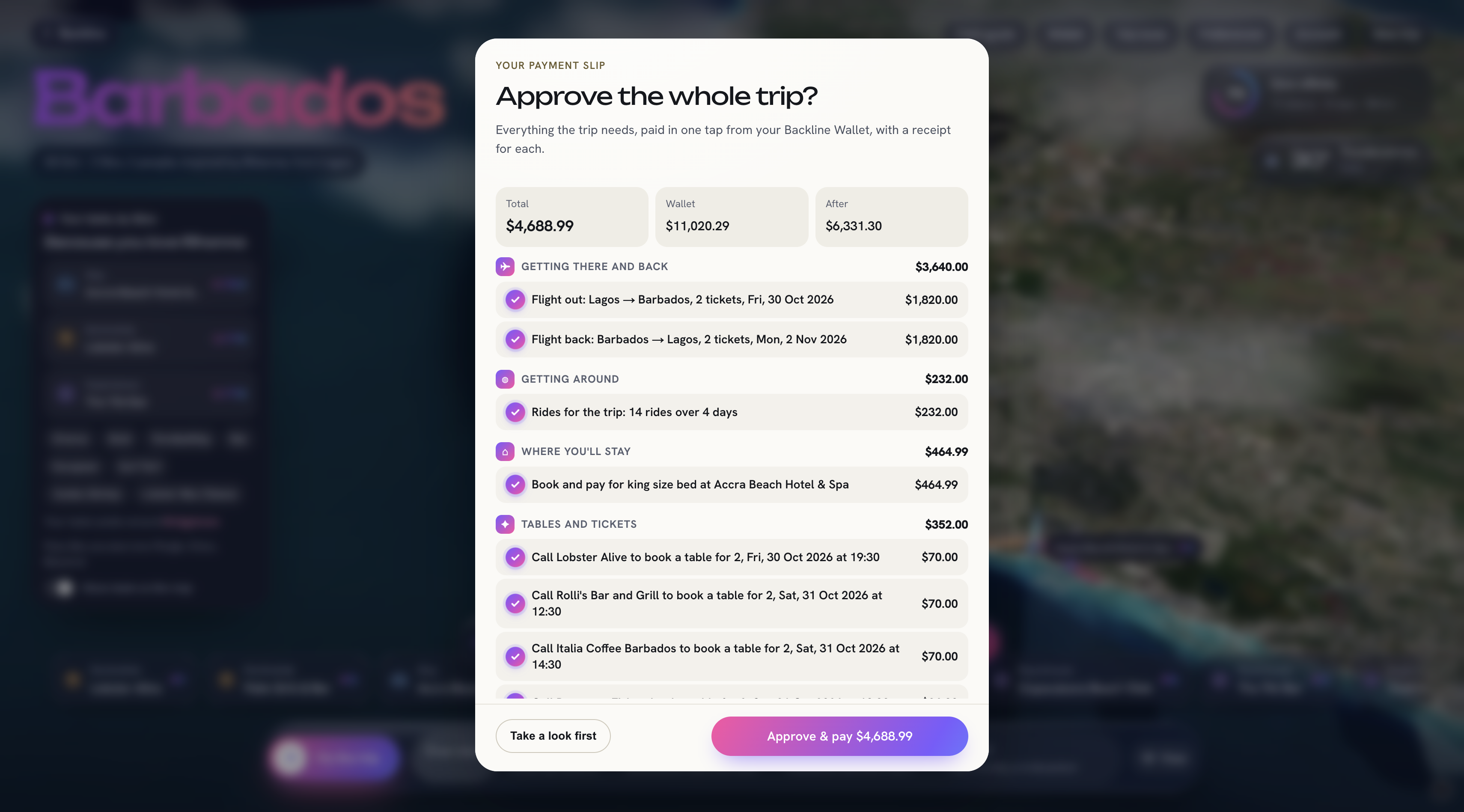
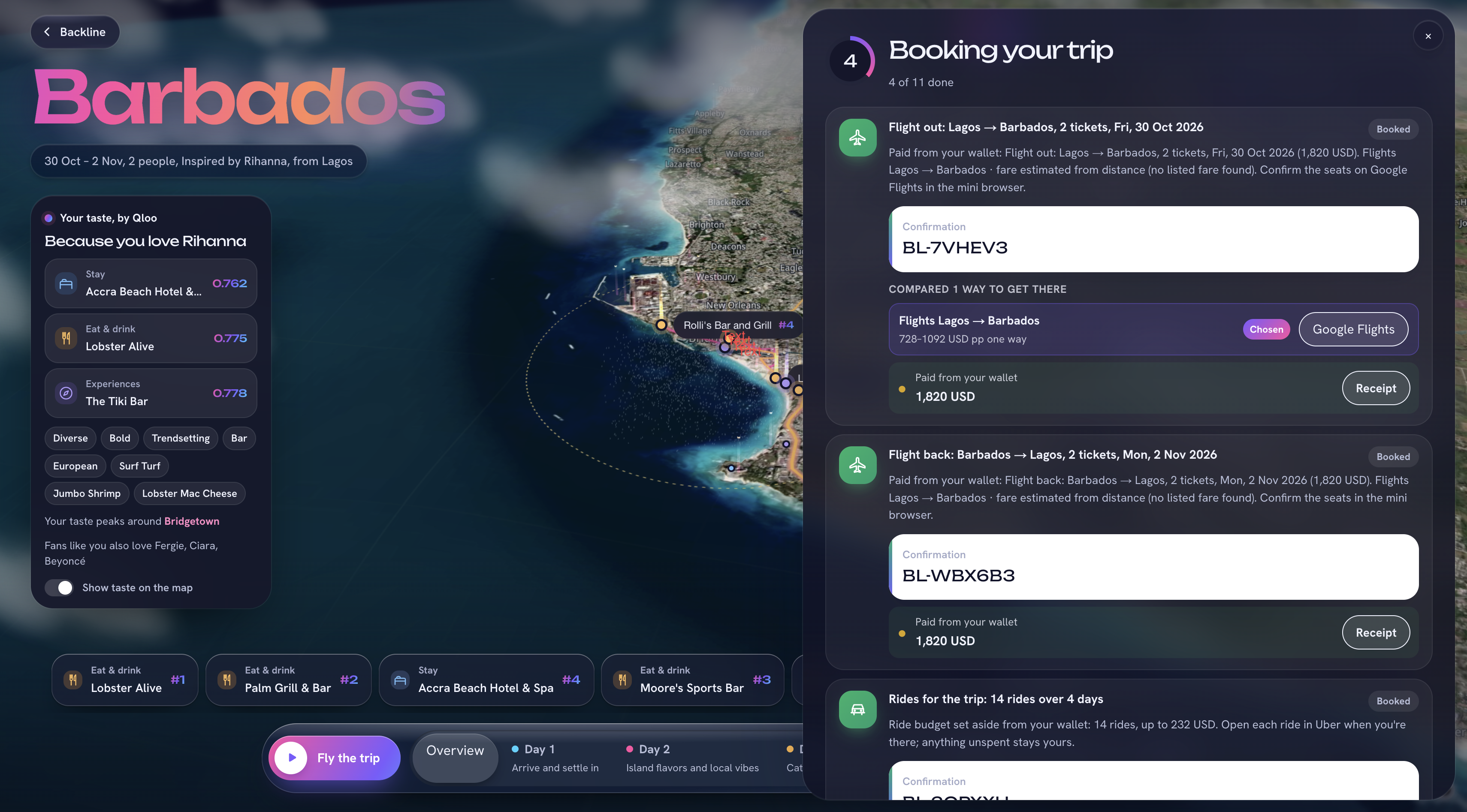
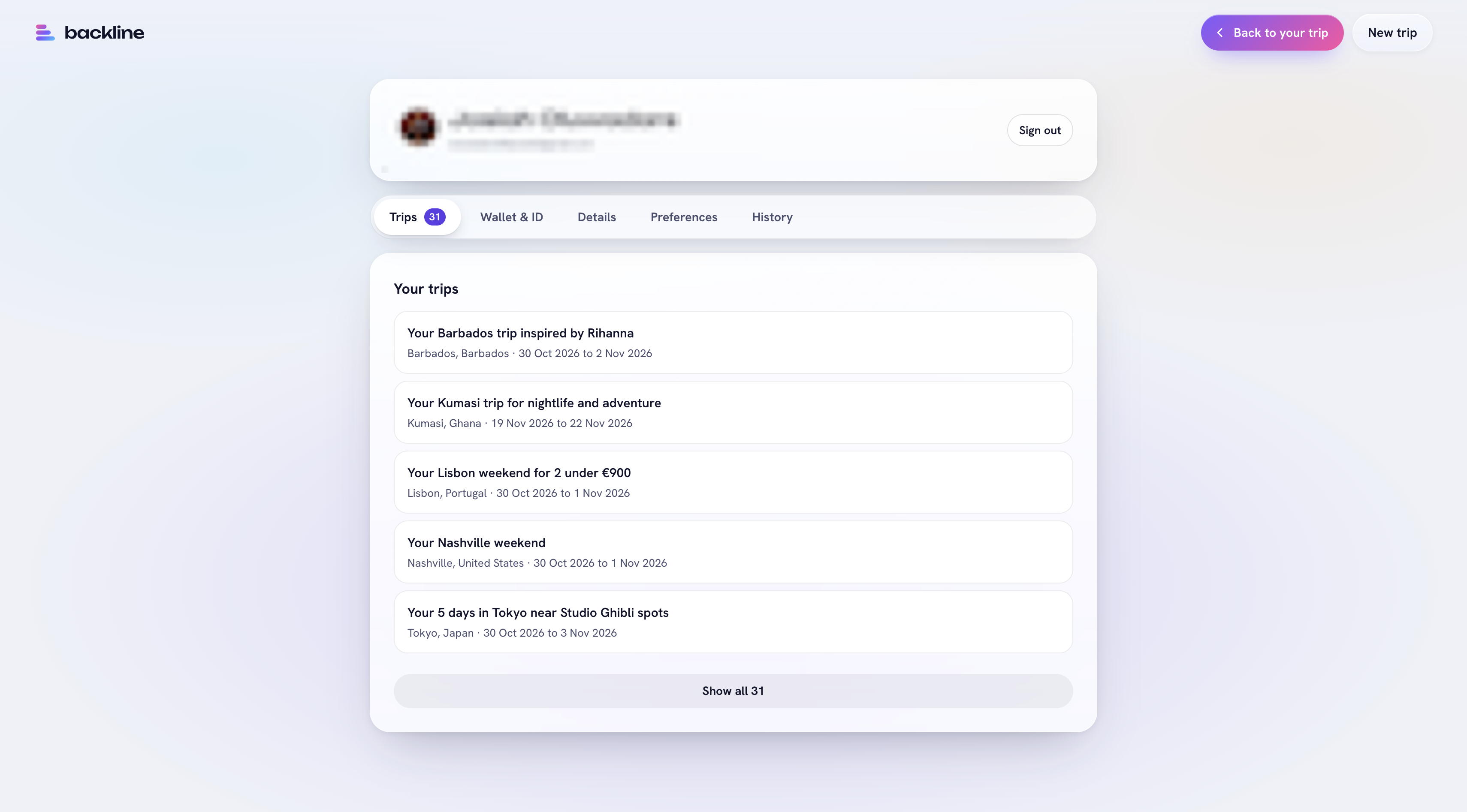
When the itinerary is ready, Backline coordinates the booking workflow for flights, accommodation, airport transfers and restaurant reservations through available integrations. Users can follow AI phone calls, track transaction states, and review receipts and refunds.
The goal is to bring discovery, planning and execution into one experience, so travellers spend less time coordinating their trips and more time experiencing them.
How we built it
Backline is built with Next.js, React and TypeScript, deployed on Vercel, with Supabase and PostgreSQL for authentication, accounts and application data.
Rather than treating the agent as one large prompt, I built a sequence of typed steps that pass structured results between stages: understanding the request, interpreting taste, researching options, planning the itinerary and coordinating bookings.
Qloo powers taste-based discovery. Nemotron on Nebius handles request understanding and planning, Claude supports web research with sources, and Groq Whisper handles voice input.
Vapi and Telnyx power AI phone calls. LiteAPI provides hotel booking integration in sandbox mode, Duffel provides flight integration in test mode, and Resend handles email delivery.
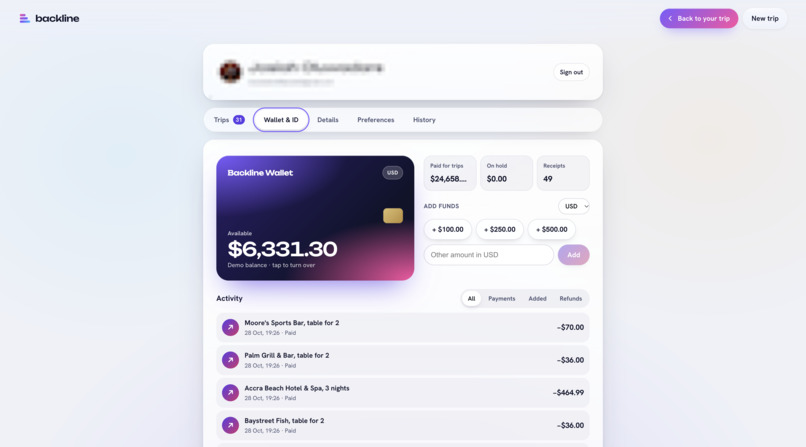
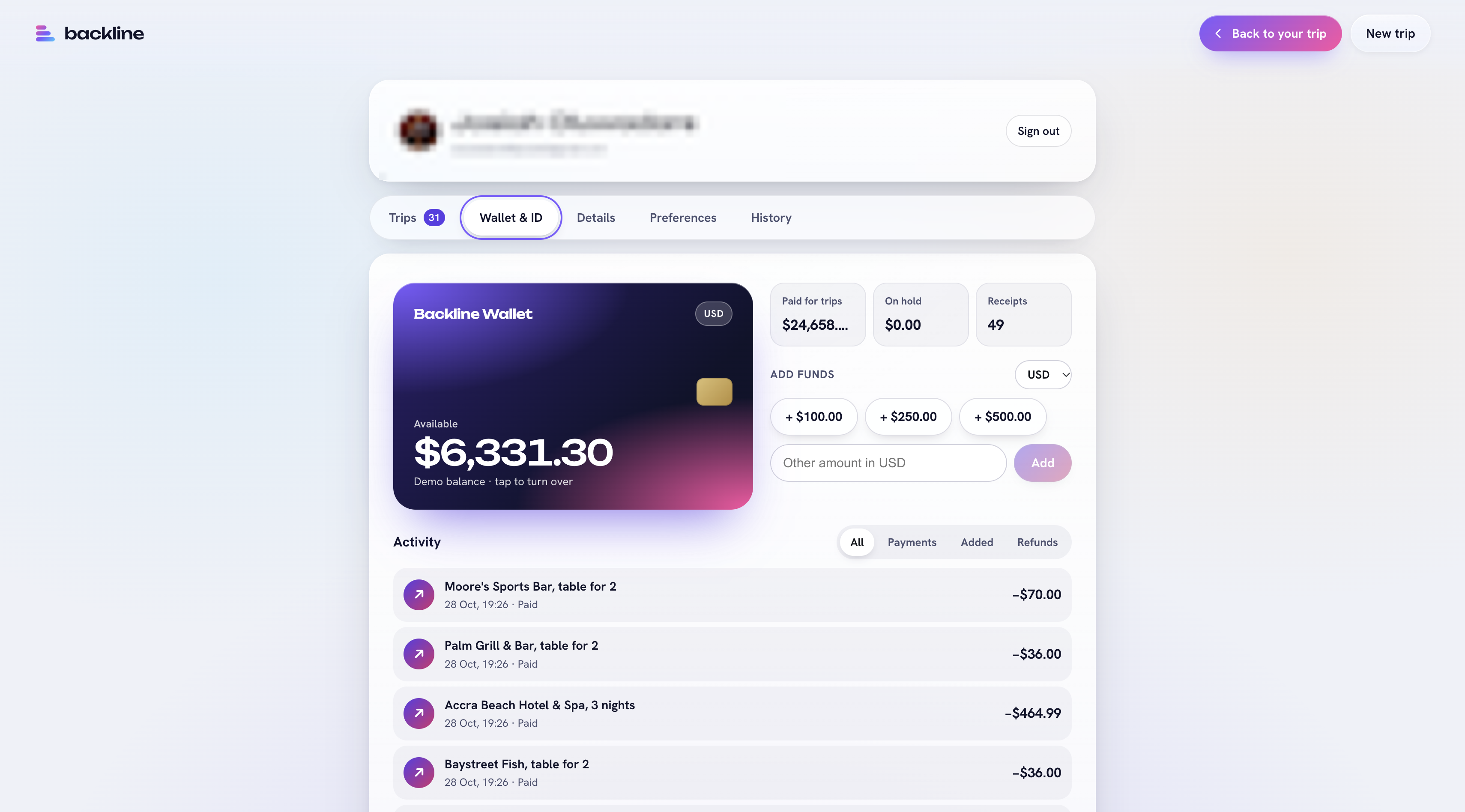
I also built a PostgreSQL wallet ledger to manage demo balances, payment holds, transaction records, refunds and receipts. This supports the transaction workflow without requiring judges to spend real money.
For the visual experience, I used MapLibre and satellite imagery for mapping, with a Three.js layer sharing the map camera to create an interactive 3D globe.
Challenges we ran into
The hardest part was connecting recommendations to a transaction workflow. Producing an itinerary is one thing; coordinating multiple providers, tracking booking states, handling failures and accounting for refunds is another.
Payments were a major obstacle. Stripe would not onboard my Nigerian business, so I built an internal wallet ledger and a demo balance to let judges explore the transaction flow without real-money payments. Integrating an appropriate licensed payment provider remains a priority for enabling live transactions.
Voice calling presented another challenge. I integrated Telnyx to support outbound calls, but I didn't want a demo unexpectedly calling a real restaurant. By default, the demo directs calls to the user's own phone, allowing the calling experience to be tested safely.
I also had to adapt to changing services and infrastructure during development. When my Gemini quota ran out, I moved research to Claude. Changes in transport availability required a more flexible approach to pricing across markets.
Finally, AI models sometimes generated prices without reliable evidence. I introduced a rule: every price needs a source, or it must be explicitly identified as an estimate.
Accomplishments that we're proud of
I'm proud of building a connected workflow that brings together taste-based discovery, sourced research, itinerary generation, 3D exploration, booking orchestration and AI phone calls.
Qloo isn't just an extra integration. Its taste signals influence actual recommendations, including neighbourhood selection and hotel choices when a preferred option is unavailable.
I'm also proud of building the supporting transaction logic, including holds, refunds and receipts, rather than stopping at the itinerary. The prototype accounts for the return journey, too, helping create a more complete picture of the trip.
Most importantly, I pushed Backline beyond a conventional AI chatbot towards an agent that coordinates multiple tools and actions toward a concrete outcome.
What we learned
I learned that people need more than impressive AI output to trust an agent. They need to understand why it recommends something, where its information came from, what actions it has taken and what happened when something failed.
Showing Qloo scores, research sources, call activity and transaction records made the product more transparent. I also learned that getting an API to return a result is very different from building a reliable product someone would trust with a purchase.
Failure handling, accurate pricing, transaction integrity and clear communication are not secondary features. They are fundamental to building an agent that can act on someone's behalf.
What's next for Backline
The next step is integrating an appropriate licensed payment provider and completing the live booking workflow, including reliable confirmations, cancellations and refunds.
I want Backline to serve travellers worldwide, adapting to their departure locations, destinations, tastes, budgets and the services available in each market.
Beyond individual trips, I'm exploring group travel, where Backline combines different people's preferences into one coherent experience. I also see opportunities beyond traditional travel, including concerts, events and nights out that people can discover and book through the same agent.
The long-term vision is to build a personal AI agent for experiencing the world. Tell Backline what kind of experience you want, and it works out where to go, what to do and how to make it happen.
Built With
- claude
- duffel
- groq
- liteapi
- maplibre
- nebius
- nemotron
- next.js
- openstreetmap
- postgresql
- qloo
- react
- resend
- supabase
- telnyx
- three.js
- typescript
- vapi
- vercel

Log in or sign up for Devpost to join the conversation.