-
-

-
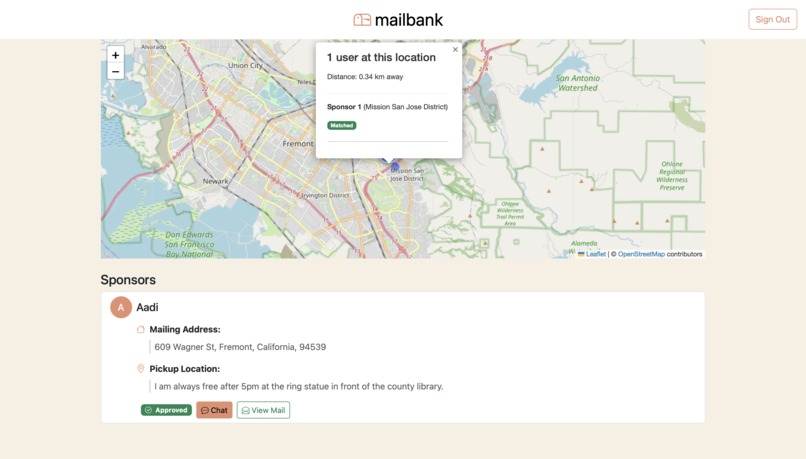
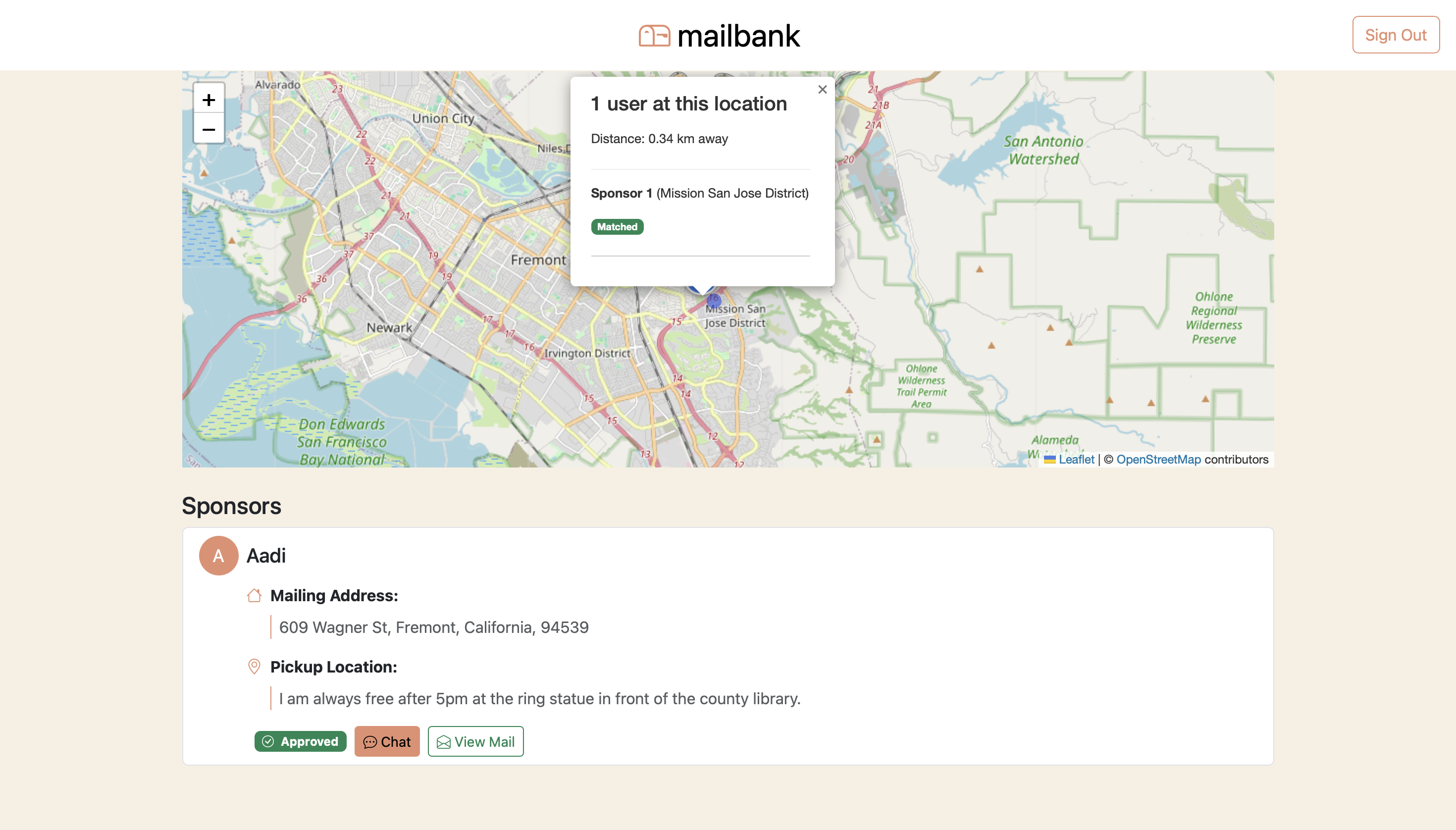
What a person in need of a mailbox would see after an approved match
Inspiration
I’ve often helped address the symptoms of poverty by helping at food redistribution banks, but often feel like I am helping a symptom of poverty instead of poverty itself. My own city, Fremont, has passed laws that negatively impact homeless people. They even passed a measure that makes it illegal to AID homeless people, which has thankfully been recently removed. Everyone deserves agency, a right to influence the policies that directly affect them. Most homeless or displaced people don’t have a mailing address, which is necessary to receive ballots or benefits. Instead of addressing symptoms, I want to help these people take a stand for themselves and influence directives and policies that help them or go against them.
What it does
The website enables the connection between people offering to carry mail with displaced people. The app keeps locations private and identities private, both for volunteers and displaced people. A displaced person views listings of volunteers in their area, which only shows an approximate location as to not compromise volunteers. A displaced person can request to match with a volunteer. The volunteer will share their mailing address so the displaced person can put it down on any forms that require it: to receive ballots, benefits, IDs, or legal documents. The important distinction here is MAILING ADDRESS, a displaced person cannot put someone’s address in the residency field. The app provides guidelines on how this information should be filled out. When a request is made, the displaced person must specify a pickup location: it can be a specific landmark or intersection, or even the mailing address itself. Once a request is accepted, a messaging channel opens between the volunteer and displaced person. The volunteer can send a notification to the displaced person once mail is received and a pickup date/time can be coordinated. Volunteers can choose to unsupport any dependents (displaced people) at any time for safety reasons. Requests can be modified and have to be approved by both parties to make a match, as certain pickup locations may not work as well as other ones.
How we built it
We used html, css, and js to create a website both functional on web and mobile to improve accessibility. To keep user data secure, we used a firebase database with custom rules to prevent malicious read or writes. We used openstreetmap and geohashing to process user locations and display them, without revealing sensitive data.
Challenges we ran into
Safety and legality were key issues with our app, and we don’t want anyone to misuse anyone’s mail or anyone to put incorrect information when signing up for mail. We need to obfuscate locations when delivered to the client and prevent access to private information until a match is successful. To keep everyone safe, we had to do lots of research on laws to ensure our app and what we encourage is legal, which it thankfully is.
Accomplishments that we're proud of
The project works extremely well, especially the live chat. This is usable for most people and can really help. The app also works really well on mobile, which is awesome for people without computer access.
What we learned
This app surprisingly taught me more on the legal side of things than anything programming related. I learned about how a lot of displaced people have internet access but not access to mail, so this app would still remain accessible and enable accessibility at the same time.
What's next for mailbank
We need to pilot this program with more users and maybe even create custom mail redistribution centers. Mailbank can provide more guidelines and documentation. The main feature we aim for is notifications, since constantly checking the website is inefficient. We need to include guidelines and disclaimers in many locations, to ensure no malicious use occurs. One of the best things we can do is reach out to food banks, and discuss potentially carrying mail on behalf of others.


Log in or sign up for Devpost to join the conversation.