Inspiration
AI and robotics have witnessed remarkable breakthroughs in recent years, transforming the way we live and work. These advancements have paved the way for seamless integration into various aspects of our daily lives, from healthcare to home automation. At the start of this hackathon, we were inspired to create an innovative solution on wheels that leverages this progress.
A shared issue we identified was remembering to water plants—a task that becomes increasingly challenging with a busy lifestyle or for those owning multiple plants. While reminder apps exist to address this, they often require technical know-how, posing difficulties for the older generation who may not be as tech-savvy. This can lead to confusion, missed schedules, and neglected plants.
With this in mind, we set out to design Auto-Mate, a device that simplifies plant care. Our system not only provides timely reminders but also bridges the gap between technology and accessibility, ensuring everyone can care for their plants effortlessly and efficiently.
What it does
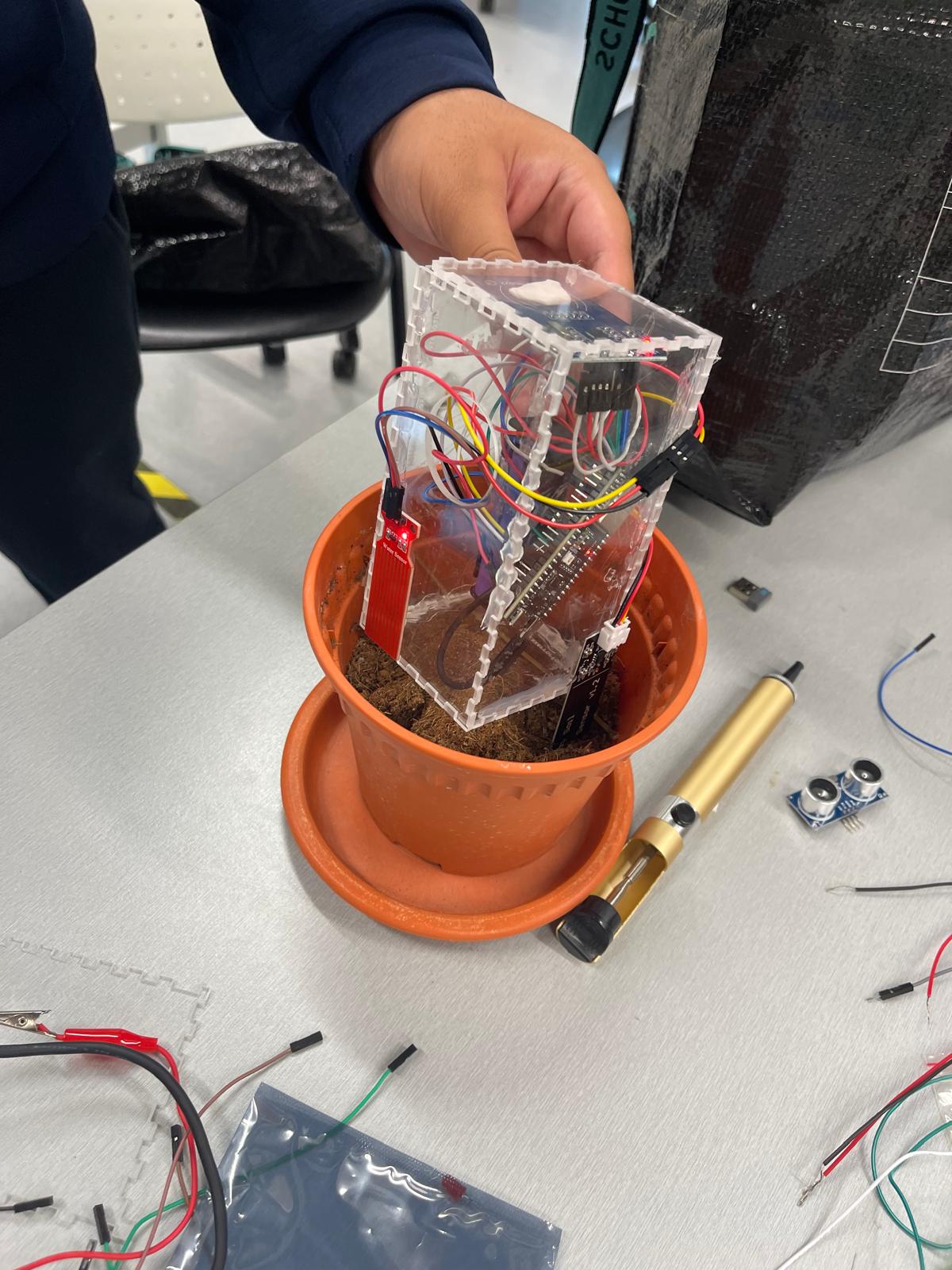
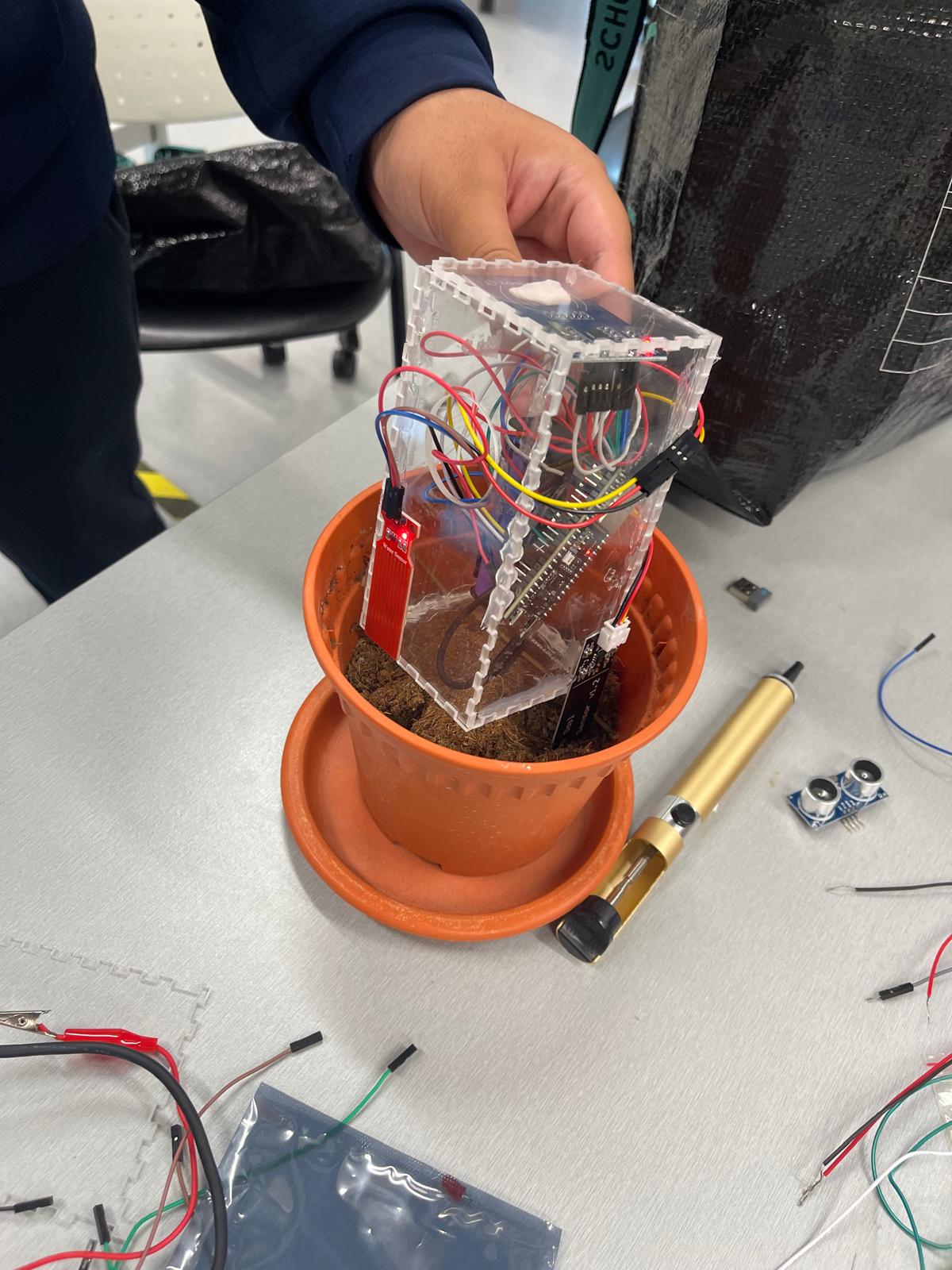
Auto-Mate is designed to ensure that plants are always well-cared for, making plant maintenance effortless for users. Equipped with advanced sensors, it monitors key factors such as water levels, temperature, and soil moisture to assess the plant's condition accurately.
Based on these readings, the system alerts users when their plants need attention, such as watering or adjusting environmental conditions. This proactive approach helps prevent neglect and ensures optimal care.
To enhance usability, Auto-Mate incorporates RFID technology, allowing users to link their phones to individual plants. Through a dedicated website, users can access real-time data about their plants' health, enabling them to track and manage multiple plants with ease.
With its intelligent monitoring and user-friendly features, Auto-Mate bridges technology and nature, making plant care smarter and more accessible.
How we built it
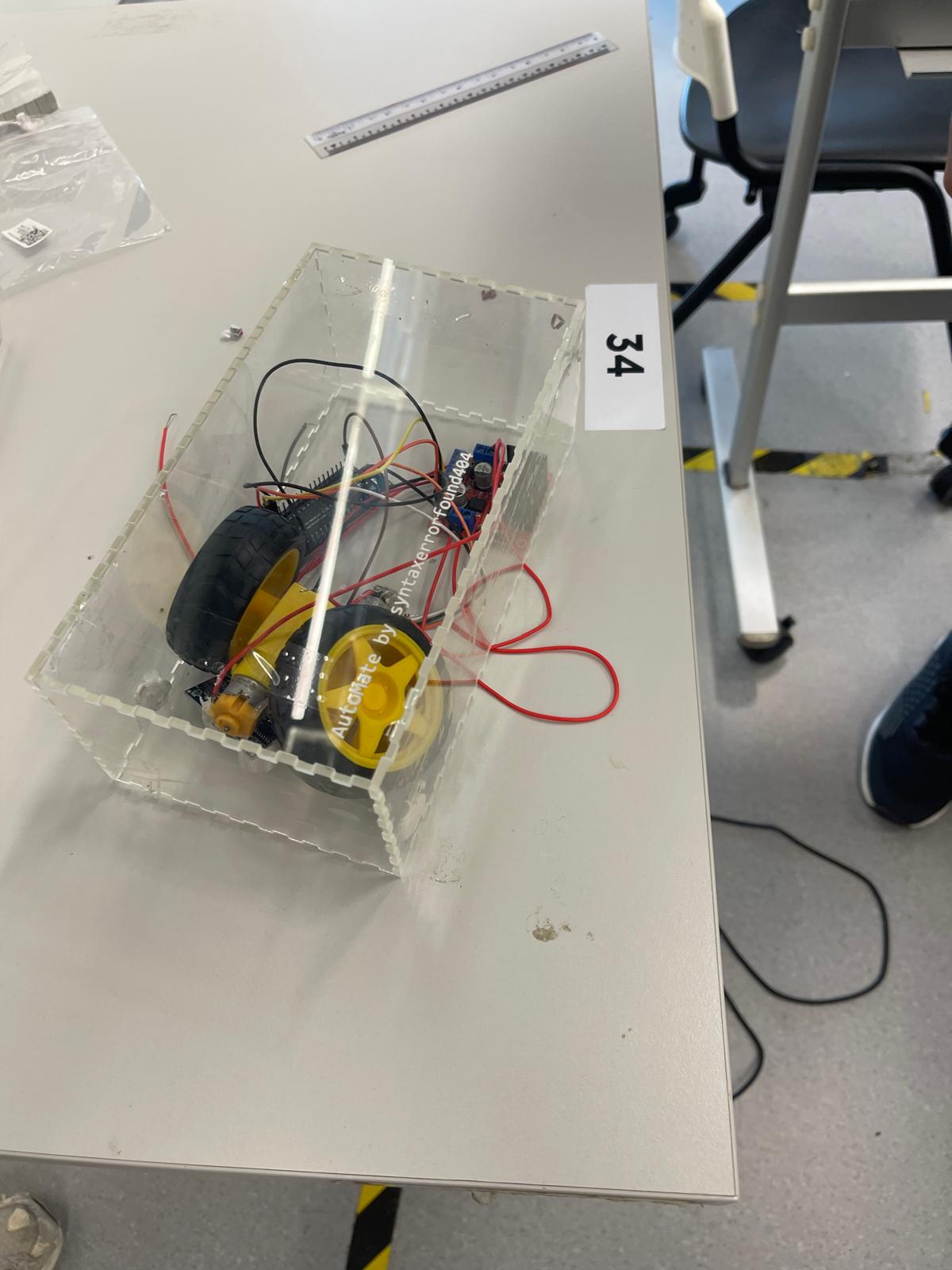
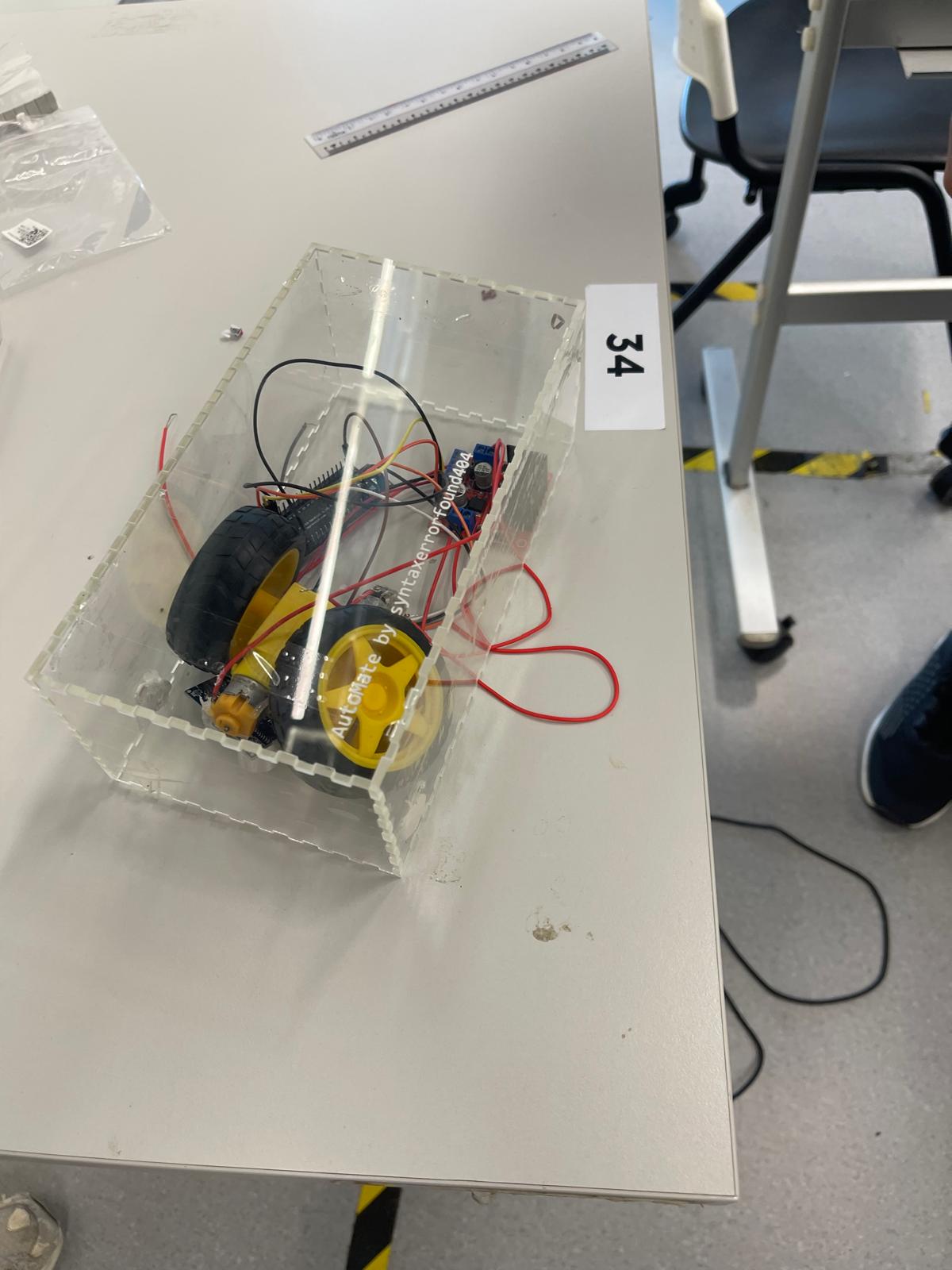
Auto-Mate is powered by an ESP32 microcontroller, which serves as the brain of the device, enabling seamless integration of sensors and motors. The ESP32 facilitates the collection of critical data, such as water levels, soil moisture, and temperature, ensuring accurate monitoring of plant health.
The motors, controlled by the ESP32, allow the bot to move autonomously, making it adaptable to various environments. Additionally, RFID tags are used to establish a connection between the device and individual plants. For the body itself, we designed it using Adobe Illustrator and printed out the body in acrylic using laser cutters.
Sensor data is transmitted to a dedicated website linked to the device via the RFID tag. This website provides users with real-time updates, allowing them to monitor and manage their plants effectively from anywhere. By combining these technologies, Auto-Mate ensures precise plant care and an intuitive user experience.
Challenges we ran into
During the development of Auto-Mate, we encountered several challenges that tested our problem-solving skills. One of the primary issues was setting up the ESP32 microcontroller. Initially, our laptops were unable to connect to the ESP32, preventing us from running our code. After troubleshooting, we discovered that some wire connections were either incorrect or weak, stemming from earlier mistakes where wires were cut improperly and had to be soldered back. Resolving this issue took considerable time and effort, but we eventually succeeded in establishing a connection.
Another significant hurdle was getting the LED strip to work. Despite repeatedly modifying our connections and debugging our code, the LEDs failed to function. We attempted different approaches but were unable to resolve this issue.
Additionally, the camera we intended to use for distance detection and collision avoidance faced similar challenges. It remained unresponsive despite extensive testing, likely due to connection or hardware issues. These setbacks taught us valuable lessons in troubleshooting and adaptability while pushing us to innovate with the resources at hand.
Accomplishments that we're proud of
We were able to get the RFID tag to work and receive the data onto the website. The motors worked well and we were able to fit our circuits into the design easily.
What we learned
We learnt the importance of the ESP32 and how we can use it to automate innovation. From a simple idea, several solutions can arise and when we have the right resources to use. Though this may not be a persistent problem throughout society, it proves how we can harness the power of AI and robotics to automate one of the many tiny things that make up our daily lives.
What's next for AutoMate
We hope that future prototypes are more efficient and built with all the important features such as the camera and LED strip. We also hope that future implementations are successful and want to see this as a future project that gains popularity for its innovation.


Log in or sign up for Devpost to join the conversation.