Inspiration
Spacecraft continuously generate telemetry, but detecting meaningful changes in that data can be difficult when signals are noisy, multivariate, and constantly changing. We wanted to build a system that could move beyond passive monitoring and help identify unusual spacecraft behaviour automatically.
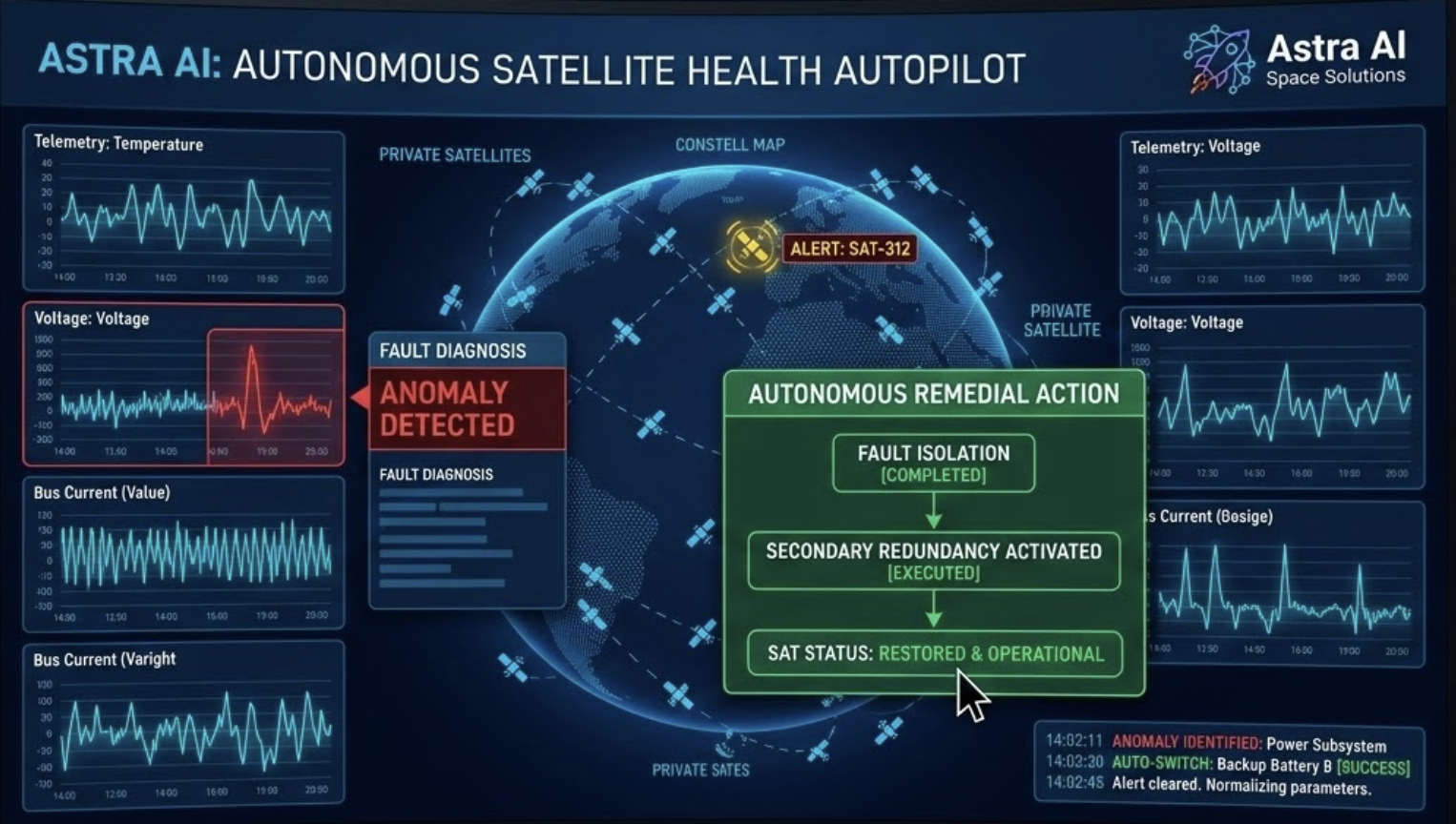
This led us to build Astra AI, a satellite health monitoring platform combining telemetry anomaly detection with live orbital intelligence in one dashboard.
What it does
Astra AI provides two connected capabilities:
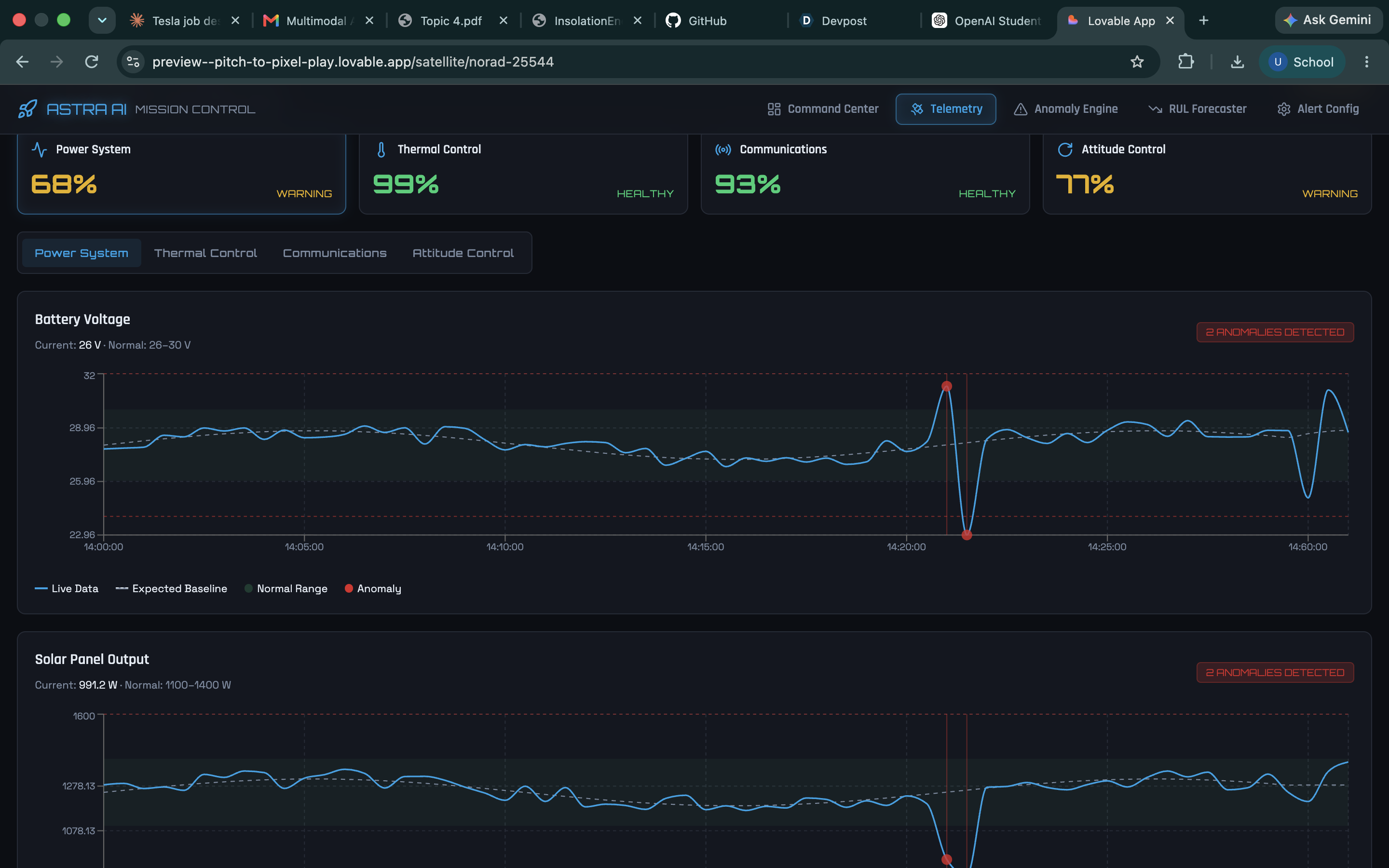
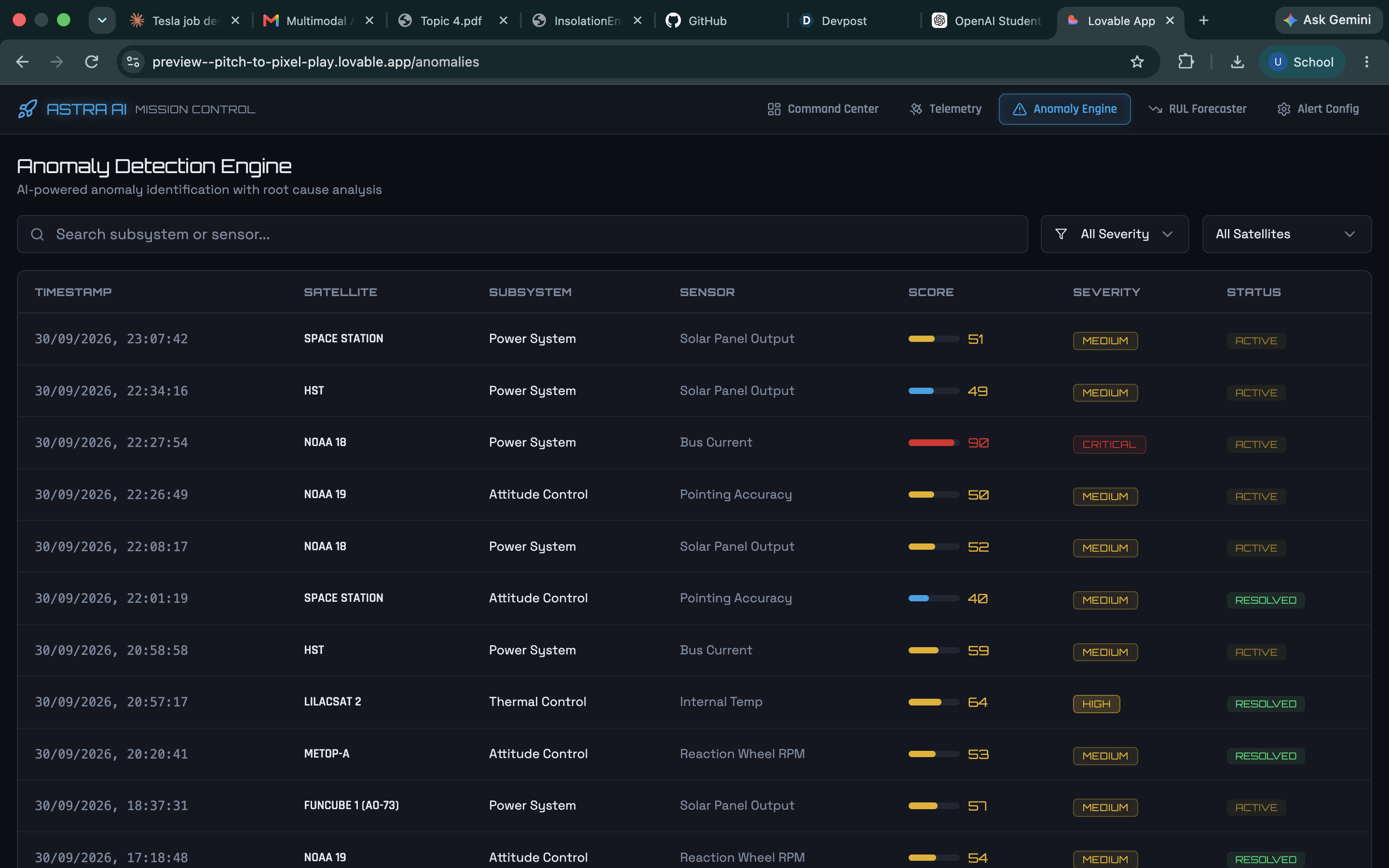
- AI-powered telemetry monitoring: Detects unusual behaviour in spacecraft telemetry and highlights anomalous regions for investigation.
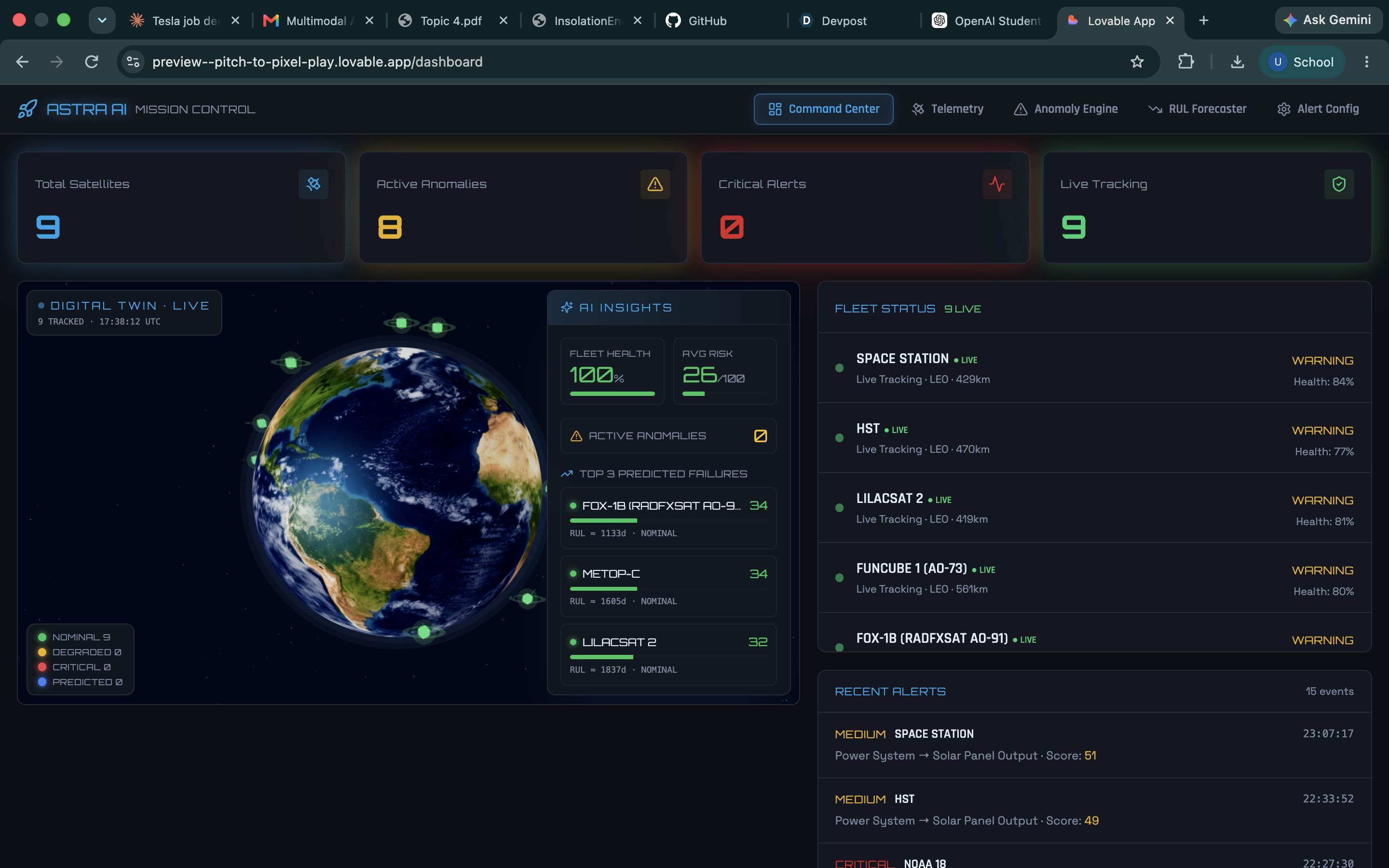
- Live satellite intelligence: Tracks satellites using NORAD IDs and provides orbital position, movement, metadata, and interactive 3D visualisation.
For anomaly detection, Astra AI analyses NASA SMAP S-1 telemetry across 18 channels and generates temporal change-point scores. The results are exposed through an API and visualised as interactive telemetry charts, allowing users to inspect where and when anomalous behaviour occurs.
The platform also integrates orbital data and satellite metadata to provide a unified satellite monitoring experience.
How we built it
The anomaly-detection pipeline was developed in Python using a windowed change-point approach. For each point in the telemetry sequence, neighbouring temporal windows are compared across multiple channels to measure changes in signal behaviour.
We calibrated a robust median/MAD threshold on training data and evaluated the detector against NASA-labelled anomaly intervals. The S-1 detector achieved approximately 0.35 F1 and 0.30 PR-AUC on our evaluation.
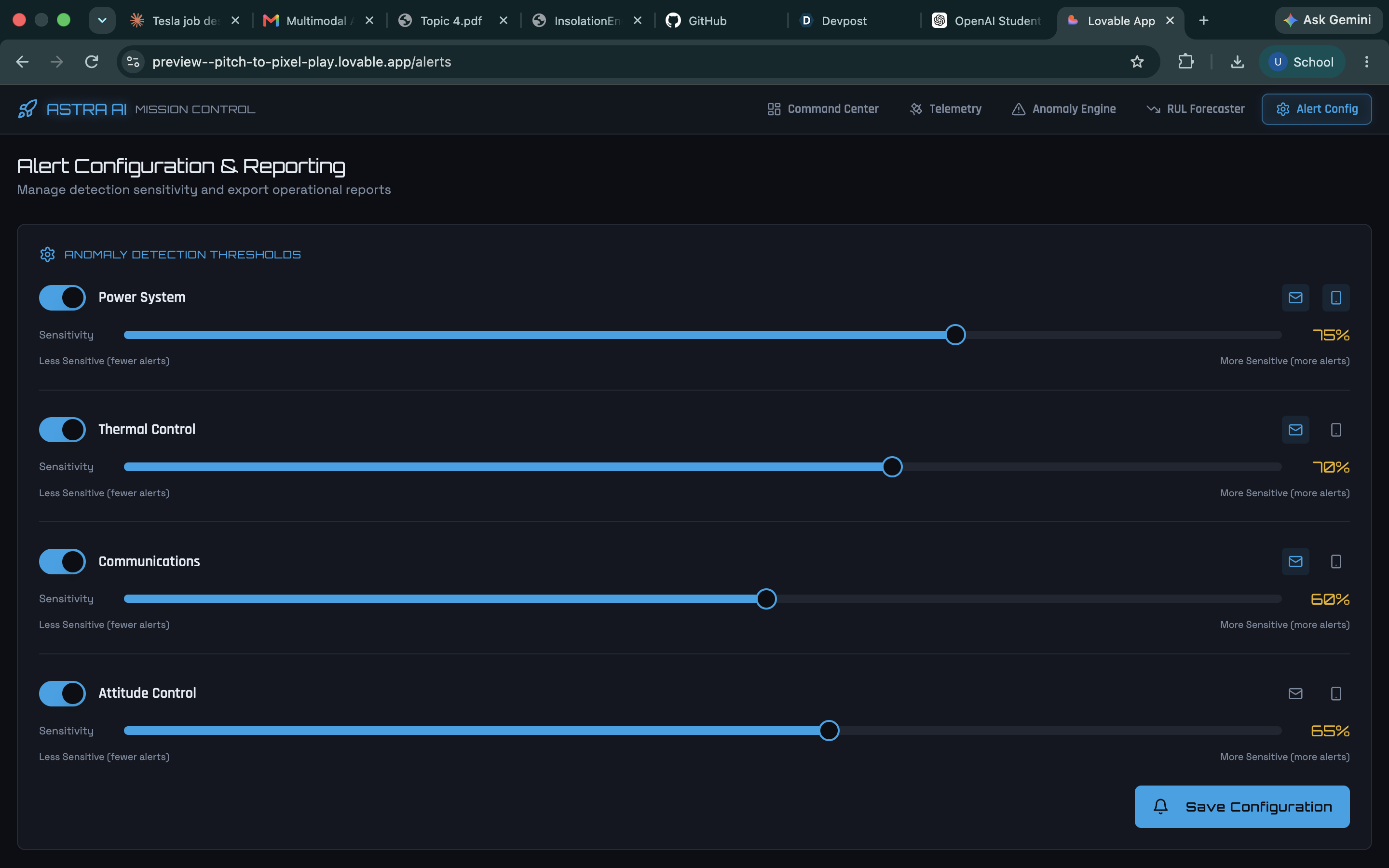
The ML pipeline is exposed through a FastAPI inference service. A React/TypeScript interface visualises telemetry, anomaly scores, and detected regions.
For live orbital intelligence, we integrated N2YO orbital data and SatNOGS metadata through Supabase Edge Functions. A Three.js 3D globe provides interactive satellite tracking, orbit visualisation, and satellite-specific detail views.
Challenges we ran into
One of the biggest challenges was distinguishing genuine anomalies from normal changes in spacecraft telemetry. A simple threshold can produce many false positives, while an overly conservative threshold can miss important events.
We therefore experimented with different detection approaches and focused on temporal change-point behaviour, using robust statistics for threshold calibration.
Another challenge was combining ML inference with live external data sources. Telemetry analytics and orbital tracking have very different data characteristics, so we separated the pipelines while connecting them through a common satellite-focused interface.
Accomplishments that we're proud of
- Built an end-to-end satellite health monitoring prototype rather than only an offline ML model.
- Developed a multivariate anomaly detector using 18 NASA SMAP S-1 telemetry channels.
- Achieved approximately 0.35 F1 and 0.30 PR-AUC against NASA-labelled anomaly intervals.
- Connected the ML pipeline to a FastAPI inference service and interactive React dashboard.
- Integrated N2YO and SatNOGS data for live satellite intelligence.
- Built an interactive Three.js 3D globe with satellite tracking and orbit visualisation.
- Created a unified platform combining telemetry analytics and orbital intelligence.
What we learned
We learned that effective anomaly detection is not simply about choosing a sophisticated ML model. Understanding the temporal structure of telemetry, selecting appropriate evaluation metrics, and calibrating thresholds can be equally important.
We also learned how to take an ML experiment and turn it into an application by connecting inference APIs, external data sources, databases, and an interactive frontend.
Most importantly, we learned that model outputs need to be interpretable. Showing users where an anomaly occurred on the telemetry timeline makes the detection much more useful than simply returning a binary prediction.
What's next for Astra AI
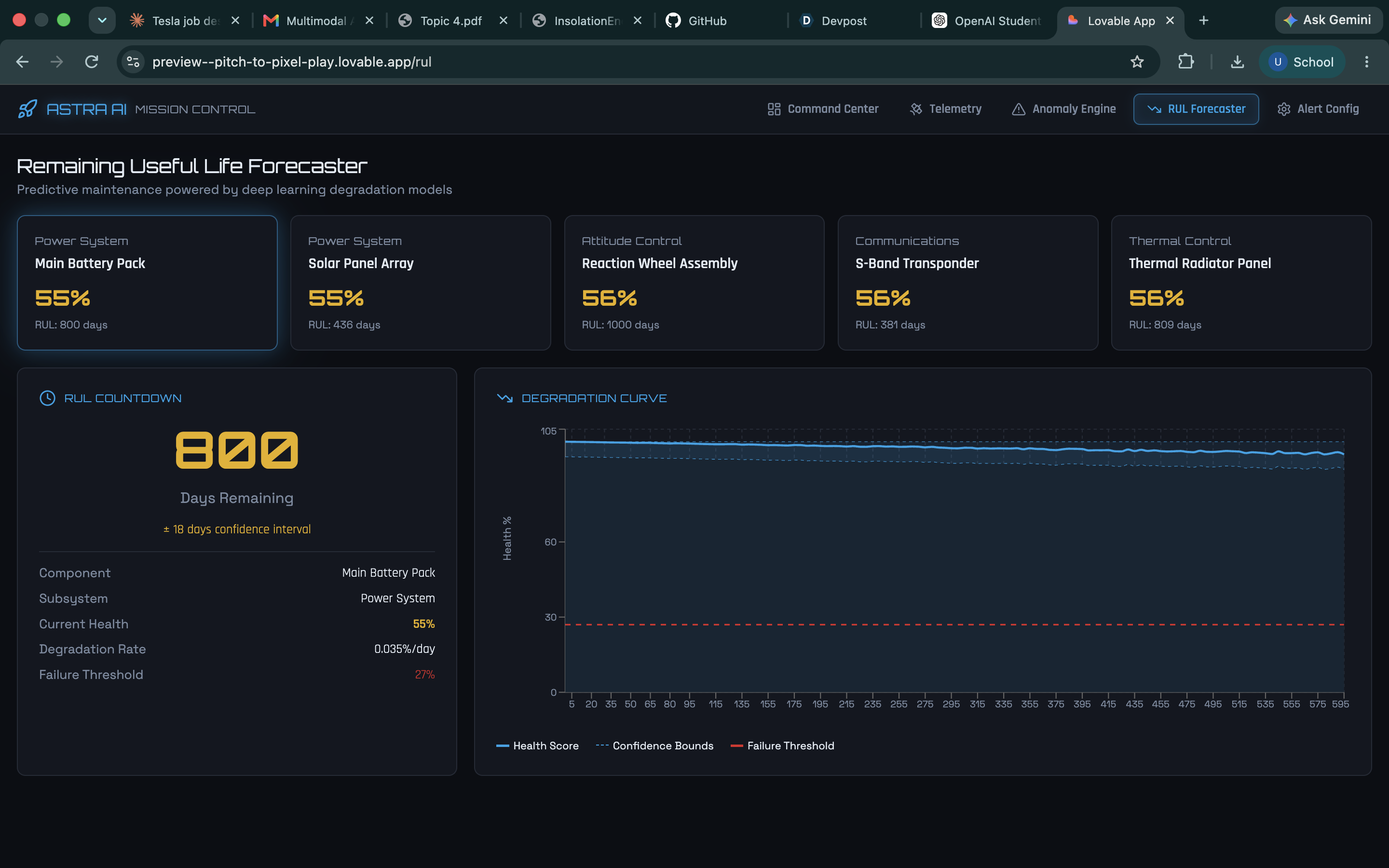
Our next step is to move from anomaly detection towards predictive satellite health monitoring.
We plan to expand the system with additional spacecraft datasets, richer temporal modelling, improved anomaly classification, and more comprehensive satellite health indicators.
The longer-term goal is to build a platform that can continuously monitor spacecraft behaviour, identify emerging issues early, provide interpretable evidence for each detection, and support faster operational decision-making.
Built With
- api
- fastapi
- n2yo
- nasa
- numpy
- pandas
- python
- react
- rest
- satnogs
- scikit-learn
- smap
- supabase
- three.js
- typescript


Log in or sign up for Devpost to join the conversation.