
Argus: new material tests, and the failure they caught
We ran new controls against the current Argus demo, including a photograph we had not used before. Here are the outputs, not just the next-step list.
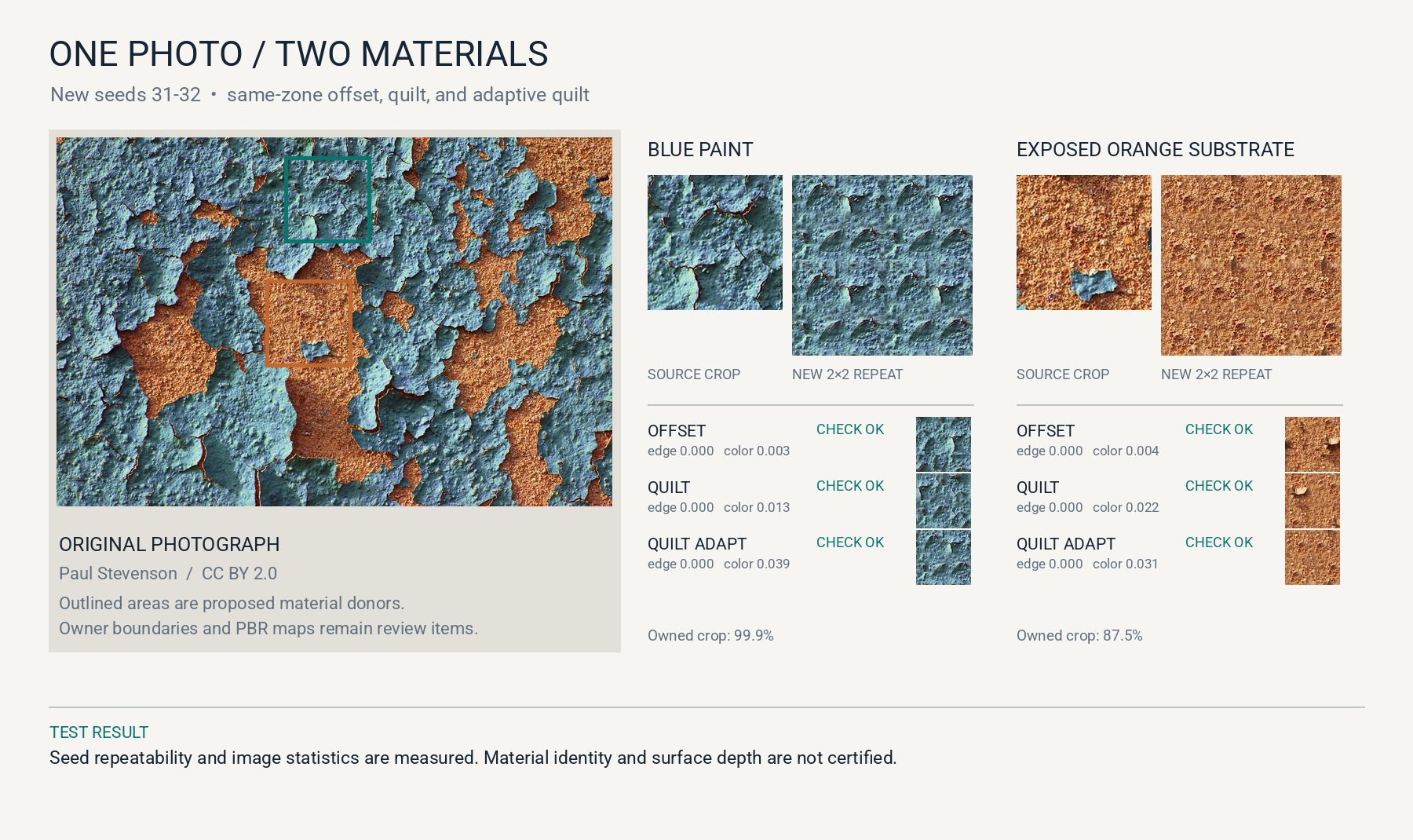
One photo, two materials. We selected blue paint and exposed orange substrate from Paul Stevenson's peeling-paint photograph, then made new offset, quilt, and adaptive-quilt candidates at two seeds each. The twelve new rasters reproduce exactly with the same seed, differ between seeds, and pass our narrow seam, median-color, and texture-gradient checks. The panel shows the source crops beside the new 2×2 repeats. These are material candidates; the checks do not prove measured PBR or perfect material boundaries.
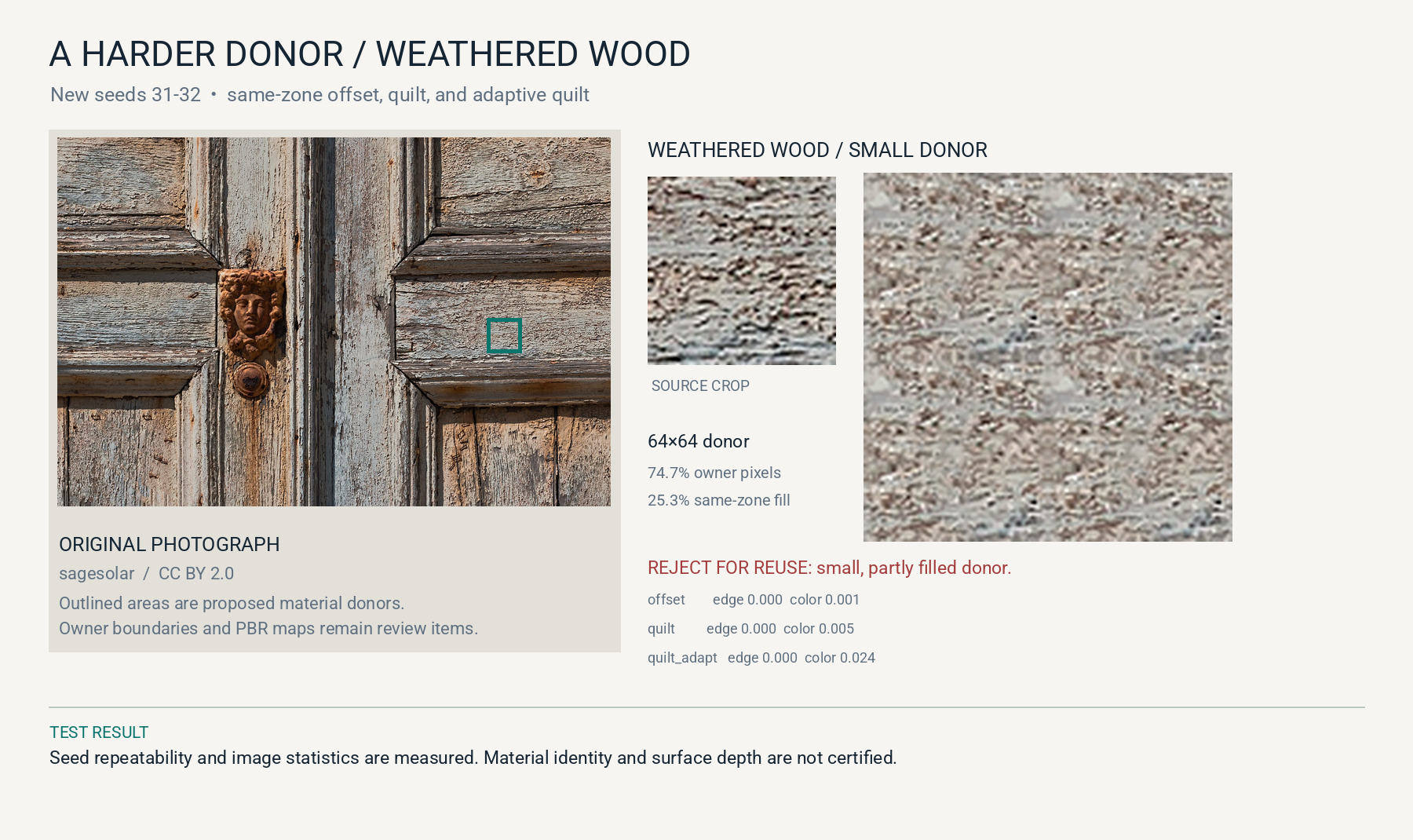
A repeat that still fails the reuse decision. The weathered-wood candidate looks plausible and all six variants pass the narrow technical checks, but its donor is only 64×64 pixels. Just 74.7% of that crop belongs to the proposed material; the rest is filled from nearby same-zone pixels. We marked it reject for reuse until we can find a larger, cleaner donor. This is exactly the sort of failure an edge-seam score misses.
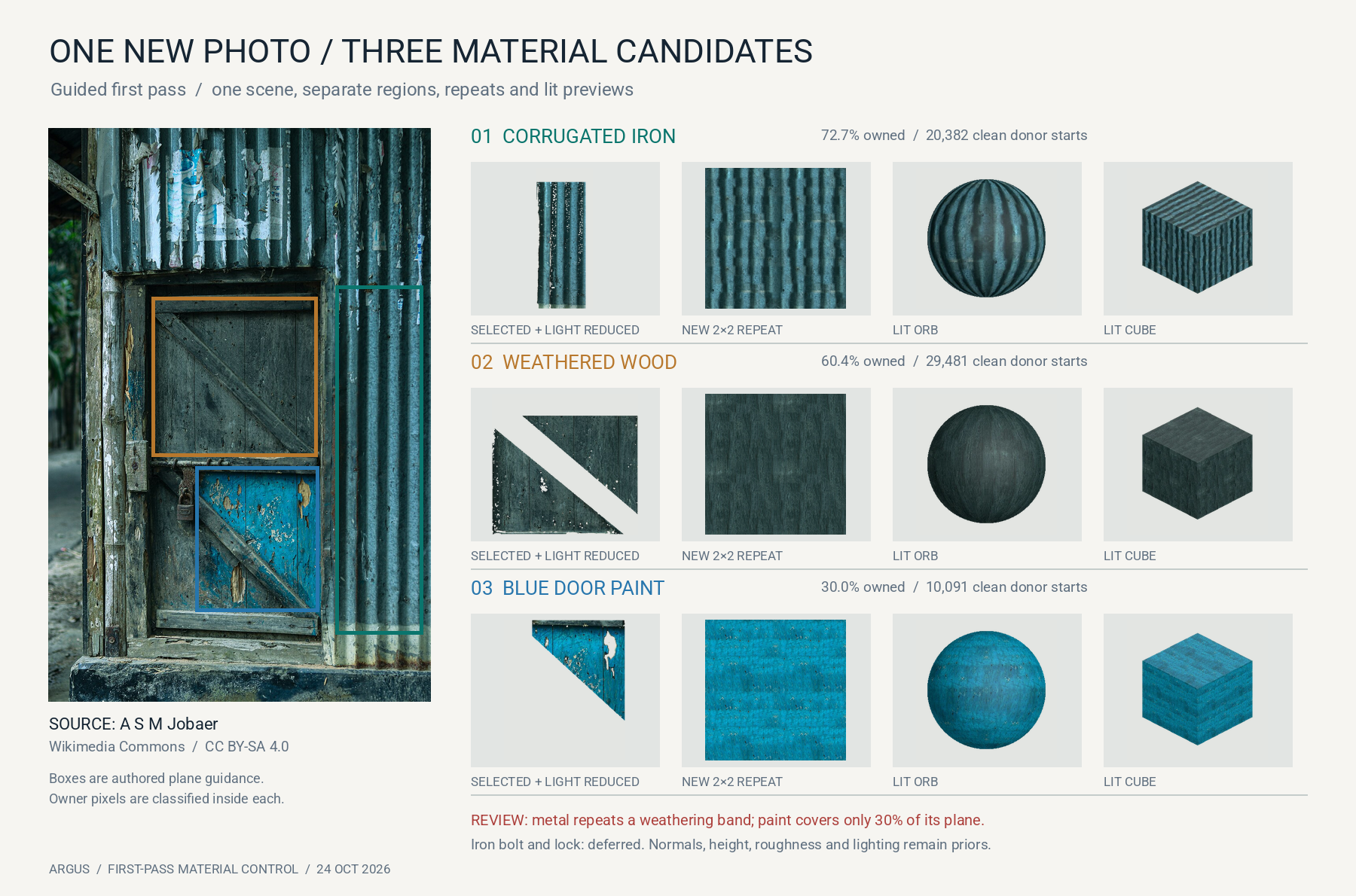
A new scene, not another crop of the old controls. We found a CC BY-SA 4.0 photograph by A S M Jobaer showing corrugated iron, weathered wood, blue paint and iron hardware in one door. We froze three guided regions before the first run. Argus produced separate UV material candidates, 2×2 repeats, and lit orb/cube previews for the iron wall, wood and paint. Every selected donor stayed inside its computed material mask; all three material ZIPs and UV meshes passed integrity checks. The material-owner coverage was 72.7%, 60.4% and 30.0%, respectively. The metal repeat still carries a broad weathering band, and the small lock has no defensible repeat donor. Both remain review items, not quietly merged into a finished PBR material.

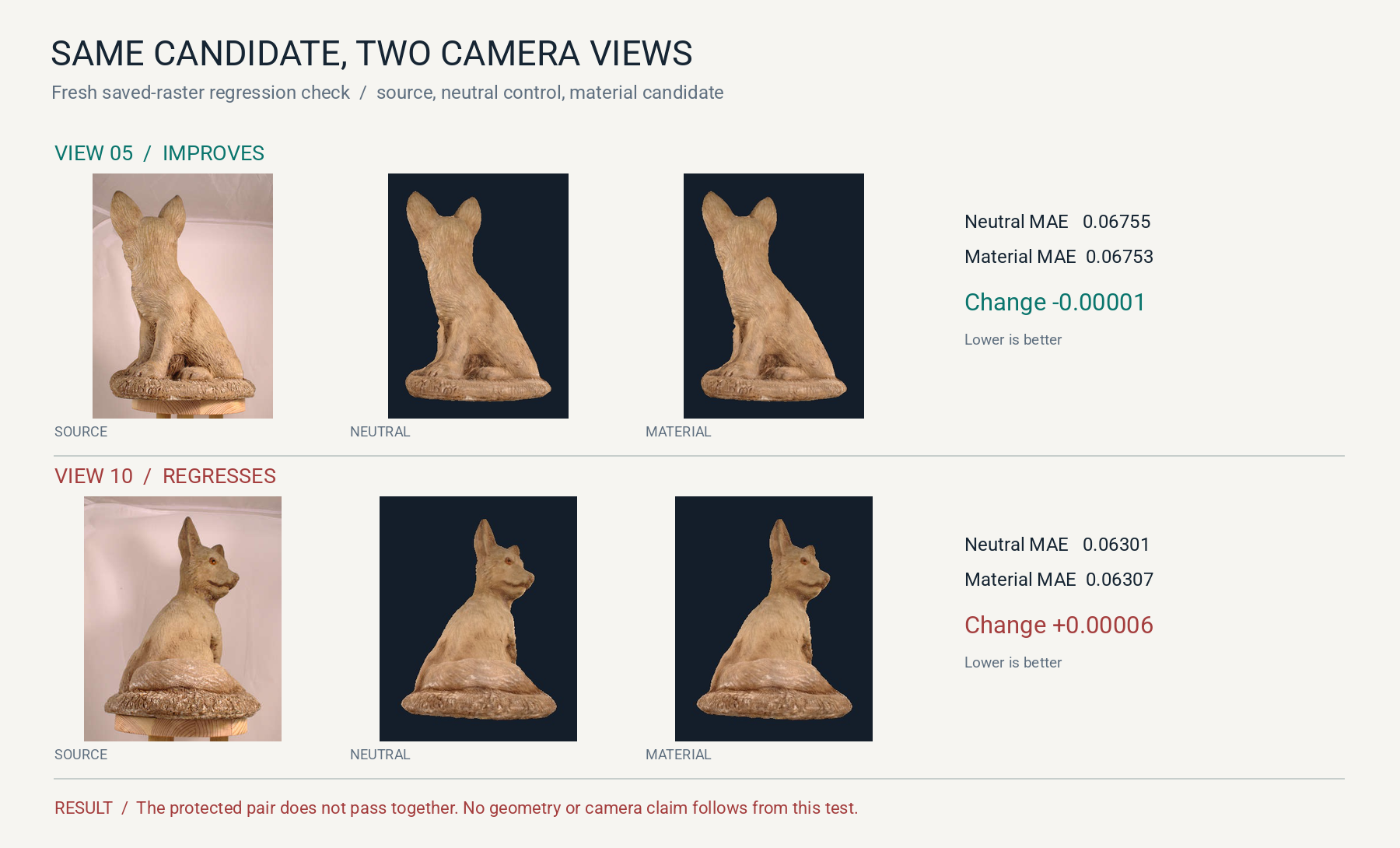
The fox still has to answer to every camera. We recomputed error for all twelve saved source/control/candidate raster groups. Under this same-grid owner-mask measurement, the material candidate improves five views. View 05 gets a tiny gain; view 10 gets worse. The pair fails our protected-view check. This is a new analysis of saved images, not a new mesh or light fit, and its measurement contract differs from the earlier six-of-twelve local report.
The useful part is that neat-looking repeats and nearly identical fox renders cannot quietly pass. The reports keep the sources, masks, seeds, hashes, metrics and rejections together. Next we will try a larger wood donor, remove the duplicated weathering from the metal repeat, and seek a fox correction that helps view 10 without losing view 05.
Photo credits: Paul Stevenson and sagesolar (CC BY 2.0); A S M Jobaer and John Davies's fox set (CC BY-SA 4.0). These panels adapt their photographs; the full report records the changes.
Full test receipt and source credits · Interactive demo · 2:27 video