🏡 Arcon: Your AI Architect Agent & Design Ecosystem
For judges: arcon-ten.vercel.app → press For judges. A guided tour of 14 stops, about three minutes, no sign-up. At stop 9, press Pay with PayPal on Maya's billed fee and pay it yourself in the PayPal sandbox. Then press Try it yourself to design your own space from scratch.
Sandbox test card: choose Debit or Credit Card →
4111 1111 1111 1111, any future date, any 3-digit code, ZIP94105, phone415 555 0100. No real money moves.Mobile app: open arcon-ten.vercel.app on your phone and choose Add to Home Screen (iPhone) or Install app (Android).
Code: github.com/vickysharma-prog/arcon (MIT licence)
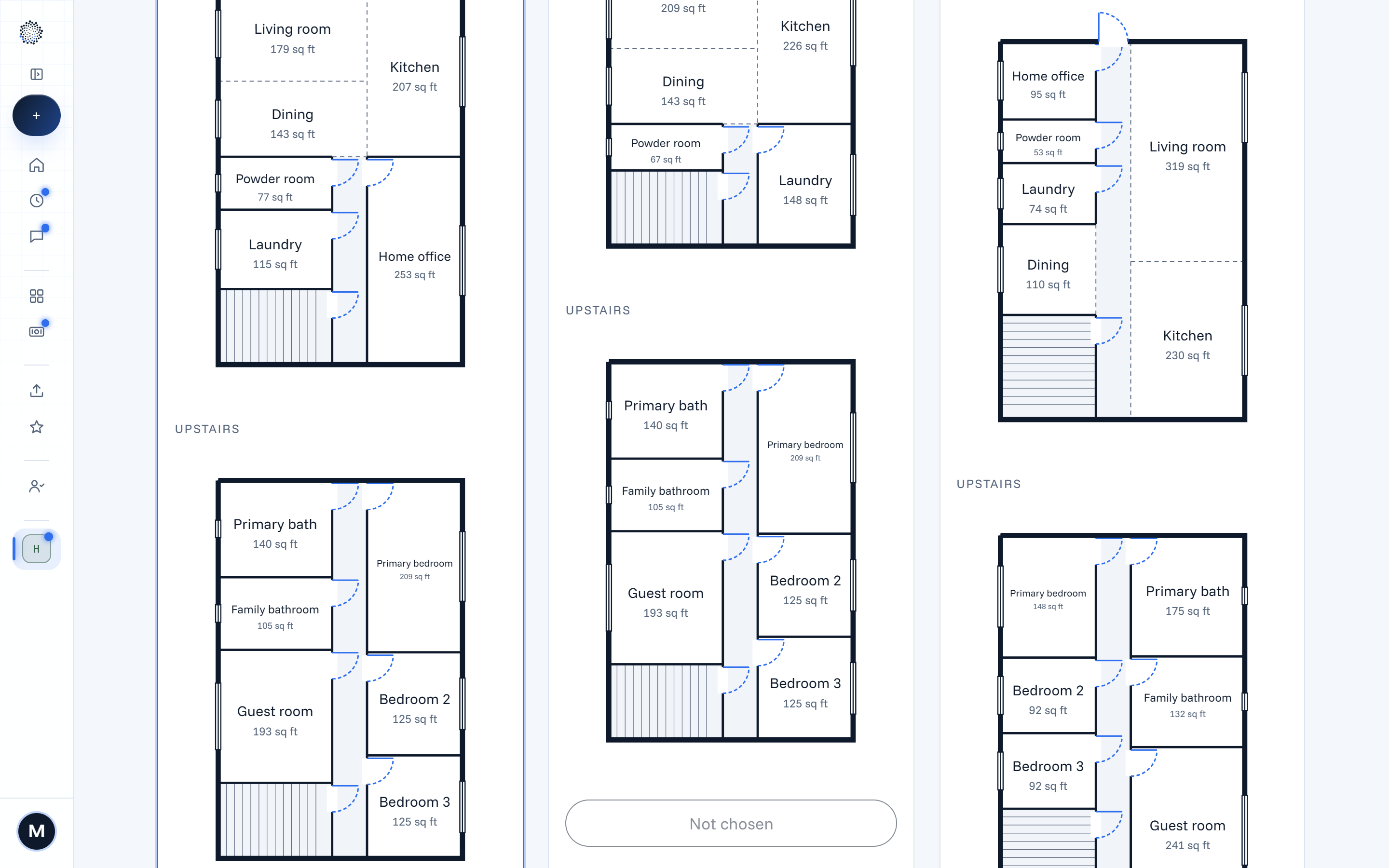
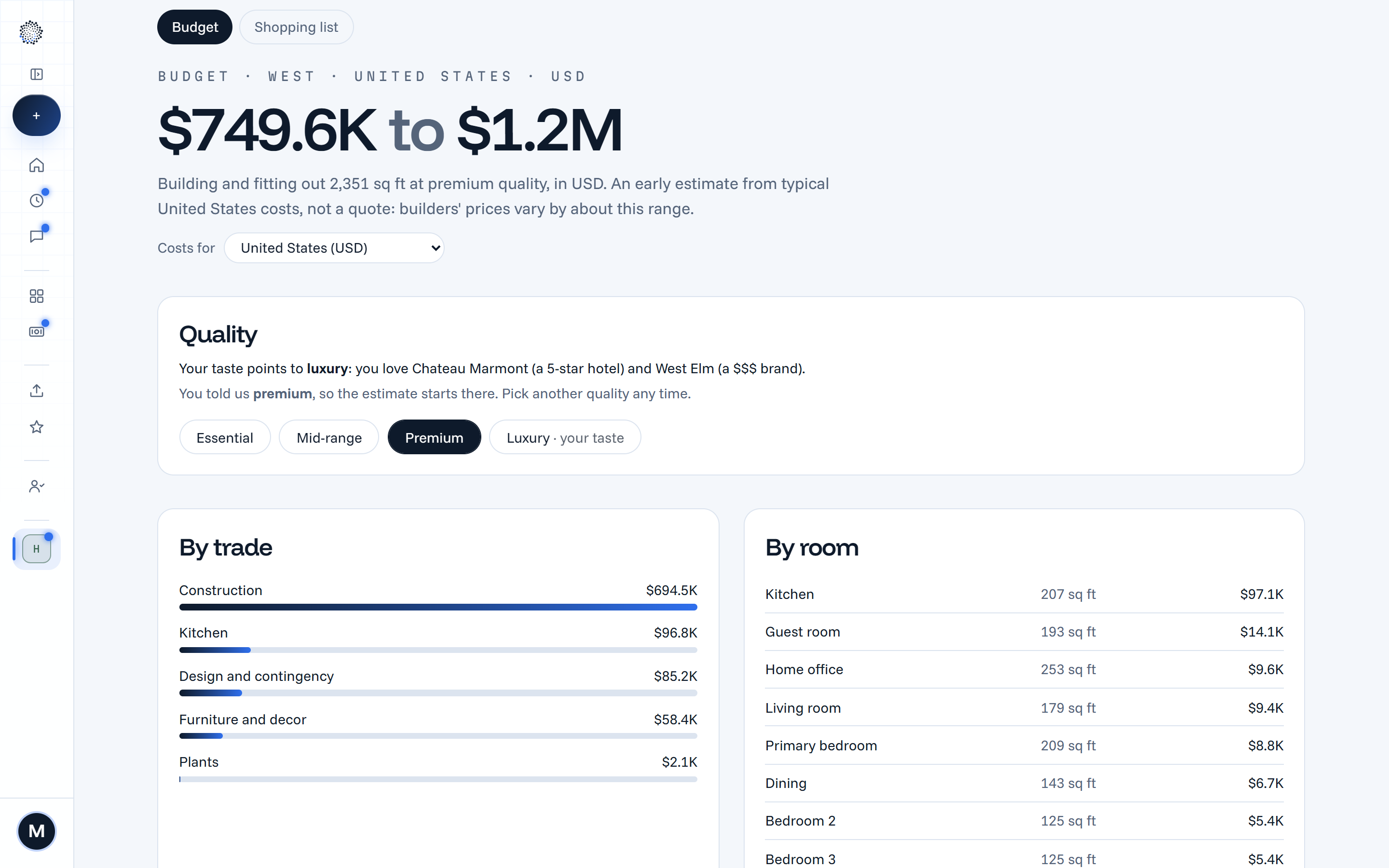
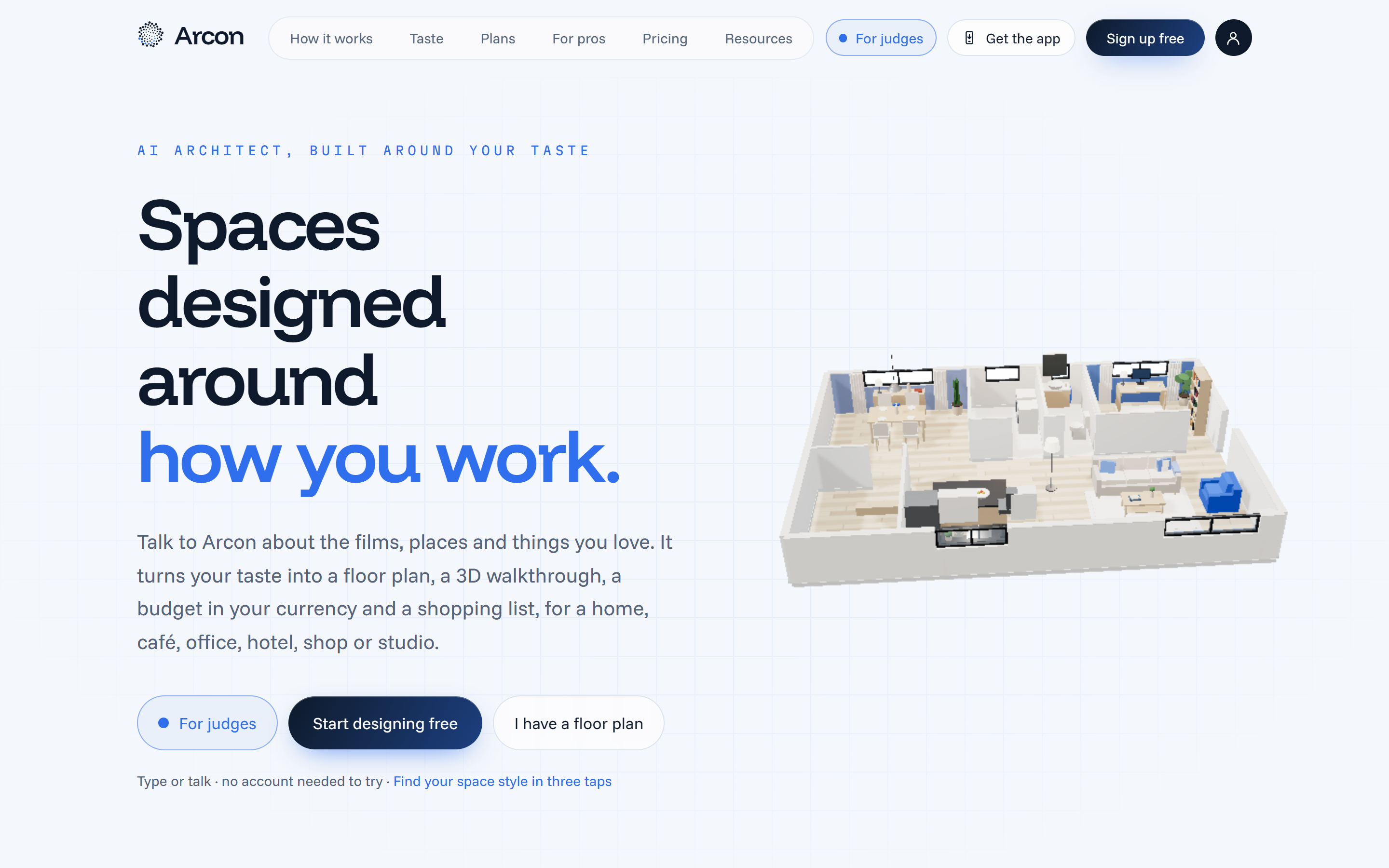
Arcon turns your taste into your space. Tell Arcon about the space and three things you love: a place, a brand, a film or some music. Arcon's AI architect reads the taste behind them and designs the whole space: a style with its sources, three floor plans ranked for how you live, a 3D walkthrough by day and night, a budget in your currency, a shopping list and the drawings for your builder.
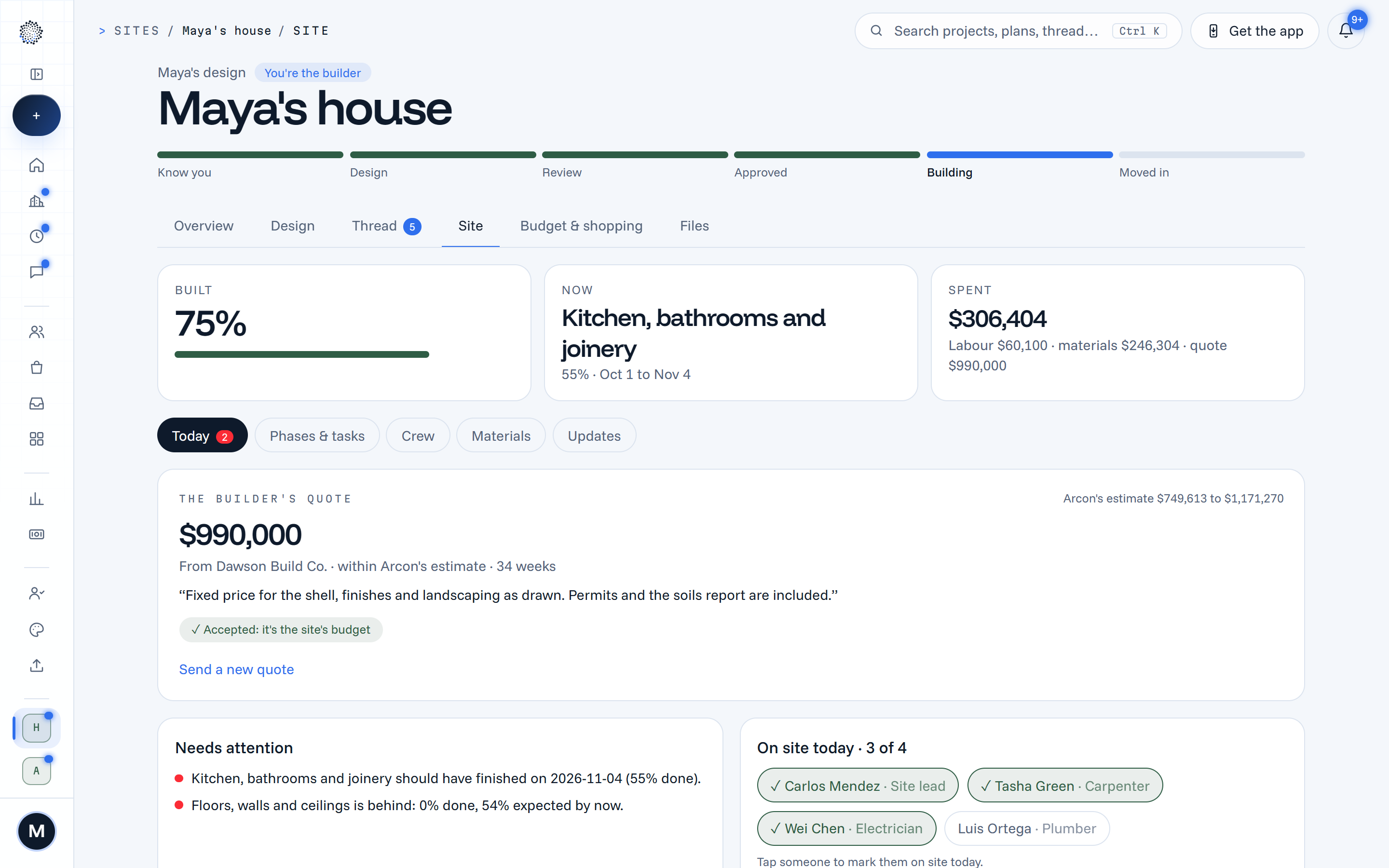
Then Arcon becomes the software the whole build runs on. The owner, the architect, the builder and the client work from one project record, with nothing hidden and everything trackable: one thread, the quote, the building site, every sign-off, right to the keys.
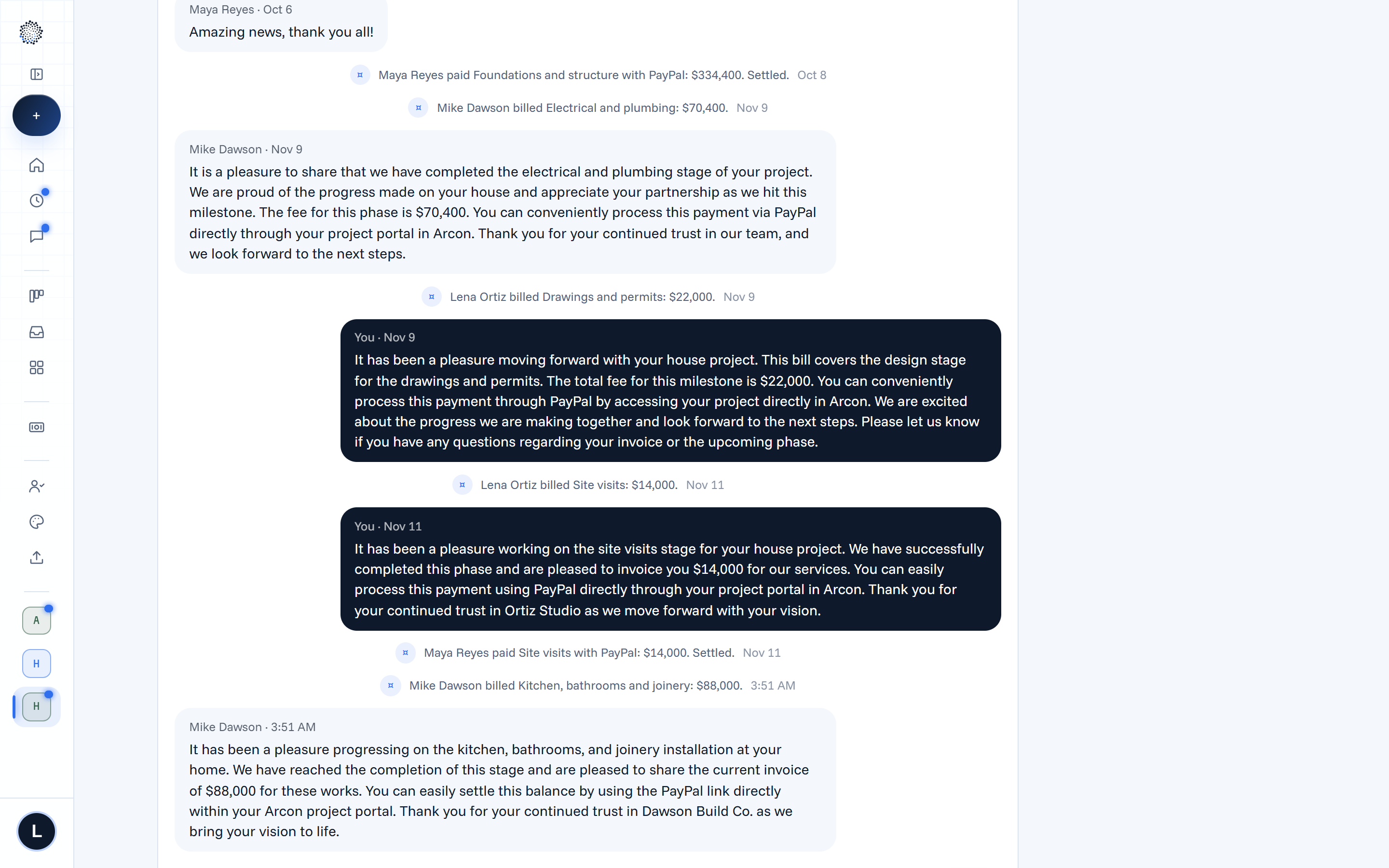
Every decision starts from taste, and every one shows where it came from. Four AI agents do the work an architect's first weeks take, and code checks everything they write. Even the money follows the record: when a stage is done, Arcon's agent drafts the bill, and the client pays with PayPal straight to whoever did the work.
💡 Inspiration
For years I have wanted to build one thing: an architect for everyone, one that understands a person before it draws a single wall.
Every good architect starts the same way. Before any drawing, they spend weeks learning the client: where they love to stay, what they buy, what they watch, how their family moves through a day. The drawing is the easy part. Understanding the person is the craft, and it is the part most people can never afford.
And once the design is done, a second problem starts: the build. Messages, files, quotes and bills spread across a dozen tools, and money is where trust breaks. Architects chase their fees; clients get a bill and don't know what it pays for.
So I built Arcon: an AI architect that understands you, and one record that carries the project, and its payments, from the first conversation to the keys. I started on 9 October 2026 and built it from scratch, then made PayPal the way money moves through it.
🔭 The vision
I envisioned a platform that would:
- 🧠 Understand people through their taste, from the places, brands and stories they already love
- 🏡 Turn that taste into a real space: a style, floor plans, a 3D walk, a budget and a shopping list, each decision traced to its source
- 🤖 Keep designing with you: change anything in plain words, and the agent re-checks and re-prices it
- 🤝 Carry the design into the build, so the owner, architect, builder and client share one record from the first question to the keys
- 💳 Make money as clear as the design: bills that explain themselves, paid with PayPal straight to whoever did the work
- 🌍 Work for everyone, everywhere: any home or business, eight markets, by voice or text, in English, Hindi or Hinglish
🎯 The problem
The real problem in design is understanding the person, and then keeping everyone on the same page.
- People can't name their style. They can't say "warm mid-century with walnut and brass", but they can name the hotel they never wanted to leave. Architects spend early meetings guessing, and owners approve designs they can't picture.
- That gap is expensive. In a survey of 1,000 US homeowners, 74% of those who remodeled had regrets; 53% of those who hired a contractor went over budget and 46% faced significant delays (Clever Real Estate, 2024).
- The market is huge. About 26 million US homeowner households improved their homes in 2023 (Harvard JCHS), and Americans are spending $518B on it in 2026 (Harvard JCHS, LIRA).
- After the design, the project scatters across texts, spreadsheets and calls, and nobody sees the same truth.
- Money is where trust breaks. Fees are billed by stage in emails and spreadsheets. The client gets "Approval of the final design, $3,200" with no link to the work it pays for, so it waits, and the architect chases it.
Personal taste is the heart of a great design, and the hardest part to capture. And a build only goes well when everyone, and every payment, works from the same record.
✨ What it does: from taste to keys
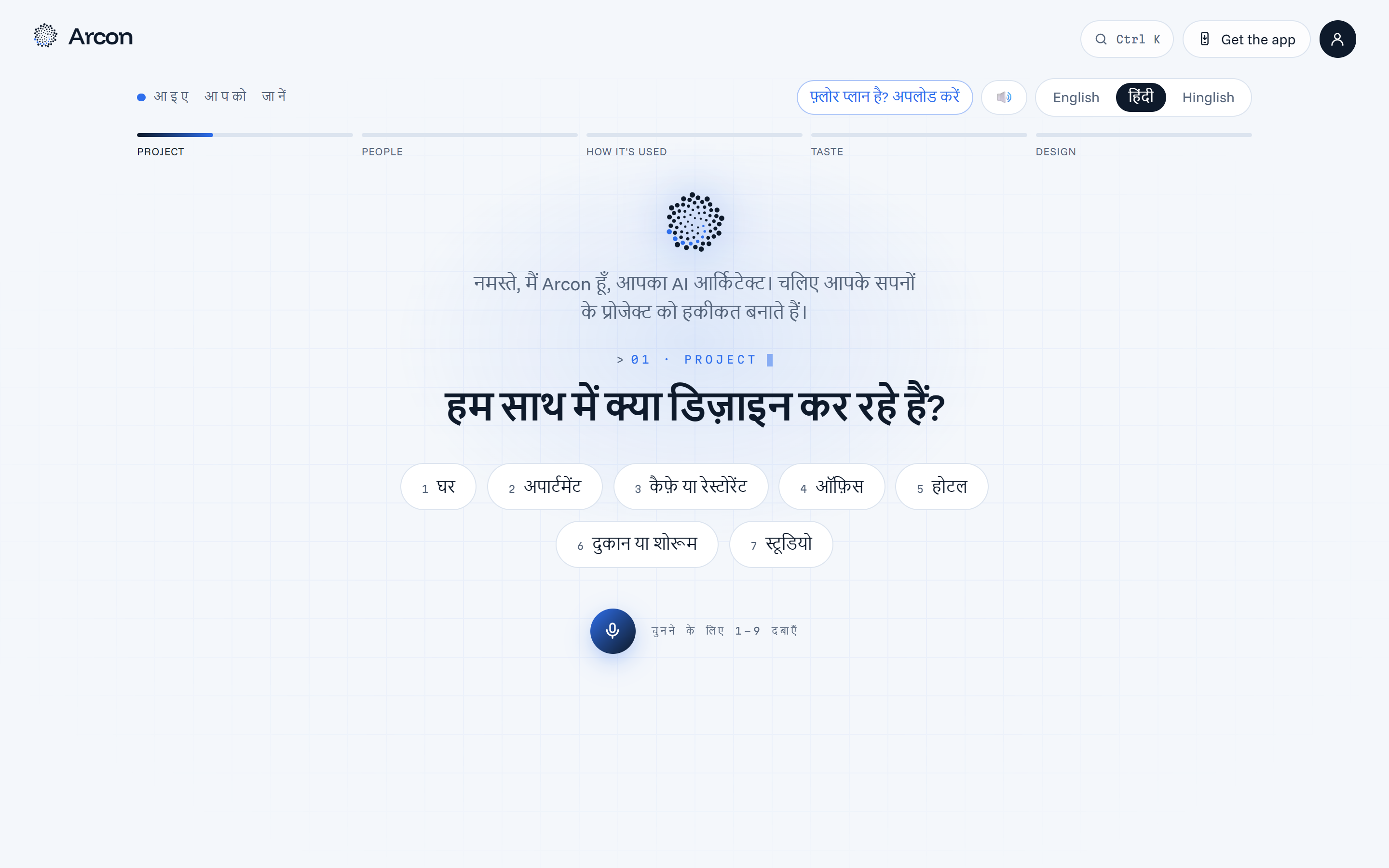
- 🗣️ Know you. A short interview by voice or text, in English, Hindi or Hinglish: the space, the people, how they live in it, the budget. Then three picture picks: a place, a brand, a film, show or music.
- 🧠 Read the taste. The picks are matched as you tap them. Their decor, ambience and aesthetics, the brands and artists they point to, and their price levels become one weighted taste profile, revealed as a style with its sources.
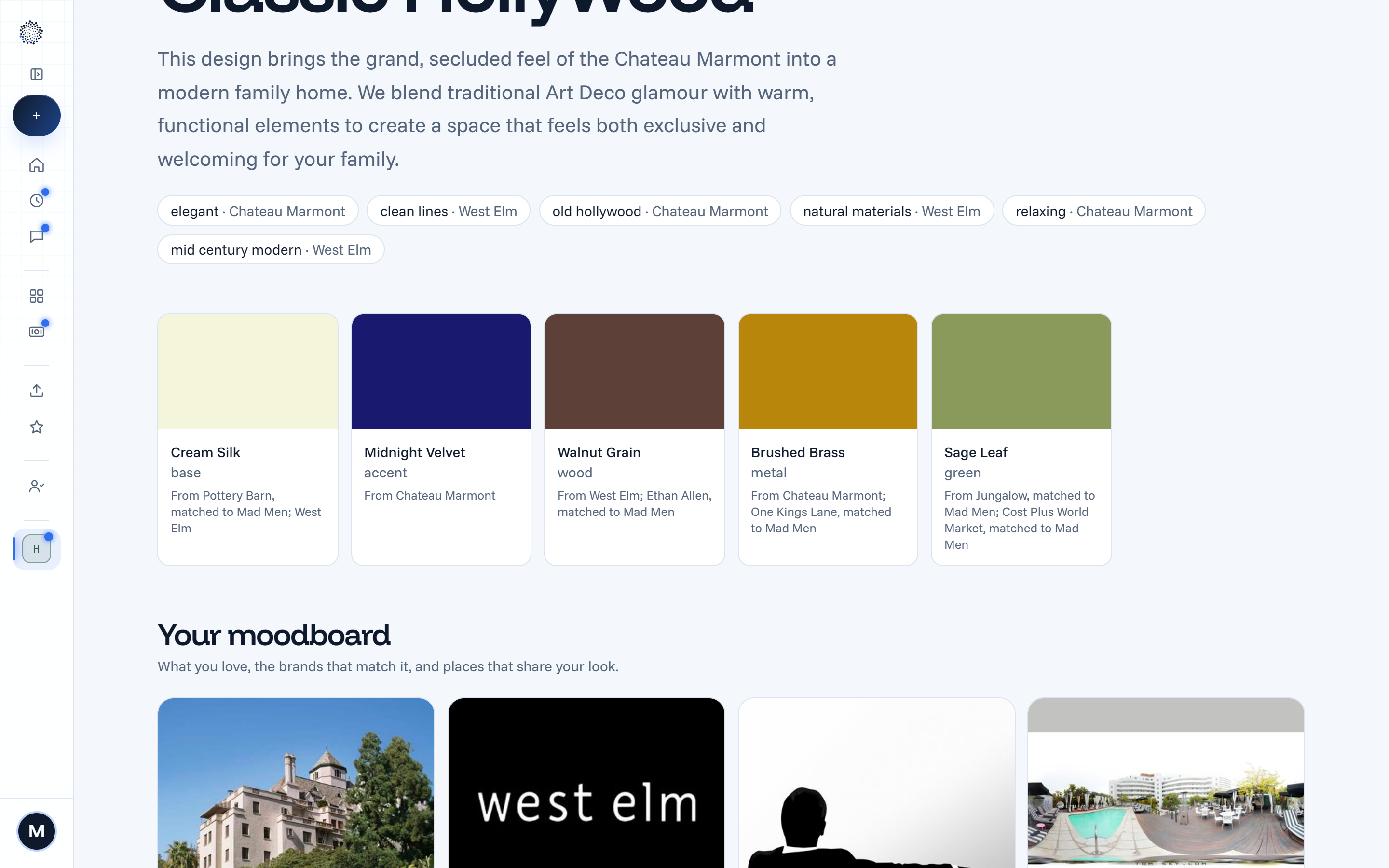
- 🎨 Your style. A brief with palette, materials, light and plants, each choice credited to the love it came from; a moodboard; art galleries nearby and a playlist; and a taste trail that lists every decision and its signal.
- 📐 Three plans picked for how you live. Drawn by Arcon's own layout engine and ranked from your answers and taste, each with "why this fits you" and honest trade-offs. Or upload your own plan and Arcon reads it.
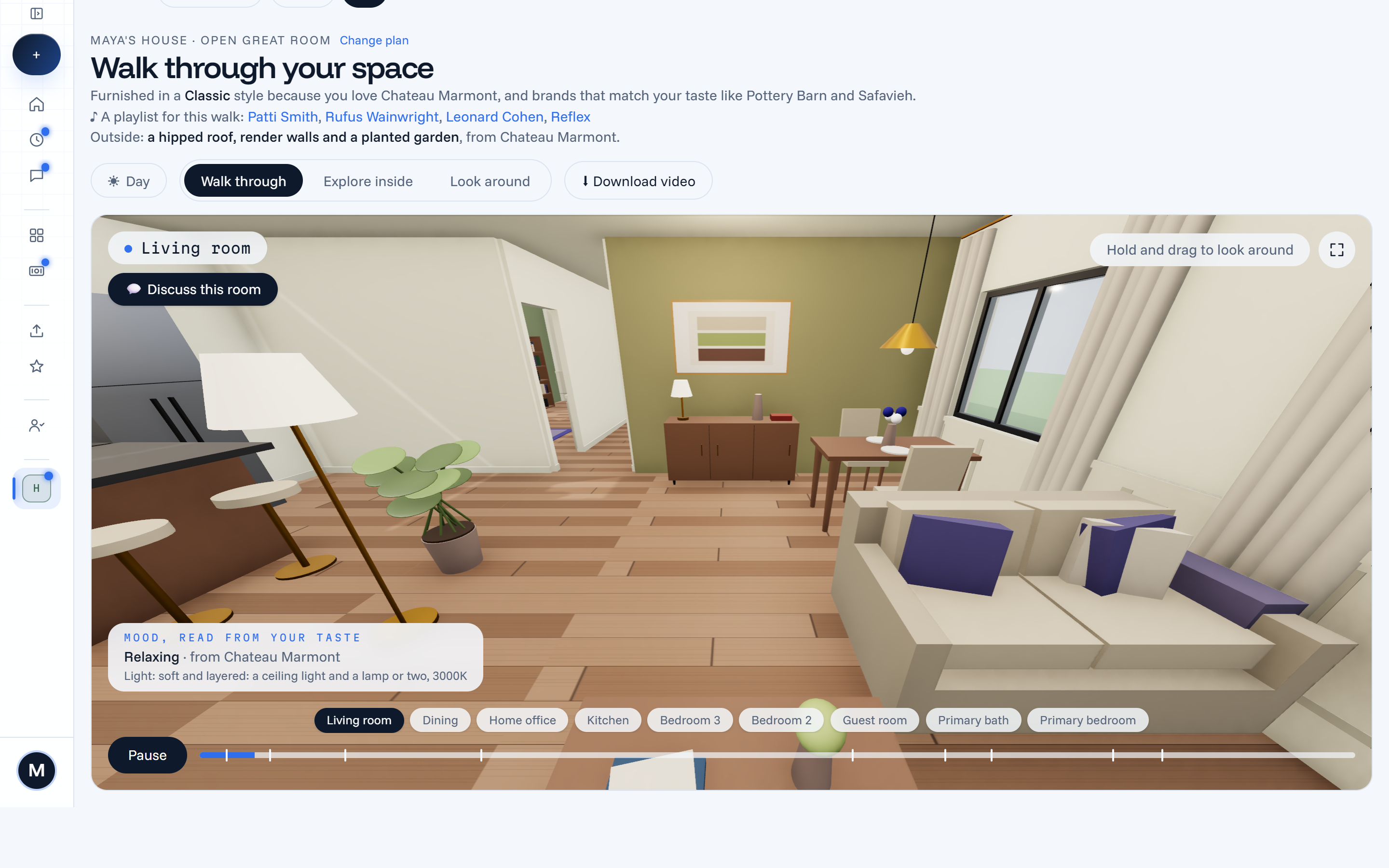
- 🏠 Walk through it in 3D. Furniture in your style, room moods and light, day and night, look around from above, a chip for every room.
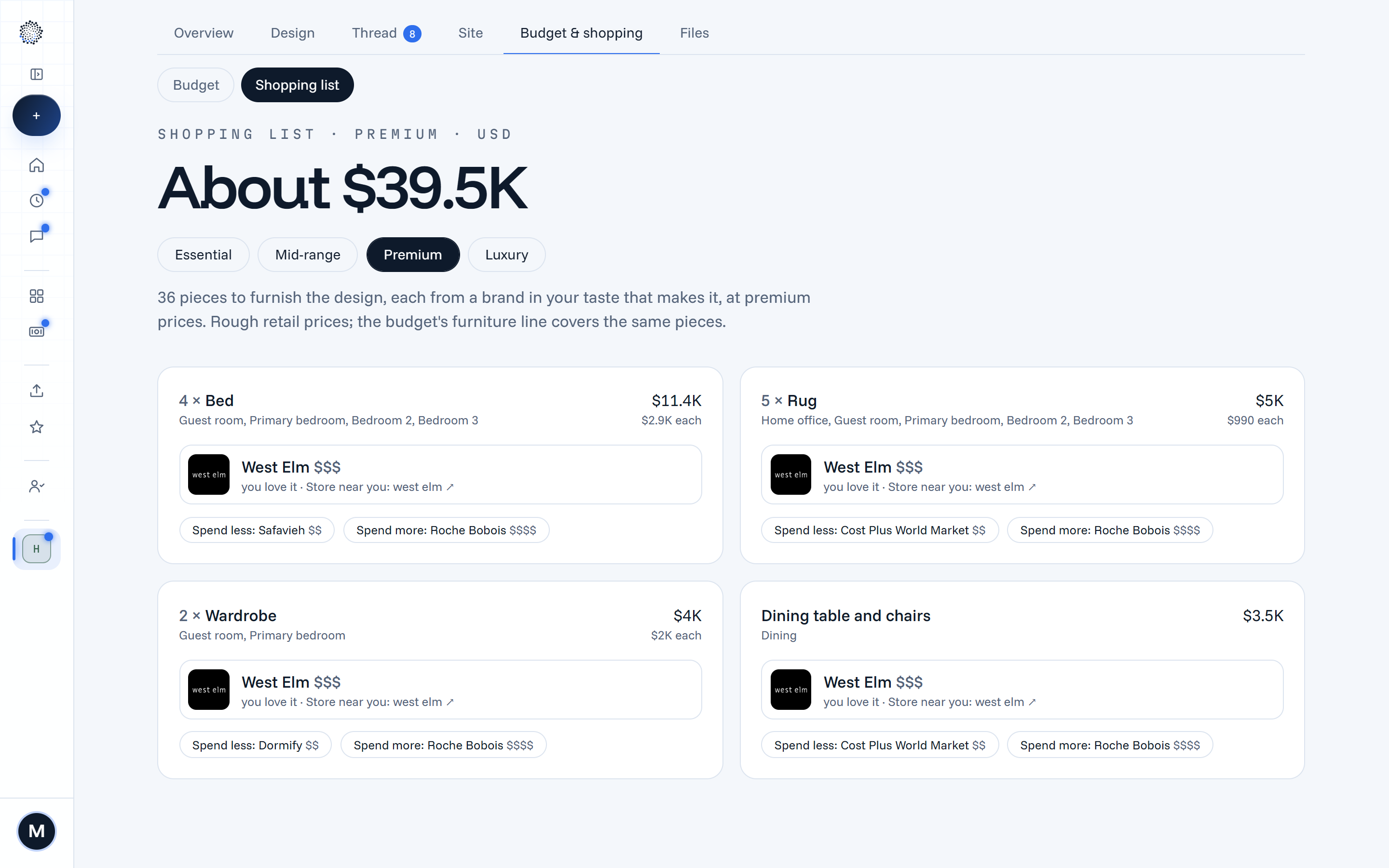
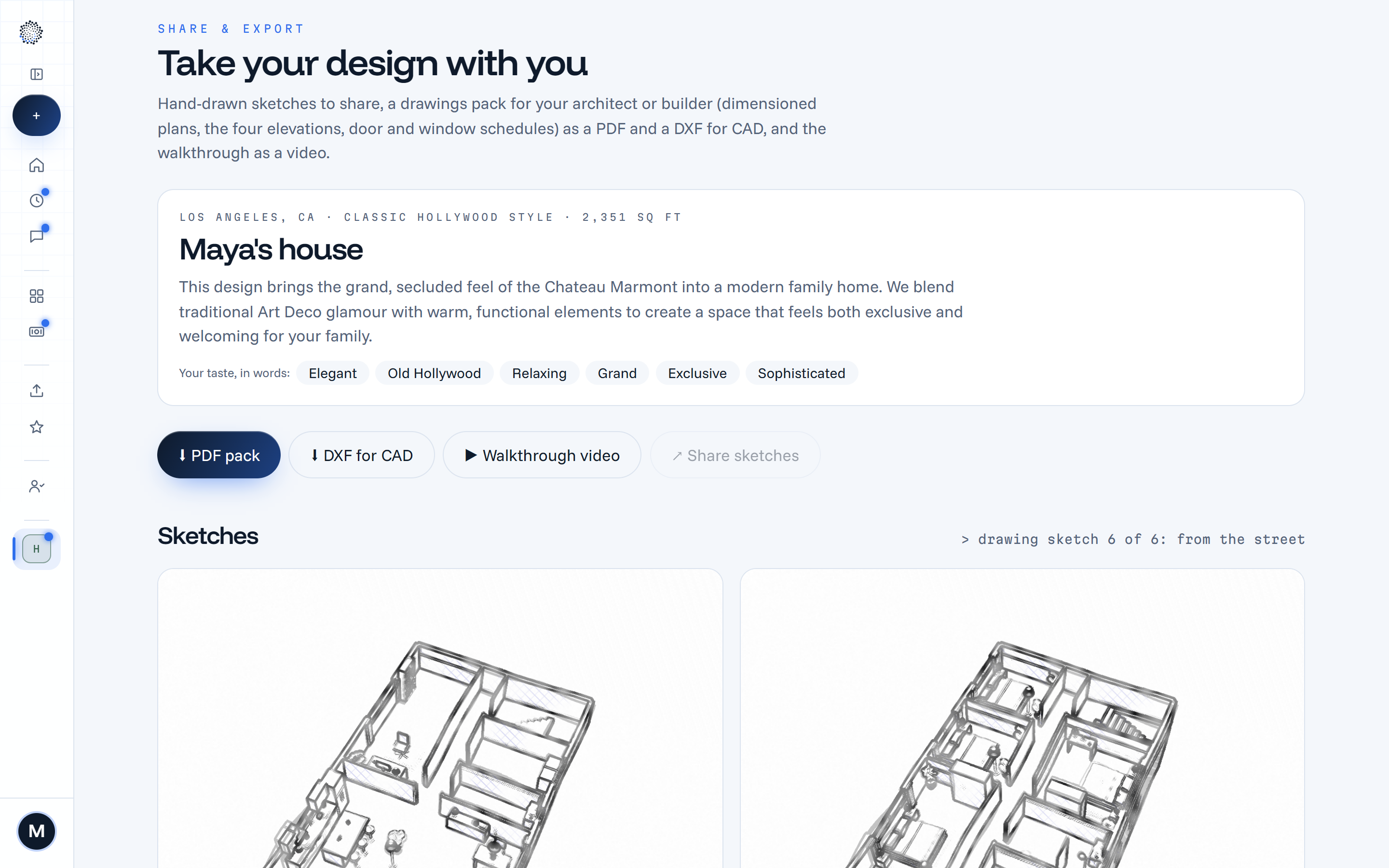
- 💵 Budget, shopping and drawings. Priced room by room from Arcon's cost database for 8 markets; a shopping list at your price level; a drawings pack with plans, elevations and schedules as PDF and DXF.
- 💬 Change anything by asking. "Add a study." "Make the kitchen bigger." Arcon's agent edits the plan, the code re-checks it against an architect's rules, and the 3D, budget and timeline follow, as versions you can undo.
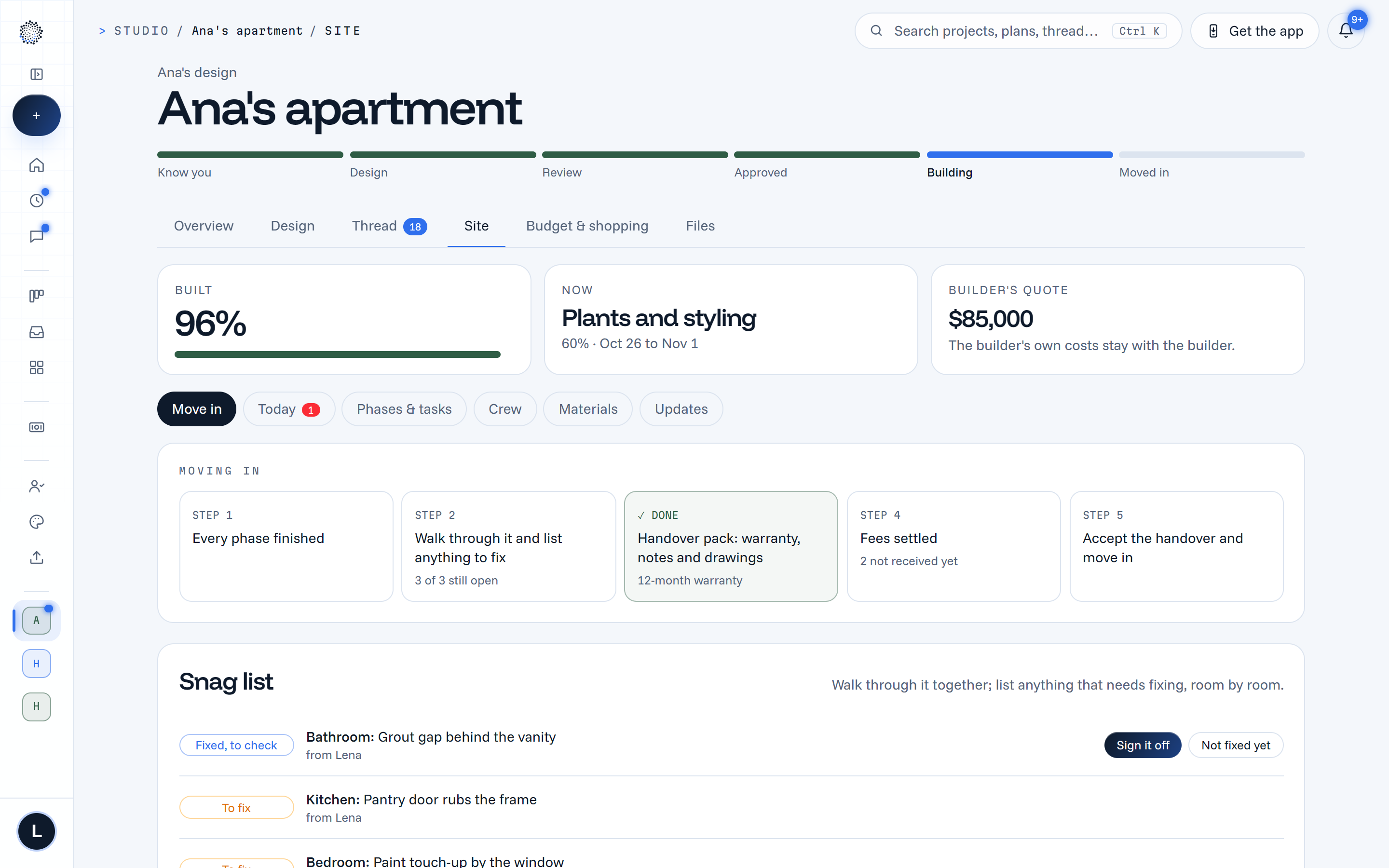
- 🤝 Run the whole build. Invite your architect, builder and client. One thread for everyone. Send for review; approval locks a version, and any later change shows its cost and waits for approval. Phases, crew, materials, deliveries and photo updates; a snag list, the handover pack, a warranty and the keys.
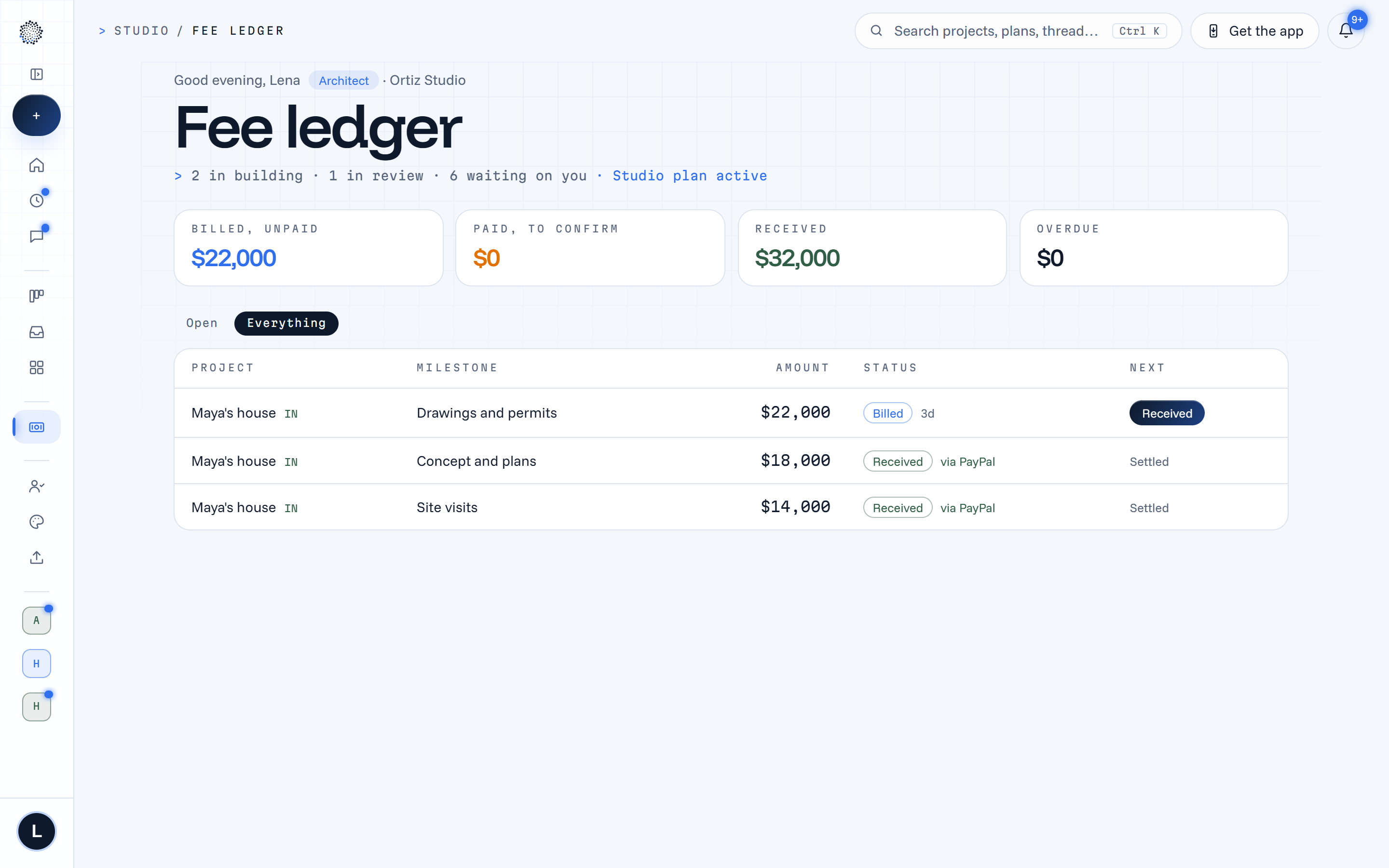
- 💳 Pay where the work is, with PayPal. Unlock your design with one payment. Your architect and builder bill each stage with a note Arcon drafts from the record; you ask what it covers, then pay with PayPal straight to them. It settles on the project at once, and their fee ledger shows it.
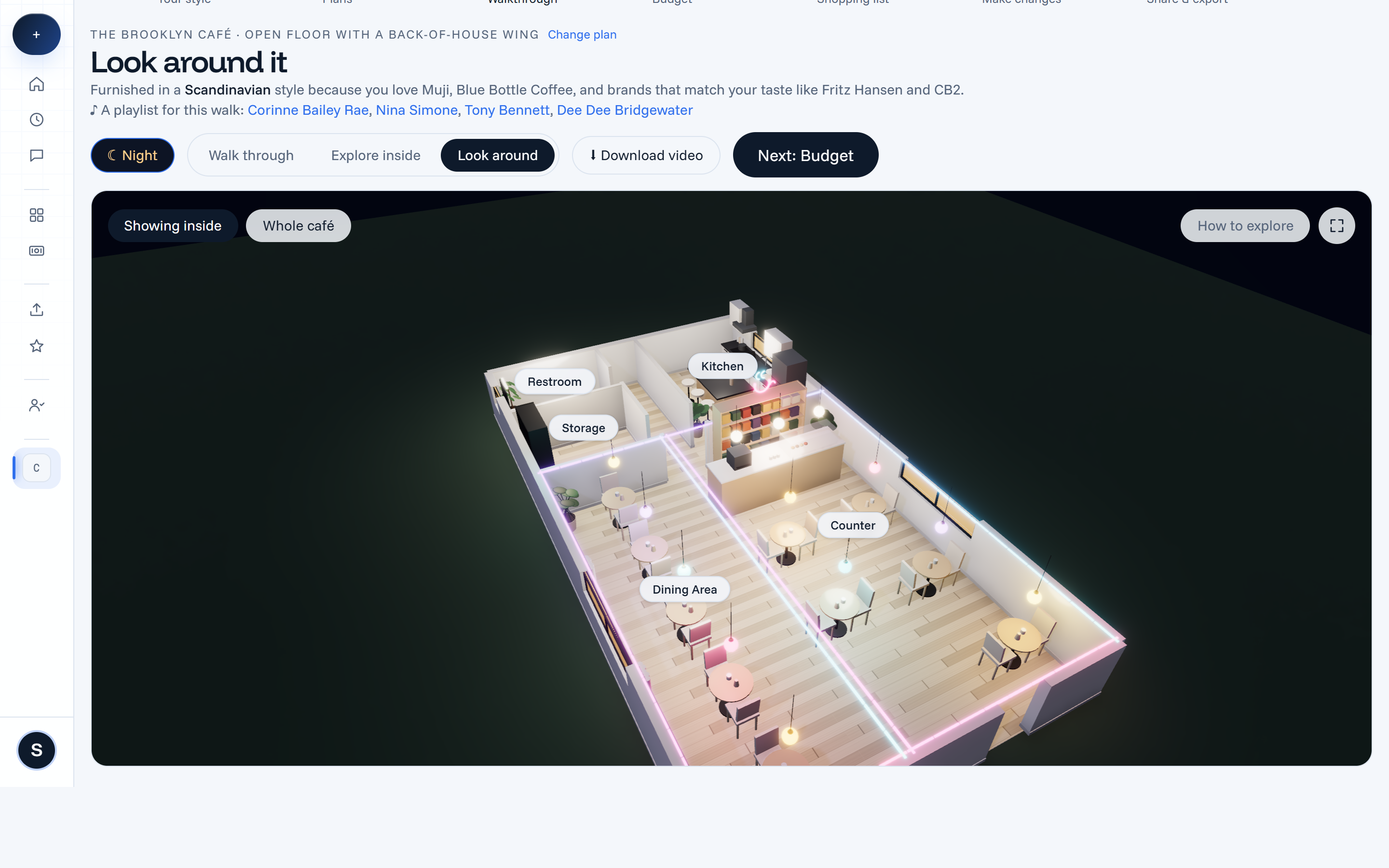
For businesses, Arcon reads the street. For a café, shop, office or hotel, Arcon places the site on the map and reads who already fills the places around it, by age, so the design fits its crowd. Sam's Brooklyn café in the tour is designed for its street and opens by night with lighting designed from its taste.
🧠 The taste engine: behind every decision
Taste is Arcon's starting point. Every design decision runs on a taste graph of places, brands, film, TV and music, and the app shows the signal behind each one.
- 17 modules read taste, through search, insights and heatmaps, with location, radius, popularity, price-level and age signals.
- 7 kinds of things you can love: places, brands, films, TV shows, artists, albums and destinations.
- 20+ tag families: decor, ambience, aesthetic property, emotional tone, style, price level, sustainability, industry, place categories and more.
| Taste signal | Design decision it drives | Where you see it |
|---|---|---|
| Decor and ambience of places you love | Style name and words, room moods and light | Your style · 3D "Mood, read from your taste" |
| Aesthetic and emotional tone of brands you love | Materials, palette, furniture style | Style words with sources · the 3D |
| Films, TV and music | Brand discovery, art wall, playlist | Moodboard · Art and sound |
| Price level, hotel class | The finish level the budget opens at | Budget |
| Matched brands, local stores | Shopping list at each price level | Shopping list |
| Sustainability tags, plant nurseries nearby | Greenery score and plant sourcing | Budget · Greenery |
| Interests behind each layout | Ranking of the three plans and their reasons | Plans |
| Heatmaps, local places by age | Neighbourhood read for a business | A café's neighbourhood |
Three layers, strongest first. Places you name carry decor and ambience directly; brands carry aesthetics and tone; culture reaches home brands through insights. The places you named weigh most, so many matched brands can't drown out what you said. A brand Arcon matched is credited as "matched to" what you love, never as something you said.
💳 PayPal: money that follows the work
PayPal isn't a checkout bolted on at the end. It's how money moves through the same record the design and the build live on, at the point in each person's work where it happens.
| Who | Where in their work | What happens | PayPal |
|---|---|---|---|
| Homeowner or business owner | A locked step (budget, shopping list, changes, drawings) | Style, three plans and the 3D are free. One payment ($149, $299 for a business) unlocks the rest, no account needed. It opens only after PayPal has captured the money. | Orders v2, captured on the server |
| Architect or builder | Account → "Get paid with PayPal" | Connects the PayPal account their clients pay into. Arcon never holds the money. | Orders v2 with the pro as payee |
| Architect or builder | Project → Fees → Bill… | Arcon's agent drafts the bill's note from the record since their last bill: the plan chosen, the changes, the approvals, the site phases signed off. They edit it and send it in one tap. | |
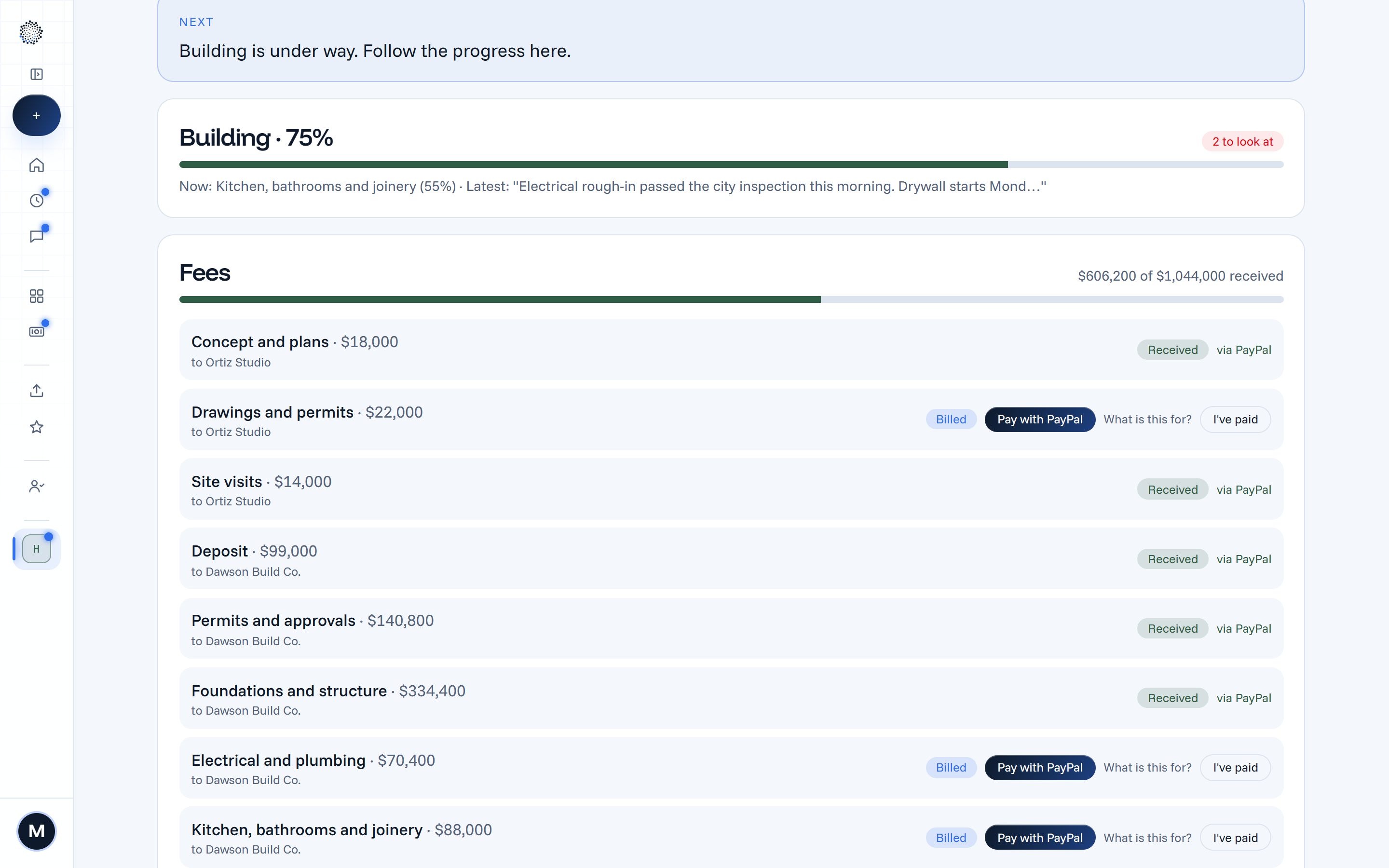
| Client | Project → Fees → Pay with PayPal | Asks "What is this for?" and Arcon explains the fee from the record. Then pays with PayPal, Pay Later or card, straight to the pro. It settles on the project the moment it goes through. | Orders v2, capture, webhook |
| Architect or builder | Account → "Plan and payments" | Studio ($99/mo or $990/yr) or Build ($299/mo or $2,990/yr). A trial that's still running stays free: the first charge waits for its end. | Subscriptions |
How the money stays right (lib/paypal/):
- The browser never sets an amount or a payee. It says what it wants to pay for; the server builds the order from Arcon's own records.
- Every order names the one thing it pays for in its
custom_id(unlock:<project>,fee:<milestone>,plan:<user>:<plan>), and settles only for the exact amount and currency asked for. - Settled exactly once. The capture route and the webhook can arrive in either order; a payment moves from created to completed once. Before capturing, Arcon checks the thing is still owed, so two tabs or a double click never charge twice.
- Webhooks verified by PayPal, then the order or subscription is read back from PayPal before Arcon acts on it.
🤖 Agentic by design
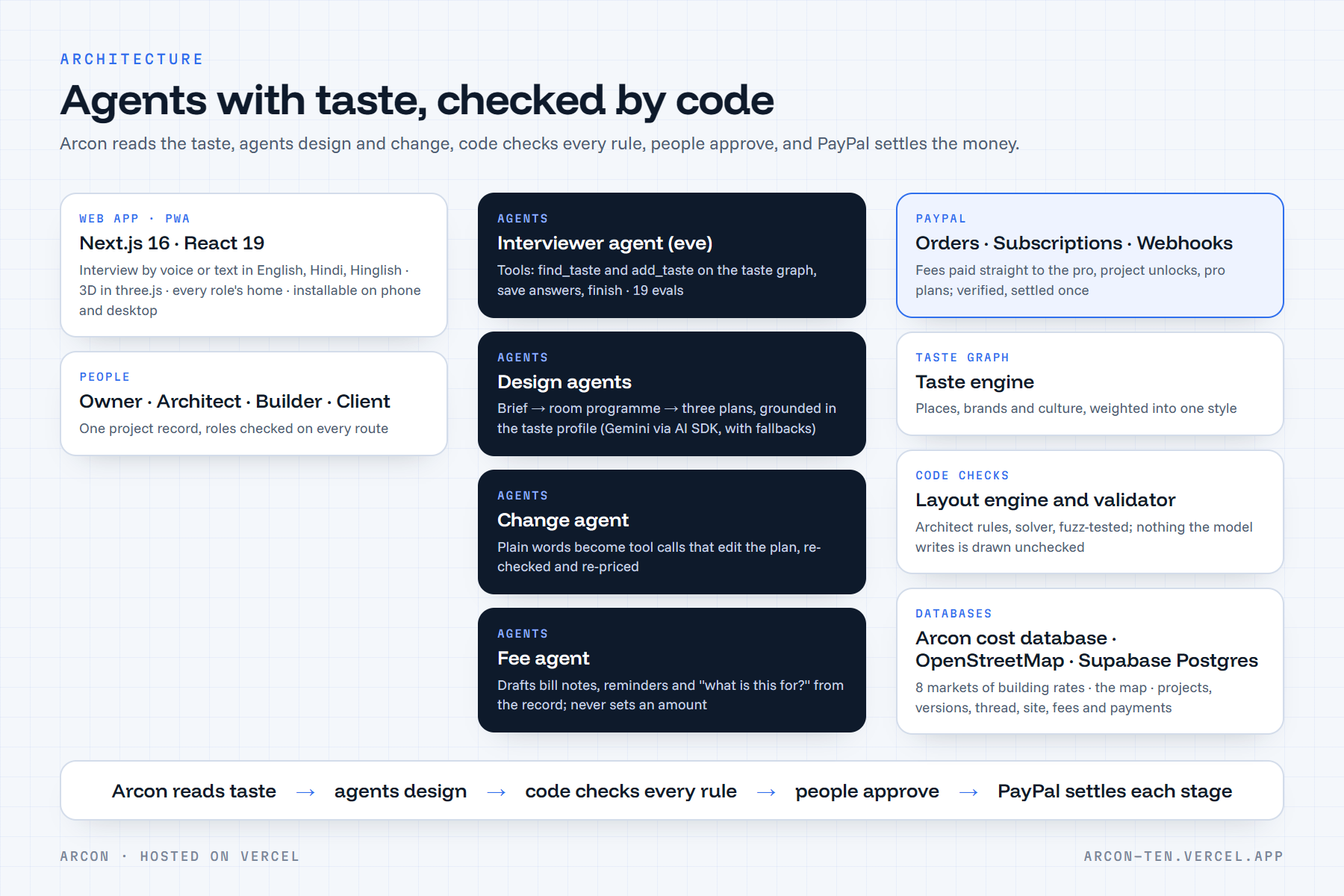
Arcon reads taste → agents design → code checks every rule → people approve → PayPal settles each stage
| Agent | What it does | Tools |
|---|---|---|
| Interviewer agent (built with eve) | Holds the conversation, resolves your loves, saves answers | find_taste, add_taste, save answers, finish · 19 evals |
| Design agents | Brief → room programme → three plans, grounded in the taste profile | Gemini through the AI SDK, with model fallbacks |
| Change agent | Turns plain words into edits of the plan | Tool calls that edit the layout; re-checked and re-priced |
| Fee agent | Drafts the bill's note, reminders, and "what is this for?" from the project's record | Reads only that pro's work and the client's answers; never sets an amount |
Models write; code verifies. Nothing a model writes is drawn, priced, credited or paid until the code has checked it. The fee agent writes words only: a draft that names any amount other than the fee's own is thrown away for a plain note, and that rule has its own tests. Nothing is sent or paid on its own: the pro sends every note, the client presses Pay.
🏗️ How I built it
I built Arcon alone, in six phases. Each phase ended with something working on the live site, tested, and written up in a dated build log.
Phase 1 · Foundations and the taste engine (9 to 10 October)
- Built the taste client first: every answer cached in the project database so a question is asked once, keys kept in the environment.
- The interview: a short chat by voice or text in English, Hindi or Hinglish that saves how a household lives in its own words.
- The taste engine: three weighted layers (places first, then brands, then culture), with filters so each signal is clean.
Phase 2 · Design intelligence (11 to 12 October)
- Taught the layout engine real layout concepts from an architect's practice, then a validator and a solver so every plan passes the same rules.
- Three plans per home, picked from how the family lives and what they love, each with what it does best and what it gives up.
- Real stairs, furniture that respects walls and doors, and a 3D walk that follows a person's route.
Phase 3 · The ecosystem (13 to 14 October)
- One project record for owner, architect, builder and client, roles checked on every route.
- Project thread with room tags, photos and files; find a pro ranked by taste match; fees by milestone.
- The building site: phases from the design's timeline, crew and attendance, materials, spend, snag list, handover and keys.
Phase 4 · Taste behind every decision (15 to 17 October)
- Room moods and light; art from galleries near the site; a playlist for the home; an exterior from taste.
- A neighbourhood read for cafés, shops and offices.
- Change requests priced before approval, builder quotes and sign-offs, and a drawings pack in PDF and DXF.
Phase 5 · Polish and proof (19 to 30 October)
- A guided tour through four real-feeling projects (Maya's house, Lena's studio, the Parks in review, Sam's café), view only, no sign-up.
- A café designed by night with its own lighting, phone-first fixes, a security upgrade of Next.js.
Phase 6 · PayPal, and the agent that handles money (1 to 11 November)
- PayPal Orders, Subscriptions and Webhooks in the sandbox: project unlocks, fees paid straight to the pro, Studio and Build plans.
- The fee agent: bill notes, reminders and explanations from the project's own record, with a guard that keeps every amount human.
- Payments everywhere in the tour: Maya pays her architect and builder stage by stage; Sam unlocks his café; and judges can pay a fee themselves, with no sign-up (it's billed again a few minutes later for the next visitor).
- A sandbox integration check that pays a fee into the architect's PayPal, settles it once, refuses a second payment, unlocks a project and refuses a wrong amount.
The stack
| Area | Technology |
|---|---|
| App | Next.js 16 (App Router), React 19, TypeScript, Tailwind, installable PWA |
| 3D | three.js with React Three Fiber, a hand-drawn sketch shader for drawings |
| Agents | eve agent framework, AI SDK 7, Gemini with fallbacks |
| Payments | PayPal: Orders v2, JavaScript SDK buttons (PayPal, Pay Later, card), Subscriptions, Webhooks |
| Taste | A taste graph API: search, insights, heatmaps |
| Data | Supabase (Postgres, Auth, Storage) |
| Hosting | Vercel |
🛡️ Engineering and trust
- An architect's rules in code. A layout engine with a validator and solver: stairs that line up, no bedroom opening off the kitchen, minimum room sizes, furniture only on solid wall and never across a doorway. A fuzz test runs hundreds of random homes on every test run.
- Money rules in code. Amounts and payees come only from Arcon's records; every order names what it pays for; settled once; webhooks verified.
- No invented claims. The brief may only credit things you said you love; a bill's note may only describe that pro's own work.
- Privacy by role. Every route checks who you are on the project. The builder's own costs stay with the builder; the client sees the budget, not the margins.
- Tested. 445 unit tests, 19 agent evals (including prompt injection), integration checks against the real services including the PayPal sandbox, and live checks against the deployed site after every deploy.
🌟 Where Arcon goes from functional to actually good
Arcon designs the right room for this person, because it knows what they love, and that runs through every step.
- 🧠 Every design starts from taste. The style, materials, palette, room moods, budget level, shopping list and the reasons behind each plan all come from what you love.
- 🏨 Taste becomes space. A boutique hotel, a design brand and a classic film become a style: walnut, brushed brass, deep velvet, low warm light, and a plan built around how the family lives.
- 💡 Lighting and mood, room by room. Each room's mood and light come from the ambience of the places you love. A café by night gets coloured pendants, a lit sign and a neon cove designed from its taste.
- 🔍 Every decision shows its source, and so does every bill: people trust a design, and a payment, they can trace.
- 🚀 Ready for real people today. Live on web and phone, 7 kinds of space, 8 markets, English, Hindi and Hinglish, and 100+ architects, met in conversations and meetings during the build, waiting to use it.
📈 Arcon in numbers
| 1 builder | built from scratch, from 9 October 2026 |
| 38,000+ lines | of TypeScript across 419 files, 310 commits |
| 445 tests · 19 agent evals | plus a PayPal sandbox check and live checks after every deploy |
| 4 agents | interviewer, design, change, fee |
| 17 taste modules | across 7 kinds of things you love and 20+ tag families |
| 4 PayPal capabilities | Orders, JavaScript SDK buttons, Subscriptions, Webhooks |
| 61 API routes · 18 database migrations | one project record for every person on it |
| 8 markets · 7 kinds of space | homes, apartments, studios, cafés, offices, shops, hotels |
| 4 people, 1 record | owner, architect, builder and client, from the first question to the keys |
🚧 Challenges I ran into
1. Floor plans an architect would sign. Problem: models write layouts that overlap, open bedrooms into kitchens and walk through walls. Solution: the model never draws. It writes the room programme; Arcon's own layout engine places the rooms, a validator applies an architect's rules, and a solver repairs.
2. An agent near money. Problem: a model drafting bills could invent a number or claim work another pro did. Solution: the agent only writes words. It reads only that pro's own record, every amount comes from the milestone the pro set, any other figure throws the draft away, and a person sends every note.
3. Turning taste data into design decisions. Problem: raw taste results are rich but noisy; a brand search can return a fashion label, and culture alone says little about walls. Solution: three weighted layers with places first, industry and media filters, popularity limits, and a credit on every word, so each decision has a clear, true source.
4. Paying the right person, once.
Problem: fees must go to the architect or builder, not to Arcon, two tabs must never charge twice, and judges shouldn't have to sign up to try it.
Solution: PayPal orders with the pro as payee, a custom_id naming what each order pays for, a still-owed check before capture, settled exactly once; the tour opens just the PayPal routes, and a fee paid there is billed again a few minutes later.
5. One product for four people. Problem: owners, architects, builders and clients need different views of the same project, and some numbers must stay private. Solution: one project record, roles checked on every route, and each person's own home: My spaces, Studio and Sites.
🏆 Accomplishments I'm proud of
Product
- ✅ A complete product, live today: from the first question to the keys, built solo
- ✅ Four people on one record: owner, architect, builder and client, each with their own home in the app
- ✅ Seven kinds of space and eight markets, with budgets by room and trade
- ✅ A drawings pack an architect can work from: dimensioned plans, four elevations, schedules, PDF and DXF
AI and PayPal
- ✅ Four agents, checked by code: interviewer, design, change and fee
- ✅ Bills that explain themselves: drafted from the project's own record, and explained to the client on request
- ✅ Fees paid straight to the pro with PayPal, settled on the project at once, never charged twice
- ✅ Judges can pay in the tour, in the sandbox, with no sign-up
Engineering
- ✅ A real layout engine: three distinct plans per home, fuzz-tested over hundreds of random homes
- ✅ 445 tests, 61 API routes, 18 migrations, a PayPal sandbox check, and live checks after every deploy
People
- ✅ 100+ architects on board: met in conversations and meetings during the build, and waiting to use Arcon on their own projects
📚 What I learned
- Taste is the input that makes design AI personal: "a hotel you loved" becomes something a system can reason about.
- Reliable agents need code around them: models are best at language and judgement, code is best at rules, and money needs both.
- Showing the source of every choice, and of every bill, builds trust faster than any explanation.
🏙️ How Arcon changes the industry
| Today | With Arcon |
|---|---|
| Weeks of meetings to find a client's style | A style read from what they love, in minutes, with its sources |
| One concept, redrawn by hand after every comment | Three plans at once, and changes in plain words, re-checked and re-priced |
| Budgets that surprise at the end | A budget by room and trade from day one, and the cost of every change before it's approved |
| Design, quote, site and invoices in separate tools | One project from the first question to the keys |
| Bills that don't say what they're for, chased by email | Bills drafted from the record, explained on request, paid with PayPal where the work is |
For homeowners and business owners: a design that feels like theirs, a price they can trust, and payments they understand. For architects and designers: briefs that arrive ready, concepts in minutes, and fees that get paid without chasing. For builders: a quote from the design, a site plan from its timeline, and each stage paid as it finishes.
💼 The business
| Plan | For | Price |
|---|---|---|
| Free | Anyone | Interview, style, three plans, 3D preview |
| Project | Homeowners and business owners | $149 a home, $299 a business, one time, with PayPal |
| Studio | Architects and interior designers | $99 a month, 14 days free, with PayPal |
| Build | Builders and contractors | $299 a month, 14 days free, with PayPal |
The wedge: a design in minutes, free to start. The expansion: every project designed in Arcon moves into the build, where architects and builders run on PayPal plans and get paid through Arcon. The flywheel: pros bring their clients, clients bring their builders.
🔮 What's next
- PayPal Payouts for a builder's crew and suppliers, straight from the site's records
- Invoices with the work attached: drawings and site photos for the stage they bill
- Going live with real PayPal accounts, starting with the architects I've been talking with during the build
- Photoreal renders from the 3D, more kinds of spaces, and native apps for the building site
🎤 To the judges
I started my first startup in my junior year of high school. Arcon is the one I have wanted to build ever since: the software an entire project runs on, with taste at its heart, and now, with money that follows the work. I believe it will change how the world designs, builds and pays for the spaces it lives in.
Arcon. Your AI architect, from the first conversation to the last payment.
Built With
- ai-sdk
- eve
- gemini
- next.js
- node.js
- openstreetmap
- paypal
- postgresql
- react
- supabase
- tailwindcss
- three.js
- typescript
- vercel