-
-
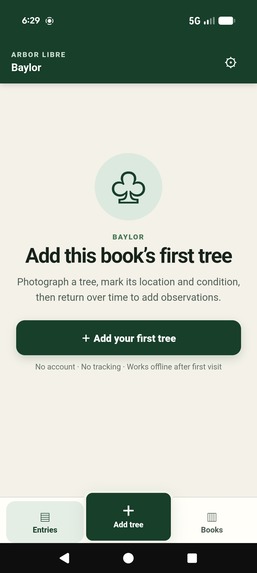
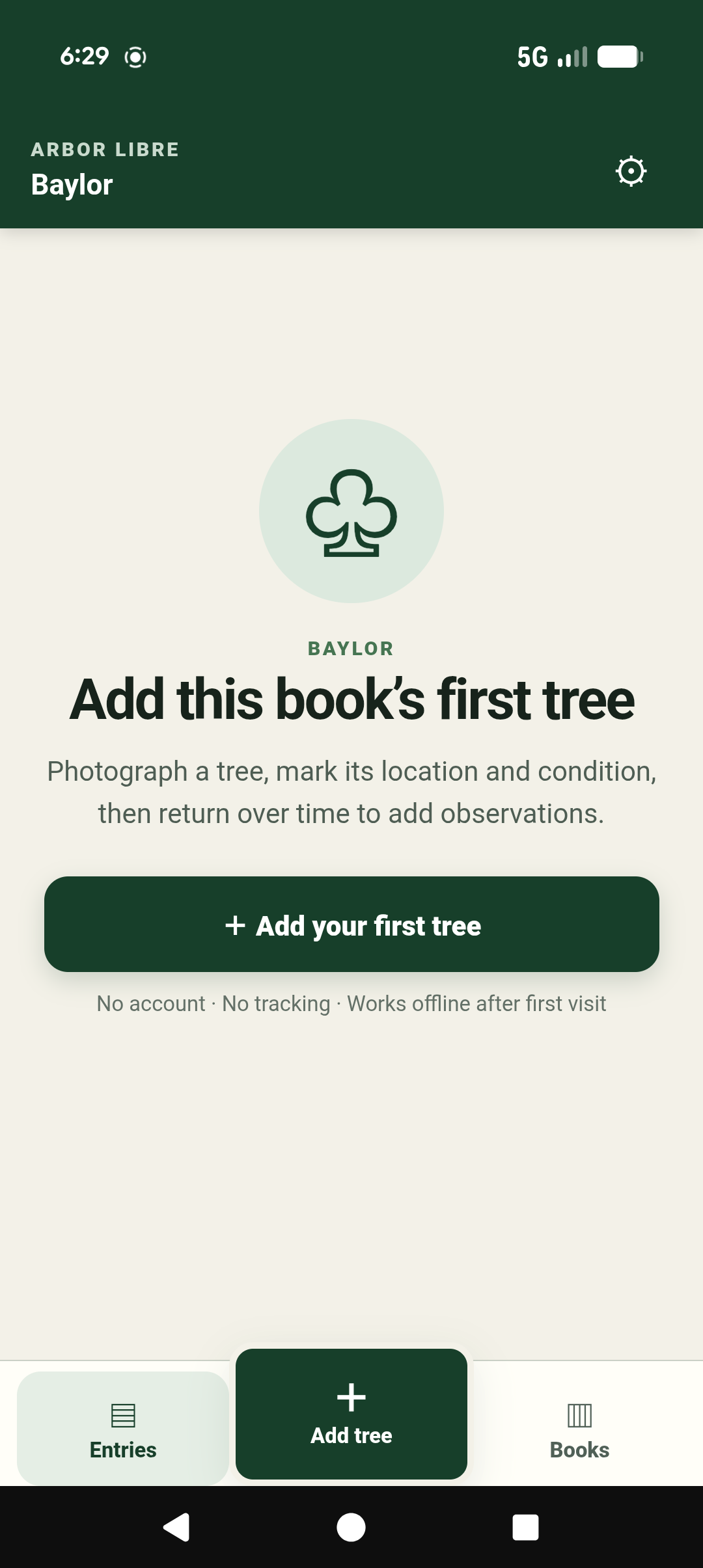
Create book and add first tree
-
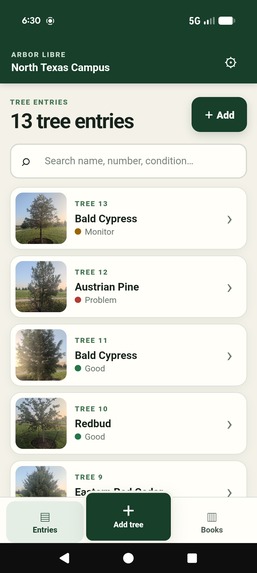
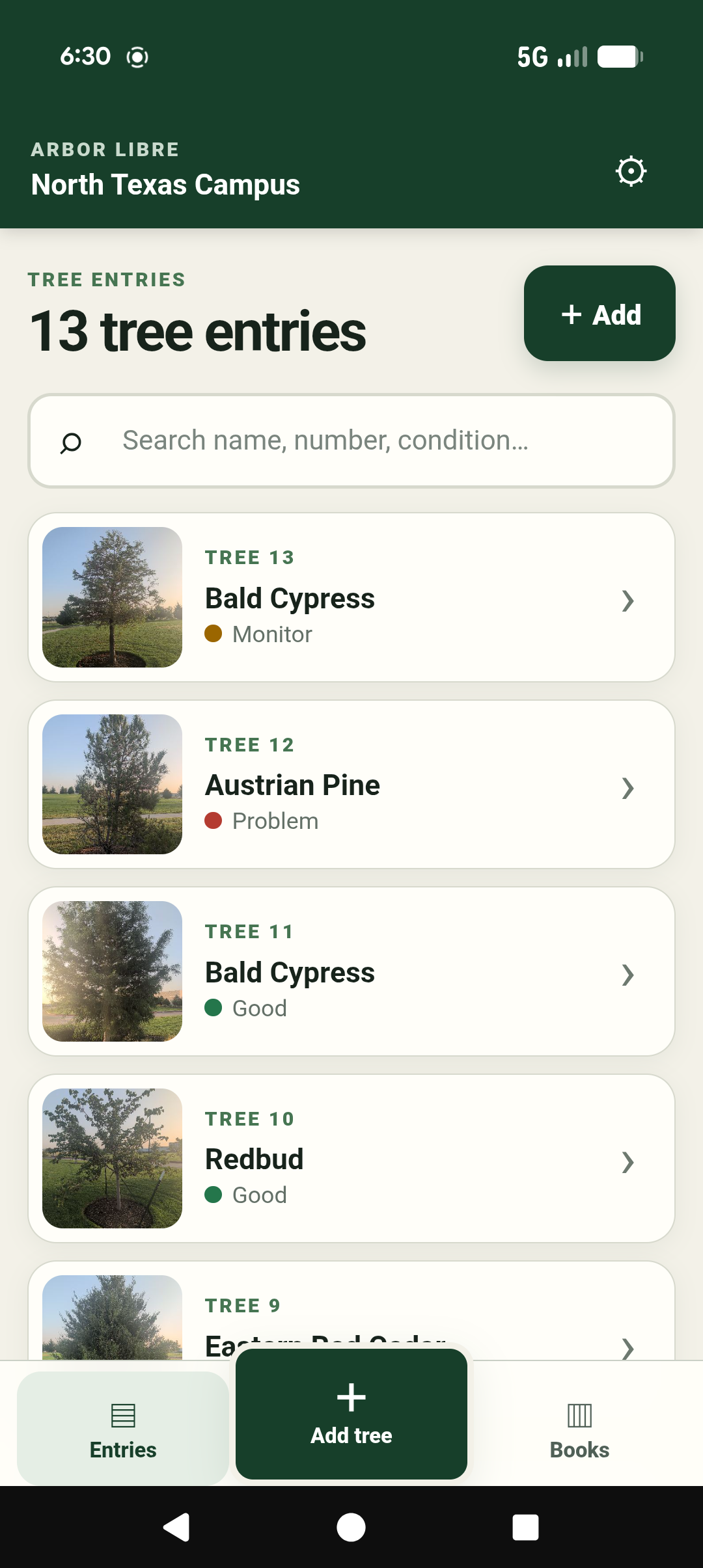
Add tree entries
-
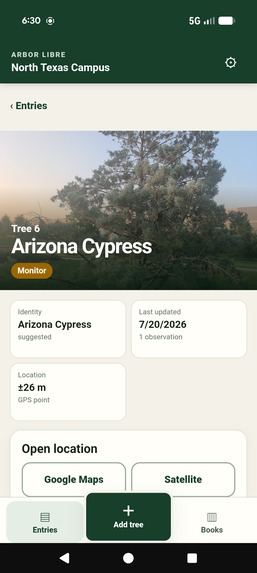
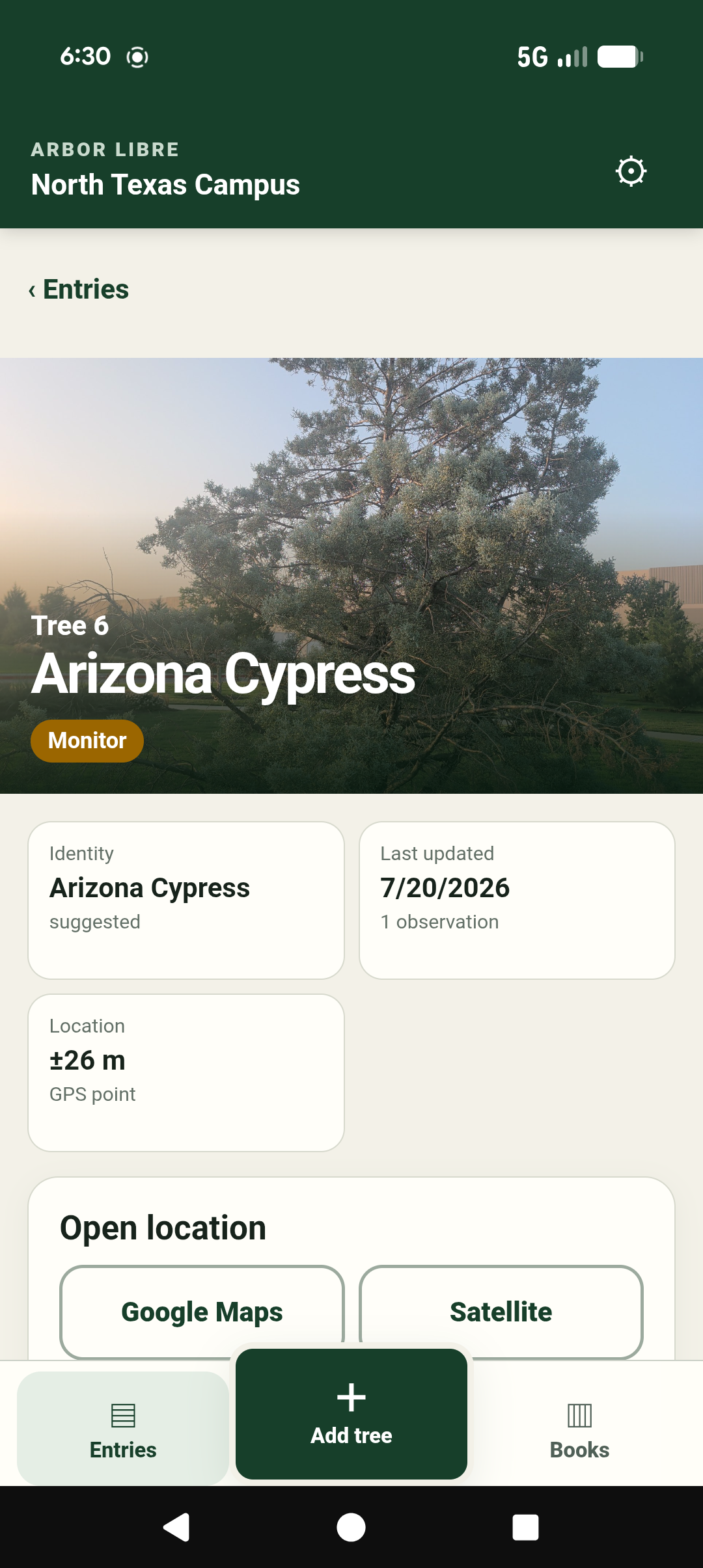
Tree information
-
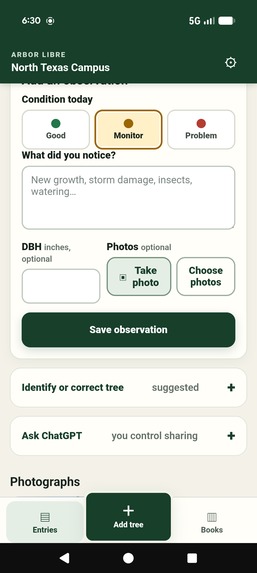
Information menu
-
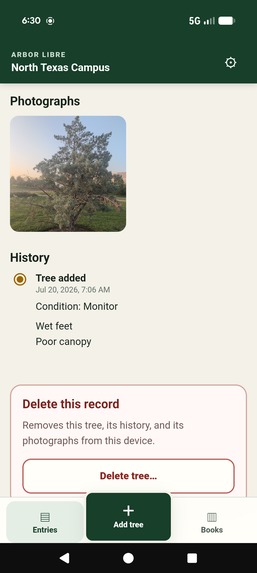
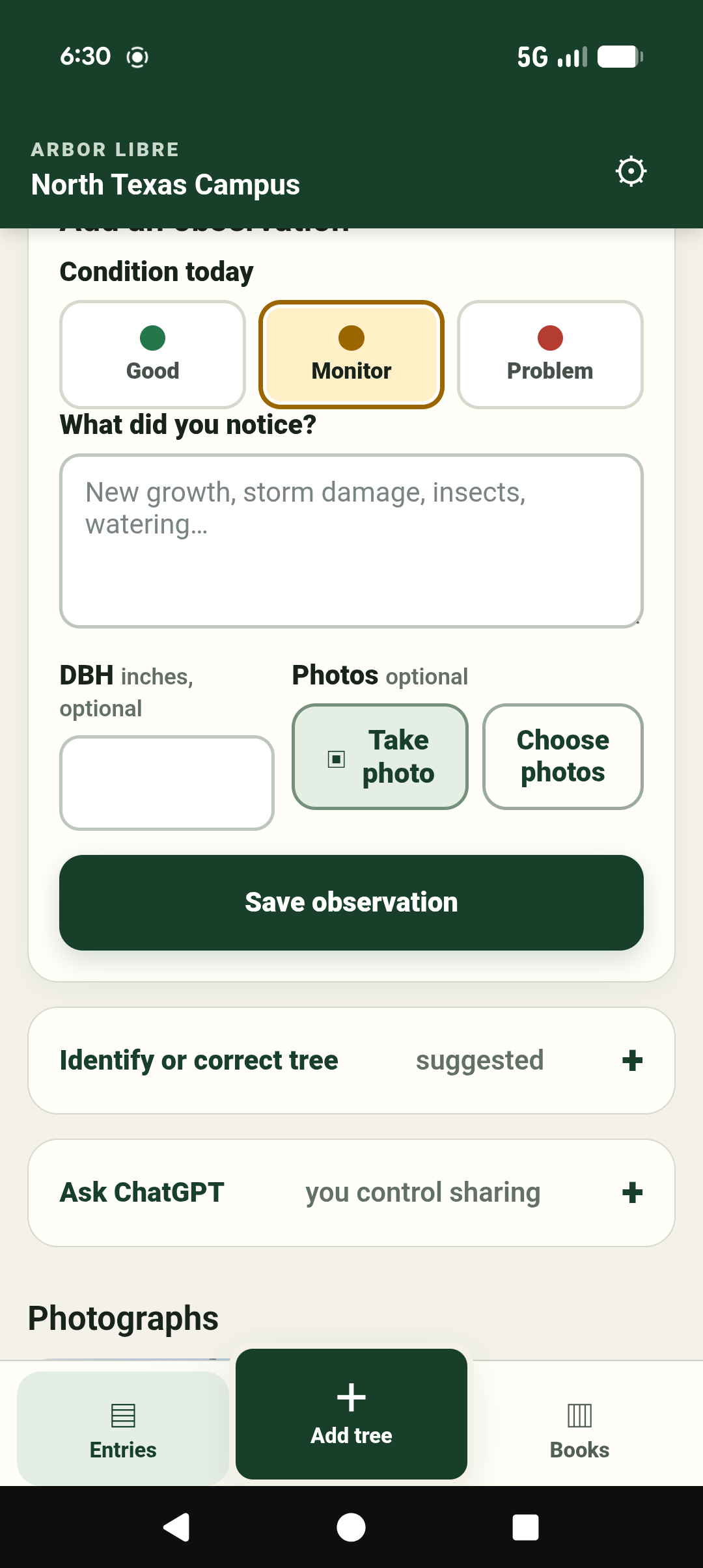
Build tree history
-
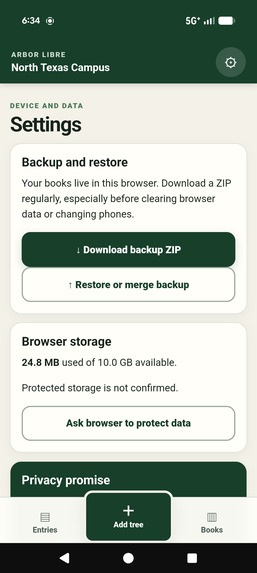
Backup/Downlaod/Restore
-
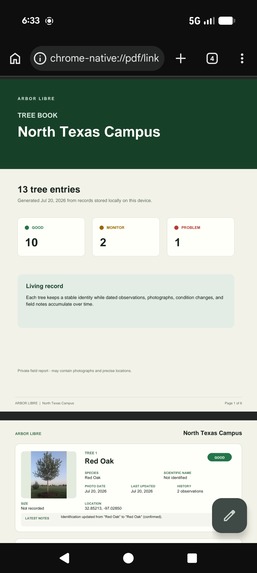
Create pdf of Tree Book
-
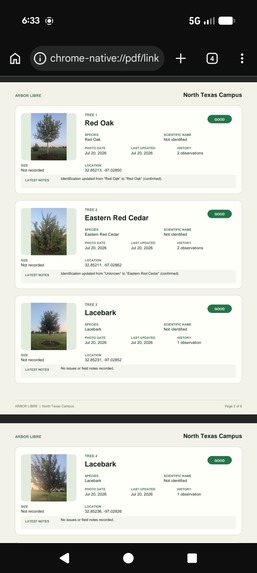
pdf Tree Book
Inspiration
I have spent more than 20 years working in the green industry and currently help manage more than 1,300 trees across three locations. Tree inventories are often scattered across spreadsheets, photographs, paper notes, and separate inspection reports. In the field, that makes it difficult to build and maintain a useful history for every tree.
I wanted one simple mobile tool that combined a tree catalog, inspection workflow, backup system, and professional reporting.
An app that didn't cost a fortune with features I wanted and no subscription.
What it does
Arborlibre is a field-ready, offline-first tree inventory and audit application. It allows users to:
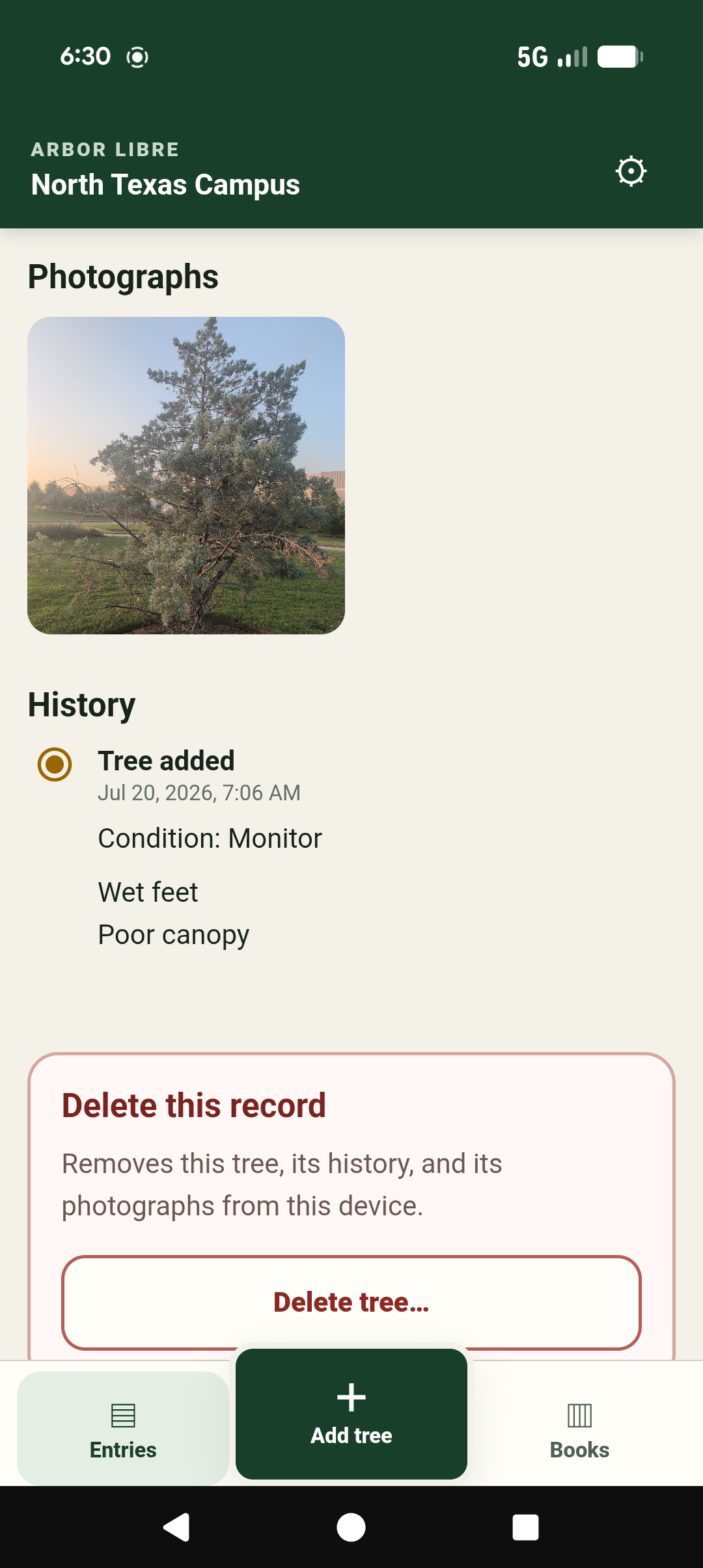
- Create searchable records for individual trees
- Organize trees by property and location
- Record species, condition, issues, observations, and inspection dates
- Capture photographs and device GPS coordinates in the field
- Maintain a visual history of each tree
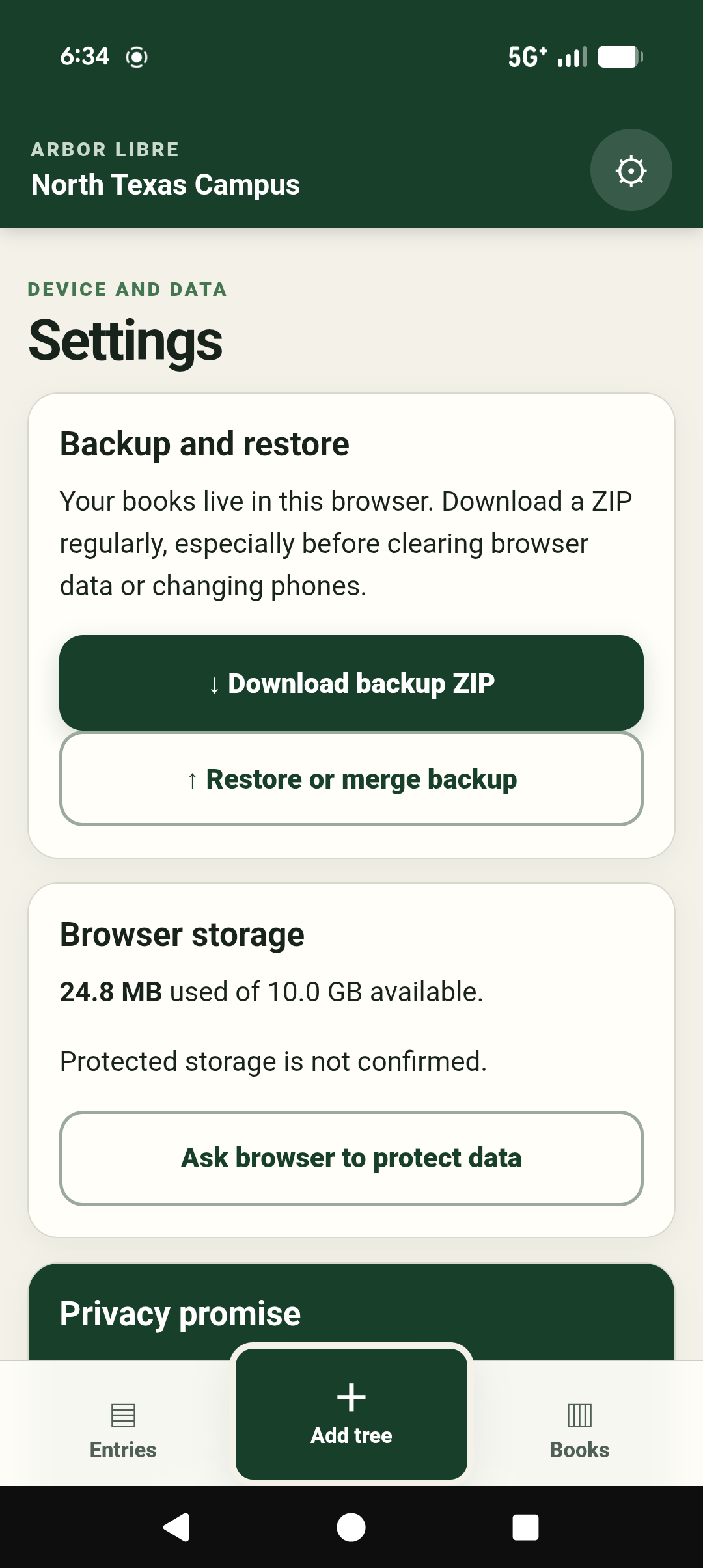
- Export complete, restorable ZIP backups
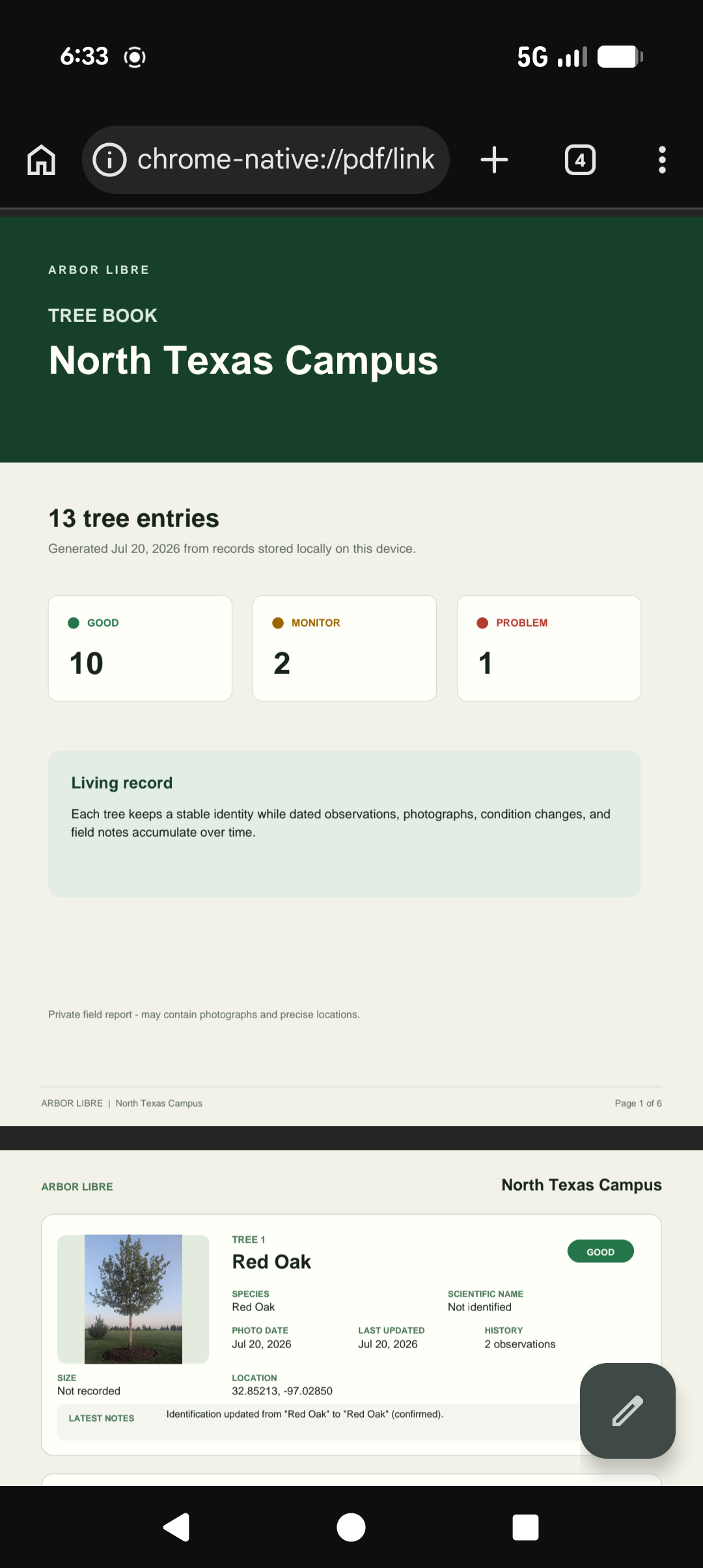
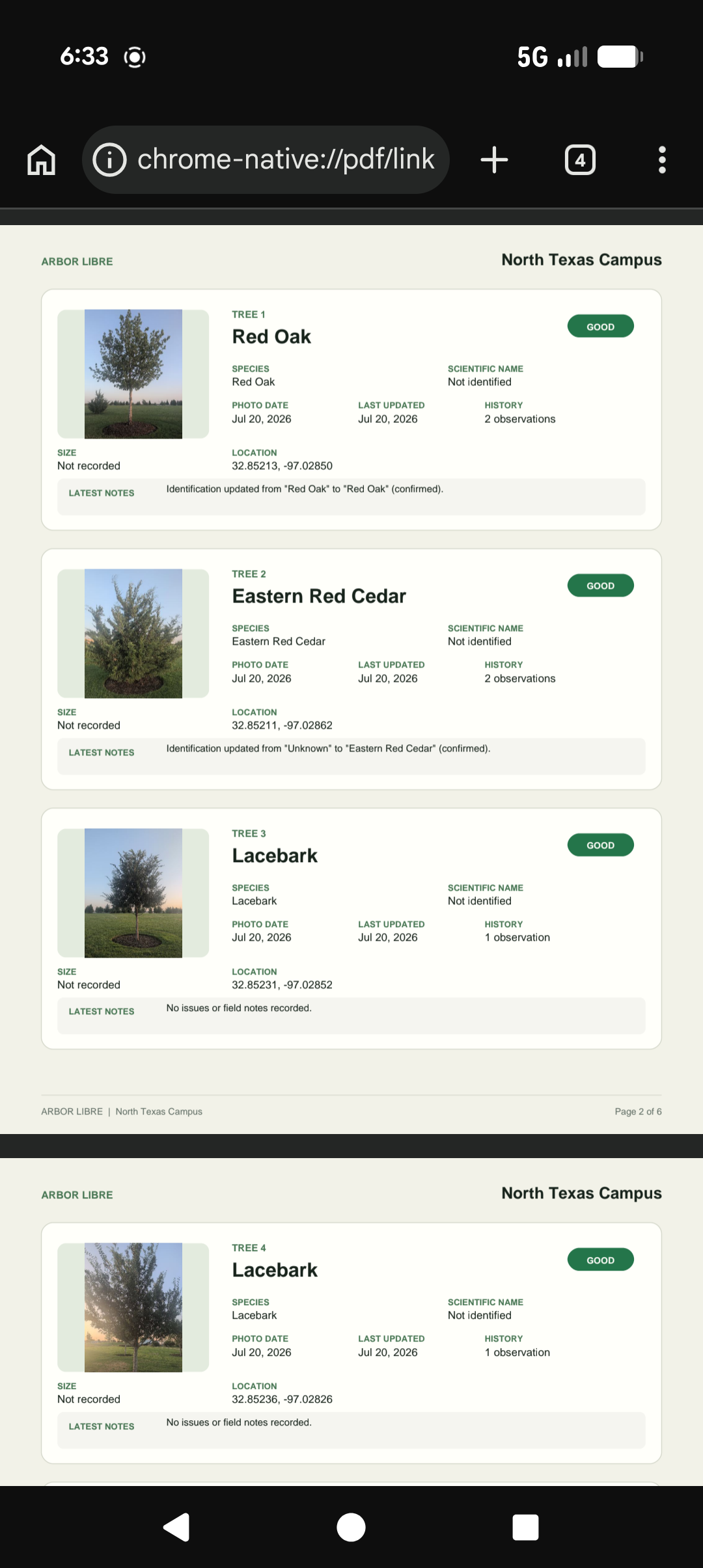
- Generate polished PDF tree books for owners, managers, and clients
The application remains useful where cellular service is weak or unavailable. Data stays available locally, allowing inspections to continue without depending on a remote server.
How I built it
I built approximately 99% of Arborlibre through vibe coding with GPT-5.6 and Codex. Rather than writing code by hand, I described features, workflows, bugs, and design changes in natural language. I also used screenshots to show Codex what I was seeing and guide each iteration.
I supplied more than 20 years of domain knowledge, defined the product requirements, made the design decisions, and tested the application under real field conditions. Codex translated that direction into the interface, offline data architecture, image handling, backup and restore system, responsive mobile design, and PDF reporting.
This workflow allowed me to move from an idea to a functional, field-tested application during OpenAI Build Week, beginning July 17, 2026.
This allowed me to move rapidly from an idea to a functional application that could be tested on a real phone under actual field conditions.
Challenges I ran into
The biggest challenge was making the application simple enough to operate outdoors while still collecting meaningful information.
Other challenges included storing photographs locally, accommodating variable GPS accuracy, creating trustworthy backups, preserving data without requiring an account, and turning raw inspection records into readable professional reports.
The PDF export was especially important. A database is useful to the person collecting information, but property owners and decision-makers need a document they can easily review and share.
Accomplishments that I'm proud of
We took a real operational need and made it into a working mobile application during a short development window.
Arborlibre is more than a technical proof of concept. It supports the complete field workflow: recording trees, attaching photographs and locations, documenting issues, finding records later, protecting the data through restorable backups, and producing polished reports.
I am especially proud that it works offline and is simple enough to use while walking a property.
The best feeling is watching work colleagues use the app and make suggestions. I really like seeing what chat and I built being used by other ppl.
The professional look and flow of the app.
What I learned
Arborlibre demonstrated how Codex can help a domain professional build specialized software without losing the experience and judgment that make the tool valuable.
The most important decisions were not simply about code. They were about understanding what information matters in the field, how quickly it can be recorded, and how people will use it later.
Vibe coding leveled the playing field and allowed me to make a functional app that helps me in my daily job.
What's next for Arborlibre
The next phase will include long-term inspection comparisons, improved mapping, optional external high-accuracy GPS support, team workflows, and intelligent summaries that help identify developing tree-health and property-wide maintenance trends.
Arborlibre is already a working application. My next goal is to begin using it across three real properties containing more than 1,300 trees (we started to use it as a company tool today).
Even though designed to run local I see the need for cloud storage. Chat and I will be working on that next.
I would like to build an interactive tree map of the saved books as a feature.
Built With
- api
- app
- codex
- css3
- gps
- html5
- indexeddb
- javascript
- jspdf
- jszip
- manifest
- openai
- progressive
- service
- web
- worker

Log in or sign up for Devpost to join the conversation.