Inspiration
Freshwater ecosystems are constantly changing, but environmental information can be difficult to turn into clear, timely decisions. I was inspired by the OneAquaHealth mission to connect environmental monitoring, citizen science, AI, and human wellbeing. I started with a simple question: What if citizen science didn't just tell us what is happening, but helped us decide what to investigate next? That question led me to build AQUORA — Aquatic Understanding & Risk Anticipation.
What is AQUORA?
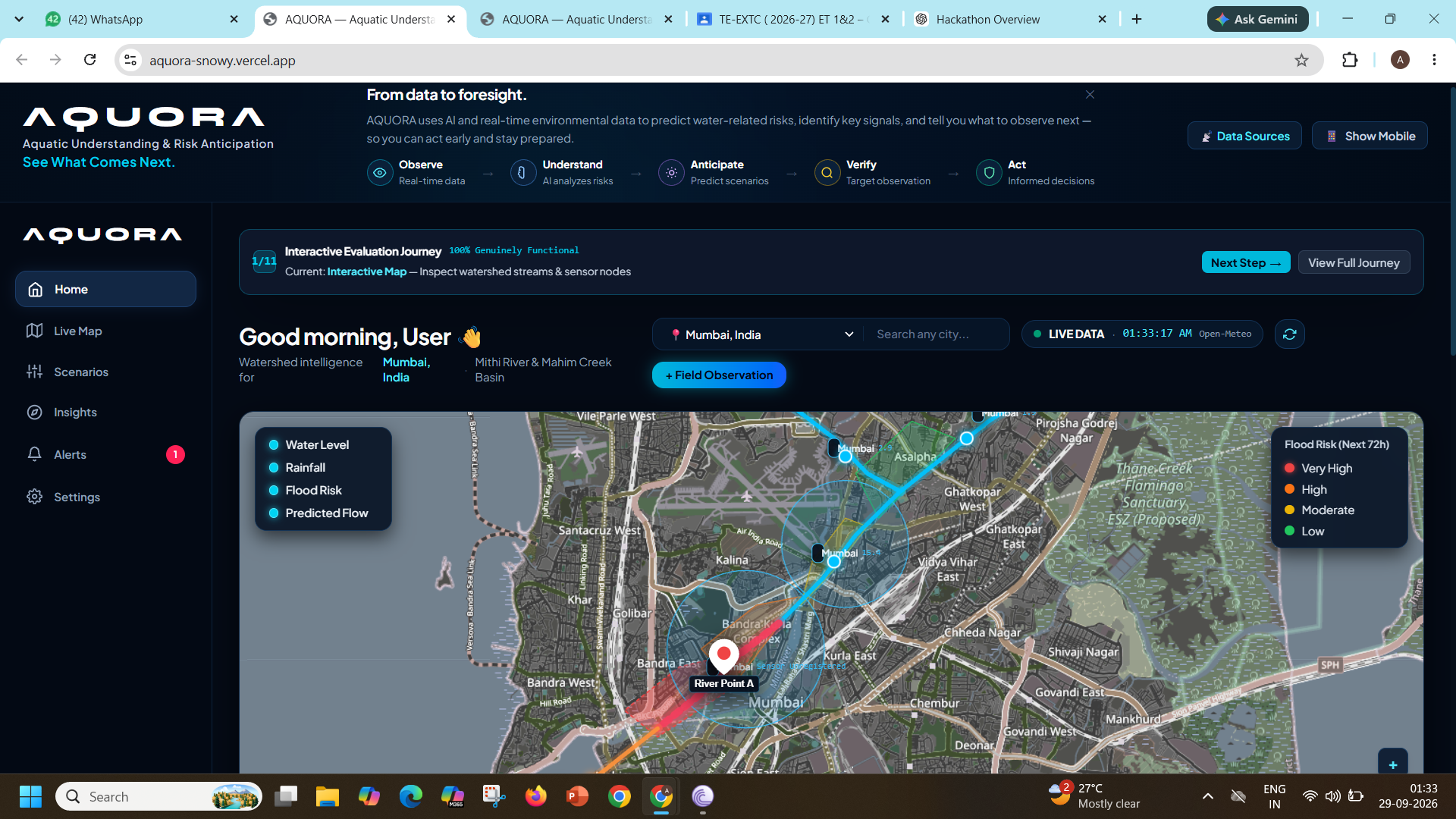
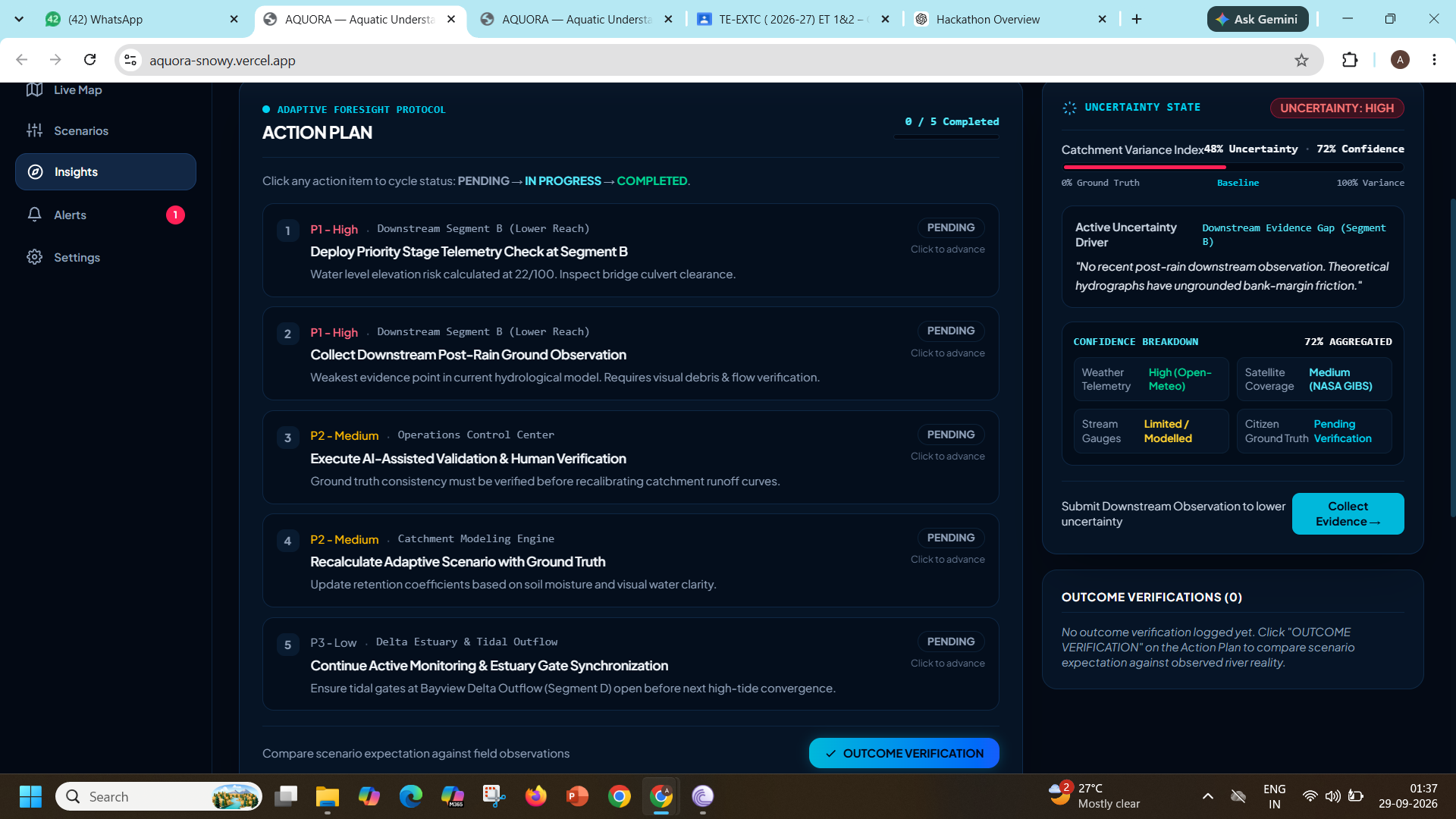
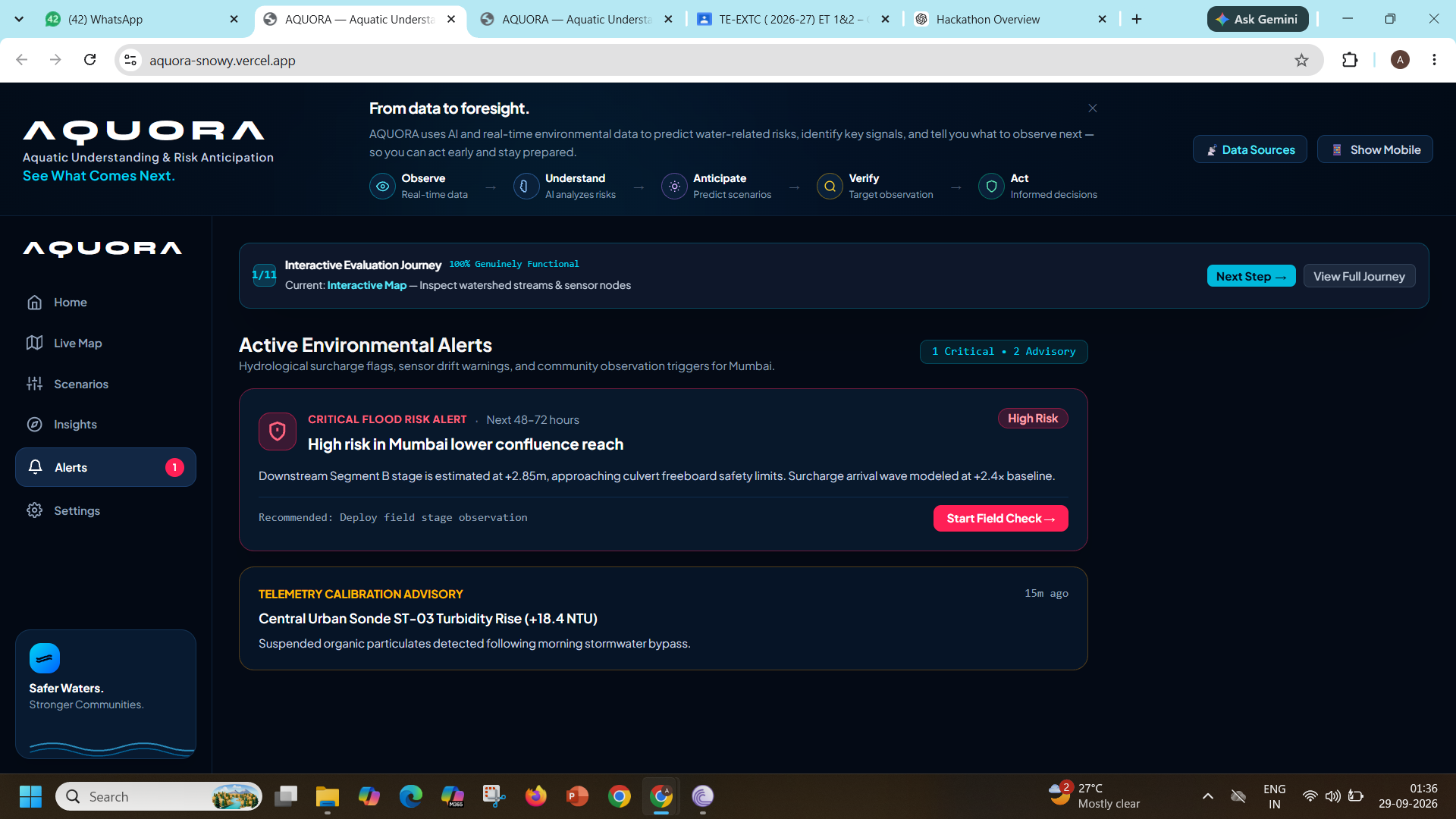
AQUORA is an AI-assisted freshwater resilience platform that helps communities explore environmental scenarios, understand uncertainty, and decide what evidence should be collected next. Instead of stopping at a dashboard, AQUORA follows an adaptive workflow: Observe → Understand → Anticipate → Verify → Act Users can explore scenarios such as heavy rainfall, heatwaves, vegetation loss, and upstream development. AQUORA combines available environmental data and observations to show potential impacts, explain the factors involved, identify evidence gaps, and recommend a Next Best Observation. AI is used as a decision-support layer, while human observation and verification remain central.
How I Built It
I built AQUORA as an interactive web prototype focused on making complex environmental information understandable and actionable. The prototype includes:
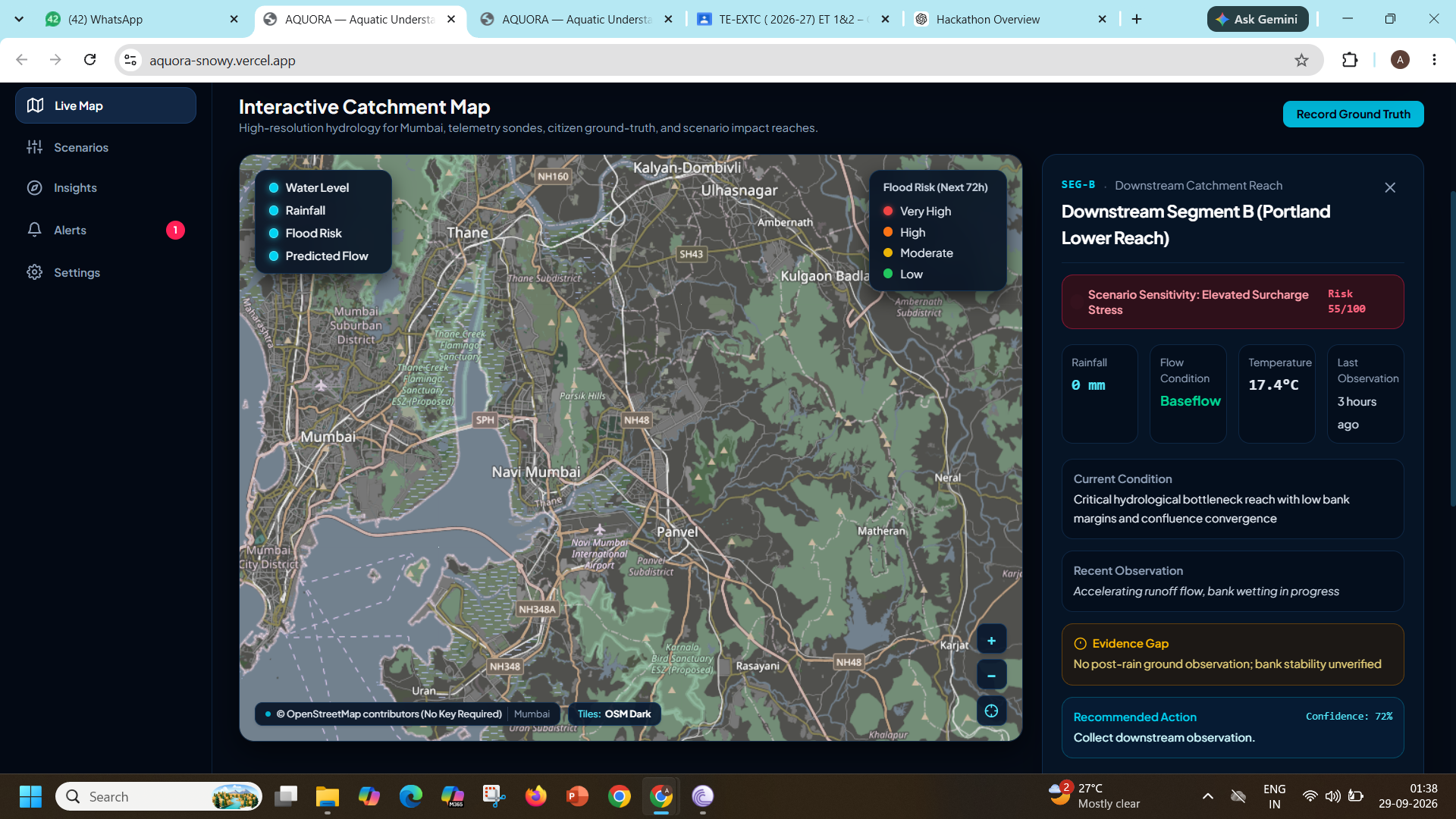
- Interactive environmental map
- Live environmental data integration
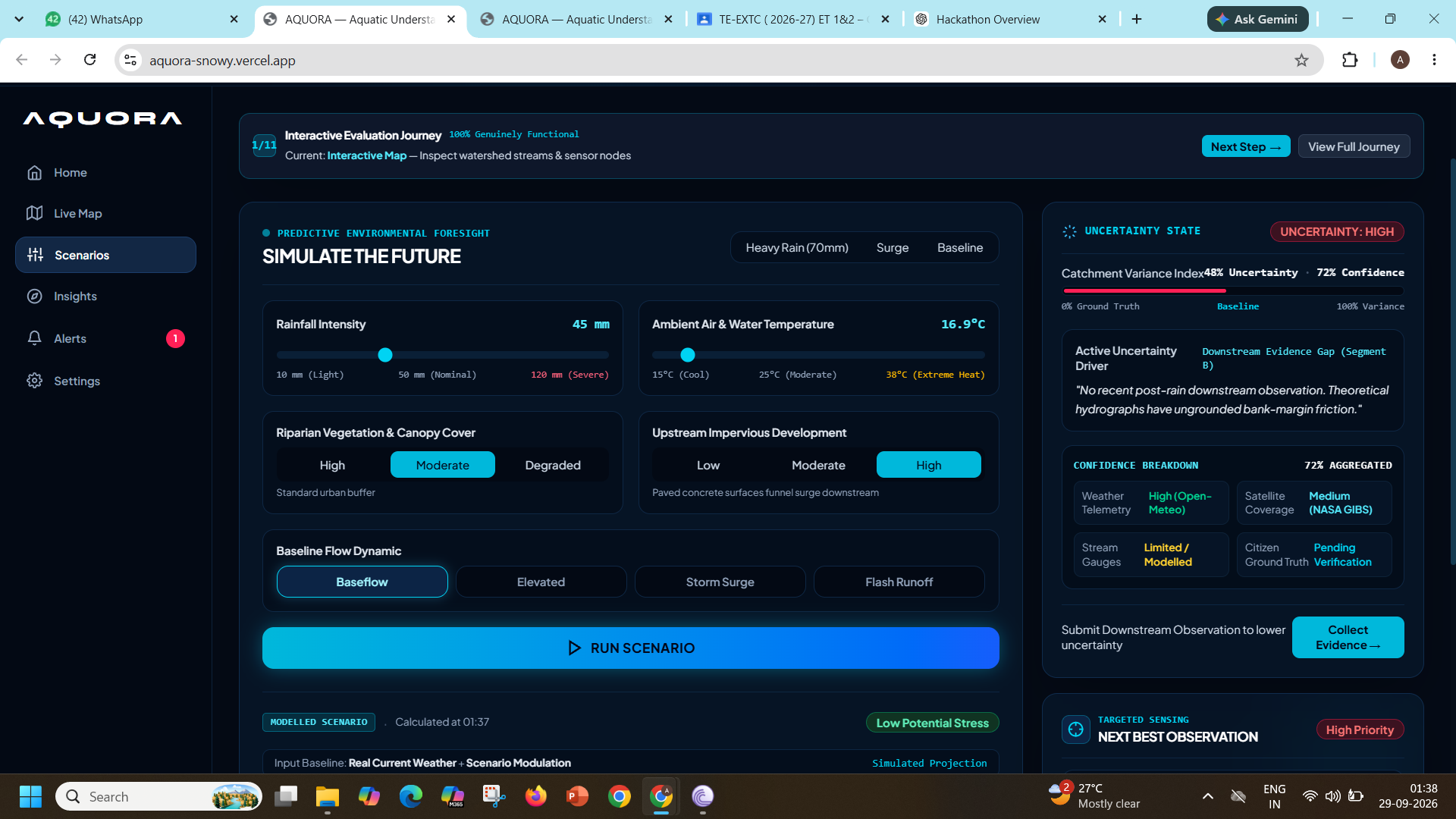
- What-if scenario simulation
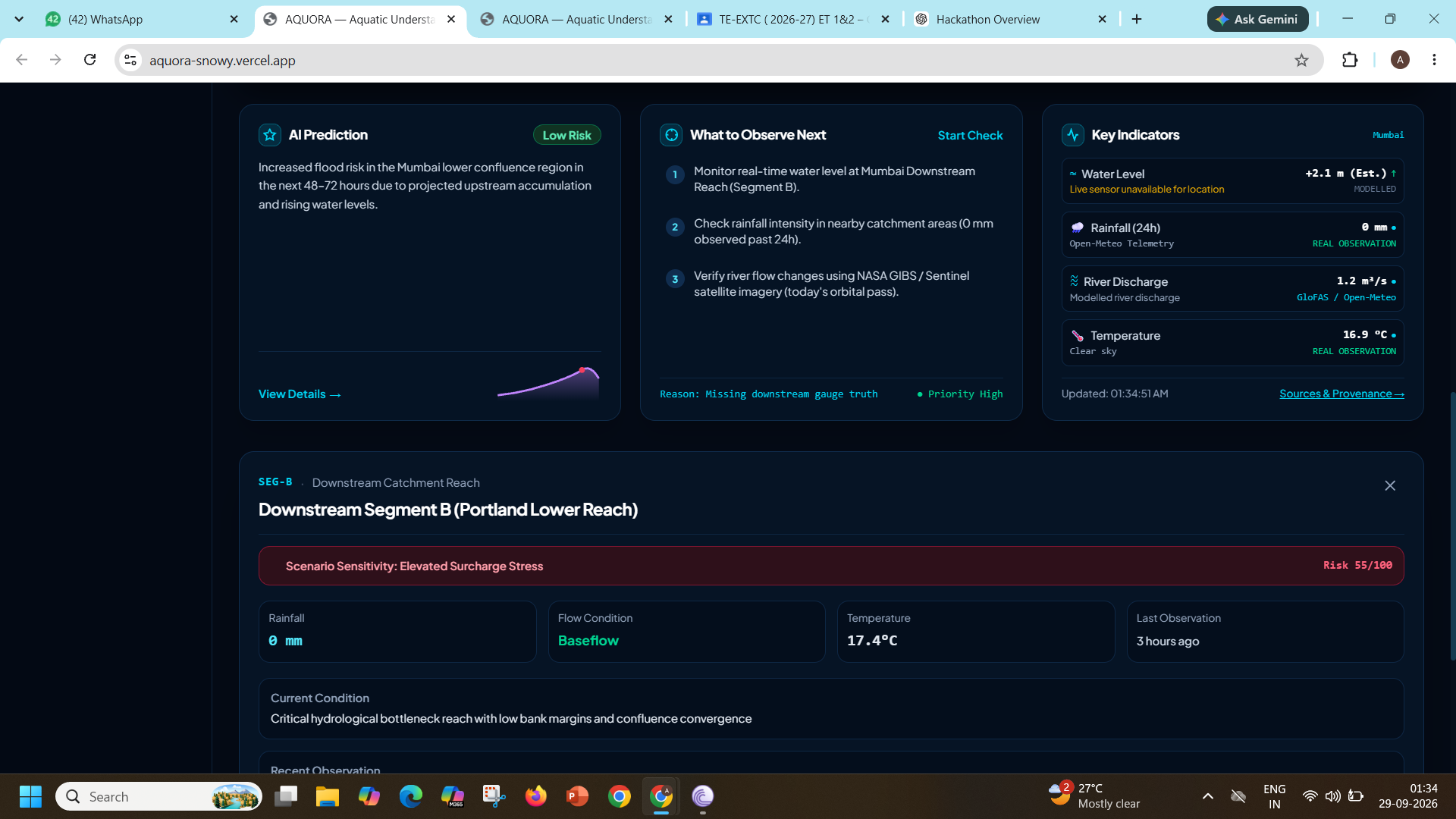
- Environmental indicators
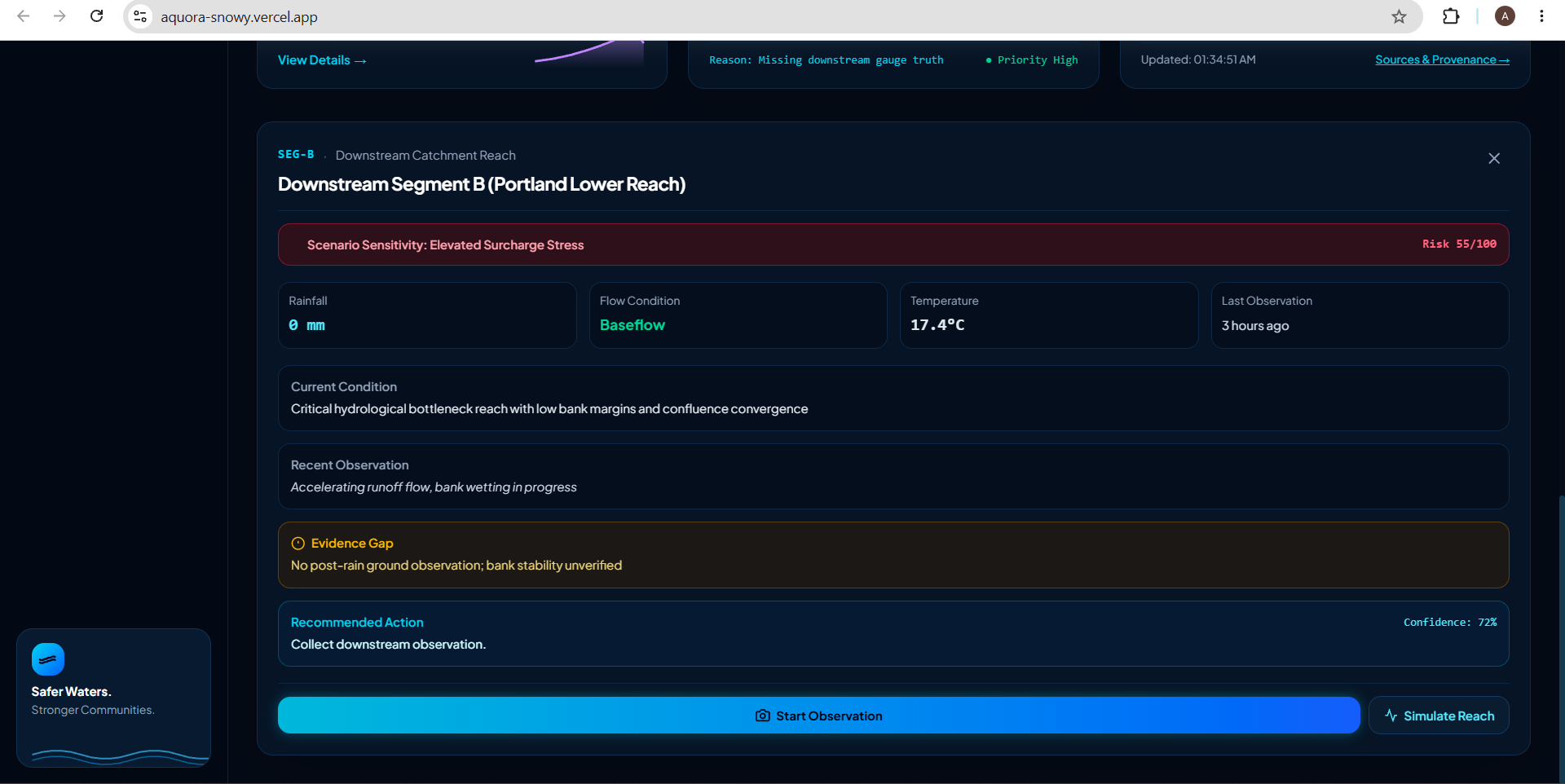
- Uncertainty detection
- Explainable scenario results
- Next Best Observation recommendations
- Dynamic action plans
- Citizen observation workflow
- Outcome verification
- Data-source transparency
Where appropriate, AQUORA uses publicly available environmental data sources. The interface distinguishes between real observations, model forecasts, user observations, and AQUORA scenario outputs. I developed the prototype as a modern web application, maintained the source code on GitHub, and deployed the application publicly through Vercel.
What I Learned
My biggest learning was that more data does not automatically lead to better decisions. A dashboard can display weather, maps, observations, and environmental indicators, but the harder questions are:
- What does this information mean?
- What are we still uncertain about?
- What should we observe next?
- How should new evidence change our understanding? I also learned the importance of clearly distinguishing real observations, model forecasts, user observations, and scenario outputs instead of presenting them as the same type of information.
Challenges I Faced
One of my biggest challenges was designing a system that could explore potential environmental impacts without presenting uncertain scenarios as scientific certainty. I therefore focused AQUORA on scenario analysis, explainability, and uncertainty, rather than claiming precise predictions beyond what the available data can support. Another challenge was integrating real public environmental data while keeping the prototype accessible and avoiding unnecessary API-key dependencies. As an individual participant, I also had to handle the product concept, development, testing, design, data integration, and deployment myself. This pushed me to use AI-assisted development tools while still making the key product and design decisions myself.
Why AQUORA?
AQUORA aims to move freshwater citizen science from passive data collection toward adaptive investigation. Instead of ending with a map or risk indicator, AQUORA asks: What should we observe, verify, or investigate next? This creates a continuous workflow: Data → Insight → Foresight → Evidence → Action
Track Alignment
Track 6 — Resilience Informatics AQUORA addresses resilience planning by helping users explore potential environmental scenarios, identify uncertainty, prioritize further observation, and develop evidence-informed actions for freshwater ecosystems.
Built With
- ai
- climate
- css
- data
- ecosystems
- freshwater
- geospatial
- html
- interactive
- javascript
- maps
- open-meteo
- openstreetmap
- resilience
- scenario
- simulation
- vercel
- vite


Log in or sign up for Devpost to join the conversation.