Inspiration

Most productivity tools quietly assume a neurotypical brain: consistent executive function, steady motivation, no shame spiral when things stall. For neurodivergent founders — ADHD, autistic, AuDHD — that assumption is where the tools fall apart. We built All You Can the other way around: by and for the neurodivergent community, designed for how our brains actually work on a hard day, not an ideal one.

What it does

All You Can is an Awareness & Executive Functioning System. It helps you:

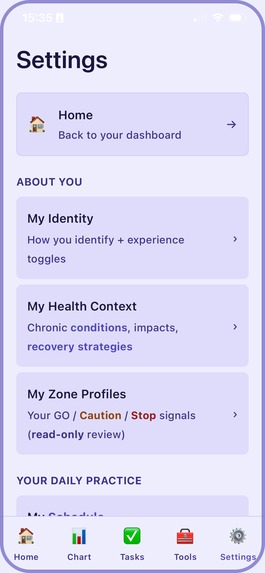
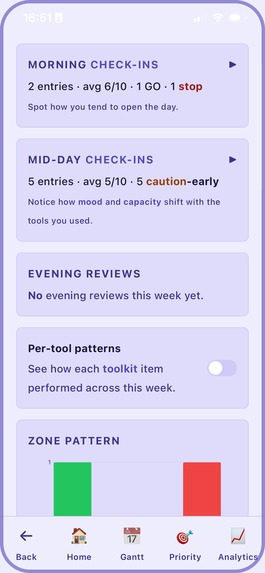
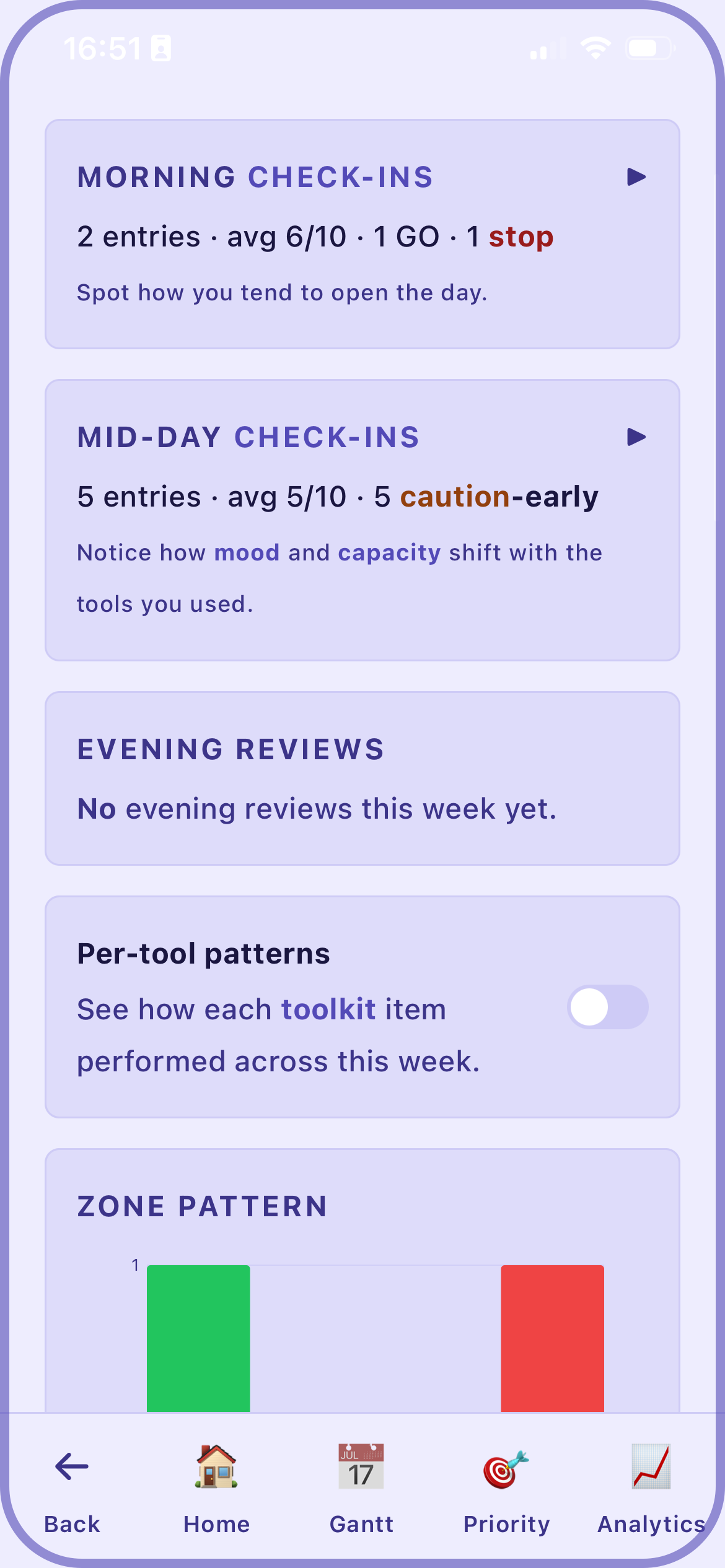
Recognize your state. A GO / Caution / Stop zone model across eight life dimensions, reassessed through quick morning, midday, and end-of-day check-ins. The critical window is Caution — we catch the slip before it becomes a spiral.

Act on a plan you made when you were clear. In your GO zone you pre-design your own recovery actions; in Caution and Stop we surface your words back to you, never generic advice.

Meet your capacity from day one. Onboarding offers three ways in — Experiential (learn as you go, ~5 min), Quick (essentials, ~10–15 min), or Frontloaded (map everything, 60–90 min). Switch anytime; answers carry over.

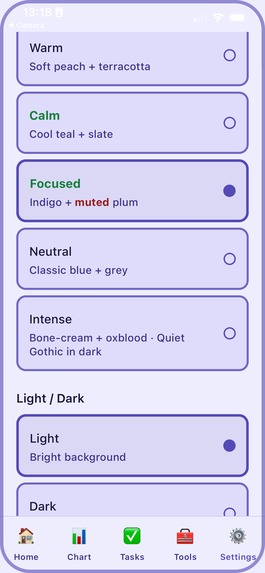
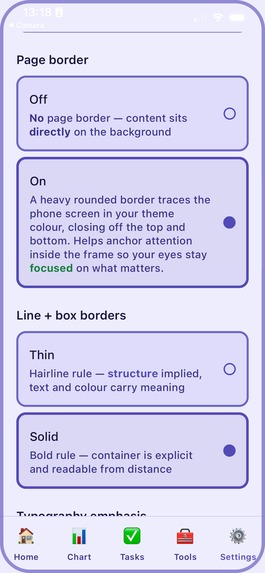
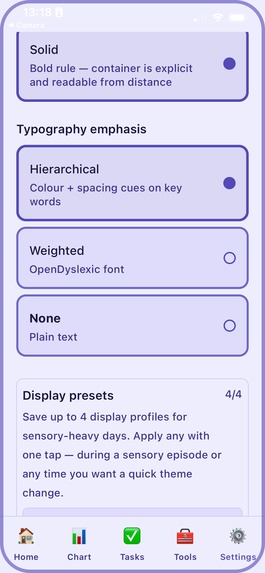
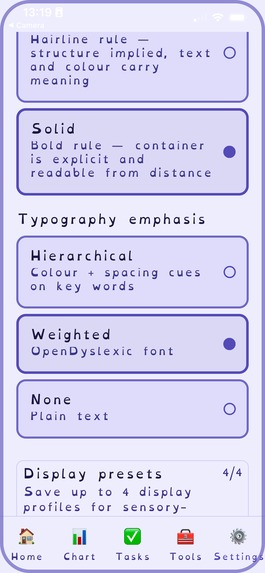
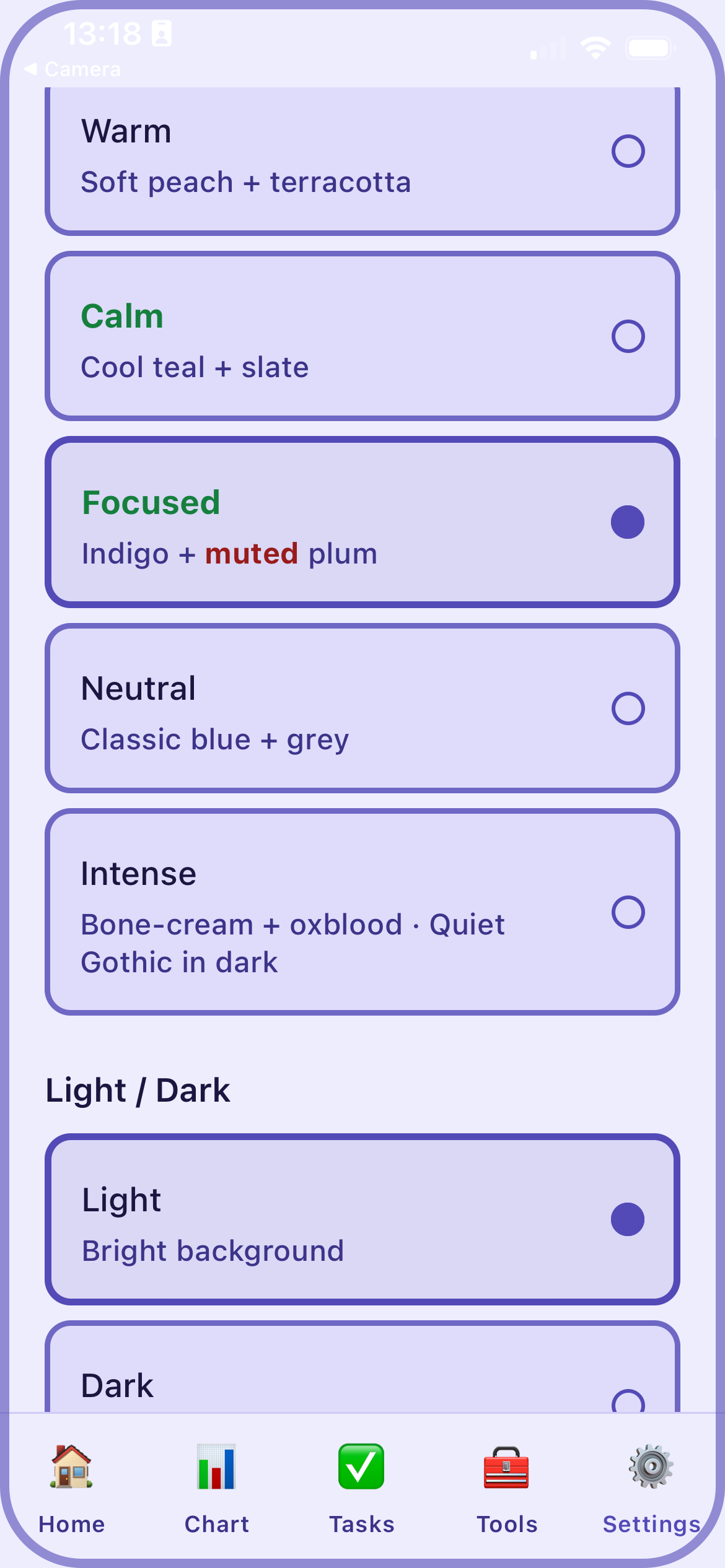
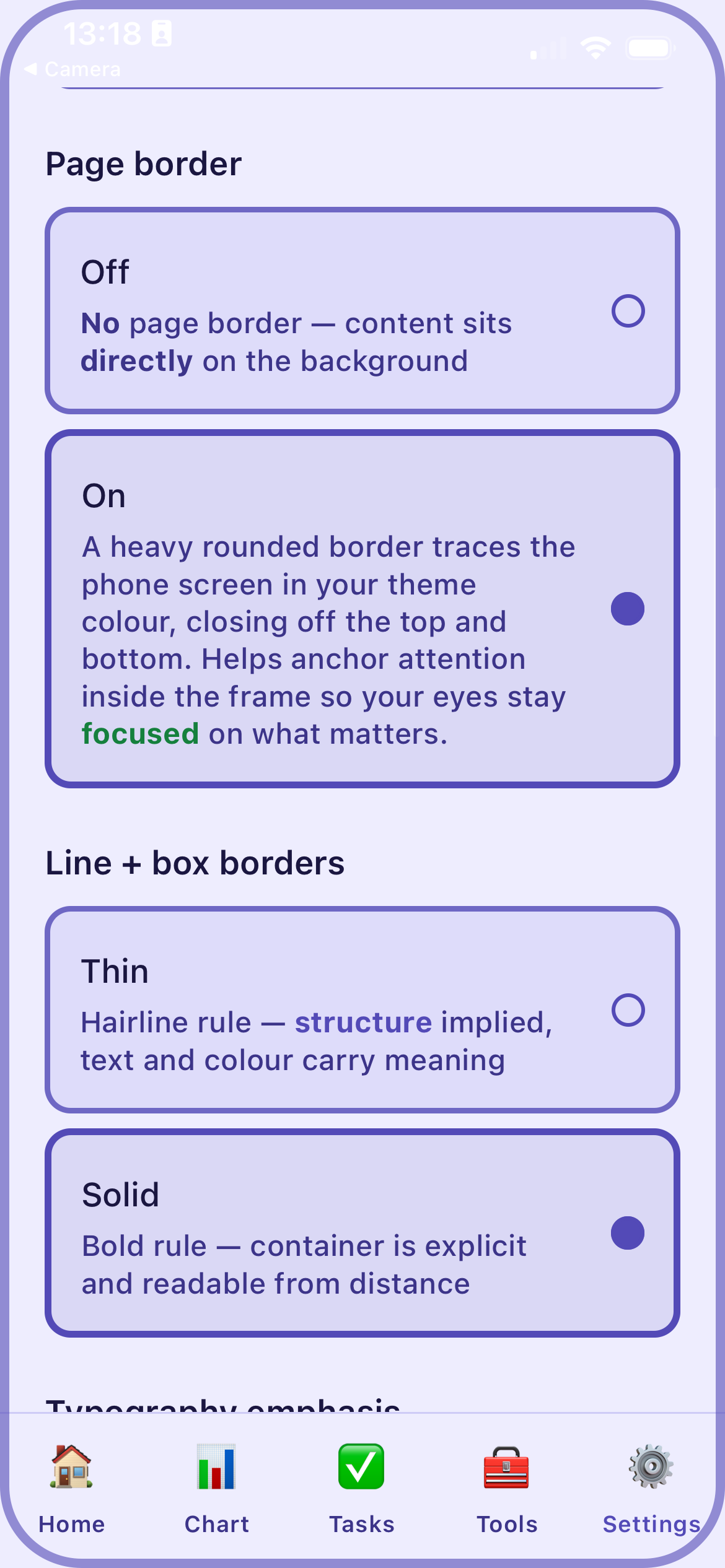
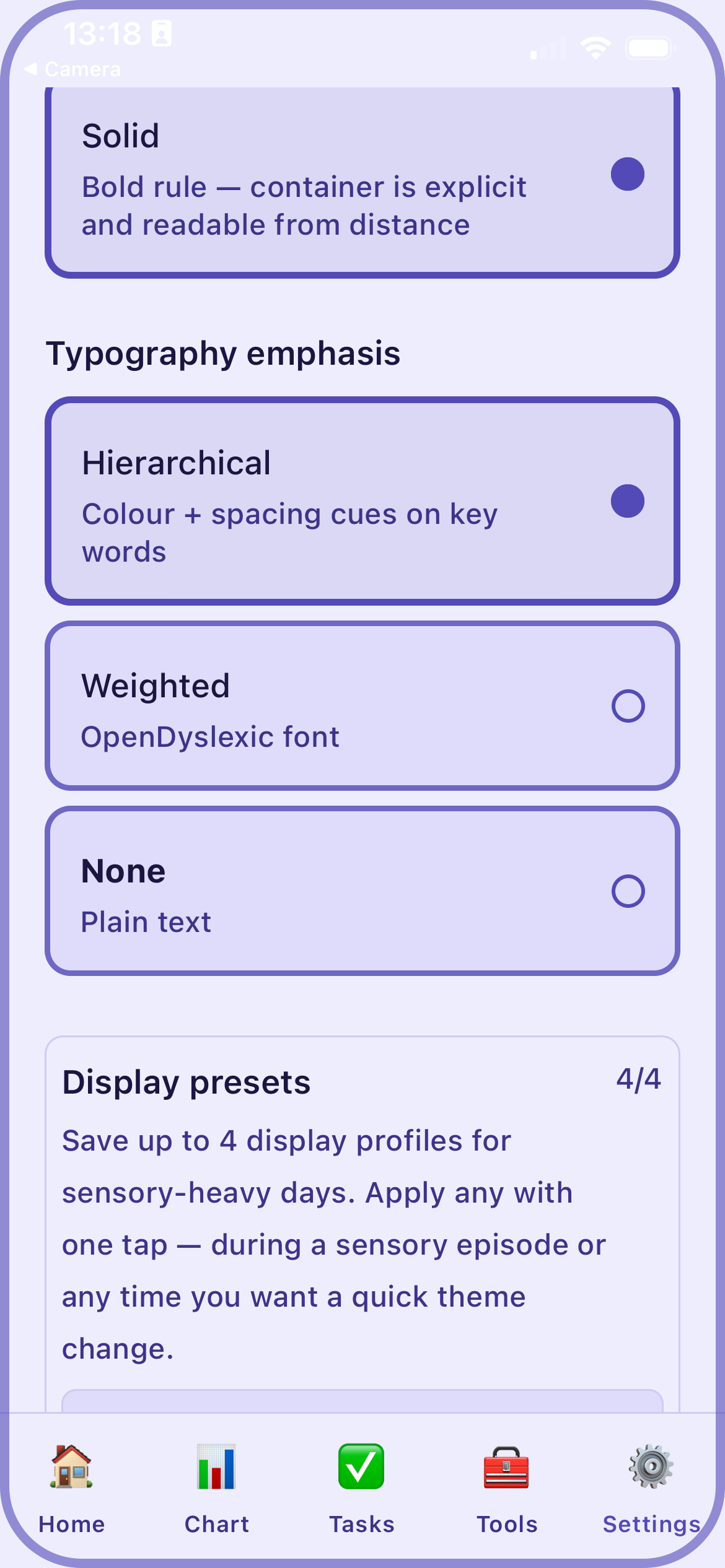
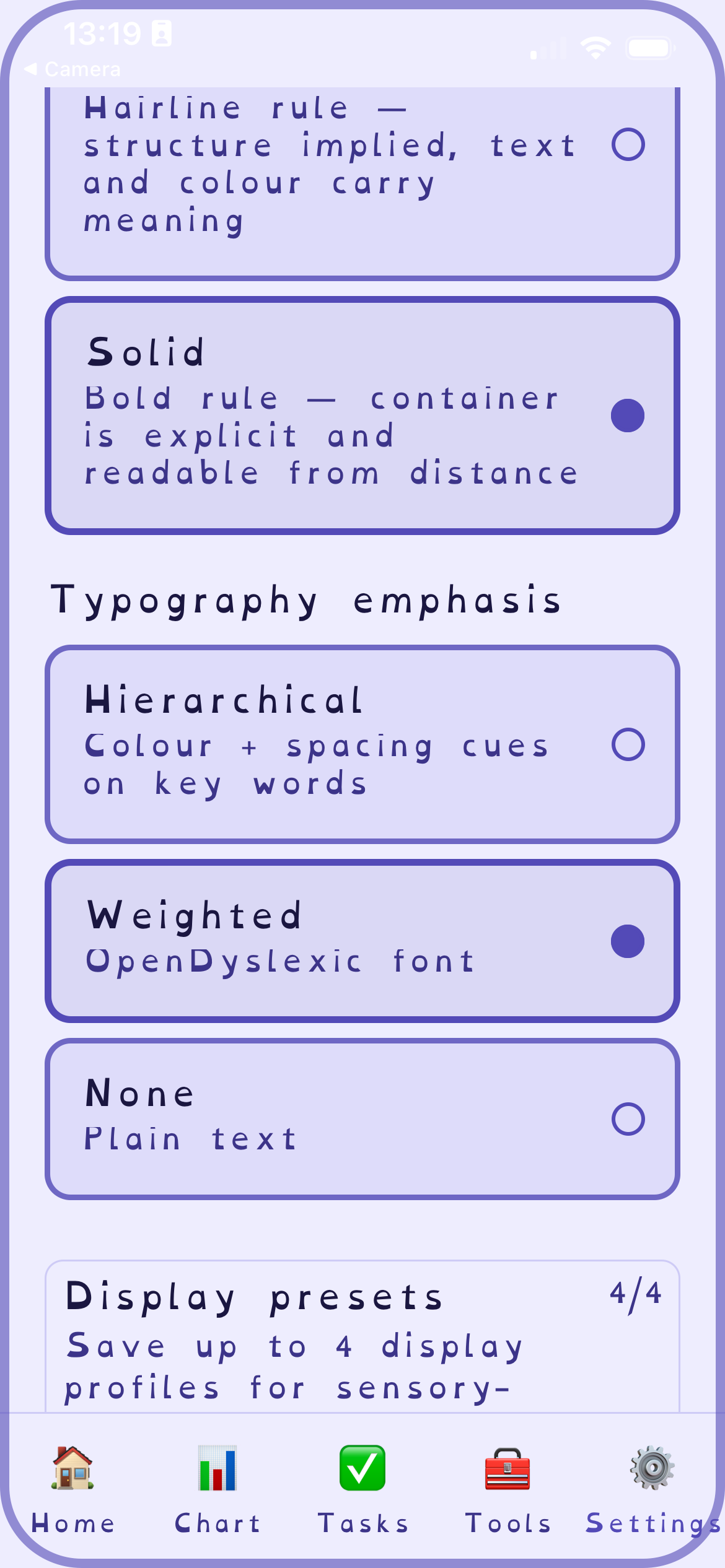
Adapt the whole surface to how you read. Five themes, light/dark, a hierarchical-emphasis typography mode, real OpenDyslexic, an optional focus rail, and AAA-contrast text — accessibility as the whole product, not a settings page. (We're honest, too: OpenDyslexic has no proven edge over a clean sans, so it's offered as a preference, never imposed.)

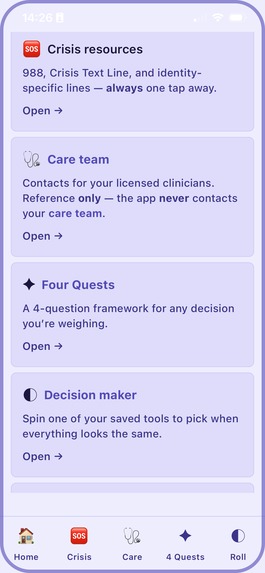
Think it through with ALLY. Our AI companion (Claude, behind a safety "behavior contract") offers motivational-interviewing reflections and reframes, the Four Quests decision framework, and gentle note-writing help — it helps you decide, never dictates.

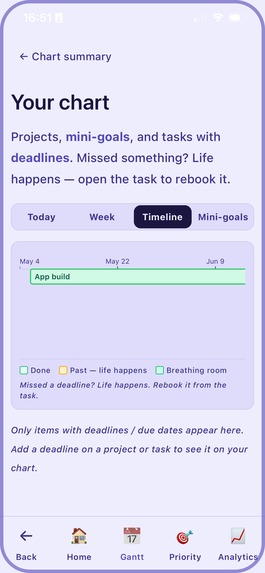
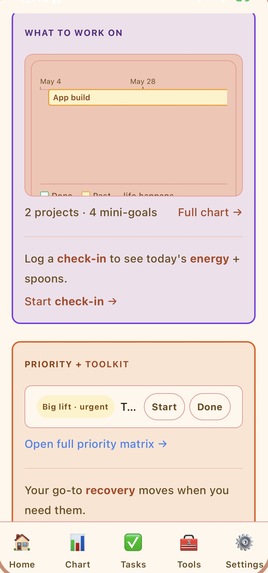
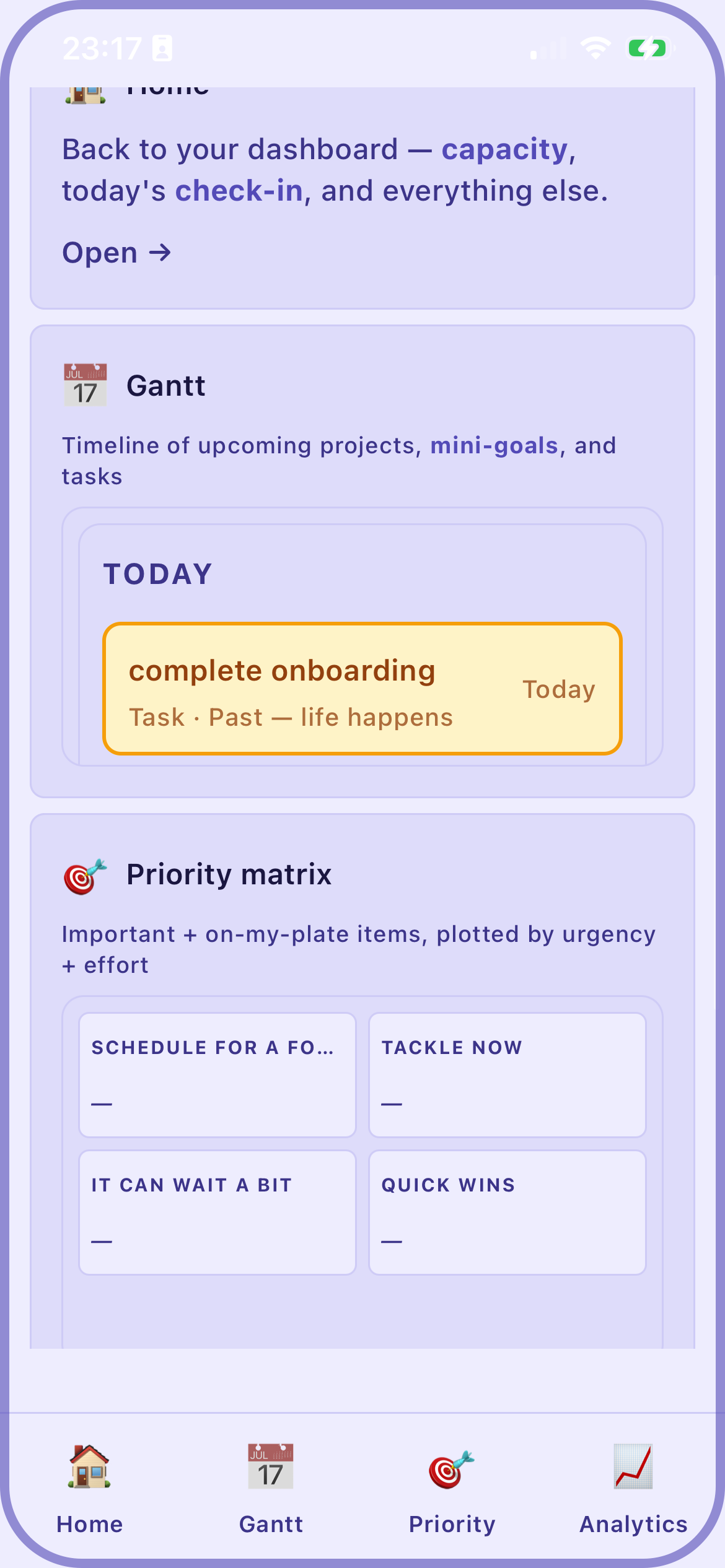
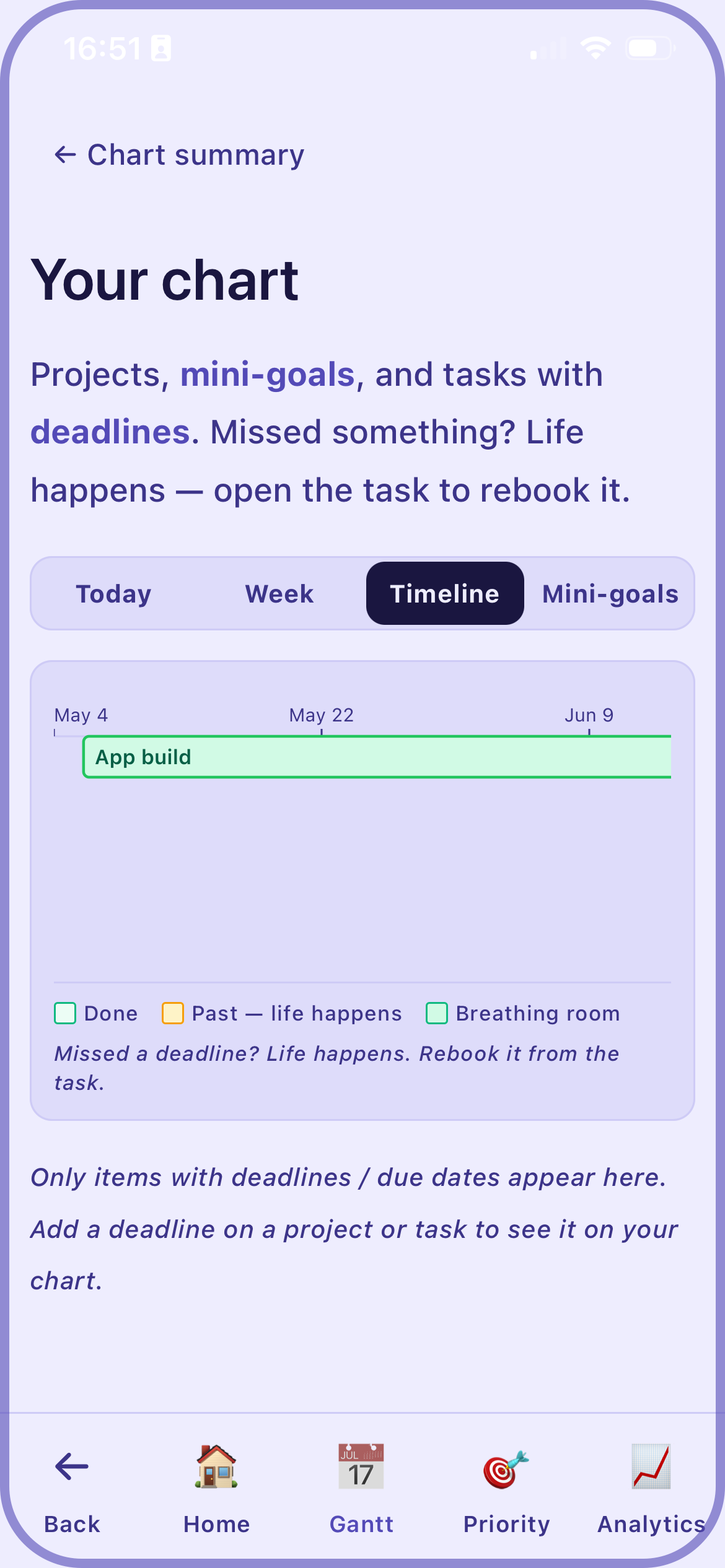
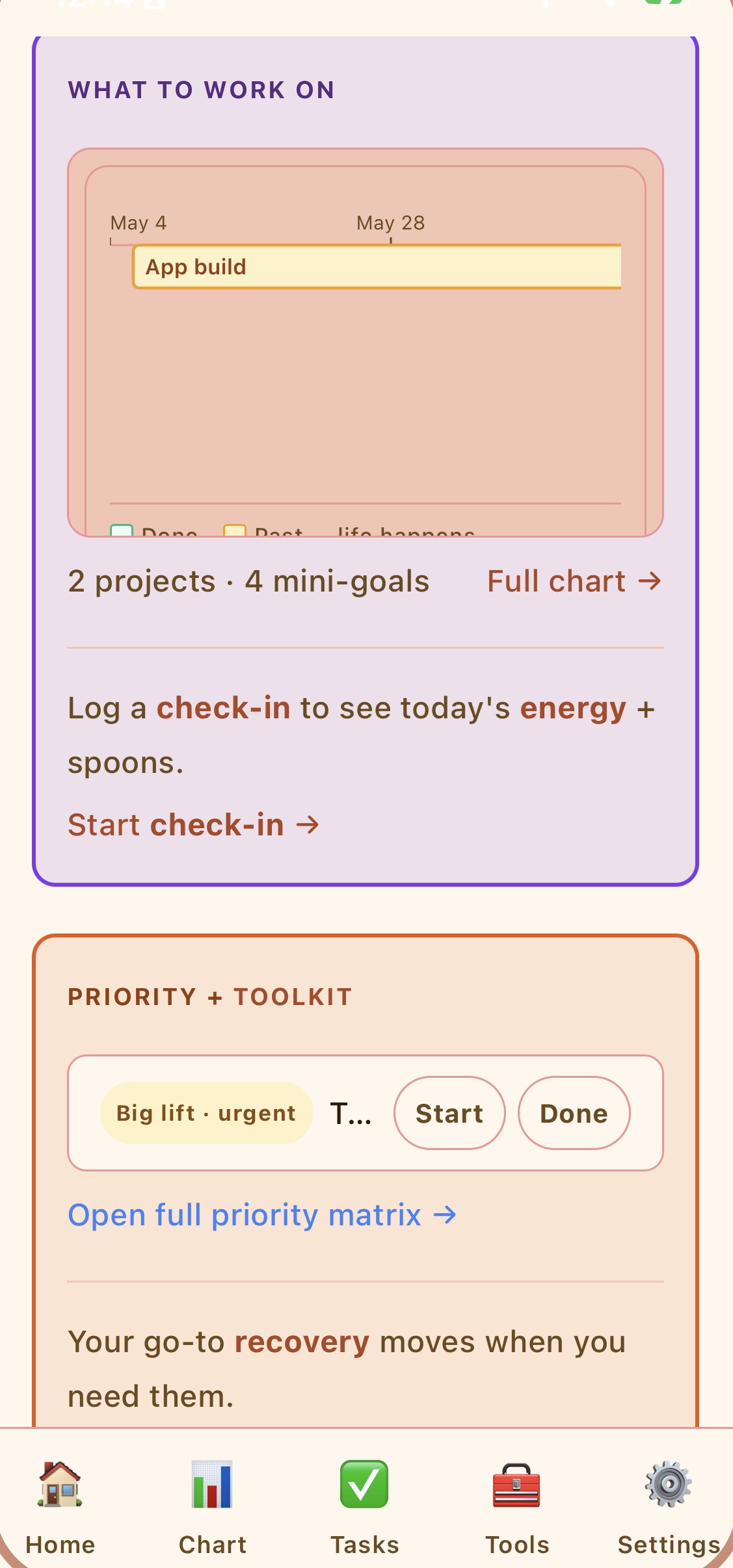
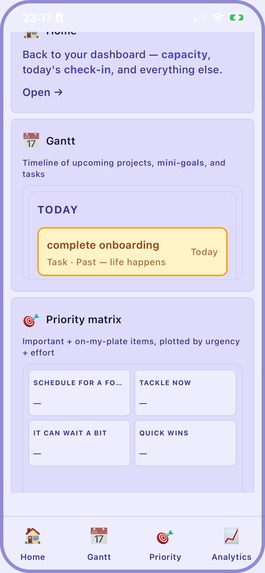
See time without alarm. A custom chart treats a slipping deadline as caution-yellow, never alarm-red — because life happens; it isn't a moral failure.

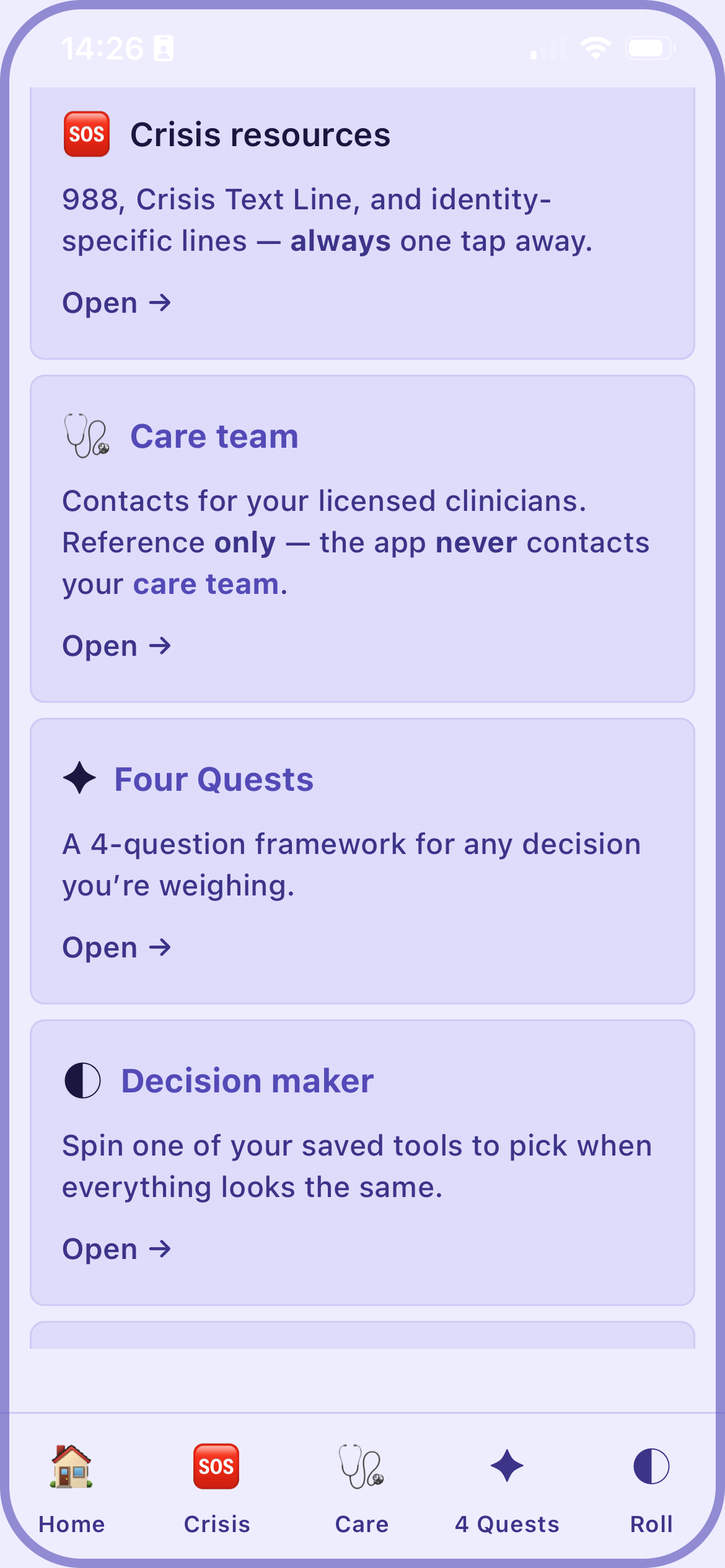
Stay safe. In a Stop state the product steps back from productivity and routes to a human — an accountability buddy or 988 / Crisis Text Line. It never contacts your care team; those links are yours to use.

How we built it

True-native mobile with Expo / React Native + Expo Router — real native navigation, gestures, haptics, notifications (APNs/FCM), and Keychain/Keystore storage. Not a WebView.

Supabase (Postgres + Row-Level Security + Auth) as the backend, with a strict save-then-navigate + hydrate-on-mount discipline so nothing is silently lost.

RevenueCat for cross-platform billing and entitlements (details below).

Anthropic Claude for every AI surface, routed through a single behavior contract that encodes the app's clinical-safety guardrails (motivational interviewing, nonviolent-communication needs framing, strength-based tone, crisis routing) — the only sanctioned path to the model.

A companion web app (Next.js) that owns payments, legal, admin, and all backend cron/OAuth — the Spotify pattern, keeping the mobile app clean and App Store–compliant.

RevenueCat integration

RevenueCat is our single source of truth for entitlements across iOS, Android, and web.

The RevenueCat SDK powers in-app purchases on both stores (Apple StoreKit and Google Play Billing) — verified end-to-end with real purchases on each platform (iOS sandbox → always_on_ai_annual; a real Google Play purchase → active first_tier entitlement).

The always_on_ai entitlement gates ALLY, our premium AI companion tier. The mobile app simply reads the RevenueCat entitlement — no receipt validation or store-to-DB plumbing of our own.

Unified billing: web subscriptions (Stripe) and mobile IAPs resolve to the same entitlement, so a director is never double-billed, and "Manage subscription" uses RevenueCat's customerInfo. managementURL to deep-link straight to the correct store or the web portal.

Challenges we ran into

Making "native" mean native — real sheets, gestures, and pickers, not a JS imitation. Treating accessibility as the entire surface rather than a toggle, without overclaiming benefits we can't evidence.

Designing for safety: a non-clinical product that must step back and route to a human in crisis, and must never contact someone's care team.

Apple's anti-steering rules — solved by keeping payments on the web and the mobile app sign-in-only, with RevenueCat unifying entitlements underneath.

Accomplishments we're proud of

Shipped to both the App Store and Google Play inside the event window while not knowing how to build Native and all the rules to follow.

Accessibility-first from the ground up (five themes, OpenDyslexic, typography emphasis, focus rail, AAA contrast, increasing and widening social access to Discord to allow for social connection across countries contact contexts, and Alexithymia language) — built with neurodivergent input.

A genuinely harm-aware crisis design and an AI-safety behavior contract.

Clean cross-platform monetization on RevenueCat with verified purchases on both stores.

What we learned

Design-token and native-pattern discipline is what makes an app feel calm and trustworthy — especially for overwhelmed users.

"Built with the community" isn't a tagline; identity selection changes every default (strength- based language, alexithymia-aware questions, agency at every step).

What's next

A visual-parity pass to bring the whole app to the polish of our demo reel.

More ALLY surfaces, an opt-in Quest mode, and tablet-optimized layouts.

A note on social good (supports the Peace Prize) for greater good considering the struggles and suicide rate of neurodivergent community members struggling to survive and function.

All You Can is not therapy and not a diagnosis — and it's careful to say so. Its job in a good moment is to help you build your own recovery plan; its job in a hard moment is to get out of the way and connect you to a human. For a community that's been underserved and too often pathologized, that restraint is the point.

Built With

Share this project:

Updates

posted an update —

All You Can App: update for 1.0.7

All You Can App 1.0.7 was released on the Apple App Store and Google Play on 2026-09-25. We have sent eight over-the-air updates since then, to both 1.0.7 and 1.0.6, so everyone on either version has the current code.

Subscriptions and RevenueCat One subscription works across Apple, Google and Stripe on the web, with RevenueCat as the single source of entitlement. This release makes that setup safer:

A free trial with no card for people who aren't ready to choose. Tapping "I'll decide later" now starts a 14-day trial. The server skips anyone who already has an active Apple or Google subscription through RevenueCat, is comped, or is on a paid plan.

An existing trial is never extended or restarted.

Nobody is billed twice, and nobody is left without access. Entitlement data can't be edited from the app itself.

A database trigger blocks the app from changing the subscription tier and status, the RevenueCat entitlement flag, the RevenueCat app user id, the Stripe ids, and the admin and comp flags.

Only the server can change them. That means the RevenueCat and Stripe webhooks, and the trial route.

People subscribed through the stores never see the web checkout. Anyone with an active Apple or Google entitlement goes straight past the web plan picker.

Comped accounts can't be locked out. The lock rules match across web, mobile and the database.

Product Onboarding is simpler and safer.

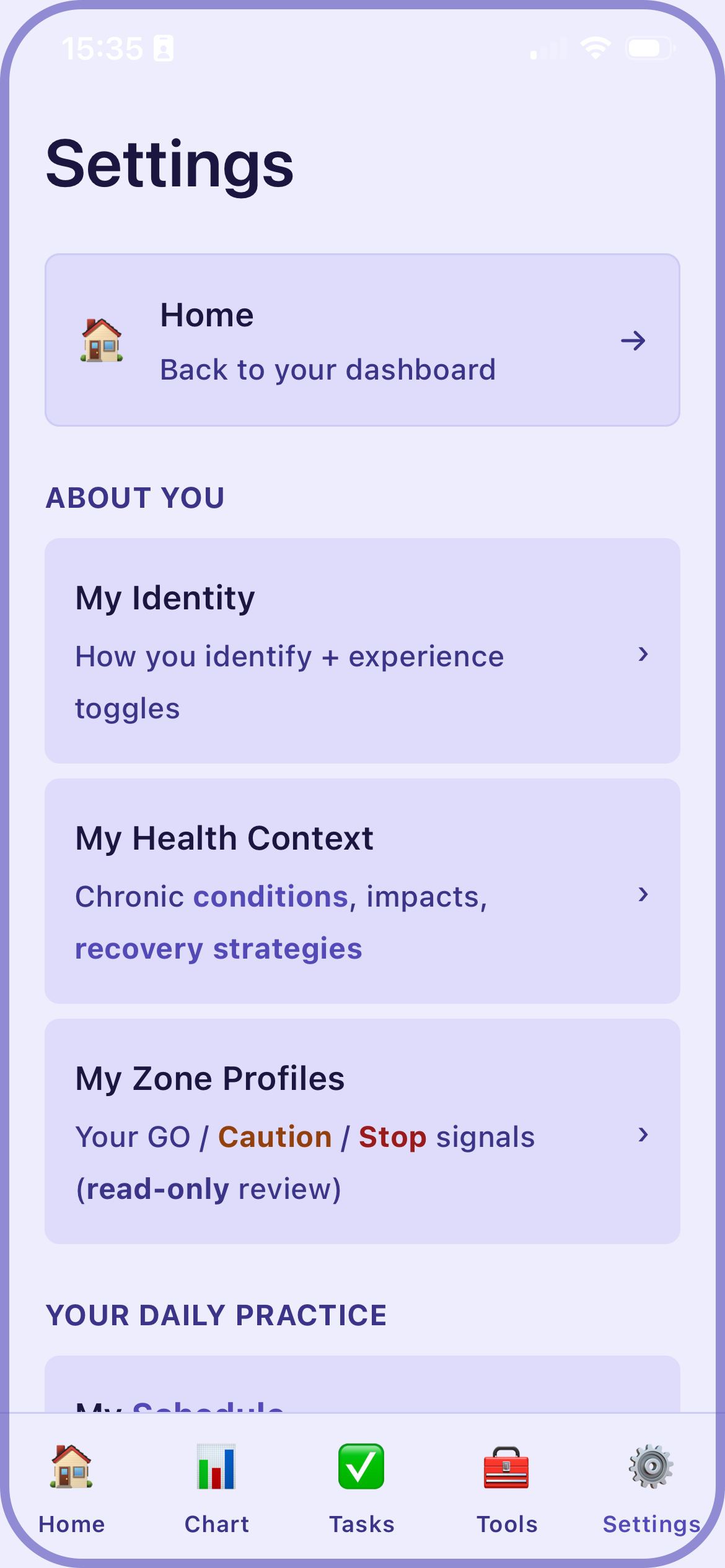
Setup options are now named by effort, and the easiest one is recommended. Adding a support person is an optional offer at the end instead of a required step. Each item on the setup checklist can be skipped. The safety check can no longer be skipped by resuming onboarding. Each person's day resets on their own schedule. "Today" follows their own sleep and work pattern, not calendar midnight. This matters for night-shift workers and people with shifted sleep schedules. It covers: check-ins routines reminders safety check timing buddy alerts

Stage of change is back. A bug had stopped it from saving. The morning check-in again shows a short banner when someone's stage changes. Safety fix. End-of-day reviews on mobile were being saved as Stop (crisis) days. That is fixed, and the affected data has been corrected.

Shorter text throughout. Screens lead with a short instruction, with the explanation behind an optional expander.

Delivery 1.0.7 has no native changes. We cut it so new installs run the onboarding fixes on their first launch, because an over-the-air update only applies from the second launch. Every later fix went out over the air to both 1.0.7 and 1.0.6, with no app review needed.

Log in or sign up for Devpost to join the conversation.

posted an update —

All You Can App — v1.0.6 A productivity + wellness app built for neurodivergent brains — ADHD, Autistic, AuDHD, and beyond. Not another to-do list: it helps you recognize your own state, pre-design recovery while you're thinking clearly, and keep projects moving without spiraling into shame when they stall.

Not a clinical product — a tool that meets you where you are, with strength-based framing, a motivational-interviewing tone, and "your words, your way" throughout.

New in 1.0.6 Onboarding, redesigned around energy — not features We renamed our three setup paths by how much effort they take, after a new user told us "Quick sounds easier than Experiential." Now you choose:

Easiest Low Effort Profile Setup (recommended, 5–7 min) — learn-as-you-go: the app captures your personal warning signs just-in-time during real check-ins, instead of a 45-minute upfront form. Some Effort/Energy Profile Setup Full Profile Setup — deep personalization when you want it. A dashboard that adapts to your neurotype ADHD, Autistic, AuDHD, and unspecified profiles each get a curated home screen — the right tools surfaced for how your brain works, not a one-size-fits-all wall of cards.

Support network, without the pressure Adding a body-double or accountability buddy now sends their intro invite the moment you save — no forgotten step. Optional, never mandatory, with graceful crisis-line fallbacks if you'd rather go it alone.

Recovery matched to your actual state Toolkit suggestions reorder by whether you're wound-up or shut-down (Window of Tolerance–aware) and by which recovery tools have actually worked for you before.

Quest Mode An optional playful, gamified tone for anyone who finds it motivating — off by default, and never applied to safety-critical moments.

Data sovereignty — the "Umbilical Protocol" Download a working offline copy of your data, then irreversibly delete your account on your own terms. Your data, your call.

Reliability + polish Self-healing sessions — no more stuck "Loading…" spinners after the app's been backgrounded. Clock-aware check-in greeting, landscape/iPad support, and a raft of save-reliability fixes. Smarter seasonal detection Seasonal Experience Difference detection now compares against your own shoulder-season baseline, so it flags genuine shifts instead of noise.

Built with Web: Next.js 16 (App Router), React, TypeScript, Tailwind, Supabase (Postgres + RLS + Auth) Mobile: Expo / React Native (true-native iOS + Android) AI (ALLY): Anthropic Claude — propose-never-impose, motivational-interviewing + NVC safety guardrails Billing: one subscription across three channels (Apple, Google, Stripe) unified by RevenueCat Voice: Deepgram (speech-to-text) + OpenAI TTS (read-aloud) Available now on the App Store and Google Play.

Log in or sign up for Devpost to join the conversation.

posted an update —

Shipping Update — 3 store releases + a live OTA in 8 days

All You Can App went from approved to a fast, visible shipping cadence — three App Store / Google Play releases (1.0.3 → 1.0.4 → 1.0.5) between Aug 27 and Sep 3, plus a same-week over-the-air hotfix. Highlights by build:

1.0.5 (Sep 3) — Quest Mode + smarter suggestions + rock-solid saves

Quest Mode, a full gamification layer for neurodiverse "directors" — capacity becomes Health Points, energy becomes Action Points, rest becomes a Save Point, milestones become Side-Quests, wrapped in an "Adventurer's Map" theme with an RPG check-in voice and narrator. AI suggestion cards that surface the right nudge at the right moment, coordinated so the dashboard never overwhelms. Save-reliability pass — offline writes can no longer silently drop, and failed wellness-buddy alerts now surface instead of failing quietly (safety-critical for our audience). OTA (Sep 4): self-healing session fix shipped over-the-air on the 1.0.5 runtime — no store wait.

1.0.4 (Aug 30) — visual redesign + full customization

A new design-token system (lifted borderless cards, softer corners, consistent primitives) that lifts every screen and theme at once. Nav & settings customization — hide/trim menu items, per-section toggles, color-coded categories, identity-aware recommendations. Safety upgrades — EU emergency line (112), sharper Stop-zone detection, depletion-vs-recovery routing.

1.0.3 (Aug 27) — profile, voice & AI onboarding

Native director profile + global voice button (mic-picker, on every tab). AI note-assist that helps directors put feelings into words during onboarding and check-ins.

Log in or sign up for Devpost to join the conversation.

Submission history