-
-
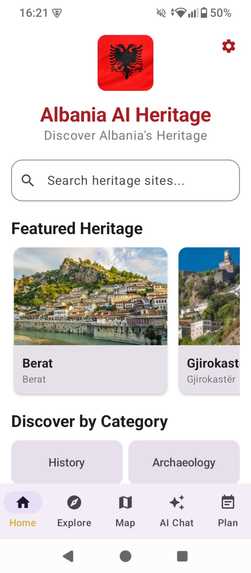
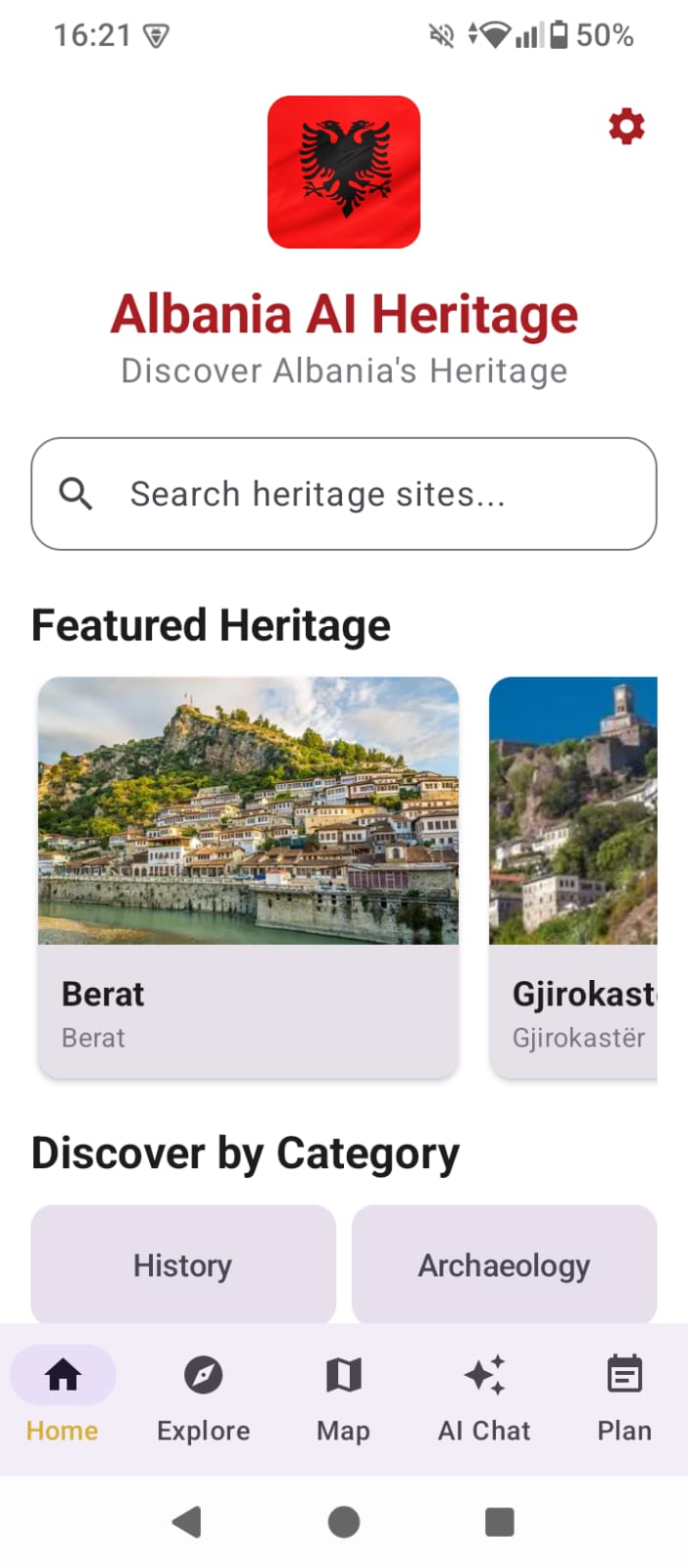
Home Screen
-
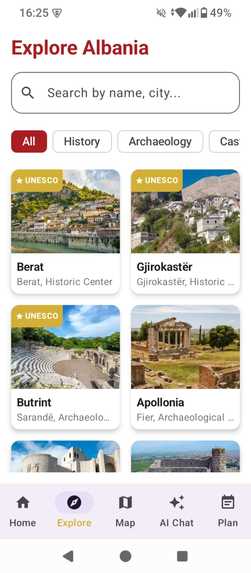
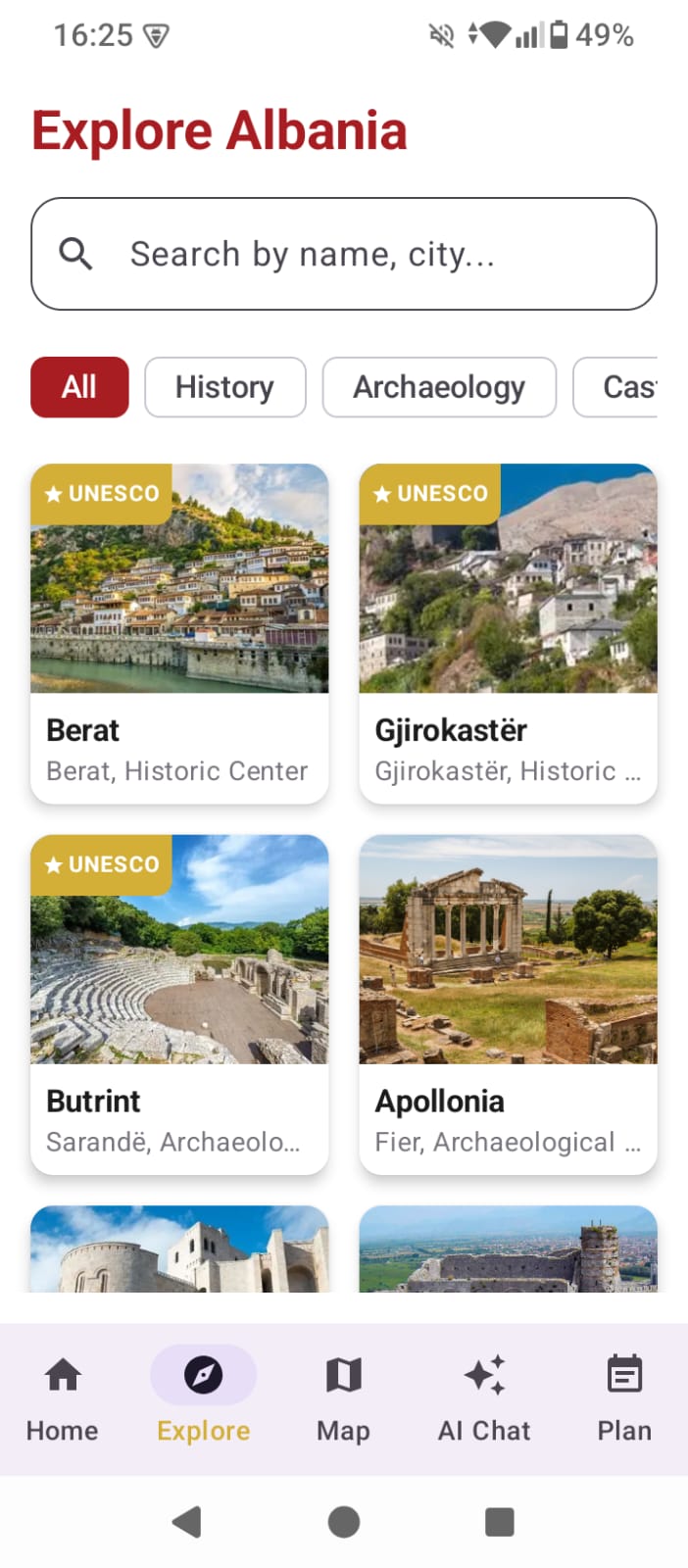
Explore Heritage
-
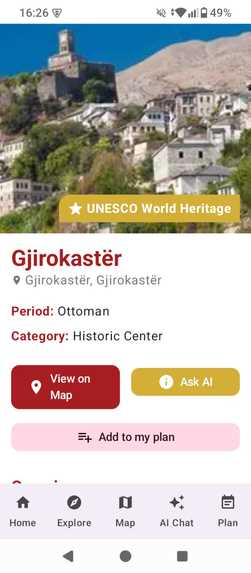
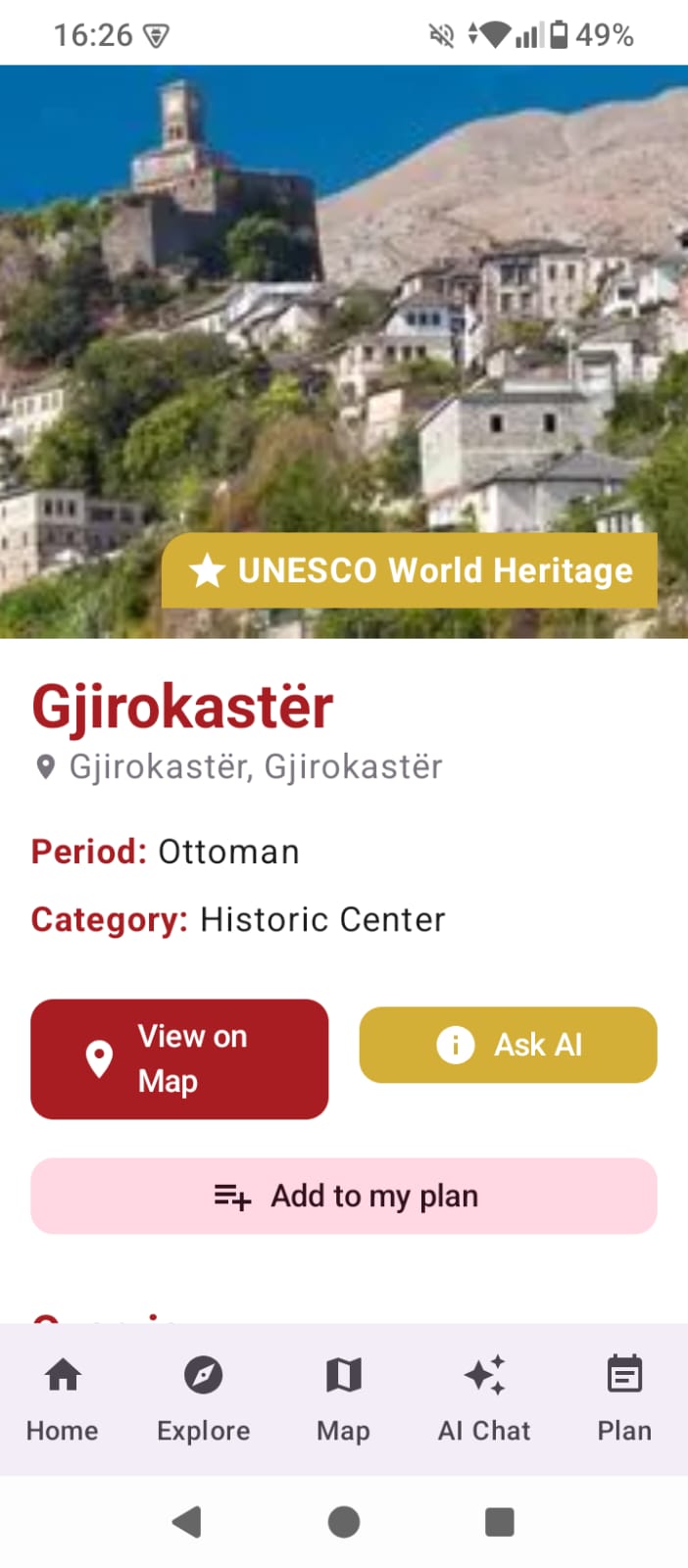
Heritage Details
-
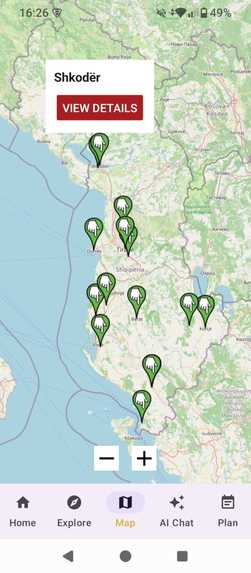
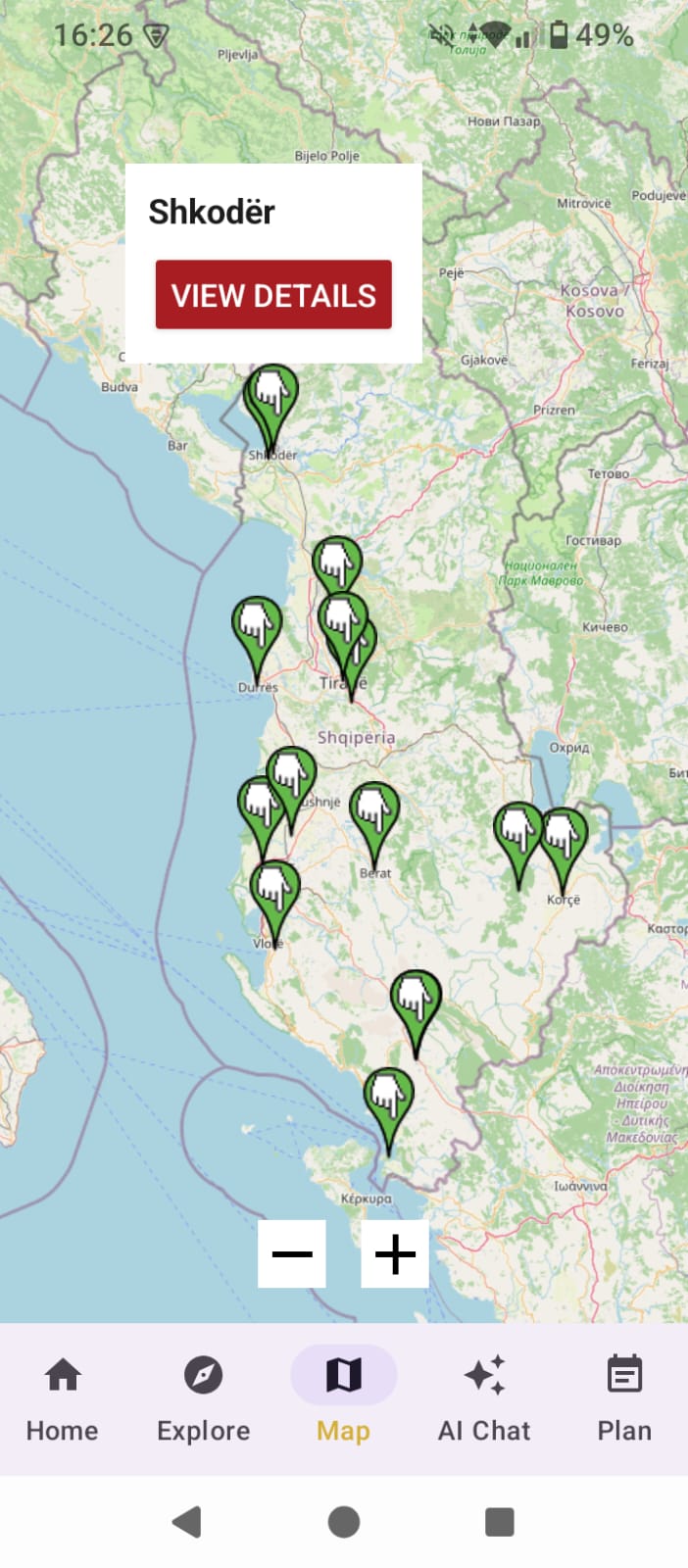
Interactive Map
-
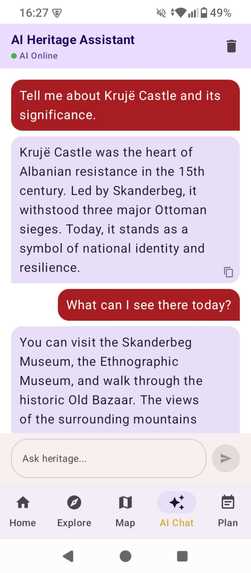
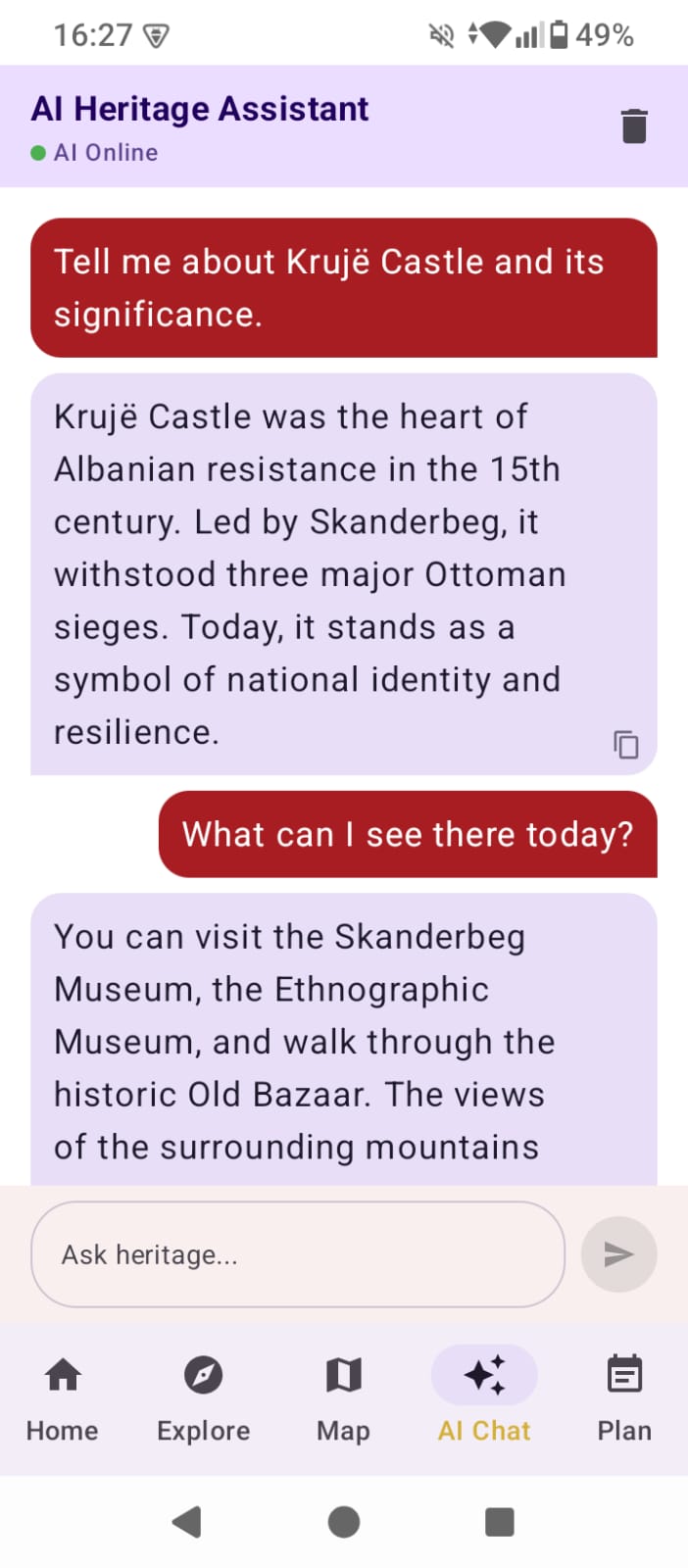
AI Heritage Assistant
-
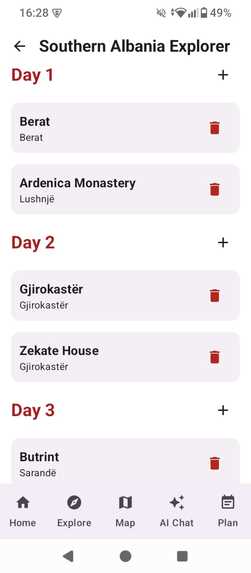
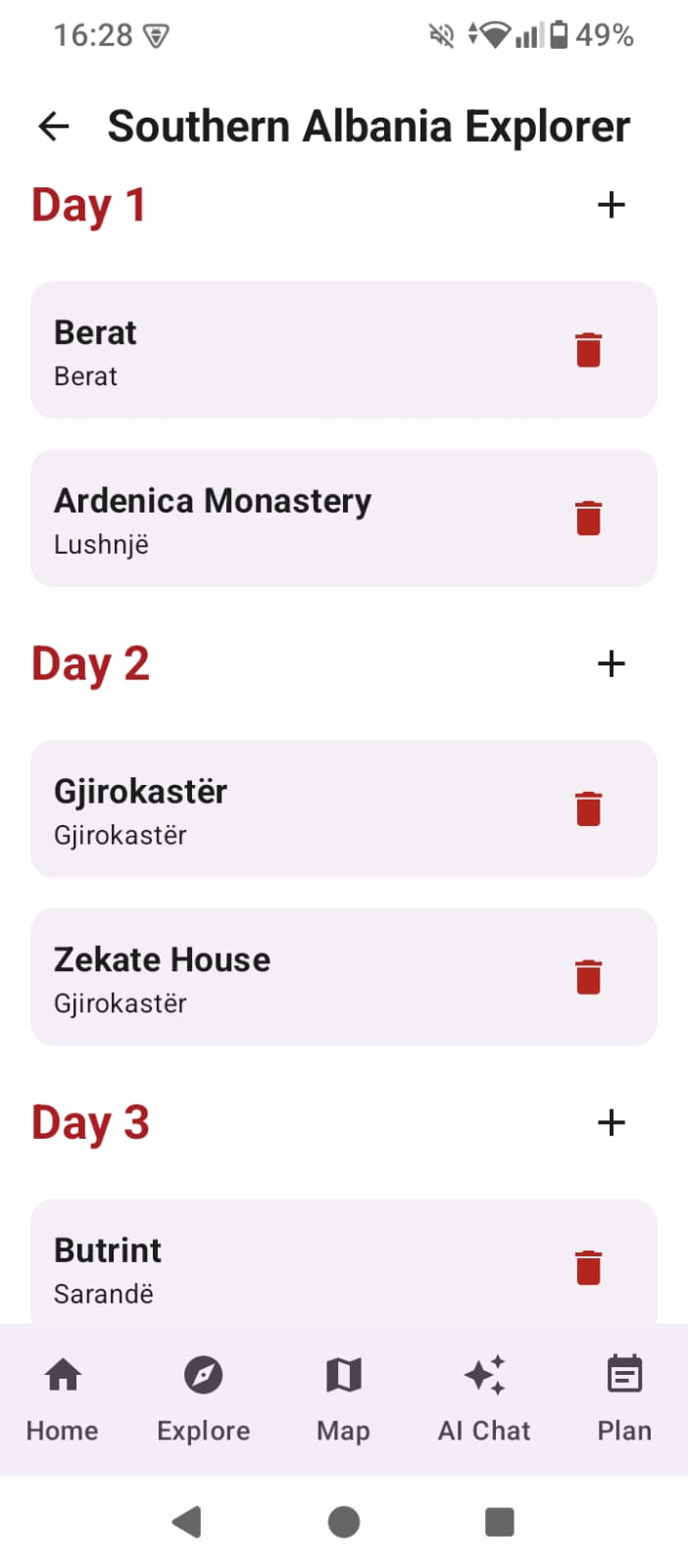
Travel Plans
Inspiration
Albania has a rich cultural heritage, from ancient archaeological sites and medieval castles to historic cities, religious monuments, museums, traditions, and folklore. However, I noticed that discovering this heritage can be fragmented across different sources and difficult to explore in an interactive way. I built Albania AI Heritage to bring these experiences together in one mobile application and make Albanian heritage easier to discover, understand, and explore.
What I built
Albania AI Heritage is an Android application that combines structured cultural heritage information, interactive exploration, maps, personalized travel planning, and AI-powered assistance. With my application, users can:
- Explore heritage sites by category, location, and search.
- View detailed information about historical and cultural places.
- Discover locations through an interactive map.
- Ask an AI Heritage Assistant questions about Albanian heritage.
- Generate personalized itineraries based on destination, number of days, and interests.
- Create and manage travel plans manually.
- Explore heritage in both Albanian and English.
The application includes examples such as Berat, Gjirokastër, Butrint, Apollonia, Krujë Castle, Rozafa Castle, Korçë, Durrës Amphitheatre, Voskopojë, Ardenica Monastery, Petrela Castle, Kaninë Castle, Shkodër, Zekate House, and the Et'hem Bej Mosque.
How I built it
I developed the application as a native Android project using Kotlin and Jetpack Compose, with Material 3 for the interface and Navigation Compose for screen navigation.
I used:
- Kotlin
- Jetpack Compose
- Material 3
- Android ViewModel / MVVM architecture
- Coroutines
- Gemini API integration
- OSMDroid for interactive maps
- Coil for image loading
- Local structured heritage data
- GitHub for source-code management
I designed the AI functionality with a fallback/demo mode so that the core application experience remains usable even when live AI access is unavailable.
What I learned
During development, I learned how to combine AI capabilities with structured cultural data instead of treating AI as a standalone chatbot. I also gained experience with Android architecture, reactive UI state, navigation between contextual screens, interactive maps, API integration, error handling, and designing a mobile experience around a real-world cultural use case. I also learned the importance of validating AI-generated travel plans against the user's actual destination, duration, and interests rather than returning generic recommendations.
Challenges
One of the main challenges I faced was integrating AI into a reliable application while keeping the experience functional when the API is unavailable. I addressed this by implementing a demo/fallback system. Another challenge I faced was connecting different parts of the application so that actions remain contextual. For example, selecting a heritage site on the map can lead to its details, while asking the AI about a selected site can provide context-specific assistance. I also focused on keeping sensitive API credentials outside the source code and using a safer configuration approach for development.
Why it matters
I believe Albania's heritage is not only a collection of monuments—it is a living connection between history, culture, places, and communities. With Albania AI Heritage, my goal is to demonstrate how AI and modern mobile technology can make cultural heritage more accessible, interactive, and personalized while encouraging people to explore Albania more deeply.
Albania AI Heritage — Discover Albania. Understand its heritage. Powered by Human & AI.
Built With
- ai-assistant
- android
- android-studio
- coil
- coroutines
- cultural-heritage
- gemini-ai
- generative-ai
- git
- github
- google-gemini
- gradle
- jetpack-compose
- junit
- kotlin
- kotlin-flow
- markdown
- material-3
- mvvm
- okhttp
- openstreetmap
- osmdroid
- room
- sqlite
- travel-planning

Log in or sign up for Devpost to join the conversation.