
Inspiration
We wanted to make healthcare easier and faster for everyone.
- Many people struggle to understand their symptoms.
- Finding the right doctor is often confusing.
- We decided to create an AI assistant to help.
What it does
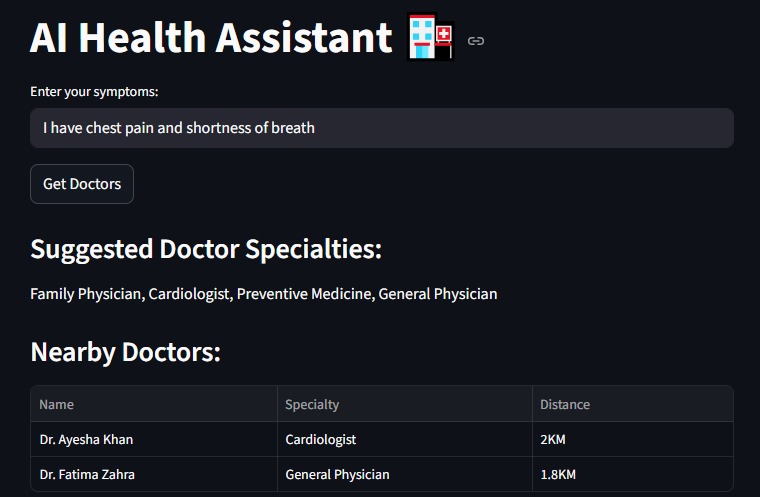
- Analyzes your symptoms carefully.
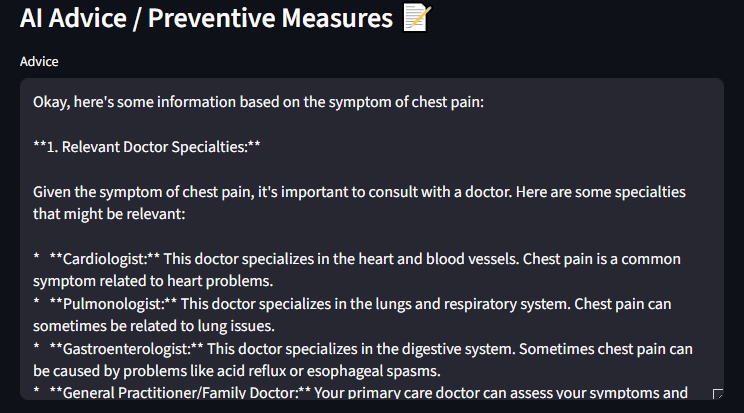
- Suggests possible health conditions.
- Guides you to nearby doctors or clinics.
- Gives personalized health tips and medicine reminders.
How we built it
- Frontend: Streamlit web app for user interaction.
- AI/ML: Gemini models to analyze symptoms.
- Python: Core logic.
- Other tools: APIs for maps, doctor info, and notifications.
Challenges we ran into
- Understanding vague or unclear user input.
- Ensuring AI gives accurate and safe suggestions.
- Integrating multiple APIs smoothly (maps, clinics, reminders).
Accomplishments that we're proud of
- Successfully built a working AI assistant prototype.
- Can analyze symptoms and suggest conditions in real-time.
- Integrated doctor/clinic finder and health tips into one app.
What we learned
- How to combine AI with real-world healthcare data.
- Importance of user-friendly interfaces in health apps.
- Challenges of handling sensitive health information responsibly.
What's next for AI Health Assistant
- Add support for multiple languages.
- Integrate wearable devices for real-time health tracking.
- Make recommendations more personalized with user history.
Built With
- gemini
- langchain
- openstreetmap
- python
- streamlit
- streamlit-cloud


Log in or sign up for Devpost to join the conversation.