-
-
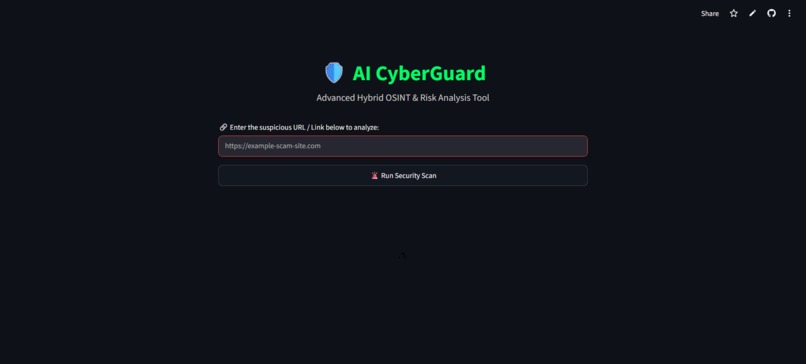
AI CyberGuard Web Interface Dashboard
-
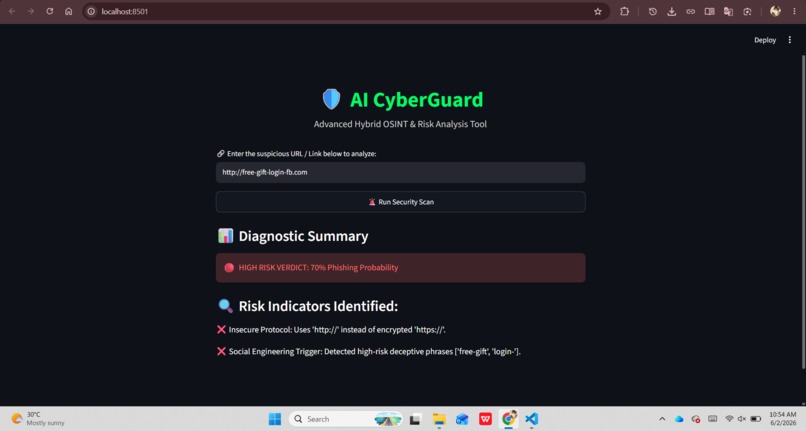
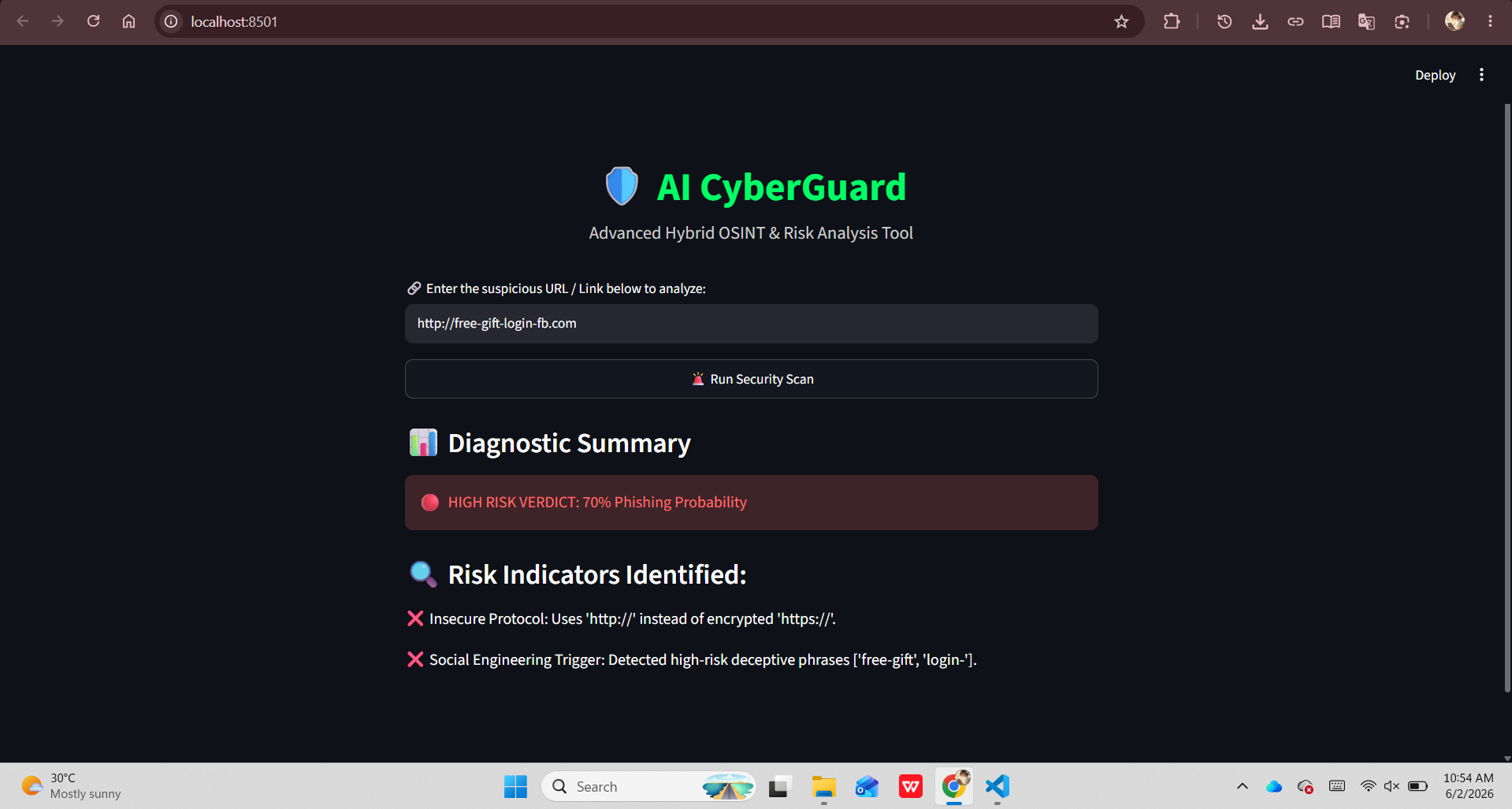
Real-time Insecure URL Analysis & Phishing Risk Detection
🌟 Inspiration
Every day, thousands of non-technical users fall victim to sophisticated phishing campaigns and malicious links via WhatsApp, SMS, and email. Existing solutions are either too complex for regular users or hidden behind corporate firewalls. We wanted to build a simple, accessible, yet highly advanced tool that empowers ordinary internet users to confidently verify any link before clicking.
🚀 What it does
AI CyberGuard is an intelligent URL security scanner. A user simply inputs a suspicious link, and the system runs a multi-layered diagnostic check:
- Rule-Based Check: Analyzes URL structure for common red flags (lack of HTTPS, suspicious subdomains, deceptive keywords like 'free-gift', 'login-fb').
- AI-Powered Diagnostics: Leverages the Gemini API to dynamically analyze the URL context and estimate the true intent behind the link.
- Risk Scoring System: Combines both checks to output a clear, color-coded Risk Percentage (0-100%) so users instantly know if it's safe.
🛠️ How we built it
The entire system is engineered using a clean, modern Python architecture:
- Backend Core: Pure Python logical structures and string-parsing algorithms for fast, lightweight local heuristics.
- AI Brain: Integrated Google Gemini API for context-aware language modeling to spot deceptive link patterns.
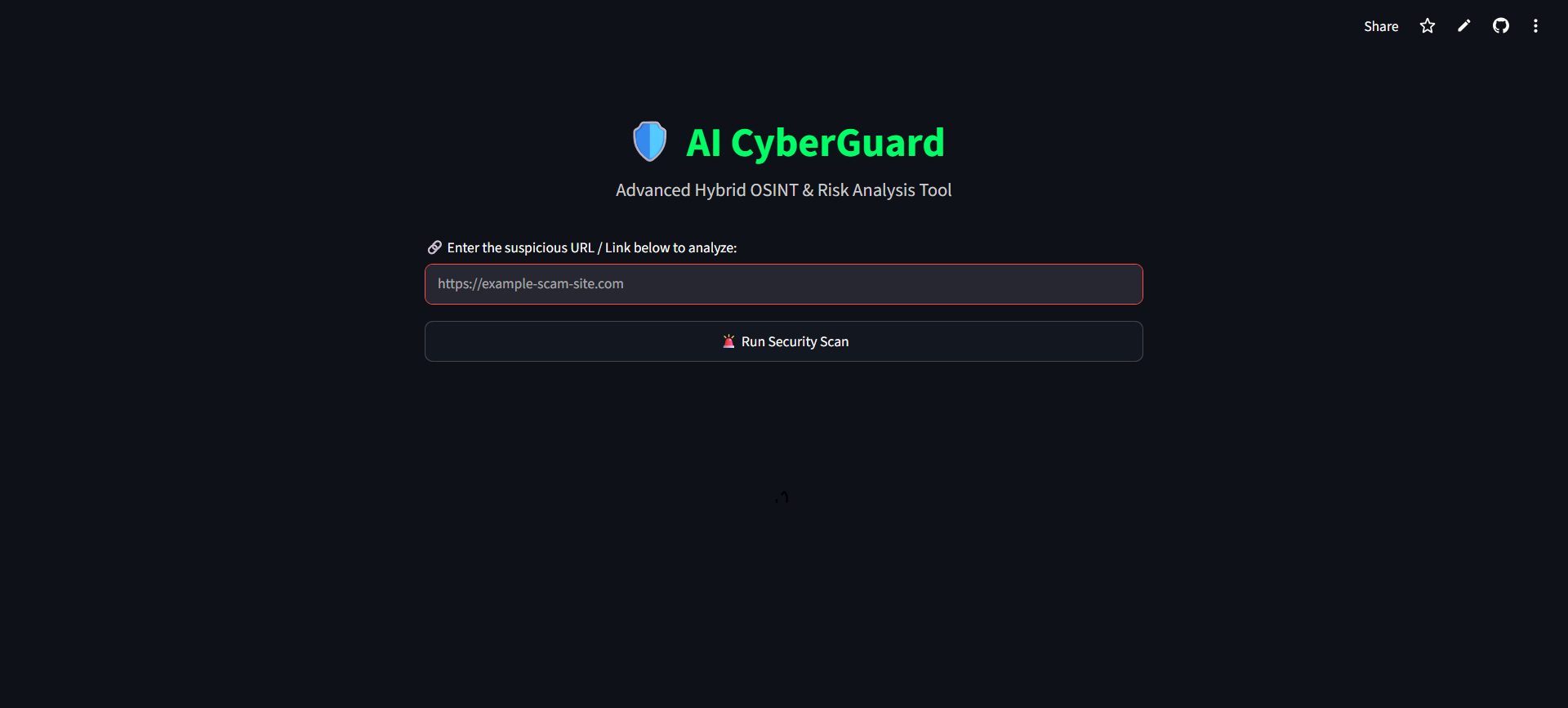
- Frontend Interface: Developed using Streamlit to provide an elegant, lightning-fast web UI that works flawlessly on both desktop and mobile browsers.
💪 Challenges we overcame
Balancing speed and accuracy was tough. Pure rule-based checks miss new ("zero-day") scams, while relying solely on heavy AI models can introduce latency. We overcame this by building a hybrid scoring pipeline—running immediate structural checks first, and passing context to the API asynchronously. This ensures a responsive, seamless user experience.
🏆 Accomplishments that we're proud of
- Successfully connected a highly reliable AI engine to a lightweight frontend using Python.
- Created an interface so simple that a child or a grandparent can use it to stay safe online without needing a cybersecurity degree.
📚 What we learned
- Deeper insights into context analysis using Large Language Models (LLMs).
- How to efficiently deploy user-facing data applications using Streamlit Cloud pipelines.
🔮 What's next for AI CyberGuard
- Deploying a free browser extension so links are scanned automatically on the fly.
- Implementing an automated threat-intelligence community database to log and report confirmed scam sites globally.
Built With
- gemini-api
- gifthub
- leaflet.js
- openai-api
- openstreetmap
- phyton
- react
- streamlit
- tailwindcss
- typescript

Log in or sign up for Devpost to join the conversation.