-
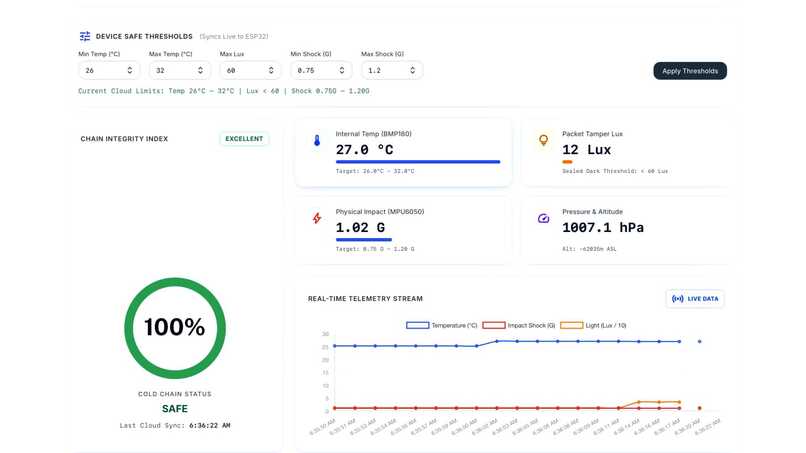
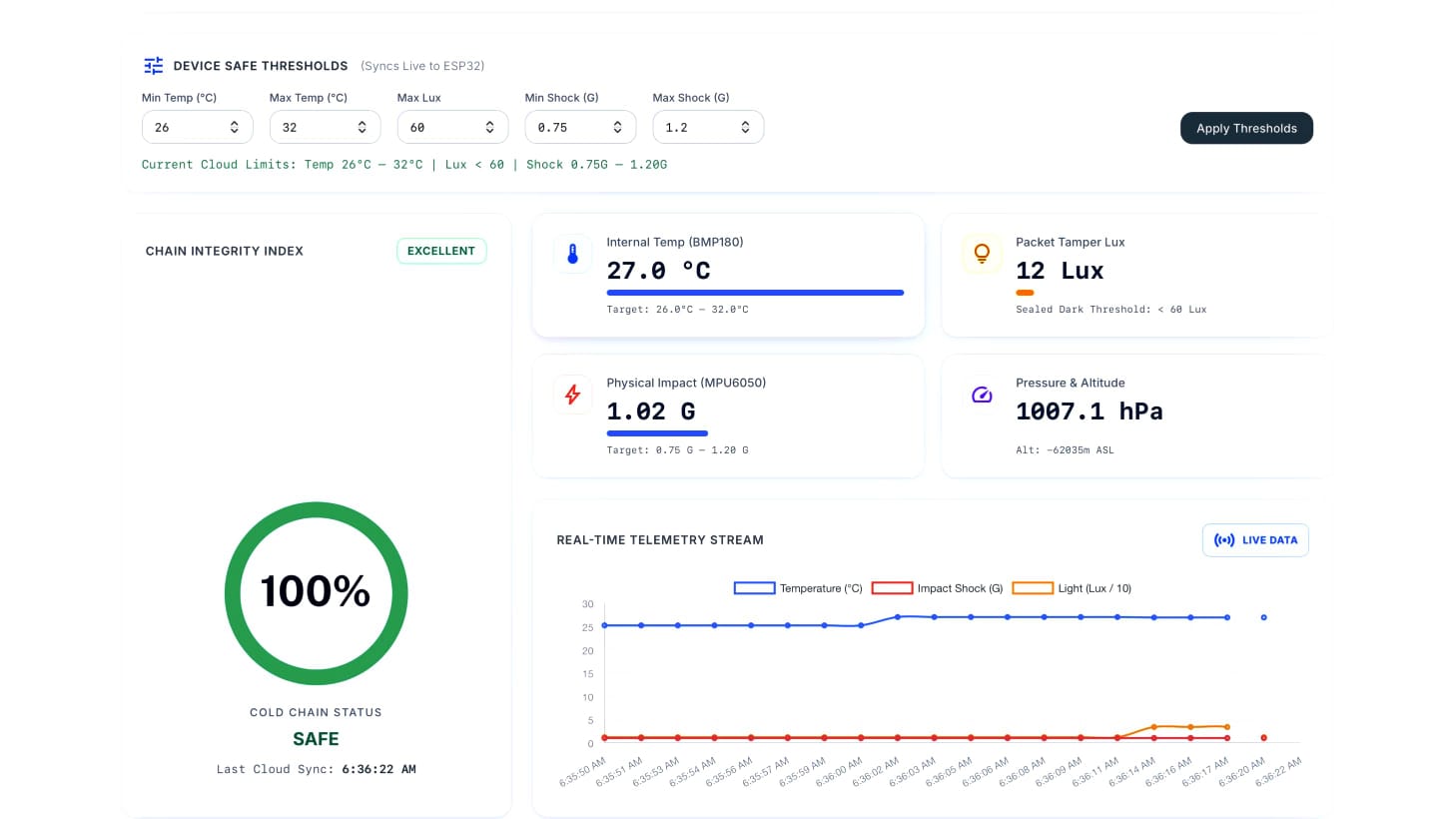
website when the box is closed
-
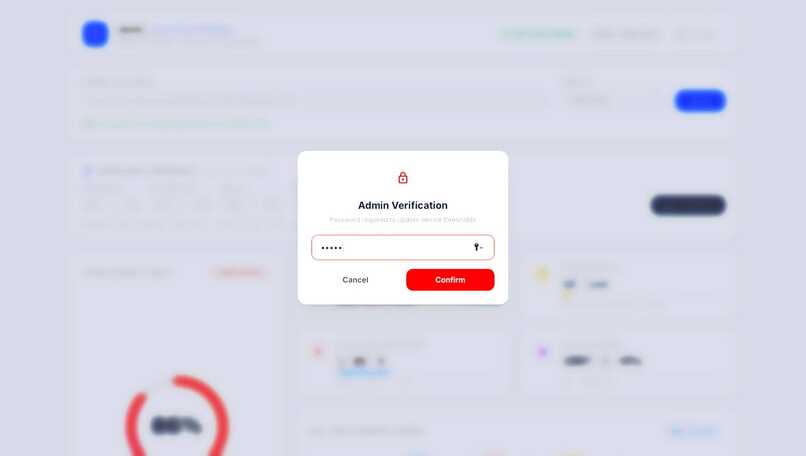
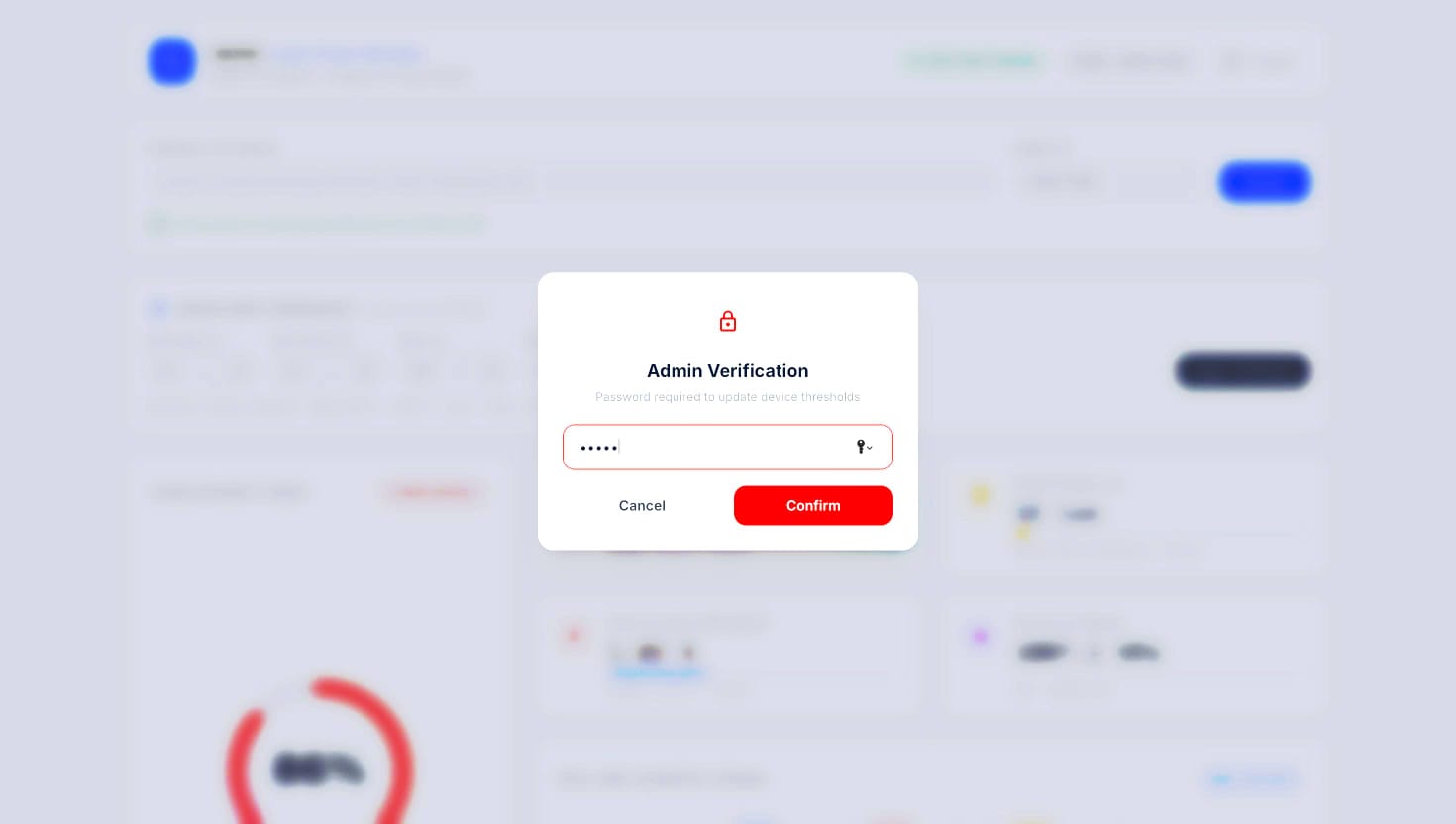
admin lock
-
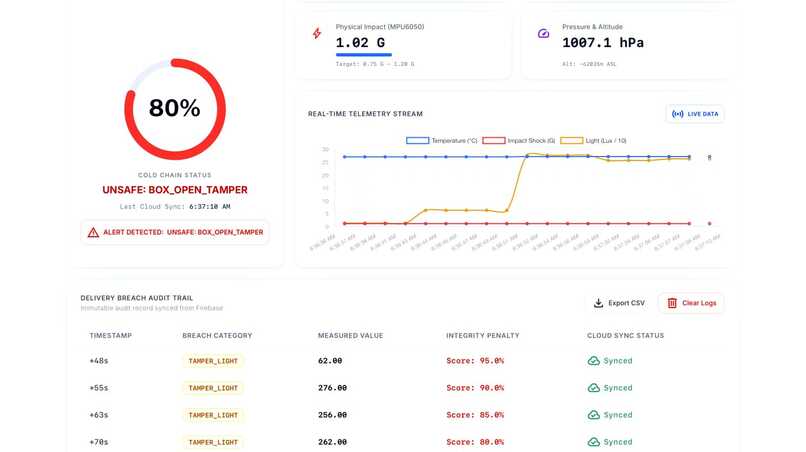
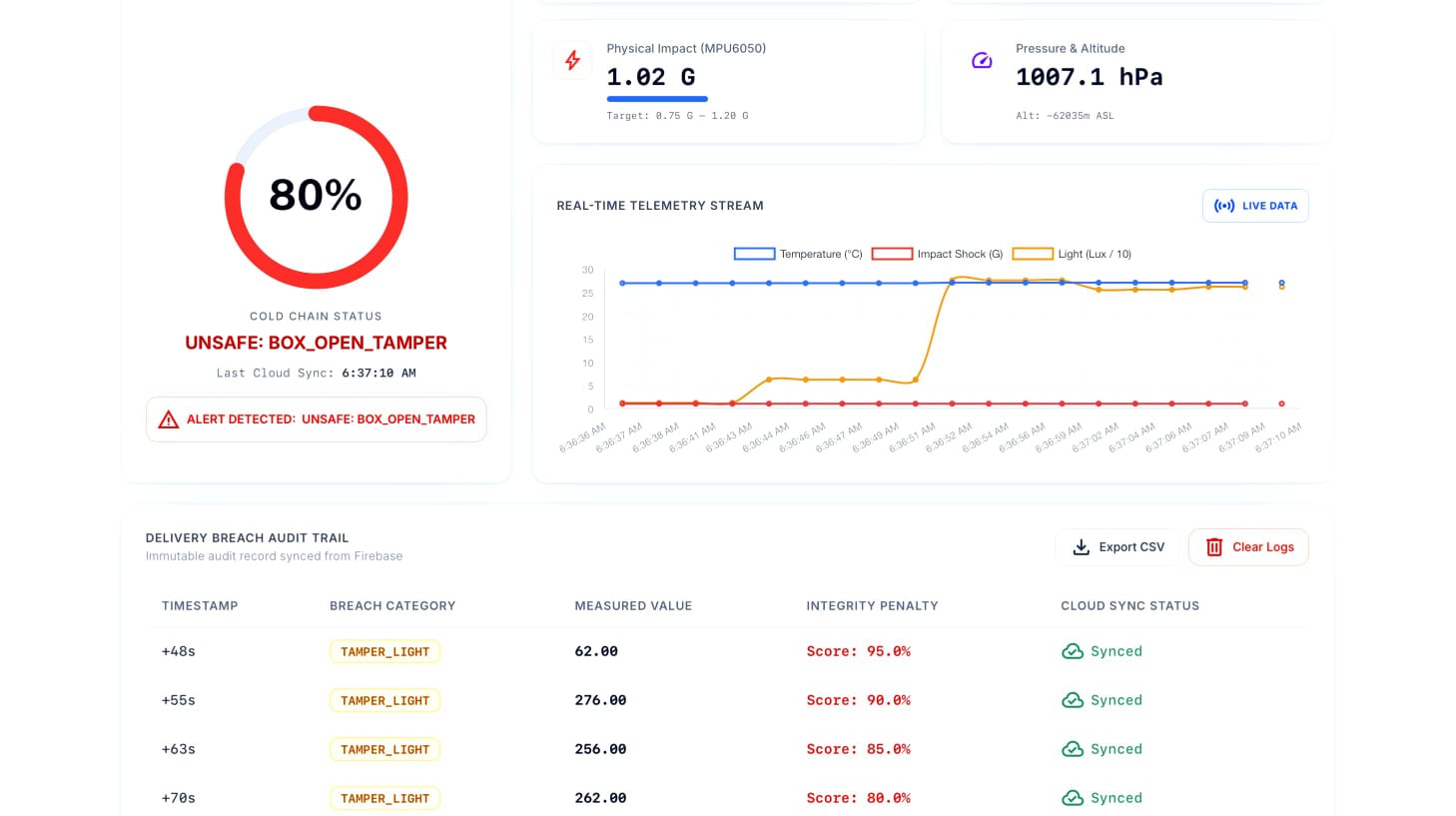
website when the box is open
-
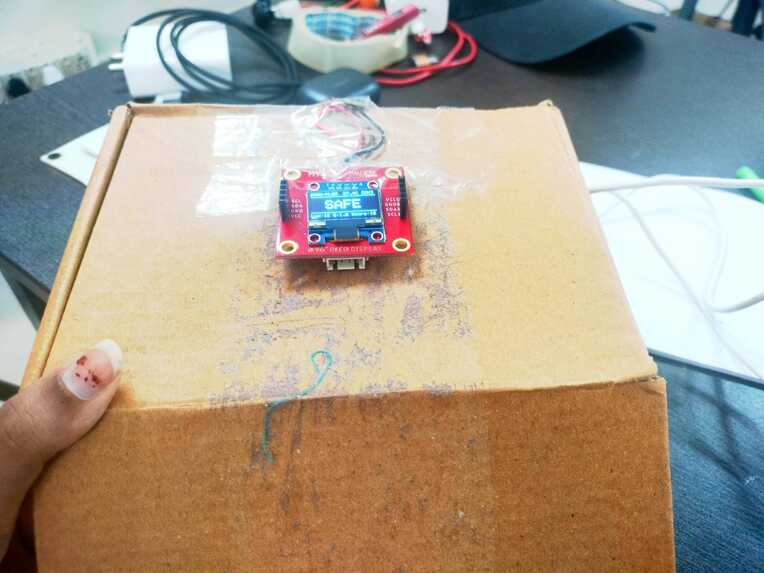
website when the box is closed
-
website when the box is open
AEGIS – Smart Vaccine Transportation Monitoring System
Inspiration
Vaccines are highly sensitive to environmental conditions during transportation. Exposure to unsuitable temperatures, excessive light, physical shocks, or improper handling can compromise vaccine quality and safety. We were inspired to develop a smart, affordable monitoring system that helps identify these risks before vaccines reach their destination.
Our goal is to make vaccine transportation safer by providing real-time visibility into the conditions inside a vaccine carrier and helping healthcare workers respond quickly to potential risks.
What It Does
AEGIS is an IoT-based vaccine transportation monitoring system that continuously monitors critical environmental and handling conditions during transit.
Key features include:
- Temperature Monitoring: Tracks temperature and identifies deviations from configured safety limits.
- Light Monitoring: Measures light intensity to help detect unwanted exposure or possible carrier opening.
- Shock and Motion Detection: Uses an accelerometer and gyroscope to identify sudden impacts, vibrations, and abnormal movement.
- Pressure Monitoring: Tracks pressure changes that may provide additional information about transportation conditions.
- Location Tracking: Helps monitor the carrier's geographical location during transportation.
- Real-Time Dashboard: Displays sensor readings, safety status, and alerts through a web interface.
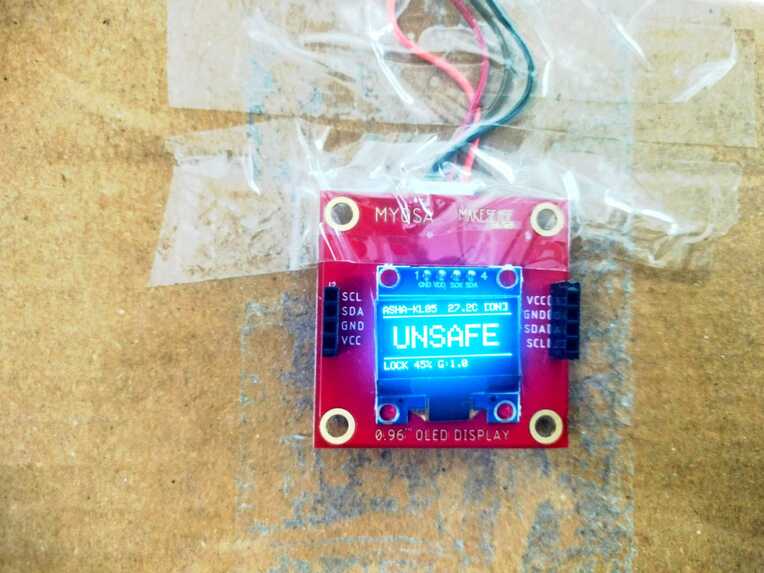
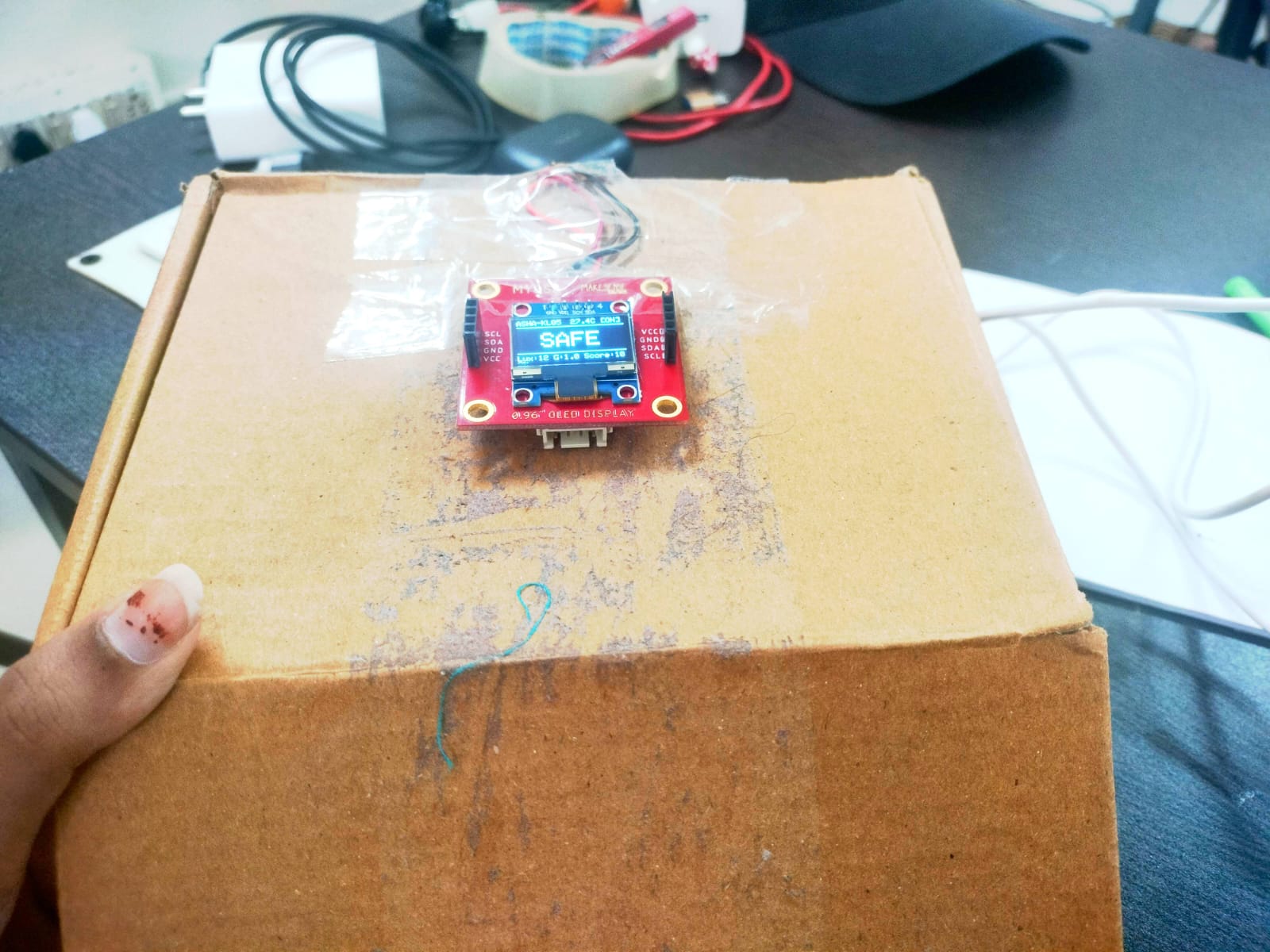
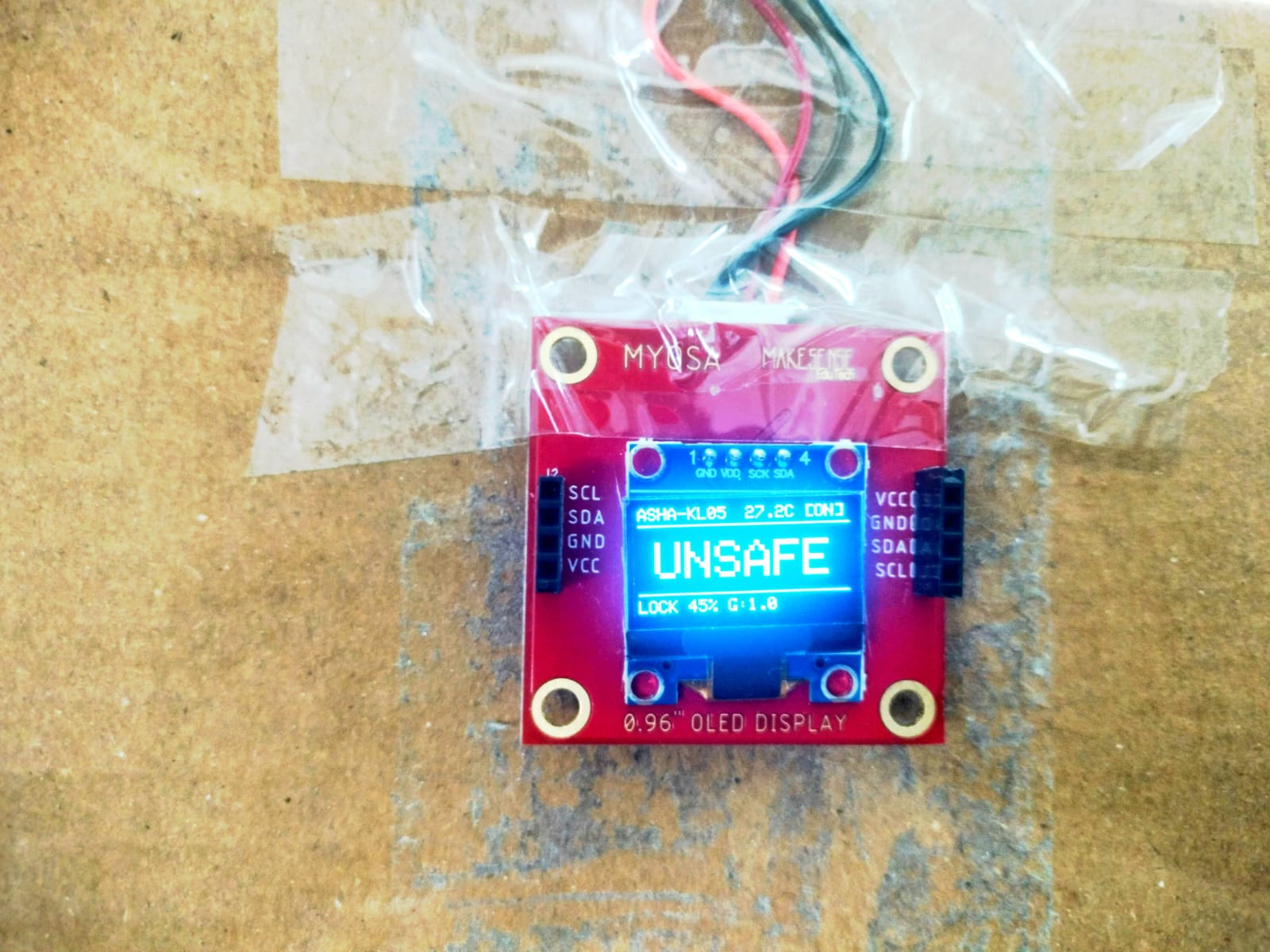
- OLED Display: Provides immediate local status information without requiring access to the dashboard.
- Configurable Safety Thresholds: Allows users to set monitoring limits and identify potential safety breaches.
How We Built It
We developed AEGIS using an ESP32 microcontroller as the central processing unit. Sensors collect environmental and motion data, while the ESP32 processes the readings and communicates them to a cloud-connected dashboard.
The system includes temperature, light, accelerometer, and gyroscope sensors, along with pressure and location monitoring components. An OLED display provides local feedback, while an RGB LED offers visual status indications.
We integrated the sensor data with a web dashboard using Firebase for cloud data storage and synchronization. The dashboard displays live readings, configurable thresholds, and alerts when monitored values exceed the defined limits.
Our approach combines embedded systems, IoT communication, cloud integration, and web development to create a practical prototype for monitoring vaccine transportation conditions.
Challenges We Faced
One of our biggest challenges was ensuring consistency between the physical device and the web dashboard. At times, the OLED display indicated an unsafe condition while the dashboard showed a safe status. We worked on improving threshold validation, sensor-data synchronization, and safety-status calculations.
Another challenge was interpreting sensor readings correctly. For example, light intensity can fluctuate depending on the environment, and motion sensors may detect ordinary handling as well as potentially harmful impacts. Selecting meaningful thresholds and distinguishing normal variations from possible breaches required careful testing.
We also faced challenges in integrating multiple sensors, maintaining reliable cloud communication, and presenting the collected information in a clear, understandable format.
What We Learned
Through this project, we gained practical experience in ESP32 programming, sensor integration, IoT communication, Firebase, and real-time dashboard development. We learned the importance of sensor calibration, consistent threshold logic, reliable data synchronization, and testing a complete hardware-software system.
Most importantly, we understood that collecting sensor data is only one part of a monitoring solution. The system must also interpret that data accurately and communicate potential risks clearly to the people who need to act.
What's Next
We aim to improve AEGIS by adding more reliable breach detection, offline data logging, automatic route-deviation alerts, historical journey reports, and notifications for healthcare workers. We also plan to validate the monitoring system against appropriate vaccine-specific storage and transportation requirements.
AEGIS is a prototype designed to support safer vaccine transportation. It does not independently certify vaccine potency or replace approved cold-chain monitoring procedures.
Our vision is to make vaccine transportation more transparent, traceable, and reliable—helping protect the quality of every dose throughout its journey.
Built With
- accelerometer
- cloud
- css
- dashboard
- embedded
- esp32
- firebase
- gps
- gyroscope
- hardware
- html
- javascript
- led
- light
- monitoring
- oled
- pressure
- real-time
- rgb
- sensor
- temperature

Log in or sign up for Devpost to join the conversation.