-
-
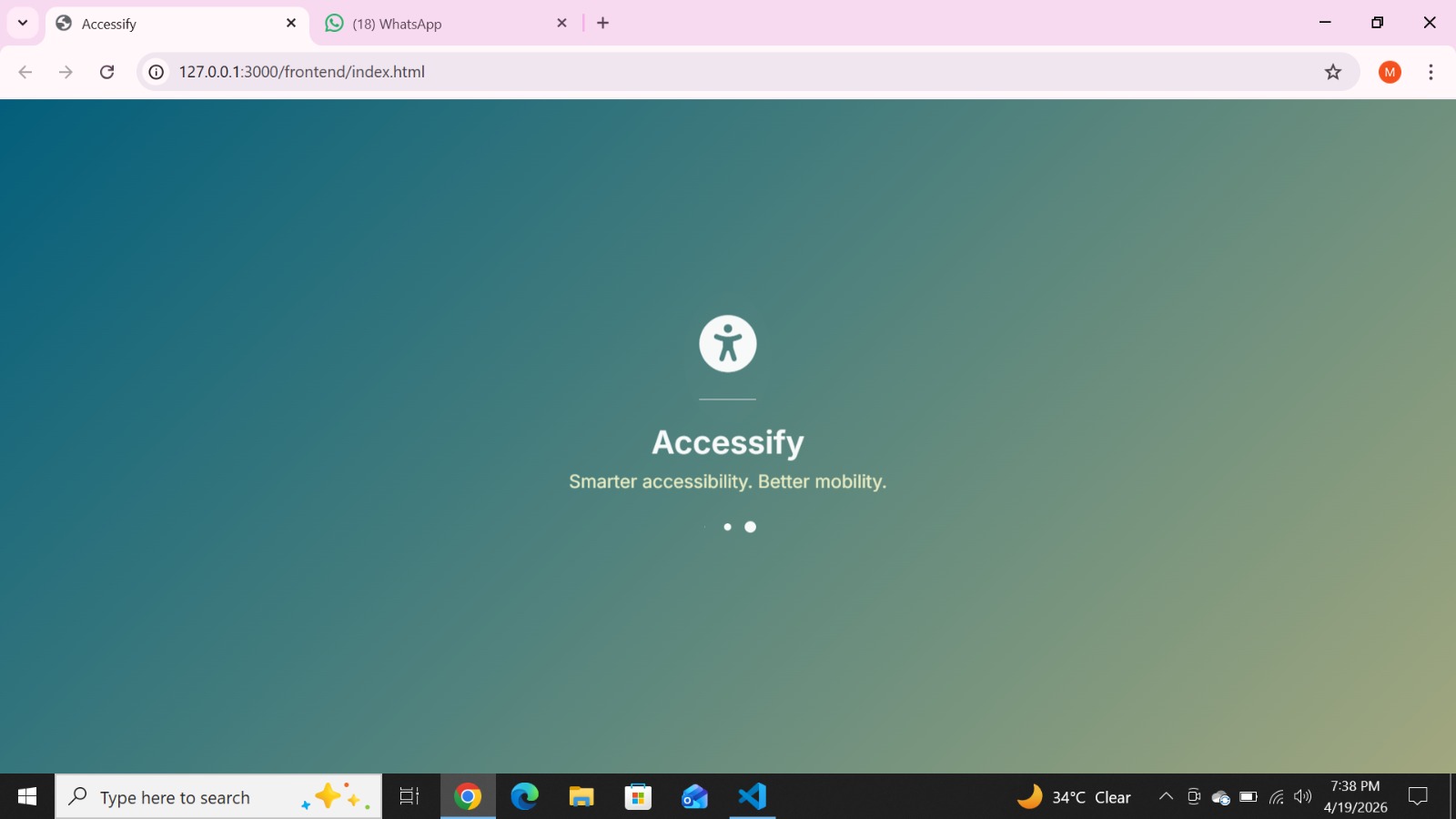
Flash
-
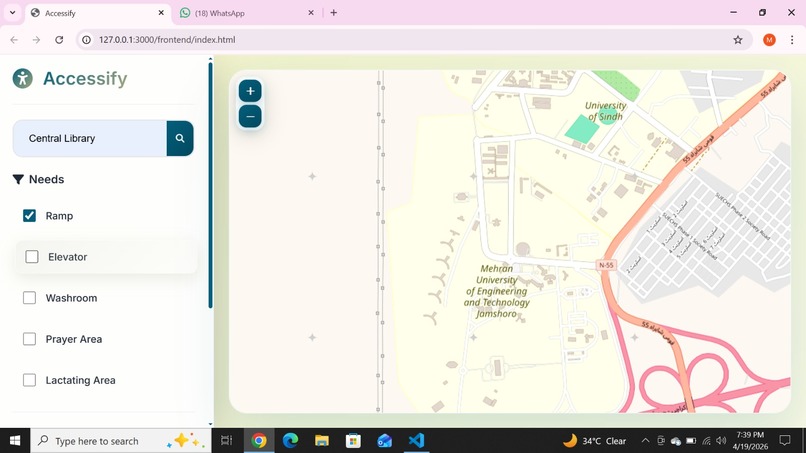
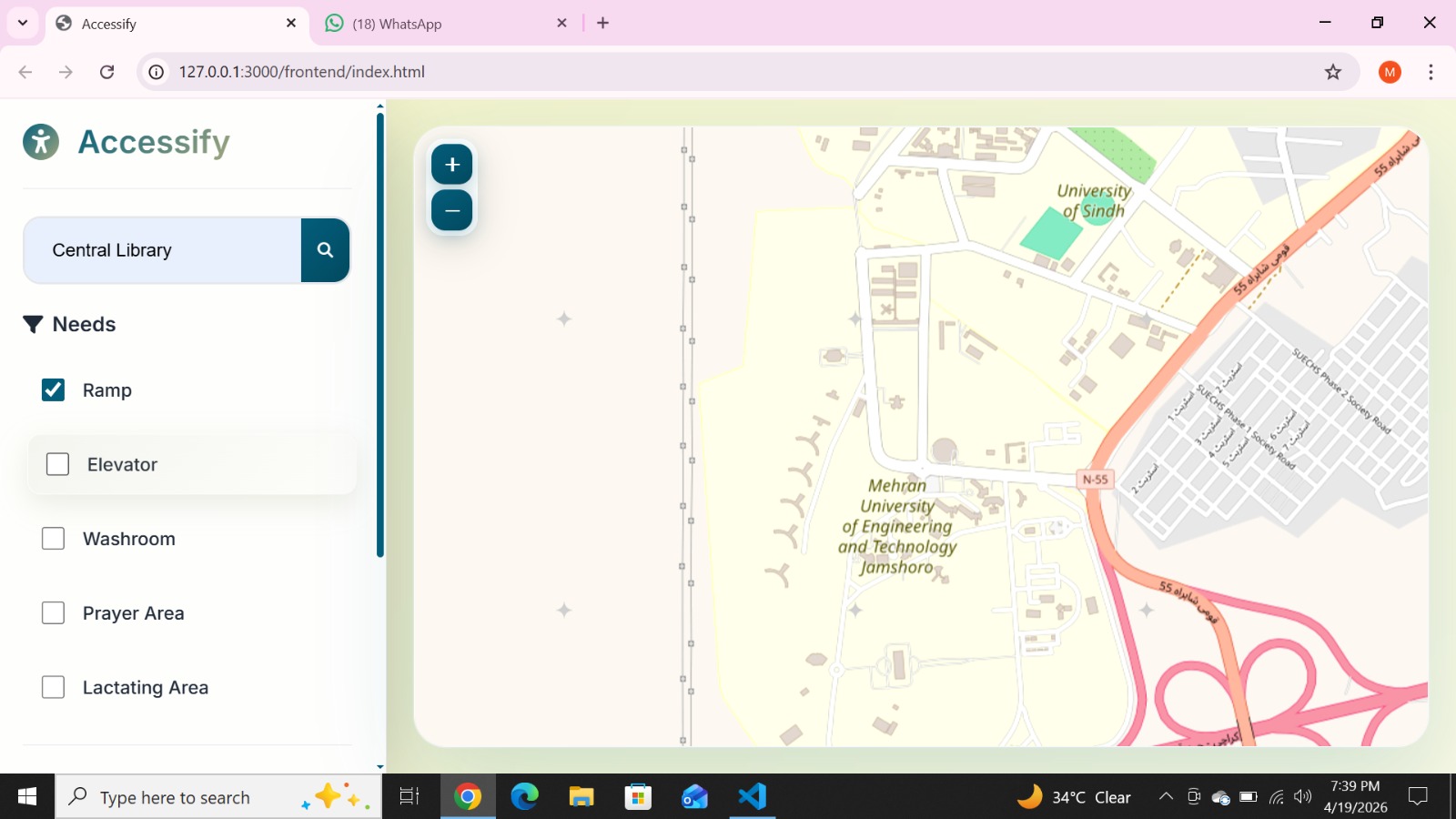
Map based website
-
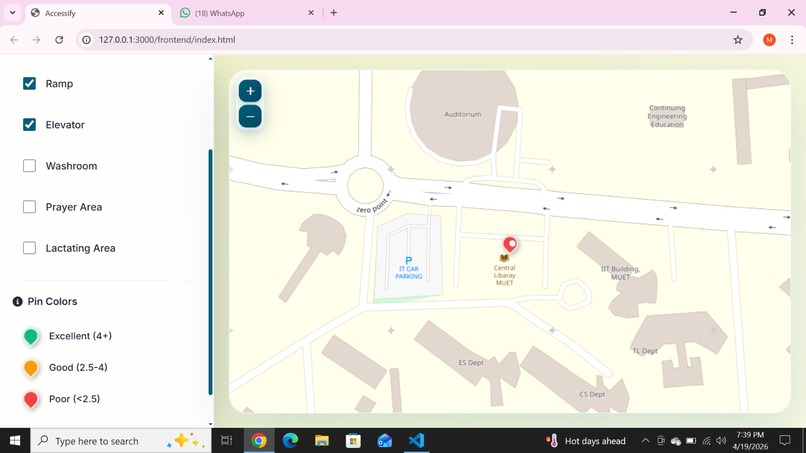
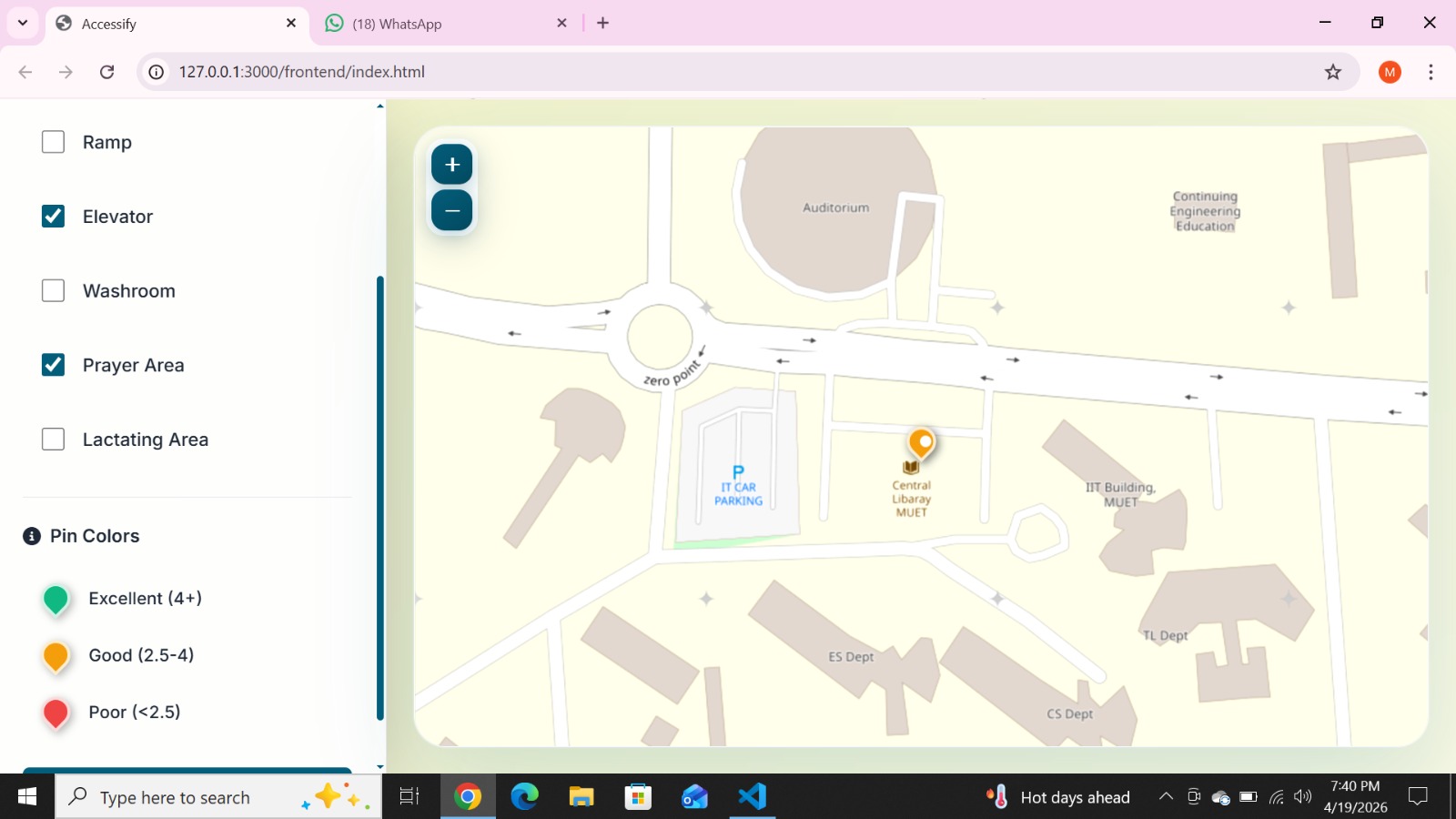
Search and filter (red pin due to selected services)
-
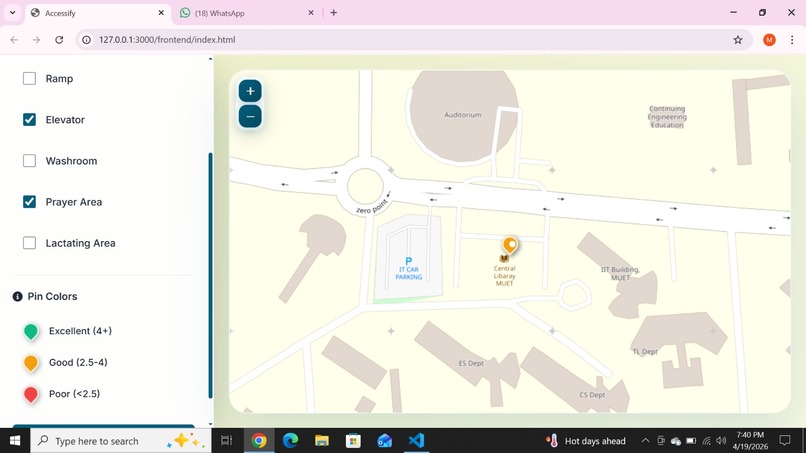
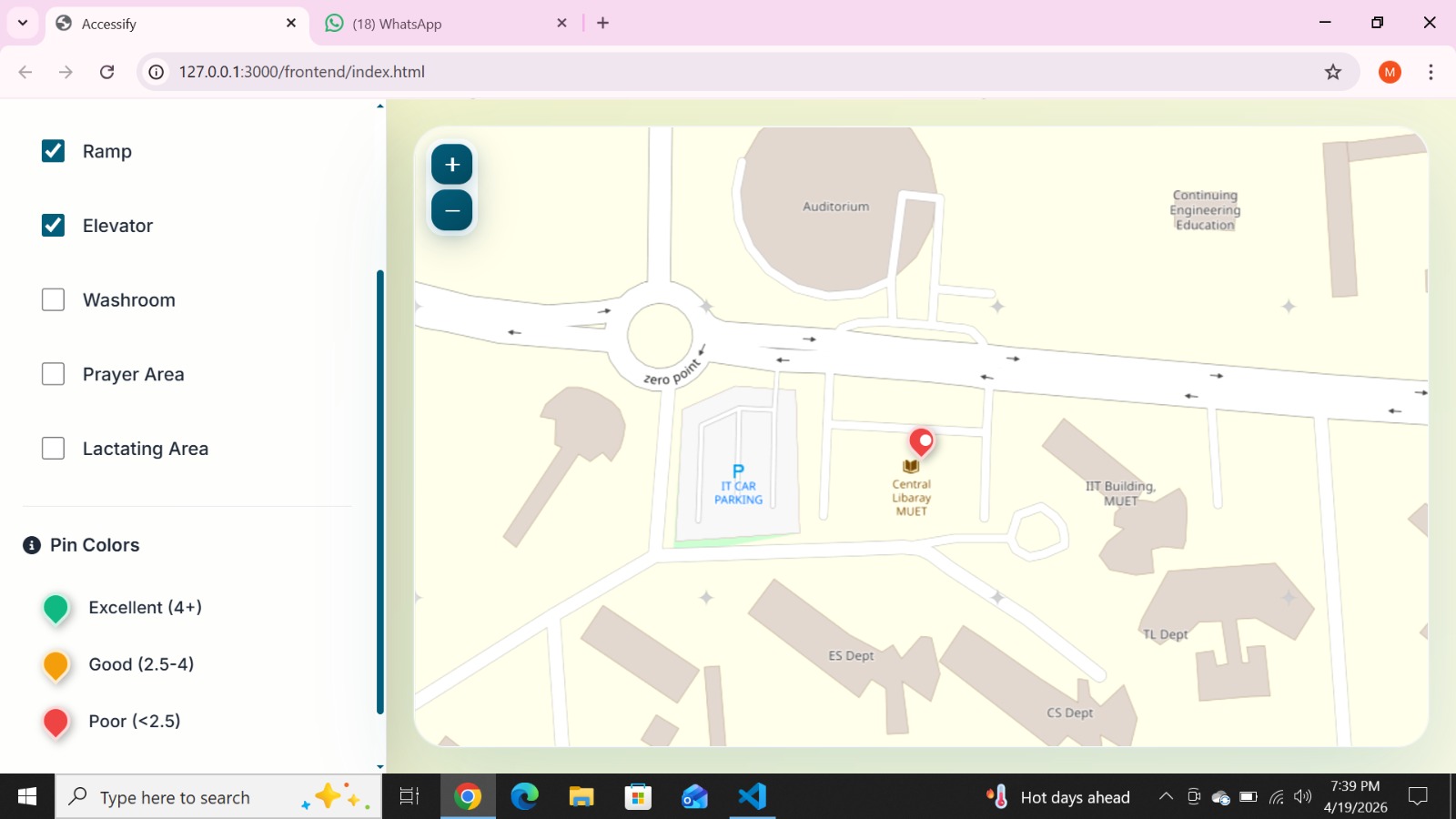
Yellow pin of same place for different filters (pin colors have meaning)
-
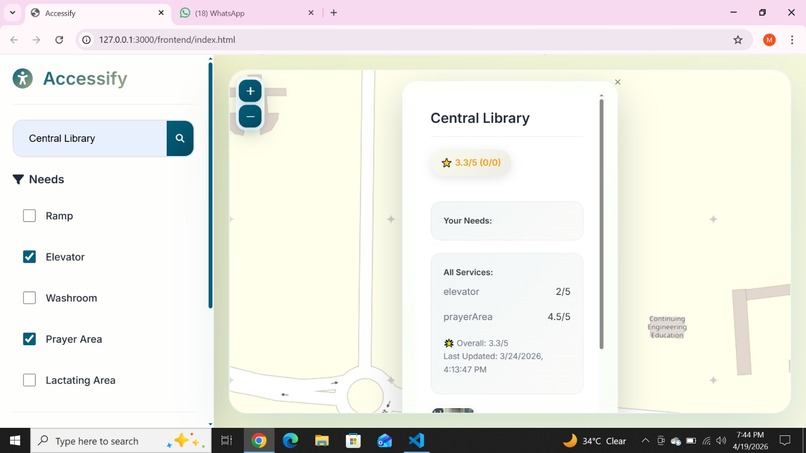
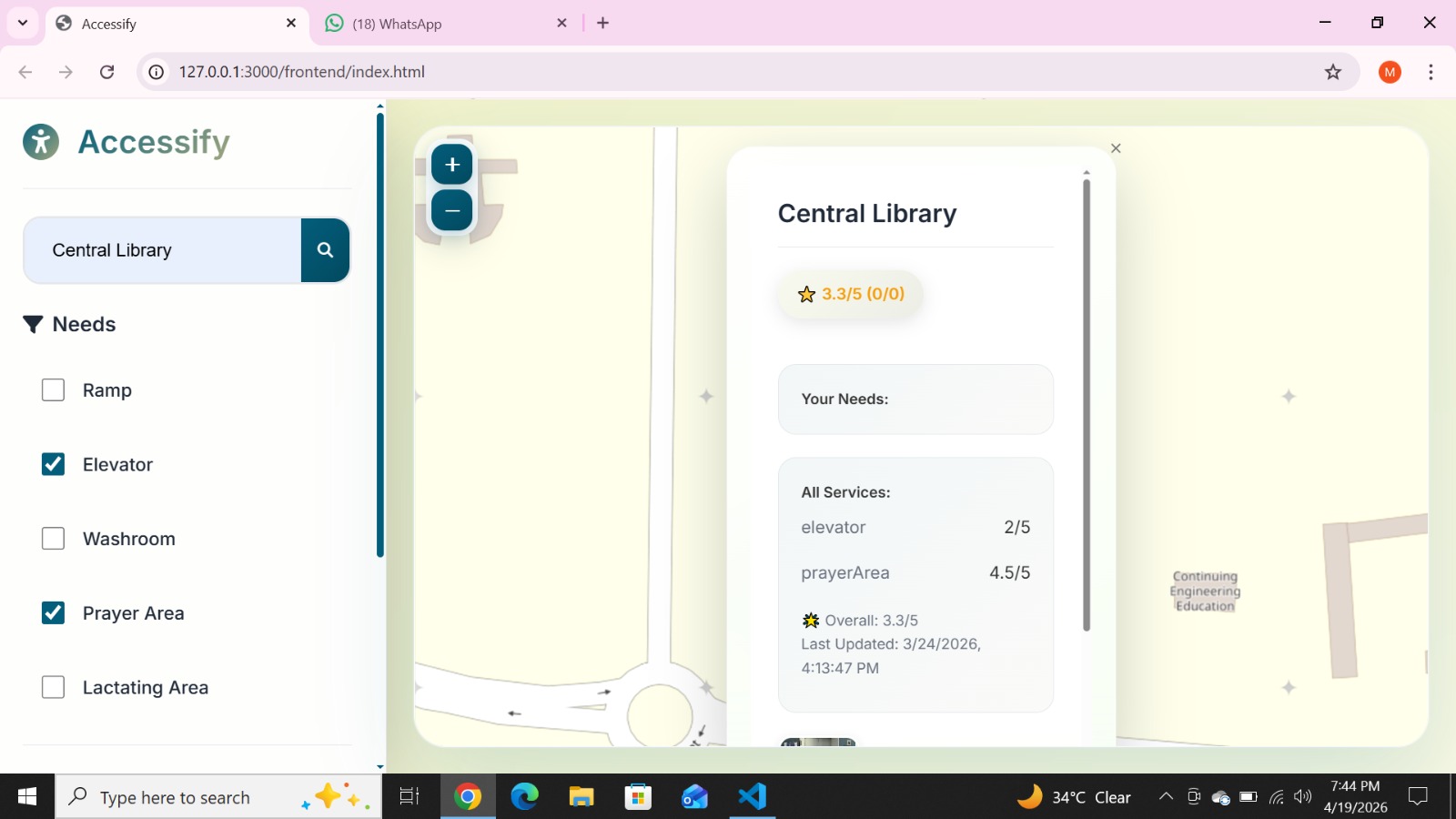
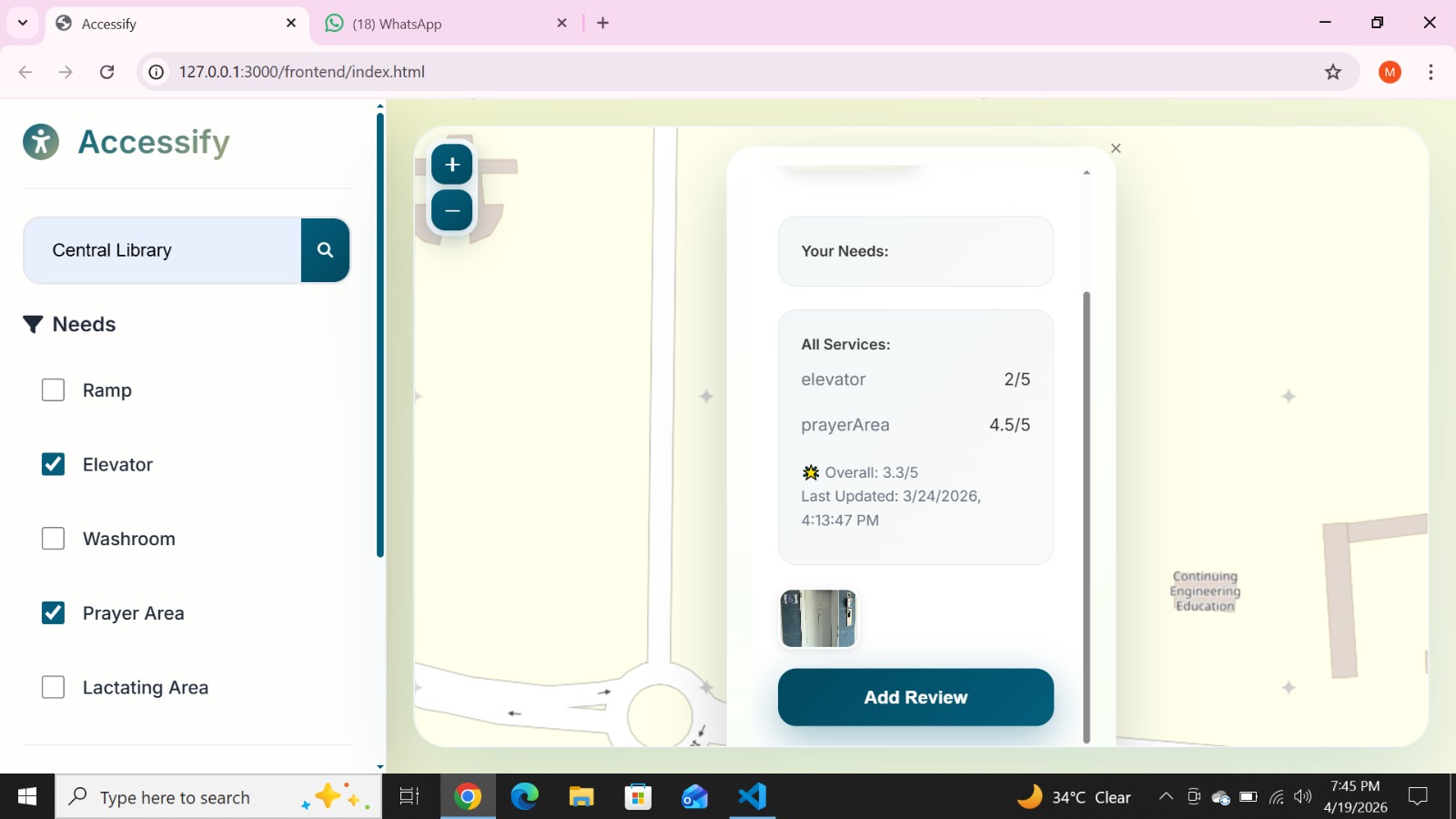
Accessibility card (showing score of each service, personalized score, overall score, last verified stamp, images
-
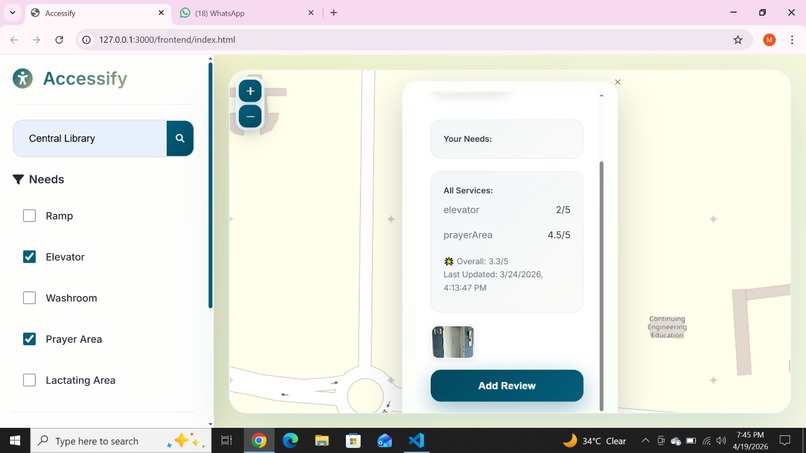
Images of place
-
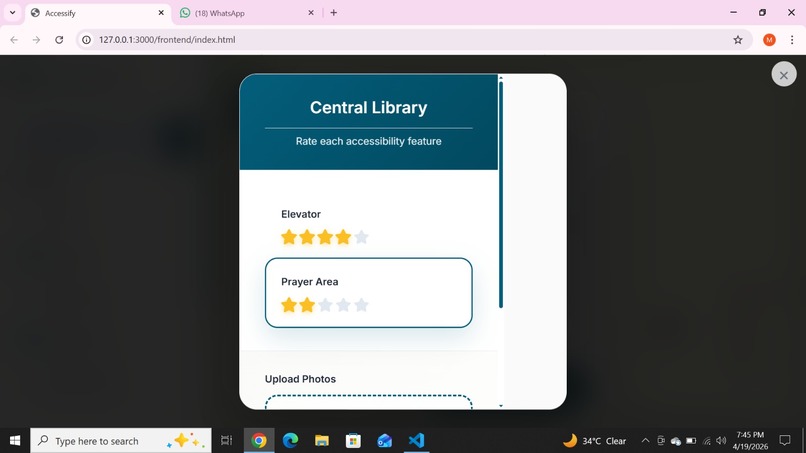
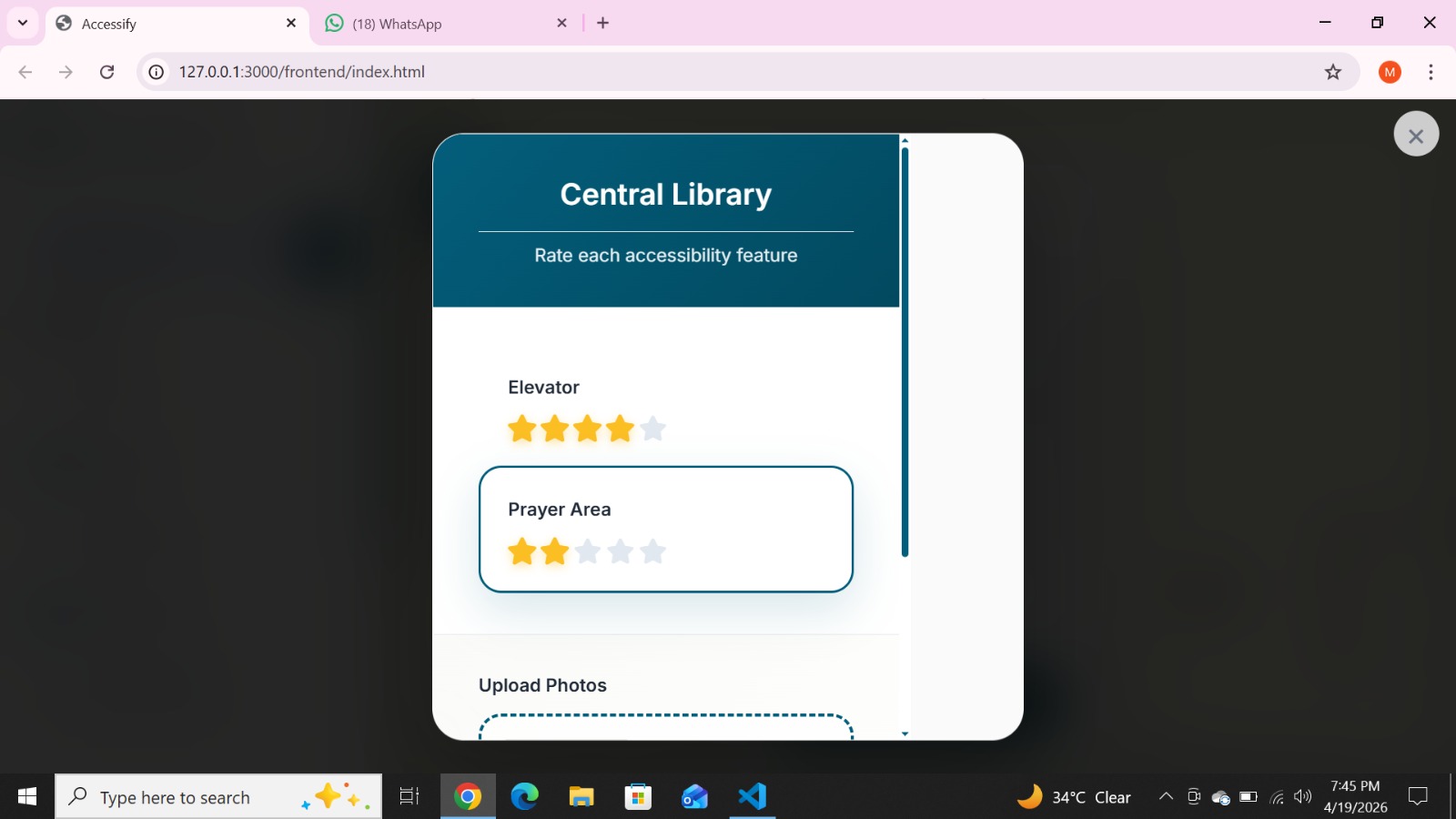
Review form with one required image (score will be recalculated and image will be shown on accessibility card)
-
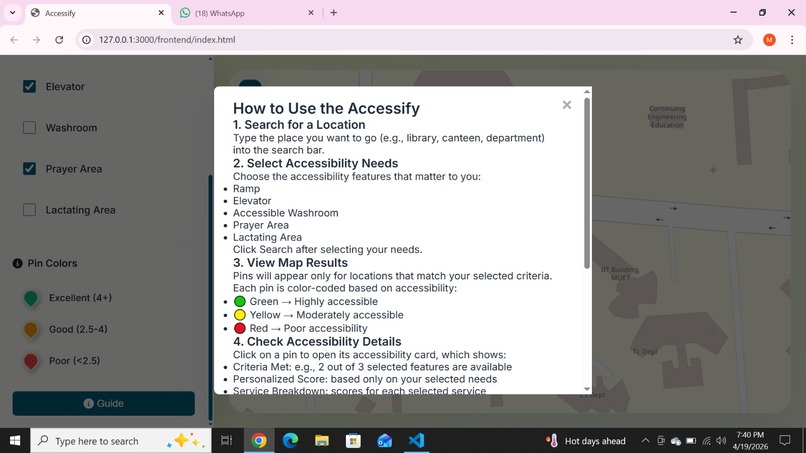
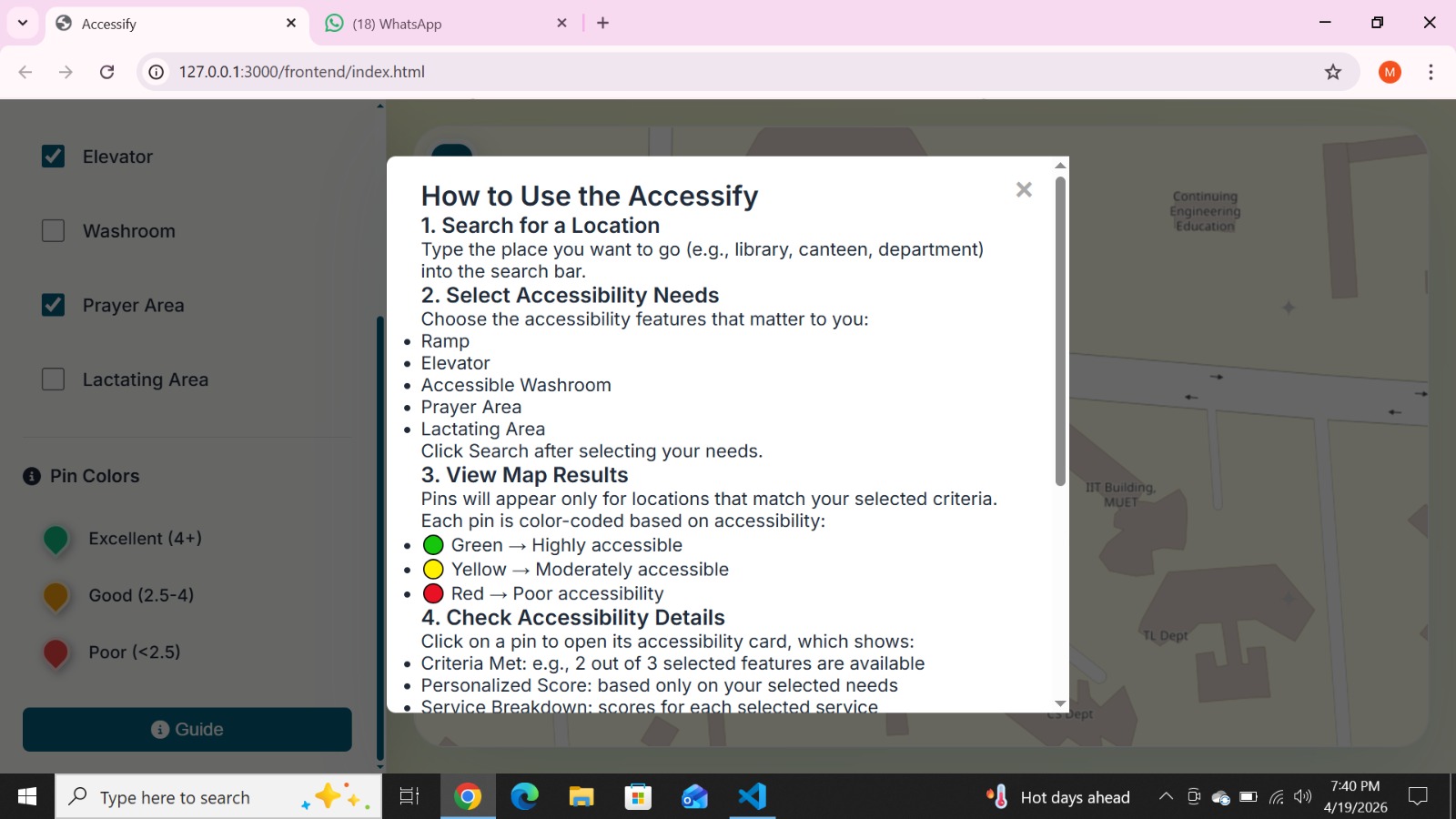
Guide for new users
-
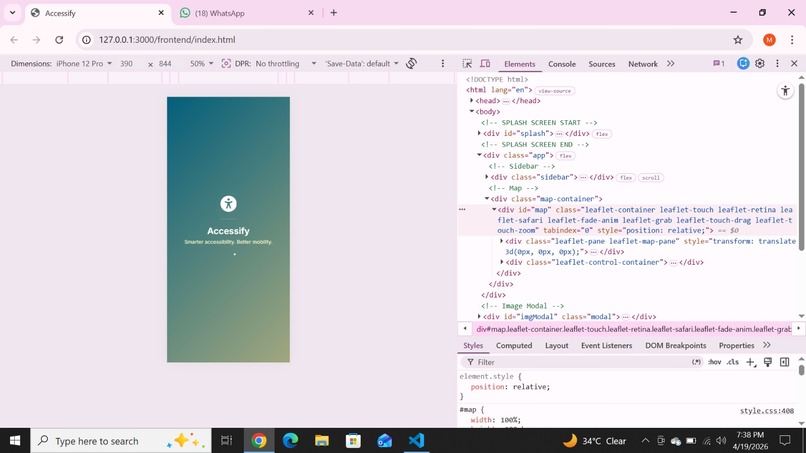
Responsive design
Inspiration
Accessibility is often spoken about in theory — but rarely experienced in practice. The inspiration for Accessify came from a simple, frustrating reality: people with disabilities, elderly individuals, and parents with young children have no reliable way to know whether a place will accommodate their needs before they arrive.
Searching online returns scattered, outdated, and unverified information. Google Maps labels a place "wheelchair accessible" with no further detail. Word of mouth is inconsistent. There is no single platform that gives a person the confidence to say — yes, this place works for me today.
According to the WHO, approximately 1.3 billion people — 16% of the global population — experience significant disability. Yet 65% of them face barriers when using retail services, and 57% when accessing entertainment and hospitality venues. These are not edge cases. This is a systemic gap in public information. We built Accessify to close that gap.
What It Does
Accessify is a smart, map-based platform that empowers people with disabilities, elderly users, and parents with young children to find accessible places easily and confidently.
Users search for a place or category, then select the specific services they need — ramps, elevators, accessible washrooms, lactating areas, prayer spaces, or accessible parking. The map responds instantly with color-coded pins: green means all selected needs are met, yellow means partial access, and red means the place may not be suitable.
Clicking any pin opens an Accessibility Card showing every available service, a personalized score calculated specifically for the user's selected needs, an overall reliability score, real photos uploaded by previous visitors as proof, and a last-verified timestamp that updates automatically with every new review submission.
Users can also contribute by rating each service from 1 to 5 stars and uploading at least one photo — keeping the data honest, current, and community-driven. First-time users are guided through the platform with a built-in step-by-step onboarding tour.
How We Built It
We built Accessify as a full-stack web application using the following stack:
- Frontend — HTML, CSS, and JavaScript for a lightweight, responsive interface
- Backend — Node.js and Express.js to build a RESTful API handling search, scoring, reviews, and timestamp logic
- Database — PostgreSQL hosted on Neon, storing all places, services, reviews, scores, and timestamps
- Map — Leaflet.js with OpenStreetMap tiles for the interactive, color-coded pin map.
Personalized score based on selected services.
Overall reliability scores are averaged from all user star ratings per service and recalculated daily to ensure data stays fresh.
Challenges We Ran Into
Personalized Scoring Logic — Designing a score that reflected only what each individual user cared about, rather than a generic label, required careful backend logic to dynamically filter and calculate results per request.
Data Freshness — Crowdsourced data is only as trustworthy as its last update. We tackled this by auto-refreshing timestamps on every review submission and making photo uploads mandatory — reducing the risk of stale or misleading entries.
Map Performance — Rendering multiple color-coded pins simultaneously while keeping the map responsive required optimizing our pin update logic to avoid recalculating scores on every page load.
Scope Management — With a broad target audience spanning wheelchair users, elderly individuals, parents, religious users, and people with temporary injuries, we had to make deliberate decisions about which features to ship versus defer — and resist the temptation to build everything at once.
Accomplishments That We're Proud Of
We are proud of building a fully functional, end-to-end platform within the hackathon timeline that genuinely addresses a real-world problem. The personalized scoring system — where results adapt to each user's specific needs rather than showing a one-size-fits-all score — is something no existing accessibility platform currently offers. We are also proud of the data integrity model we designed: mandatory photo proof and automatic timestamp refreshes make Accessify more trustworthy than any alternative on the market today.
What We Learned
- How to build and optimize a RESTful API that serves dynamic, user-specific results in real time
- How to integrate Leaflet.js with a custom backend to render data-driven, personalized map pins
- The importance of data integrity in crowdsourced systems — and how small design decisions like required photos and live timestamps can enforce it at scale
- How to scope and deliver a meaningful product under time pressure without losing sight of the core problem being solved
What's Next for Accessify
- Expanding coverage to more cities and regions globally
- Adding more accessibility service categories including sensory, cognitive, and visual impairment support
- Introducing an AI-powered image verification layer to flag misleading or irrelevant photo submissions
- Building a dedicated mobile app for on-the-go access
- Partnering with local governments and businesses to seed verified, official accessibility data at scale


Log in or sign up for Devpost to join the conversation.