Inspiration
When the T breaks, riders are left in the dark, and it breaks often: the MBTA reported 132 planned disruption days in 2026. Riders keep hitting the same failures: predictions that never arrive, 30-minute branch gaps hidden behind "normal" service, shuttles at the wrong curb.
MBTA Go shows where trains are. It doesn't say why they stopped, what crews are doing, or what to do next. We wanted a map that makes the invisible T visible, and a game that rewards understanding the system and helping other riders, not killing time on the platform.
What it does
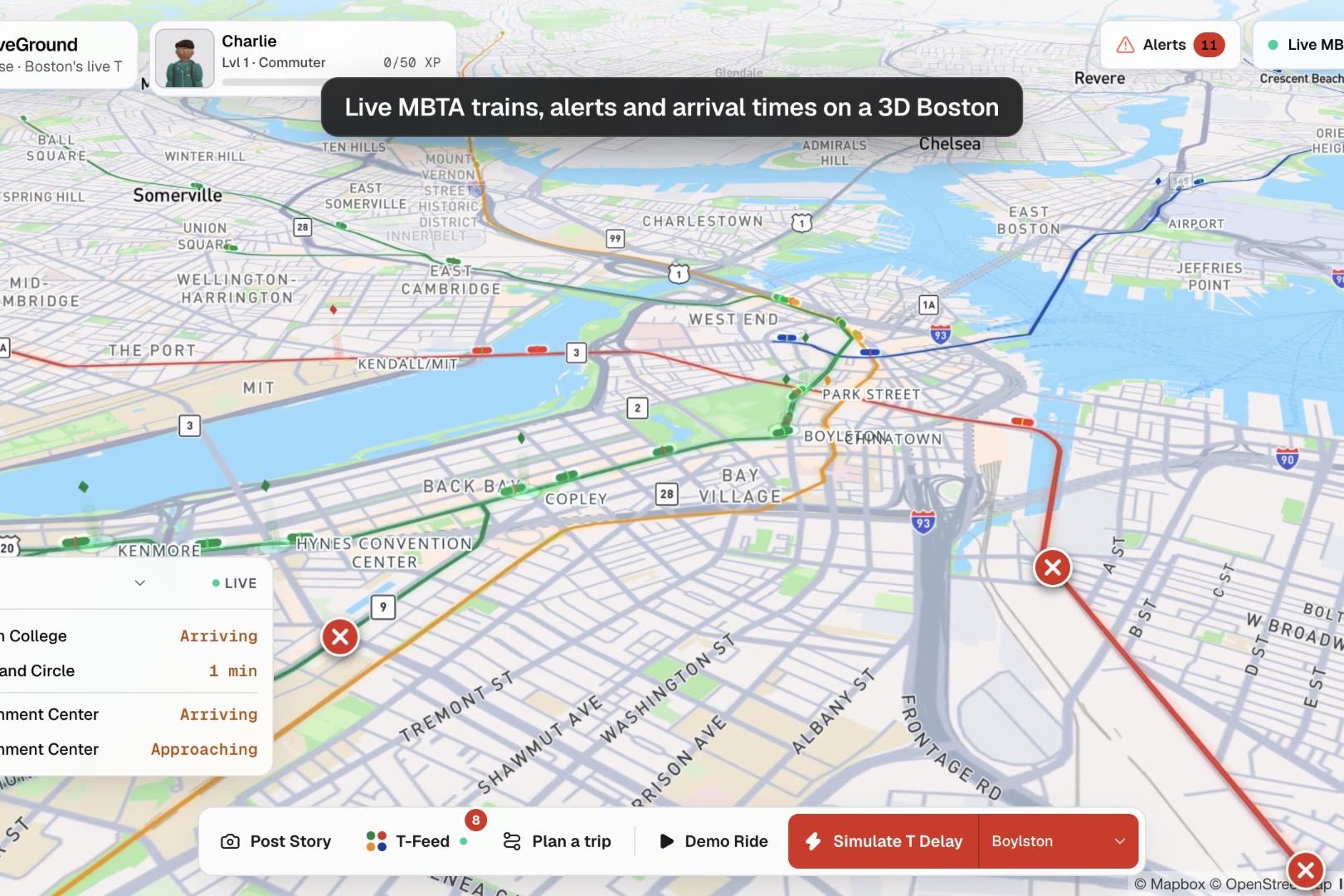
AboveGround is a live 3D map of Boston's T. It answers three questions: what's happening, why, and what to do next.
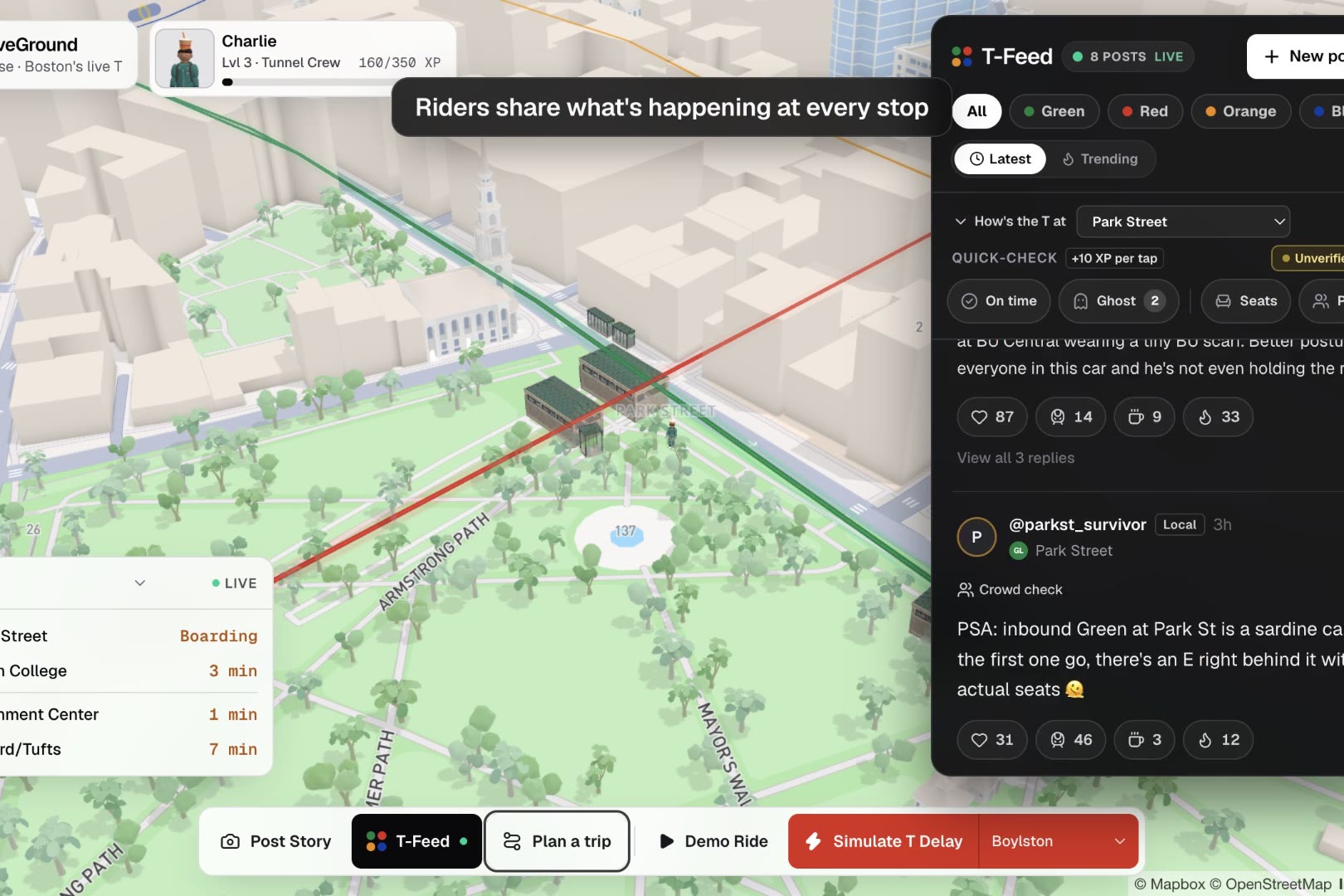
- See: every train, alert and arrival comes live from the MBTA, on a 3D Boston. Tap a stop for next trains, branch gaps and one-tap rider reports. Lines, your route and trains stay visible through buildings when you zoom in.
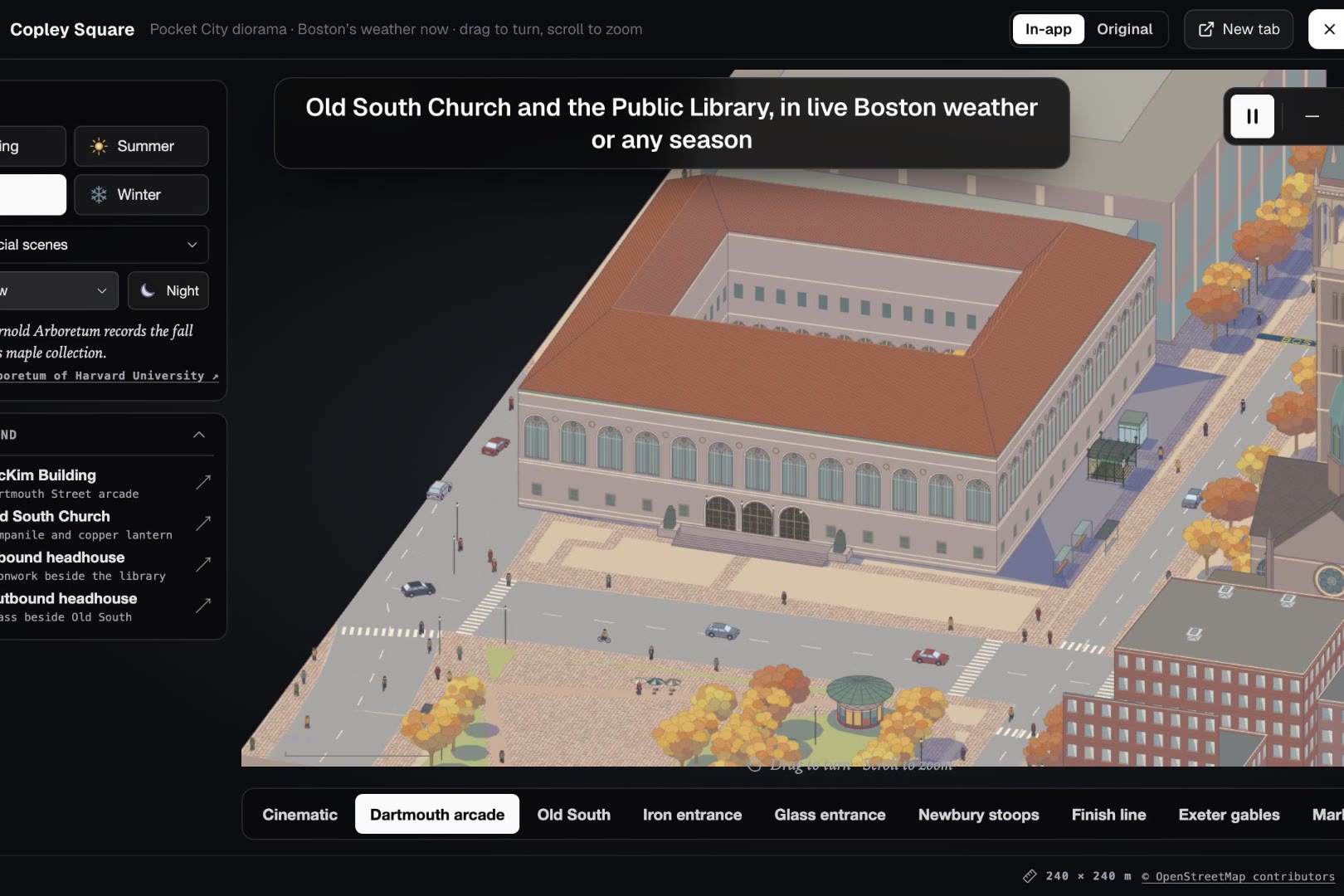
- Street view: at eight stations, fly down into a hand-drawn diorama of the block, building by building, in Boston's live weather or any season.
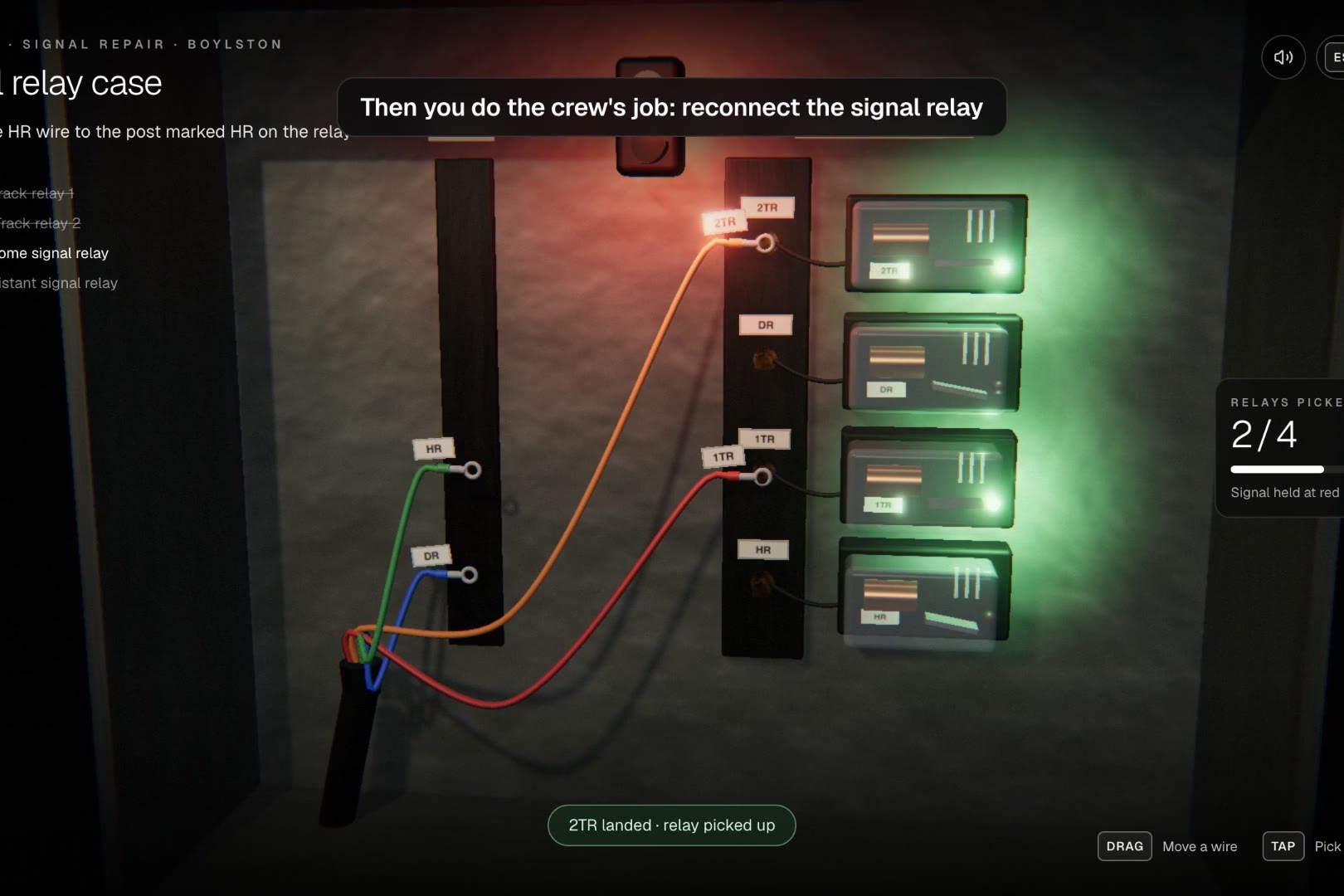
- Fix the T: when a line stops, AI explains what broke in plain English, with a real repair time. Then you walk into the tunnel and do the crew's job in a 3D mini-game with no timer, one for each kind of fault: signal, rail, switch, power, disabled train and frozen switch. Then you watch the crew finish.
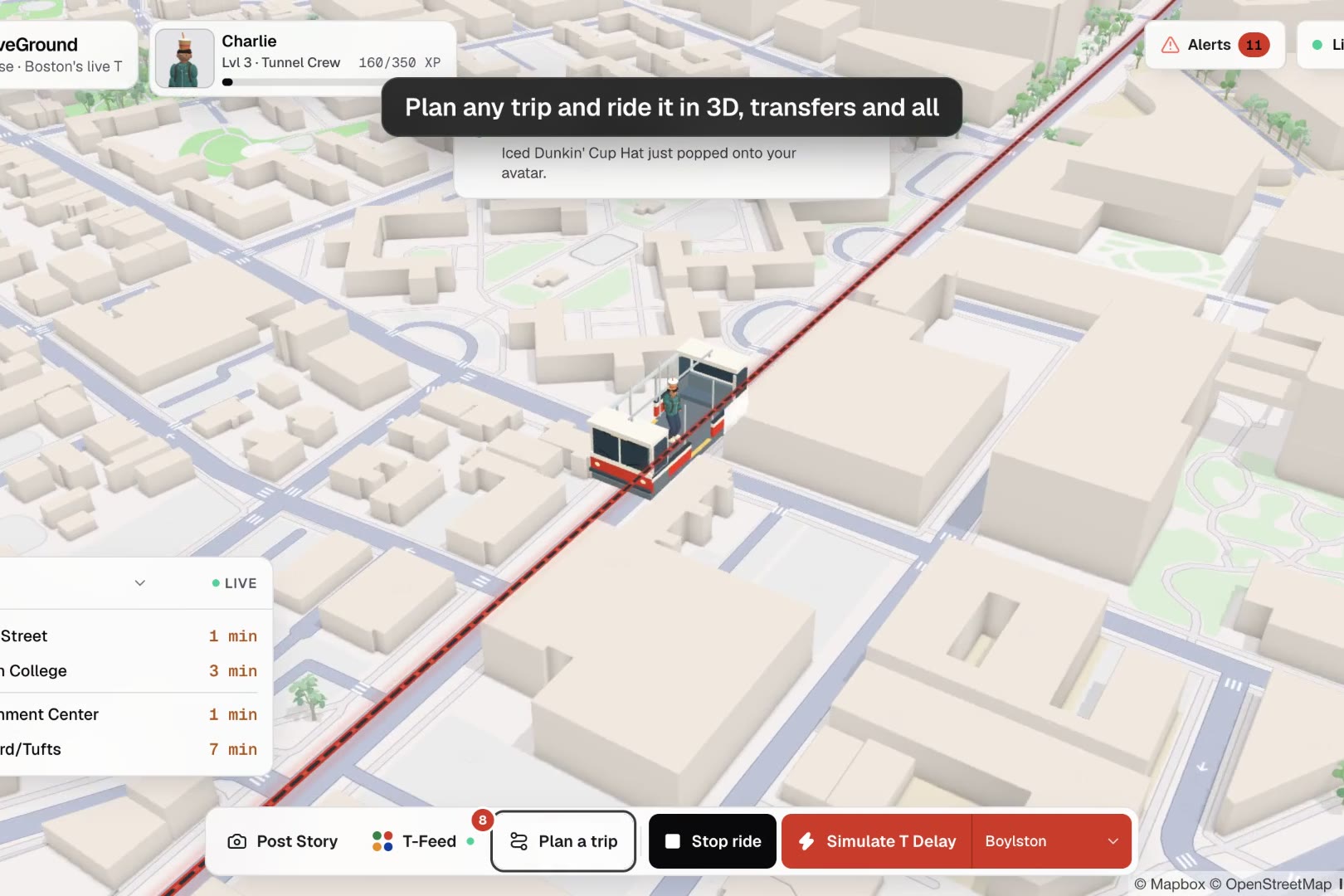
- Plan a trip and ride it: your avatar walks to the platform, rides the train, transfers and walks out, all in 3D.
- T-Feed and Station Stories: riders post what's happening at each stop. Quick-Check reports (on time, ghost train, packed) take one tap and queue offline in tunnels.
- Transit Rank: points and hats for reports, posts and repairs, with one-tap accounts.
- The real city: day, night and weather follow Boston. Overnight, when the T is closed, a labeled sample service runs on the real tracks.
How we built it
- Frontend: Next.js 16 (App Router), React 19, TypeScript and Tailwind CSS 4.
- Map: Mapbox GL JS v3 with the Standard style for 3D buildings and lighting, and MapLibre GL as a fallback. A custom three.js layer draws the trains, stations, avatar and trip car, plus a see-through pass that shows them through buildings.
- Stations: eight station models built in Blender from photos and OpenStreetMap footprints: Boylston, BU Central, Copley, Harvard, Hynes, Kenmore, Kendall/MIT and Park Street.
- Street view: eight hand-drawn isometric dioramas generated from OpenStreetMap buildings, streets and trees, with researched landmark detail, seasons and local occasions.
- Backend: Python and FastAPI. It polls the MBTA V3 API for vehicles, alerts and predictions, simulates delays for the repair flow, and stores T-Feed posts, stories, reports and accounts.
- AI: Gemini 3.8 Flash with Gemini API key rewrites raw MBTA alert text into plain English. Every call has a 4-second cap with written templates as the fallback, so the demo never waits on it. Gemini is supported through an environment variable.
- Repair games: six three.js scenes, a relay case, a rail weld, a track switch, substation switchgear, a disabled train and a frozen switch, with materials, sparks, smoke and sound all made in code.
- Weather: National Weather Service observations at Logan Airport, with Open-Meteo as the fallback.
- Offline-first: reports and posts queue in the browser while you're underground and send when you have signal. If the MBTA feed is down, simulated trains keep the map alive.
Challenges we ran into
- Buildings hid our world. Zoomed in, Mapbox's 3D buildings covered our trains, stations and trip route. We made the lines draw through buildings and added an x-ray pass that shows our 3D models as silhouettes behind them.
- The T sleeps. Service stops overnight, exactly when we were testing and recording. We built a clearly labeled sample service on the real tracks that hands back to live trains at 6 AM.
- AI on a live stage. A slow answer would freeze the demo, so every AI call has a 4-second cap and a written fallback.
- Four people, one page. Everyone's features meet in one screen, so we split ownership by folder and locked a shared data contract at the start.
Accomplishments that we're proud of
- Live data end to end: the demo video shows 61 real trains on a Sunday morning.
- Hand-drawn dioramas of eight real Boston blocks, and Blender models of eight stations.
- A repair you play yourself, then watch the crew finish, based on the kinds of faults the MBTA actually fixes.
- A full trip you can ride in 3D, from the street to the platform and back out.
What we learned
- How the MBTA V3 API models vehicles, alerts and predictions, and how often its alerts need translating.
- How real subway repairs work: signal relays, rail welds, switch heaters, power substations.
- That a fallback for every network call is what makes a live demo safe.
What's next for AboveGround
- A data partnership with the MBTA.
- Accessibility-first routing that avoids broken elevators.
- Per-branch crowding built from rider reports.
- Street view for more stations.
SPARK! Roast Receptionist:
SPARK! Roast Receptionist is a desk bot for the Spark! lab entrance. Its round ESP32 display shows animated eyes that follow visitors using webcam face tracking. When a visitor taps its touch pad, it takes a photo, Gemini writes a playful roast, and the bot speaks it with its mouth moving in sync with the voice. It works offline, too: if the internet drops, it roasts your shirt colour or picks a line from its own collection, so the demo never stops. Our $1,000 build-out adds an enclosure with a speaker, an Arduino UNO Q so it no longer needs a laptop, wave-to-wake, and a family of bots around the lab.
Built With
- anthropic
- blender
- claude
- fastapi
- mapbox
- maplibre
- mbta-v3-api
- national-weather-service
- next.js
- open-meteo
- openstreetmap
- python
- react
- tailwindcss
- three.js
- typescript


