-
-
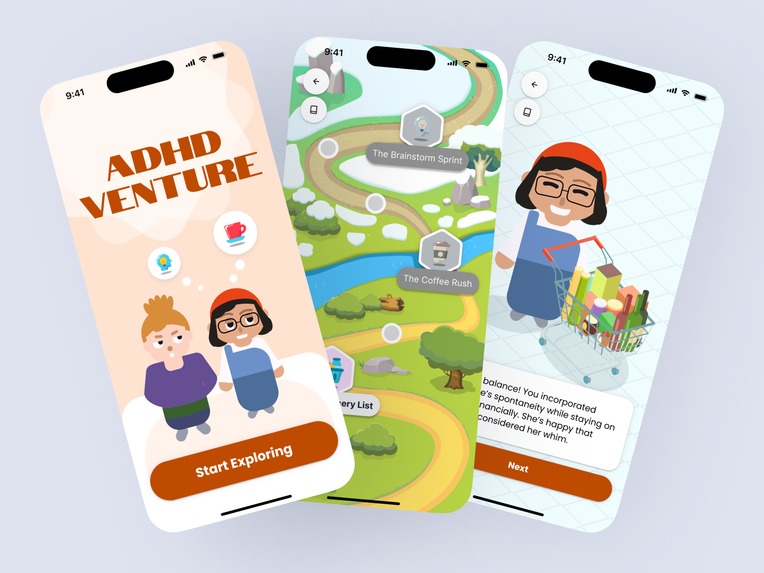
Interface Mockup
-
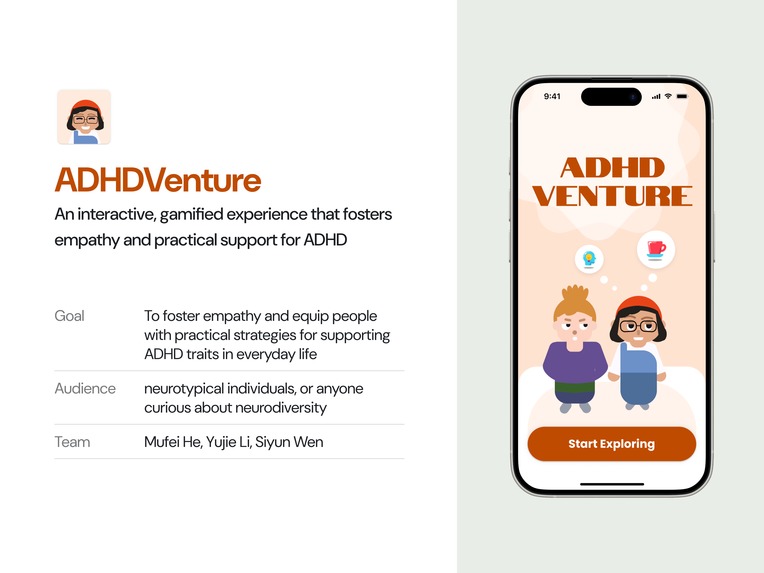
Project Overview
Inspiration
ADHD is one of the most common neurodevelopmental disorders, affecting 5–8% of children worldwide and an estimated 2.5–5% of adults globally. Yet, many go undiagnosed or under-supported, often facing stigma and misconceptions. Society frequently views ADHD through a narrow lens, focusing on perceived negatives like impulsivity, forgetfulness, or decision paralysis, while overlooking the incredible strengths ADHD individuals bring, such as creativity, hyperfocus, and problem-solving.
At the same time, societal norms often place the burden of adjustment on neurodiverse individuals, expecting them to adapt to environments designed for neurotypical people. This creates barriers in workplaces, schools, and social settings, where understanding and accommodations could make a huge difference.
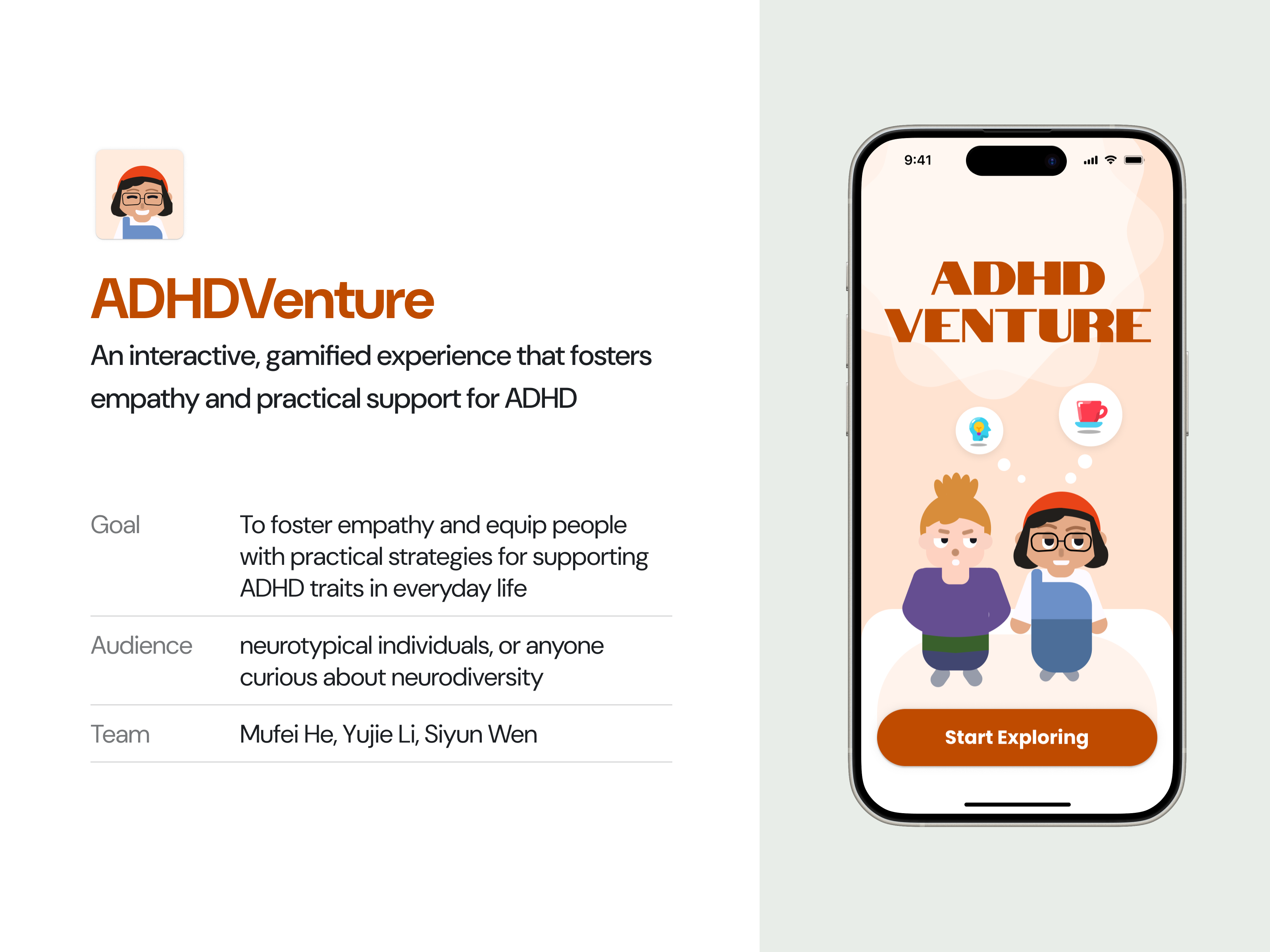
We were inspired to create ADHDVenture to address this gap. Our goal is to foster empathy, promote understanding, and provide actionable strategies to support ADHD traits in everyday life. By highlighting real-world scenarios and offering practical solutions, we hope to shift the narrative from judgment to celebration of neurodiversity.
What it does
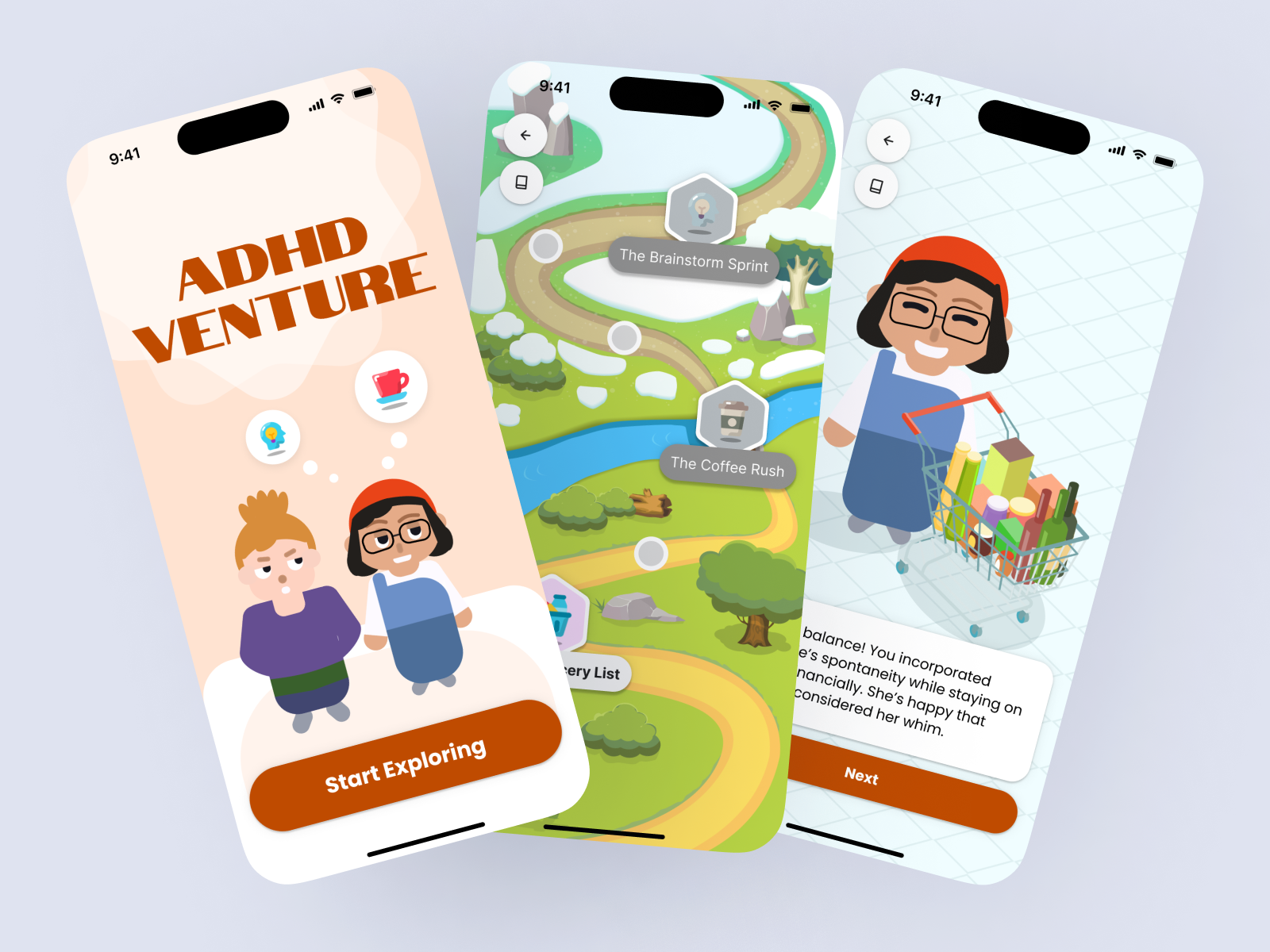
ADHDVenture is an interactive, gamified experience where players join their neurodiverse friend Maddie in real-world scenarios like grocery shopping or brainstorming. The game helps players uncover ADHD traits, such as impulsivity and working memory challenges, while highlighting their strengths. Players make choices, learn practical tips, and unlock ADHD facts, promoting empathy and actionable support.
How we built it
- Ideation: We started with FigJam to brainstorm and storyboard scenarios.
- Design: Using Figma, we created prototypes and visuals, supported by tools like ChatGPT and Adobe Photoshop for content and illustrations.
- Development: We implemented the game with React, Vite, and TypeScript, coding in VS Code. The game is hosted on GitHub Pages for easy access.
Challenges we ran into
- Avoiding Stereotypes: We carefully balanced highlighting ADHD traits without reinforcing negative or overly simplistic narratives.
- Time Constraints: With limited time, we focused on creating one polished scenario as a minimum viable product (MVP).
- Balancing Fun and Education: Ensuring the game was engaging while maintaining its educational value was a complex design challenge.
Accomplishments that we're proud of
- Creating a gamified experience that highlights both challenges and strengths of ADHD without stereotyping.
- Designing a functional prototype with meaningful user interactions within a short timeframe.
- Providing players with actionable strategies they can apply in real-life situations to support neurodiverse individuals.
What we learned
- The ADHD Spectrum: We deepened our own knowledge about ADHD traits, strengths, and challenges.
- Collaboration: Working as a team with diverse skills in design and development helped us blend technical and creative elements seamlessly.
What's next for ADHDVenture
- More Scenarios: Expand the game to include additional contexts, like workplace interactions or group projects.
- Customization: Allow users to choose different characters or neurodiverse traits for a personalized experience.
- Accessibility: Enhance the design for inclusivity, adding features like text-to-speech or multilingual support.
- Research-Based Validation: Partner with ADHD experts and educators to refine the content and maximize its impact.
Built With
- adobe-illustrator
- chatgpt
- figjam
- figma
- github
- photoshop
- react
- typescript
- vite
- vscode


Log in or sign up for Devpost to join the conversation.