-
-
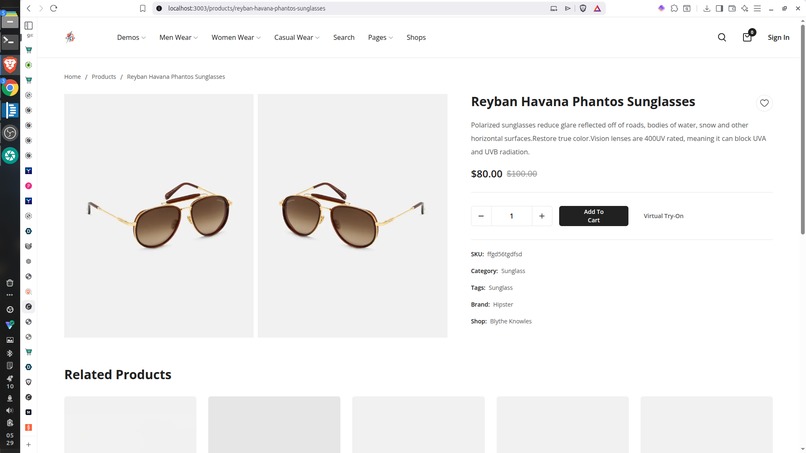
Produt details
-
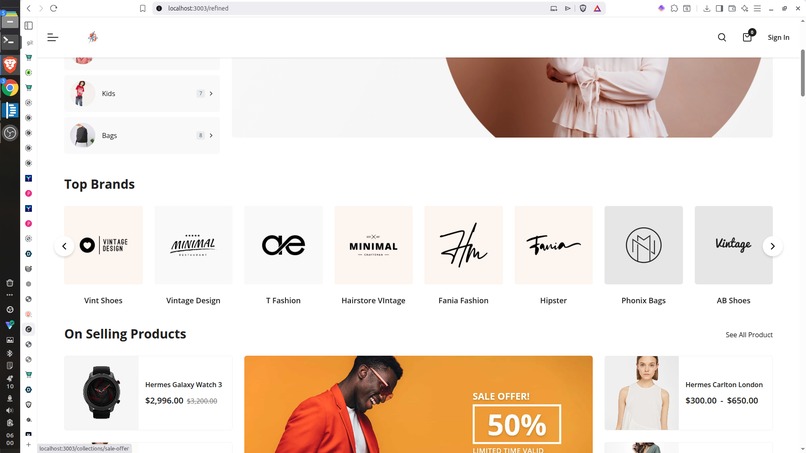
home landing
-
-
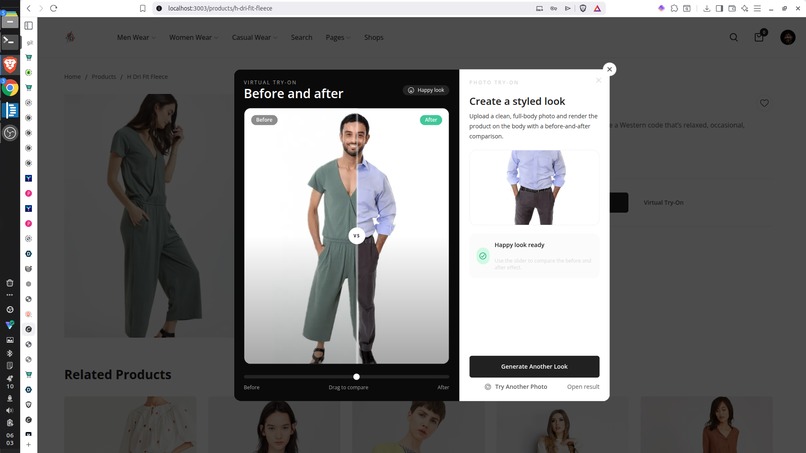
lai try on
-
Zyro Fashion: AI-Powered Virtual Try-On Marketplace
Research-Backed Problem Statement
Online fashion has a confidence problem. Shoppers can see product photos, size charts, and model images, but they still cannot answer the most important question: "How will this look on me?"
This uncertainty is not just emotional. It has direct business cost. The National Retail Federation and Happy Returns estimated that retail returns would reach $890 billion in 2024, with retailers estimating 16.9% of annual sales being returned. The same report notes that online return rates are, on average, 21% higher than overall return rates, and that 51% of Gen Z consumers engage in bracketing, where shoppers intentionally buy multiple items or sizes expecting to return some of them.
Fashion is especially exposed. Radial reports that apparel categories have some of the highest online return pressure, with estimated return rates of 26% for clothing, 19% for bags and accessories, and 18% for shoes. That directly matches the categories Zyro Fashion targets.
Zyro Fashion interprets this problem as a pre-purchase confidence gap. Instead of treating returns only as a post-purchase logistics issue, the project moves decision support earlier into the shopping flow.
Inspiration
Most fashion e-commerce experiences are still built around presentation, not personalization. Product photos are polished. Model shots are carefully styled. Product pages are optimized for browsing. But the shopper still has to imagine the product on their own body, with their own style, and in their own buying context.
The inspiration for Zyro Fashion came from that mismatch. If shoppers are already using their homes as fitting rooms through bracketing, then the online store should provide a better fitting-room experience before purchase. The project does not treat AI try-on as a novelty button. It treats AI try-on as a practical retail layer that helps shoppers make better decisions before they add items to cart.
What We Built
Zyro Fashion is a complete AI-powered fashion marketplace experience. It combines a production-style multivendor commerce system with a Perfect Corp-powered virtual try-on flow.
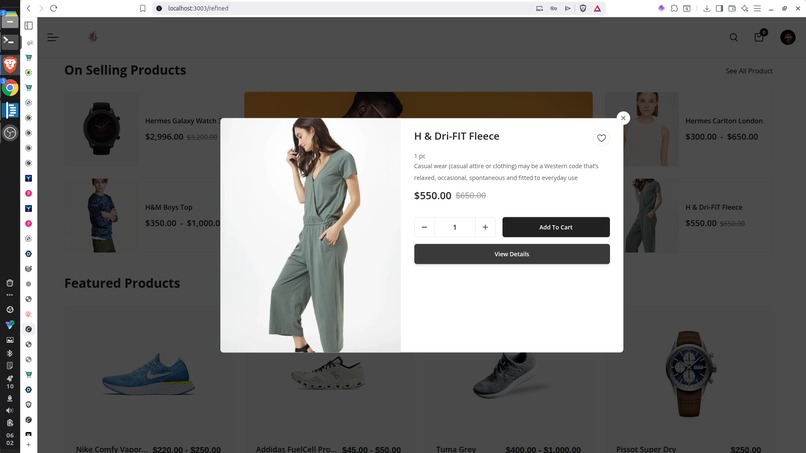
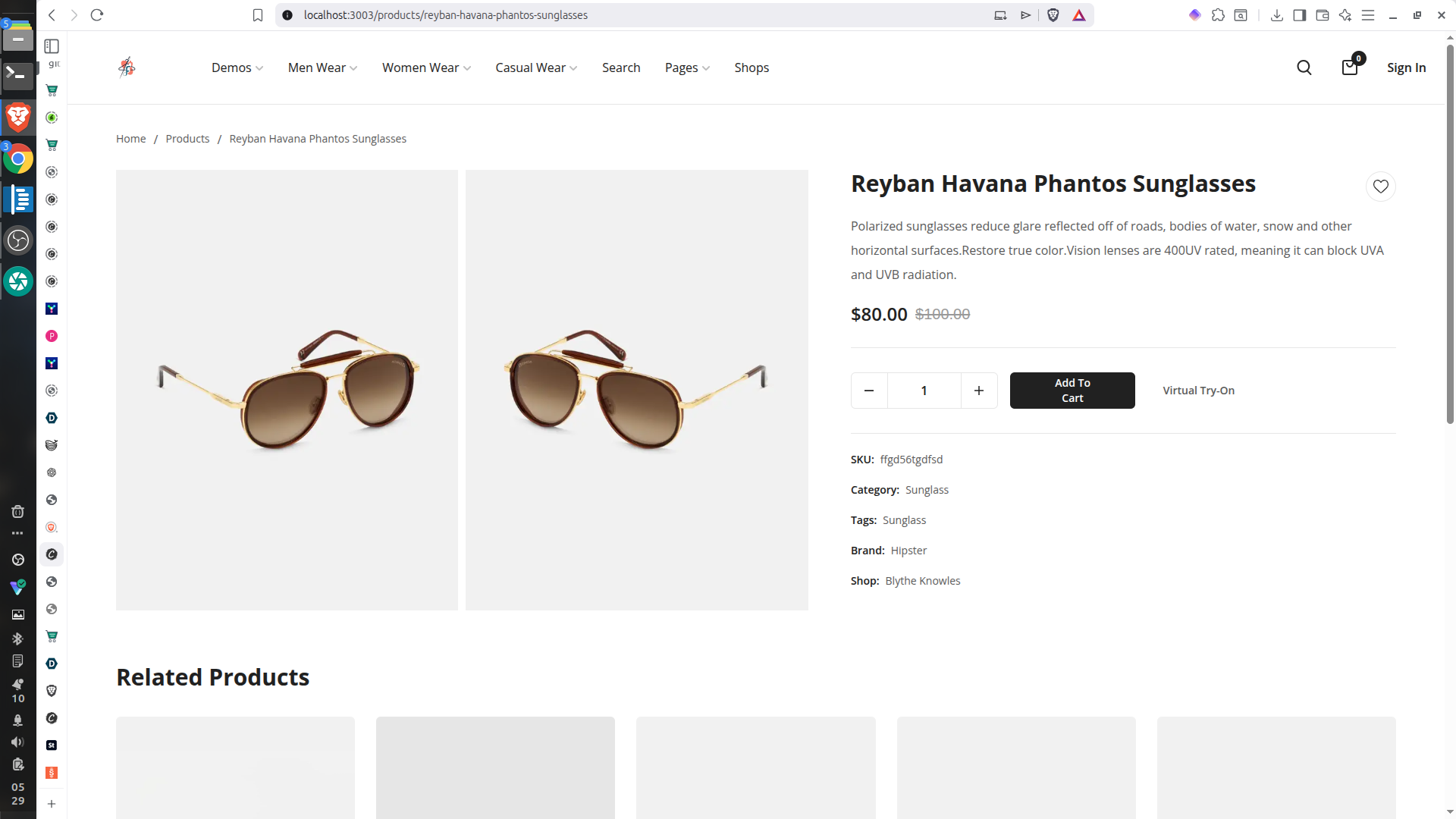
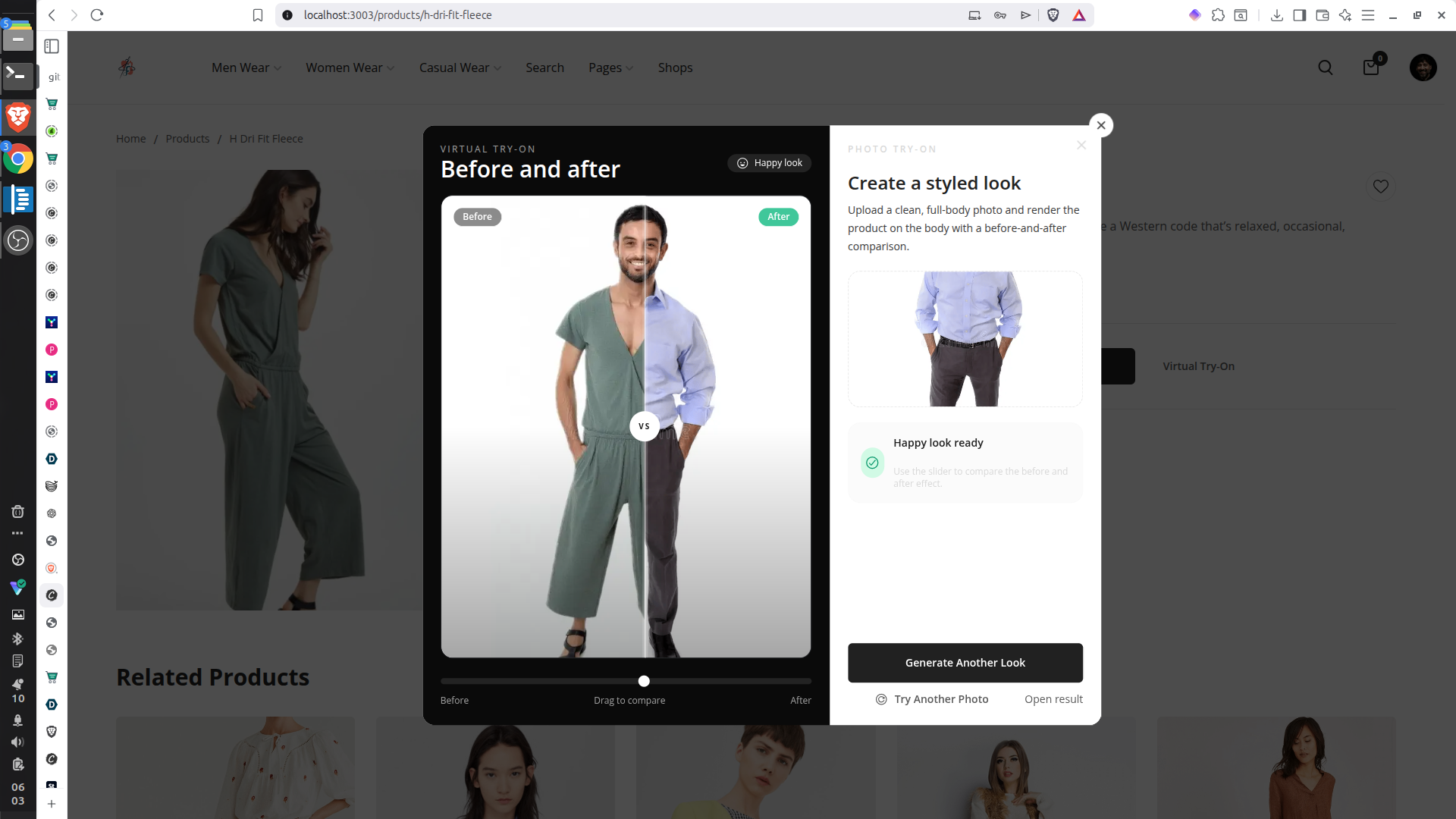
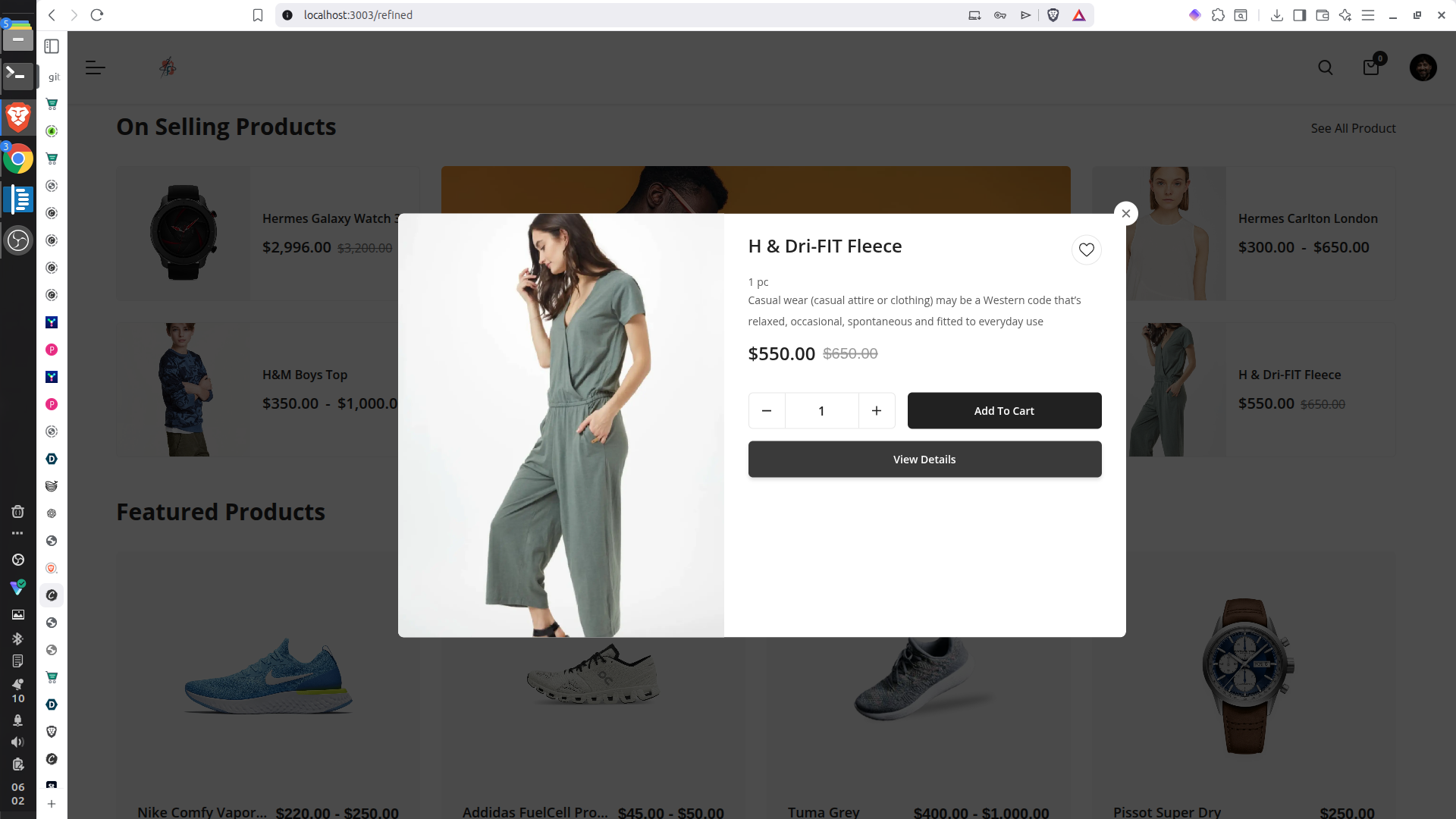
A shopper can browse products from multiple vendors, open a product detail page, view product information and seller identity, start a try-on, upload a photo, wait through a dedicated processing state, compare the before and after output, then continue shopping or proceed to checkout.
The main achievement is not only that AI try-on works. The main achievement is that AI try-on is placed inside a real commerce flow: discovery, evaluation, decision, cart, and checkout.
Core User Journey
- The shopper lands on the marketplace.
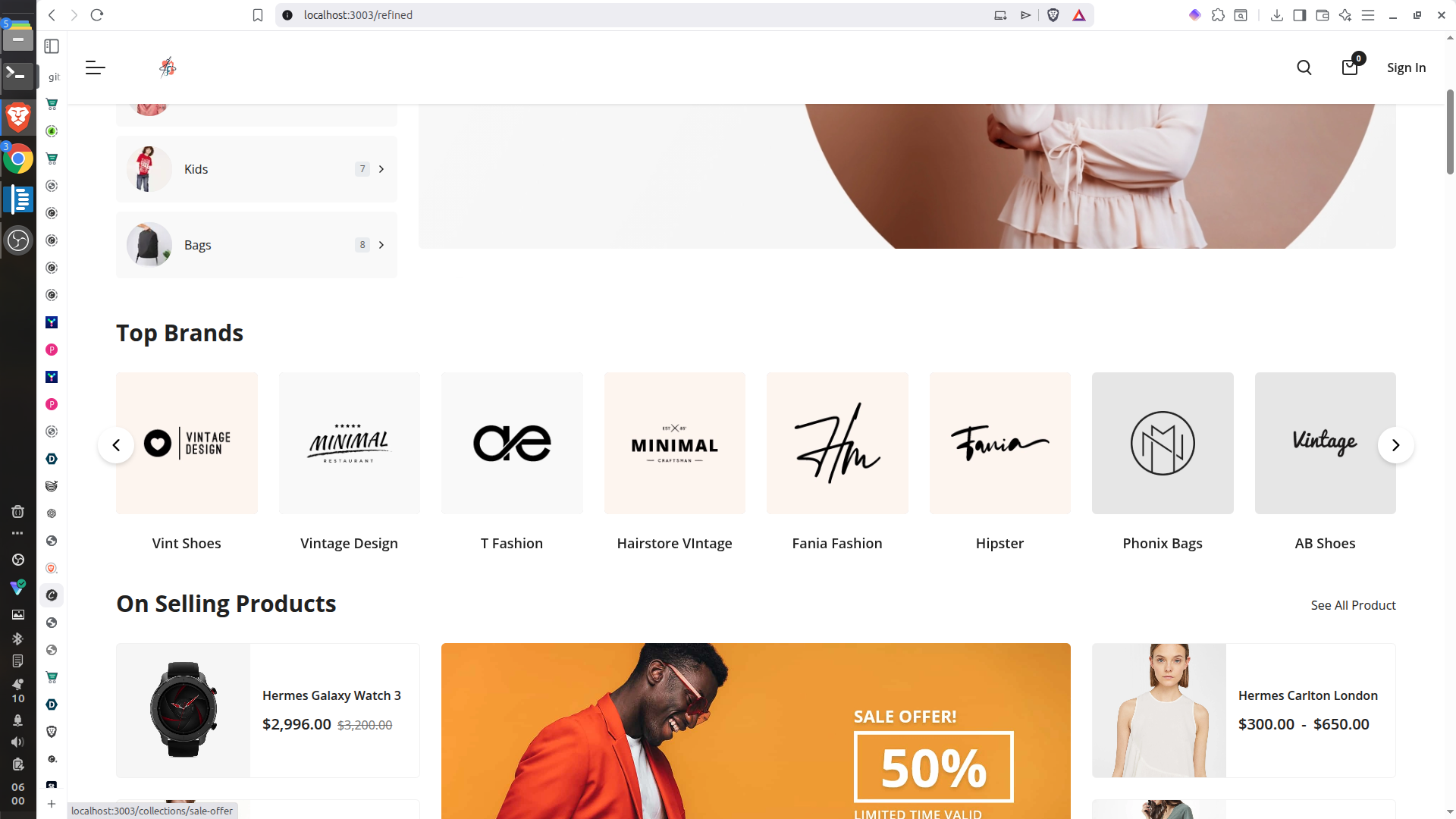
- The shopper browses product categories and vendor products.
- The shopper opens a product detail page.
- The shopper selects the Try-On option.
- The shopper uploads a photo.
- The system routes the image and product reference to the relevant AI try-on capability.
- The shopper sees a loading state while processing happens.
- The shopper receives a before/after visual result.
- The shopper adds the item to cart with more confidence.
- The shopper continues to checkout.
Why This Is Different
Many AI fashion demos stop at image generation. Zyro Fashion connects AI visualization to actual shopping behavior.
The project has three layers:
- Commerce layer: product browsing, vendors, cart, checkout, coupons, orders, customer account, and admin operations.
- AI try-on layer: clothing, shoes, bags, and watches supported through Perfect Corp virtual try-on APIs.
- Decision layer: before/after comparison, loading feedback, product context, and purchase continuation.
This makes the project stronger than a standalone AI demo because the AI result has a commercial next step.
Feature Set Implemented and Represented
Shopper-Facing Commerce Features
- Complete customer authentication flow
- Product listing and product detail pages
- Category-based product browsing and filtering
- Async full-text product search
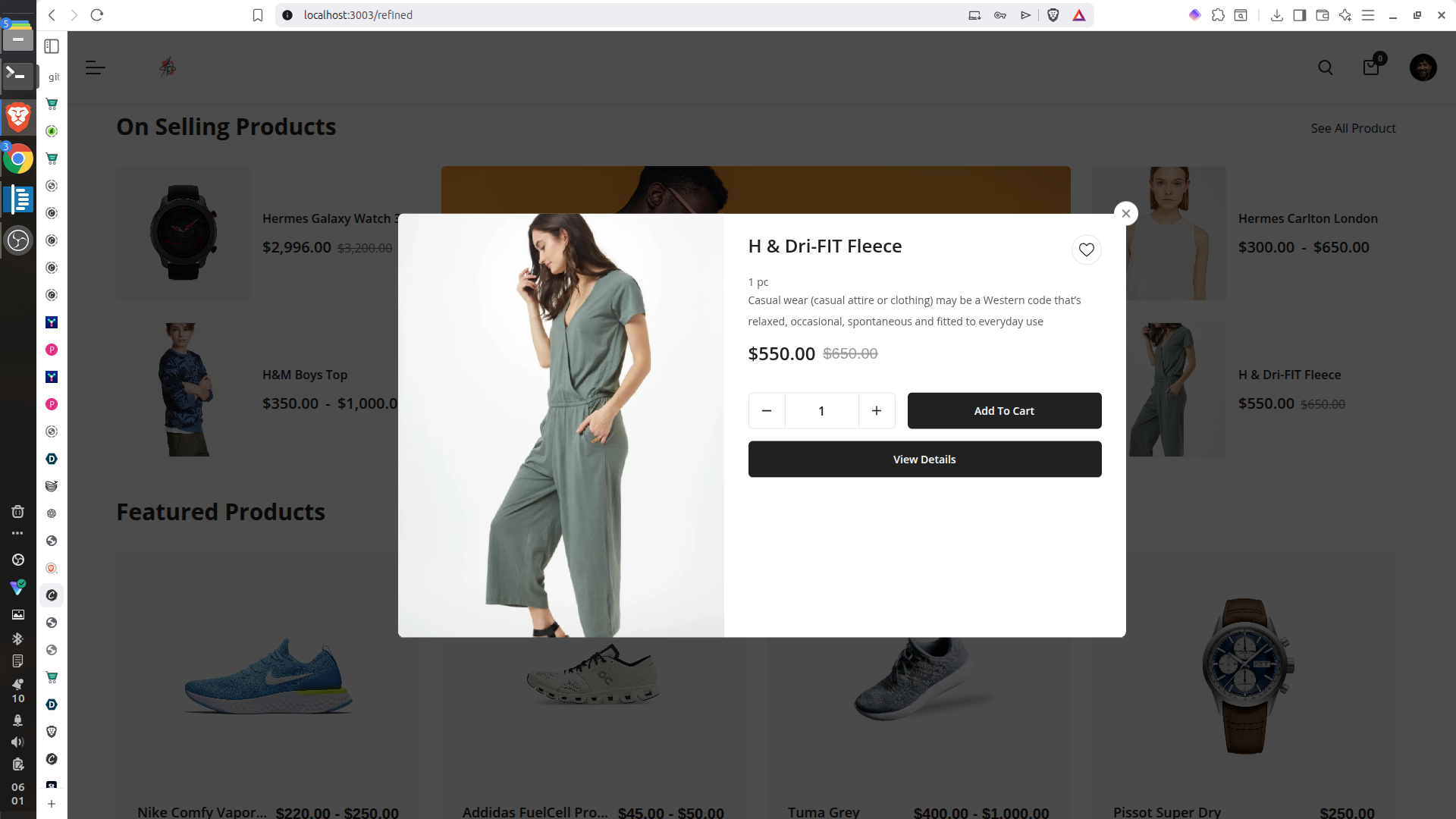
- Quick add-to-cart experience
- Product variants and pricing display
- Coupon support
- Cart and quick checkout flow
- Cash-on-delivery compatible checkout path
- Stripe-ready payment structure through payment abstraction
- User account settings
- Customer order history
- SEO-friendly product URLs
- Responsive React/Next.js storefront interface
Vendor and Marketplace Features
- Multivendor marketplace structure
- Vendor/shop identity preserved on product pages
- Seller-ready product catalog structure
- Vendor product ownership logic
- Shop-level product management capability
- Seller onboarding path available for future expansion
- Commission-ready marketplace structure
- Shop maintenance and ownership-transfer concepts available for marketplace operations
Admin and Operations Features
- Admin dashboard foundation
- Product management
- Category management
- Product type management
- Order management
- Order-status management
- Customer management
- Coupon management
- Tax management
- Shipping management
- Store settings
- Multicurrency-ready commerce structure
- Analytics dashboard foundation
AI Try-On Features
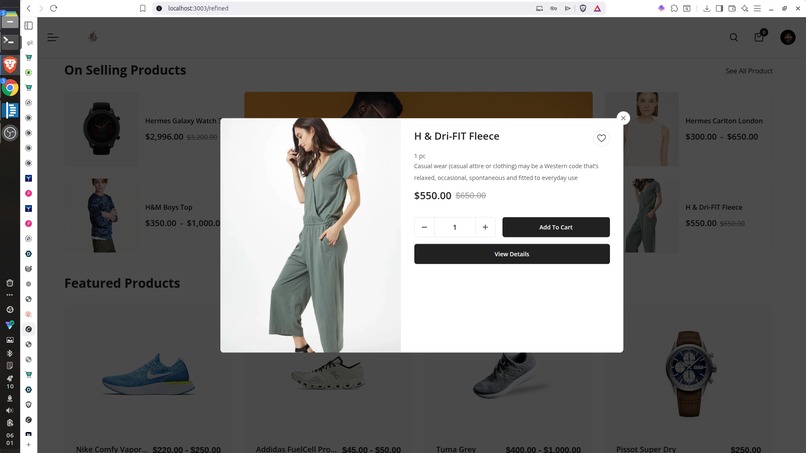
- Try-On entry point from product page and product modal
- Photo upload flow
- AI processing/loading state
- Before-and-after result display
- Clothing virtual try-on support
- Shoes virtual try-on support
- Bag virtual try-on support
- Watch virtual try-on support
- Category-aware routing to the relevant AI capability
- Fallback-ready result handling for demo reliability
Integrated Perfect Corp APIs
- AI Clothes Virtual Try-On
- AI Shoes Virtual Try-On
- AI Bag Virtual Try-On
- AI Watch Virtual Try-On
The project uses Perfect Corp APIs as the visible intelligence layer. The shopper-facing value is immediate: upload a photo, preview the product, compare the result, and continue shopping.
Technical Architecture
Zyro Fashion uses a modular architecture so the marketplace, AI services, and frontend experience can evolve independently.
Frontend
The storefront uses a modern React and Next.js interface with a responsive UI. Product pages, modals, cart flows, and try-on interactions are presented in a clean shopping experience rather than a lab-style demo.
Backend and Commerce
The backend follows a Laravel REST API pattern with MySQL-backed commerce data. The system supports products, product types, categories, vendors, orders, customers, coupons, taxes, shipping, store settings, and admin workflows.
AI Compatibility Layer
The AI layer is deliberately separated from the storefront. It accepts user images and product references, identifies the product category, routes the request to the correct Perfect Corp capability, and returns a normalized result to the UI.
This keeps the system extensible. Future categories such as jewelry, beauty, hair, or video try-on can be added without rebuilding the marketplace.
Design Interpretation
The visual direction was intentionally calm and product-first. Winning hackathon projects often succeed because they make the problem instantly understandable. Zyro Fashion applies that principle by keeping the interface familiar enough to feel like real shopping, while placing the AI moment where it matters most: before purchase.
The design avoids overloading the page with futuristic effects. Instead, it uses the try-on result as the hero. The user does not need to understand the technical stack to understand the value.
Research Interpretation for Judges
The key insight is that returns are not only a logistics problem. They are often a confidence problem created before checkout. If a shopper cannot visualize fit, style, or category compatibility, the store either loses the sale or creates a likely return.
Zyro Fashion addresses this earlier than traditional return-management tools. It gives the shopper a stronger decision signal before purchase. That creates value for both sides:
- For shoppers: more confidence, less guessing, and a better sense of ownership before buying.
- For vendors: more qualified purchase intent and potentially fewer avoidable returns.
- For marketplaces: a differentiated shopping experience that can increase engagement across categories.
Additional Info
Zyro Fashion was developed as a realistic e-commerce product rather than a standalone AI experiment. The implementation builds on a full commerce foundation and extends it with a modular AI try-on layer.
The marketplace foundation includes customer authentication, product browsing, search, category filters, cart, checkout, coupons, order history, vendor identity, admin dashboards, product management, order management, customer management, shipping, taxes, and store settings.
The AI upgrade adds the missing confidence layer. Instead of asking the shopper to decide based only on product images, the system lets them preview the item on themselves before purchase. This is especially relevant to fashion categories where returns are high: clothing, shoes, bags, and accessories.
The project was designed through an iterative process:
- Research the real problem: online fashion uncertainty and return pressure.
- Define the product direction: a confidence-first marketplace.
- Upgrade the storefront experience: cleaner product pages, Try-On entry points, and result presentation.
- Integrate the AI layer: product-aware routing to Perfect Corp APIs.
- Build the demo flow: browse, try-on, compare, cart, checkout.
- Prepare the project narrative: focus on real-world retail value, not only technical novelty.
Challenges Faced
The first challenge was choosing the right scope. AI try-on can expand into many categories, but a hackathon project needs a complete and understandable flow. We focused on the path that creates the clearest retail value: browse, try on, decide, and checkout.
The second challenge was integrating AI into a real shopping interface without making it feel separate. The try-on needed to feel like part of the product page, not a detached experiment.
The third challenge was latency. AI-generated results are not instant, so the experience needed a proper loading state and fallback-ready behavior to remain reliable during a live demo.
What We Are Proud Of
We are proud that Zyro Fashion demonstrates a complete shopping journey rather than a single feature. The project shows how AI can be embedded into practical commerce, where the output affects the user’s purchase decision.
We are also proud of the modular architecture. The system can support additional AI capabilities without redesigning the marketplace foundation.
What We Learned
The main lesson is that AI features win when they solve a real user decision problem. A try-on image is useful only if the shopper can act on it immediately. By connecting the AI result to product context, cart, and checkout, the project becomes more than a visual demo.
We also learned that storytelling matters. Judges need to understand not only what the project does, but why it matters now. The strongest interpretation of Zyro Fashion is not "a fashion site with try-on." It is "a pre-purchase confidence engine for reducing uncertainty in online fashion."
What’s Next
- Multi-item try-on for complete outfits
- Personalized style recommendations
- AI-generated outfit bundles
- Video-based try-on previews
- Vendor analytics showing how try-on affects conversion
- Return-risk scoring based on product category and shopper behavior
- Sustainability dashboard estimating avoided return logistics
Sources Used for Research
- National Retail Federation and Happy Returns, 2024 Consumer Returns in the Retail Industry Report: retail returns projected at $890B; 16.9% annual return rate; online return rates 21% higher than overall rates; Gen Z bracketing behavior.
- Radial, Online Fashion Retailers’ Guide to Reducing Returns in 2024: estimated return rates of 26% for clothing, 19% for bags and accessories, and 18% for shoes.
- Perfect Corp / YouCam API documentation and hackathon materials: virtual try-on API capabilities used as the project’s AI layer.

Log in or sign up for Devpost to join the conversation.