-
-
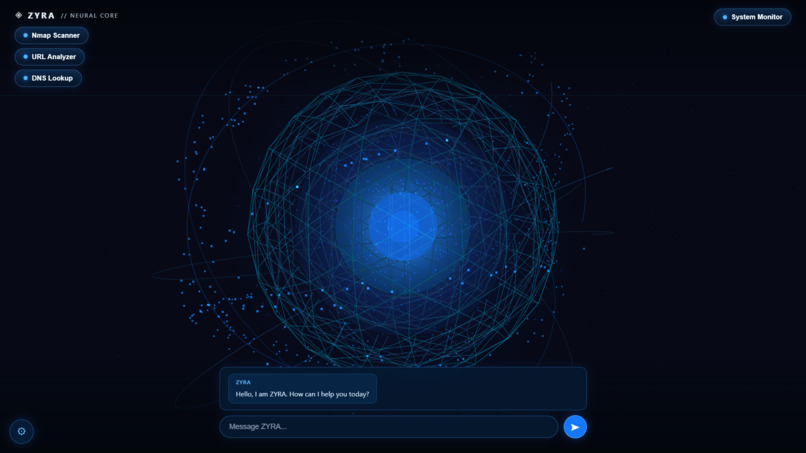
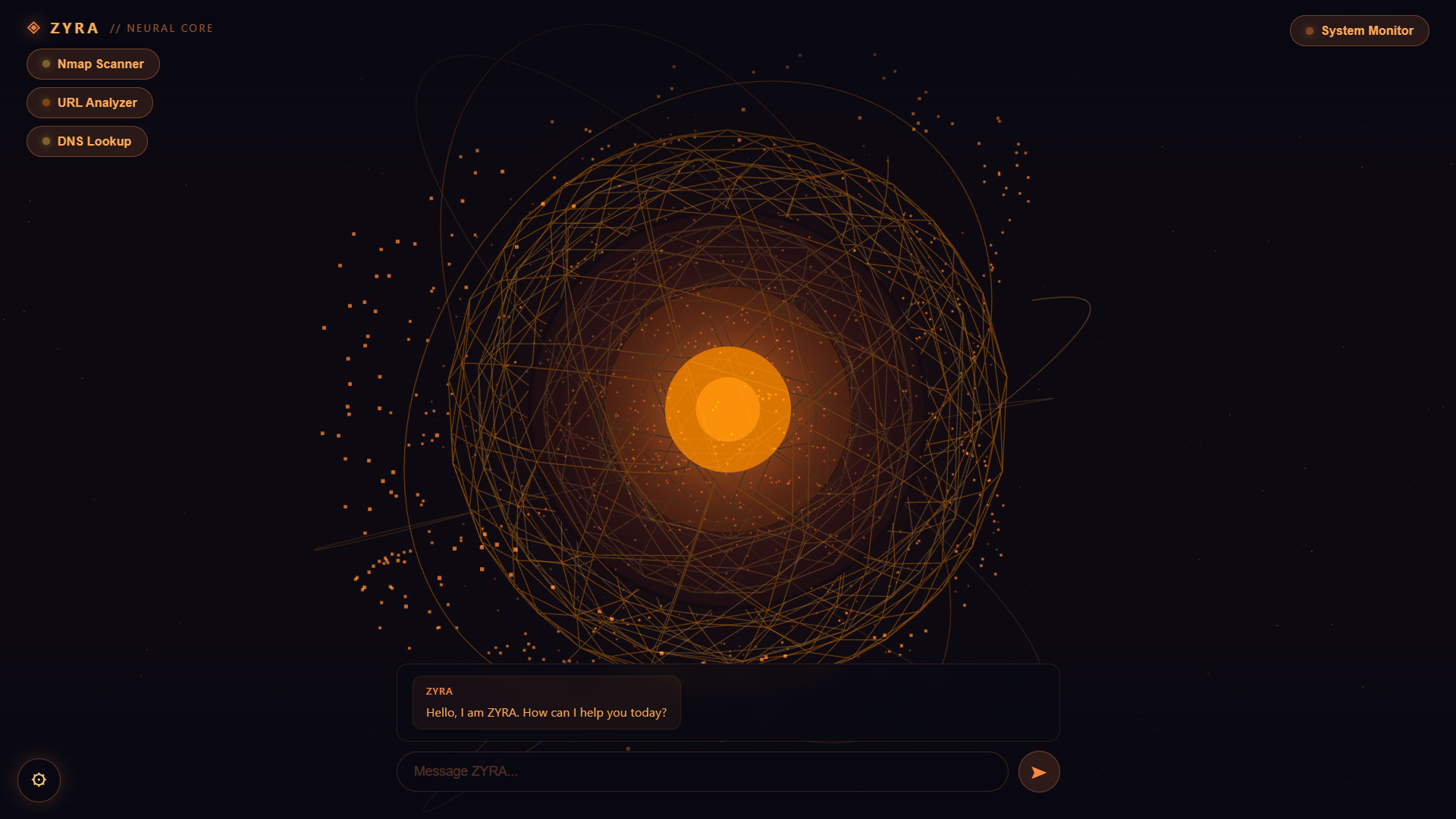
Zyra Desktop
-
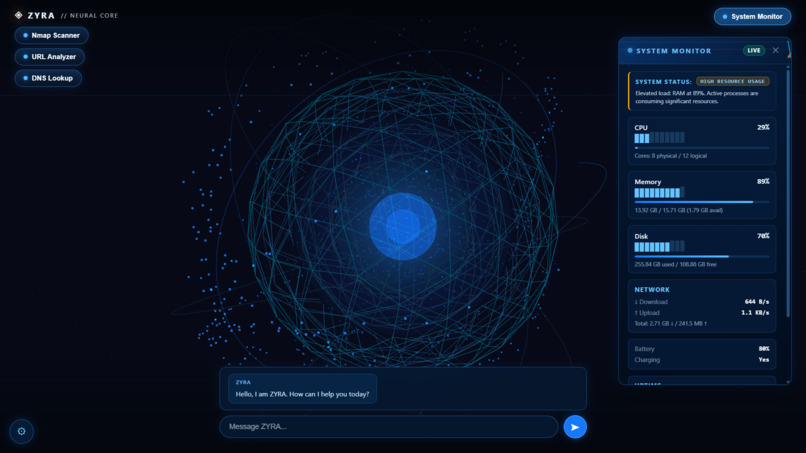
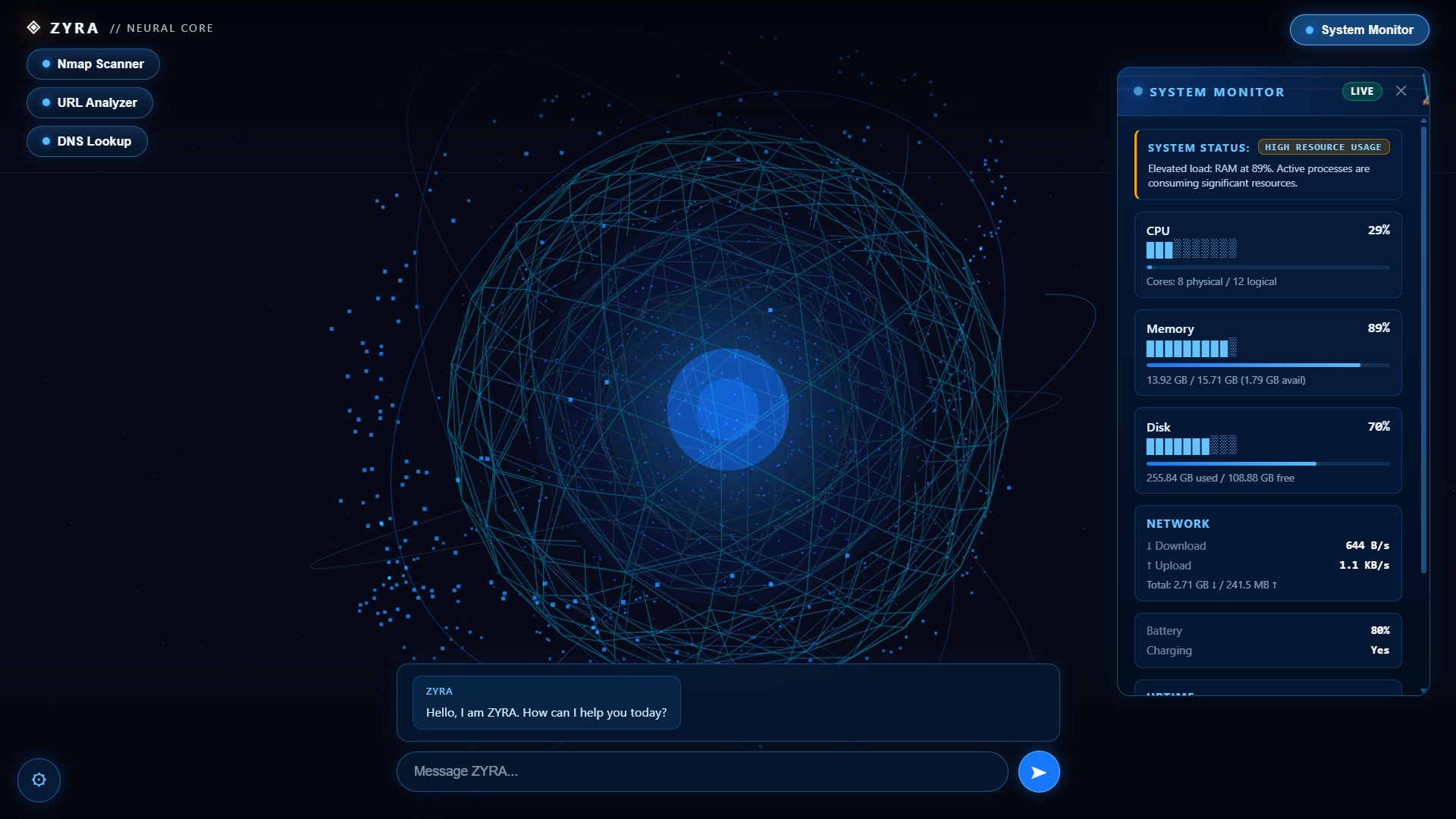
System Monitor
-
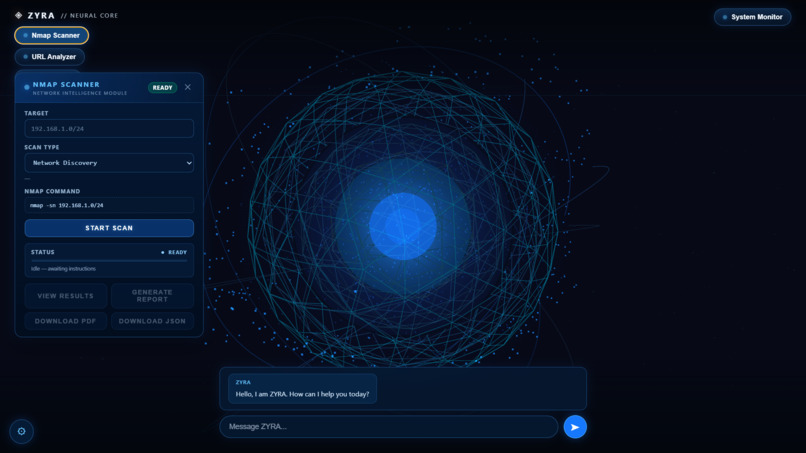
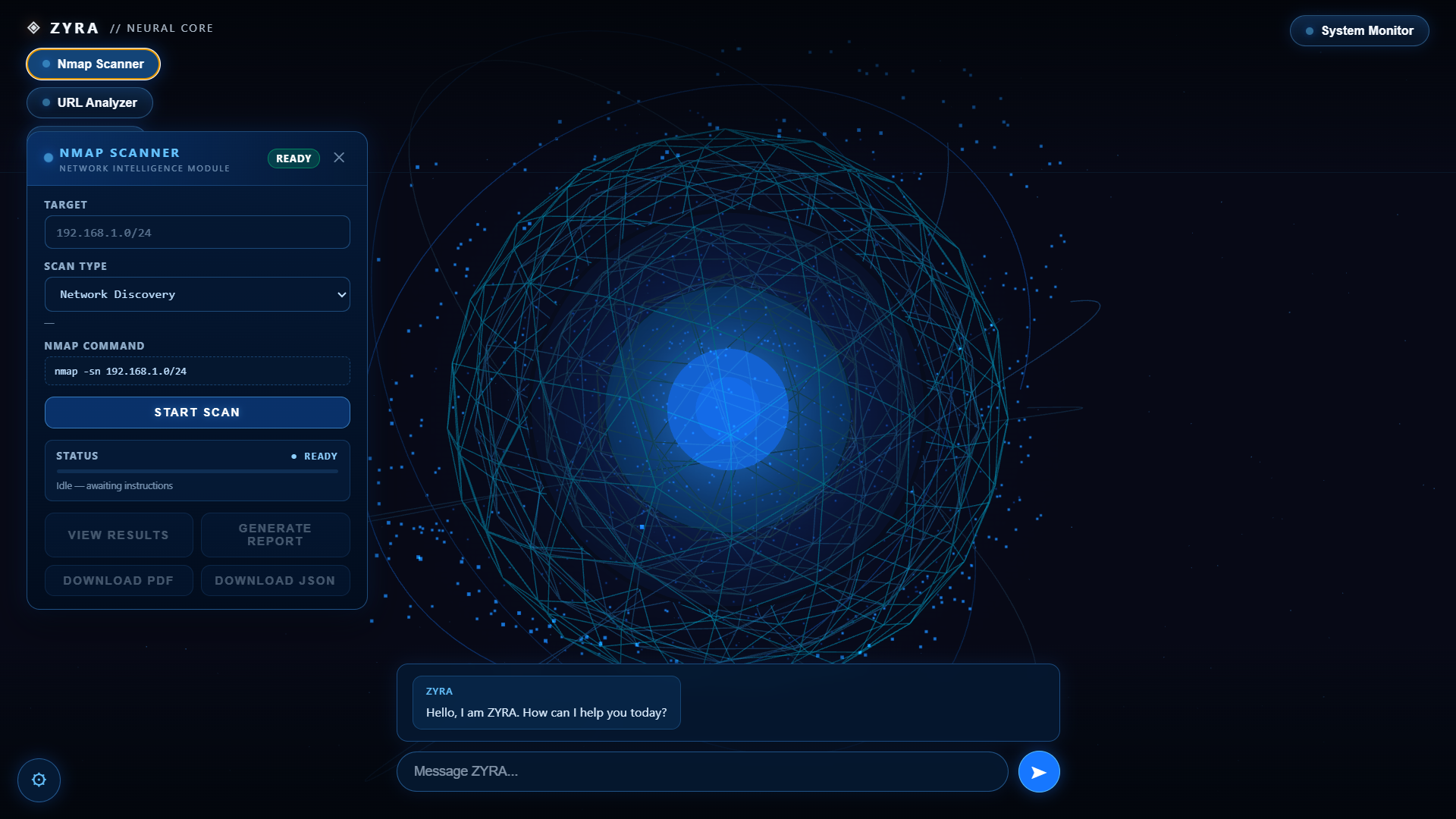
Nmap Scanner
-
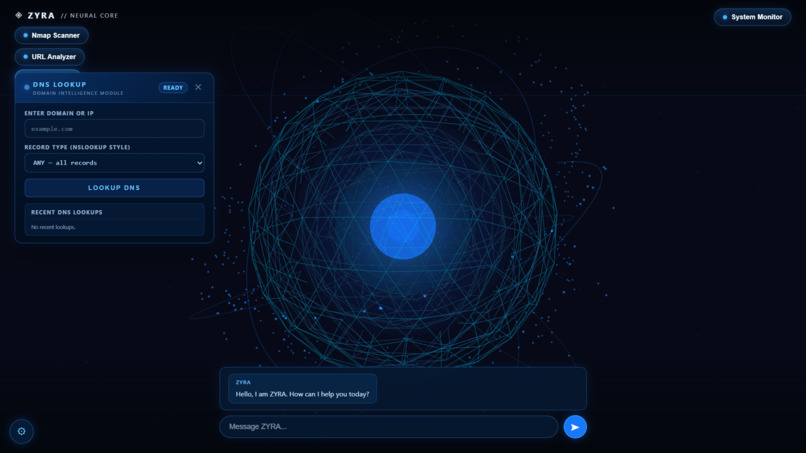
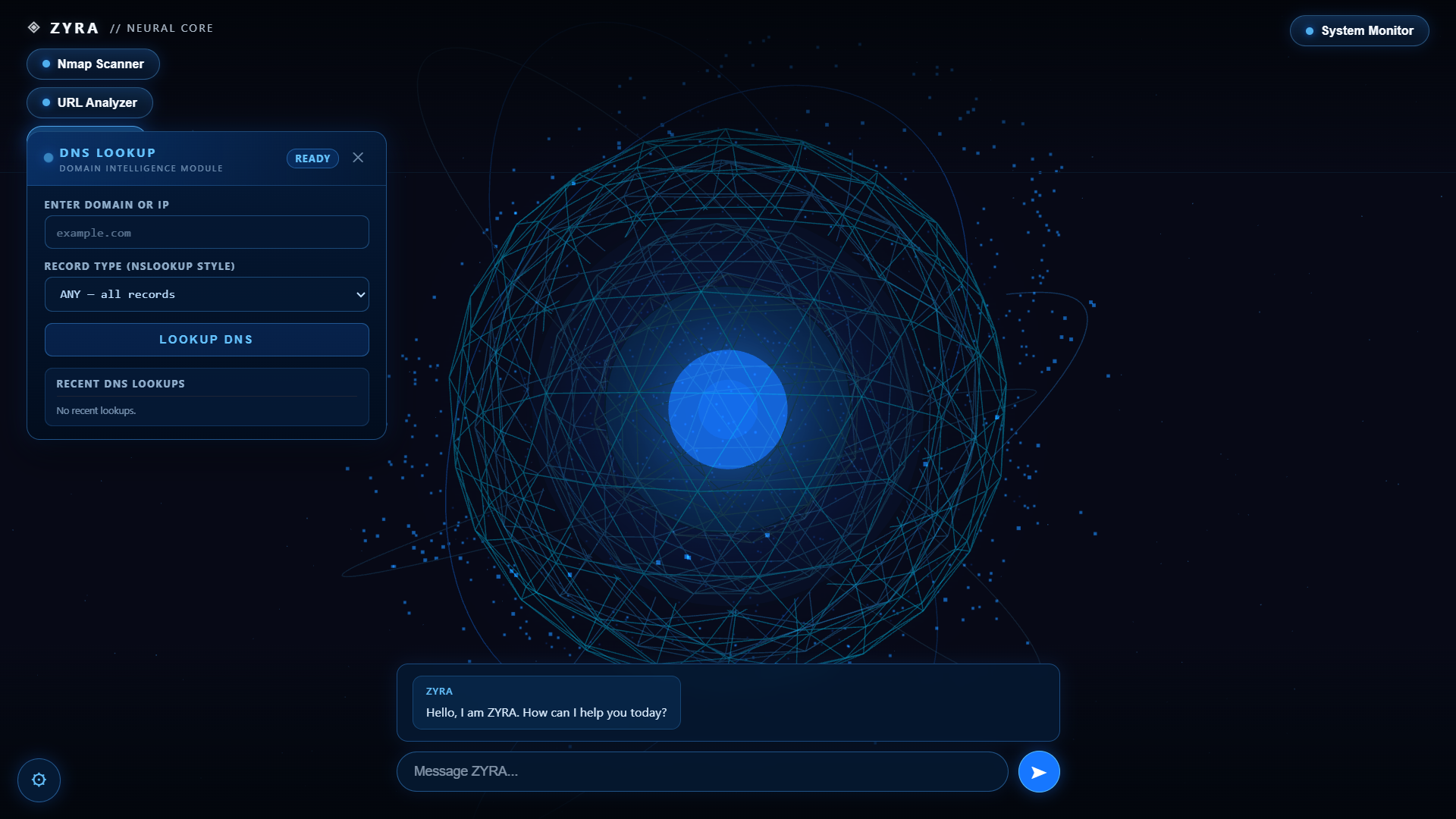
DNS Lookup
-
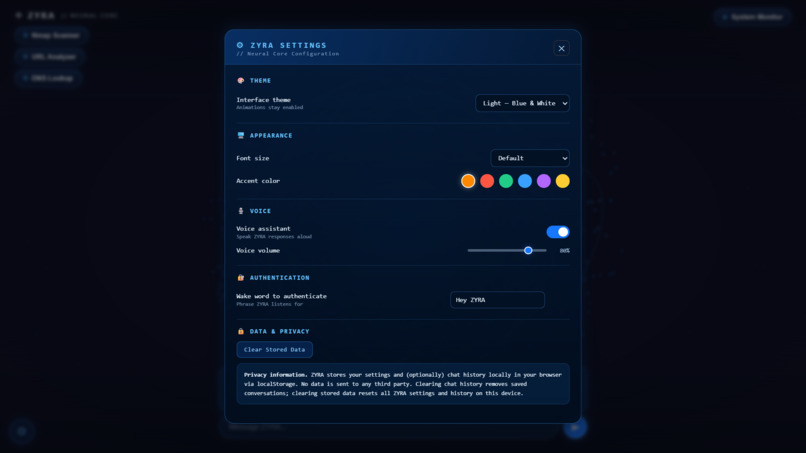
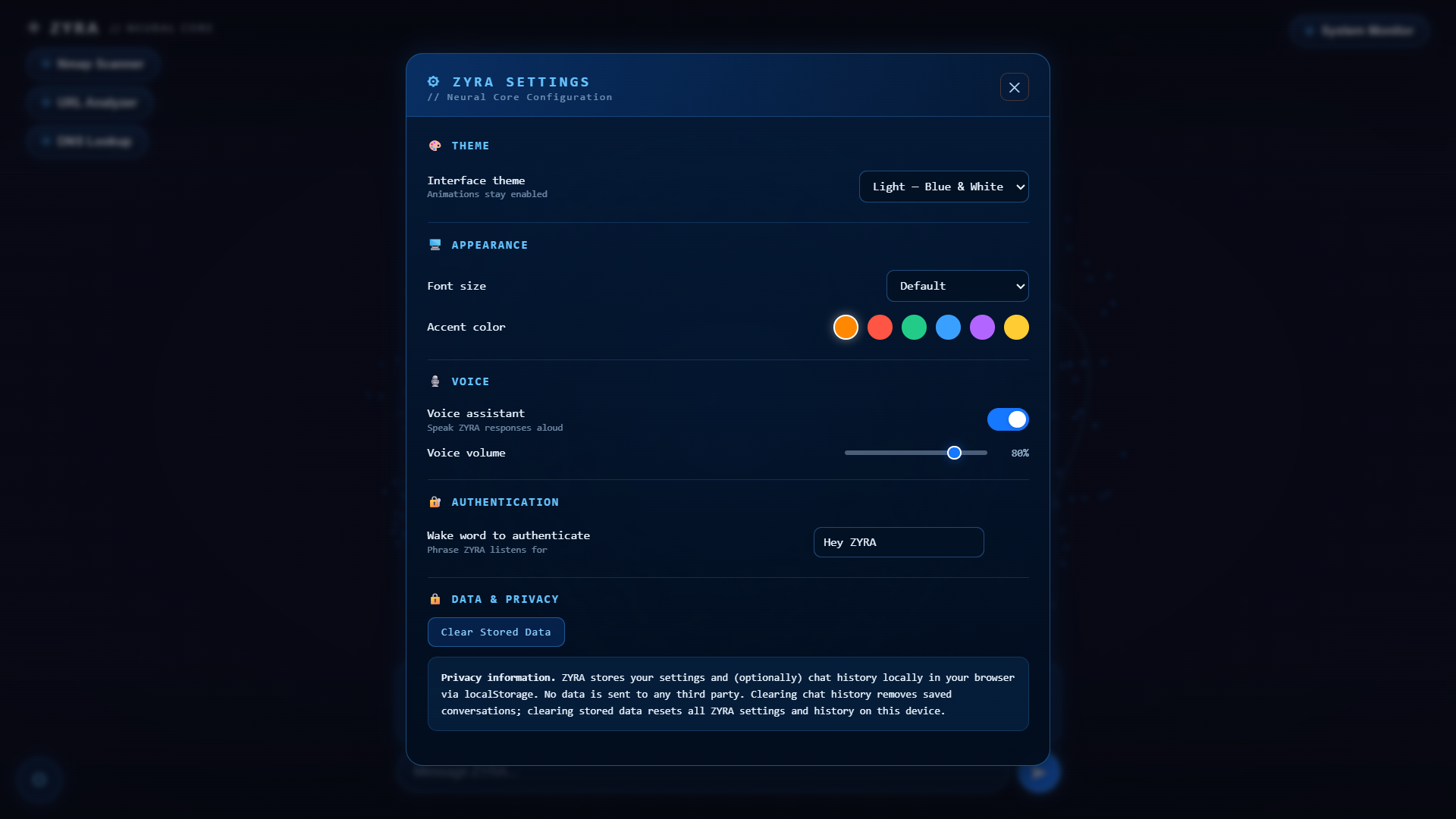
Settings panel
-
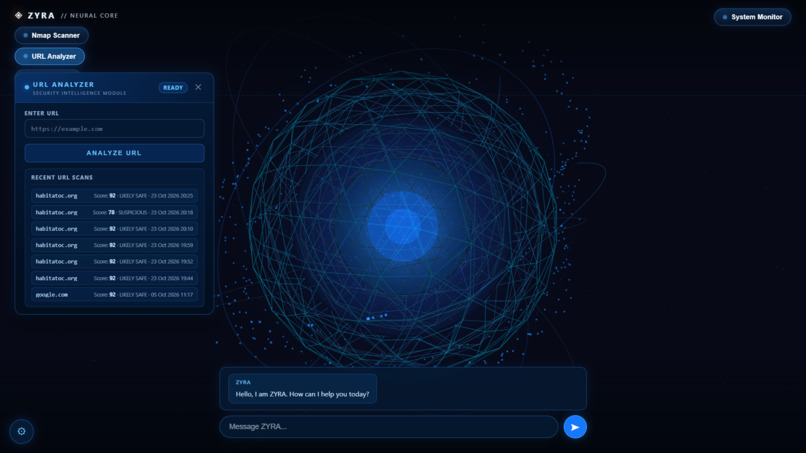
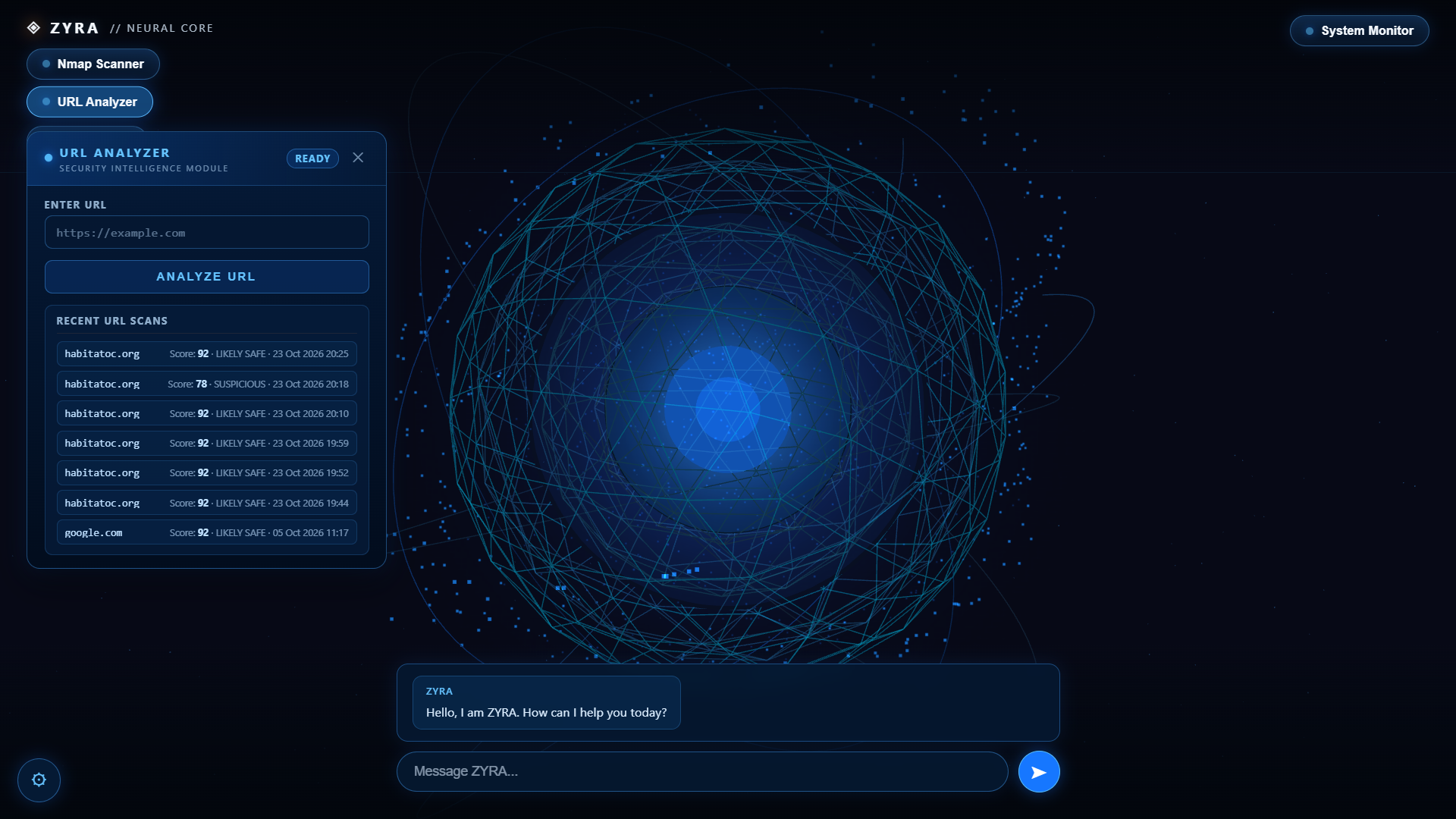
URL Analyser
-
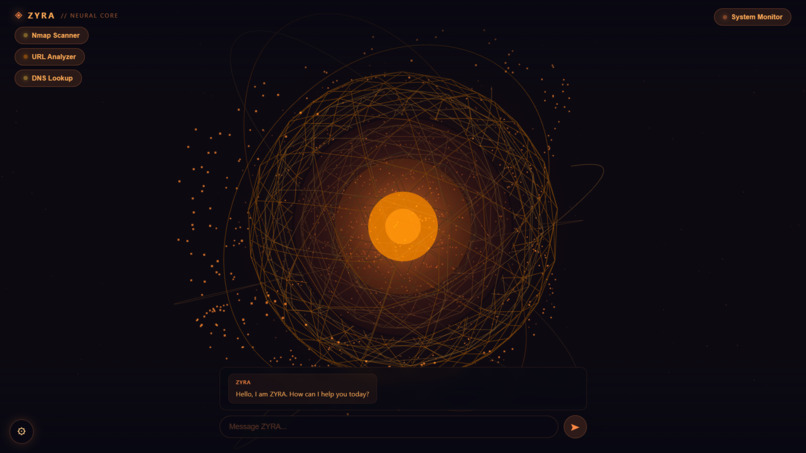
Zyra Hunter Mode
Inspiration
As cyber threats continue to grow, phishing websites, malicious URLs, and online scams have become serious risks for individuals and organizations. Many users struggle to identify suspicious links and protect themselves from digital attacks because cybersecurity tools can be complicated or difficult to use.
We were inspired to build ZYRA – AI Security Assistant, an intelligent desktop application that makes cybersecurity more accessible through natural language interaction, voice commands, and AI-powered assistance. Our goal was to create an assistant that helps users understand potential security threats and interact with technology more easily.
What it does
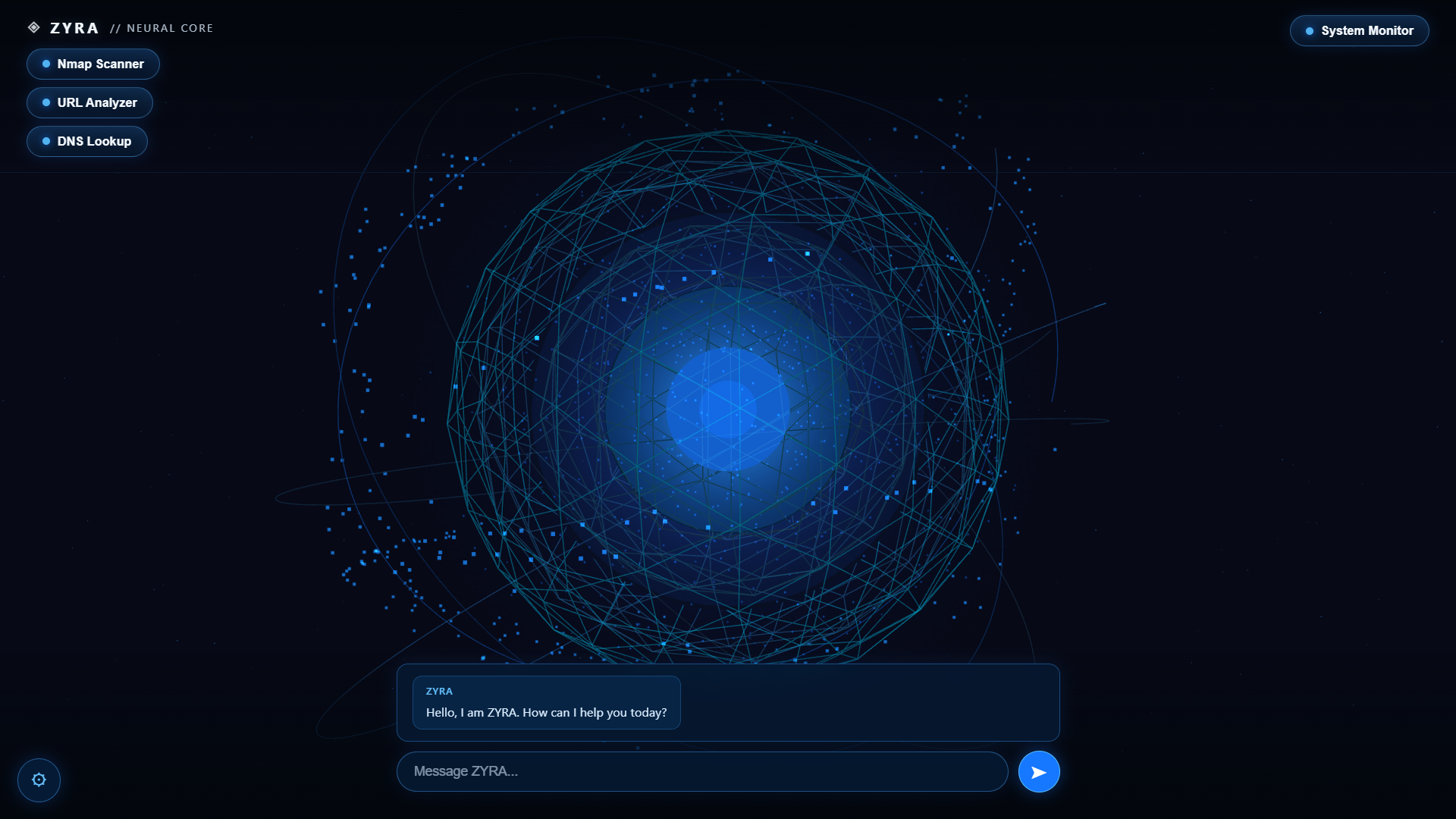
ZYRA is an AI-powered desktop security assistant designed to combine intelligent assistance with cybersecurity features.
Its key features include:
- AI-powered assistance: Helps users ask questions and receive useful responses through a conversational interface.
- Voice interaction: Enables users to interact with the assistant using voice commands and spoken responses.
- Phishing URL detection: Analyzes URLs to help identify potentially suspicious or malicious links before users visit them.
- Security awareness: Helps users better understand online threats and make safer decisions while browsing the internet.
- Desktop application: Provides a dedicated interface that brings AI assistance and security-related functionality into one application.
- Local AI integration: Uses Ollama-compatible language models to support AI interactions, reducing dependence on external AI services when configured for local use.
Our vision is to make cybersecurity assistance more convenient, interactive, and accessible for everyday users.
How we built it
We developed ZYRA as a desktop application that integrates a user interface, a backend service, AI capabilities, and voice interaction.
The project uses Electron and TypeScript for the desktop application, with a Python-based backend for supporting application functionality. We integrated AI capabilities through Ollama-compatible language models and implemented voice-related components for speech recognition and spoken responses.
The phishing detection feature is intended to analyze URLs and help distinguish potentially dangerous links from legitimate ones. We also worked on packaging the application into a distributable Windows executable so users can run ZYRA without manually starting the development environment.
Throughout development, we tested the integration between the frontend and backend, addressed communication issues, and worked to improve reliability, usability, and performance.
Challenges we ran into
One of our biggest challenges was integrating multiple technologies into a single desktop application while keeping the experience responsive and reliable.
Some of the main challenges included:
- Voice recognition and response delays: Making speech recognition and spoken responses work smoothly without long waiting times.
- AI connectivity: Managing communication with locally running AI models and troubleshooting connection issues.
- Phishing detection accuracy: Working toward more reliable URL analysis and reducing incorrect classifications.
- Frontend and backend integration: Ensuring that commands, requests, and responses move correctly between the Electron interface and Python backend.
- Application packaging: Building a standalone Windows application with the required dependencies and resources.
- Performance optimization: Investigating CPU usage and improving responsiveness, particularly on systems with limited hardware resources.
These challenges helped us understand that building an AI-powered security assistant requires more than adding features: reliability, testing, performance, and user experience are equally important.
Accomplishments that we're proud of
We are proud to have developed ZYRA into a desktop application that brings AI assistance, voice interaction, and cybersecurity functionality together in one project.
Our key accomplishments include:
- Building a dedicated desktop interface using Electron and TypeScript.
- Integrating a Python backend with AI-related functionality.
- Working toward hands-free interaction through voice commands and spoken responses.
- Developing a phishing URL detection feature focused on helping users recognize potentially dangerous links.
- Packaging the application for Windows distribution.
- Identifying real-world integration and performance problems and working to resolve them through testing and debugging.
Most importantly, we transformed an idea into a working project and gained practical experience building and integrating a multi-component AI application.
What we learned
Developing ZYRA taught us how challenging and rewarding it is to combine AI, cybersecurity, voice technologies, and desktop application development.
We learned the importance of designing clear communication between frontend and backend components, managing dependencies, packaging applications correctly, and testing features beyond the development environment.
We also learned that AI-generated answers and automated security classifications must be evaluated carefully. A useful security tool should communicate uncertainty, avoid unsupported claims, and be tested against a diverse range of legitimate and malicious examples.
This project strengthened our skills in debugging, integration, software development, performance analysis, and iterative improvement. It also reinforced our belief that cybersecurity tools should be understandable and accessible to everyone.
What's next for ZYRA - AI Security Assistant
Our next goal is to make ZYRA more accurate, reliable, responsive, and useful in everyday situations.
Future improvements include:
- Improved phishing detection: Strengthening URL analysis, testing against trusted datasets, reducing false positives and false negatives, and improving detection of suspicious links.
- Faster voice interaction: Reducing speech recognition and response delays while improving command handling.
- Better AI reliability: Improving model connectivity, error handling, and the continuity of conversations.
- Lower resource consumption: Optimizing CPU and memory usage so ZYRA performs better on lower-specification computers.
- Expanded security capabilities: Exploring additional features such as suspicious-message analysis, security explanations, and safer browsing assistance.
- Improved user experience: Making the interface more intuitive and providing clearer feedback when a service is unavailable or a security result is uncertain.
- Continuous testing and improvement: Validating features across different systems and real-world test cases.
Our long-term vision is to evolve ZYRA into a dependable AI security companion that helps people interact with technology confidently, recognize potential cyber threats, and take a more proactive approach to digital safety.
Built With
- artificialintelligence
- cybersecurity
- electron
- largelanguagemodels(llms)
- machine-learning
- ollama
- phishingdetection
- python
- typescript
- voicerecognition

Log in or sign up for Devpost to join the conversation.