-
-
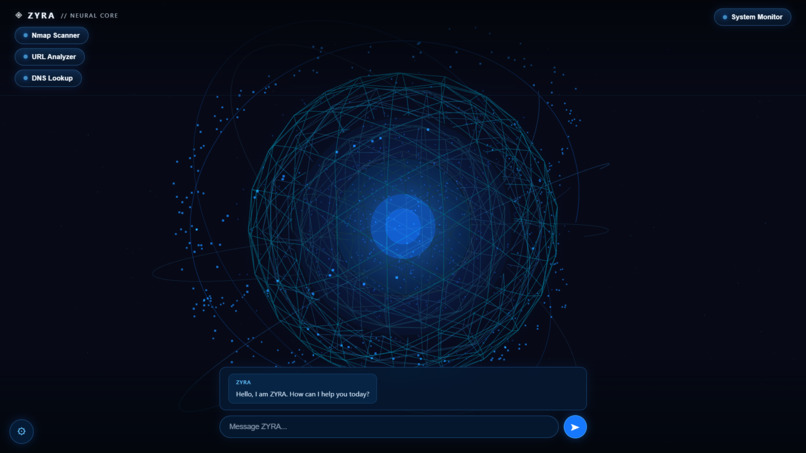
ZYRA - Dashboard
-
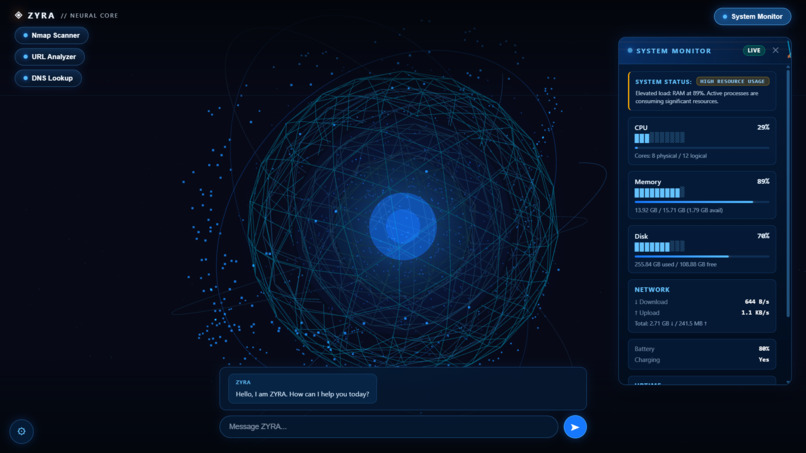
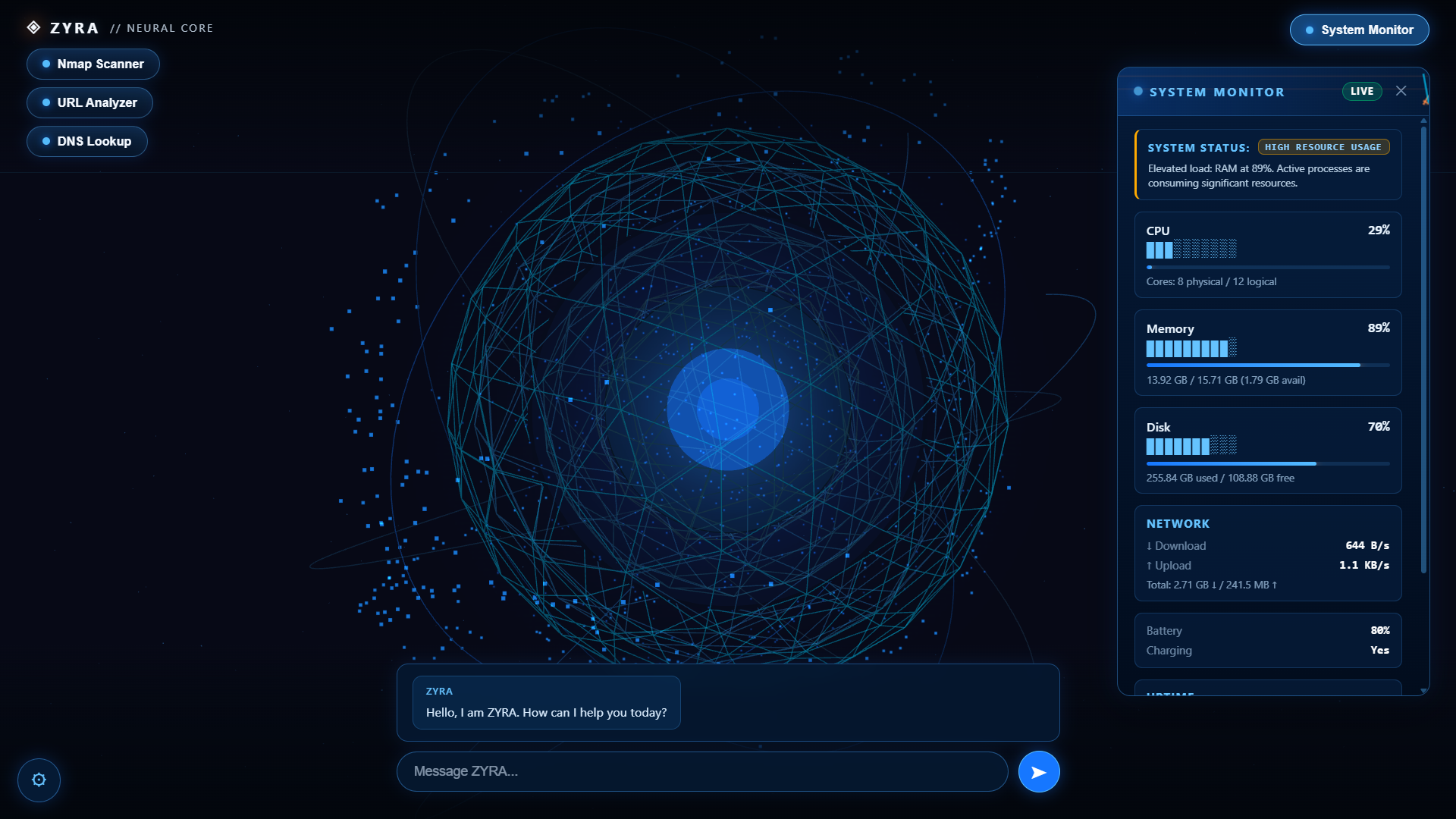
System Monitor
-
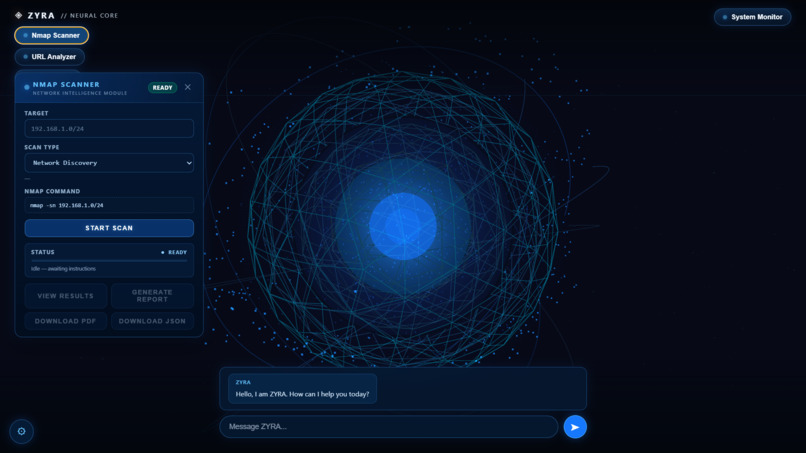
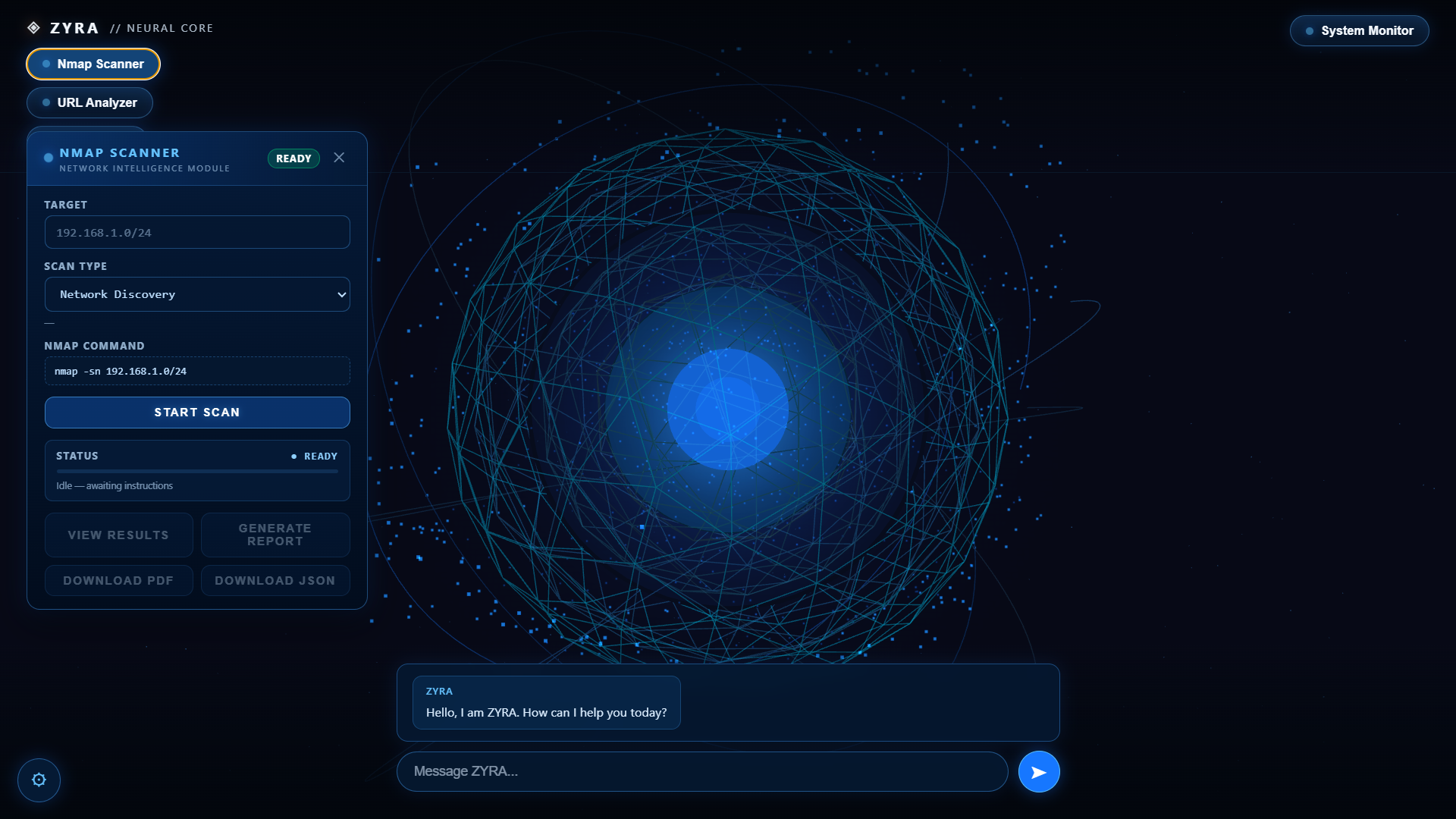
Nmap Scanner
-
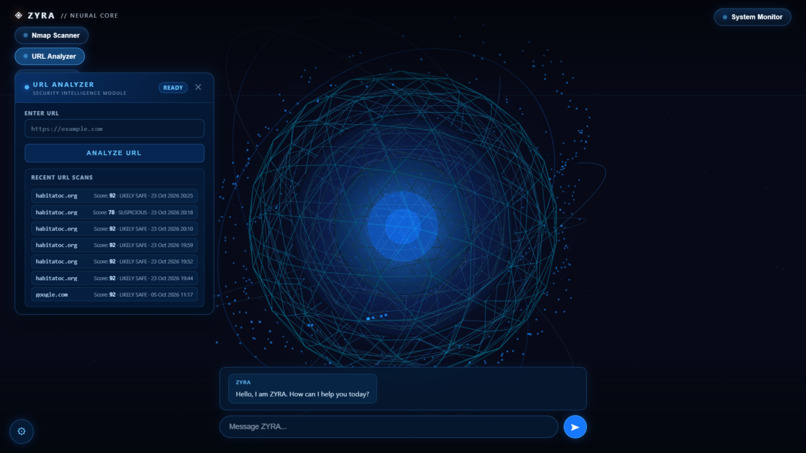
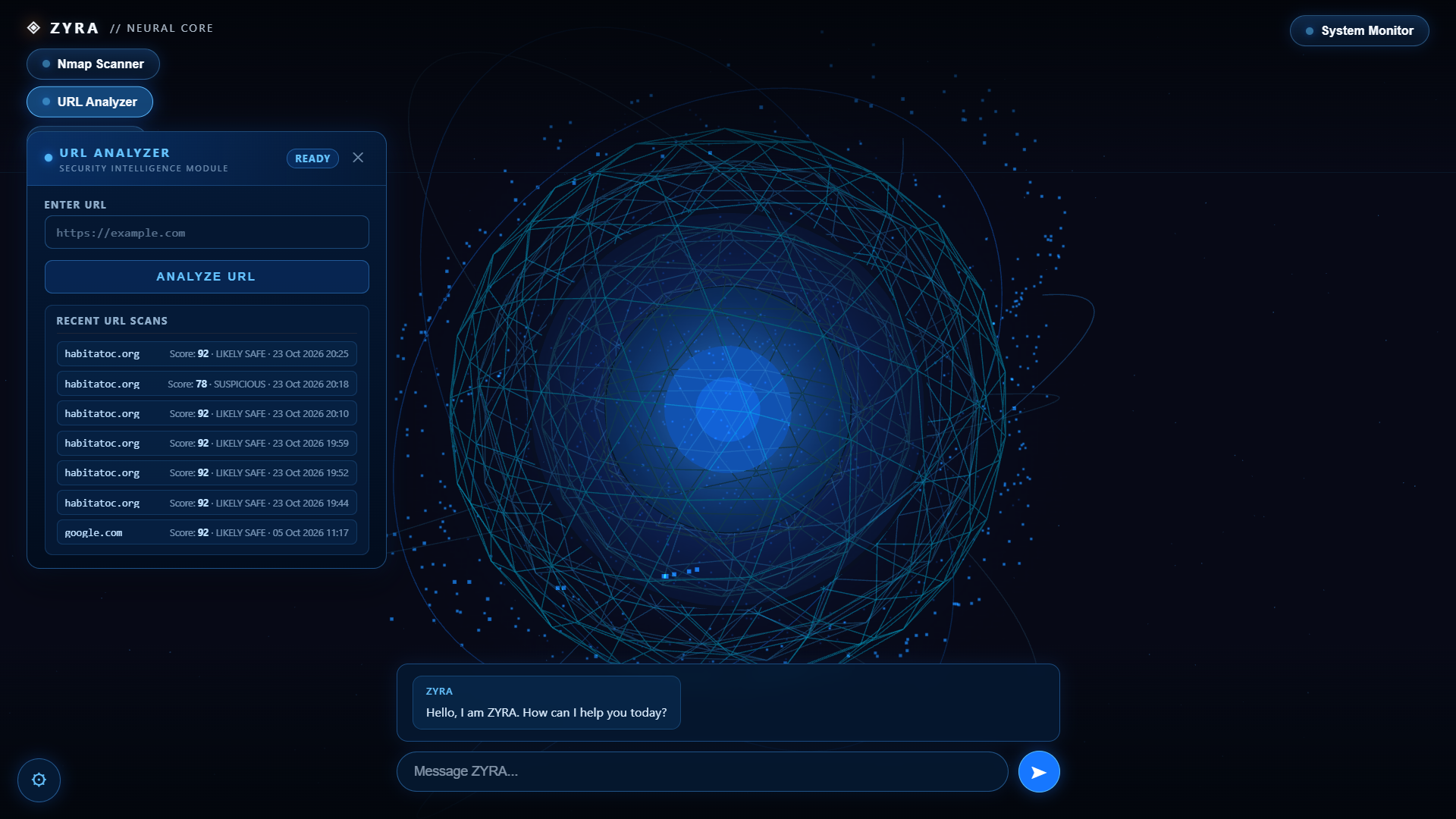
URL Analyser
-
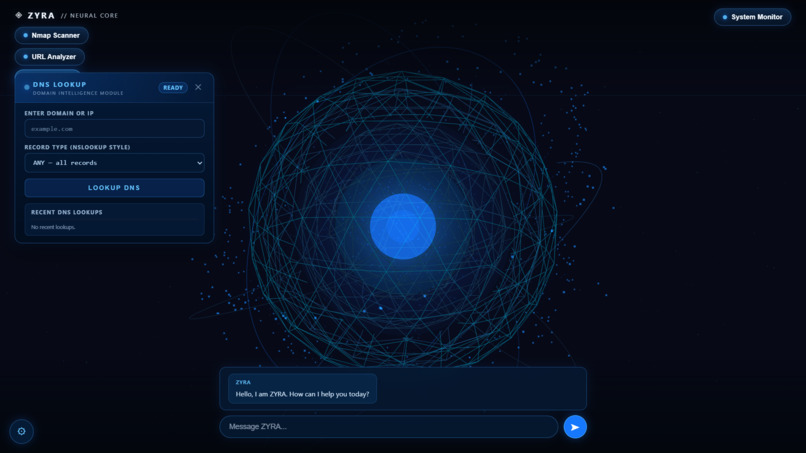
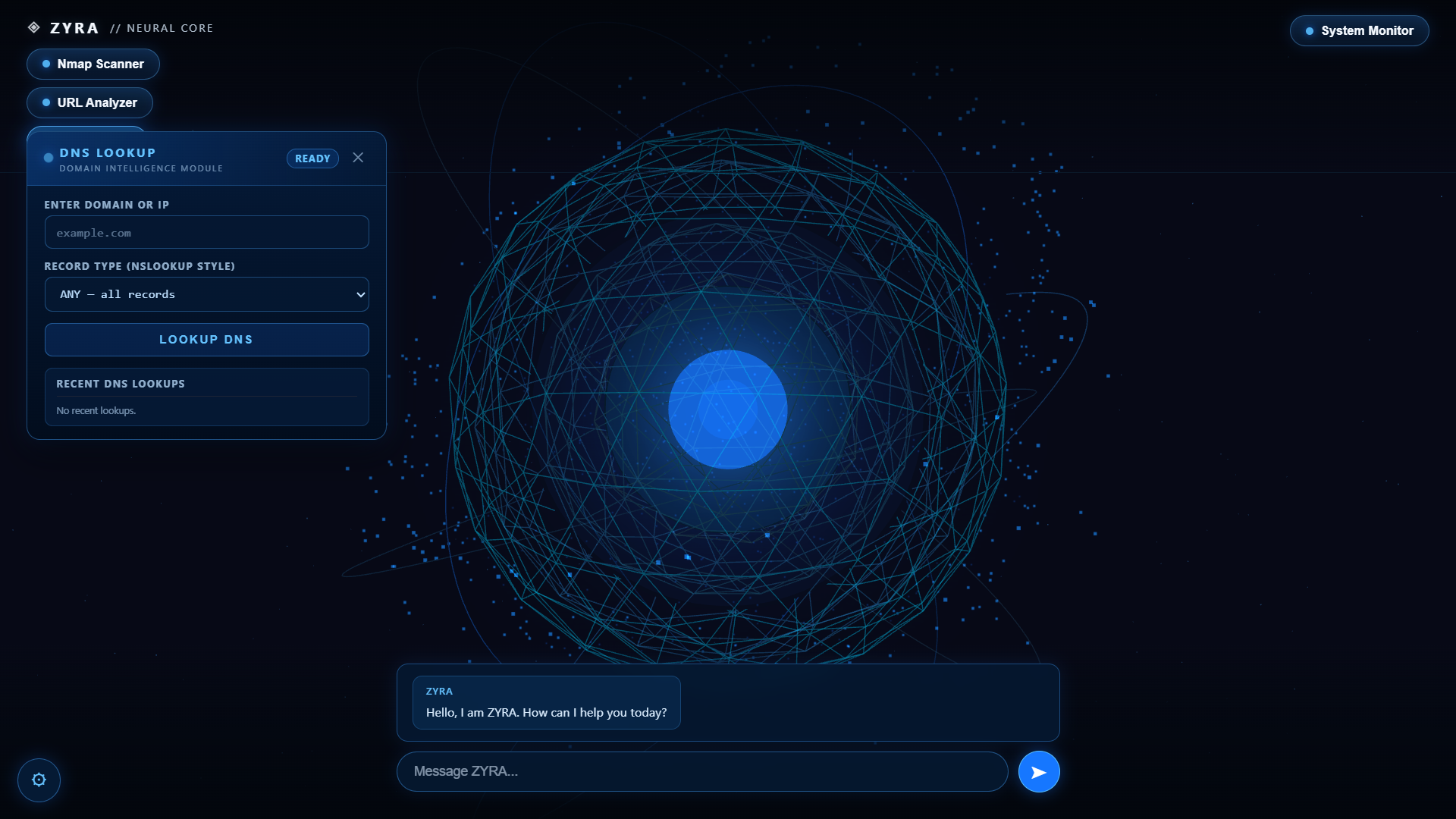
DNS Lookup
-
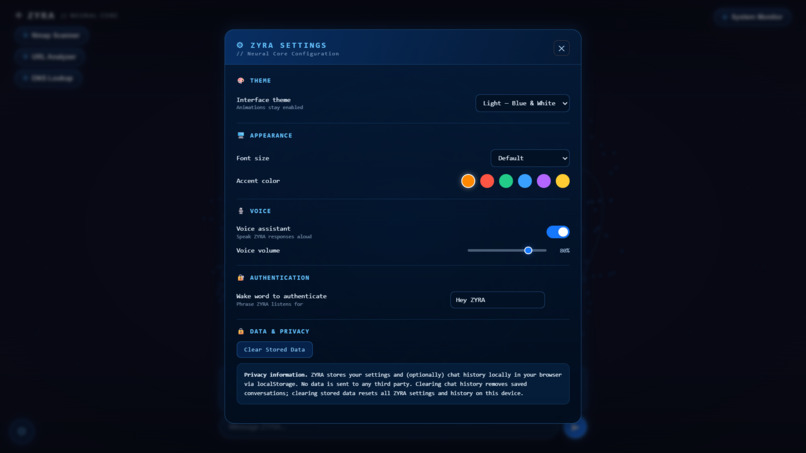
Settings
-
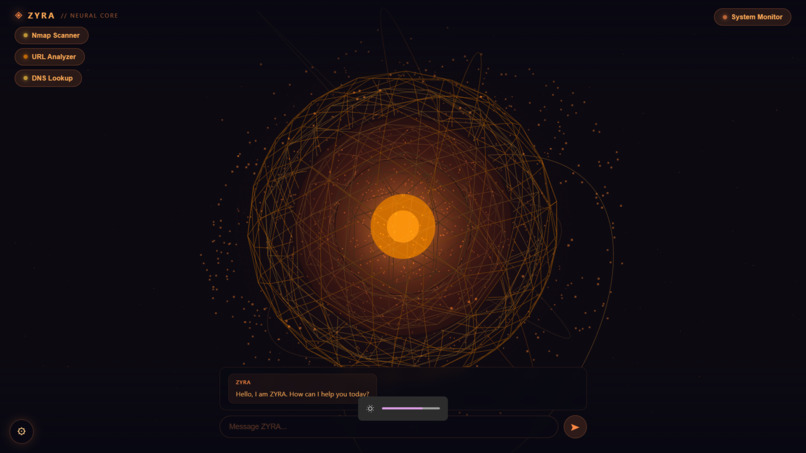
Zyra Hunter Mode
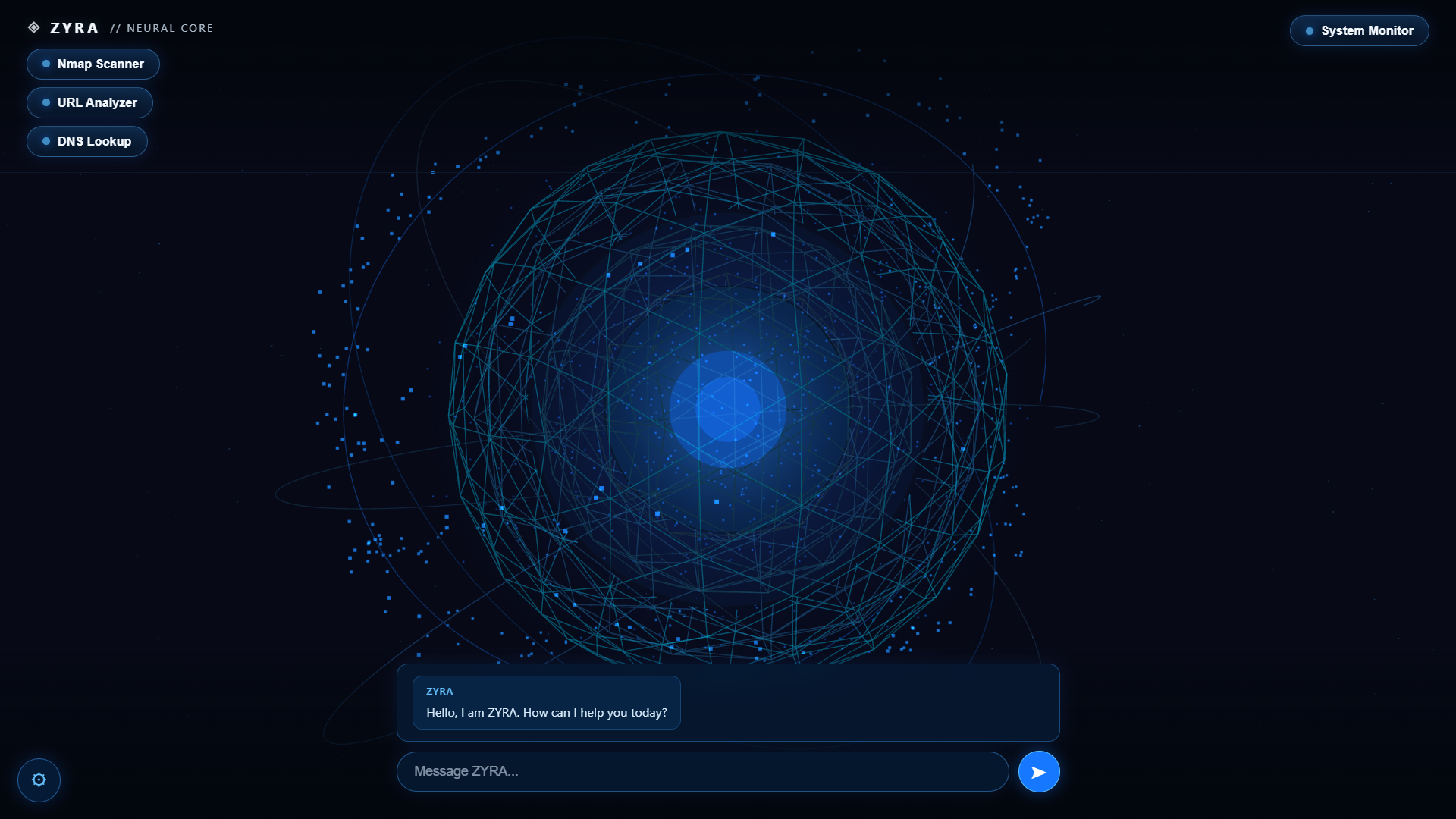
ZYRA – AI-Powered Cybersecurity Assistant
Inspiration 💡
In today's digital world, cyber threats such as phishing websites, malicious links, online scams, and fraudulent login pages are becoming increasingly difficult to identify. Many users unknowingly interact with suspicious websites because they lack the technical knowledge or tools required to recognize potential threats. This inspired us to develop ZYRA, an AI-powered desktop cybersecurity assistant designed to make digital security smarter, faster, and more accessible to everyone.
Our vision was to create a security assistant that does more than simply check URLs. We wanted to develop an intelligent system capable of analyzing suspicious links, identifying potential phishing threats, estimating risk levels, and assisting users through voice automation. By combining machine learning, screen analysis, and intelligent assistance, we aimed to make cybersecurity more proactive, user-friendly, and practical for everyday use.
What It Does 🚀
ZYRA is a desktop cybersecurity assistant that helps users identify potentially dangerous URLs and make safer decisions online. It combines machine learning, automated screen analysis, and voice interaction to simplify phishing detection.
Key features include:
- AI-Powered Phishing Detection: Uses an XGBoost machine learning model to analyze URL characteristics and estimate the likelihood that a link is associated with phishing.
- Risk Scoring and Classification: Evaluates suspicious URLs and presents a risk score, probability estimate, and classification to help users understand potential threats.
- Screen Analysis with OCR: Uses Optical Character Recognition (OCR) to extract visible URLs from screen content, helping users analyze links without manually copying and pasting them.
- Voice Automation: Integrates voice-based interaction to make security analysis more convenient and accessible.
- Interactive Analysis and Dataset Exploration: Provides a way to inspect the dataset and understand the information used in phishing detection.
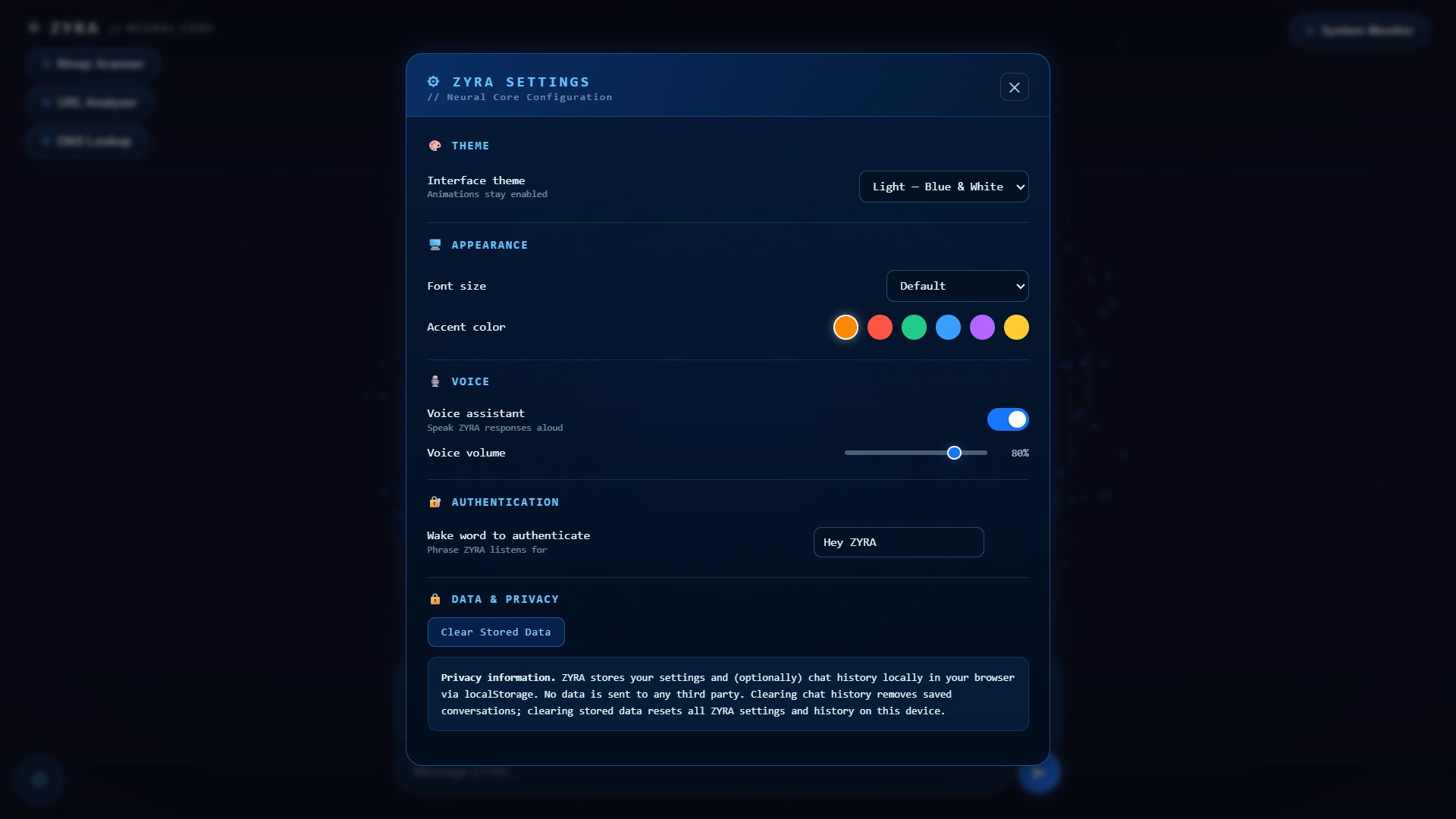
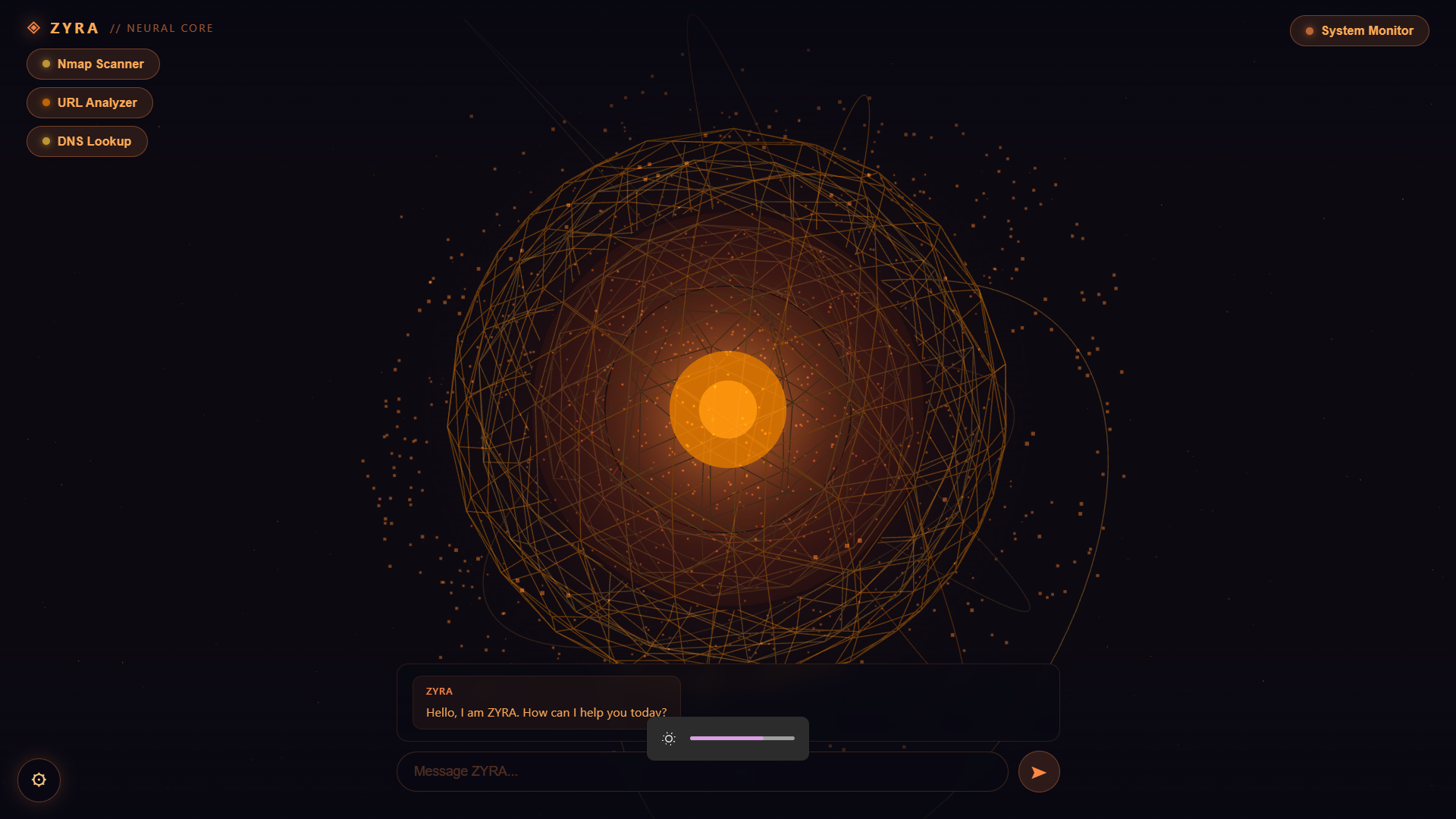
- Desktop-Based Interface: Brings cybersecurity capabilities together in a single application, making security analysis easier to access.
How We Built It 🛠️
We developed ZYRA as a modular desktop application using Python and machine learning technologies. The system combines several components that work together to analyze suspicious URLs and present understandable security results.
The phishing detection module uses an XGBoost classifier to evaluate URL-related features and estimate the likelihood of phishing activity. The model's output is incorporated into a risk assessment workflow that helps users interpret the results. The quality of these predictions depends on the training dataset, feature engineering, model validation, and testing.
To reduce manual effort, we incorporated screen analysis using OCR, enabling the application to extract URLs visible on the user's screen. These URLs can then be passed to the analysis pipeline for further evaluation. We also incorporated voice automation to support a more natural and convenient interaction experience.
The desktop interface connects these components and presents the analysis results to the user. We organized the application into separate functional modules to make development, debugging, testing, and future improvements more manageable.
Challenges We Faced ⚙️
One of our main challenges was designing a phishing detection system that could distinguish suspicious URLs from legitimate ones without relying on simple keyword matching. URLs can contain misleading text, unusual structures, and deceptive domain names, making reliable classification a challenging task.
Another challenge was integrating OCR-based screen analysis with the phishing detection pipeline. Extracting a URL from screen content requires careful handling of recognition errors, incomplete text, and variations in how URLs appear on the screen.
We also faced challenges in combining machine learning, desktop interface functionality, and voice automation into one application. Ensuring that the different components communicate correctly while keeping the application responsive required careful debugging and integration.
Performance optimization was another important consideration. Since ZYRA runs as a desktop application, controlling CPU and memory usage while maintaining responsive screen analysis and machine learning operations is essential for delivering a smooth user experience.
What We Learned 📚
Building ZYRA helped us understand how machine learning can be applied to practical cybersecurity problems. We gained experience in URL feature extraction, classification workflows, model evaluation, and the importance of testing against both phishing and legitimate URLs.
We also learned how to integrate OCR, voice automation, and a graphical desktop interface into a unified application. The project strengthened our understanding of modular software architecture, debugging, performance optimization, and the challenges involved in connecting multiple technologies.
Most importantly, we learned that cybersecurity tools must do more than produce predictions. They should present understandable results, minimize unnecessary user effort, and be evaluated carefully to reduce false positives and false negatives.
What's Next? 🔮
We envision ZYRA evolving into a more comprehensive, intelligent cybersecurity assistant. Future improvements could include enhanced phishing datasets, continuous model evaluation, improved OCR accuracy, more efficient resource management, expanded threat intelligence integration, and additional detection capabilities.
We also aim to improve the transparency of risk assessments by providing clearer explanations of the factors contributing to each prediction. Further testing across different browsers, screen layouts, and real-world URL scenarios will help us evaluate the system's reliability and usability.
Our long-term goal is to make advanced cybersecurity assistance more accessible by combining machine learning, automation, and intuitive interaction in one practical desktop application.
Our Vision 🌐
ZYRA is our step toward making cybersecurity proactive, intelligent, and accessible. By combining machine learning-based phishing detection, screen-based URL extraction, risk assessment, and voice automation, we aim to help users recognize potential online threats before interacting with them.
Through this project, we hope to demonstrate how thoughtfully integrated technologies can simplify cybersecurity and contribute to a safer digital environment.
Built With
- artificialintellingence
- automation
- cybersecurity
- desktopapplication
- machine-learning
- natural-language-processing
- ocr
- phishingdetection
- python
- riskassessment
- threatdetection
- urlanalysis
- voiceautomation
- xgboost
