-
-
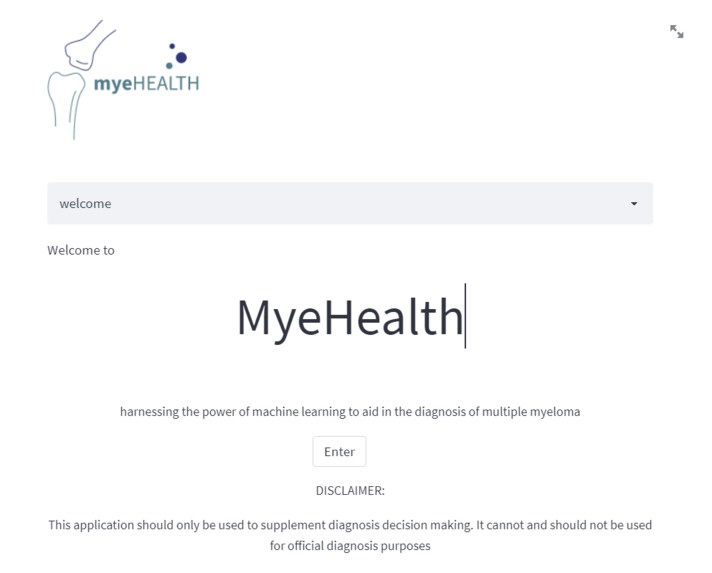
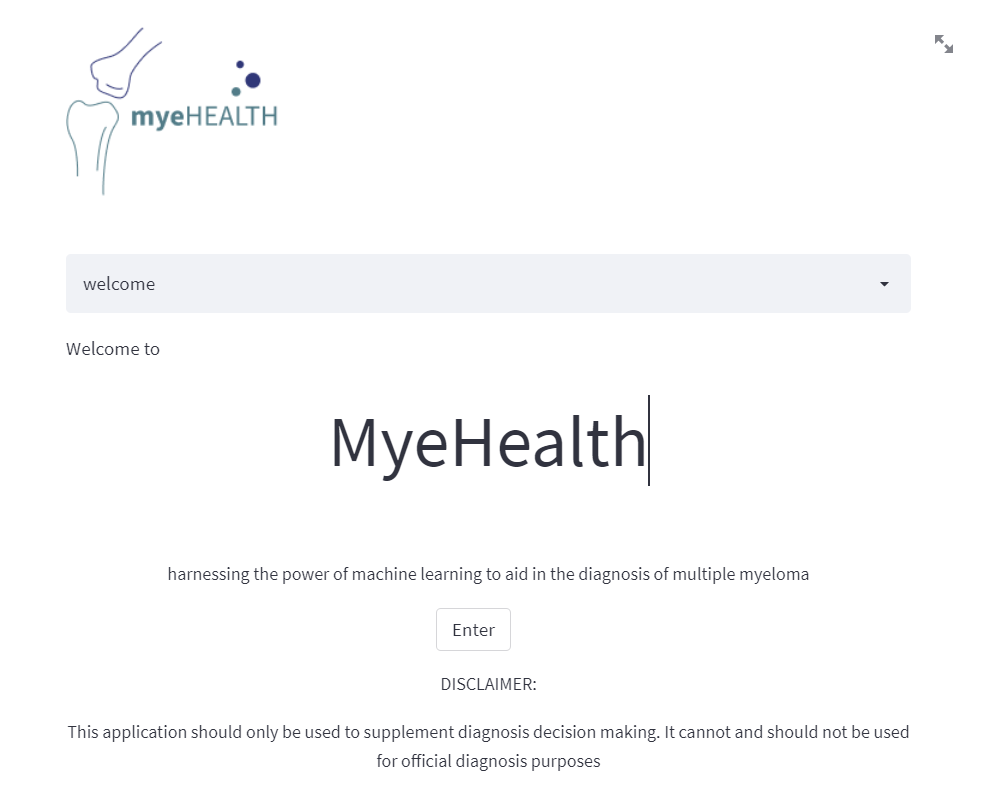
Welcome Page
-
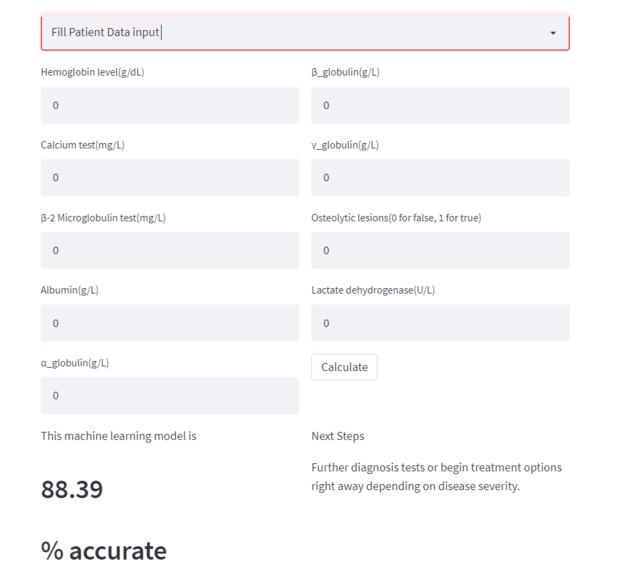
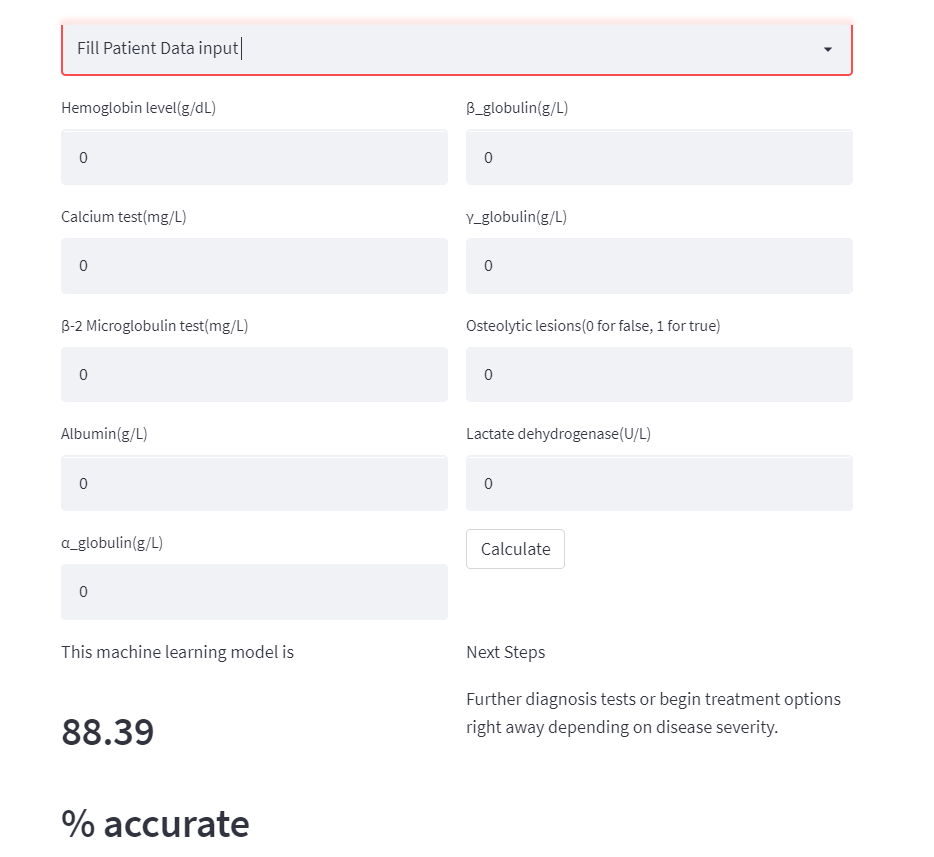
Input Patient Data Page + Machine Learning Model Prediction
Inspiration
Inaccuracy or delay in diagnosis of diseases can undeniably have catastrophic consequences on patients. In particular, multiple myeloma, a cancer of plasma cells, often goes undiagnosed due to the lack of symptoms in early stages of the disease or symptom similarity to other health complications. When treated early, progression to advanced stages of Multiple Myeloma can be delayed and some symptoms alleviated.
Our Solution
Tool to assist clinicians in early diagnosis of multiple myeloma. Utilising patient attribute data inputted by clinicians, the tool references ML trained data and provides a percentage value corresponding to the likeliness of a patient having multiple myeloma. The tool also specifies which stage of multiple myeloma the patient is in, to support the physician in determining next steps for diagnosis and treatment.
Our process
- Obtained patient data with varying stages of multiple myeloma
- Cleaned the data to remove any non-numerical values and group similar stages together to reduce complexity
- Created synthetic data emulating individuals with multiple myeloma using bounds outlined in the research paper, and mean and standard deviation for each attribute:
- Created synthetic data emulating healthy individuals based on standard health guidelines
- Trained the ML model using a mixture of clinical and synthetically-generated data points for each stage of multiple myeloma
- Designed a user-friendly web application for clinicians to input patient data
- Utilising python and Streamlit framework, developed the front end of the web application
- Connected the ML model to the front end
Challenges
- Balancing the dataset to eliminate bias in ML decision making
- Connecting the ML model to the front end application
Accomplishments and what we learned
- Learning how to use a new framework to construct the frontend of the web application
- Coding a Machine Learning model with no prior experience or knowledge
- Learning how to make use of data for real life application
- Learning data analysis and interpreting data trends
Results
- A functioning prototype of the diagnosis web application tool
- A script that creates synthetic data based on existing data points
- 80-95% accuracy in diagnosing stages of multiple myeloma
What's next
- Improving diagnosis accuracy by training the Machine Learning Model with more available patient data.
- Automated input of patient attributes to reduce time required and potential errors when manually inputting data
- Develop the tool to aid in the diagnosis of other types of cancer, and ultimately other frequently misdiagnosed diseases
Potential Opportunities
To be used by doctors in areas with weak healthcare infrastructure where access to a second professional opinion may not be readily available.


Log in or sign up for Devpost to join the conversation.