-
-
Zuri | Launch, plan, grow. All in one place. AI-powered for African entrepreneurs.
-
Most businesses don't fail online because they didn't try, they go quiet because no one gave them a plan.
-

Zuri's landing page; clear, direct, built for entrepreneurs who don't have time to guess.
-
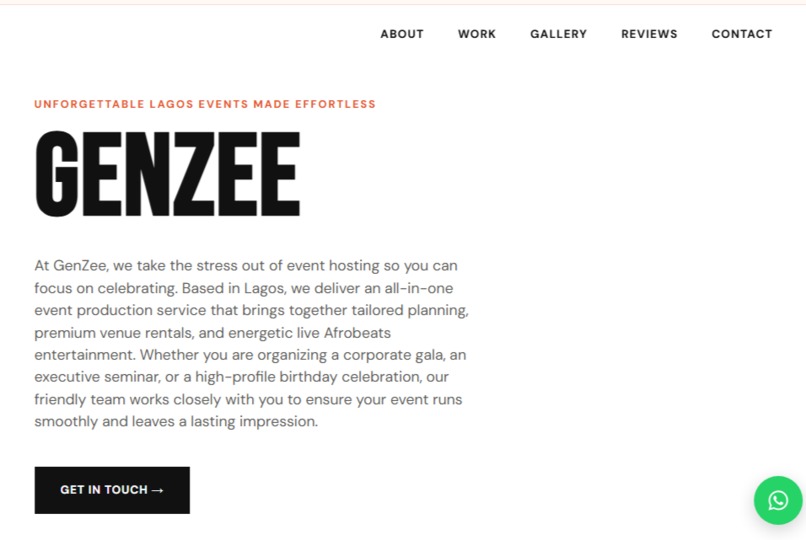
In minutes, Zuri turns those answers into a real premium website.
-
-
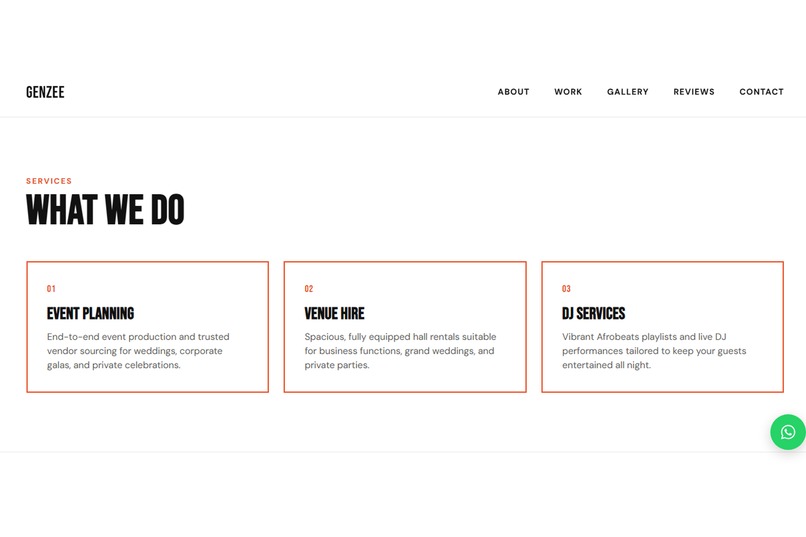
-
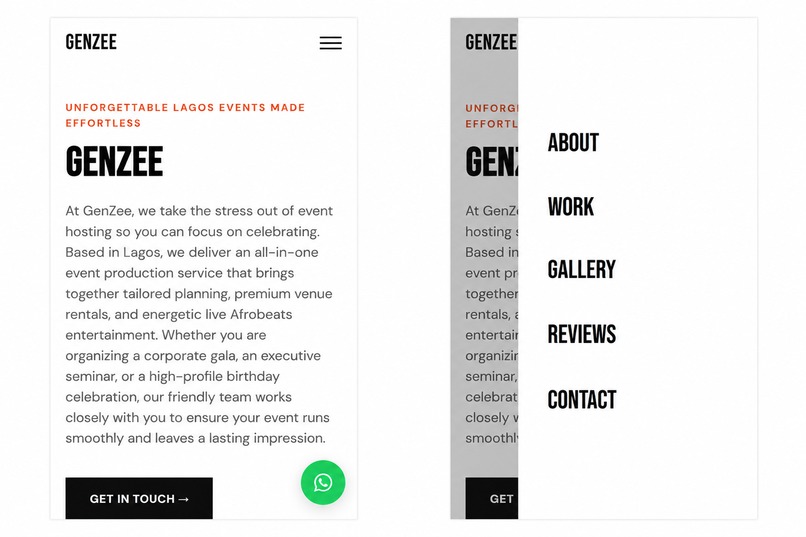
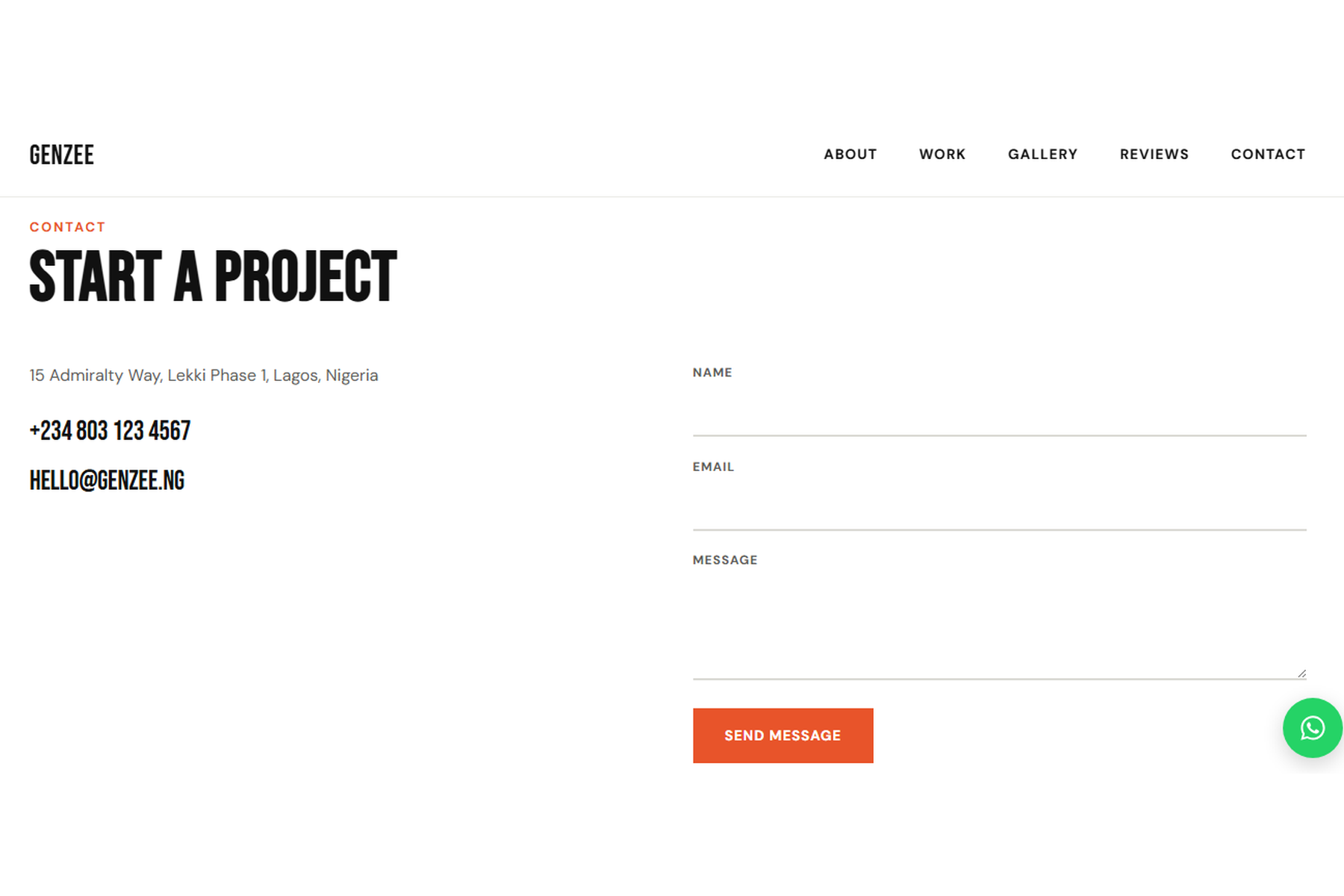
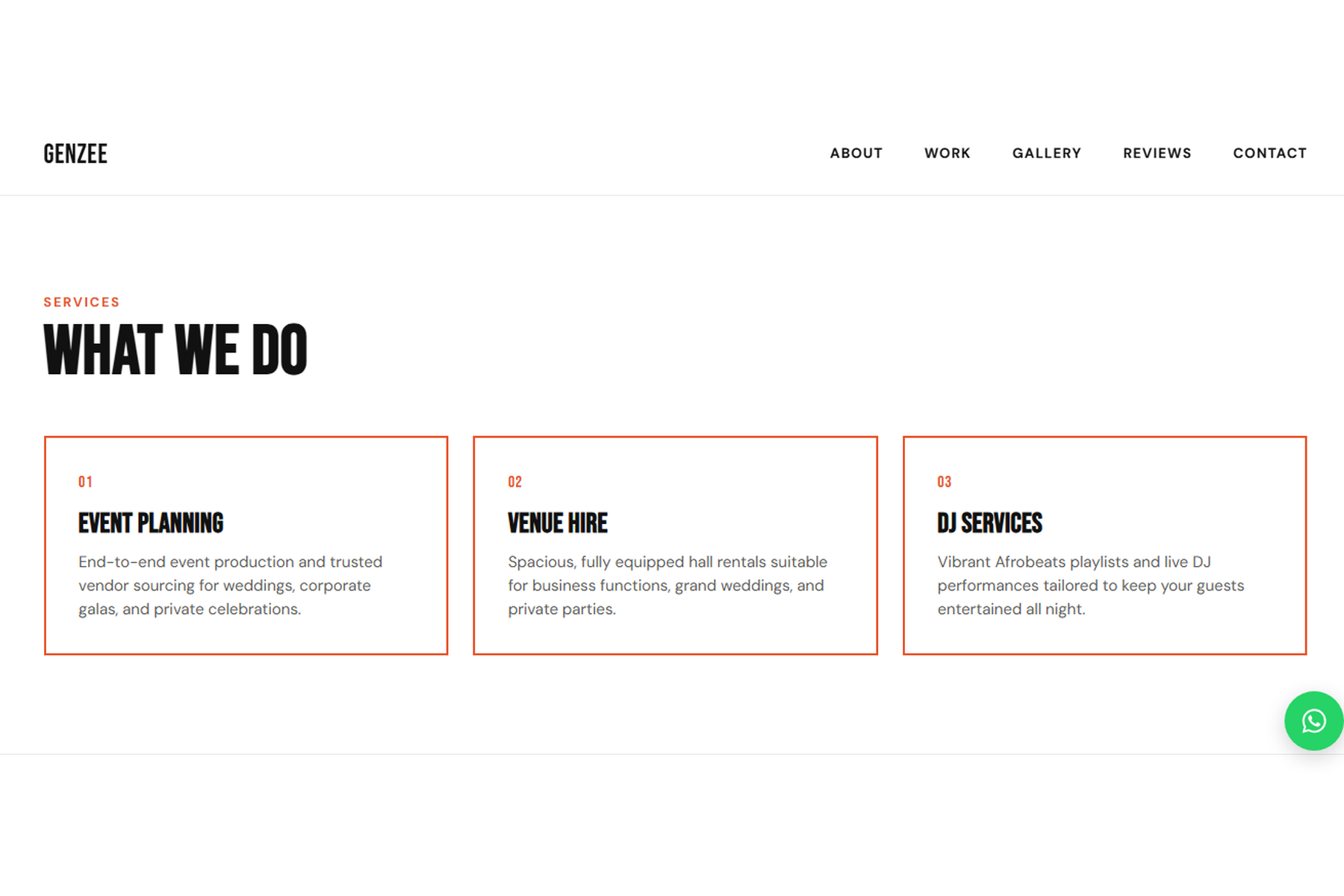
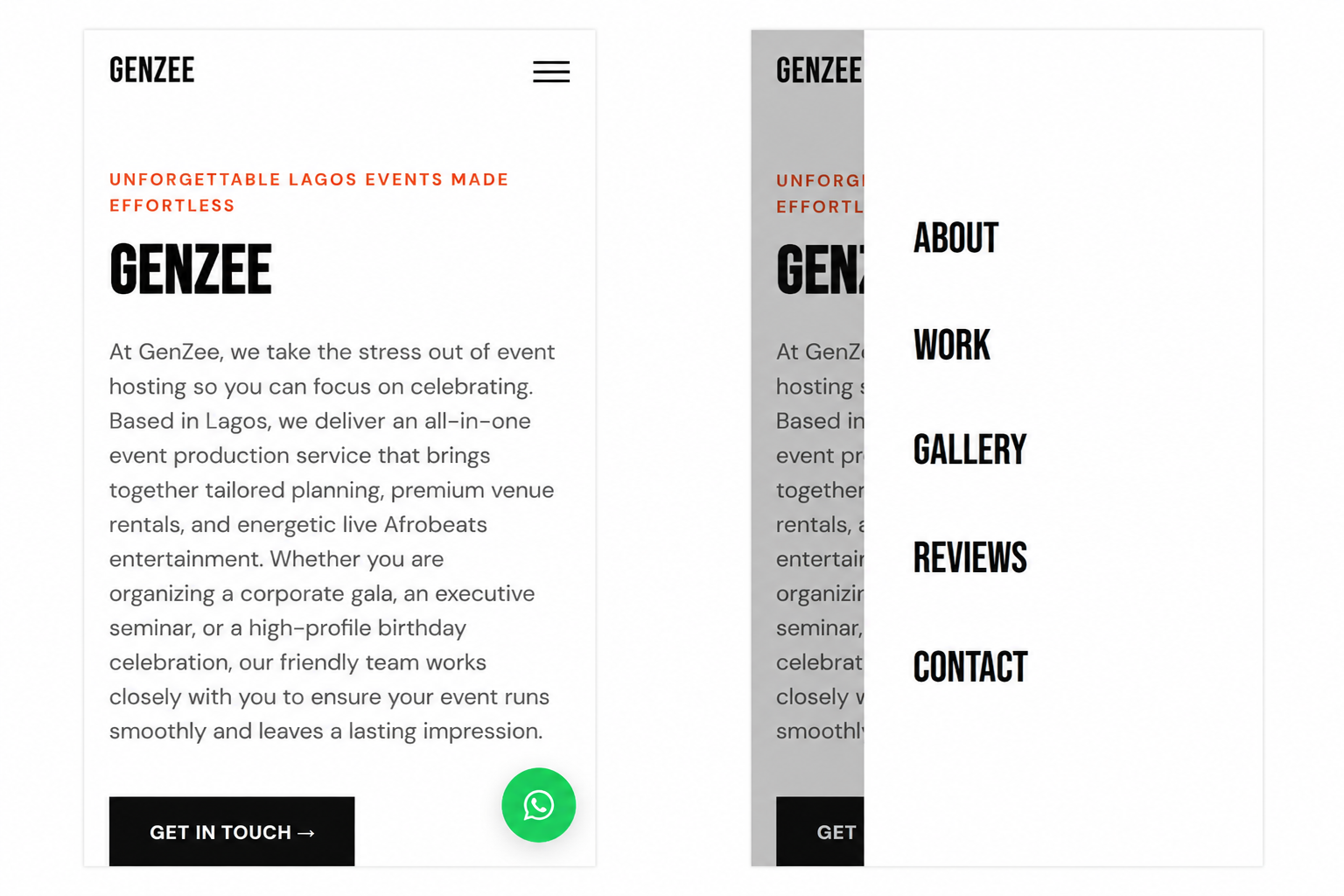
Every site is responsive and ready to share, on any device.
-
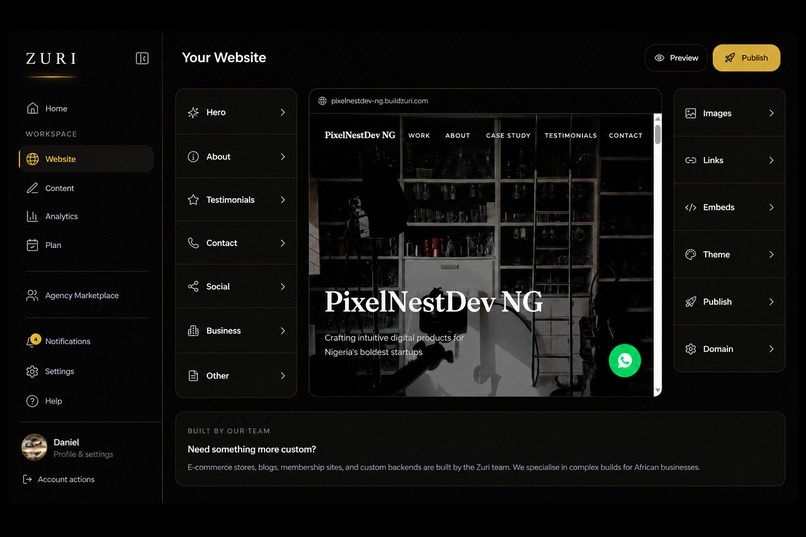
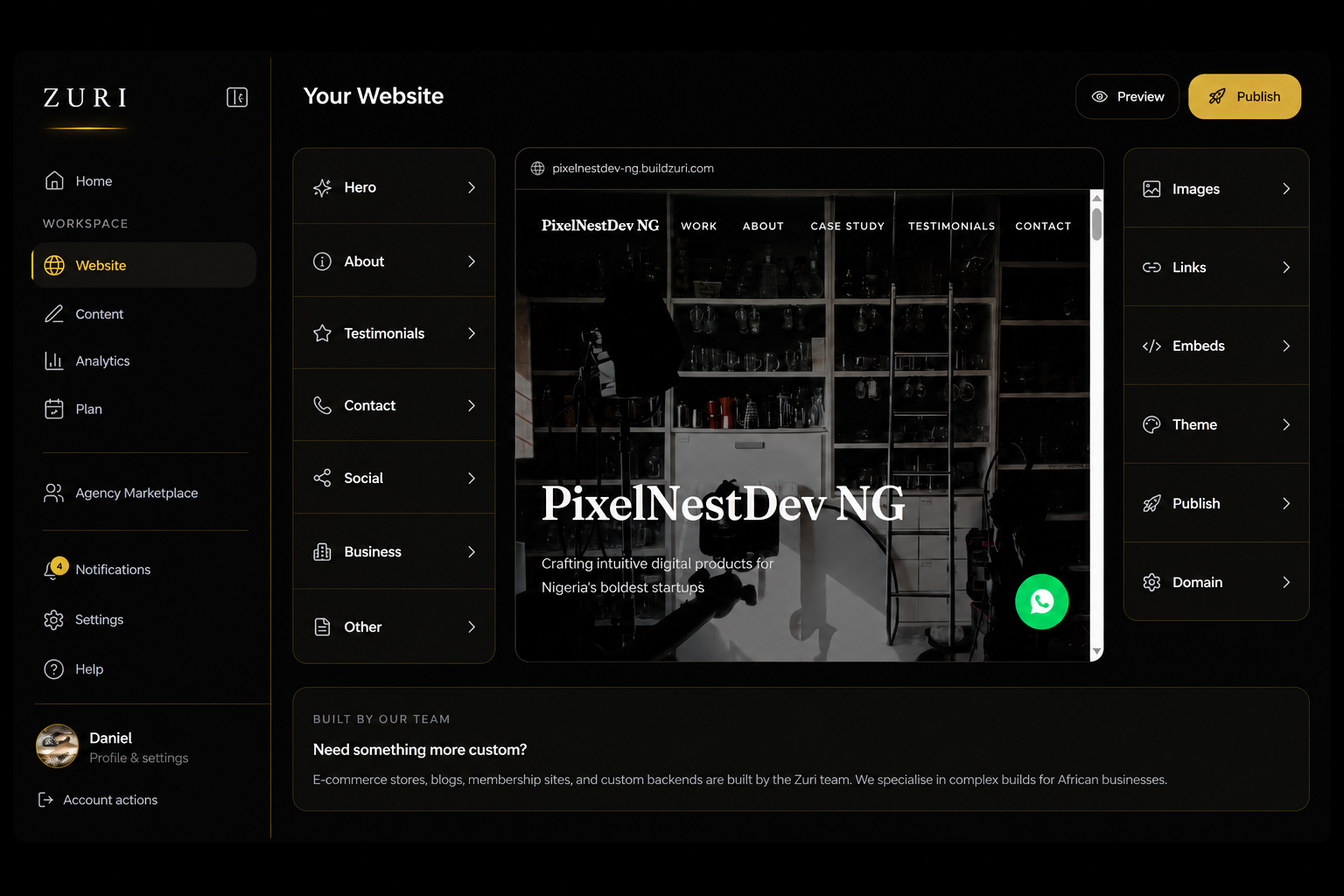
Edit anytime, without touching a single line of code.
-
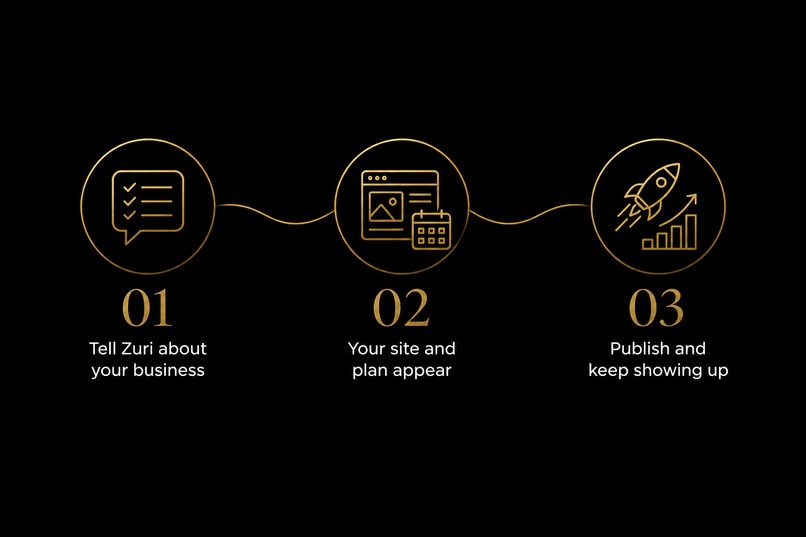
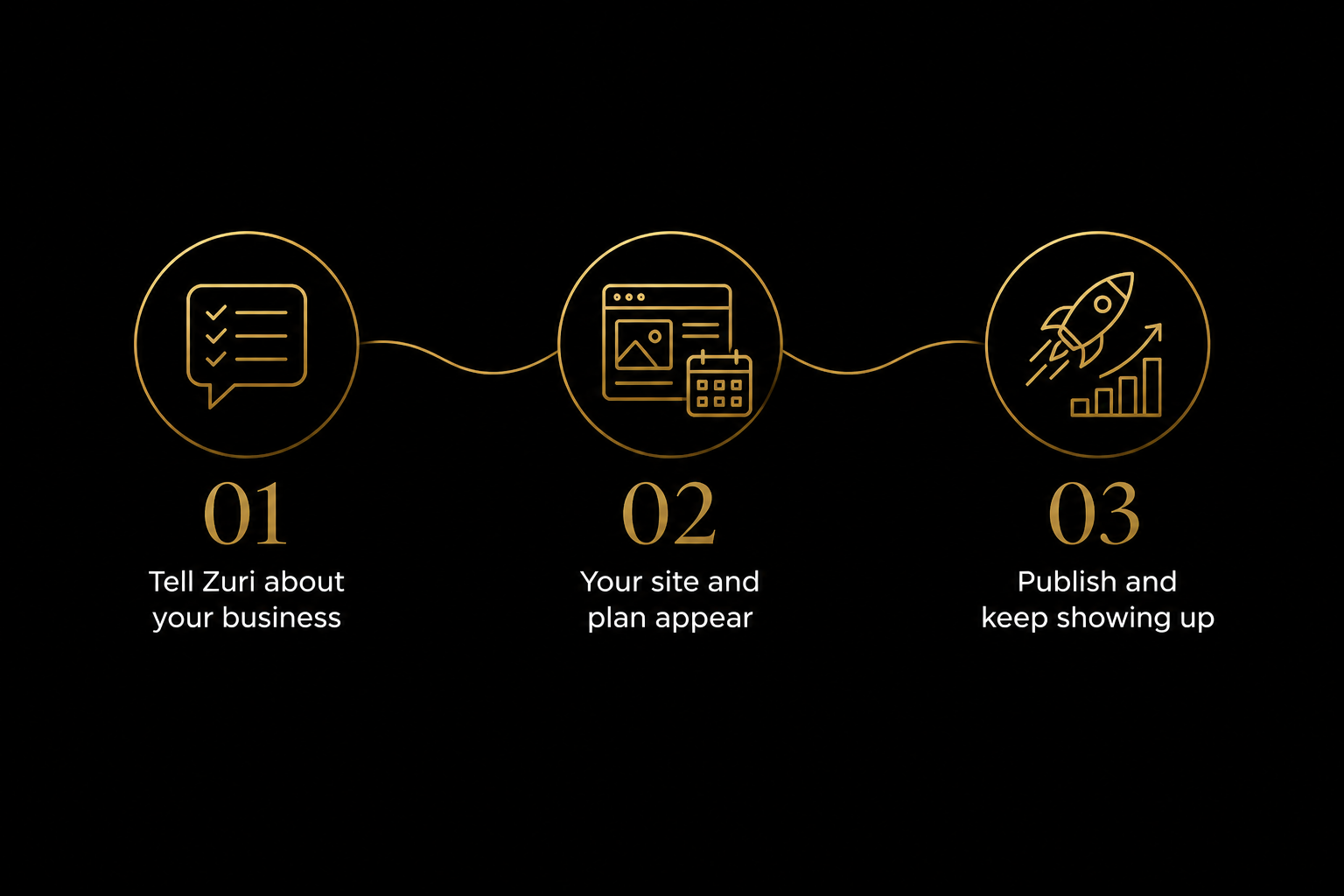
From nothing online to fully set up, in three simple steps.
-
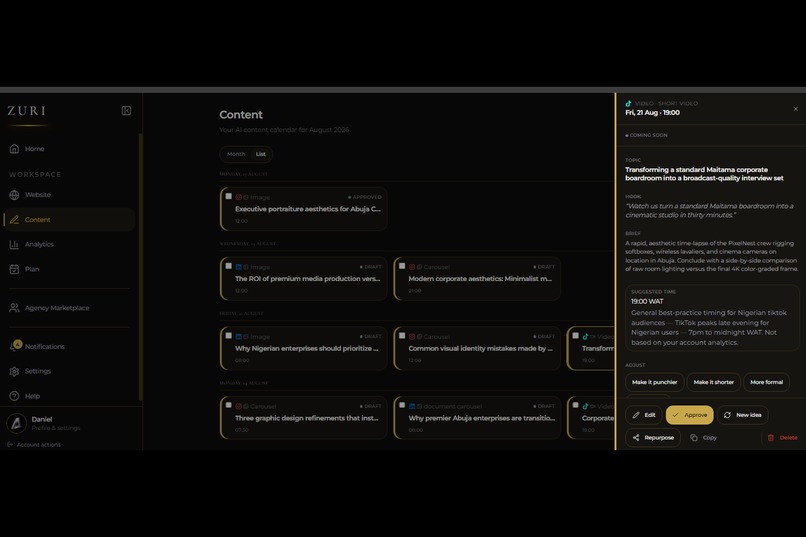
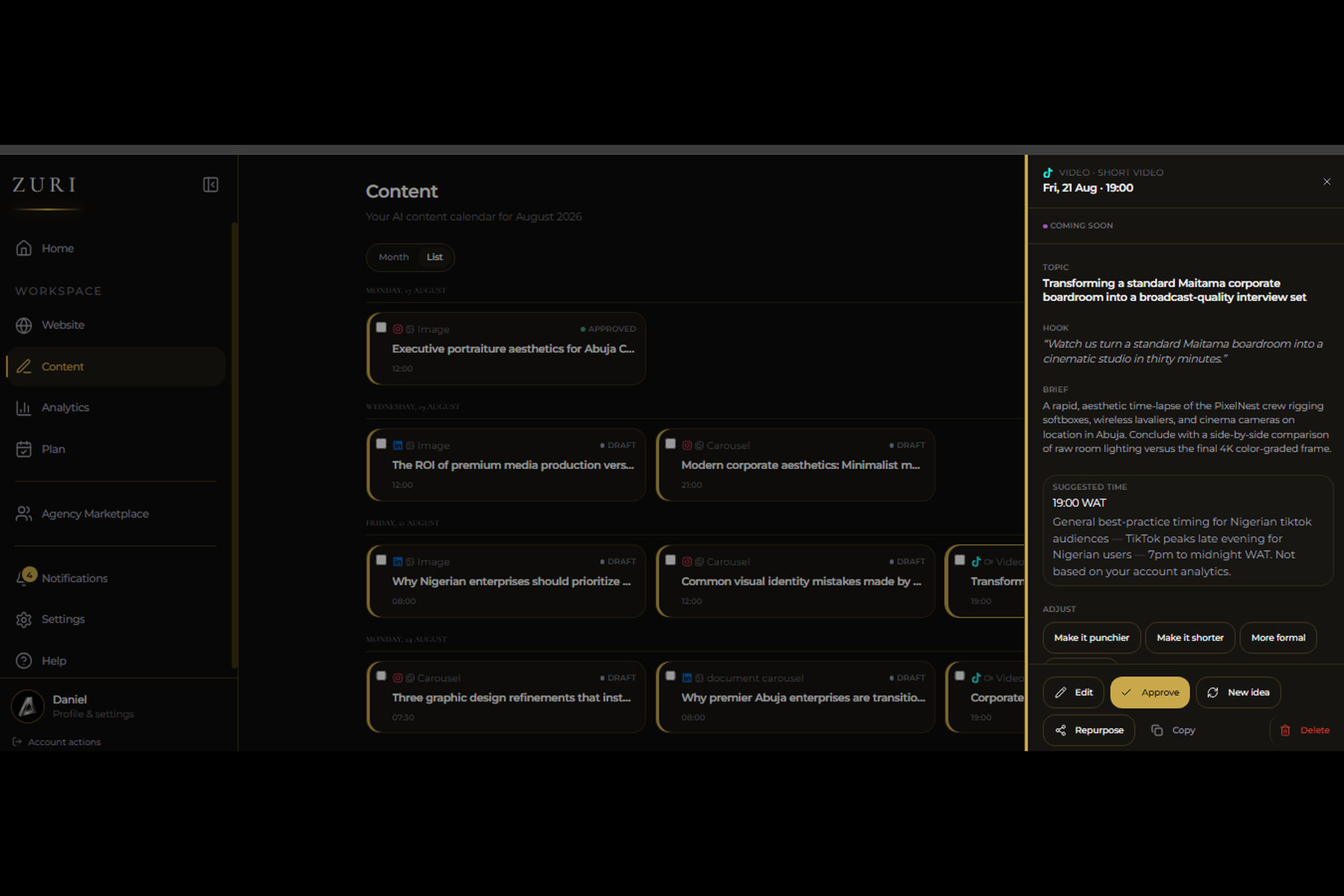
A real 90-day plan, what to post, when, and why; not just a to-do list.
-

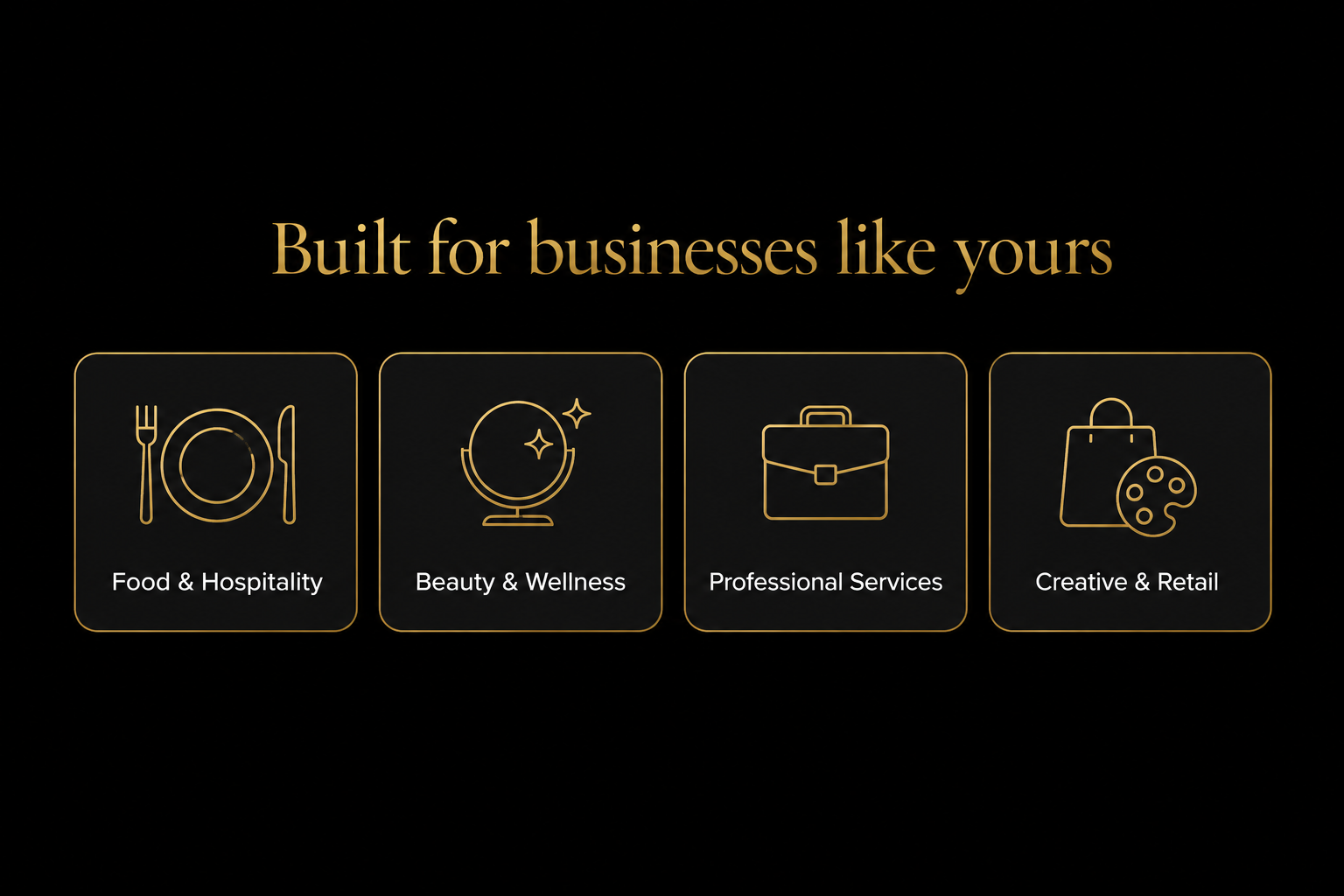
Built for businesses like yours; food, beauty, professional services, and creative retail.
-

Your business already earned its reputation. Now give your website the same. Start free at buildzuri.com.


Inspiration
Most African businesses start online, then quit within two weeks.
Not because the idea was bad. Not because the market wasn't there. They quit because the tools available to them were never built with their reality in mind.
We watched this pattern repeat itself constantly across Nigeria. A tailor opens an Instagram page, posts three times, then goes silent. A cake maker builds a website using a free template, realizes it looks nothing like her brand, and abandons it. A consultant tries to keep up with content, pricing, and customer messages all at once, with no team and no roadmap, and simply runs out of hours in the day.
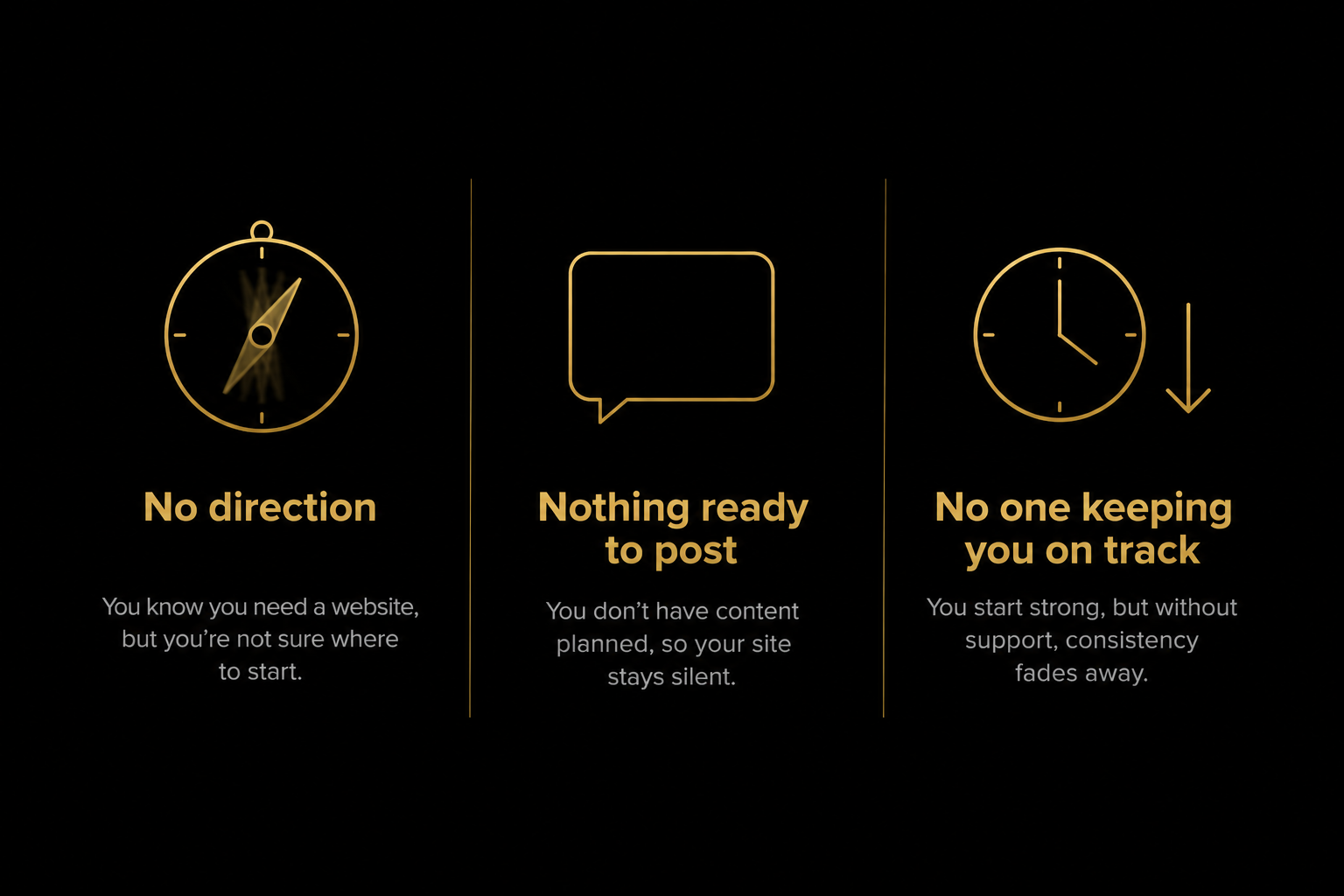
Three problems kept showing up everywhere we looked.
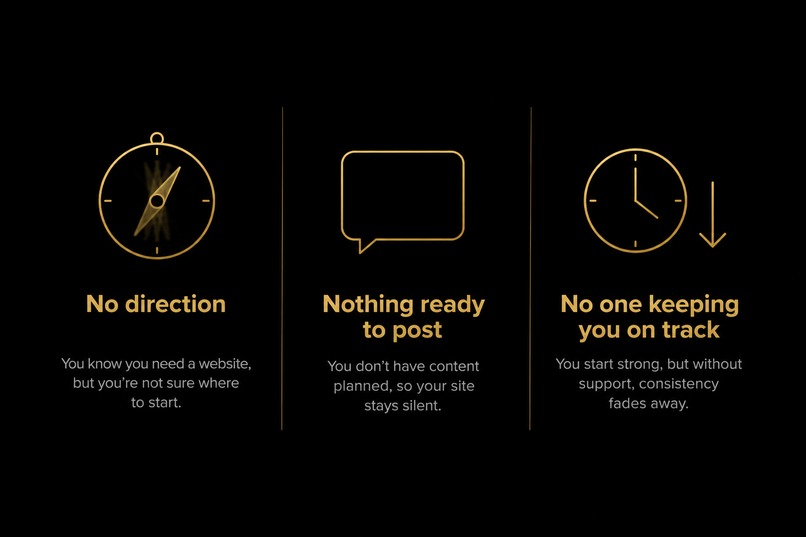
No direction. Without a clear roadmap, business owners get overwhelmed and lose focus. They know they should be online, but nobody tells them what to do first, second, or third.
No ready-made content. Creating posts, images, and offers from scratch is a full-time job, not something a solo founder running their actual business can afford to spend hours on every day.
No accountability. Without tracking and reminders, momentum evaporates. There is no one checking in, no system nudging them forward. They are on their own, and eventually, they stop.
We built Zuri because we believe the fix for this is not another generic website builder. It is an operating system for African entrepreneurs, one that uses AI to do the heavy lifting a small team would normally provide: building the site, generating the content, tracking the results, and gently keeping the business owner moving forward.
What it does
Zuri takes a business owner from zero to a fully published, professional online presence in minutes, not weeks.
A short, guided onboarding asks about the business: what it offers, who it serves, and how it should feel. As those questions are answered, an AI generated preview of the actual website builds live in front of the user, so they watch their site take shape in real time instead of staring at a loading screen. At the end of onboarding, Gemini generates a complete, on brand website, tailored copy, a content calendar, and an initial ninety day strategy, all from that short conversation.
From there, Zuri becomes a daily operating layer for the business. The Content tab plans and generates social posts and captions so the owner is never starting from a blank page. The Analytics tab tracks real website traffic, social performance through Meta, and search visibility through Google Search Console, then uses Gemini to translate the raw numbers into a plain language monthly report a non technical business owner can actually act on. The Agency Marketplace connects businesses to real Nigerian agencies for the work that genuinely needs a human, like paid advertising or brand strategy. A full notification system, delivered by email and in app, keeps the accountability loop alive: reminders, milestones, and nudges that a business owner would otherwise only get from a team they cannot yet afford.
Every part of the product is built mobile first, because that is how our users actually access the internet.
How we built it
Zuri is a Next.js and TypeScript application, deployed on Vercel, with Supabase providing our Postgres database, authentication, and storage layer. Gemini powers the core intelligence of the product: website generation, content and caption writing, monthly analytics reporting, and brand voice matching all run through Gemini, called via Vertex AI on Google Cloud.
Cloudinary handles our media pipeline, serving both a curated library of stock imagery for generated sites and user uploaded assets like logos, through a signed upload flow so credentials never touch the client. Flutterwave powers subscription billing for the Nigerian market specifically, and Resend handles the full email layer, from welcome sequences to monthly reports to trial reminders, built on top of a shared template system. Meta's Graph API and the Google Search Console API feed real performance data into the Analytics tab, and the whole application ships as a installable PWA, with an offline fallback and a service worker built for spotty mobile connections.
We designed the entire interface around a simple standard: if Vercel or Linear would not ship it, we should not either. That meant a genuine design token system, premium loading states instead of bare spinners, and a level of attention to motion and micro interaction that most tools in this market simply do not offer their users.
Challenges we ran into
The honest version of this story includes real breakage, not just a clean finished product.
Early in development, our Content Security Policy quietly blocked our own preview iframe from loading fonts and reaching our own APIs, while the browser flagged our sandbox configuration as a genuine security risk. We found it by actually reading our own console output during a routine screenshot review, not because a test caught it, and fixing it meant rethinking how tightly scoped a CSP should be for content that mixes our own infrastructure with third party embeds.
Images silently failing to load on generated sites turned out to be a second CSP gap, this time missing an entire provider from our allowlist, even after we had already fixed the underlying template data that referenced those images correctly. It was a reminder that a correct fix at one layer of the stack can still fail completely at another layer, and that debugging has to start with the actual browser console, not an assumption about where the problem lives.
Our onboarding flow went through a genuine identity crisis. What started as a simple five step form became a live, AI aware experience with a preview that builds as you answer, deeper business context collection, and a level of animation and polish we rebuilt more than once until it stopped feeling like a form and started feeling like a product.
We also learned, the hard way, to be careful about what we automate. An early plan to auto charge trial users the moment their trial ended would have been a reasonable default for many products, but we caught, before building it, that doing so without a clear reminder sequence first would generate exactly the kind of support disputes and trust damage a young product cannot afford. We redesigned the trial system around a no card required model with real reminder emails instead, before a single line of the original version was written.
Accomplishments that we're proud of
We are proud that Zuri takes a business owner from a blank page to a fully published, AI generated website in minutes, with copy, images, and structure tailored to their actual business rather than a generic template.
We are proud of the live preview experience in onboarding, where a user watches their site take shape in real time as they answer a handful of questions, instead of waiting for a result they cannot see forming.
We are proud that Zuri is not just a website builder. It is a genuine operating layer for a small business, combining AI generated content planning, real analytics pulled from Meta and Google Search Console, plain language monthly reports written by Gemini, and a curated agency marketplace, all in one product.
We are proud of the discipline we held around quality under pressure. Every screen was audited, debugged, and rebuilt against a simple standard: if a product like Vercel or Linear would not ship it, we would not either. That included catching and fixing real security gaps in our own Content Security Policy, systemic overflow bugs, and broken loading states, not just adding visual polish on top of unresolved problems.
We are proud that the entire product was built mobile first, with a working PWA, offline handling, and a design system built specifically for the connectivity and device realities of our actual users, rather than adapted from a desktop first product as an afterthought.
And we are proud that every AI feature in Zuri exists to solve one of the three real reasons African businesses abandon their online presence: no direction, no ready-made content, and no accountability, not because AI was a trend we wanted to attach to the product.
What we learned
We learned that premium is not a visual style, it is a discipline applied consistently across hundreds of small decisions: how a button behaves the moment it becomes clickable, how a loading state looks the tenth time you see it, how a form communicates that a field is empty rather than merely styled to look empty.
We learned that AI generated experiences earn trust through visible process, not just a good final result. The single change that made our onboarding feel meaningfully more premium was not a new feature, it was showing the site come alive while someone answers questions, instead of asking them to wait for a result they cannot see forming.
And we learned that building for African entrepreneurs specifically means designing for constraints that many products ignore entirely: unreliable connections, mobile first usage, and a business owner whose time for learning a new tool is measured in minutes, not hours.
What's next for Zuri
Our immediate roadmap includes expanding real time AI insights across the Analytics dashboard, deepening our agency marketplace into a genuine two sided platform, and building out a proper multi-site architecture so a single account can manage more than one project, something we deliberately chose not to rush into our current core data model this close to submission, in favor of shipping a stable, well tested single site experience first. We also plan to introduce Higgsfield for AI video generation, giving business owners the ability to turn a single prompt into short, ready to post video content for their social channels, extending the same principle behind the rest of Zuri: removing the time and skill barrier that keeps small business owners from showing up consistently online.
Built With
- cloudinary
- firebase-cloud-messaging
- flutterwave
- google-gemini-api
- google-search-console-api
- meta-graph-api
- next.js
- postgresql
- react
- resend
- supabase
- tailwind-css
- typescript
- vercel


Log in or sign up for Devpost to join the conversation.