-
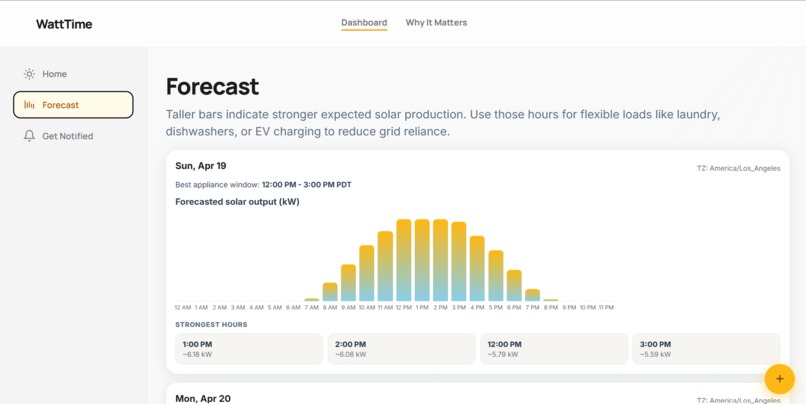
insights of peak sunlight hours
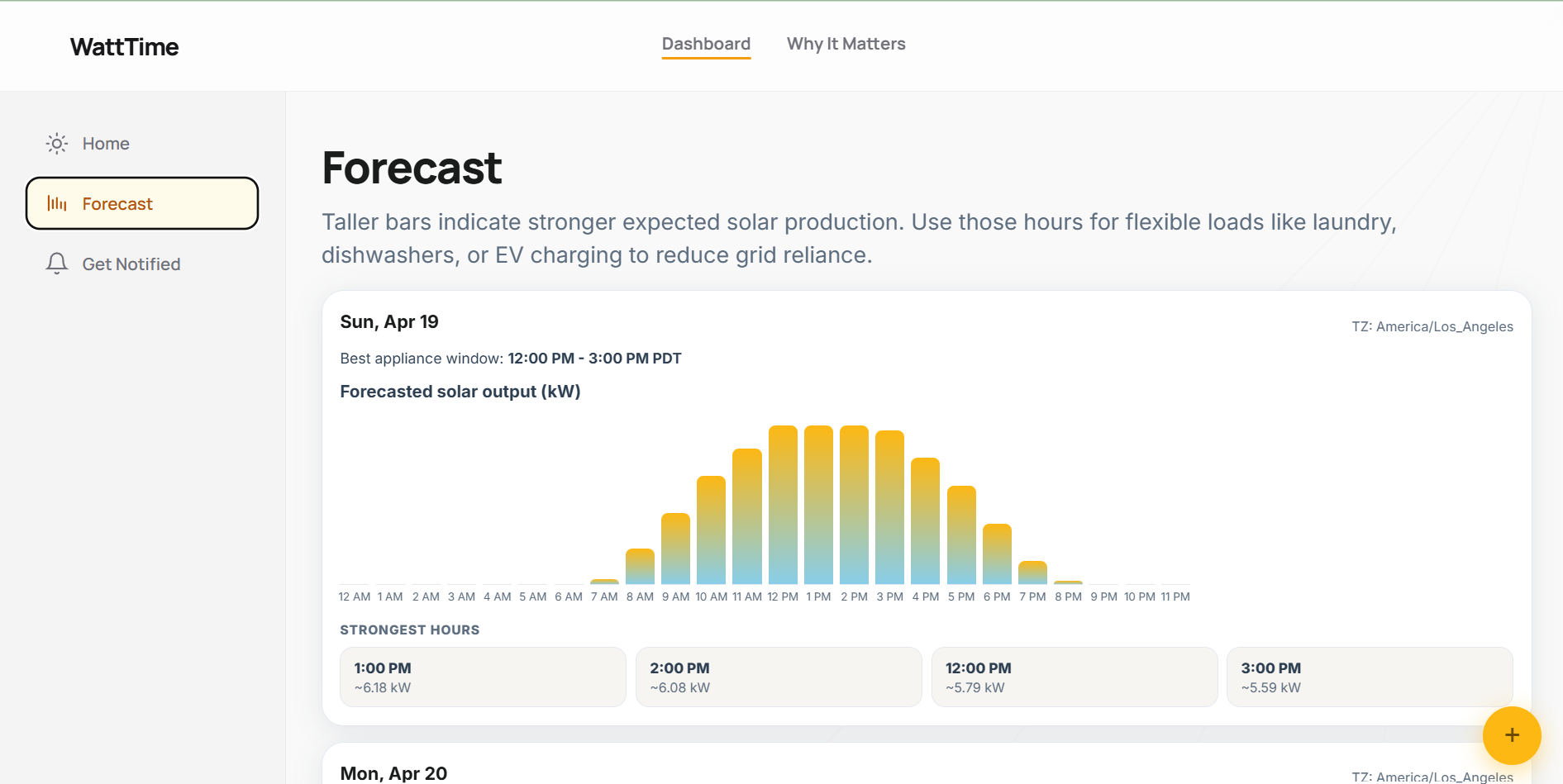
Inspiration
When we were coming up with ideas, we all realized we had the same shared interest of solar power and improving its use in our homes. As such, we decided to base our hackathon project on improving its efficiency.
What it does
name provides users who use solar panels with a report of the best times each day to use power-heavy appliance, such as water heating, air conditioning, and EV charging, based on the weather conditions and forecasts of their location. It also gives a daily email of the best time to use appliances for maximum solar energy usage efficiency.
How we built it
name takes location and appliance information from the user, and leverages weather data from that area, provided by Open-Meteo, fetching crucial information like sun intensity, temperature, and cloud coverage - all things that can affect the efficiency of solar panels. After that, it compiles and processes all the information using NVIDIA NIM, and returns the complex data into a concise and easy-to-read report of the next week's forecast, and when best to use high power appliances for maximum efficiency.
Frontend
We used React Vite and Stitch to design and build the UI and frontend functionality of our app.
Backend
In order to process the user's and Open-Meteo's data, we a Step Function to call AWS Lambdas to fetch data based on user location, process the data using NVidia NIM, and return the data in a human-readable format.
Challenges we ran into
Working with AWS technologies as purely front-end developers was difficult, to say the least. With our initial experience, or lack thereof, with AWS, it was inevitable that a good amount of our time was spent learning how different backend components and tools fit together. Despite this challenge, we persisted through, absorbing as much knowledge as we could and asking our mentors whenever we needed help, eventually ending knowing far more than we could've imagined about AWS.
Accomplishments that we're proud of
One of the biggest things we've accomplished this weekend was leveraging the LLM capabilities
What we learned
Our biggest takeaways were learning about all the different technologies AWS has to offer. It was also invaluable to learn about how to use these technologies in our own projects, expanding the limits on what we could do.
What's next for Untitled
In the future, we plan to not only utilize weather conditions of the area, but to also use the tilt and direction of the user's solar panels as input, and use satellite data of cloud coverage, dust, and humidity to ensure the most accurate results possible.
Built With
- amazon-ses
- amazon-web-services
- api-gateway
- lambda
- open-meteo
- react
- typescript
- vite

Log in or sign up for Devpost to join the conversation.