-
-
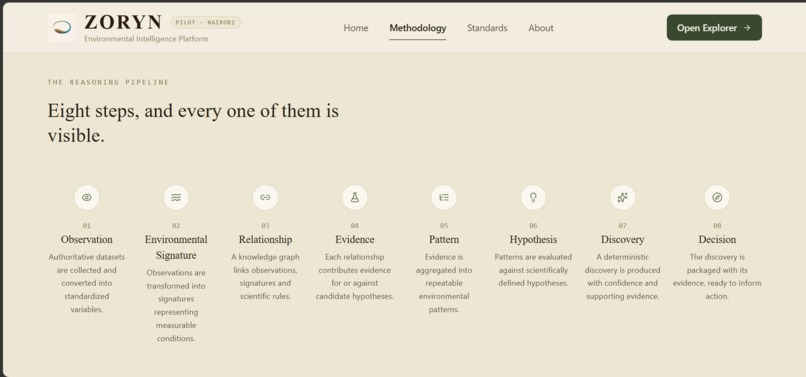
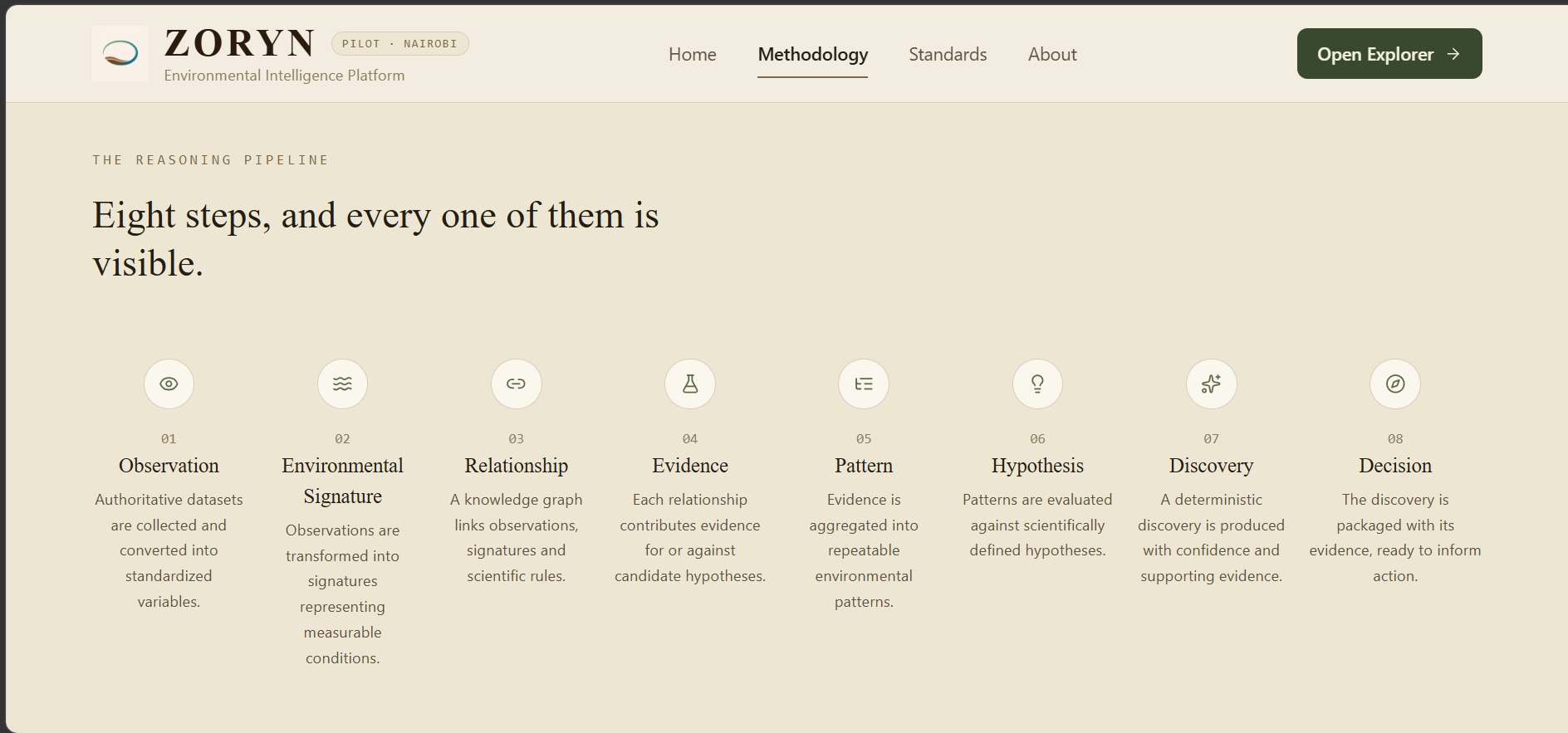
The eight-step deterministic reasoning pipeline, from environmental observations to evidence-based decisions.
-
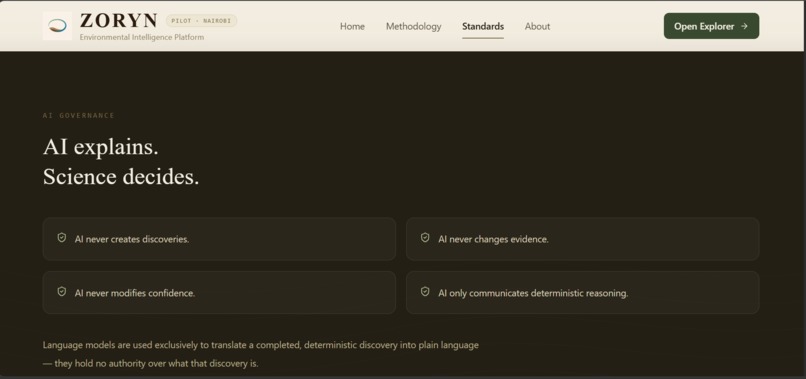
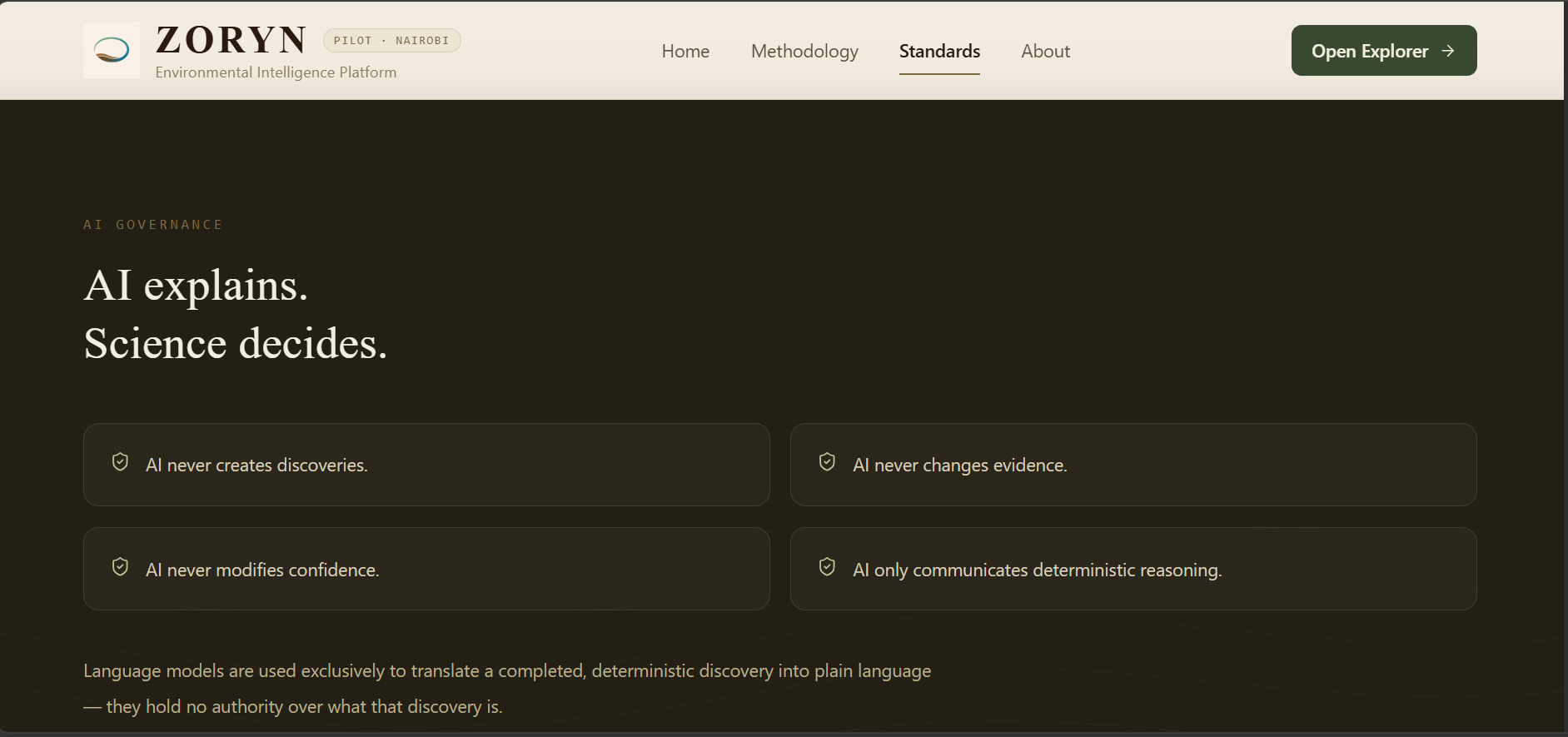
AI governance principles ensuring science remains authoritative while AI serves only as an explanatory layer.
-
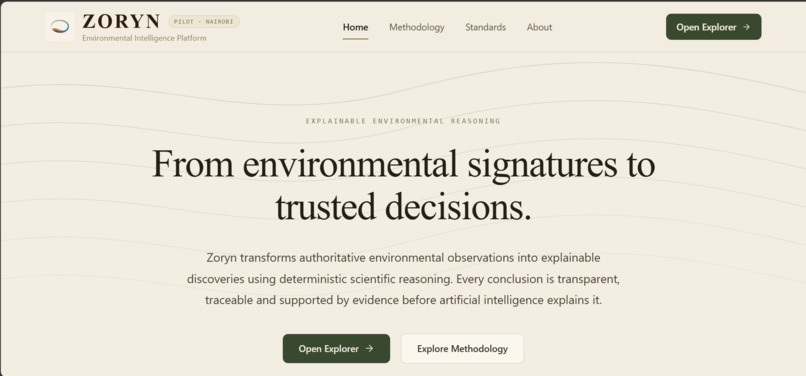
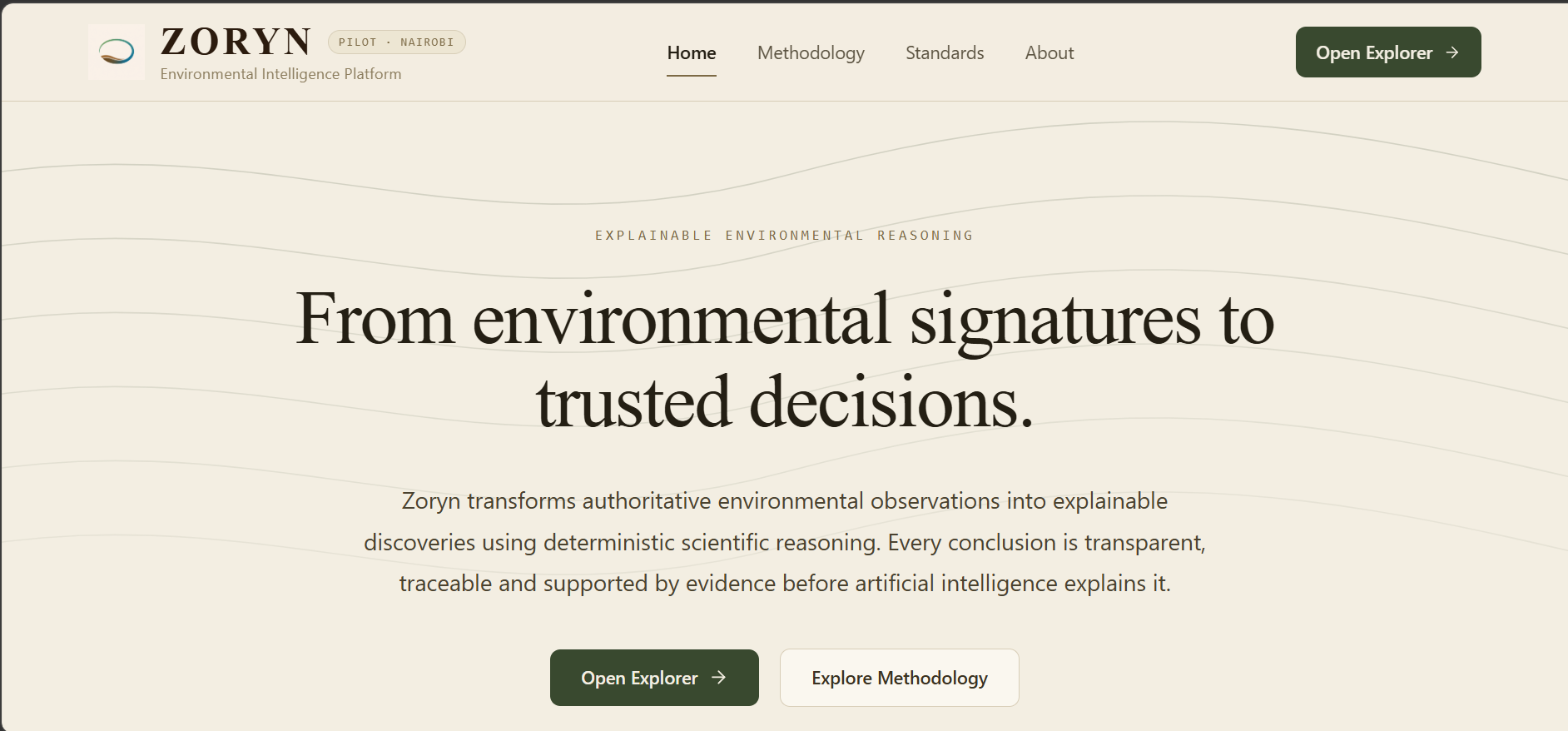
Zoryn landing page introducing explainable environmental intelligence.
-
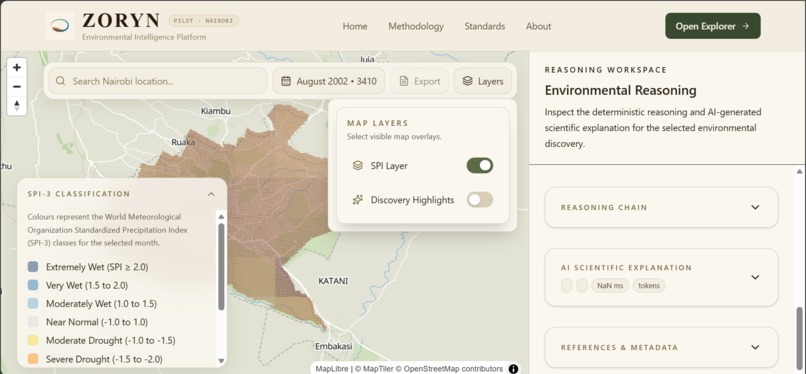
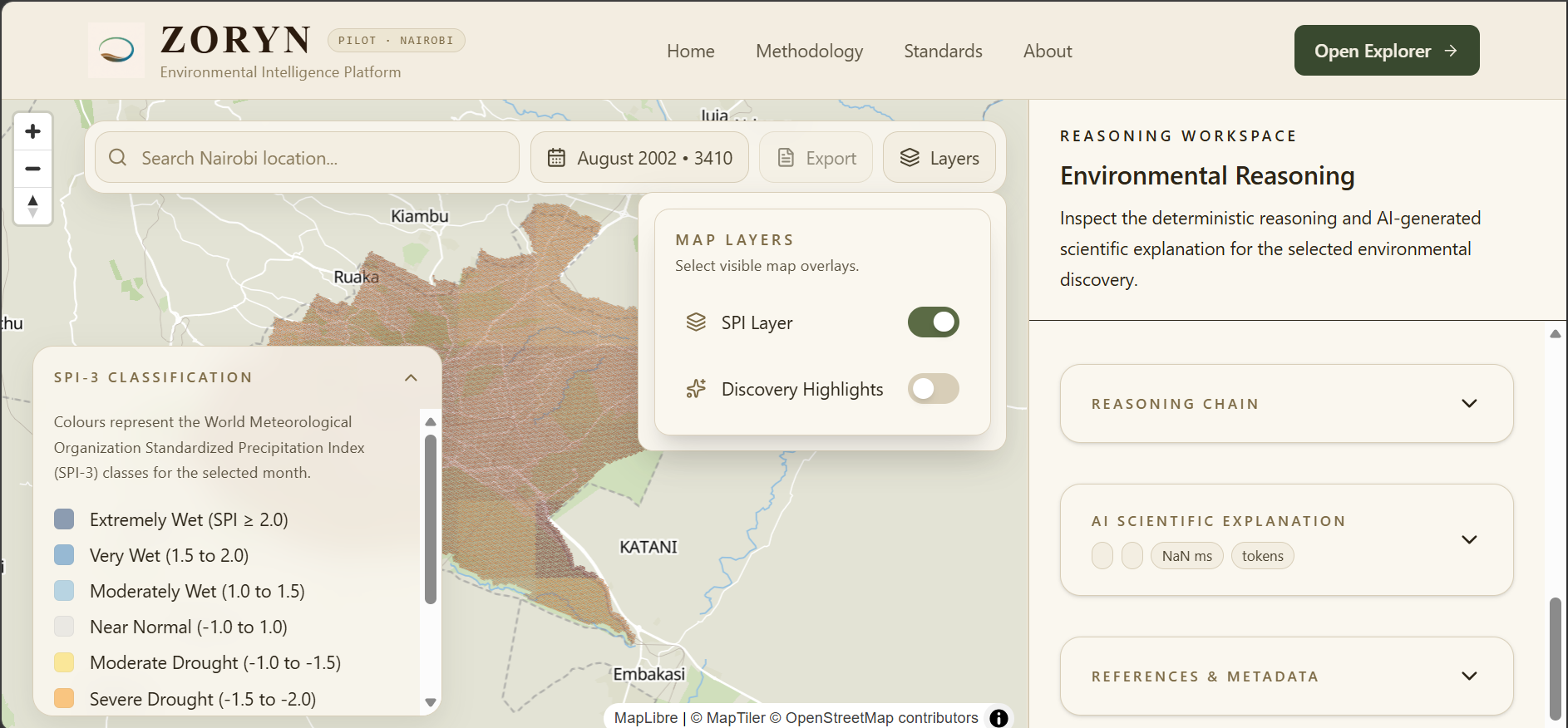
Configurable environmental map layers for exploring standardized environmental indicators and discovery highlights.
-
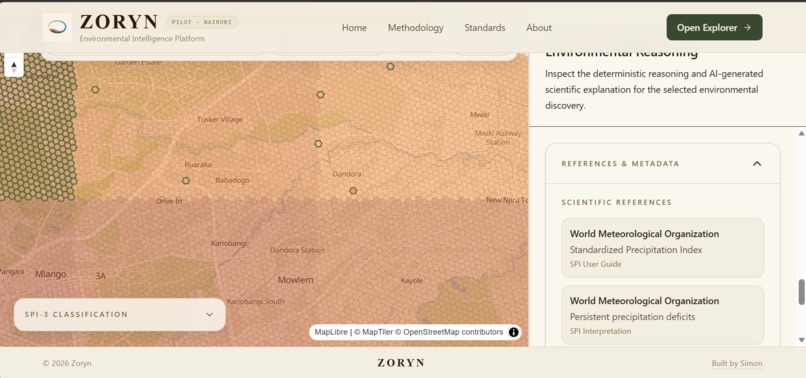
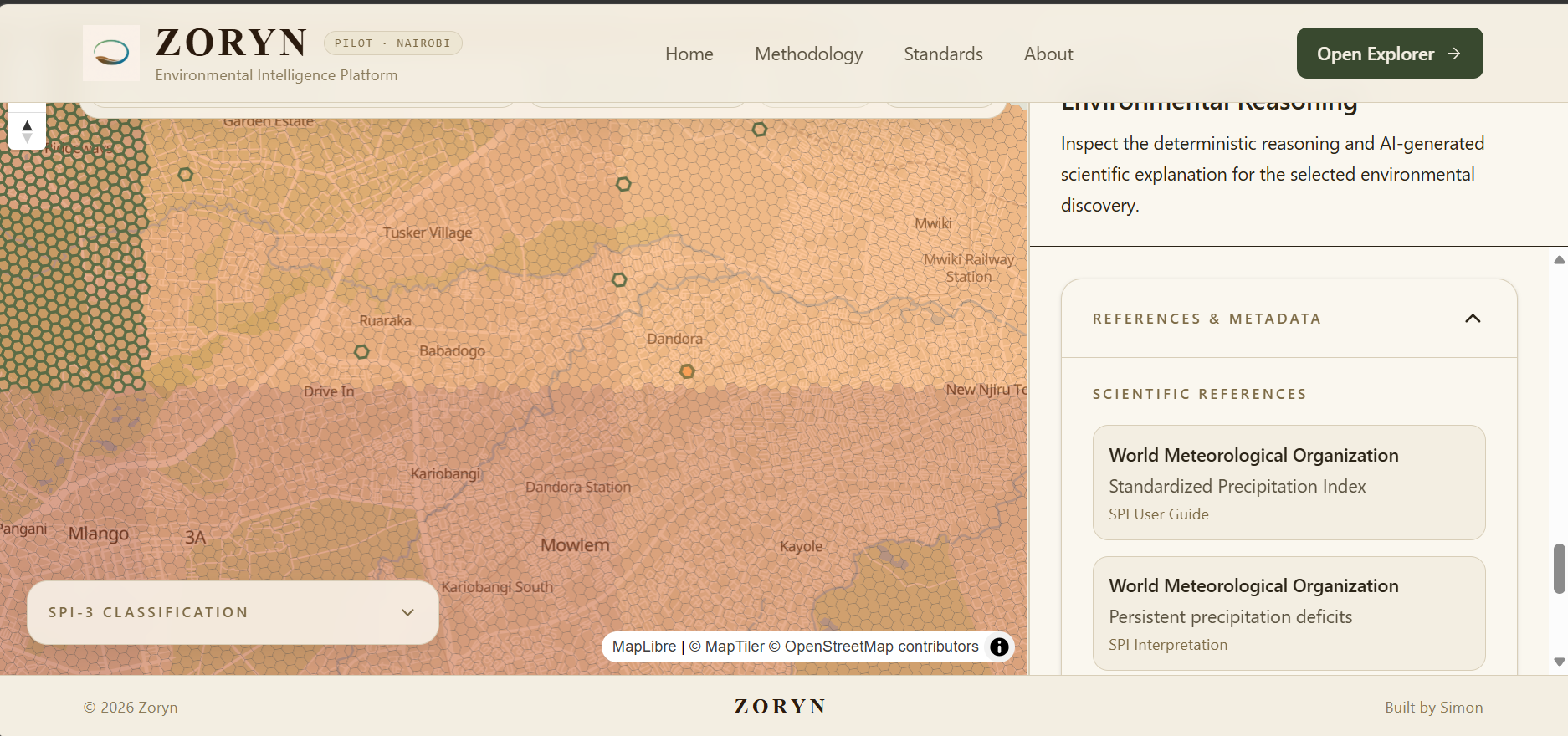
Every environmental conclusion is backed by scientific references and complete data provenance.
-
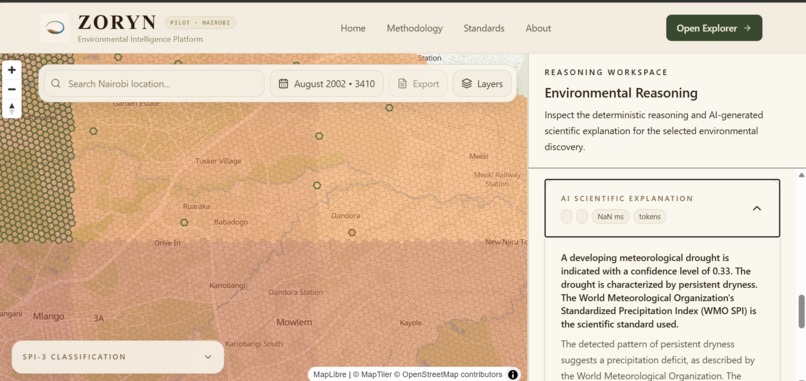
AI translates completed scientific discoveries into clear, human-readable environmental explanations.
-
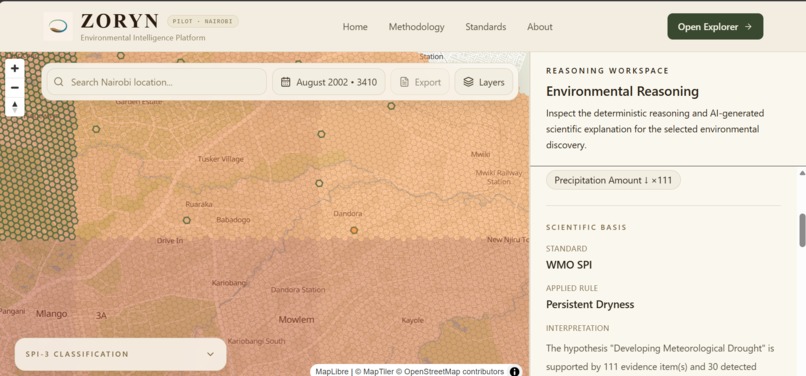
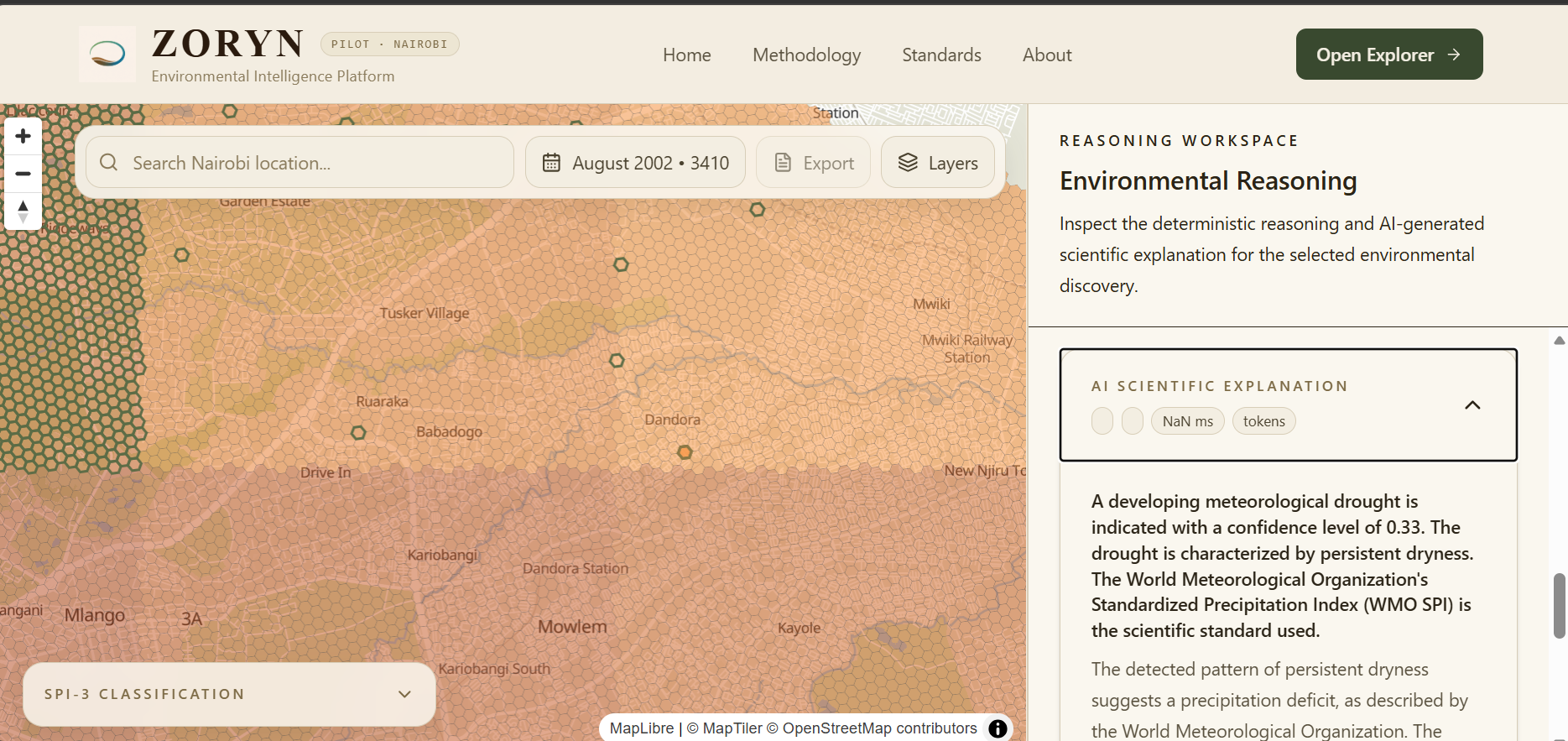
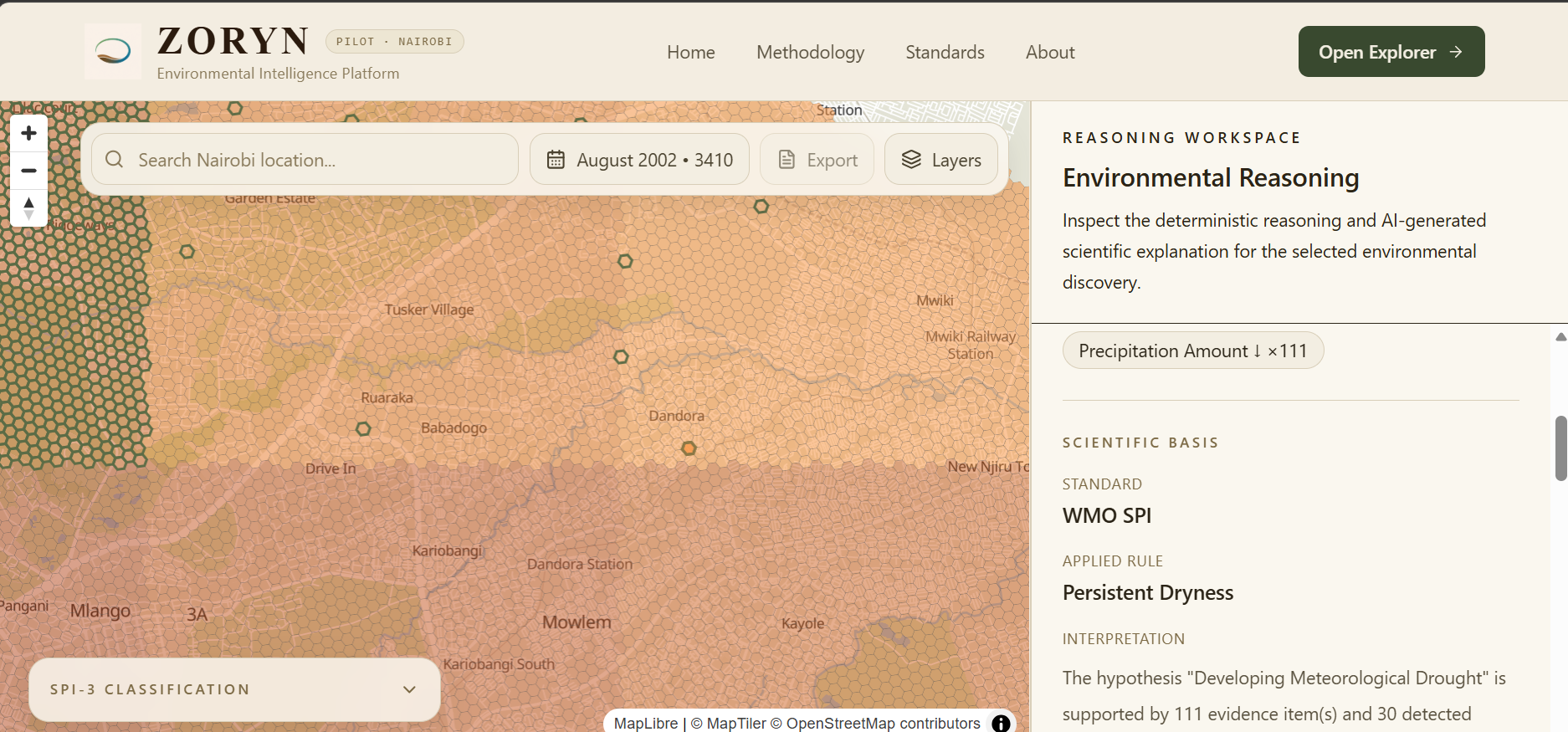
Interactive explorer combining H3 geospatial visualization with explainable environmental reasoning.
Inspiration
I built many climate models over the years, each solving a different problem. That process made me realize that what was missing wasn't another model—it was a platform that could learn from all of them, reason across them, and explain why it reached a conclusion. That's what inspired Zoryn.
What it does
Zoryn is an environmental intelligence platform that identifies meaningful environmental changes and explains them using evidence rather than predictions alone. It can be used as an early warning system because it detects even the smallest changes in trends toward a climate event, across different time scales, while showing the reasoning and data behind every insight.
How I built it
I combined open climate datasets, H3 spatial indexing, a knowledge graph, and a signature-based reasoning engine. Instead of looking at a single variable, Zoryn creates environmental signatures from historical observations, compares them with current conditions, and explains the closest matching patterns with full data provenance.
Challenges I ran into
The biggest challenge was making the reasoning transparent while keeping the platform fast. Processing large geospatial datasets and delivering explainable results within the limits of free cloud infrastructure required a lot of optimization.
Accomplishments that I'm proud of
I'm proud that Zoryn doesn't behave like a black box. Every insight is backed by evidence, a reasoning path, and clear provenance. I'm also proud of building a signature-based reasoning engine that can recognize complex environmental patterns instead of relying on simple thresholds.
What I learned
I learned that accuracy alone isn't enough. People trust environmental intelligence much more when they can understand why a conclusion was reached and where the evidence came from.
What's next for Zoryn – your environmental assistant
I want Zoryn to become a live environmental assistant that continuously consumes high-frequency environmental data and relates it to patterns from past events. By combining real-time observations, environmental signatures, susceptibility and multi-criteria analysis within its knowledge graph, I hope it will provide earlier, more reliable warnings and help people understand not only what is happening, but also why and what could happen next
Built With
- duckdb
- fastapi
- gee
- geopandas
- grok
- h3
- maplibre
- parquet
- polars
- python
- react
- typescript

Log in or sign up for Devpost to join the conversation.