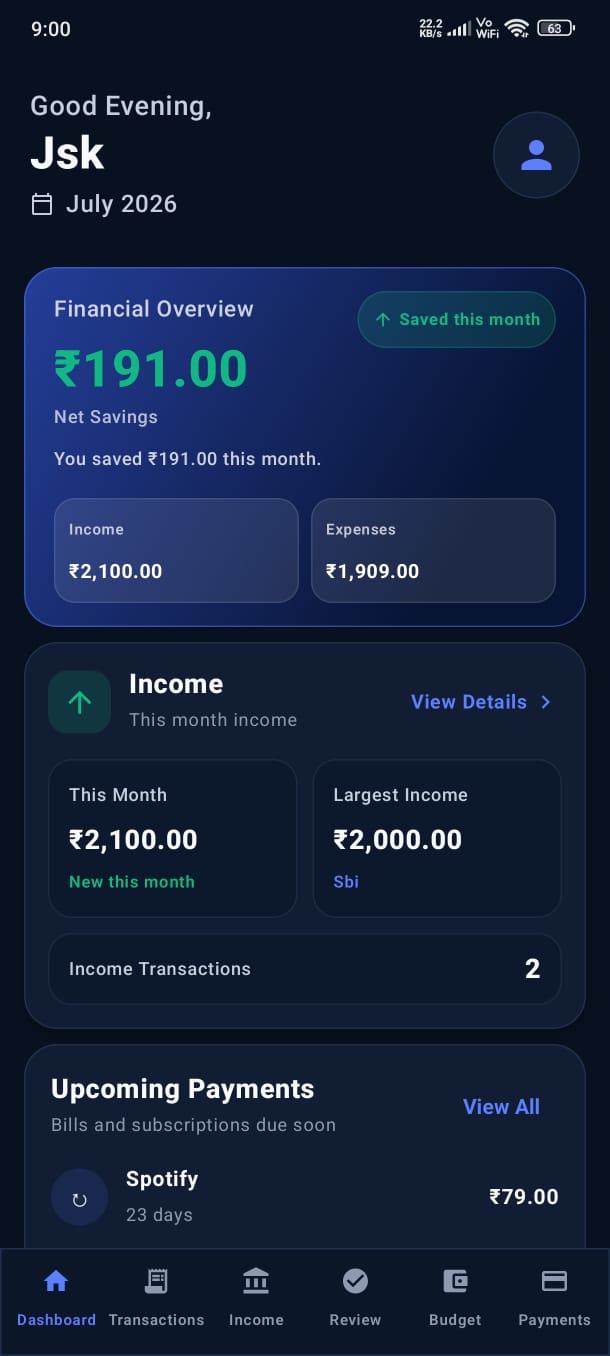
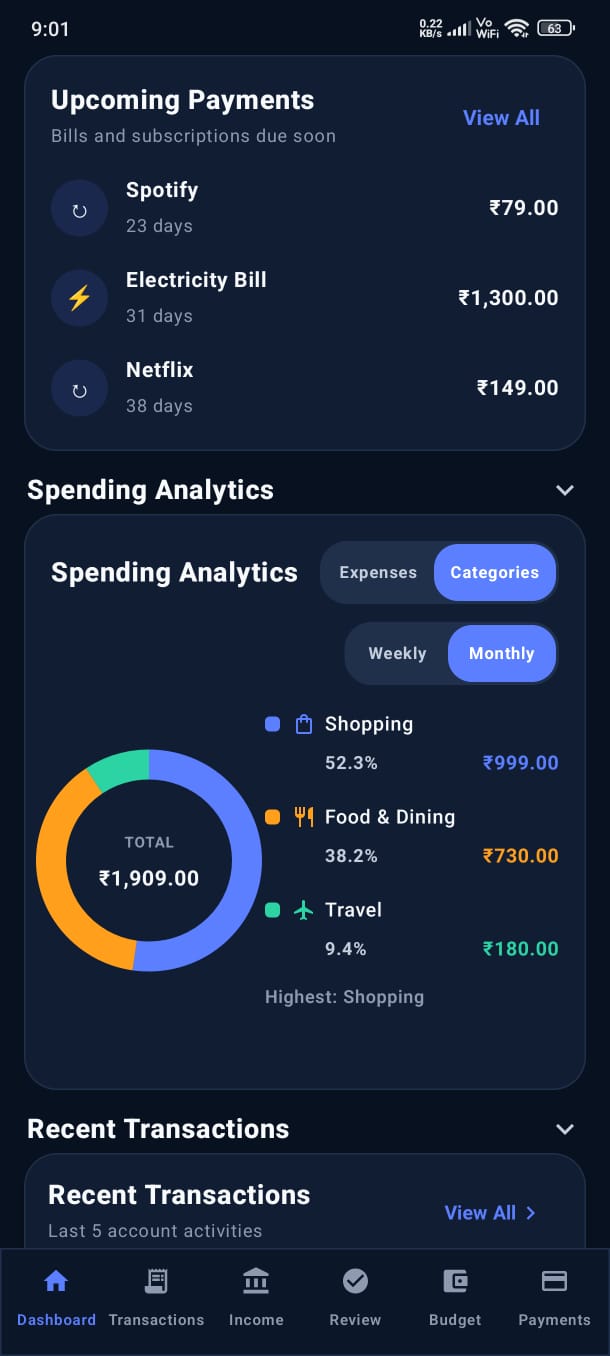
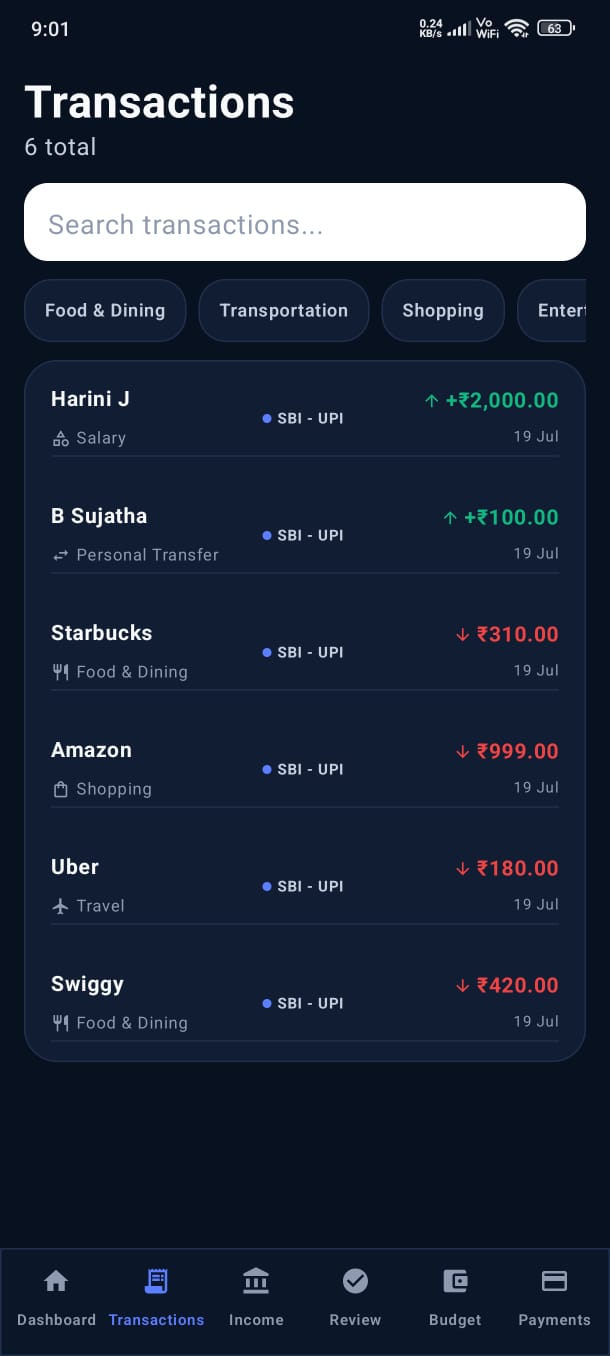
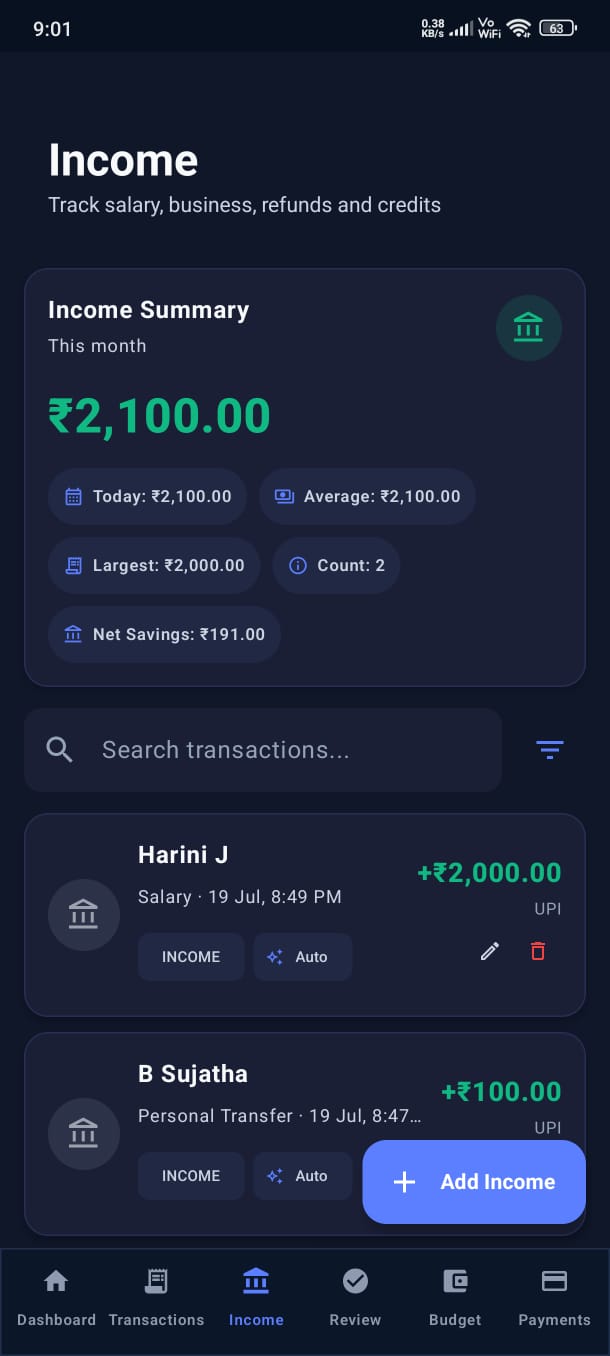
ZORS
Inspiration
Managing personal finances manually is time-consuming, and many people forget to record everyday expenses. While payment notifications already contain transaction information, most users still need to enter expenses manually into finance apps.
ZORS was built to automate this process by intelligently detecting payment notifications, extracting transaction details, and organizing them into a clean, offline-first personal finance experience.
What it does
ZORS automatically tracks expenses and income from payment notifications and provides users with a complete overview of their finances.
Key Features
- Automatic expense detection
- Automatic income detection
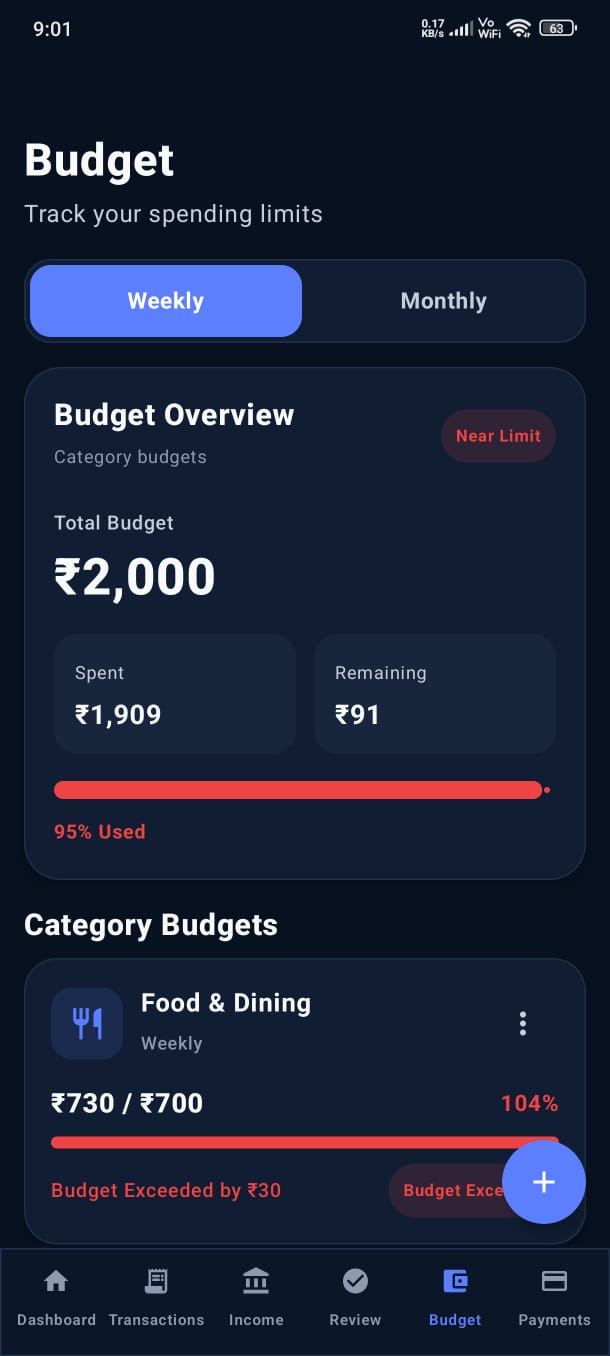
- Budget management
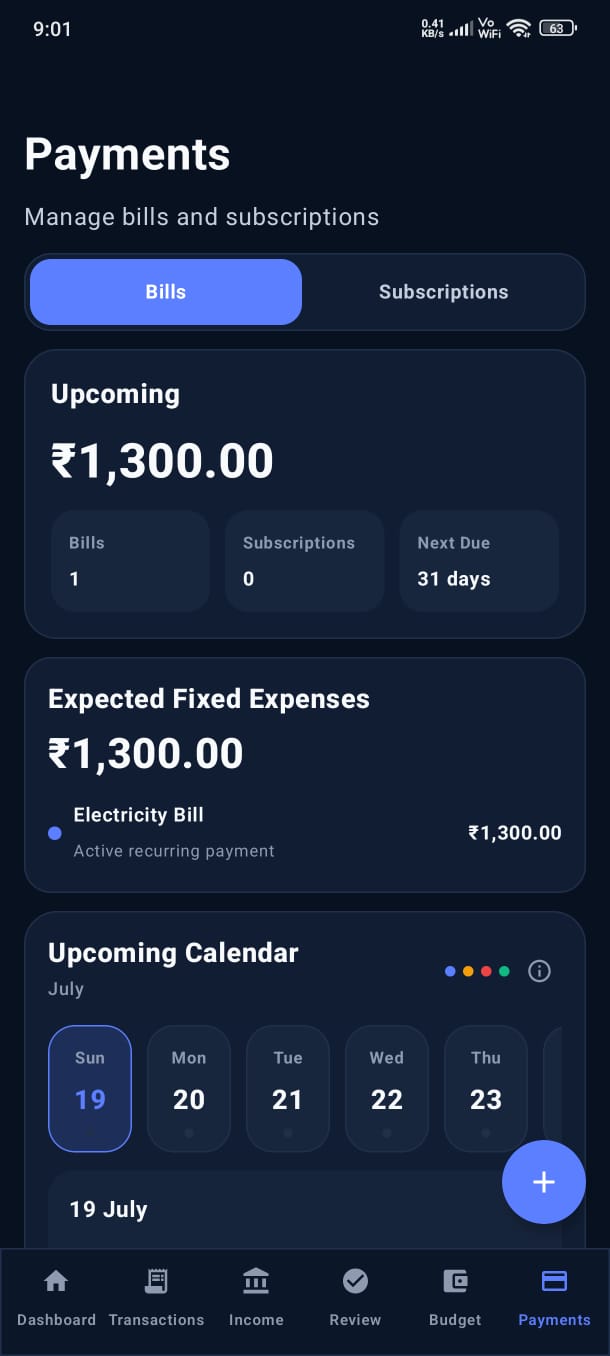
- Bills & subscription tracking
- Financial dashboard
- Category-wise analytics
- Transaction history
- Export to PDF & CSV
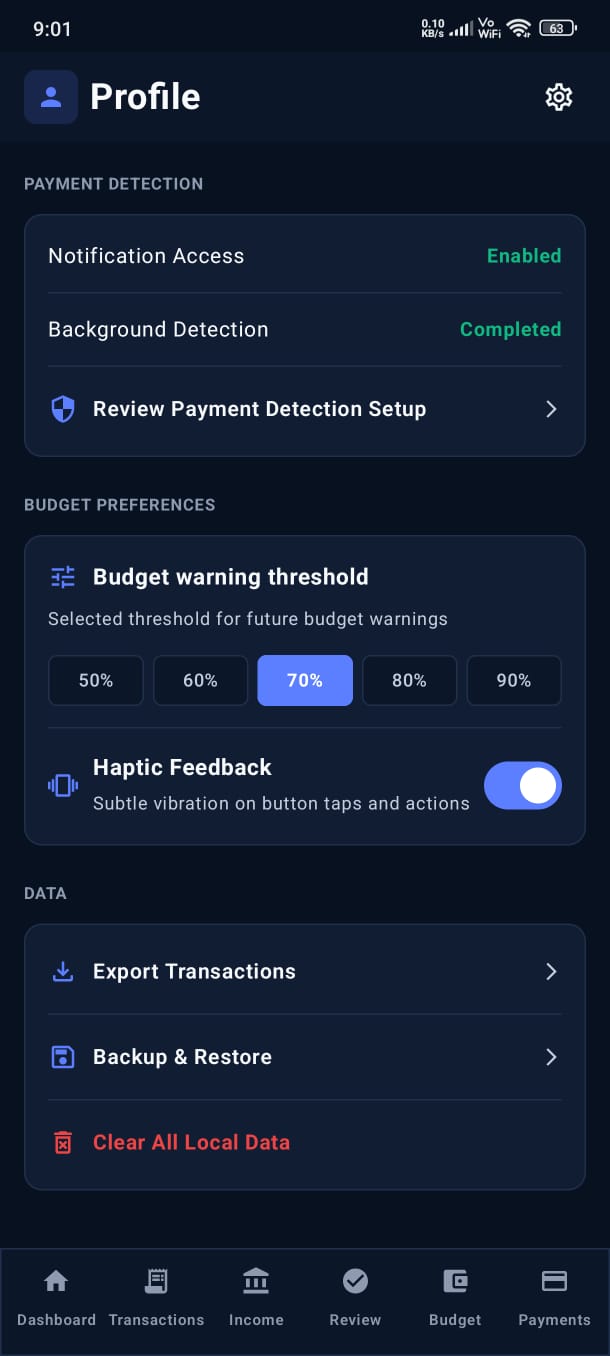
- Local backup & restore
All user data is stored locally on the device to prioritize privacy.
How we built it
The application was built using modern Android development practices.
Tech Stack
- Kotlin
- Jetpack Compose
- MVVM Architecture
- Repository Pattern
- Room Database
- Material Design 3
- Android Notification Listener
The app follows an offline-first architecture where payment notifications are parsed, converted into transactions, stored in Room, and displayed through Jetpack Compose UI.
Challenges we ran into
Some of the biggest challenges included:
- Reliably parsing payment notifications from different banks and UPI applications.
- Preventing duplicate transactions.
- Building a scalable transaction model that supports expenses, income, budgets, analytics, and subscriptions.
- Designing a clean and intuitive user interface while keeping the application fully offline.
Accomplishments that we're proud of
- Built a complete offline-first personal finance application.
- Successfully implemented automatic expense and income detection.
- Created a unified financial transaction architecture.
- Added budgeting, analytics, bills, subscriptions, export, and backup functionality.
- Delivered a polished Material Design 3 Android application.
What we learned
Throughout this project we gained practical experience with:
- Modern Android architecture
- Jetpack Compose
- Room Database
- Notification Listener APIs
- MVVM and Repository Pattern
- Large-scale Android project organization
- AI-assisted software development workflows
How we used OpenAI Codex & GPT-5.5
OpenAI Codex and GPT-5.6 played an important role during development.
Codex was used for:
- Feature implementation
- Kotlin refactoring
- Debugging
- Architecture improvements
- Code reviews
- UI refinements
- Release preparation
GPT-5.6 was used for:
- Project planning
- Feature design
- System architecture discussions
- UI/UX improvements
- Technical explanations
- Documentation
- README creation
- Demo planning
- Hackathon submission preparation
While AI significantly accelerated development, the application itself is not an AI-powered product. Instead, AI was used as an engineering assistant throughout the software development lifecycle.
What's next for ZORS
Future improvements include:
- Cloud synchronization
- Multi-device support
- OCR receipt scanning
- Smart spending insights
- Enhanced recurring payment detection
- Advanced financial reports


Log in or sign up for Devpost to join the conversation.