ZoomTrans: Reimagining the Future of Transportation
About the Project
Transportation is an essential part of everyday life, especially within university communities where students, staff, and visitors depend on reliable mobility. Yet, accessing transportation can still involve payment difficulties, limited coordination, and inefficient processes.
The idea behind ZoomTrans emerged from a simple question: What if technology could make everyday transportation smarter, easier, and more accessible?
Inspired by discussions around student welfare and transportation at the University of Ilorin (UNILORIN), we set out to build a digital mobility platform that connects passengers, drivers, and transport administrators through technology.
What Is ZoomTrans?
ZoomTrans is a smart transportation and digital mobility platform designed to improve how people access and interact with transportation services.
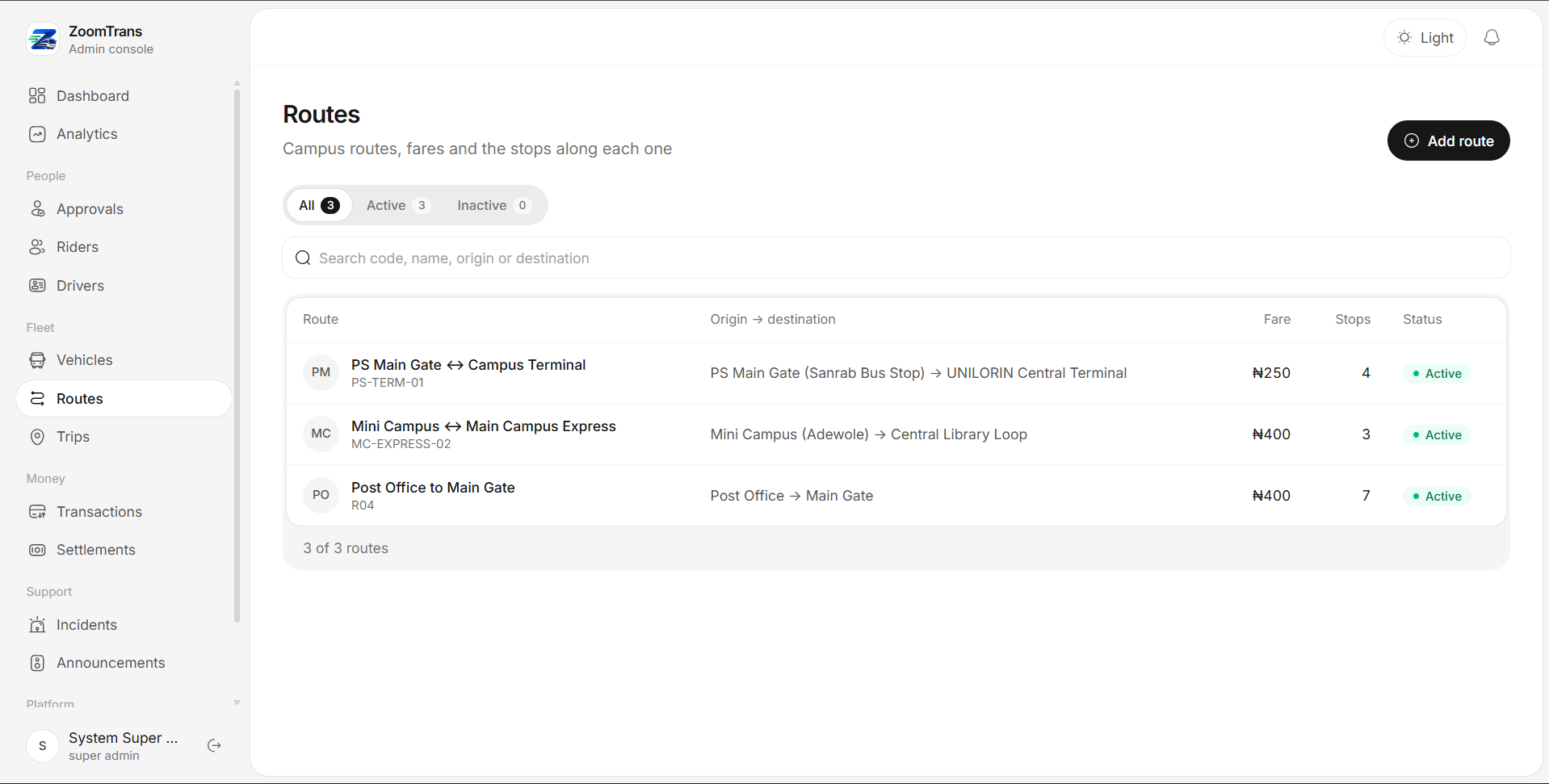
Our initial focus is the University of Ilorin, with intended transportation routes including Post Office–Hostel Area and Post Office–UITH.
The platform brings together three key participants:
- Passengers: Access transportation services through a convenient digital experience.
- Drivers: Interact with the platform to support transportation operations.
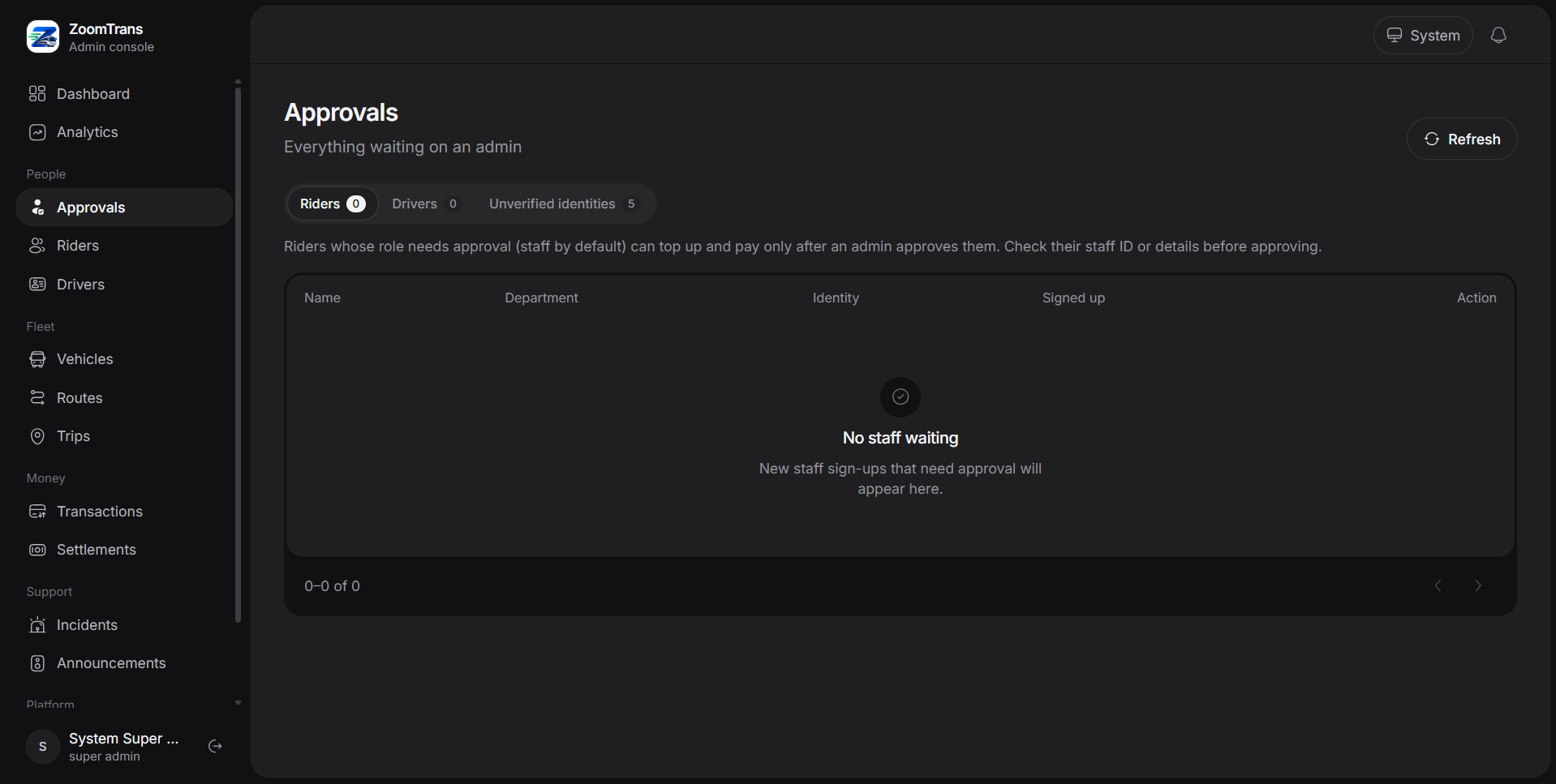
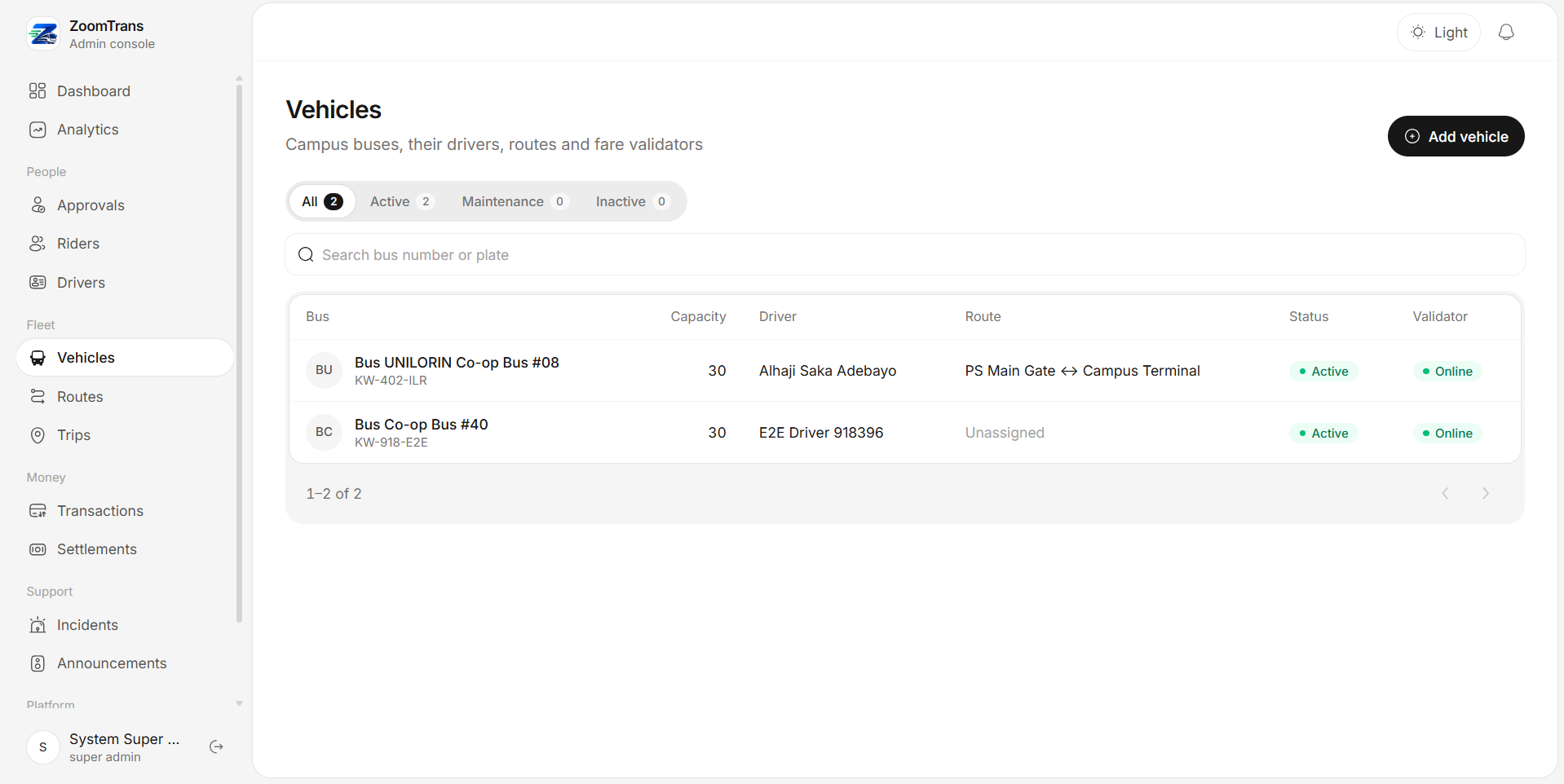
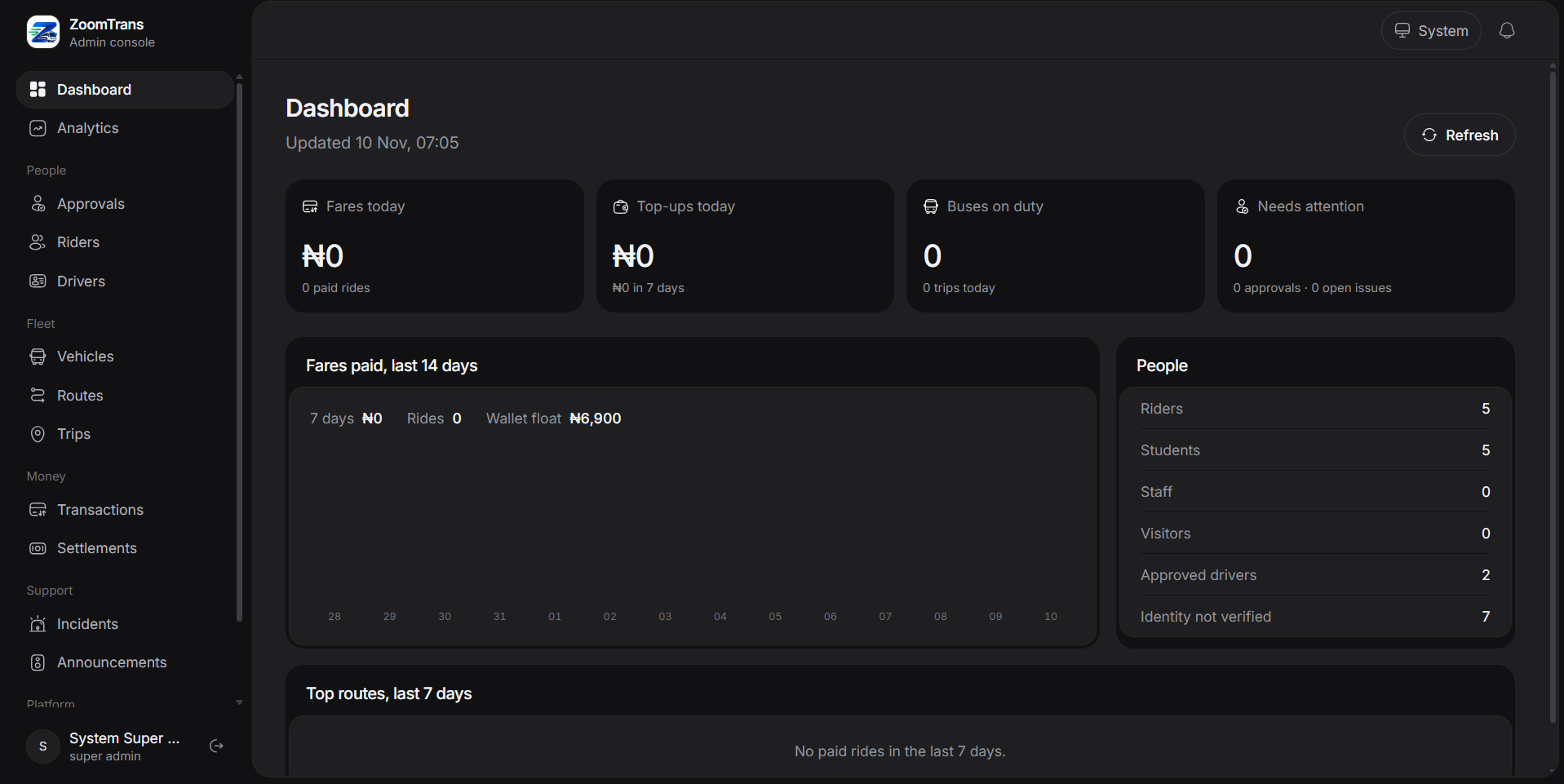
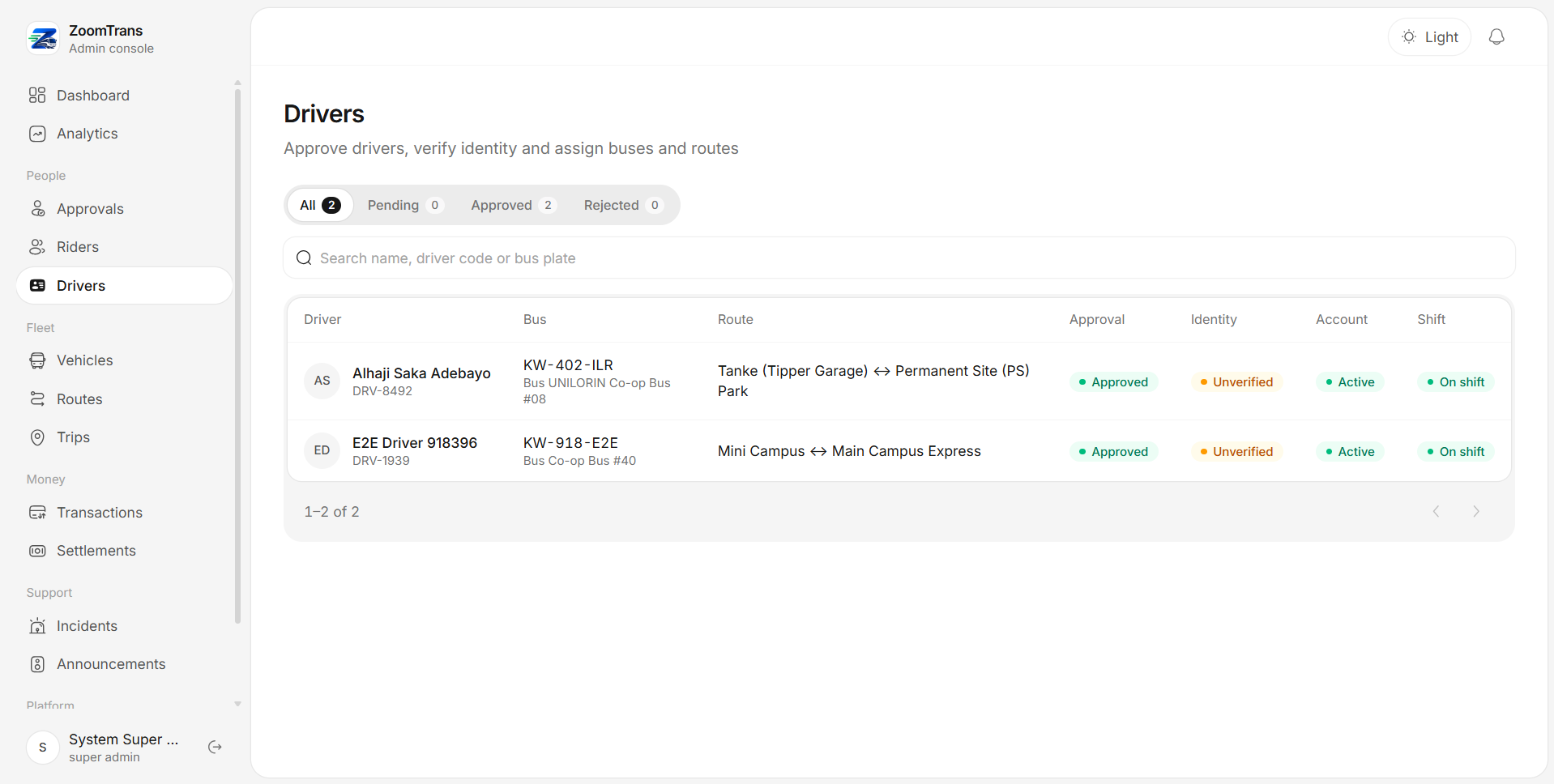
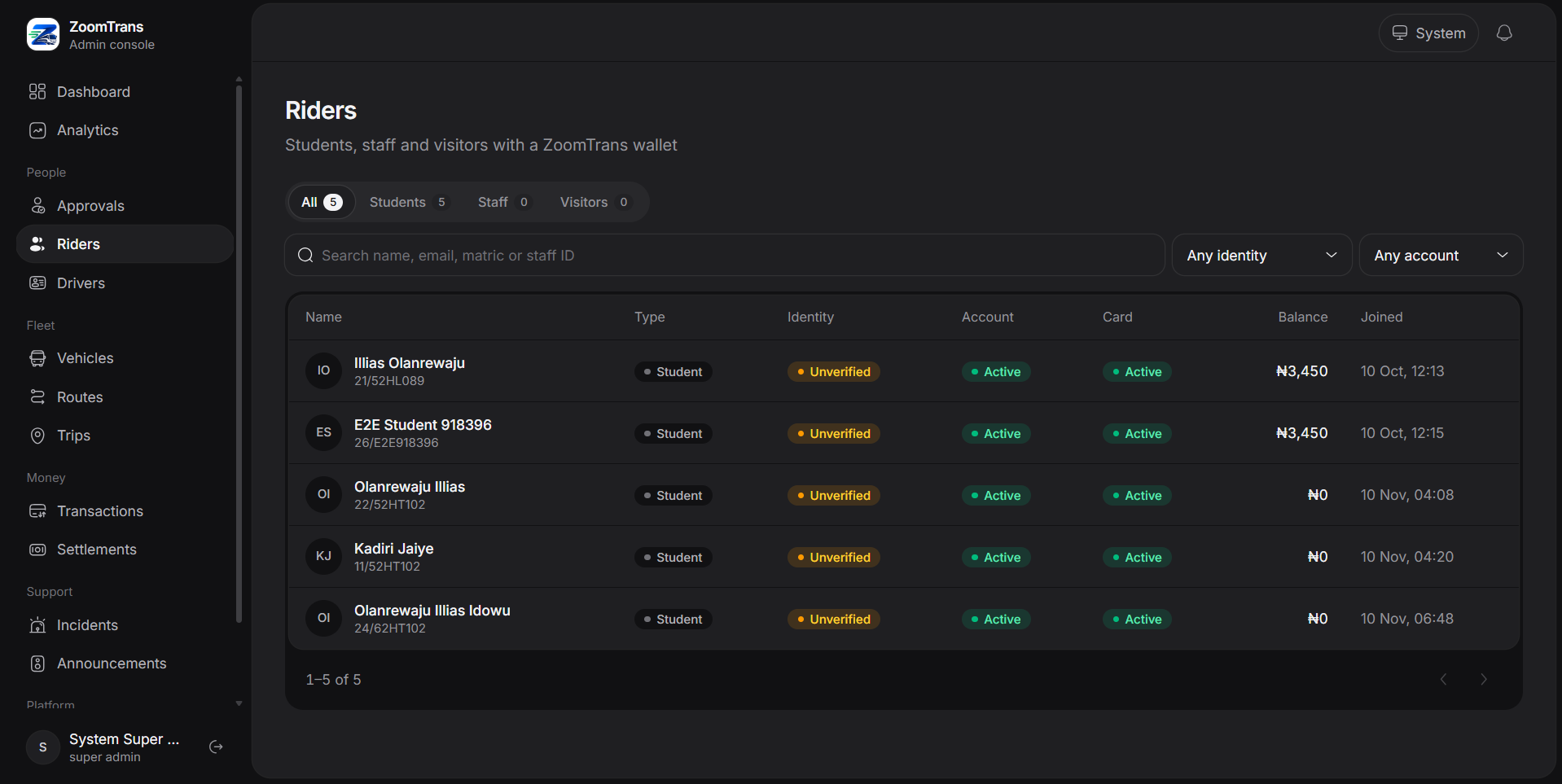
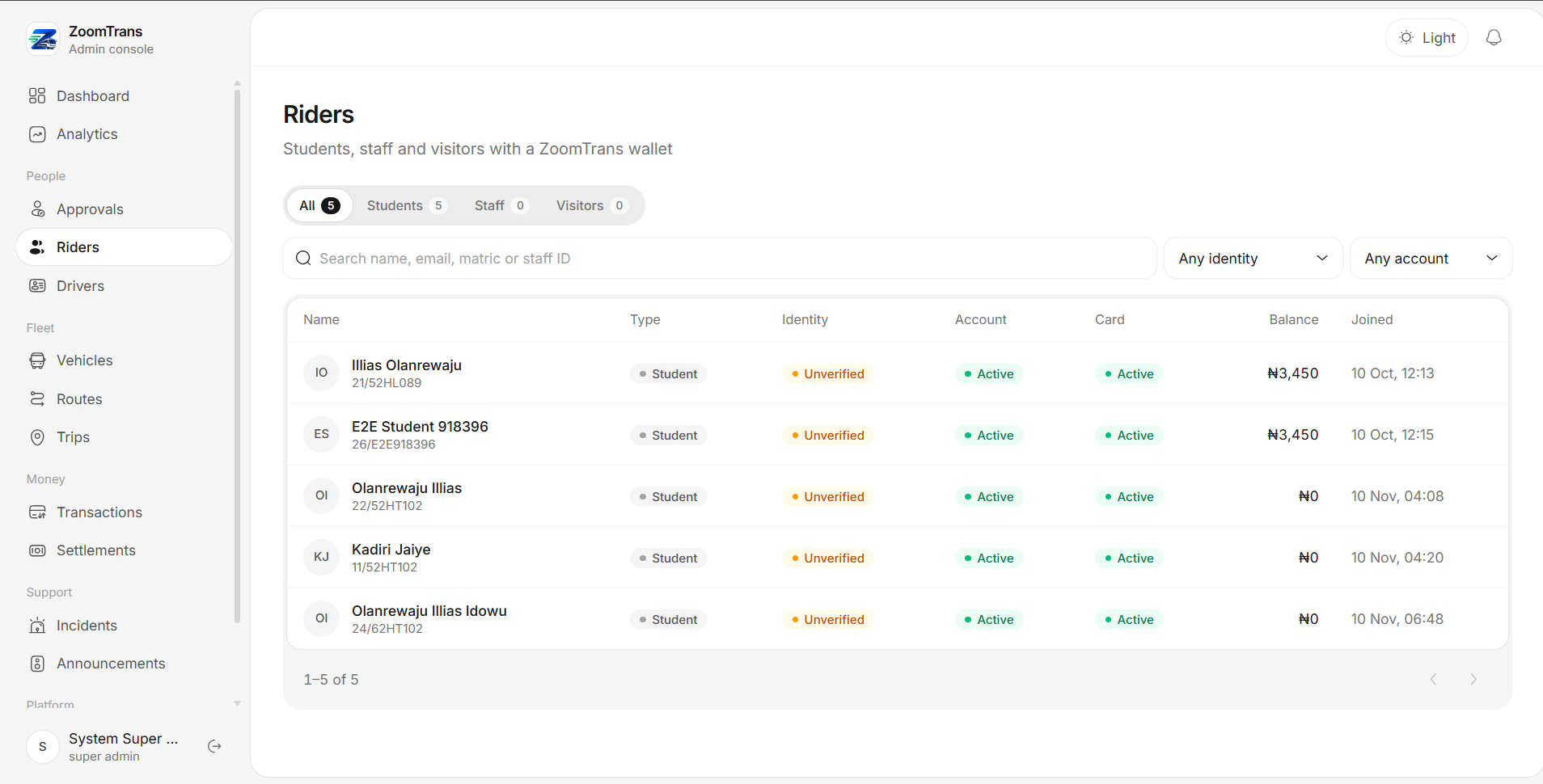
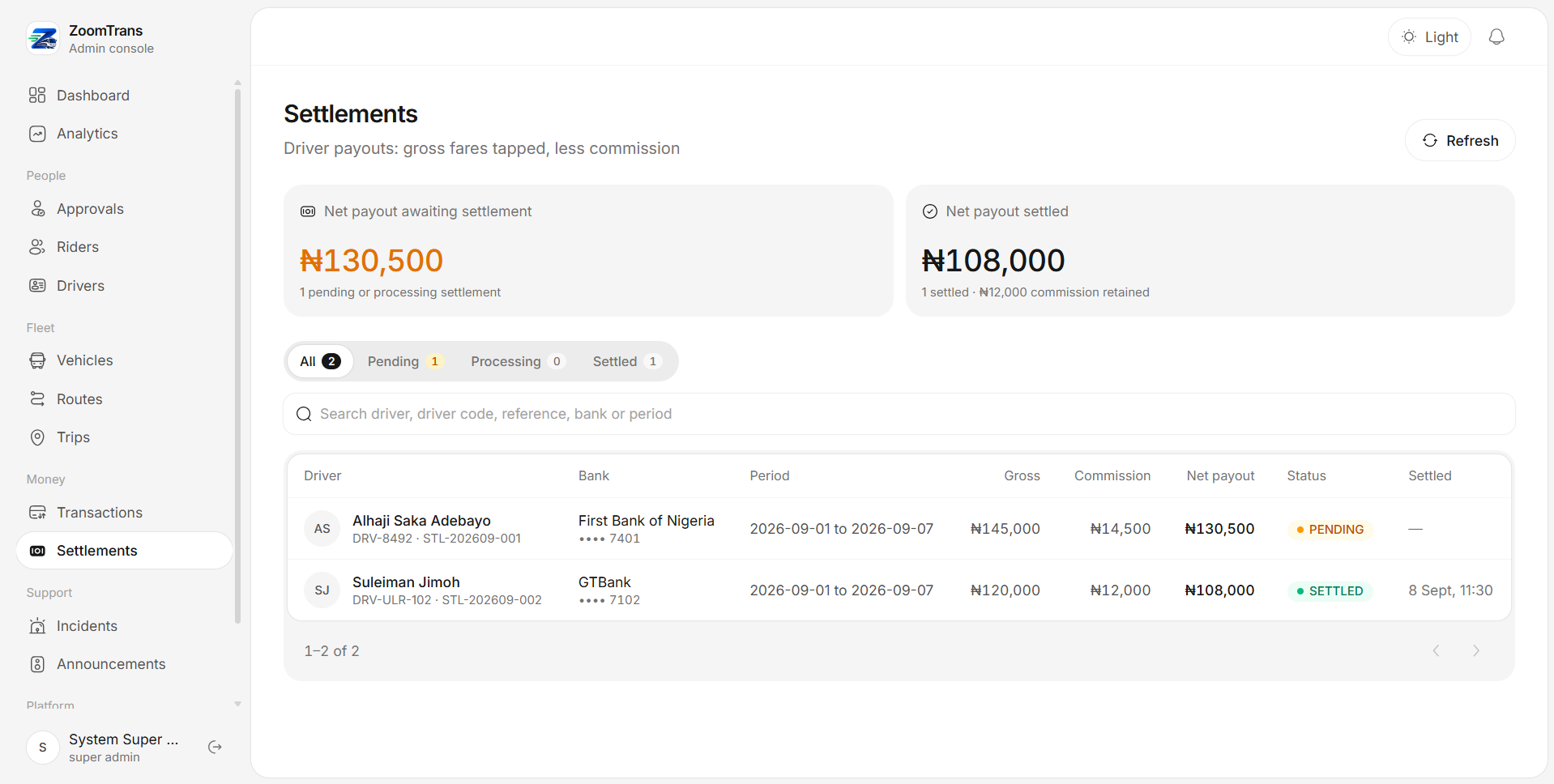
- Administrators: Manage and coordinate activities within the transportation ecosystem.
Our goal is to create a more connected, convenient, and digitally coordinated transportation experience.
Technology Behind ZoomTrans
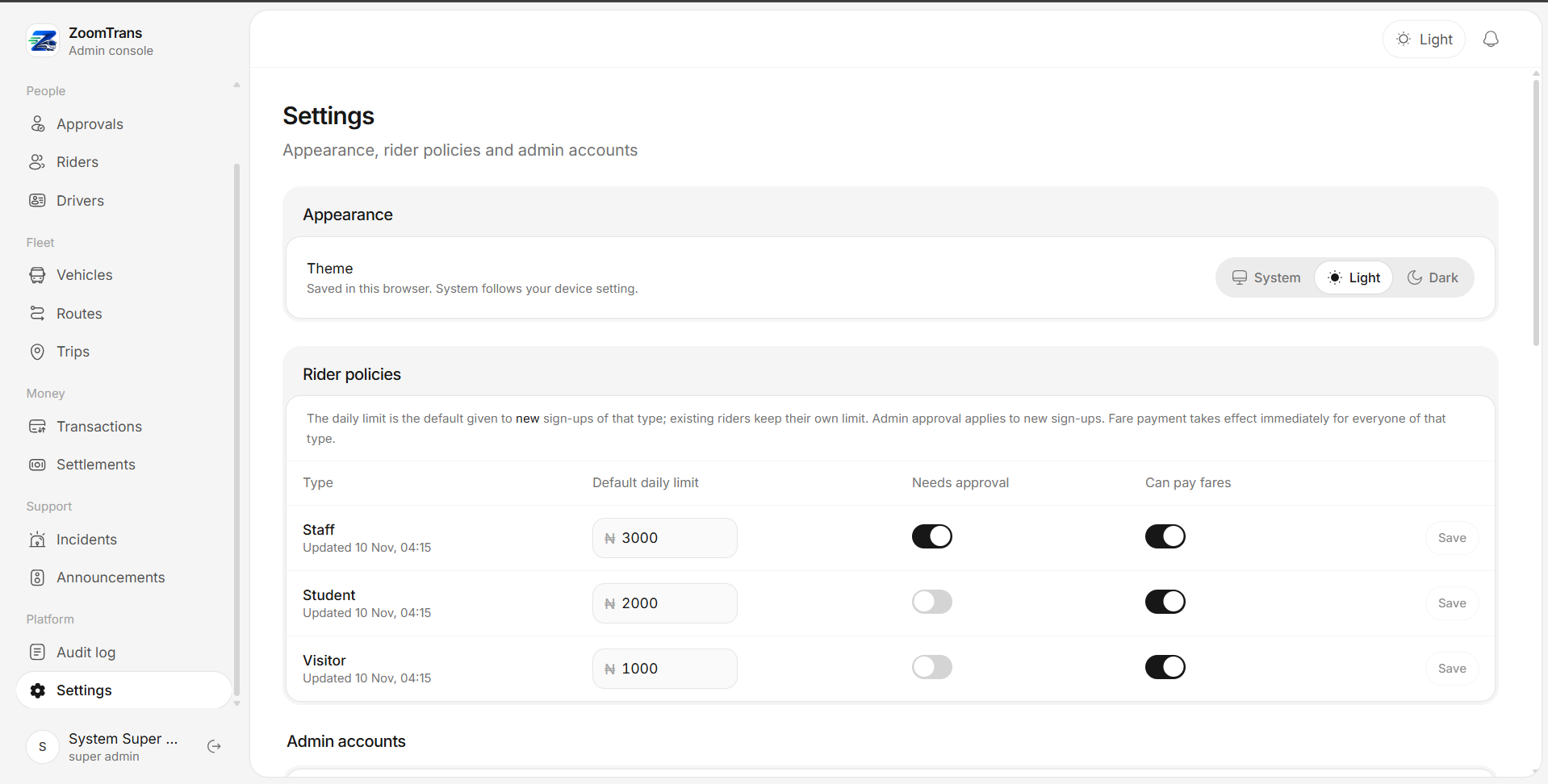
ZoomTrans is being developed as an integrated mobile and web ecosystem.
Our technology stack includes:
- Mobile Application: React Native and Expo.
- Backend: Node.js.
- Database: PostgreSQL.
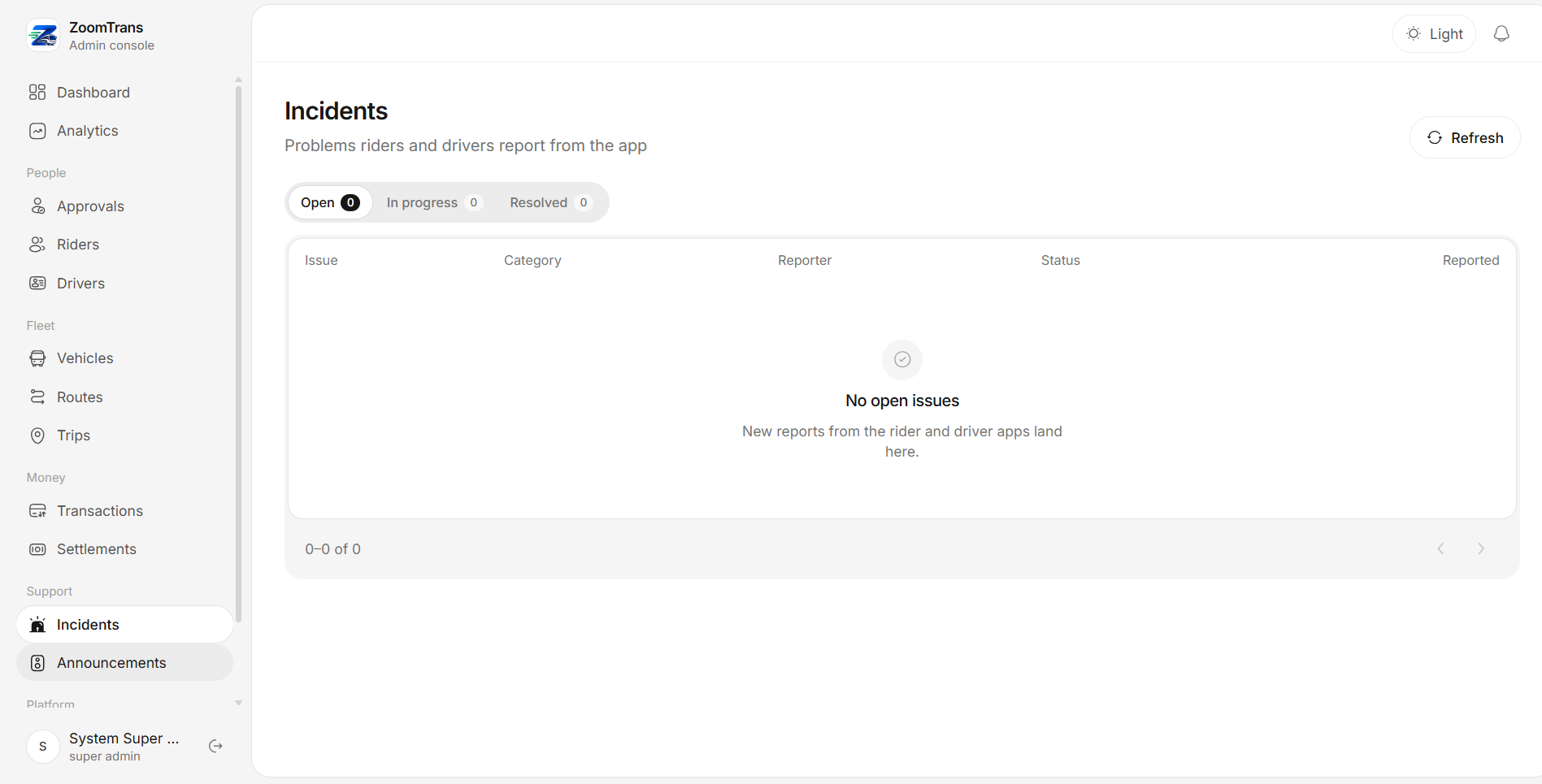
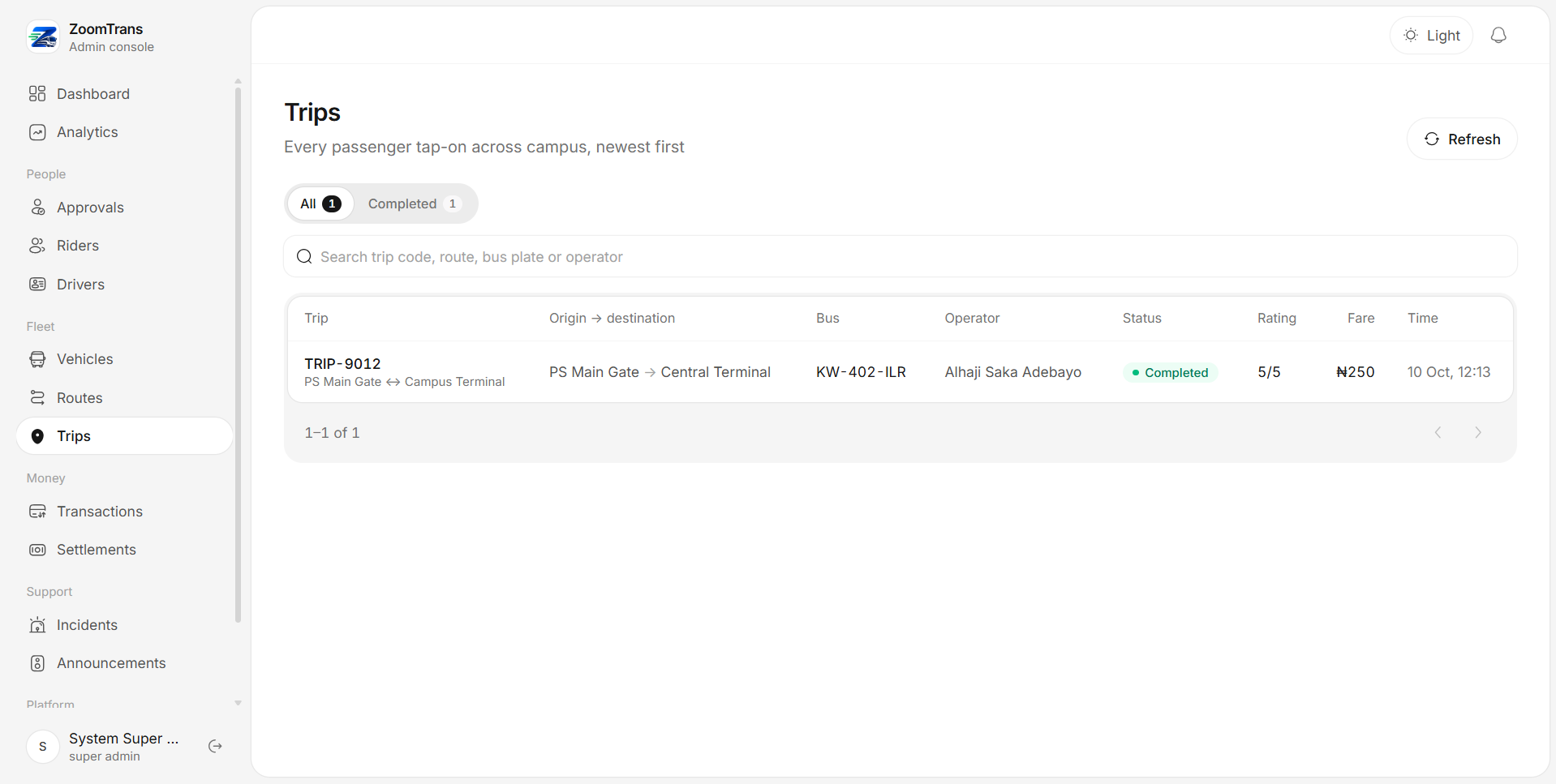
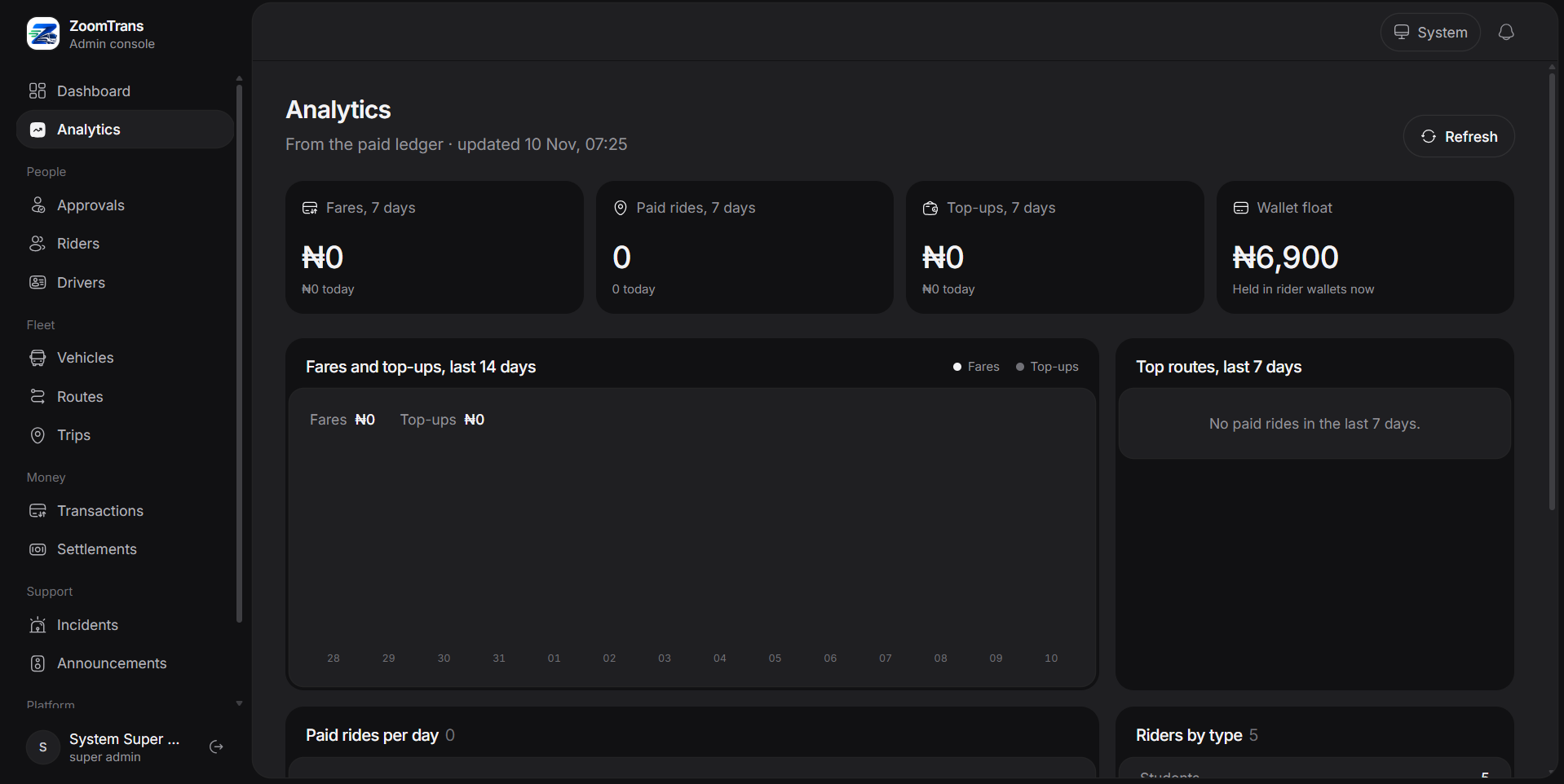
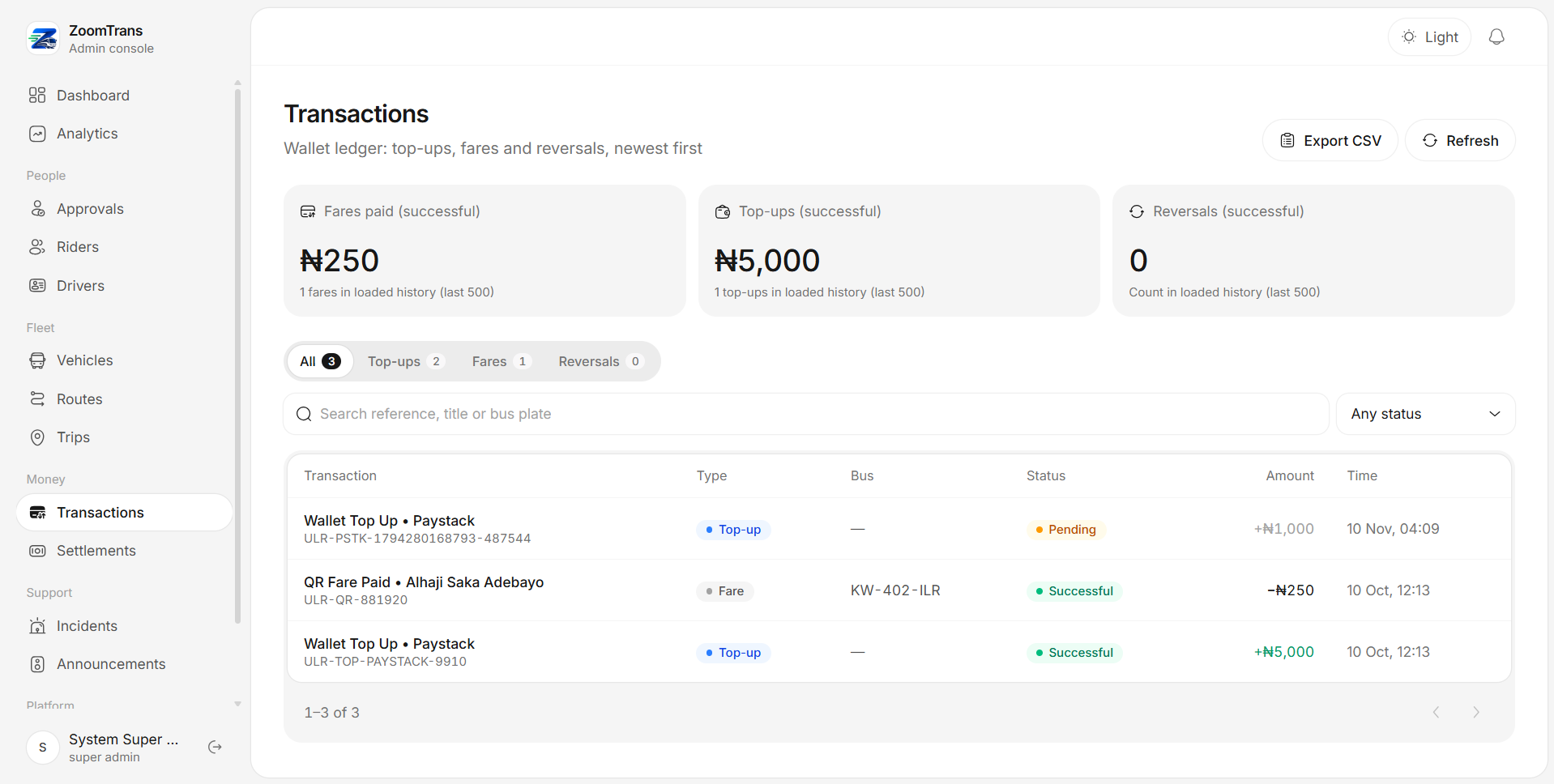
- Web Application: Administrative and operational interface.
- Integration: API-driven communication between the applications and backend.
- Security: Backend-managed authentication and authorization.
The architecture is designed to support maintainability, scalability, and shared data management across the mobile and web applications.
The platform also incorporates digital wallet and payment experiences, alongside QR-based interactions.
Challenges and Lessons
Building ZoomTrans has been an exciting engineering journey, with challenges extending beyond implementation.
Some of the major challenges include translating a real-world transportation problem into a practical software solution, designing a connected ecosystem for different user roles, managing infrastructure and resource constraints, and preparing the applications for real-world deployment.
One important lesson has been understanding that building useful technology starts with identifying genuine problems. Good software requires more than functional code; it demands thoughtful architecture, usability, security, collaboration, and continuous improvement.
Through this project, we have strengthened our experience in full-stack development, API integration, database design, application architecture, teamwork, and product development.
What's Next?
ZoomTrans is designed with a broader mobility vision in mind.
Our future development goals include:
- Physical ZoomTrans transit cards.
- Contactless tap-in transportation payments.
- Seamless wallet funding and payment experiences.
- Improved driver and administrative workflows.
- Intelligent transportation coordination and operational insights.
- Expansion into other universities and urban transportation networks.
These are planned capabilities that we intend to introduce progressively as the platform evolves.
The Team and Vision
ZoomTrans is a collaborative initiative that I am leading with a team of five.
This project represents our commitment to applying engineering, innovation, teamwork, and problem-solving to challenges that affect everyday life.
We are not simply building another application; we are working towards a more connected transportation ecosystem.
ZOOMTRANS — MOVE SMARTER. PAY EASIER. TRAVEL BETTER.
Reimagining the Future of Transportation, One Journey at a Time.
Built With
- api-integration
- authentication
- cloud-deployment
- digital-payments
- digital-wallet
- expo.io
- full-stack-development
- javascript
- mobile-development
- node.js
- postgresql
- qr-code
- react-native
- responsive
- rest-api
- smart-mobility
- software-engineering
- transportation-technology
- typescript
- web-development
